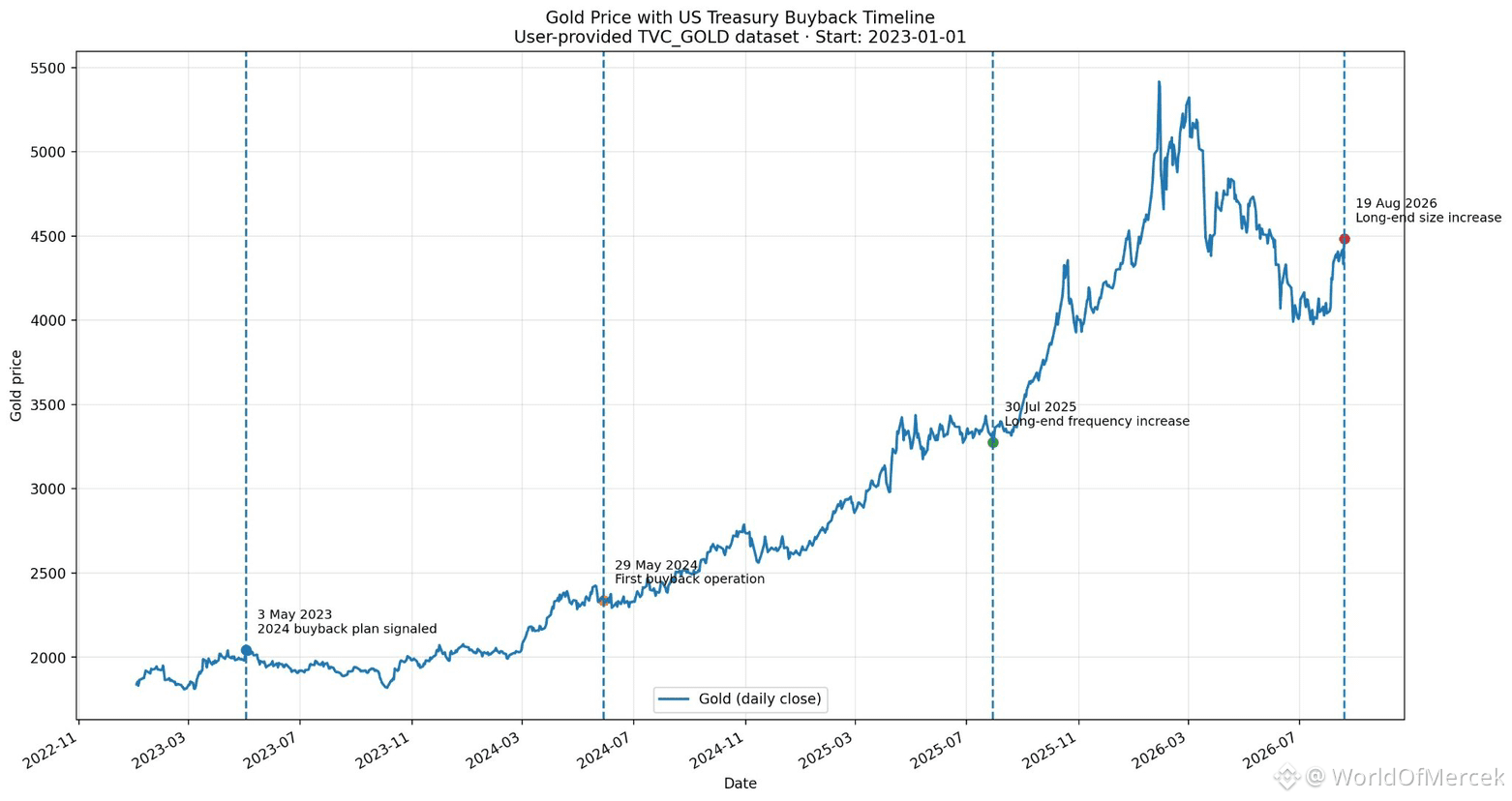

في مايو 2023، أعلنت وزارة الخزانة الأميركية خططاً لإعادة بدء عمليات شراء عكسية منتظمة للأوراق الحكومية (Treasury buybacks) اعتباراً من العام التالي.
كانت الفكرة بسيطة إلى حدّ كبير: شراء سندات أقدم وأقل سيولة وتحسين كيفية عمل سوق الخزانة.
وفي 29 مايو 2024، بدأوا بالفعل في تنفيذ ذلك.
ثم في يوليو 2025، أصبح البرنامج أكثر تركيزاً على الطرف الطويل. بدأت عمليات الشراء العكسية في قطاعي 10–20 سنة و20–30 سنة تحدث بشكل أكثر تكراراً.
أمس، خطوا خطوة أخرى.
اعتباراً من 9 سبتمبر، سيُضاعَف على الأقل الحد الأقصى لحجم عمليات دعم السيولة على الطرف الطويل من 2 مليار دولار إلى 4 مليارات دولار لكل عملية.
إذن خلال السنوات الثلاث الماضية:
2023: الإعلان عن برنامج الشراء العكسية.
2024: بدء استخدامه.
2025: استخدامه بشكل أكثر في سندات الخزانة الأطول أجلاً.
2026: مضاعفة حجم تلك العمليات.
أريد أن أوضح أمراً واحداً هنا لأنني أعلم إلى أين عادةً يتجه مسار الحديث:
هذا ليس برنامج تيسير كمي (QE).
الاحتياطي الفيدرالي لا يطبع المال لشراء سندات الخزانة. وزارة الخزانة تدير سوق ديونها بنفسها، وتقوم بشراء الأوراق الأقدم وتحاول منع تحوّل السيولة إلى مشكلة في أجزاء من منحنى العائد.
لكن القول «إن هذا ليس تيسيراً كميّاً» لا يعني أيضاً أن التطور لا يتعلق بالأمر.
أصبحت الولايات المتحدة بحاجة متزايدة لتمويل ديونها. وضُغطت عوائد الأجل الطويل. وخلال الفترة نفسها، أصبحت وزارة الخزانة أكثر نشاطاً تدريجياً في دعم السيولة في الطرف الطويل.
الآن ضع الذهب بجانب هذا التسلسل الزمني.
أنا بالطبع لا أقول إن عمليات الشراء العكسية من جانب الخزانة هي سبب انتقال الذهب من حوالي 2000 دولار إلى ما هو عليه اليوم. هناك الكثير من العوامل الأخرى وراء هذه الحركة.
لكنني أعتقد أن كليهما جزء من القصة الأكبر نفسها.
كلما أصبح من الأصعب تمويل العجز المتزايد دون خلق توتر في مكان ما داخل سوق السندات، زاد الأمر إثارة للاهتمام بالنسبة إلى أصل لا يصدره أي مُصدر، ولا يحلّ له أجل، ولا يوجد له طرف مقابل.
يمكن لوزارة الخزانة تحسين السيولة. ويمكنها تغيير أنماط الإصدار. ويمكنها شراء السندات الأقدم وجعل «السباكة» تعمل بشكل أفضل.
لكن ما لا يمكنها فعله، بأي من تلك الوسائل، هو جعل الدين يختفي.
كانت الفكرة بسيطة إلى حدّ كبير: شراء سندات أقدم وأقل سيولة وتحسين كيفية عمل سوق الخزانة.
وفي 29 مايو 2024، بدأوا بالفعل في تنفيذ ذلك.
ثم في يوليو 2025، أصبح البرنامج أكثر تركيزاً على الطرف الطويل. بدأت عمليات الشراء العكسية في قطاعي 10–20 سنة و20–30 سنة تحدث بشكل أكثر تكراراً.
أمس، خطوا خطوة أخرى.
اعتباراً من 9 سبتمبر، سيُضاعَف على الأقل الحد الأقصى لحجم عمليات دعم السيولة على الطرف الطويل من 2 مليار دولار إلى 4 مليارات دولار لكل عملية.
إذن خلال السنوات الثلاث الماضية:
2023: الإعلان عن برنامج الشراء العكسية.
2024: بدء استخدامه.
2025: استخدامه بشكل أكثر في سندات الخزانة الأطول أجلاً.
2026: مضاعفة حجم تلك العمليات.
أريد أن أوضح أمراً واحداً هنا لأنني أعلم إلى أين عادةً يتجه مسار الحديث:
هذا ليس برنامج تيسير كمي (QE).
الاحتياطي الفيدرالي لا يطبع المال لشراء سندات الخزانة. وزارة الخزانة تدير سوق ديونها بنفسها، وتقوم بشراء الأوراق الأقدم وتحاول منع تحوّل السيولة إلى مشكلة في أجزاء من منحنى العائد.
لكن القول «إن هذا ليس تيسيراً كميّاً» لا يعني أيضاً أن التطور لا يتعلق بالأمر.
أصبحت الولايات المتحدة بحاجة متزايدة لتمويل ديونها. وضُغطت عوائد الأجل الطويل. وخلال الفترة نفسها، أصبحت وزارة الخزانة أكثر نشاطاً تدريجياً في دعم السيولة في الطرف الطويل.
الآن ضع الذهب بجانب هذا التسلسل الزمني.
أنا بالطبع لا أقول إن عمليات الشراء العكسية من جانب الخزانة هي سبب انتقال الذهب من حوالي 2000 دولار إلى ما هو عليه اليوم. هناك الكثير من العوامل الأخرى وراء هذه الحركة.
لكنني أعتقد أن كليهما جزء من القصة الأكبر نفسها.
كلما أصبح من الأصعب تمويل العجز المتزايد دون خلق توتر في مكان ما داخل سوق السندات، زاد الأمر إثارة للاهتمام بالنسبة إلى أصل لا يصدره أي مُصدر، ولا يحلّ له أجل، ولا يوجد له طرف مقابل.
يمكن لوزارة الخزانة تحسين السيولة. ويمكنها تغيير أنماط الإصدار. ويمكنها شراء السندات الأقدم وجعل «السباكة» تعمل بشكل أفضل.
لكن ما لا يمكنها فعله، بأي من تلك الوسائل، هو جعل الدين يختفي.