
في المشهد المحموم والمشبع بالنيون للعملات الرقمية في أوائل عام 2026، الضوضاء أعلى من أي وقت مضى. ومع ذلك، تحت سطح العملات الميم المتداولة والبرامج المدعومة من المشاهير، يحدث تحول أكثر جدية وأهمية. بلازما، سلسلة الكتل من الطبقة 1 التي تجاهلها الكثيرون باعتبارها "مجرد سلسلة متخصصة أخرى" عند إطلاقها العام الماضي، قد رسخت نفسها بهدوء كالمكان الرائد للتمويل اللامركزي (DeFi). إذا كنت تتبع البيانات، فالقصة ليست مجرد نمو - إنها تتعلق بإعادة هيكلة أساسية لطريقة حركة الدولارات الرقمية.
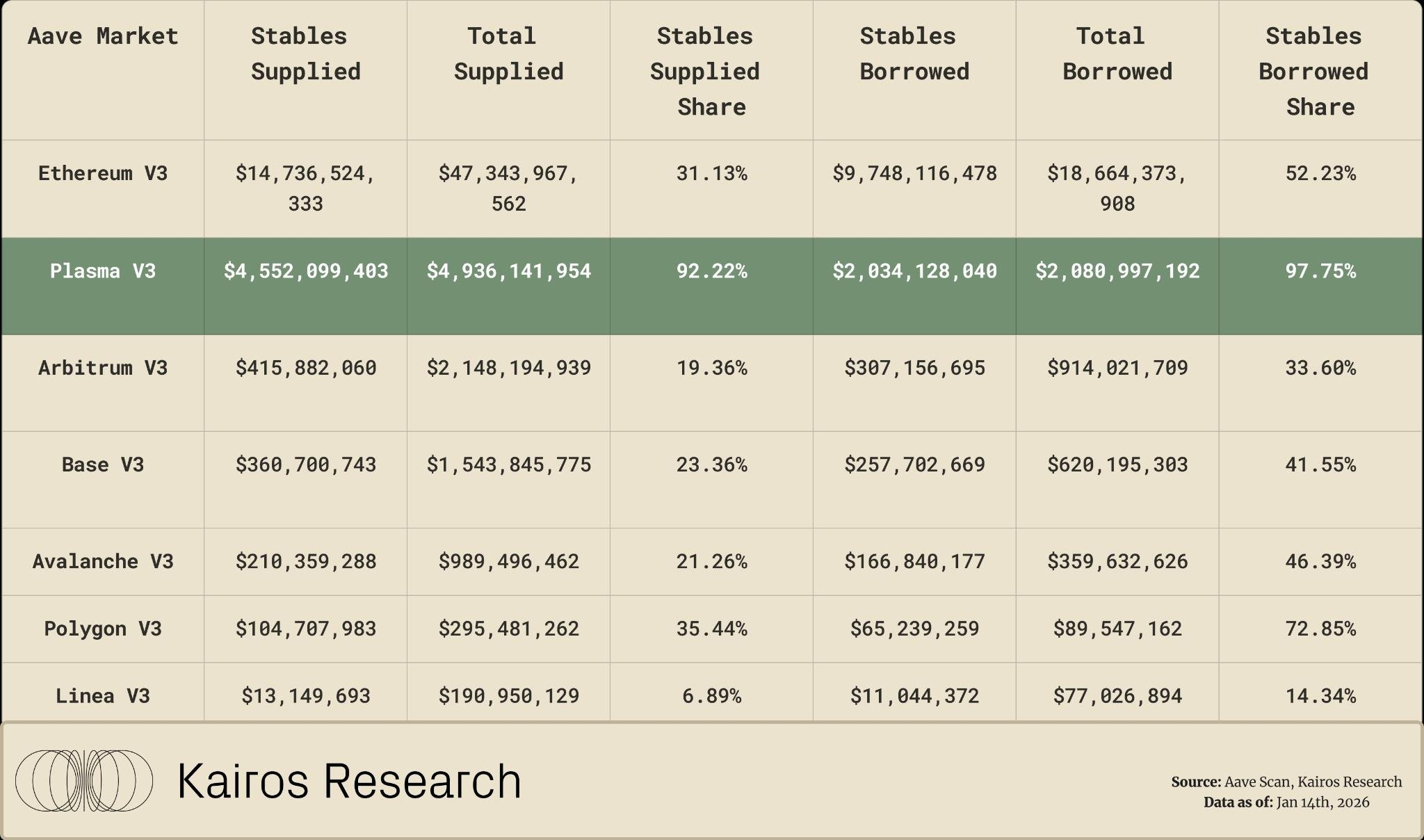
إحدى أكثر المقاييس دلالة على هذا التفوق تظهر داخل الخزائن الرقمية لـ Aave v3. فعلى الرغم من أن إجمالي القيمة المقفلة (TVL) يُشار إليه غالبًا باعتباره العلامة النهائية على النجاح، إلا أنه قد يكون مؤشرًا زائفًا للترفيع (بريقًا للذات). إذ يمكن أن تبقى مليارات من الأموال خامدة في بروتوكول، تجمع الغبار بينما تنتظر عائدًا لا يأتي أبدًا. تُروى القصة الحقيقية عبر كفاءة رأس المال. حاليًا، تحافظ بلازما على أعلى نسبة من العملات المستقرة المُورّدة مقابل المُقترضة عبر جميع أسواق Aave v3 عالميًا. وهذا فرقٌ حاسم. يعني ذلك أنه في بلازما، لا يتم «ركن» الأموال فقط لجني الحوافز؛ بل إنها تتحرك بالفعل. تشير معدلات الاستخدام المرتفعة إلى سوق ائتماني صحي وحيوي حيث إن الطلب على السيولة يطابق العرض، مما يخلق حلقة مالية مستدامة تعذّر على سلاسل أقدم وأكثر ازدحامًا تكرارها.
ترجم هذا الكفاءة إلى قفزة هائلة في الصعود على مستوى الترتيب العالمي. فقد رسّخت بلازما موقعها الآن كأكبر سلسلة ثانية من حيث إجمالي القيمة المقفلة TVL عبر «رباعية قوة» من بروتوكولات من الدرجة الأولى: Aave وFluid وPendle وEthena. إن احتلال المركز الثاني خلف Ethereum Mainnet في هذه الفئات بعينه يُعد إنجازًا كان يبدو مستحيلًا قبل ثمانية عشر شهرًا. وهذا يشير إلى تحوّل كبير في المكان الذي يختاره «المال الذكي» ليقيم فيه. بالنسبة لبروتوكولات مثل Ethena، التي تعتمد على القيمة المستقرة للحفاظ على دولارها الصناعي، أو Pendle، التي تتألق عبر تحويل العائد إلى رموز قابلة للتداول، توفّر بلازما بيئة عالية الإنتاجية ومنخفضة زمن الوصول تبدو كترقية مؤسسية لـ DeFi كان ينتظرها منذ نشأته.
ومع ذلك، قد تكون التحفة التاجية للشبكة هي نجاحها مع الأصول ذات المستوى المؤسسي. تستضيف بلازما الآن أكبر مجمّع سيولة على السلسلة بالكامل لـ syrupUSDT، وتقف حاليًا عند رقمٍ مدهش يبلغ 200 مليون دولار. طُوِّرت من قبل Maple Finance، وتمثل syrupUSDT الجسر بين العائد الواقعي عالي الجودة والشفافية غير المسموح بها في البلوك تشين. إن سيطرة مجمّع واحد على سلسلة واحدة بهذا القدر من السيولة لشهادة على الثقة التي يضعها كلٌّ من «الحيتان» الأفراد واللاعبين المؤسسيين في بنية بلازما. الأمر لا يتعلق فقط بحجم الـ 200 مليون دولار؛ بل يتعلق بالاستقرار الذي توفره للنظام البيئي الأوسع. تعني السيولة العميقة أن المتداولين الكبار يمكنهم الدخول والخروج من المراكز على نطاق واسع دون الخوف من الانزلاق الهائل، ما يجعلها الملاذ الآمن المفضل في سوق متقلب.
إذن لماذا يحدث ذلك على بلازما وليس في مكان آخر؟ يكمن الجواب في إزالة الاحتكاك. من خلال إعطاء الأولوية لتحويلات USDT بدون رسوم وبأجل نهائي أقل من ثانية عبر إجماع PlasmaBFT، أزالّت الشبكة فعليًا «ضريبة الغاز» التي كانت تجعل استراتيجيات DeFi المتقدمة باهظة الثمن بالنسبة للمستخدم العادي. عندما لا يكلفك الأمر شيئًا لتحريك أموالك وثوانٍ لتسويتها، تبدأ الحسابات الخاصة باللبنات المالية المعقدة بالعمل فجأة لصالح المشارك بدلًا من الشبكة.
بينما نتعمّق أكثر في عام 2026، فإن عصر «الضبابية التجريبية» لم يعد يعطي نتائج؛ بل بات المجال يتحول أخيرًا إلى المنفعة. لا تحاول بلازما أن تكون حاسوبًا عالميًا لكل شيء من الفن إلى الألعاب؛ بل لديها مهمة واحدة محددة بدقة: أن تكون طبقة التسوية الأكثر كفاءة لاقتصاد الدولار العالمي. بالنظر إلى البيانات الحالية، يصعب القول إنهم لا يفوزون. لم يعد طرح Stablechain مجرد نظرية—إنه واقع، وبلازما تمسك بوضوح بمفاتيح الطريق.