#termmax @TermMax
على نحوٍ عفوي، افترضت أن GT مجرد توكن آخر من نوع ERC-20 مثل FT وXT، إلى أن تحققت بالفعل — ليس كذلك. إن GT هو ERC-721، أي توكن غير قابل للاستبدال (NFT)، وهذا الاختيار التصميمي الواحد يغيّر أكثر مما يبدو. 🎴
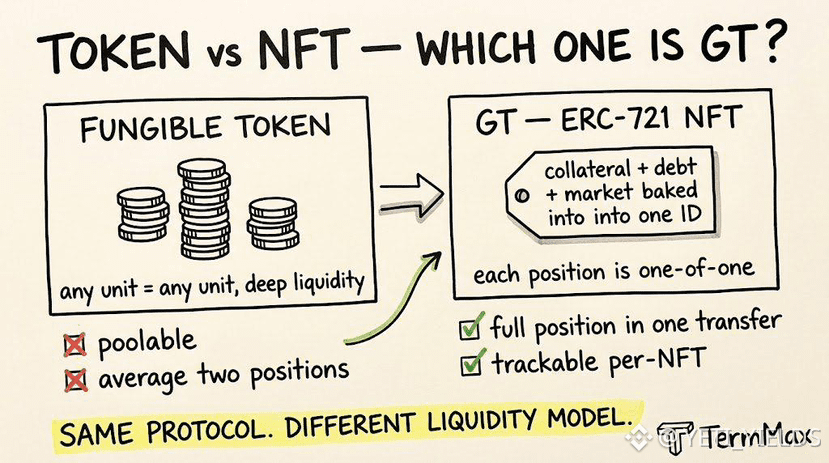
التوكن القابل للاستبدال يعني أن كل وحدة قابلة للتبادل — 100 USDC هي 100 USDC بغض النظر عن محفظة من جاءت. أما الـNFT فيعني أن كل GT عبارة عن كائن مختلف ومُتتبَّع بشكل منفصل — مركزك المحدد المُستَغَل، مع مقدار الضمان الخاص به، ومقدار الدين، ومعلمات السوق الخاصة به، وكل ذلك مُضمَّن داخل ذلك الـToken ID الواحد. #️⃣
النتائج العملية: لا يمكنك "موازنة" أو دمج مركزين من GT معًا بنفس طريقة تجميع دفعتين من توكن قابل للاستبدال — كل GT يُعد سجلًا مستقلًا بذاته. يمكنك نقل مركز مُستَغل بالكامل إلى شخص آخر عبر نقل NFT واحد، مع الضمان والديْن وكل شيء، دون الحاجة إلى فك أي شيء أولًا. 🔁 وبما أن كل مركز هو توكن فريد، يمكن لواجهة مبنية على TermMax تتبع وعرض سجلّ مركزك الدقيق لكل NFT بدلًا من إعادة بنائه من مجموعة من أرصدة قابلة للاستبدال.
طريقة تقريبية لتقدير المقايضة: مركزان من GT بنسبة ضمان/ديْن متطابقة لا يندمجان إلى وحدة سائلة واحدة كما يحدث مع 50 USDC + 50 USDC = 100 USDC. بيع GT محدد يعني إيجاد مشتري يريد هذه التركيبة الدقيقة — وبشكل واقعي، هذا يجعل تجمع الأطراف المقابلة أصغر من سوق قابل للاستبدال بالحجم نفسه، وهو ما يُحتمل أن يفسّر لماذا تبدو أحجام تداول GT الثانوية أرقّ من أحجام FT/XT في معظم الأسواق اليوم. 📈
هل كنت تعلم أن GT كان NFT قبل ذلك، أم افترضت أنه يعمل مثل أي توكن آخر في محفظتك؟ 💬 هل سترغب فعلًا في تداول مركز GT في سوق ثانوي، أم أن خطة الإغلاق دائمًا هي الاحتفاظ حتى النهاية؟
@TermMax #TermMax
على نحوٍ عفوي، افترضت أن GT مجرد توكن آخر من نوع ERC-20 مثل FT وXT، إلى أن تحققت بالفعل — ليس كذلك. إن GT هو ERC-721، أي توكن غير قابل للاستبدال (NFT)، وهذا الاختيار التصميمي الواحد يغيّر أكثر مما يبدو. 🎴
التوكن القابل للاستبدال يعني أن كل وحدة قابلة للتبادل — 100 USDC هي 100 USDC بغض النظر عن محفظة من جاءت. أما الـNFT فيعني أن كل GT عبارة عن كائن مختلف ومُتتبَّع بشكل منفصل — مركزك المحدد المُستَغَل، مع مقدار الضمان الخاص به، ومقدار الدين، ومعلمات السوق الخاصة به، وكل ذلك مُضمَّن داخل ذلك الـToken ID الواحد. #️⃣
النتائج العملية: لا يمكنك "موازنة" أو دمج مركزين من GT معًا بنفس طريقة تجميع دفعتين من توكن قابل للاستبدال — كل GT يُعد سجلًا مستقلًا بذاته. يمكنك نقل مركز مُستَغل بالكامل إلى شخص آخر عبر نقل NFT واحد، مع الضمان والديْن وكل شيء، دون الحاجة إلى فك أي شيء أولًا. 🔁 وبما أن كل مركز هو توكن فريد، يمكن لواجهة مبنية على TermMax تتبع وعرض سجلّ مركزك الدقيق لكل NFT بدلًا من إعادة بنائه من مجموعة من أرصدة قابلة للاستبدال.
طريقة تقريبية لتقدير المقايضة: مركزان من GT بنسبة ضمان/ديْن متطابقة لا يندمجان إلى وحدة سائلة واحدة كما يحدث مع 50 USDC + 50 USDC = 100 USDC. بيع GT محدد يعني إيجاد مشتري يريد هذه التركيبة الدقيقة — وبشكل واقعي، هذا يجعل تجمع الأطراف المقابلة أصغر من سوق قابل للاستبدال بالحجم نفسه، وهو ما يُحتمل أن يفسّر لماذا تبدو أحجام تداول GT الثانوية أرقّ من أحجام FT/XT في معظم الأسواق اليوم. 📈
هل كنت تعلم أن GT كان NFT قبل ذلك، أم افترضت أنه يعمل مثل أي توكن آخر في محفظتك؟ 💬 هل سترغب فعلًا في تداول مركز GT في سوق ثانوي، أم أن خطة الإغلاق دائمًا هي الاحتفاظ حتى النهاية؟
@TermMax #TermMax