لقد كنت أفكر في شيء يبدو عاديًا جدًا في التمويل التقليدي، لكنه يُتجاهَل على البلوكشين… الترخيص. إذا كان أحد الأصول الخاضعة للتنظيم متاحًا على البلوكشين، فهذا لا يعني تلقائيًا أنه يجب أن يكون بإمكان الجميع التفاعل معه. إن إلقائي نظرة على «قلعة» Dusk (Citadel) جعلني أدرك مقدار ما يعتمد عليه التمويل في الواقع من معرفة من يُسمح له بفعل ماذا.
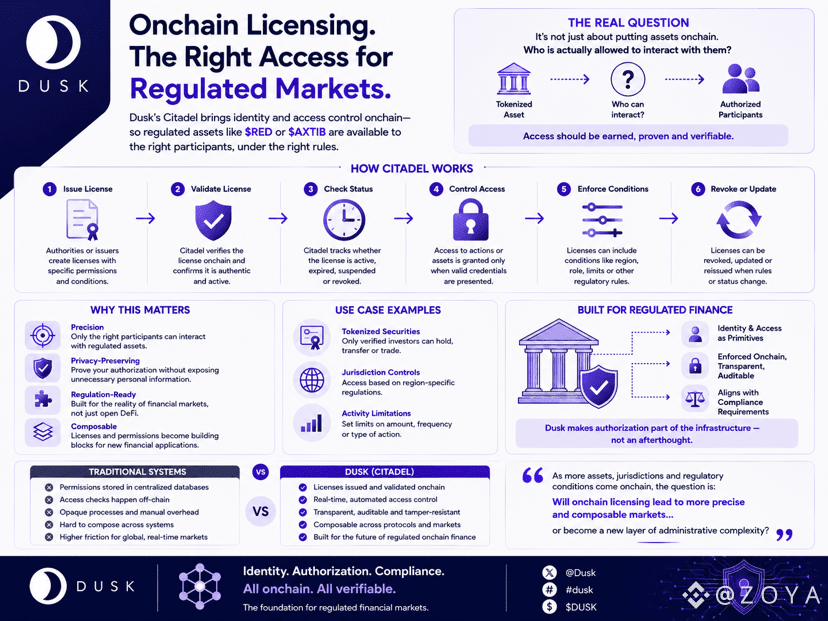
تم بناء Citadel حول إصدار التراخيص والتحقق من صحتها وما إذا كانت لا تزال نشطة، والتحكم في بعض الإجراءات بناءً على بيانات اعتماد صالحة. ما وجدته مثيرًا للاهتمام هو أن هذا يحوّل التفويض إلى شيء يمكن للبلوكشين فهمه فعلًا، بدلًا من تركه مخفيًا في مكان ما داخل قاعدة بيانات. يمكن للمشارك أن يثبت أهليته دون الحاجة إلى كشف كل تفصيلة عنه. 🤯
ثم بدأت أفكر في مدى اختلاف ذلك عن تجربة التشفير المعتادة. معظمنا اعتاد على توصيل محفظة والتفاعل مع أي عقد نريده، لكن الأسواق الخاضعة للتنظيم لا يمكنها أن تعمل بهذه الطريقة بالطبع. تحتاج الأوراق المالية المُحوّلة إلى رموز إلى قواعد حول من يمكنه الاحتفاظ بها أو تداولها أو الوصول إلى إجراءات معينة. إن نقل هذه الأذونات إلى مكان قريب من الأصل نفسه قد يجعل النظام بأكمله أكثر دقة.
ما زلت أتساءل عن مدى تعقيد هذه القواعد عندما يكون لديك أصول مختلفة، ومستثمرون، واختصاصات قضائية متعددة 😂. لكنني أحب الاتجاه الذي تتخذه Dusk هنا. إذا كان التمويل المُنظَّم يتجه إلى البلوكشين، فمن المحتمل ألا يبقى الهوية والتفويض شيئًا يحدث بهدوء في الخلفية. بل يجب أن يصبحا جزءًا من البنية التحتية أيضًا.
@Dusk #dusk $DUSK
تم بناء Citadel حول إصدار التراخيص والتحقق من صحتها وما إذا كانت لا تزال نشطة، والتحكم في بعض الإجراءات بناءً على بيانات اعتماد صالحة. ما وجدته مثيرًا للاهتمام هو أن هذا يحوّل التفويض إلى شيء يمكن للبلوكشين فهمه فعلًا، بدلًا من تركه مخفيًا في مكان ما داخل قاعدة بيانات. يمكن للمشارك أن يثبت أهليته دون الحاجة إلى كشف كل تفصيلة عنه. 🤯
ثم بدأت أفكر في مدى اختلاف ذلك عن تجربة التشفير المعتادة. معظمنا اعتاد على توصيل محفظة والتفاعل مع أي عقد نريده، لكن الأسواق الخاضعة للتنظيم لا يمكنها أن تعمل بهذه الطريقة بالطبع. تحتاج الأوراق المالية المُحوّلة إلى رموز إلى قواعد حول من يمكنه الاحتفاظ بها أو تداولها أو الوصول إلى إجراءات معينة. إن نقل هذه الأذونات إلى مكان قريب من الأصل نفسه قد يجعل النظام بأكمله أكثر دقة.
ما زلت أتساءل عن مدى تعقيد هذه القواعد عندما يكون لديك أصول مختلفة، ومستثمرون، واختصاصات قضائية متعددة 😂. لكنني أحب الاتجاه الذي تتخذه Dusk هنا. إذا كان التمويل المُنظَّم يتجه إلى البلوكشين، فمن المحتمل ألا يبقى الهوية والتفويض شيئًا يحدث بهدوء في الخلفية. بل يجب أن يصبحا جزءًا من البنية التحتية أيضًا.
@Dusk #dusk $DUSK