
لقد كنت أفكر في مدى ارتباط المخاطر الفعلية لبروتوكول الإقراض بمجموعة أرقام قليلة فقط.
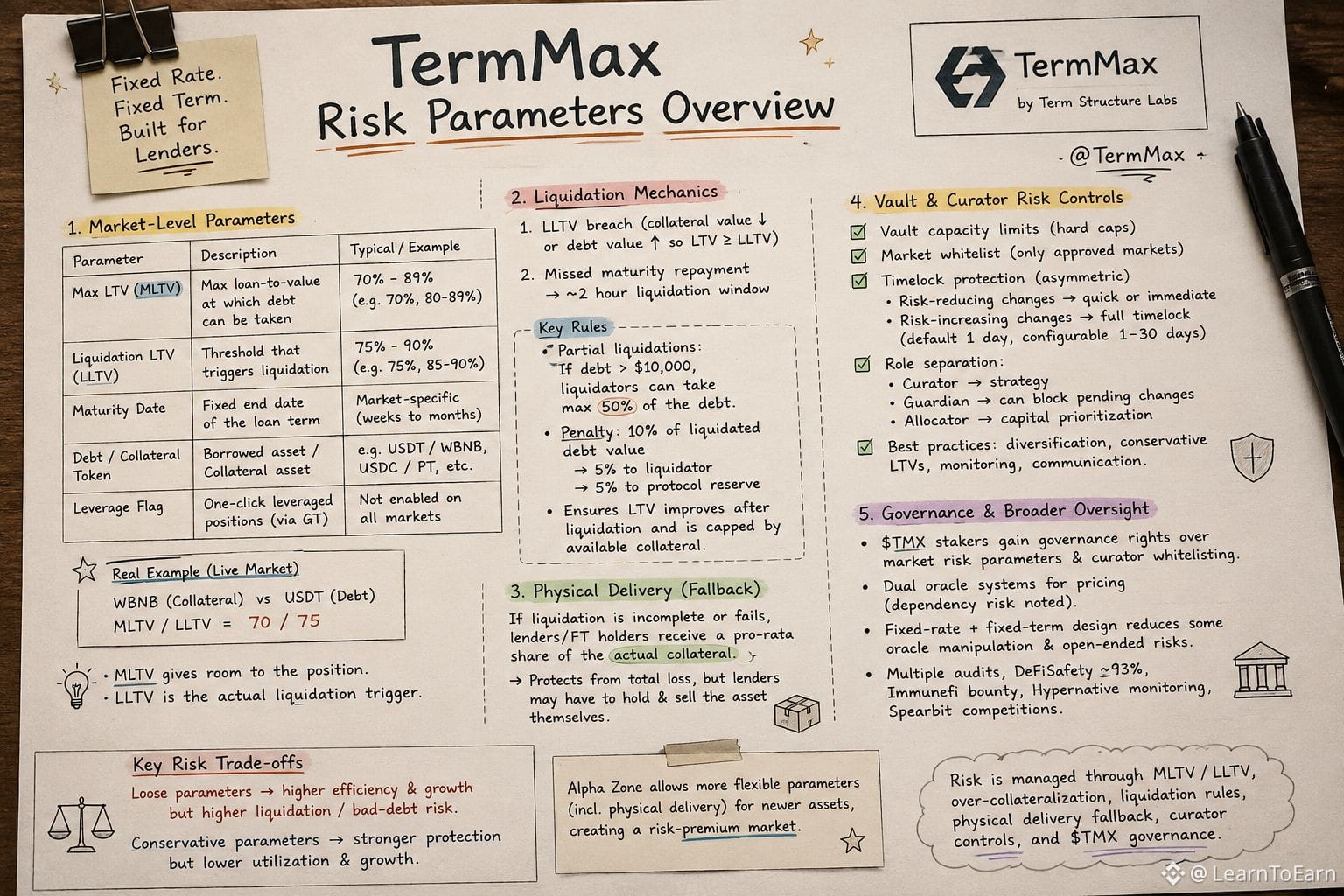
عند @TermMax ، ستكون MLTV وLLTV أول ما أنظر إليه.
تحدد MLTV مقدار ما يمكنك اقتراضه في البداية، بينما تُحدد LLTV المكان الذي يمكن أن يبدأ عنده التصفية فعليًا. هذه الفجوة مهمة لأنها تمنح المركز بعض المساحة قبل أن تصبح الأمور حرجة.
لكن المخاطر لا تتوقف عند LTV.
كما أن TermMax يستخدم مددًا ثابتة، وتصفيات جزئية، وغرامة تصفية بنسبة 10%، وحدود سعة المخازن (vault)، والقوائم البيضاء للأسواق، والقيّمين (curators)، وأزمنة التقييد (timelocks).
ما أراه أكثر إثارة للاهتمام هو آلية التعويض بالتسليم الفعلي. إذا تعذّر تصفية المركز بالكامل، فقد يحصل المقرضون على حصة نسبية (pro-rata) من الضمان نفسه. وهذا يقلل احتمال الانتهاء ببساطة دون شيء، لكنه أيضًا يعني أن المقرضين قد يرثون أصلًا قد لا يرغبون فعليًا في الاحتفاظ به.
لذلك توجد مفاضلة واضحة.
قد تؤدي المعايير الأكثر تشددًا إلى تحسين كفاءة رأس المال، لكنها في المقابل تترك مساحة أقل للديون المعدومة. أما الإعدادات الأكثر تحفظًا فتُحسن حماية المقرضين، لكنها قد تقلل من الاستخدام والنمو.
ربما تكون هذه الموازنة هي المكان الذي يحدث فيه ضبط إدارة المخاطر الحقيقي.
لا زلت مهتمًا بكيف تتطور هذه المعايير مع نضج أسواق @TermMax .
DYOR. ليس نصيحة مالية.#termmax @TermMax
عند @TermMax ، ستكون MLTV وLLTV أول ما أنظر إليه.
تحدد MLTV مقدار ما يمكنك اقتراضه في البداية، بينما تُحدد LLTV المكان الذي يمكن أن يبدأ عنده التصفية فعليًا. هذه الفجوة مهمة لأنها تمنح المركز بعض المساحة قبل أن تصبح الأمور حرجة.
لكن المخاطر لا تتوقف عند LTV.
كما أن TermMax يستخدم مددًا ثابتة، وتصفيات جزئية، وغرامة تصفية بنسبة 10%، وحدود سعة المخازن (vault)، والقوائم البيضاء للأسواق، والقيّمين (curators)، وأزمنة التقييد (timelocks).
ما أراه أكثر إثارة للاهتمام هو آلية التعويض بالتسليم الفعلي. إذا تعذّر تصفية المركز بالكامل، فقد يحصل المقرضون على حصة نسبية (pro-rata) من الضمان نفسه. وهذا يقلل احتمال الانتهاء ببساطة دون شيء، لكنه أيضًا يعني أن المقرضين قد يرثون أصلًا قد لا يرغبون فعليًا في الاحتفاظ به.
لذلك توجد مفاضلة واضحة.
قد تؤدي المعايير الأكثر تشددًا إلى تحسين كفاءة رأس المال، لكنها في المقابل تترك مساحة أقل للديون المعدومة. أما الإعدادات الأكثر تحفظًا فتُحسن حماية المقرضين، لكنها قد تقلل من الاستخدام والنمو.
ربما تكون هذه الموازنة هي المكان الذي يحدث فيه ضبط إدارة المخاطر الحقيقي.
لا زلت مهتمًا بكيف تتطور هذه المعايير مع نضج أسواق @TermMax .
DYOR. ليس نصيحة مالية.#termmax @TermMax