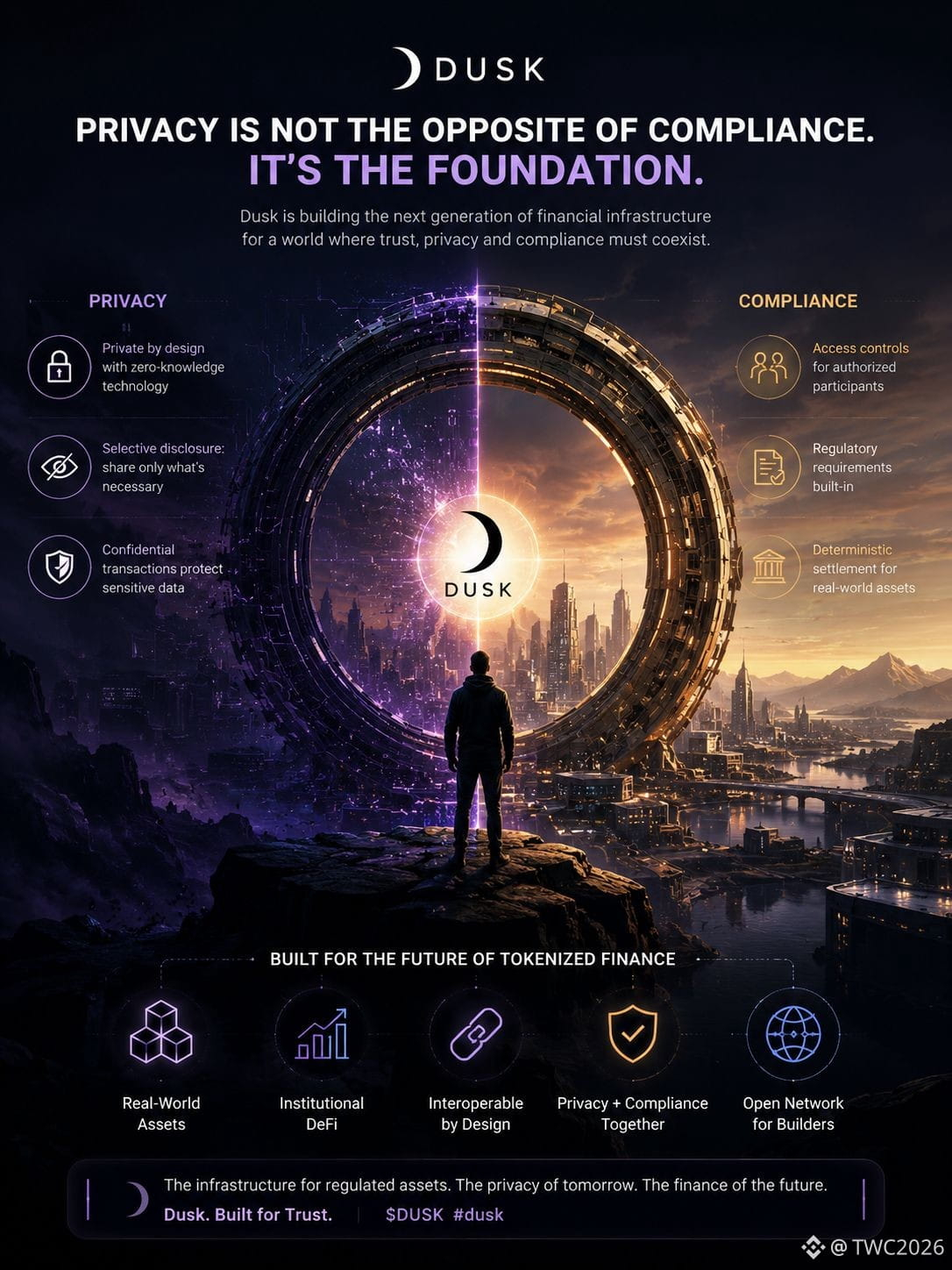
@Dusk يقترب من التمويل المرتبط بسلسلة الكتل من زاوية مختلفة: لا تكمن الفكرة ببساطة في وضع المزيد من الأصول على السلسلة، بل في جعل النشاط المالي الخاضع للتنظيم يعمل دون التضحية بالخصوصية. وبدلًا من النظر إلى الشفافية والسرّية باعتبارهما طرفين متقابلين، يستخدم @Dusk تقنيات تحافظ على الخصوصية والإفصاح الانتقائي وإثباتات المعرفة الصفرية لتمكين الأطراف المصرّح لها من التحقق من المعلومات ذات الصلة دون تعريض كل شيء للعامة.
يصبح ذلك مثيرًا للاهتمام بشكل خاص عندما نفكر في الأصول الواقعية المُمَثَّلة (tokenized real-world assets). قد تحتاج المؤسسات إلى إثبات الملكية أو الأهلية أو الامتثال، بينما لا ينبغي أن تتحول المعلومات المالية الحساسة تلقائيًا إلى مرئية للجميع على شبكة عامة. صُممت بنية Dusk لتحقيق هذا التوازن، عبر دمج المعاملات السرّية، وضوابط الوصول، والتسوية الحتمية لسير عمل الأصول الخاضعة للتنظيم.
جانب آخر مهم هو قابلية التشغيل البيني والقدرة على بناء تطبيقات مالية على بنية تحتية مصممة لتلبية متطلبات العالم الحقيقي. إذا توسعت عملية التمثيل (tokenization) لتتجاوز الأصول المضاربية وبدأت تشمل الأوراق المالية، والصناديق، ومنتجات الائتمان، وغيرها من الأدوات الخاضعة للتنظيم، فستصبح الخصوصية والامتثال أكثر أهمية بكثير.
لهذا أجد أطروحة @Dusk مثيرة للاهتمام. المشروع لا يسعى ببساطة إلى ملاحقة تبنّي البلوك تشين عبر الضجيج؛ بل يركز على مشكلة بنية تحتية صعبة: كيف يمكن للأصول المالية أن تصبح قابلة للبرمجة والتحويل والتحقق على السلسلة مع حماية المعلومات التي ينبغي أن تبقى خاصة؟
إذا كان #Web3 في النهاية سيخدم أسواقًا مالية جادة، فقد تحتاج البنية التحتية الفائزة إلى توفير كلٍّ من الشفافية والسرّية. يعمل @Dusk على الوصول إلى نقطة التقاطع تلك، وسأتابع كيف سيتطور بيئته من هنا. #dusk $DUSK
يصبح ذلك مثيرًا للاهتمام بشكل خاص عندما نفكر في الأصول الواقعية المُمَثَّلة (tokenized real-world assets). قد تحتاج المؤسسات إلى إثبات الملكية أو الأهلية أو الامتثال، بينما لا ينبغي أن تتحول المعلومات المالية الحساسة تلقائيًا إلى مرئية للجميع على شبكة عامة. صُممت بنية Dusk لتحقيق هذا التوازن، عبر دمج المعاملات السرّية، وضوابط الوصول، والتسوية الحتمية لسير عمل الأصول الخاضعة للتنظيم.
جانب آخر مهم هو قابلية التشغيل البيني والقدرة على بناء تطبيقات مالية على بنية تحتية مصممة لتلبية متطلبات العالم الحقيقي. إذا توسعت عملية التمثيل (tokenization) لتتجاوز الأصول المضاربية وبدأت تشمل الأوراق المالية، والصناديق، ومنتجات الائتمان، وغيرها من الأدوات الخاضعة للتنظيم، فستصبح الخصوصية والامتثال أكثر أهمية بكثير.
لهذا أجد أطروحة @Dusk مثيرة للاهتمام. المشروع لا يسعى ببساطة إلى ملاحقة تبنّي البلوك تشين عبر الضجيج؛ بل يركز على مشكلة بنية تحتية صعبة: كيف يمكن للأصول المالية أن تصبح قابلة للبرمجة والتحويل والتحقق على السلسلة مع حماية المعلومات التي ينبغي أن تبقى خاصة؟
إذا كان #Web3 في النهاية سيخدم أسواقًا مالية جادة، فقد تحتاج البنية التحتية الفائزة إلى توفير كلٍّ من الشفافية والسرّية. يعمل @Dusk على الوصول إلى نقطة التقاطع تلك، وسأتابع كيف سيتطور بيئته من هنا. #dusk $DUSK