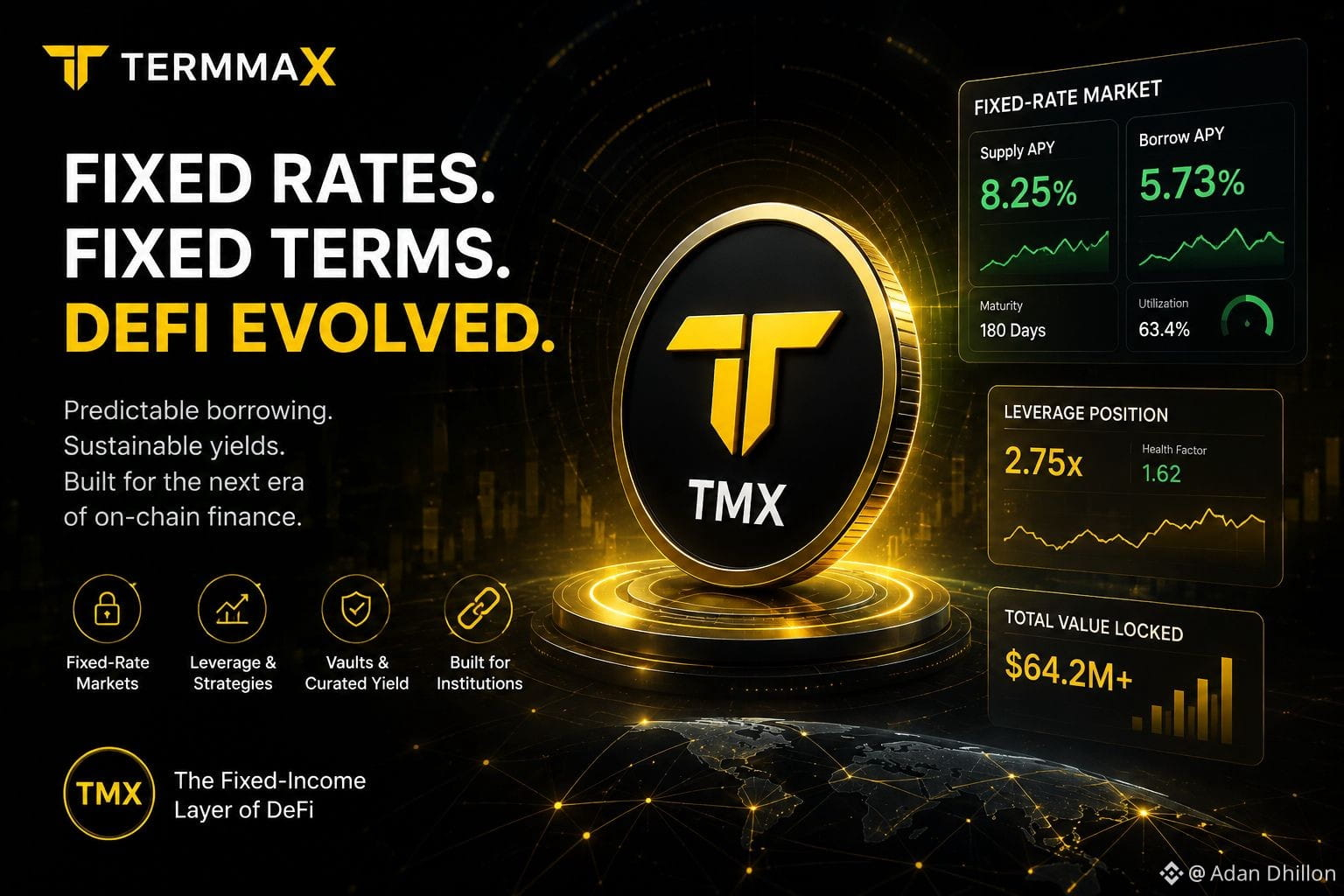
At first I assumed TermMax’s fixed-rate model was mostly about removing uncertainty for borrowers and lenders. But the more I looked, the more interesting the unused liquidity became. The whitepaper describes a design where idle funds can be deployed into external floating-rate markets such as Aave, Morpho, and Venus rather than simply remaining inactive. What caught my attention is the boundary this creates. The user-facing position can be fixed-rate, while some of the capital supporting that market is still exposed to variable-rate conditions elsewhere. So the fixed-rate promise does not mean the whole system has escaped floating rates. It means that exposure has been moved to another part of the architecture. That seems like a reasonable way to keep capital working, but it also leaves TermMax depending on external protocols, their liquidity, and their own risk assumptions. Maybe that dependency is unavoidable when fixed-term markets need efficient capital utilization. Which leaves the quieter question: how much fixed-rate stability can exist when the liquidity underneath still lives in variable-rate DeFi?
#termmax @TermMax $MUBARAK
#termmax @TermMax $MUBARAK