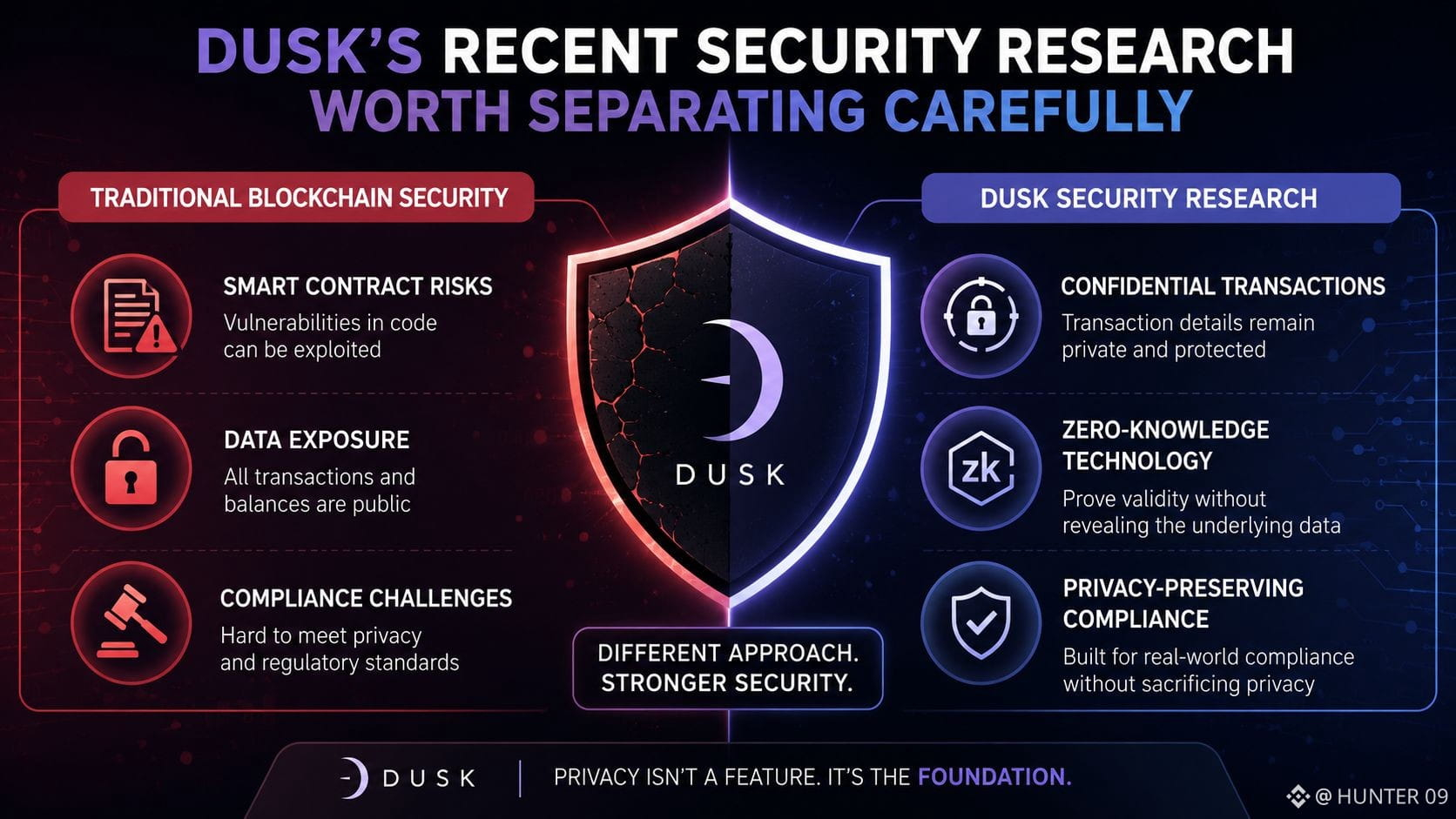

أعود دائمًا إلى سؤال واحد أثناء التعمق في Dusk: هل يمكن للتمويل المُرقمن (tokenized finance) أن يتوسع فعلًا إذا كانت كل معاملة شفافة تمامًا؟
لهذا لفتت انتباهي عقود الأمان السرّية (XSC). بدلًا من إجبار المؤسسات على الاختيار بين الامتثال والخصوصية، تحاول Dusk الجمع بين الاثنين داخل البيئة نفسها.
ما لفتني لم يكن مجرد التقنية. بل كانت الفكرة التي تقول إن الأصول الخاضعة للرقابة قد تتحرك أخيرًا على السلسلة (onchain) دون كشف بيانات حساسة للجميع.
الخصوصية تبدو رائعة من الناحية النظرية، لكن عامل التبني هو الأهم. هل يستطيع المطورون البناء حولها؟ هل ستثق المؤسسات المالية ببنية بلوكشين جديدة؟ وهل يمكن أن تتعايش السرّية مع قابلية التدقيق دون خلق تعقيد غير ضروري؟
تبدو هذه الفكرة أقوى من معظم سرديات “التعميم” التي كنت أتابعها مؤخرًا، لكن التنفيذ هو الذي سيحدد كل شيء.
#dusk @Dusk $DUSK
لهذا لفتت انتباهي عقود الأمان السرّية (XSC). بدلًا من إجبار المؤسسات على الاختيار بين الامتثال والخصوصية، تحاول Dusk الجمع بين الاثنين داخل البيئة نفسها.
ما لفتني لم يكن مجرد التقنية. بل كانت الفكرة التي تقول إن الأصول الخاضعة للرقابة قد تتحرك أخيرًا على السلسلة (onchain) دون كشف بيانات حساسة للجميع.
الخصوصية تبدو رائعة من الناحية النظرية، لكن عامل التبني هو الأهم. هل يستطيع المطورون البناء حولها؟ هل ستثق المؤسسات المالية ببنية بلوكشين جديدة؟ وهل يمكن أن تتعايش السرّية مع قابلية التدقيق دون خلق تعقيد غير ضروري؟
تبدو هذه الفكرة أقوى من معظم سرديات “التعميم” التي كنت أتابعها مؤخرًا، لكن التنفيذ هو الذي سيحدد كل شيء.
#dusk @Dusk $DUSK