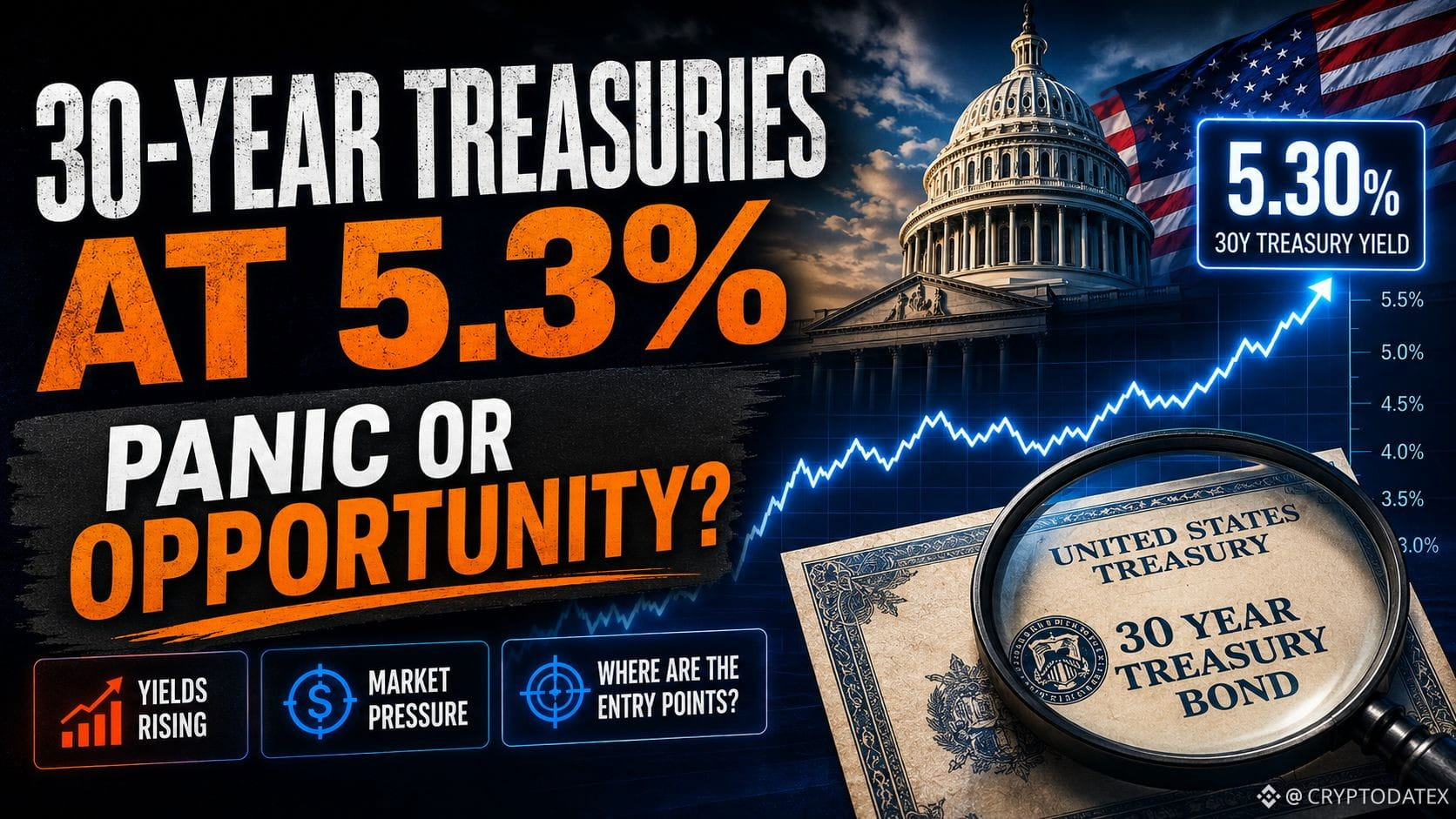
مزاد الـ30 عامًا «الفاشل» الذي يهلع الجميع بسببه؟ التاريخ يقول إنه ترتيب مُعد مسبقًا، لا تحذير. 📉
الأسبوع الماضي باعت الولايات المتحدة سندات مدتها 30 عامًا بقيمة 25 مليار دولار عند 5.216% — أعلى مستوى منذ 2001. لنستمع إلى الجوقة المعتادة: الدين غير مستدام، لا أحد يشتري، والعوائد تتجه للأعلى بشكل عمودي.
لننظر وراء العناوين.
نسبة العطاء إلى التغطية: 2.39 مقابل 2.43 متوسط — أضعف قليلًا، لكن ليس مكسورًا. المشترون الأجانب: 66.8% مقابل 67% كالمعتاد — دون تغيير تقريبًا. الهبوط الحقيقي الوحيد كان الطلب المحلي (21.6% مقابل 22.5%)، لذلك امتصّ التجار (الديلرز) 11.6% بدلًا من 10.6%. مزاد ضعيف — وليس إضرابًا من المشترين.
والآن النمط الذي يهم فعلًا 👇
كل مرة تبلغ فيها مخاوف السندات ذروتها، فإنها غالبًا ما تشير إلى القاع — لا بداية الهبوط:
2011: تخفيضات S&P لدرجة الولايات المتحدة، والجميع يتوقع ارتفاع العوائد الطويلة → العوائد انخفضت.
نوفمبر 2023: «أسوأ مزاد منذ سنوات» → الطرف الطويل تعافى/ارتفع بعد يومين.1994: «مذبحة السندات الكبرى»، عوائد الـ10 سنوات إلى 8%، وخسارة ~1 تريليون دولار، إفلاس Orange County → عادت إلى أقل من 6% بحلول نهاية 1995.
استمر «أقصى ألم» في كونه القمة دائمًا.
لماذا؟ لأن منحنى العائد يُسعّر توقعات الاقتصاد — وليس حجم الدين أو حجم ضجيج العناوين. والآن سوق العمل يتشقق، ويبدو أن التضخم تحت السيطرة، وتوقعات خفض الفائدة تحولت من ثلاث زيادات إلى خفض واحد فقط هذا العام. هذا نمط «تباطؤ الاقتصاد» حرفيًّا — حيث تكسب المدة الطويلة. 🎯
فوق 5% على الـ30 عامًا، أنت تثبّت عائدًا حقيقيًا لم تره منذ 15 عامًا (هذا السند دفع 2.5% قبل عقد). إذا انعطف الاحتياطي الفيدرالي، سيؤدي الطرف الطويل أداءً جيدًا. وإذا عاد التضخم للارتفاع، ستجلس على كوبون 5%+ وتنتظر.
إذن السؤال: إذا كانت العوائد قريبة من القمة وتبدأ بالهبوط، ماذا يحدث للأسهم والـكريبتو خلال إعادة تسعير أجواء الائتمان؟
#TreasuriesRising #Macro #BondMarkets #CryptoMacro #FederalReserve
الأسبوع الماضي باعت الولايات المتحدة سندات مدتها 30 عامًا بقيمة 25 مليار دولار عند 5.216% — أعلى مستوى منذ 2001. لنستمع إلى الجوقة المعتادة: الدين غير مستدام، لا أحد يشتري، والعوائد تتجه للأعلى بشكل عمودي.
لننظر وراء العناوين.
نسبة العطاء إلى التغطية: 2.39 مقابل 2.43 متوسط — أضعف قليلًا، لكن ليس مكسورًا. المشترون الأجانب: 66.8% مقابل 67% كالمعتاد — دون تغيير تقريبًا. الهبوط الحقيقي الوحيد كان الطلب المحلي (21.6% مقابل 22.5%)، لذلك امتصّ التجار (الديلرز) 11.6% بدلًا من 10.6%. مزاد ضعيف — وليس إضرابًا من المشترين.
والآن النمط الذي يهم فعلًا 👇
كل مرة تبلغ فيها مخاوف السندات ذروتها، فإنها غالبًا ما تشير إلى القاع — لا بداية الهبوط:
2011: تخفيضات S&P لدرجة الولايات المتحدة، والجميع يتوقع ارتفاع العوائد الطويلة → العوائد انخفضت.
نوفمبر 2023: «أسوأ مزاد منذ سنوات» → الطرف الطويل تعافى/ارتفع بعد يومين.1994: «مذبحة السندات الكبرى»، عوائد الـ10 سنوات إلى 8%، وخسارة ~1 تريليون دولار، إفلاس Orange County → عادت إلى أقل من 6% بحلول نهاية 1995.
استمر «أقصى ألم» في كونه القمة دائمًا.
لماذا؟ لأن منحنى العائد يُسعّر توقعات الاقتصاد — وليس حجم الدين أو حجم ضجيج العناوين. والآن سوق العمل يتشقق، ويبدو أن التضخم تحت السيطرة، وتوقعات خفض الفائدة تحولت من ثلاث زيادات إلى خفض واحد فقط هذا العام. هذا نمط «تباطؤ الاقتصاد» حرفيًّا — حيث تكسب المدة الطويلة. 🎯
فوق 5% على الـ30 عامًا، أنت تثبّت عائدًا حقيقيًا لم تره منذ 15 عامًا (هذا السند دفع 2.5% قبل عقد). إذا انعطف الاحتياطي الفيدرالي، سيؤدي الطرف الطويل أداءً جيدًا. وإذا عاد التضخم للارتفاع، ستجلس على كوبون 5%+ وتنتظر.
إذن السؤال: إذا كانت العوائد قريبة من القمة وتبدأ بالهبوط، ماذا يحدث للأسهم والـكريبتو خلال إعادة تسعير أجواء الائتمان؟
#TreasuriesRising #Macro #BondMarkets #CryptoMacro #FederalReserve