
كنت أعتقد أن التجزئة/التقطيع إلى رموز كانت هي الحل. ضع كل أصل حقيقي على السلسلة، وفجأة يصبح كل شيء سائلًا ويمكن الوصول إليه.
ثم نظرت إلى الأرقام.
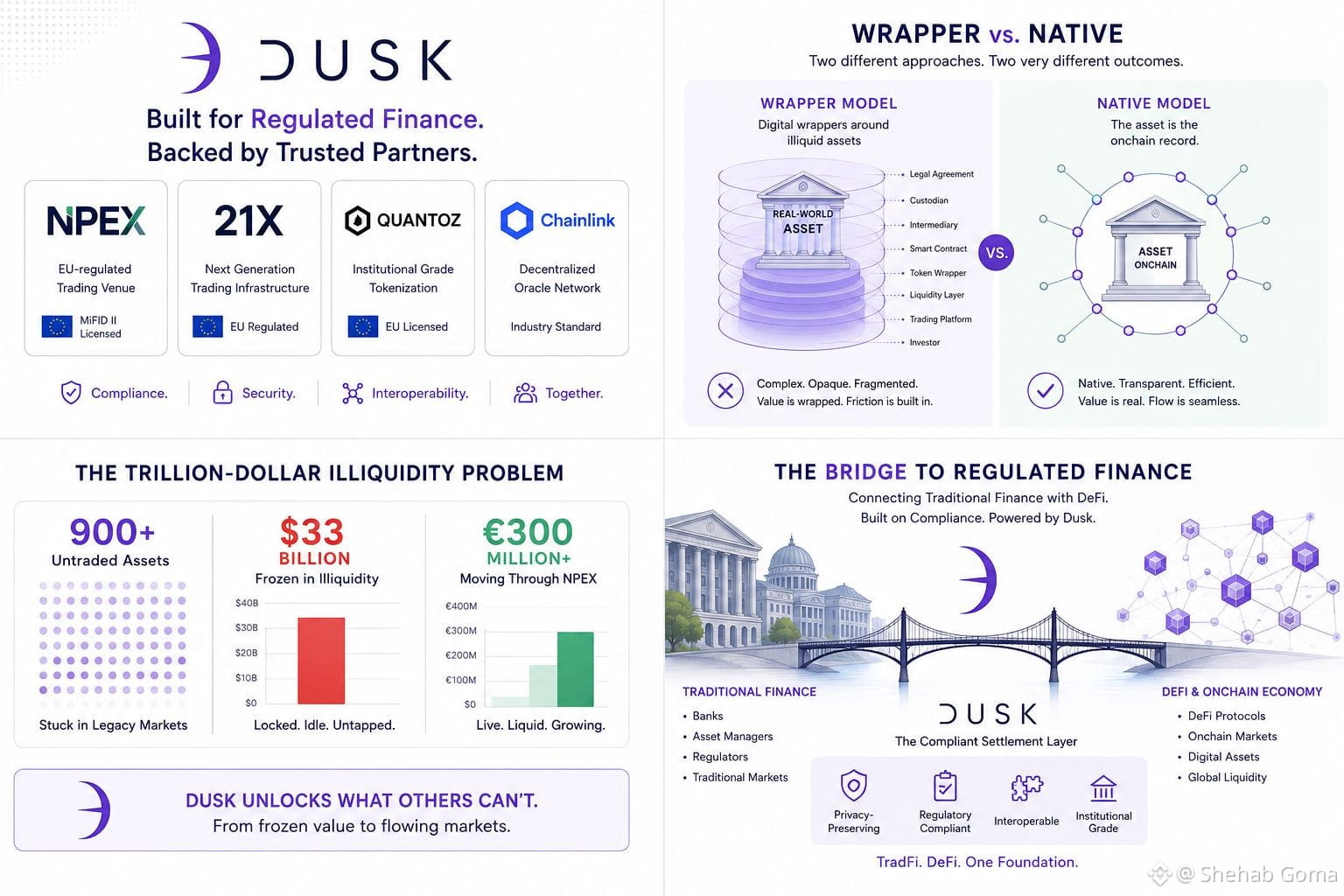
لكل دولار من القيمة المُرمّزة التي يمكنك فعلًا التداول بها، يوجد تقريبًا 10 دولارات تتكدّس هناك كإيصال رقمي. ووفقًا لبيانات RWA.xyz، فإن أكثر من 900 من أصل 1300 أصل لم تُجرِ أي صفقة طوال أسبوع كامل. هذا يعني 33 مليار دولار متجمّدة.
لم تُحلّ التجزئة مشكلة السيولة. بل إنها لم تخلق سوى أغلفة رقمية للأصول غير السائلة.
المشكلة الحقيقية لم تكن أبدًا في وضع الأصول على السلسلة. بل كانت في جعلها قابلة للتداول فعلًا—مع حسم قانوني نهائي، واستيعاب الامتثال من الأساس، وتسوية تُحسب.
@Dusk تتبع نهجًا مختلفًا. من خلال NPEX، وهي بورصة مُنظّمة من قبل هيئة AFM الهولندية، فهم يُدخلون أكثر من 300 مليون يورو من الأوراق المالية المُرمّزة إلى السلسلة. أسهم وسندات حقيقية، تُسوى خلال ثوانٍ بدلًا من أيام. ومن خلال 21X، يتم دمج التداول والتسوية في إجراء ذري واحد—معترف به بموجب قانون الاتحاد الأوروبي.
Quantoz يوفر أصل التسوية: EURQ، وهو يورو رقمي متوافق مع MiCA. نقود ورقية منظّمة، على السلسلة.
البنية التحتية موجودة. والنشاط يشير إلى أنها تلقى صدى—فبروتوكول التخزين السائل sozu لدى Dusk يمتلك بالفعل أكثر من 26 مليون دولار من الأصول المرهونة. هذه مشاركة حقيقية، وليست مجرد مضاربة.
لذلك إذا كانت التجزئة/الترميز كان يفترض أن يفتح السيولة، فلماذا لا يزال أغلب الأصول المُرمّزة يتداول بشكل ضعيف؟
ربما لأننا ركّزنا على تغليف الأصول بدلًا من إعادة بناء بنية تسوية قابلة للاستخدام. #dusk يبني شيئًا يمكن للجهات التنظيمية العمل معه فعليًا.
ما الشيء الواحد الذي يعيق قطاعك عن الانتقال إلى السلسلة؟
$DUSK
ثم نظرت إلى الأرقام.
لكل دولار من القيمة المُرمّزة التي يمكنك فعلًا التداول بها، يوجد تقريبًا 10 دولارات تتكدّس هناك كإيصال رقمي. ووفقًا لبيانات RWA.xyz، فإن أكثر من 900 من أصل 1300 أصل لم تُجرِ أي صفقة طوال أسبوع كامل. هذا يعني 33 مليار دولار متجمّدة.
لم تُحلّ التجزئة مشكلة السيولة. بل إنها لم تخلق سوى أغلفة رقمية للأصول غير السائلة.
المشكلة الحقيقية لم تكن أبدًا في وضع الأصول على السلسلة. بل كانت في جعلها قابلة للتداول فعلًا—مع حسم قانوني نهائي، واستيعاب الامتثال من الأساس، وتسوية تُحسب.
@Dusk تتبع نهجًا مختلفًا. من خلال NPEX، وهي بورصة مُنظّمة من قبل هيئة AFM الهولندية، فهم يُدخلون أكثر من 300 مليون يورو من الأوراق المالية المُرمّزة إلى السلسلة. أسهم وسندات حقيقية، تُسوى خلال ثوانٍ بدلًا من أيام. ومن خلال 21X، يتم دمج التداول والتسوية في إجراء ذري واحد—معترف به بموجب قانون الاتحاد الأوروبي.
Quantoz يوفر أصل التسوية: EURQ، وهو يورو رقمي متوافق مع MiCA. نقود ورقية منظّمة، على السلسلة.
البنية التحتية موجودة. والنشاط يشير إلى أنها تلقى صدى—فبروتوكول التخزين السائل sozu لدى Dusk يمتلك بالفعل أكثر من 26 مليون دولار من الأصول المرهونة. هذه مشاركة حقيقية، وليست مجرد مضاربة.
لذلك إذا كانت التجزئة/الترميز كان يفترض أن يفتح السيولة، فلماذا لا يزال أغلب الأصول المُرمّزة يتداول بشكل ضعيف؟
ربما لأننا ركّزنا على تغليف الأصول بدلًا من إعادة بناء بنية تسوية قابلة للاستخدام. #dusk يبني شيئًا يمكن للجهات التنظيمية العمل معه فعليًا.
ما الشيء الواحد الذي يعيق قطاعك عن الانتقال إلى السلسلة؟
$DUSK