
واصلتُ النظر إلى استثمار <span>@TermMax Alpha</span> المزدوج، وبرزت لي تناقضٌ واحد أكثر من العائد السنوي (APY).
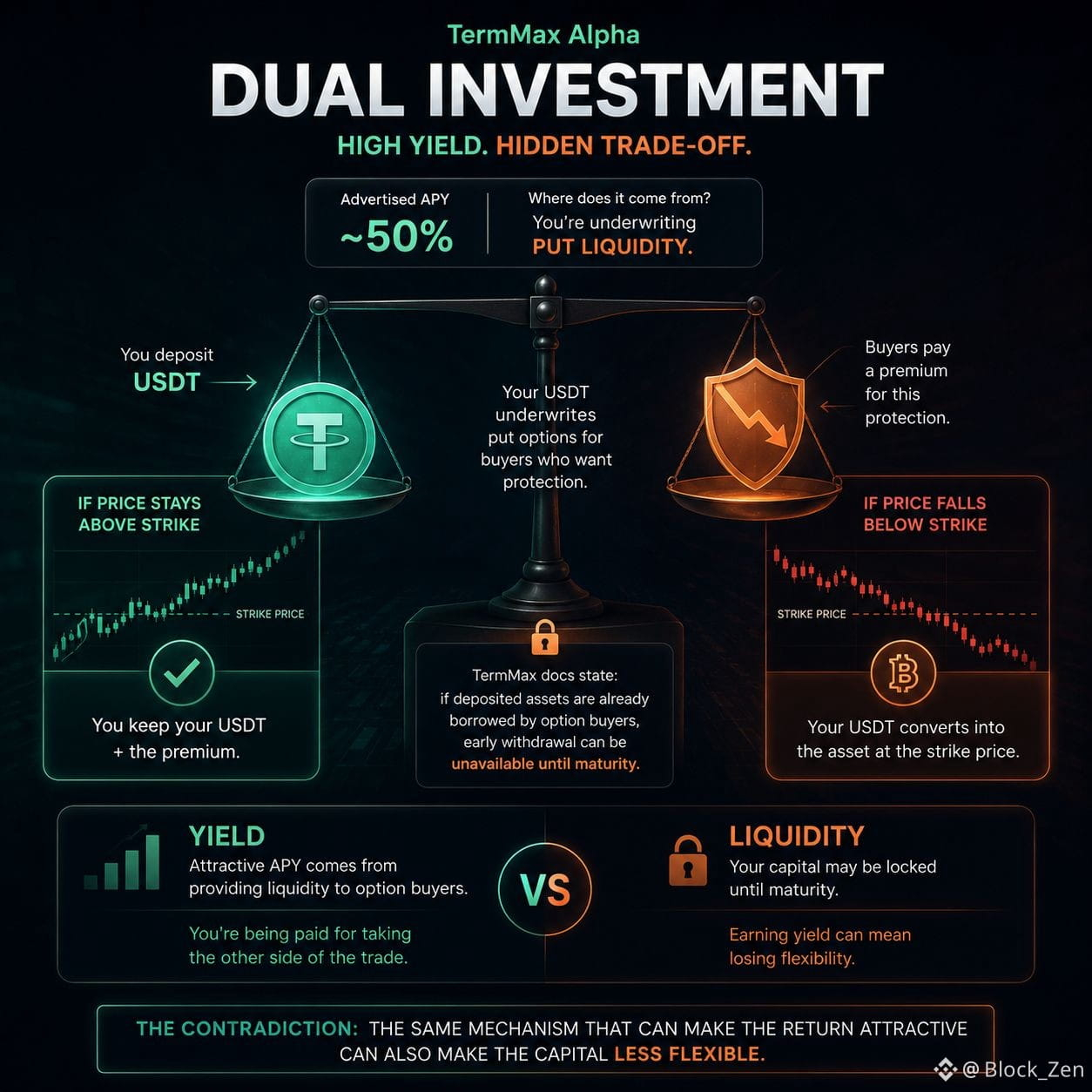
تُعلن الواجهة الحالية عن عوائد تقارب 50%، لكن الجزء الأكثر إثارةً لاهتمامي هو مصدر هذا العائد: أموالك من USDT تُستخدم عمليًا لتغطية سيولة عقود البيع (put).
إذا بقي السعر فوق سعر التنفيذ، فإنك تحتفظ بـ USDT والعلاوة. وإذا انخفض إلى ما دون سعر التنفيذ، يمكن أن يتحول USDT إلى الأصل بسعر التنفيذ الذي اخترته.
لذا فإن العائد المغري يأتي مع شرطٍ أقل وضوحًا: قد لا تبقى سيولتك سائلة بالكامل.
تقول وثائق TermMax إنه عندما تكون الأصول المودعة مُقترضة بالفعل من قِبل مشترَي الخيارات، فقد لا تتاح عمليات السحب المبكر حتى حلول الاستحقاق.
وهذا يغيّر طريقة تفكيري في المنتج.
إن العائد السنوي (APY) لا يدفع لك فعليًا فقط مقابل ركن USDT. بل أنت تُعوَّض مقابل إتاحة هذه السيولة لشخصٍ يتخذ الجهة الأخرى من عقد الخيار.
وإذا تحرك السوق بقوة، فإن هذا الفارق يصبح مهمًا.
قد تجني أرباحًا بينما تصبح في الوقت نفسه أقل مرونةً في رأس المال.
أنا مهتم بمعرفة ما إذا كان المستخدمون سيُقدّرون هذا المقايضة عندما يتوقف العائد السنوي الظاهر على العنوان عن كونه عامل الجذب الرئيسي.
التناقض الأساسي هنا هو العائد مقابل السيولة: الآلية نفسها التي يمكن أن تجعل العائد مغريًا قد تجعل رأس المال أيضًا أقل مرونة.
@TermMax #termmax
تُعلن الواجهة الحالية عن عوائد تقارب 50%، لكن الجزء الأكثر إثارةً لاهتمامي هو مصدر هذا العائد: أموالك من USDT تُستخدم عمليًا لتغطية سيولة عقود البيع (put).
إذا بقي السعر فوق سعر التنفيذ، فإنك تحتفظ بـ USDT والعلاوة. وإذا انخفض إلى ما دون سعر التنفيذ، يمكن أن يتحول USDT إلى الأصل بسعر التنفيذ الذي اخترته.
لذا فإن العائد المغري يأتي مع شرطٍ أقل وضوحًا: قد لا تبقى سيولتك سائلة بالكامل.
تقول وثائق TermMax إنه عندما تكون الأصول المودعة مُقترضة بالفعل من قِبل مشترَي الخيارات، فقد لا تتاح عمليات السحب المبكر حتى حلول الاستحقاق.
وهذا يغيّر طريقة تفكيري في المنتج.
إن العائد السنوي (APY) لا يدفع لك فعليًا فقط مقابل ركن USDT. بل أنت تُعوَّض مقابل إتاحة هذه السيولة لشخصٍ يتخذ الجهة الأخرى من عقد الخيار.
وإذا تحرك السوق بقوة، فإن هذا الفارق يصبح مهمًا.
قد تجني أرباحًا بينما تصبح في الوقت نفسه أقل مرونةً في رأس المال.
أنا مهتم بمعرفة ما إذا كان المستخدمون سيُقدّرون هذا المقايضة عندما يتوقف العائد السنوي الظاهر على العنوان عن كونه عامل الجذب الرئيسي.
التناقض الأساسي هنا هو العائد مقابل السيولة: الآلية نفسها التي يمكن أن تجعل العائد مغريًا قد تجعل رأس المال أيضًا أقل مرونة.
@TermMax #termmax