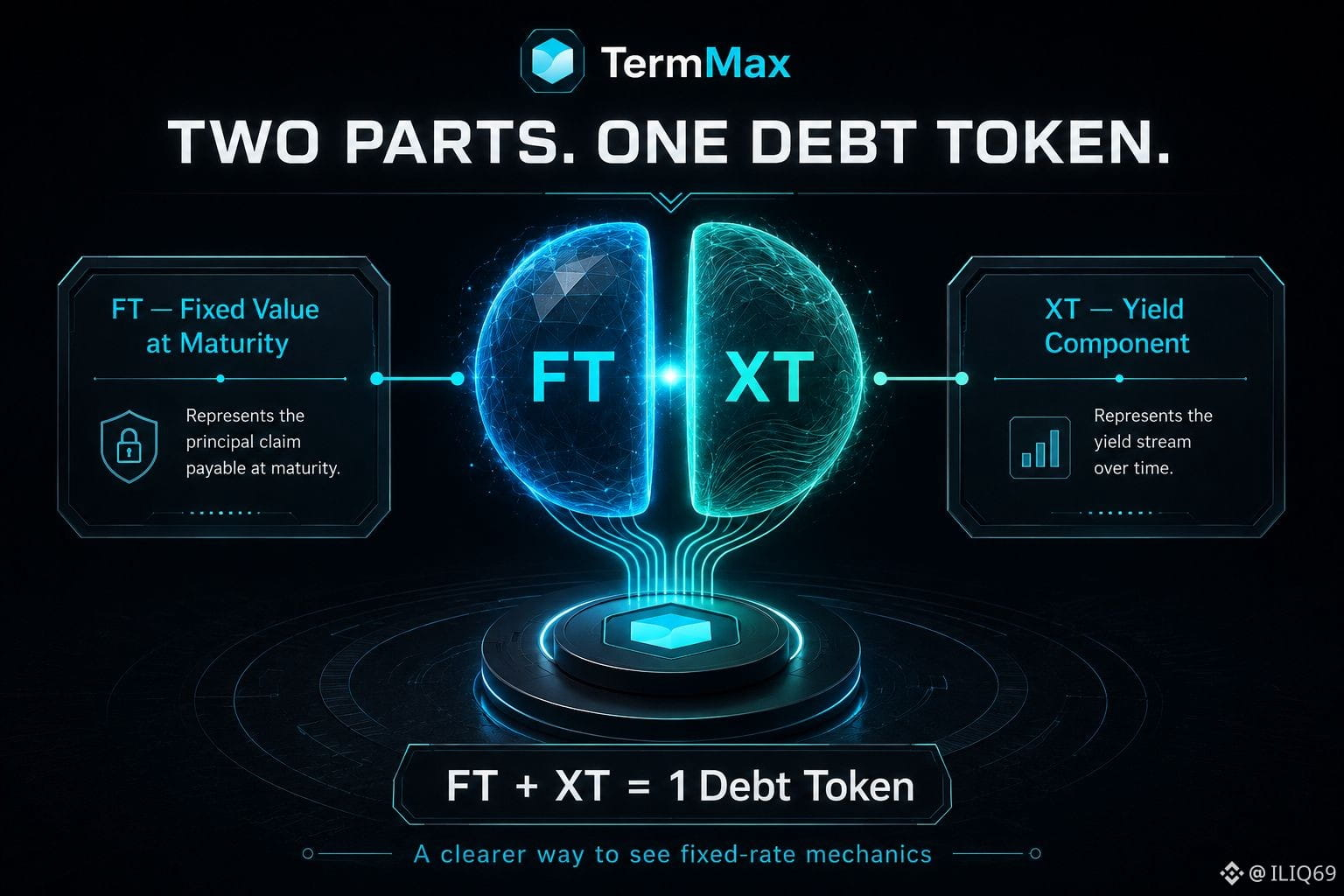
The FT and XT structure on @TermMax looked technical to me at first. Then I stopped trying to memorize acronyms and used a simpler mental model.
One debt token can be represented by two connected pieces: FT + XT. The FT carries the fixed-value claim at maturity, while XT represents the other side of that value before maturity. Together, they make the original debt token whole.
I like systems that make the economics visible instead of hiding everything inside one black-box balance. It does not remove risk or make the process “easy money,” but it gives lenders and borrowers a clearer way to see how fixed yield and borrowing cost are formed.
Which part of the FT + XT model would you want explained with a real example?
@TermMax #TermMax
One debt token can be represented by two connected pieces: FT + XT. The FT carries the fixed-value claim at maturity, while XT represents the other side of that value before maturity. Together, they make the original debt token whole.
I like systems that make the economics visible instead of hiding everything inside one black-box balance. It does not remove risk or make the process “easy money,” but it gives lenders and borrowers a clearer way to see how fixed yield and borrowing cost are formed.
Which part of the FT + XT model would you want explained with a real example?
@TermMax #TermMax
How FT earns yield
0%
What XT represents
0%
Why they equal one asset
0%
The borrower flow
0%
0 الأصوات • تمّ إغلاق التصويت