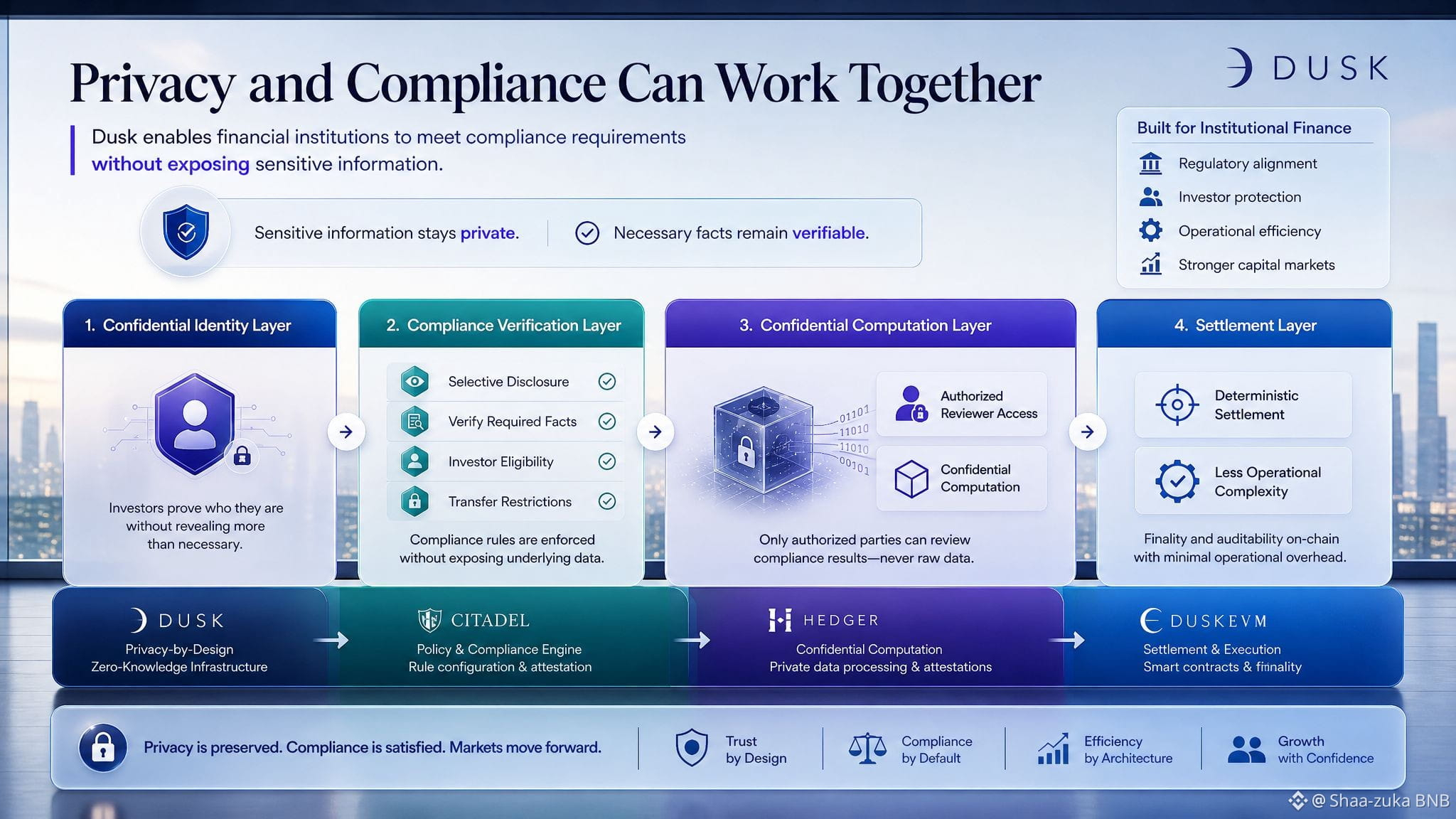
شيء واحد أعود إليه باستمرار مع Dusk هو أن الخصوصية والامتثال ليستا في الواقع نقيضين.
كنت أظن سابقًا أن التمويل الخاضع للتنظيم سيتطلب دائمًا شفافية أكبر.
لكن بعد ذلك فكرت في معنى الامتثال فعلًا.
قد يحتاج المنظم إلى معلومات معيّنة.
قد يحتاج المُصدِر إلى التحقق من الأهلية.
قد يحتاج مكان التداول إلى قيود على التحويل.
لكن كل هذا لا يعني تلقائيًا أن كل مشارك يحتاج إلى رؤية كل شيء.
وهنا تصبح مقاربة Dusk للإفصاح الانتقائي مثيرة لاهتمامي.
بدلًا من التعامل مع الخصوصية على أنها:
إخفاء كامل الصفقة
فالنموذج أقرب إلى:
إبقاء المعلومات الحساسة سرّية مع جعل الوقائع المطلوبة قابلة للتحقق.
يبدو ذلك كفارق بسيط.
لكن بالنسبة للأوراق المالية، لا أعتقد أنه كذلك.
تخيّل إثبات أن المستثمر يستوفي شرط الأهلية دون تعريض معلومات شخصية غير ذات صلة بشكل غير ضروري.
أو السماح لمراجعٍ مخوّل بالاطلاع على معلومات ليست مرئية للعامة.
عندها تصبح الخصوصية جزءًا من بنية الامتثال بدل أن تكون شيئًا يُلصق لاحقًا.
تتناول Citadel جانب الهوية وإدارة الوصول.
ويجلب Hedger الحوسبة السرّية إلى Dusk EVM.
والشبكة الأساسية توفر تسويةً حتمية.
ما زلت مهتمًا برؤية كيف يتصرف ذلك في مسارات عمل مؤسسية أكثر تعقيدًا.
لأن الاختبار الحقيقي ليس ما إذا كانت الخصوصية تعمل بمعزل عن غيرها.
بل ما إذا كانت الخصوصية والامتثال والتسوية يمكن أن تعمل معًا دون خلق طبقة إضافية من التعقيد التشغيلي.
هذه هي مشكلة Dusk التي أجدها الأكثر إثارة للاهتمام في الوقت الحالي.
#dusk $DUSK @Dusk
كنت أظن سابقًا أن التمويل الخاضع للتنظيم سيتطلب دائمًا شفافية أكبر.
لكن بعد ذلك فكرت في معنى الامتثال فعلًا.
قد يحتاج المنظم إلى معلومات معيّنة.
قد يحتاج المُصدِر إلى التحقق من الأهلية.
قد يحتاج مكان التداول إلى قيود على التحويل.
لكن كل هذا لا يعني تلقائيًا أن كل مشارك يحتاج إلى رؤية كل شيء.
وهنا تصبح مقاربة Dusk للإفصاح الانتقائي مثيرة لاهتمامي.
بدلًا من التعامل مع الخصوصية على أنها:
إخفاء كامل الصفقة
فالنموذج أقرب إلى:
إبقاء المعلومات الحساسة سرّية مع جعل الوقائع المطلوبة قابلة للتحقق.
يبدو ذلك كفارق بسيط.
لكن بالنسبة للأوراق المالية، لا أعتقد أنه كذلك.
تخيّل إثبات أن المستثمر يستوفي شرط الأهلية دون تعريض معلومات شخصية غير ذات صلة بشكل غير ضروري.
أو السماح لمراجعٍ مخوّل بالاطلاع على معلومات ليست مرئية للعامة.
عندها تصبح الخصوصية جزءًا من بنية الامتثال بدل أن تكون شيئًا يُلصق لاحقًا.
تتناول Citadel جانب الهوية وإدارة الوصول.
ويجلب Hedger الحوسبة السرّية إلى Dusk EVM.
والشبكة الأساسية توفر تسويةً حتمية.
ما زلت مهتمًا برؤية كيف يتصرف ذلك في مسارات عمل مؤسسية أكثر تعقيدًا.
لأن الاختبار الحقيقي ليس ما إذا كانت الخصوصية تعمل بمعزل عن غيرها.
بل ما إذا كانت الخصوصية والامتثال والتسوية يمكن أن تعمل معًا دون خلق طبقة إضافية من التعقيد التشغيلي.
هذه هي مشكلة Dusk التي أجدها الأكثر إثارة للاهتمام في الوقت الحالي.
#dusk $DUSK @Dusk