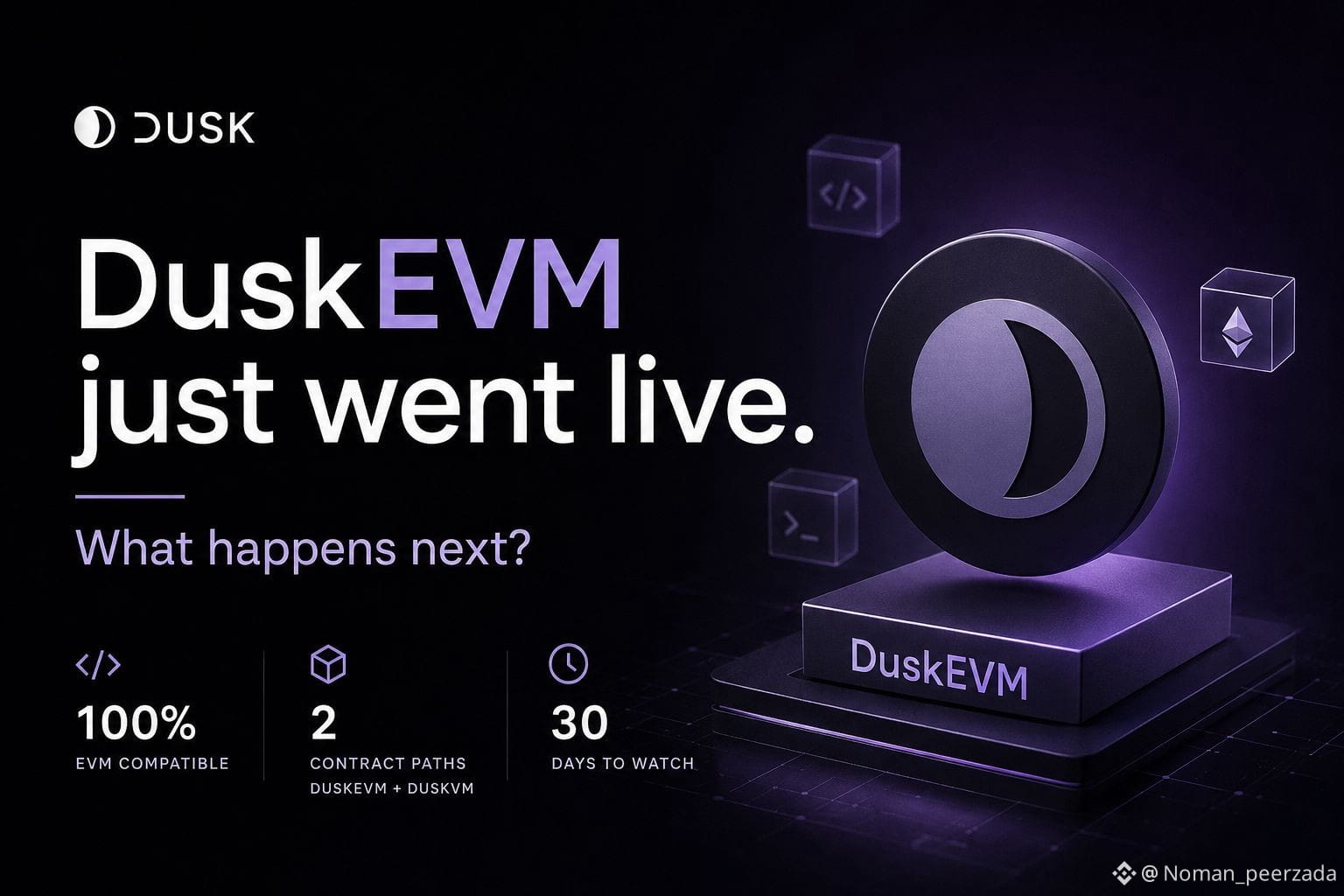

لقد تم إطلاق DuskEVM للتو، لكن الجزء الذي أتابعه ليس هو الإطلاق نفسه.
إنما هو مدى سرعة انتقال أوّل عددٍ من المطورين فعليًا من “أستطيع النشر هنا” إلى “أريد الاستمرار في البناء هنا.”
لقد راقبت إعداد DuskEVM، والاحتكاك الظاهر فيه أقل بكثير من مسار المطورين الأصلي في Dusk. يتم دعم Solidity وVyper، ومن المفترض أن تنتقل أدوات EVM الحالية. وهذا مهم لأن مطالبة المطورين بتعلم بنية جديدة أمر. لكن مطالبتهم بتغيير سير عملهم بالكامل أمر آخر.
لكن التوافق لا يوصلك إلا إلى خط البداية.
لدى Dusk مساران لعقود بالفعل: DuskEVM و DuskVM. لذا تظهر الآن مسألة أكثر عملية: إذا كنت مطورًا لدي تطبيق Solidity موجود، فما الذي يجعلني أختار DuskEVM بدلًا من عشرات الأماكن التي يمكن أن يعمل فيها نفس هذا الكود بالفعل؟
الإجابة ربما لن تأتي من إعلان ميزة أخرى.
بل ستظهر في عمليات النشر الفعلية، ونشاط المحافظ، وتفاعلات العقود، وما إذا كان المطورون يعودون بعد التجربة الأولى.
حتى جانب GitHub يستحق المتابعة. لقد تم تحديث مستودع الإيجينِس العام الخاص بـ DuskEVM في 28 يوليو، ما يدل على أن القطع تتحرك نحو مكانها، لكن نشاط يوم الإطلاق هو اختبار مختلف.
الآن أنا مهتم في الغالب بالأيام الثلاثين الأولى، لأن هذه الفترة إما أن تجعل عبارة “متوافق مع EVM” مفيدة فعلًا، أو تبدأ في أن تبدو كأنها...
@Dusk #dusk $DUSK $DEXE
إنما هو مدى سرعة انتقال أوّل عددٍ من المطورين فعليًا من “أستطيع النشر هنا” إلى “أريد الاستمرار في البناء هنا.”
لقد راقبت إعداد DuskEVM، والاحتكاك الظاهر فيه أقل بكثير من مسار المطورين الأصلي في Dusk. يتم دعم Solidity وVyper، ومن المفترض أن تنتقل أدوات EVM الحالية. وهذا مهم لأن مطالبة المطورين بتعلم بنية جديدة أمر. لكن مطالبتهم بتغيير سير عملهم بالكامل أمر آخر.
لكن التوافق لا يوصلك إلا إلى خط البداية.
لدى Dusk مساران لعقود بالفعل: DuskEVM و DuskVM. لذا تظهر الآن مسألة أكثر عملية: إذا كنت مطورًا لدي تطبيق Solidity موجود، فما الذي يجعلني أختار DuskEVM بدلًا من عشرات الأماكن التي يمكن أن يعمل فيها نفس هذا الكود بالفعل؟
الإجابة ربما لن تأتي من إعلان ميزة أخرى.
بل ستظهر في عمليات النشر الفعلية، ونشاط المحافظ، وتفاعلات العقود، وما إذا كان المطورون يعودون بعد التجربة الأولى.
حتى جانب GitHub يستحق المتابعة. لقد تم تحديث مستودع الإيجينِس العام الخاص بـ DuskEVM في 28 يوليو، ما يدل على أن القطع تتحرك نحو مكانها، لكن نشاط يوم الإطلاق هو اختبار مختلف.
الآن أنا مهتم في الغالب بالأيام الثلاثين الأولى، لأن هذه الفترة إما أن تجعل عبارة “متوافق مع EVM” مفيدة فعلًا، أو تبدأ في أن تبدو كأنها...
@Dusk #dusk $DUSK $DEXE