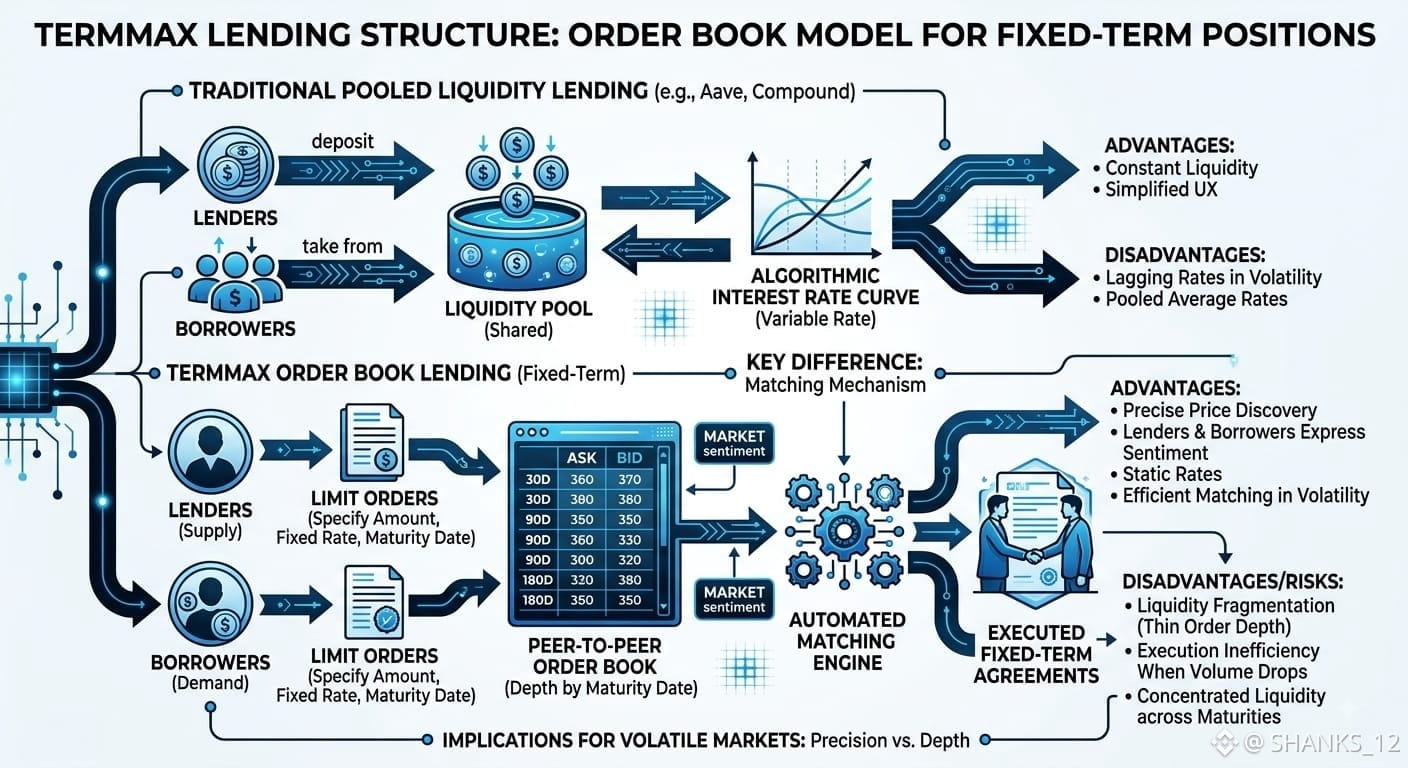
كنت أبحث في هيكل الإقراض لدى TermMax الليلة الماضية، بدافع الفضول إلى حد كبير لمعرفة كيفية تعاملهم مع المراكز ذات المدة الثابتة، وانتهى بي المطاف بالانشغال بنموذج دفتر الأوامر لديهم لفترة أطول مما توقعت. ليس هو الإعداد المعتاد للسيولة المجمعة الذي تستخدمه معظم بروتوكولات الإقراض، وهذا الاختلاف ظل يجذبني للعودة إليه.
ما يبدو مثيرًا للاهتمام هو كيف يتيح TermMax للمقرضين والمقترضين في الأساس أن يطابقوا بعضهم عبر آلية أوامر مُدرجة بدلًا من الاعتماد على منحنيات أسعار خوارزمية فقط. أحيانًا أتساءل إن كان هذا يمنح اكتشاف سعر أكثر دقة للمدد الثابتة، لأن الطرفين يعبران عن توقعاتهما الفعلية بدلًا من قبول متوسط مجمّع. هذا يجعلني أفكر في مقدار ما قد يهم ذلك خلال الفترات المتقلبة، عندما تميل المنحنيات الثابتة في الأنظمة الأخرى إلى أن تتأخر عن المزاج الحقيقي في السوق.
لكن بعد ذلك، يخطر ببالي سؤال: هل يؤدي هذا التصميم إلى تجزئة السيولة عندما يكون عمق الأوامر ضعيفًا؟ من زاوية المراقب من الخارج، يبدو نظام قائم على الأوامر أنيقًا من حيث المبدأ، لكنني لست متأكدًا تمامًا من كيفية تصرفه عندما ينخفض حجم التداول أو عندما يهيمن عدد قليل من المشاركين الكبار على عملية المطابقة. هل يمكن أن يخلق ذلك لحظات تصبح فيها عمليات التنفيذ بسعر ثابت غير كفؤة رغم أن المنطق الأساسي سليم؟
هناك أيضًا قدر أعمق من عدم اليقين حول كيفية موازنة TermMax بين هذه الدقة والحجم. السؤال الذي يطرح نفسه هو ما إذا كانت السيولة العميقة ستتكوّن باستمرار عبر عدة آجال استحقاق، أم إذا كان النمو المبكر سيظل مركزًا في عدد قليل من الأزواج المهيمنة. لا أعتقد أن أي شخص خارج الفريق الأساسي يستطيع الإجابة عن ذلك بثقة في الوقت الحالي.
ربما الاختبار الحقيقي هو ما إذا كان هذا الهيكل سيصمد عندما تصل مشاركة أوسع من السوق... على أي حال، الوقت سيكشف👍
#TermMax @TermMax
$GPS $STAR $TUT
#ChinaJulyOutputRetailInvestmentAllMiss #CMESeptemberHikeOddsFallTo30.6% #IsraelStrikesLebanonKillsHezbollahCommander #CardanoSplitsDijkstraUpgradeIntoTwoPhases
ما يبدو مثيرًا للاهتمام هو كيف يتيح TermMax للمقرضين والمقترضين في الأساس أن يطابقوا بعضهم عبر آلية أوامر مُدرجة بدلًا من الاعتماد على منحنيات أسعار خوارزمية فقط. أحيانًا أتساءل إن كان هذا يمنح اكتشاف سعر أكثر دقة للمدد الثابتة، لأن الطرفين يعبران عن توقعاتهما الفعلية بدلًا من قبول متوسط مجمّع. هذا يجعلني أفكر في مقدار ما قد يهم ذلك خلال الفترات المتقلبة، عندما تميل المنحنيات الثابتة في الأنظمة الأخرى إلى أن تتأخر عن المزاج الحقيقي في السوق.
لكن بعد ذلك، يخطر ببالي سؤال: هل يؤدي هذا التصميم إلى تجزئة السيولة عندما يكون عمق الأوامر ضعيفًا؟ من زاوية المراقب من الخارج، يبدو نظام قائم على الأوامر أنيقًا من حيث المبدأ، لكنني لست متأكدًا تمامًا من كيفية تصرفه عندما ينخفض حجم التداول أو عندما يهيمن عدد قليل من المشاركين الكبار على عملية المطابقة. هل يمكن أن يخلق ذلك لحظات تصبح فيها عمليات التنفيذ بسعر ثابت غير كفؤة رغم أن المنطق الأساسي سليم؟
هناك أيضًا قدر أعمق من عدم اليقين حول كيفية موازنة TermMax بين هذه الدقة والحجم. السؤال الذي يطرح نفسه هو ما إذا كانت السيولة العميقة ستتكوّن باستمرار عبر عدة آجال استحقاق، أم إذا كان النمو المبكر سيظل مركزًا في عدد قليل من الأزواج المهيمنة. لا أعتقد أن أي شخص خارج الفريق الأساسي يستطيع الإجابة عن ذلك بثقة في الوقت الحالي.
ربما الاختبار الحقيقي هو ما إذا كان هذا الهيكل سيصمد عندما تصل مشاركة أوسع من السوق... على أي حال، الوقت سيكشف👍
#TermMax @TermMax
$GPS $STAR $TUT
#ChinaJulyOutputRetailInvestmentAllMiss #CMESeptemberHikeOddsFallTo30.6% #IsraelStrikesLebanonKillsHezbollahCommander #CardanoSplitsDijkstraUpgradeIntoTwoPhases