@Dusk
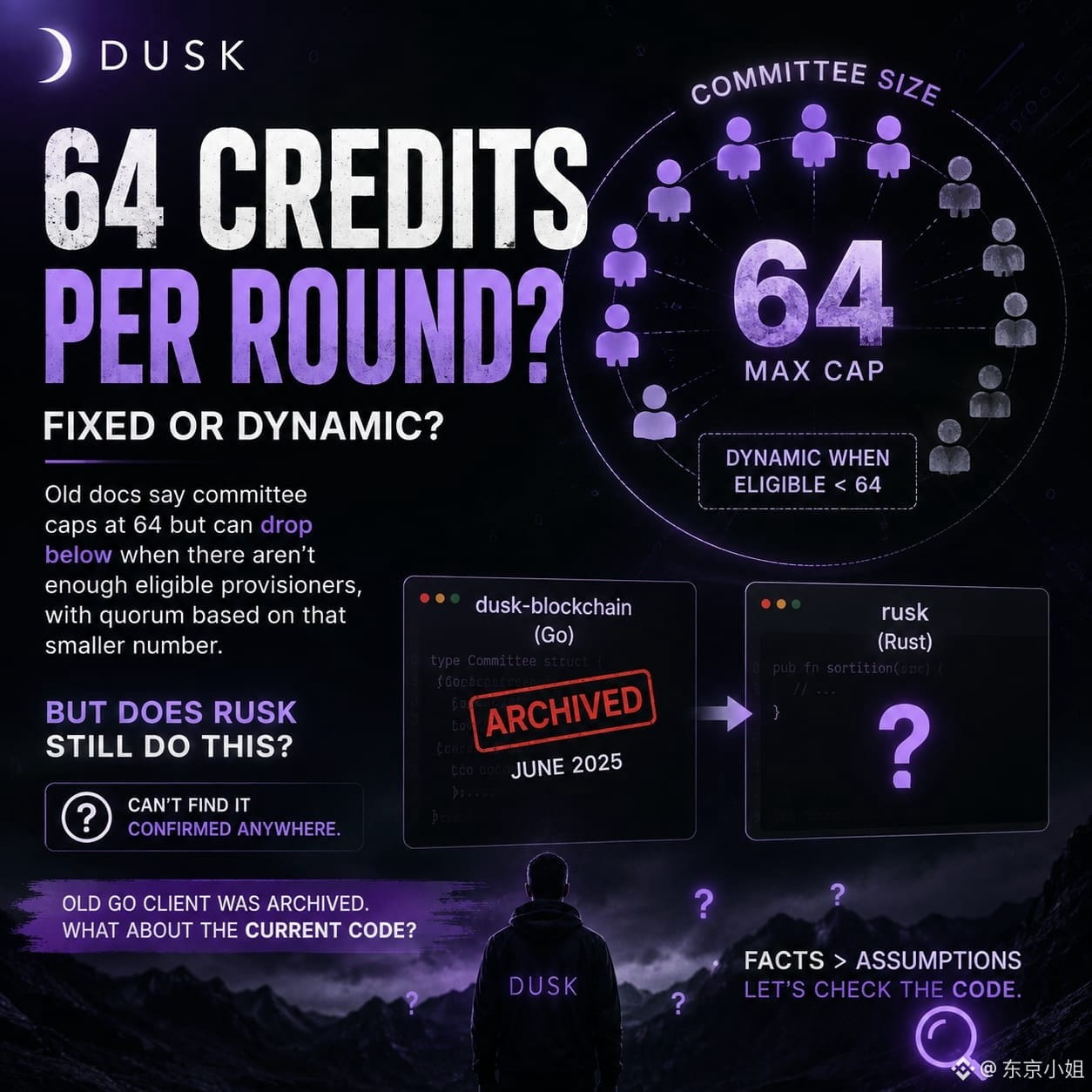
dخلتُ أبحث في كيفية عمل حجم لجنة “الغسق” فعليًا، لأن “64 رصيدًا لكل جولة” يتكرر في كل مكان كأنه ثابت. وجدتُ في مسألة على GitHub وصفًا مختلفًا — فحجم اللجنة يَحده 64، لكنه ينخفض دون ذلك عندما لا توجد إمدادات كافية من المشاركين المؤهلين، كما أن النصاب يُحسب بناءً على هذا العدد الأصغر. باستثناء أنه عندما ذهبتُ لأتحقق من قاعدة الشيفرة التي رُفعت ضدها هذه المسألة، تبيّن أنها تخص dusk-blockchain، عميل golang القديم، وقد تم أرشفته بواسطة فريقه في يونيو 2025.
إذًا كان هذا سلوكًا موثقًا في التنفيذ قبل الإطلاق على الشبكة الرئيسية (pre-mainnet)، وليس بالضرورة ما يعمل الآن — أو لنكن أدق، ليس بالضرورة أنه مختلف الآن، بل إني فعلًا لم أجد أي شيء يمكنه تأكيد ذلك. الشبكة الرئيسية تستخدم rusk (إعادة كتابة كاملة بالصدأ)، وما إذا كانت منطق الاختيار (sortition) من هذا النوع قد نُقل كما هو أو أُعيد تصميمه على طول الطريق ليس شيئًا استطعت التحقق منه.
هذه فجوة محددة بشكل غريب بالنسبة لشبكة متعمقة إلى هذا الحد من حيث الوثائق العامة — فالسلوك التاريخي حقيقي وقابل للتتبع، لكن أي شيء وجدته لا يؤكد ذلك أو ينفيه في قاعدة الشيفرة الحالية.
هل سبق لأي شخص أن تحقّق بالفعل من كود sortition الحالي في rusk؟ أم أن الجميع فقط يكرر سلوك عميل go القديم وكأنه ما زال صحيحًا؟ 🧐
#dusk $DUSK
dخلتُ أبحث في كيفية عمل حجم لجنة “الغسق” فعليًا، لأن “64 رصيدًا لكل جولة” يتكرر في كل مكان كأنه ثابت. وجدتُ في مسألة على GitHub وصفًا مختلفًا — فحجم اللجنة يَحده 64، لكنه ينخفض دون ذلك عندما لا توجد إمدادات كافية من المشاركين المؤهلين، كما أن النصاب يُحسب بناءً على هذا العدد الأصغر. باستثناء أنه عندما ذهبتُ لأتحقق من قاعدة الشيفرة التي رُفعت ضدها هذه المسألة، تبيّن أنها تخص dusk-blockchain، عميل golang القديم، وقد تم أرشفته بواسطة فريقه في يونيو 2025.
إذًا كان هذا سلوكًا موثقًا في التنفيذ قبل الإطلاق على الشبكة الرئيسية (pre-mainnet)، وليس بالضرورة ما يعمل الآن — أو لنكن أدق، ليس بالضرورة أنه مختلف الآن، بل إني فعلًا لم أجد أي شيء يمكنه تأكيد ذلك. الشبكة الرئيسية تستخدم rusk (إعادة كتابة كاملة بالصدأ)، وما إذا كانت منطق الاختيار (sortition) من هذا النوع قد نُقل كما هو أو أُعيد تصميمه على طول الطريق ليس شيئًا استطعت التحقق منه.
هذه فجوة محددة بشكل غريب بالنسبة لشبكة متعمقة إلى هذا الحد من حيث الوثائق العامة — فالسلوك التاريخي حقيقي وقابل للتتبع، لكن أي شيء وجدته لا يؤكد ذلك أو ينفيه في قاعدة الشيفرة الحالية.
هل سبق لأي شخص أن تحقّق بالفعل من كود sortition الحالي في rusk؟ أم أن الجميع فقط يكرر سلوك عميل go القديم وكأنه ما زال صحيحًا؟ 🧐
#dusk $DUSK