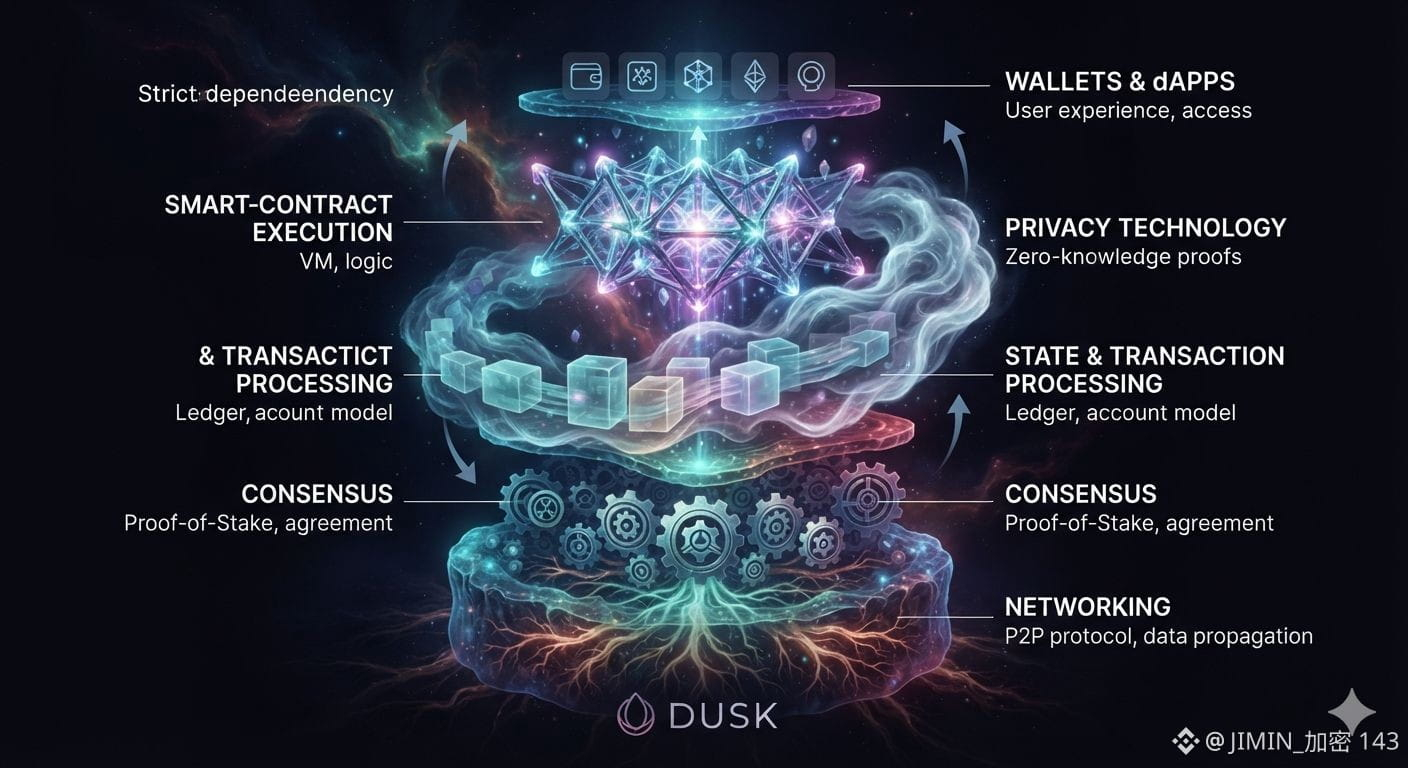
إحدى الطرق المفيدة لفهم DUSK هي تخيّلها كحزمة تقنيات (Technology Stack).
في الأسفل توجد الشبكات.
فوق ذلك يوجد التوافق (Consensus).
ثم تأتي حالة البلوكشين ومعالجة المعاملات.
فوق طبقاتها تأتي عملية تنفيذ العقود الذكية.
تتفاعل تقنيات الخصوصية مع المعاملات والتطبيقات.
وأخيرًا، توفر المحافظ والتطبيقات اللامركزية تجربة موجهة للمستخدم.
كل طبقة تعتمد على الأخرى.
إذا فشلت الشبكات، فلا يمكن للتوافق التواصل.
إذا فشل التوافق، فلا يمكن للشبكة الاتفاق على الحالة.
إذا فشل التنفيذ، فلا يمكن للعقود الذكية تحديث الحالة بشكل صحيح.
إذا فشلت بنية المعاملات، فلا يستطيع المستخدمون التفاعل مع السلسلة.
إن هذا التصميم الطبقي يجعل البلوكشين أسهل للفهم.
بدلًا من رؤية DUSK كقطعة واحدة ضخمة من التكنولوجيا، يمكننا فحص كل طبقة على حدة.
وهذا يجعل المقارنات أسهل أيضًا.
قد يعلن بلوكشينان اثنان كلاهما عن عقود ذكية، لكن تصاميمهما للشبكات والتوافق والخصوصية والتنفيذ قد تكون مختلفة جدًا.
تبرز بنية DUSK لأنها تدمج الخصوصية وحالات الاستخدام المالية ضمن التصميم العام.
والنتيجة هي نظام يساهم فيه العديد من المكونات المتخصصة لتحقيق هدف أوسع.
تعمل بروتوكولات DUSK كحزمة تقنيات مُنظَّمة حيث تعتمد كل طبقة بالكامل على الطبقة التي تحتها. وتبسط هذه البنية المعيارية تصميم المنصة وتسمح للمكونات المتخصصة باستهداف تطبيقات مالية متوافقة تحافظ على الخصوصية.#dusk $DUSK @Dusk
$NVDAB
$AAPLB
#ChinaJulyOutputRetailInvestmentAllMiss #IsraelStrikesLebanonKillsHezbollahCommander #CardanoSplitsDijkstraUpgradeIntoTwoPhases #SECCancelsCryptoRulemakingMeeting
في الأسفل توجد الشبكات.
فوق ذلك يوجد التوافق (Consensus).
ثم تأتي حالة البلوكشين ومعالجة المعاملات.
فوق طبقاتها تأتي عملية تنفيذ العقود الذكية.
تتفاعل تقنيات الخصوصية مع المعاملات والتطبيقات.
وأخيرًا، توفر المحافظ والتطبيقات اللامركزية تجربة موجهة للمستخدم.
كل طبقة تعتمد على الأخرى.
إذا فشلت الشبكات، فلا يمكن للتوافق التواصل.
إذا فشل التوافق، فلا يمكن للشبكة الاتفاق على الحالة.
إذا فشل التنفيذ، فلا يمكن للعقود الذكية تحديث الحالة بشكل صحيح.
إذا فشلت بنية المعاملات، فلا يستطيع المستخدمون التفاعل مع السلسلة.
إن هذا التصميم الطبقي يجعل البلوكشين أسهل للفهم.
بدلًا من رؤية DUSK كقطعة واحدة ضخمة من التكنولوجيا، يمكننا فحص كل طبقة على حدة.
وهذا يجعل المقارنات أسهل أيضًا.
قد يعلن بلوكشينان اثنان كلاهما عن عقود ذكية، لكن تصاميمهما للشبكات والتوافق والخصوصية والتنفيذ قد تكون مختلفة جدًا.
تبرز بنية DUSK لأنها تدمج الخصوصية وحالات الاستخدام المالية ضمن التصميم العام.
والنتيجة هي نظام يساهم فيه العديد من المكونات المتخصصة لتحقيق هدف أوسع.
تعمل بروتوكولات DUSK كحزمة تقنيات مُنظَّمة حيث تعتمد كل طبقة بالكامل على الطبقة التي تحتها. وتبسط هذه البنية المعيارية تصميم المنصة وتسمح للمكونات المتخصصة باستهداف تطبيقات مالية متوافقة تحافظ على الخصوصية.#dusk $DUSK @Dusk
$NVDAB
$AAPLB
#ChinaJulyOutputRetailInvestmentAllMiss #IsraelStrikesLebanonKillsHezbollahCommander #CardanoSplitsDijkstraUpgradeIntoTwoPhases #SECCancelsCryptoRulemakingMeeting