كنت أعتقد أن معيار XSC ما هو إلا مجرد معيار توكن خاص.
بعد التعمق أكثر في Dusk، أدركت أن ذلك جزء أصغر بكثير من الصورة.
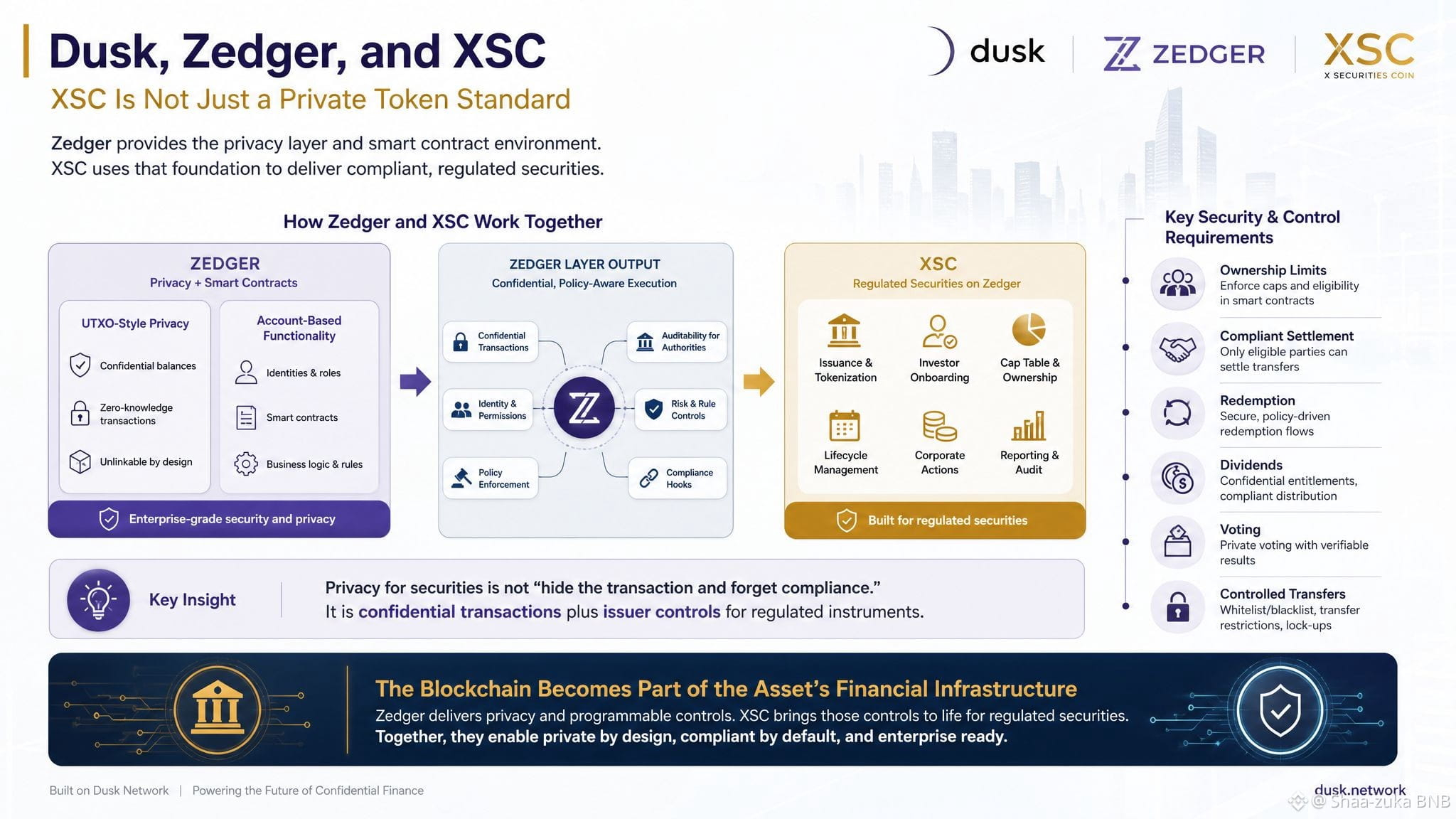
الجزء المثير للاهتمام هو كيف يعمل Zedger وXSC معًا.
يجمع Zedger بين الخصوصية بأسلوب UTXO والوظائف القائمة على الحسابات، وهذا أمر مهم لأن الأوراق المالية ليست مجرد تحويلات بسيطة.
قد تحتاج الورقة المالية الخاضعة للتنظيم إلى:
حدود ملكية
تسوية ملتزمة
استرداد
أرباح/توزيعات
تصويت
تحويلات خاضعة للرقابة
وقد صممت Dusk XSC لتناسب متطلبات من هذا النوع.
غيّر ذلك فهمي لما تعنيه عبارة «الخصوصية للأوراق المالية» فعليًا.
ليست:
«أخفِ المعاملة وانسَ الامتثال.»
بل أقرب إلى:
حافظ على سرية معلومات المعاملة مع منح مُصدر الأصل القواعد والضوابط اللازمة لأداة مالية منظمة.
الجزء الذي ما زلت أحاول فهمه بشكل أفضل هو كيف تتصرف هذه الضوابط عندما تمتلك الورقة المالية أحداثًا حياتية معقدة — خاصة عندما تحدث قيود الملكية والتصويت والتوزيعات معًا.
هذه هي المسألة المعمارية التي أجدها أكثر إثارة للاهتمام من مجرد التساؤل عما إذا كانت Dusk خاصة.
لأنّه إذا كان بإمكان XSC فعلًا ترميز القواعد التشغيلية لأوراق مالية، فليس التوكن مجرد تمثيل للأصل.
تُصبح البلوك تشين جزءًا من البنية التحتية المالية للأصل.
#dusk $DUSK @Dusk
بعد التعمق أكثر في Dusk، أدركت أن ذلك جزء أصغر بكثير من الصورة.
الجزء المثير للاهتمام هو كيف يعمل Zedger وXSC معًا.
يجمع Zedger بين الخصوصية بأسلوب UTXO والوظائف القائمة على الحسابات، وهذا أمر مهم لأن الأوراق المالية ليست مجرد تحويلات بسيطة.
قد تحتاج الورقة المالية الخاضعة للتنظيم إلى:
حدود ملكية
تسوية ملتزمة
استرداد
أرباح/توزيعات
تصويت
تحويلات خاضعة للرقابة
وقد صممت Dusk XSC لتناسب متطلبات من هذا النوع.
غيّر ذلك فهمي لما تعنيه عبارة «الخصوصية للأوراق المالية» فعليًا.
ليست:
«أخفِ المعاملة وانسَ الامتثال.»
بل أقرب إلى:
حافظ على سرية معلومات المعاملة مع منح مُصدر الأصل القواعد والضوابط اللازمة لأداة مالية منظمة.
الجزء الذي ما زلت أحاول فهمه بشكل أفضل هو كيف تتصرف هذه الضوابط عندما تمتلك الورقة المالية أحداثًا حياتية معقدة — خاصة عندما تحدث قيود الملكية والتصويت والتوزيعات معًا.
هذه هي المسألة المعمارية التي أجدها أكثر إثارة للاهتمام من مجرد التساؤل عما إذا كانت Dusk خاصة.
لأنّه إذا كان بإمكان XSC فعلًا ترميز القواعد التشغيلية لأوراق مالية، فليس التوكن مجرد تمثيل للأصل.
تُصبح البلوك تشين جزءًا من البنية التحتية المالية للأصل.
#dusk $DUSK @Dusk