واصلتُ اليوم النظر إلى DUSK نفسه بدلاً من القفز مباشرةً إلى ميزات الخصوصية، وبدأ شيء ما يزعجني قليلًا.
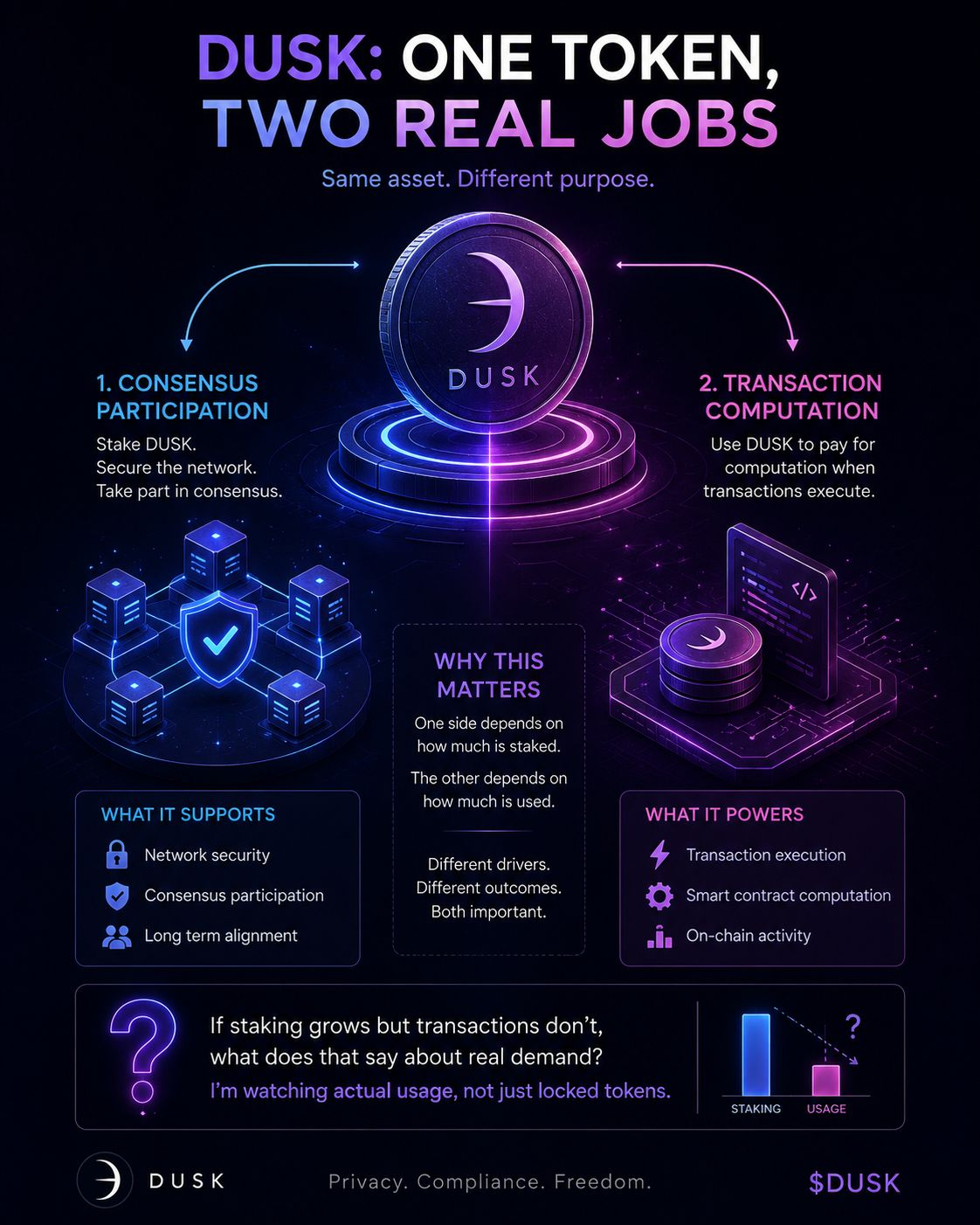
للرمز وظيفتان مختلفتان جدًا داخل الشبكة. يمكن استخدامه كجزء من المشاركة في الإجماع، لكنه يُستخدم أيضًا كالأصل لدفع ثمن الحوسبة عندما تُنفَّذ المعاملات. في البداية يبدو الأمر كأنه مجرد نقطة تتعلق بفائدة الرمز من ناحية الاستخدام. كلما فكرت فيه أكثر، تساءلت أكثر عمّا إذا كان هذان الاستخدامان يخلقان الطلب بالطريقة نفسها.
الاستيكينغ يتعلق بتجميد رأس المال للمشاركة في تأمين الشبكة. رسوم المعاملات مختلفة تمامًا. فهي تعتمد على قيام الناس فعلًا بأمور على السلسلة.
تهمني هذه الفروقات لأن شبكة ما يمكن أن يكون فيها أشخاص يحتفظون بأصل ويُنجزون عملية الاستيكينغ عليه دون أن يحدث الكثير من التنفيذ الحقيقي حوله. في تلك الحالة، قد يكون للرمز دور بروتوكولي واضح، ومع ذلك لا نرى النوع من الاستخدام الذي عادةً أرتبطه بشبكة “نشِطة”.
وأظن أنني ما زلت أحاول فهم Dusk من هنا.
إذا كانت التطبيقات السرّية في النهاية ستجلب المزيد من المعاملات إلى السلسلة، فستصبح الجوانب الحوسبية من فائدة DUSK أكثر إثارةً لاهتمامي بكثير. لكن إذا بقي النشاط مرتبطًا في الغالب بالمشاركة في الإجماع، فليس لدي يقين بأن الاستيكينغ وحده يخبرني بالكثير عن الطلب الفعلي على مستوى النظام البيئي.
ربما أنظر إلى الرمز بشكل ضيّق جدًا، لكنني أفضل أن أراقب مقدار استخدام DUSK في الحوسبة الفعلية مع مرور الوقت، بدلاً من الاكتفاء بالنظر إلى مقدار ما هو مُقفل في الاستيكينغ.
هذه هي الرقم الذي يثير فضولي الآن.
#dusk $DUSK @Dusk
للرمز وظيفتان مختلفتان جدًا داخل الشبكة. يمكن استخدامه كجزء من المشاركة في الإجماع، لكنه يُستخدم أيضًا كالأصل لدفع ثمن الحوسبة عندما تُنفَّذ المعاملات. في البداية يبدو الأمر كأنه مجرد نقطة تتعلق بفائدة الرمز من ناحية الاستخدام. كلما فكرت فيه أكثر، تساءلت أكثر عمّا إذا كان هذان الاستخدامان يخلقان الطلب بالطريقة نفسها.
الاستيكينغ يتعلق بتجميد رأس المال للمشاركة في تأمين الشبكة. رسوم المعاملات مختلفة تمامًا. فهي تعتمد على قيام الناس فعلًا بأمور على السلسلة.
تهمني هذه الفروقات لأن شبكة ما يمكن أن يكون فيها أشخاص يحتفظون بأصل ويُنجزون عملية الاستيكينغ عليه دون أن يحدث الكثير من التنفيذ الحقيقي حوله. في تلك الحالة، قد يكون للرمز دور بروتوكولي واضح، ومع ذلك لا نرى النوع من الاستخدام الذي عادةً أرتبطه بشبكة “نشِطة”.
وأظن أنني ما زلت أحاول فهم Dusk من هنا.
إذا كانت التطبيقات السرّية في النهاية ستجلب المزيد من المعاملات إلى السلسلة، فستصبح الجوانب الحوسبية من فائدة DUSK أكثر إثارةً لاهتمامي بكثير. لكن إذا بقي النشاط مرتبطًا في الغالب بالمشاركة في الإجماع، فليس لدي يقين بأن الاستيكينغ وحده يخبرني بالكثير عن الطلب الفعلي على مستوى النظام البيئي.
ربما أنظر إلى الرمز بشكل ضيّق جدًا، لكنني أفضل أن أراقب مقدار استخدام DUSK في الحوسبة الفعلية مع مرور الوقت، بدلاً من الاكتفاء بالنظر إلى مقدار ما هو مُقفل في الاستيكينغ.
هذه هي الرقم الذي يثير فضولي الآن.
#dusk $DUSK @Dusk