توقفت عند التقسيم بين DuskVM و DuskEVM لأن الأمر يبدو أبسط على الورق مما هو عليه عند تتبّع ما الذي يعمل فعليًا وفي أي مكان.
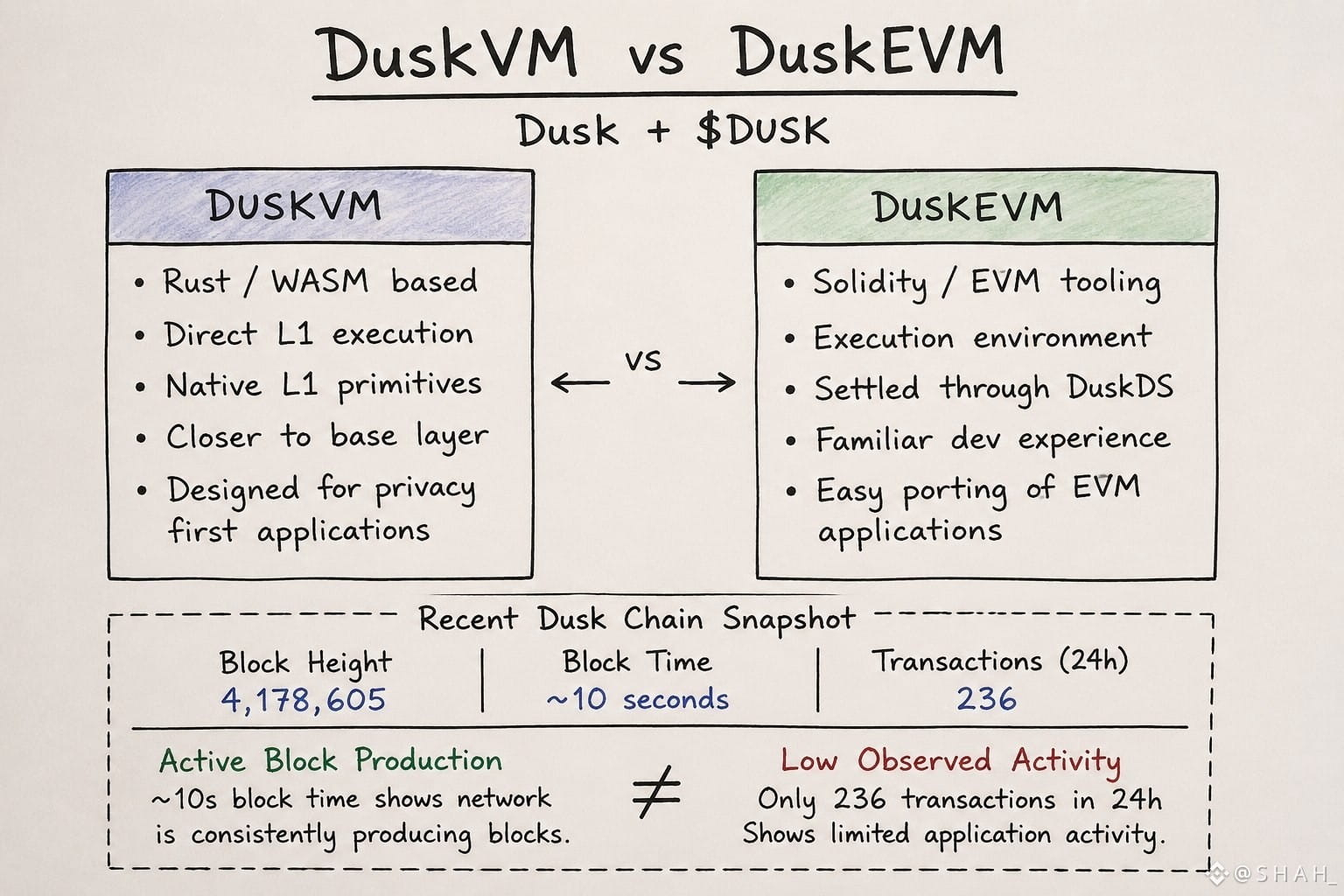
أثناء المهمة، تحققت من سلسلة Dusk ورأيت البلوك رقم 4,178,605 بينما لا تزال الشبكة تنتج بلوكات قرب علامة الـ10 ثوانٍ، في حين تم تسجيل 236 معاملة فقط خلال 24 ساعة. هذا التباين ظل عالقًا في ذهني.
@Dusk ليست حقًا تعامل DuskVM و DuskEVM كنسختين من الشيء نفسه. DuskVM هو تنفيذ Rust/WASM أصلي بشكل مباشر على L1، بينما يجلس DuskEVM كبيئة تنفيذ EVM مستقرة عبر DuskDS.
الفرق العملي هو ما أوقفني. يمنحك DuskVM اتصالًا أعمق مع بدائيات L1 الأصلية، بينما يمنحك DuskEVM للمطوّرين مسار EVM المألوف عبر Solidity.
في البداية ظننت أن طبقة EVM ستصبح تلقائيًا مركز النشاط الواضح، لكن أرقام السلسلة الأخيرة جعلتني أبطئ قليلًا. المنتج للبلوكات بشكل نشط لا يعني تلقائيًا استخدام تطبيقات نشط.
ما زلت أتساءل عمّا إذا كان DuskEVM في النهاية هو المكان الذي تستقر فيه أغلب أنشطة التطبيقات فعليًا، أم أن الـVM الأصلية تحتفظ بالأحمال الأكثر أهمية قريبة من الطبقة الأساسية…
@Dusk $DUSK #dusk
أثناء المهمة، تحققت من سلسلة Dusk ورأيت البلوك رقم 4,178,605 بينما لا تزال الشبكة تنتج بلوكات قرب علامة الـ10 ثوانٍ، في حين تم تسجيل 236 معاملة فقط خلال 24 ساعة. هذا التباين ظل عالقًا في ذهني.
@Dusk ليست حقًا تعامل DuskVM و DuskEVM كنسختين من الشيء نفسه. DuskVM هو تنفيذ Rust/WASM أصلي بشكل مباشر على L1، بينما يجلس DuskEVM كبيئة تنفيذ EVM مستقرة عبر DuskDS.
الفرق العملي هو ما أوقفني. يمنحك DuskVM اتصالًا أعمق مع بدائيات L1 الأصلية، بينما يمنحك DuskEVM للمطوّرين مسار EVM المألوف عبر Solidity.
في البداية ظننت أن طبقة EVM ستصبح تلقائيًا مركز النشاط الواضح، لكن أرقام السلسلة الأخيرة جعلتني أبطئ قليلًا. المنتج للبلوكات بشكل نشط لا يعني تلقائيًا استخدام تطبيقات نشط.
ما زلت أتساءل عمّا إذا كان DuskEVM في النهاية هو المكان الذي تستقر فيه أغلب أنشطة التطبيقات فعليًا، أم أن الـVM الأصلية تحتفظ بالأحمال الأكثر أهمية قريبة من الطبقة الأساسية…
@Dusk $DUSK #dusk