
لقد كنت أبحث أعمق في Dusk، ويخبر نموذج التكديس قصة أكثر إثارة للاهتمام من الزاوية المعتادة المتعلقة بالخصوصية.
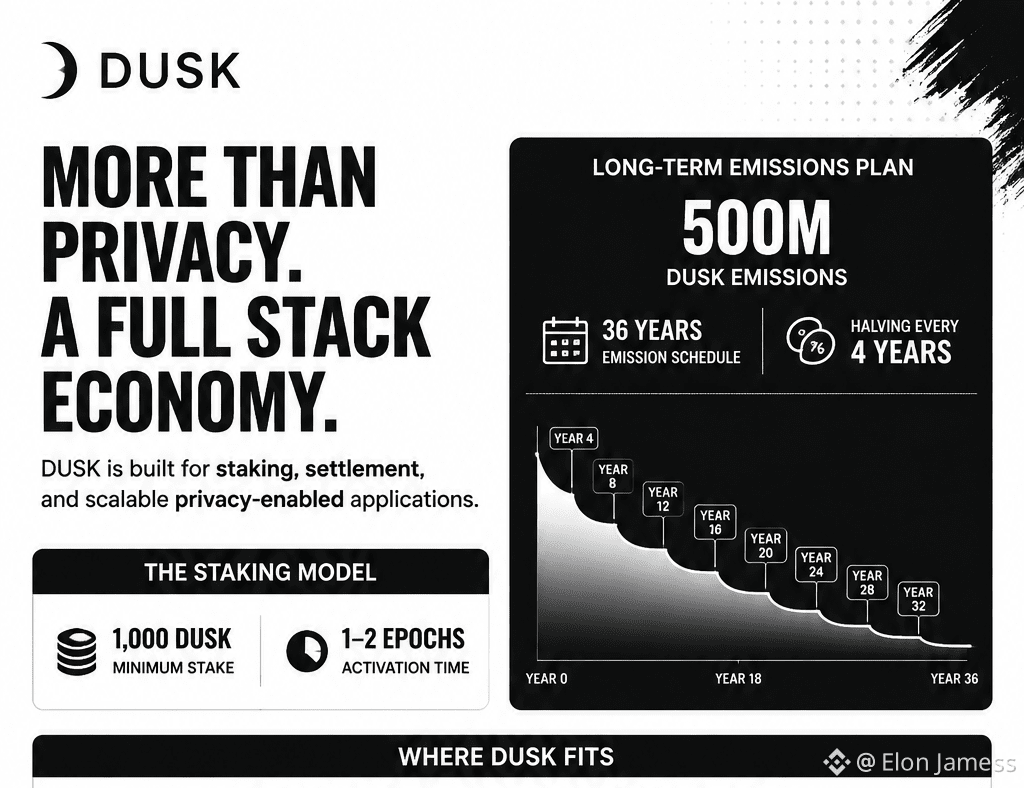
$DUSK يتطلب حدًا أدنى للتكديس يبلغ 1,000 توكن، مع تفعيل بعد حوالي 1–2 حقبة.
كما أن البروتوكول مصمم حول انبعاثات تبلغ 500 مليون DUSK على مدى 36 عامًا، حيث تنخفض الانبعاثات للنصف كل 4 سنوات.
الأهم هو أين يتموضع التوكن.
$DUSK يتموضع عبر التكديس والتسوية والغاز مع توسع Dusk عبر:
• DuskDS — التسوية & توفر البيانات
• DuskEVM — تطبيقات EVM
• DuskVM — تطبيقات تركز على الخصوصية
وهذا يخلق احتمالًا مثيرًا: إذا بدأت التطبيقات الفعلية في اكتساب زخم عبر هذه الطبقات، فقد يأتي طلب DUSK ليس من مجرد أمن الشبكة.
تضيف طبقة تجريد التكديس مستوى آخر، مما يسمح للعقود الذكية بالمشاركة في التكديس، وقد يجعل ذلك البرك والاستراتيجيات الآلية أكثر مواءمةً وتوغلًا داخل النظام البيئي.
ومع ذلك، أعتقد أن أكبر سؤال هو سؤال بسيط:
ما مقدار نشاط DUSK اليوم الذي يمثل استخدامًا اقتصاديًا فعليًا، وما مقدارَه التكديس/البنية التحتية؟
الهيكل المعماري مثير للاهتمام. الآن أريد أن أرى بيانات الاستخدام تلحق بالركب.
@Dusk #dusk
$DUSK يتطلب حدًا أدنى للتكديس يبلغ 1,000 توكن، مع تفعيل بعد حوالي 1–2 حقبة.
كما أن البروتوكول مصمم حول انبعاثات تبلغ 500 مليون DUSK على مدى 36 عامًا، حيث تنخفض الانبعاثات للنصف كل 4 سنوات.
الأهم هو أين يتموضع التوكن.
$DUSK يتموضع عبر التكديس والتسوية والغاز مع توسع Dusk عبر:
• DuskDS — التسوية & توفر البيانات
• DuskEVM — تطبيقات EVM
• DuskVM — تطبيقات تركز على الخصوصية
وهذا يخلق احتمالًا مثيرًا: إذا بدأت التطبيقات الفعلية في اكتساب زخم عبر هذه الطبقات، فقد يأتي طلب DUSK ليس من مجرد أمن الشبكة.
تضيف طبقة تجريد التكديس مستوى آخر، مما يسمح للعقود الذكية بالمشاركة في التكديس، وقد يجعل ذلك البرك والاستراتيجيات الآلية أكثر مواءمةً وتوغلًا داخل النظام البيئي.
ومع ذلك، أعتقد أن أكبر سؤال هو سؤال بسيط:
ما مقدار نشاط DUSK اليوم الذي يمثل استخدامًا اقتصاديًا فعليًا، وما مقدارَه التكديس/البنية التحتية؟
الهيكل المعماري مثير للاهتمام. الآن أريد أن أرى بيانات الاستخدام تلحق بالركب.
@Dusk #dusk