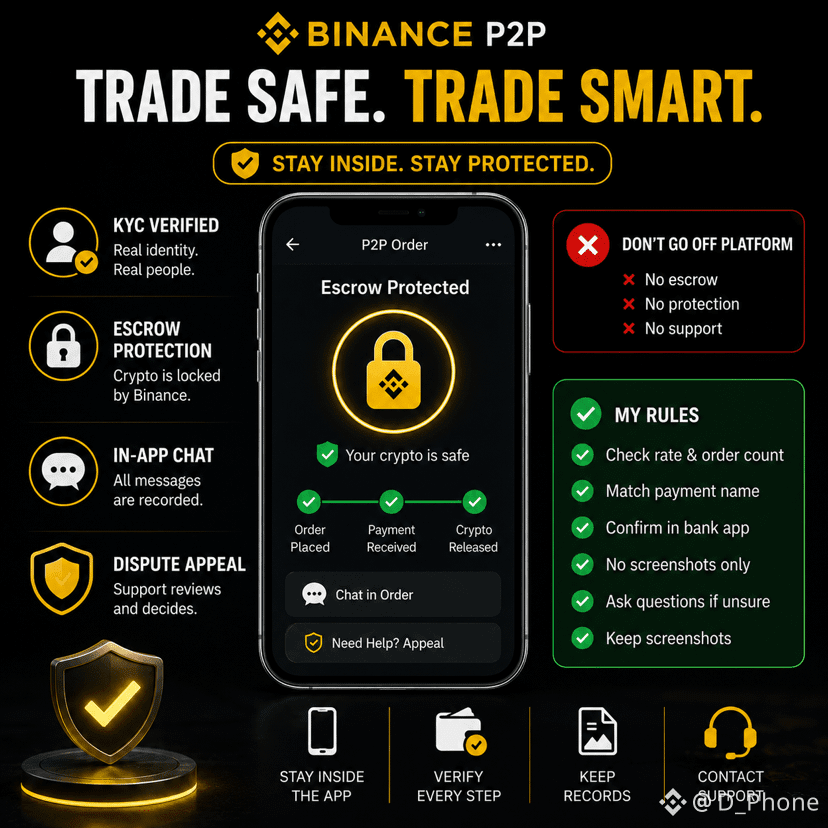
I remember opening Binance P2P for the first time and feeling unsure about trading directly with a stranger online. After a year of regular trades, I can say the protection built into Binance P2P is real, but only if you use it the right way. Every account must pass KYC before it can trade, so the person on the other side of your order has a verified identity on file. Once a buyer accepts an offer, the seller's crypto is locked in Binance's escrow, not held by either trader, so nobody can walk away with your funds mid trade. All communication happens inside the built in chat, which creates a timestamped record that support can review later. If something goes wrong, either side can open an appeal and a support agent steps in to mediate, using that chat history and any evidence submitted. These layers, verified identity, escrow, chat, and appeal, only work if you stay inside Binance P2P for the entire transaction. The moment you move to a private call or a personal payment app outside the order, none of this protection follows you anymore.
My personal rule is simple. I never confirm receipt of funds until I open my own banking app and see the balance sitting there, not a screenshot sent through chat. I also check a counterparty's completion rate, looking for 95% or higher, along with their total order count, before accepting a trade. I compare the name on the incoming payment to the name shown on their verified profile every single time. If anything feels rushed or the numbers don't match, I pause and ask questions first. When a trade genuinely stalls, I contact Binance support directly through the app instead of guessing, and I keep screenshots of every step until the order fully closes. Trading P2P gets a lot less stressful once you understand the tools already sitting in front of you.
@Binance Vietnam #BinanceP2PAnToan $AKE $BTW
My personal rule is simple. I never confirm receipt of funds until I open my own banking app and see the balance sitting there, not a screenshot sent through chat. I also check a counterparty's completion rate, looking for 95% or higher, along with their total order count, before accepting a trade. I compare the name on the incoming payment to the name shown on their verified profile every single time. If anything feels rushed or the numbers don't match, I pause and ask questions first. When a trade genuinely stalls, I contact Binance support directly through the app instead of guessing, and I keep screenshots of every step until the order fully closes. Trading P2P gets a lot less stressful once you understand the tools already sitting in front of you.
@Binance Vietnam #BinanceP2PAnToan $AKE $BTW