تفصيلة تقنية واحدة جعلتني أُعيد التفكير في «Dusk» بطريقة مختلفة.
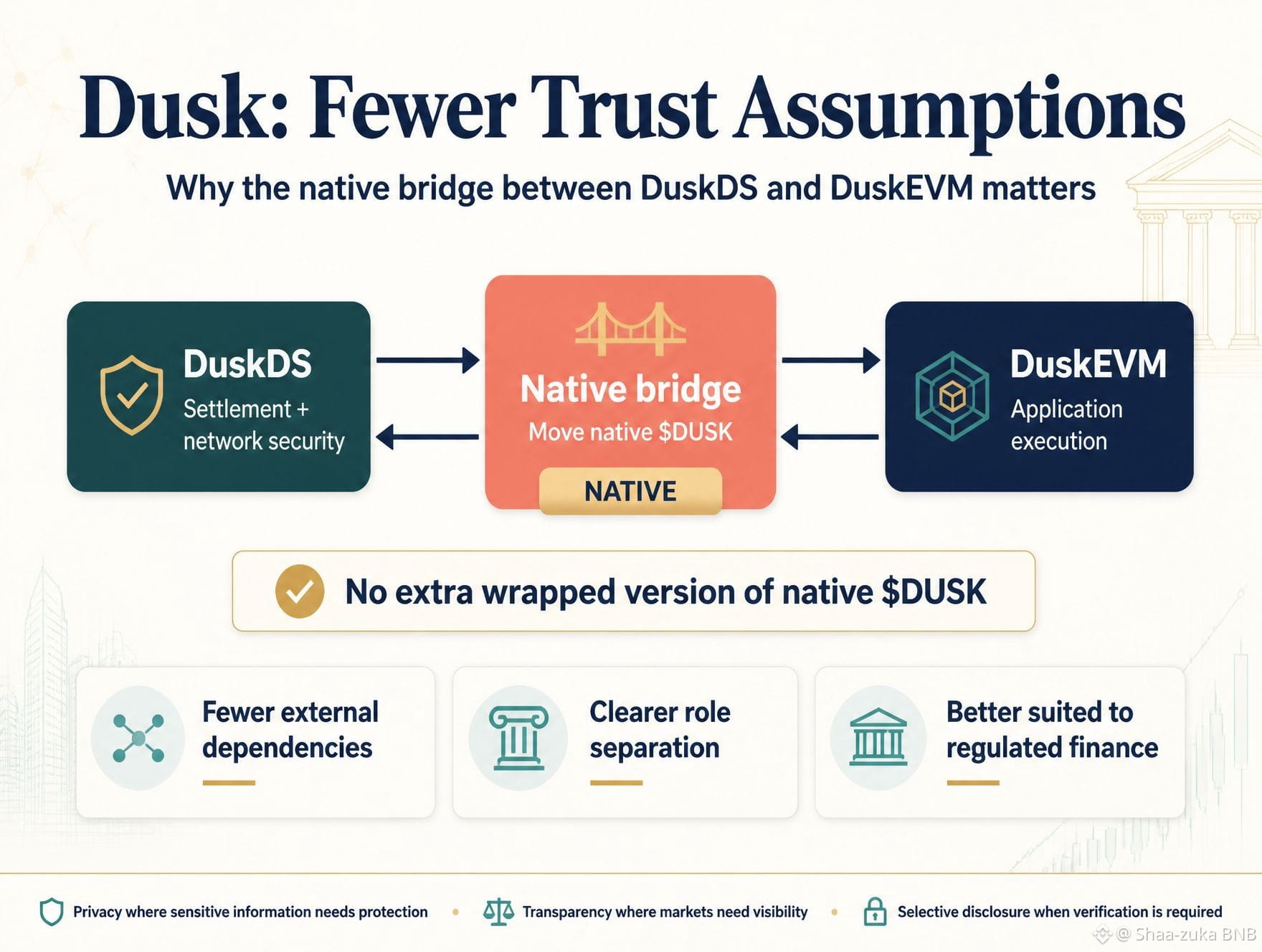
العلاقة بين DuskDS وDuskEVM لم تعتمد على إنشاء نسخة مغلّفة إضافية من native $DUSK
@Dusk يستخدم بنية جسر native بين الطبقات.
في البداية، قد يبدو ذلك كتفصيلة تنفيذية صغيرة.
لا أعتقد ذلك.
أي جسر إضافي أو غلاف أو وصي خارجي يمكن أن يُدخل افتراضًا جديدًا في نظام مالي.
لذلك بدأت أنظر إلى Dusk من سؤال مختلف:
كم عدد افتراضات الثقة الإضافية التي يحتاجها التصميم فعليًا؟
يحافظ نموذج Dusk على وضوح الأدوار:
DuskDS → التسوية وأمن الشبكة
DuskEVM → تنفيذ التطبيقات
الجسر native → نقل DUSK بين الطبقات
وهذا مهم بشكل خاص بالنسبة للتمويل المُنظَّم.
إذا كانت مؤسسة ما تتعامل بالفعل مع متطلبات الامتثال والهوية وتقييدات الأصول ومتطلبات الإفصاح، فإن إضافة تبعيات بنية تحتية غير ضرورية ليس بالأمر المفيد.
لهذا أحب مبدأ التصميم هنا:
لا تُضِف تعقيدًا حيث لا يحتاجه البروتوكول.
وتظهر الفلسفة نفسها في أماكن أخرى ضمن Dusk:
الخصوصية حيث تحتاج المعلومات الحساسة إلى حماية،
والشفافية عندما يحتاج السوق إلى رؤية واضحة،
والإفصاح الانتقائي عندما يحتاج طرف مُخوَّل إلى التحقق.
بالنسبة لي، هذه أطروحة أقوى بكثير من مجرد القول:
«لدى Dusk جسر.»
إنها تتعلق بتقليل افتراضات الثقة غير الضرورية عبر منظومة التمويل كاملة.
#dusk
العلاقة بين DuskDS وDuskEVM لم تعتمد على إنشاء نسخة مغلّفة إضافية من native $DUSK
@Dusk يستخدم بنية جسر native بين الطبقات.
في البداية، قد يبدو ذلك كتفصيلة تنفيذية صغيرة.
لا أعتقد ذلك.
أي جسر إضافي أو غلاف أو وصي خارجي يمكن أن يُدخل افتراضًا جديدًا في نظام مالي.
لذلك بدأت أنظر إلى Dusk من سؤال مختلف:
كم عدد افتراضات الثقة الإضافية التي يحتاجها التصميم فعليًا؟
يحافظ نموذج Dusk على وضوح الأدوار:
DuskDS → التسوية وأمن الشبكة
DuskEVM → تنفيذ التطبيقات
الجسر native → نقل DUSK بين الطبقات
وهذا مهم بشكل خاص بالنسبة للتمويل المُنظَّم.
إذا كانت مؤسسة ما تتعامل بالفعل مع متطلبات الامتثال والهوية وتقييدات الأصول ومتطلبات الإفصاح، فإن إضافة تبعيات بنية تحتية غير ضرورية ليس بالأمر المفيد.
لهذا أحب مبدأ التصميم هنا:
لا تُضِف تعقيدًا حيث لا يحتاجه البروتوكول.
وتظهر الفلسفة نفسها في أماكن أخرى ضمن Dusk:
الخصوصية حيث تحتاج المعلومات الحساسة إلى حماية،
والشفافية عندما يحتاج السوق إلى رؤية واضحة،
والإفصاح الانتقائي عندما يحتاج طرف مُخوَّل إلى التحقق.
بالنسبة لي، هذه أطروحة أقوى بكثير من مجرد القول:
«لدى Dusk جسر.»
إنها تتعلق بتقليل افتراضات الثقة غير الضرورية عبر منظومة التمويل كاملة.
#dusk