عدتُ اليوم مرارًا إلى جانب المطوّر في Dusk، وذلك في الغالب لأنني أعتقد أنني كنت أنظر إلى المشروع كثيرًا من زاوية الأصول والخصوصية.
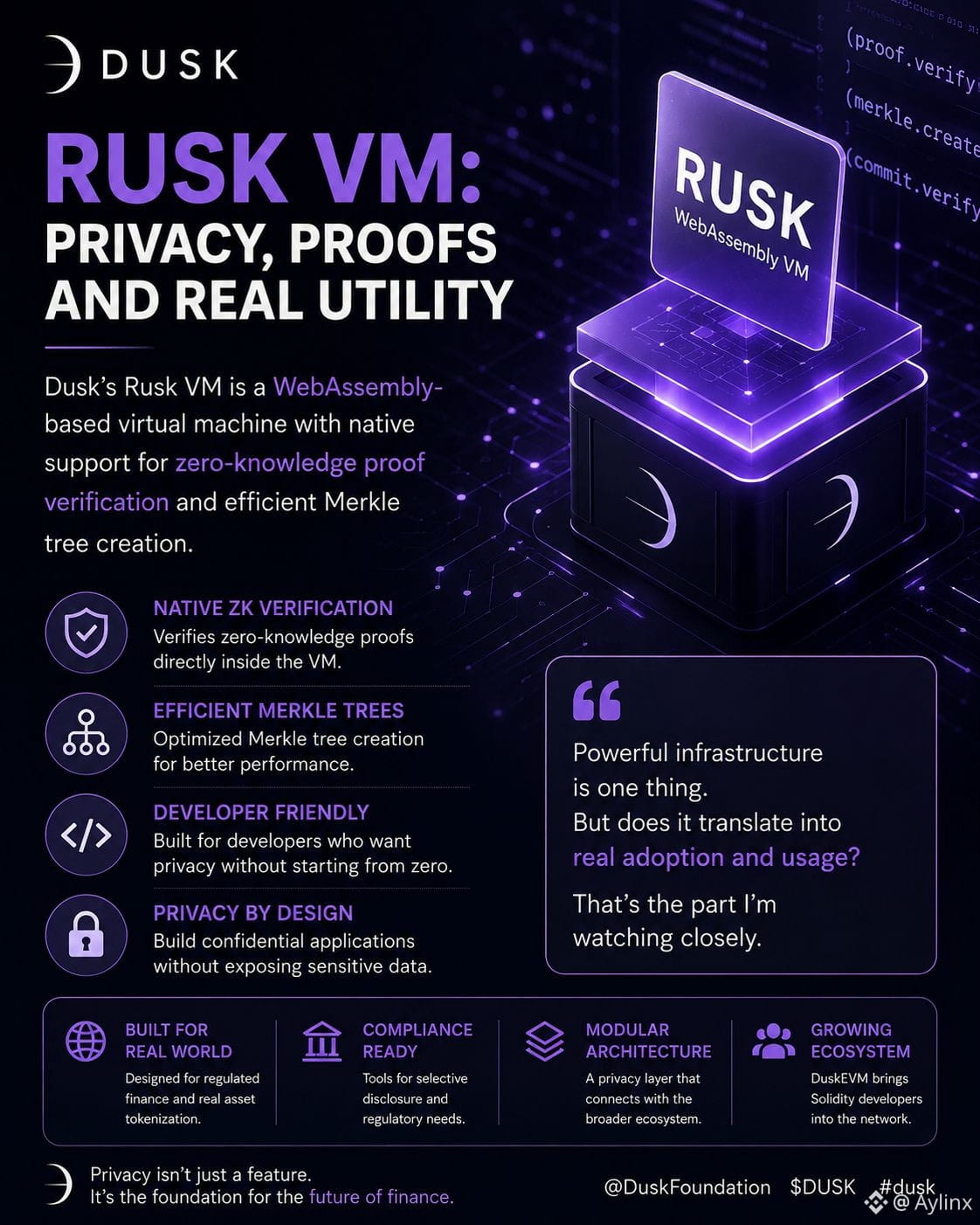
الجزء الذي وجدت نفسي أقرأ عنه هو Rusk، الجهاز الافتراضي الخاص بـ Dusk المبني على WebAssembly. ما جذب انتباهي لا يقتصر على كونه طبقة تنفيذ أخرى فحسب. يصف البحث التقني دعمًا أصليًا للتحقق من إثباتات المعرفة الصفرية وإنشاء شجرات ميركل بكفاءة داخل الجهاز. يبدو ذلك كتفصيل تنفيذي صغير إلى أن أفكر في ما يمكن أن يعنيه للمطوّرين الذين يبنون تطبيقات تكون فيها عملية إثبات شيء ما دون كشف كل شيء هي في الواقع جزء من المشكلة.
ما زلت أحاول أن أحدد مدى أهمية ذلك خارج نطاق التصميم التقني. فالتشفير لا يفتقر إلى بنية تحتية تبدو مثيرة للإعجاب عندما تقرأ المعمارية، لكنها تصبح أقل أهمية بكثير عندما تبحث عمّا إذا كان الناس يبنونها فعليًا ويستخدمونها.
ربما لهذا السبب أنا أكثر اهتمامًا بتجربة المطوّر مقارنةً بقائمة الميزات. إذا كانت أدوات التشفير مدمجة في بيئة التنفيذ، فهل يجعل ذلك فعلًا بناء التطبيقات الخاصة أسهل، أم أن التعقيد ينتقل فقط إلى مكان آخر؟
وهناك أمر آخر كنت أود مراقبته: ما إذا كان المطوّرون الذين يعرفون بالفعل منظومة EVM يجدون سببًا كافيًا للتجربة مع Dusk بدلًا من البقاء حيث توجد الأدوات والمستخدمون بالفعل.
أنا فضولي حول أي جانب سيفوز عمليًا: أدوات خصوصية أصلية أفضل، أم سهولة منظومة مطوّرين راسخة بالفعل؟
@Dusk $DUSK #dusk
الجزء الذي وجدت نفسي أقرأ عنه هو Rusk، الجهاز الافتراضي الخاص بـ Dusk المبني على WebAssembly. ما جذب انتباهي لا يقتصر على كونه طبقة تنفيذ أخرى فحسب. يصف البحث التقني دعمًا أصليًا للتحقق من إثباتات المعرفة الصفرية وإنشاء شجرات ميركل بكفاءة داخل الجهاز. يبدو ذلك كتفصيل تنفيذي صغير إلى أن أفكر في ما يمكن أن يعنيه للمطوّرين الذين يبنون تطبيقات تكون فيها عملية إثبات شيء ما دون كشف كل شيء هي في الواقع جزء من المشكلة.
ما زلت أحاول أن أحدد مدى أهمية ذلك خارج نطاق التصميم التقني. فالتشفير لا يفتقر إلى بنية تحتية تبدو مثيرة للإعجاب عندما تقرأ المعمارية، لكنها تصبح أقل أهمية بكثير عندما تبحث عمّا إذا كان الناس يبنونها فعليًا ويستخدمونها.
ربما لهذا السبب أنا أكثر اهتمامًا بتجربة المطوّر مقارنةً بقائمة الميزات. إذا كانت أدوات التشفير مدمجة في بيئة التنفيذ، فهل يجعل ذلك فعلًا بناء التطبيقات الخاصة أسهل، أم أن التعقيد ينتقل فقط إلى مكان آخر؟
وهناك أمر آخر كنت أود مراقبته: ما إذا كان المطوّرون الذين يعرفون بالفعل منظومة EVM يجدون سببًا كافيًا للتجربة مع Dusk بدلًا من البقاء حيث توجد الأدوات والمستخدمون بالفعل.
أنا فضولي حول أي جانب سيفوز عمليًا: أدوات خصوصية أصلية أفضل، أم سهولة منظومة مطوّرين راسخة بالفعل؟
@Dusk $DUSK #dusk