

هناك افتراض في عالم العملات المشفرة يرفض الموت:
إذا كان هناك ما يحتاج إلى الامتثال، فلابد أن يكون هناك من يراه.
المعاملة كاملة.
المحفظة.
المبلغ.
الأطراف المقابلة.
التاريخ.
ضع كل شيء على سجلّ شفاف، أضف طبقة هوية فوقه، وسمِّ النتيجة تمويلاً منظَّمًا.
الأمر بسيط.
وهو أيضًا حلّ مباشر بشكل مدهش لمشكلة أكثر تعقيدًا بكثير.
من خلال مراقبة معمارية غسق عن كثب، تتمثل الفكرة الأكثر إثارة للاهتمام ليست في أنها تجعل المعاملات خاصة. فقد جربت العديد من الأنظمة تحقيق ذلك.
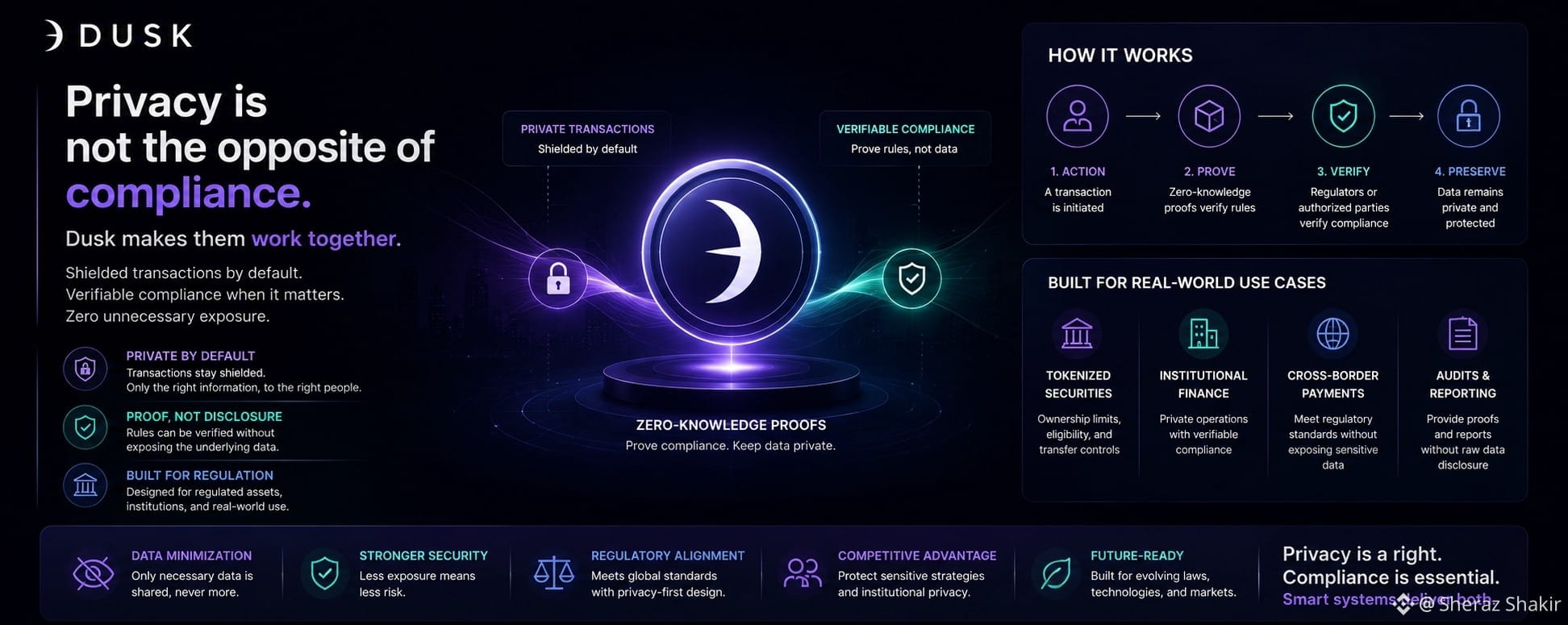
تتمثل الفكرة المثيرة للاهتمام في أن Dusk يعتبر الإثبات والإفصاح أمرين مختلفين.
يبدو هذا التمييز تقنيًا حتى تفكر فيما تحتاجه أسواق المال فعليًا.
قد يحتاج المنظم إلى دليل على أن المستثمر كان مؤهلًا.
قد يحتاج المُصدر إلى معرفة أن سقف الملكية لم يتم تجاوزه.
قد يحتاج المكان/المنصة إلى إثبات أن التحويل كان مسموحًا به.
قد يحتاج المدقق إلى التحقق من اتباع قاعدة معيّنة.
لا تعني أيٌّ من تلك العبارات تلقائيًا أن كل مشارك في السوق يحتاج إلى رؤية الميزان الكامل للمستثمر أو سجل معاملاته أو معلوماته الشخصية كافة.
صُمم Dusk حول هذا الفصل. تصف وثائقها نموذجًا يجمع بين التحكم في الوصول والتحويلات المُحصَّنة (shielded transfers) وإثباتات المعرفة الصفرية والإفصاح الانتقائي، مع توفر أوضاع معاملات عامة وخاصة حسب سير العمل.
هذه أطروحة أكثر دقة بكثير من «بلوك تشين خاصة».
التفصيلة التي يتخطاها معظم الناس
إحدى أسهل الأخطاء هي اعتبار الخصوصية إخفاء كل شيء.
هذا ليس ما يحاول Dusk فعله فعليًا.
تتيح بنيته مستويات مختلفة من الرؤية. يمكن لمعاملات Phoenix إخفاء المُرسِل والمُستقبِل والمبلغ المحوَّل عن المراقبين العاديين، بينما يمكن لآليات مفاتيح العرض (view-key) توفير الرؤية للأطراف المصرّح لها. ويمكن بقاء نماذج معاملات أخرى عامة عندما تكون الشفافية مفيدة.
الأمر مهم لأن الأسواق الخاضعة للتنظيم لم تعمل يومًا على أساس شفافية مطلقة.
قد تكشف بورصة أسعار السوق دون كشف كل قطعة من المعلومات التي يحتفظ بها كل مستثمر.
يمكن للجهة المُسجِّلة الاحتفاظ بسجل ملكية دون نشر الحياة المالية الكاملة للمستثمر.
يمكن للمدقق التحقق من ضابط ما دون الحاجة إلى وصول غير مقيد إلى كل قطعة غير مرتبطة من المعلومات.
نسيَت صناعة البلوك تشين أحيانًا هذا التمييز لأن دفاتر الأستاذ العامة جعلت الشفافية الجذرية ملائمة تقنيًا.
يَسأل Dusk في جوهره ما إذا كان ينبغي للراحة أن تملي بنية أسواق المال.
الامتثال أكثر من مجرد KYC
تفصيل آخر يستحق المتابعة هو كيفية تعامل Dusk مع الامتثال باعتباره شيئًا يمكن أن يوجد داخل سير العمل الخاص بالأصل، بدلًا من كونه قائمة تحقق خارجية.
تصف وثيقته ضوابط حول الأهلية وربط المحفظة ببطاقة (wallet binding) وحدود الملكية وقيود التحويل والإبلاغ والاسترداد والتسوية. كما يصف محتواه المرتكز على الأصول سير عمل للأوراق المالية الخاضعة للتنظيم حيث تُصمَّم الأهلية والتحويلات الخاضعة للرقابة والإفصاح والتسوية معًا.
هذا مهم.
تخيّل رمزًا يمثل ورقة مالية خاضعة للتنظيم مع قاعدة تقول إن مستثمرًا واحدًا لا يمكنه تجاوز حد معين للملكية.
في سلسلة شفافة تقليدية، تكون الإجابة السهلة هي جعل الملكية مرئية وحساب النتيجة علنًا.
تطرح بنية موجهة نحو الخصوصية سؤالًا مختلفًا:
هل يستطيع النظام إثبات أن التحويل يُبقي المستثمر تحت الحد المسموح دون كشف معلومات غير لازمة عن مركزه الكامل؟
صُمم عمل Zedger السابق لدى Dusk صراحةً حول هذا النوع من المشكلات، بما في ذلك التحويلات المقيّدة وغيرها من القيود الخاصة بالأوراق المالية.
هنا لم تعد تقنية الإثباتات الصفرية المعرفة مجرد عرضٍ للتشفير، بل تبدأ بالتحول إلى بنية تحتية للسوق.
عندها توجد الهوية
عمل Citadel لدى Dusk هو جزء آخر يُتجاوَز غالبًا.
الفكرة الأساسية ليست مجرد «أخفِ هويتك».
الأقرب إلى:
أثبت السمة التي تهم دون الكشف غير الضروري عن كل ما وراءها.
تصف وثائق Dusk الإفصاح الانتقائي لسمات مثل مكان الإقامة وفئة العمر والاعتماد/التأهيل. كما يصف مواد Citadel السابقة أيضًا إثباتات الملكية والصحة مع إبقاء السمات الأساسية مخفية.
هذا التمييز ذي صلة خاصة بالأصول الخاضعة للتنظيم.
لنفترض أن منتجًا استثماريًا متاح فقط لفئة مستثمرين مؤهلين.
لا يقتصر سؤال الامتثال بالضرورة على:
«“أظهر للجميع بالضبط من هو هذا الشخص وكل شيء عنه.”»
قد تكون ببساطة:
«“هل يمكن للنظام أن يثبت أن هذا الشخص يستوفي الشرط المطلوب؟”»
هذه متطلبات بيانات مختلفة جدًا.
ويصبح الفرق أكثر أهمية بمجرد تخزين المعلومات على دفتر الأستاذ غير القابل للتغيير (immutable ledger).
تعمل أوروبا بصمت على جعل هذا الحجة أقوى
وهنا تصبح أطروحة Dusk أكثر إثارة من نقاش تشفير-محض (crypto-native) فقط.
اعتمدت الهيئة الأوروبية لحماية البيانات (EDPB) إرشاداتها الخاصة بحماية بيانات بلوك تشين في يوليو 2026. تؤكد الإرشادات على الآثار المتعلقة بالخصوصية الناتجة عن وضع البيانات الشخصية على دفاتر الأستاذ الموزعة، وتشدد على تدابير مثل تقليل البيانات وتجنب الإتاحة العامة غير الضرورية.
تشير المادة المرافقة للـ EDPB إلى وضوح غير معتاد في المشكلة: يمكن أن تصبح بيانات وصف معاملات البلوك تشين بيانات شخصية بحد ذاتها عندما يمكن ربط المعرّفات بالأفراد، بينما يمكن للنهج المبني على المعرفة الصفرية أن يساعد في إبقاء الهويات مخفية. كما يشير إلى إبقاء المعلومات الشخصية الفعلية خارج السلسلة (off-chain) واستخدام إثباتات تشفيرية عندما يكون ذلك مناسبًا.
هذا انعكاسٌ رائع.
لسنوات، غالبًا ما تعامل التشفير مع الشفافية كفضيلة افتراضية والخصوصية كاستثناء.
قانون حماية البيانات يدفع الصناعة بشكل متزايد إلى التساؤل عما إذا كان إتاحة المعلومات بشكل دائم للجميع يعد بنية مسؤولة فعلًا.
في هذا السياق، يتوقف الإفصاح الانتقائي عن الظهور كأنه رفاهية.
يبدأ الأمر بالظهور كأنه عملي.
لكن هنا يتعطل سرد Dusk السهل
هناك خطر في المضي بعيدًا في الاتجاه المعاكس.
يمكن لإثبات معرفة صفرية أن يثبت أن العبارة صحيحة.
لا يجيب تلقائيًا عن كل سؤال قد يطرحه منظمون.
هذا التمييز مهم جدًا.
معايير FATF، على سبيل المثال، تشترط أن يلتزم مزوّدو خدمات الأصول الافتراضية بإجراء العناية الواجبة تجاه العملاء، والاحتفاظ بالسجلات، وفي التحويلات ذات الصلة، الحصول على معلومات المُنشئ والمستفيد وحفظها ونقلها بشكل آمن. ويُعزّز تحديث 2025 للتوصية 16 أيضًا أهمية أن ترافق المعلوماتُ المدفوعاتِ عبر الحدود.
لذلك ستكون هناك حالات قد لا يكون فيها قول «الإثبات يتحقق من القاعدة» هو نهاية النقاش التنظيمي.
قد يرغب مشرف في الاطلاع على السجل الأساسي.
قد يحتاج محقق إلى ربط عدة أحداث.
قد يحتاج جهاز إنفاذ القانون إلى معلومات خارج العبارة المحددة التي يثبتها مسار/دائرة ZK.
قد تكون لدى مؤسسة التزامات قانونية خاصة بها تتجاوز ما يتحقق منه عقد ذكي بعينه.
هذه هي الاختبار الشديد الحقيقي.
يجب أن يكون الإفصاح الانتقائي انتقائيًا في الاتجاهين معًا
غالبًا هذه أهم ملاحظة/تفصيلة دقيقة.
لا يمكن لنظام خصوصية مؤسسي جاد أن يقول ببساطة:
«“المنظم لا يحصل على شيء.”»
ولا يمكنه أن يقول:
«يأخذ المنظم كل شيء».
يحتاج إلى أرض وسط خاضعة للرقابة.
تصف وثائق البنية التحتية للسوق لدى Dusk هذا الاتجاه بدقة: يمكن لبعض المعلومات أن تبقى سرية بينما يستقبل المُصدرون أو القنوات/المنصات أو المدققون أو المشرفون رؤية خاضعة للرقابة عندما يتطلب سير العمل ذلك.
وهذا أقرب بكثير إلى كيفية عمل البنية التحتية المالية الناضجة فعليًا.
تصبح المسألة حينها مسألة سلطة ونطاق وإجراء.
من يستطيع طلب الإفصاح؟
لأي غرض؟
ما البيانات التي يمكنهم رؤيتها؟
هل يمكن حصر الإفصاح في أصل واحد أو معاملة واحدة؟
هل يمكن التحقق منه بشكل مستقل؟
هل يمكن للمدقق إعادة إنتاج النتيجة؟
ماذا يحدث إذا طلبت ولايتان قضائيتان معلومات مختلفة؟
ماذا يحدث عندما يتغير إطار تنظيمي؟
هذه الأسئلة أقل سحراً من إثباتات المعرفة الصفرية.
على الأرجح هي أكثر أهمية.
هناك ميزة هادئة أخرى
يمكن للخصوصية أن تحمي المؤسسات من المنافسين، لا من المنظمين فقط.
خزانة شركة شفافة بالكامل شيء غريب.
إذا كان بإمكان الجميع مراقبة مراكز مؤسسة ما والأطراف المقابلة وأحجام المعاملات وأنماط الحركة، فقد تتحول الشفافية إلى معلومات استخباراتية.
وقد صاغ Dusk هذا الأمر صراحة باعتباره مشكلة مؤسسية: يمكن للبلوك تشين العامة أن تكشف مراكز حساسة تجاريًا ومعلومات المعاملات التي قد لا يرغب بها النشاط التجاري الخاضع للتنظيم أن تكون مرئية للجميع بشكل شامل.
هذا يغير الحجة الاقتصادية لصالح الخصوصية.
الخصوصية ليست بالضرورة حول إخفاء سوء التصرف.
أحيانًا الأمر ببساطة يتعلق بمنع كل مشارك في السوق من استلام المعلومات نفسها في الوقت ذاته.
تفهم الأسواق التقليدية هذه الغريزة بشكل حدسي.
التشفير ما يزال يتعلم ذلك.
البنية التحتية التي تحتها أيضًا مهمة
وهناك تفصيل تقني آخر يستحق التذكر: الخصوصية ليست مجانية.
تذكر وثائق Dusk أن توليد إثباتات المعرفة الصفرية عملية حسابية مكثفة ويستخدم بنية تحتية مُتخصصة للمُثبِت (prover).
هذا يطرح أسئلة عملية حول إثبات التكلفة والكمون والتعقيد التشغيلي وتوفر البنية التحتية.
يمكن لبنية الخصوصية أن تكون أنيقة على الورق لكنها تصبح محرجة على نطاق واسع.
ستُحدَّد إذن عملية التبني المؤسسي بأكثر من مجرد صحة تشفيرية.
سيُحسم ذلك اعتمادًا على ما إذا كان النظام بأكمله قابلًا للتنبؤ بدرجة كافية لفرق العمليات والمدققين والجهات الحافظة للأصول وأفراد الامتثال والمنظمين ليثقوا به.
هذا عتبة أعلى بكثير.
فهل يَكفي الإفصاح الانتقائي لدى Dusk؟
قراءتي هي: إنها قد تكون كافية محتملًا كأساس تقني، لكنها ليست تلقائيًا كافية كإجابة تنظيمية.
هذا التمييز مهم.
يمكن لـ Dusk تقديم دليل تشفيري على أن شرطًا قد استُوفي دون الحاجة إلى أن تصبح المعاملة الأساسية عامة. بنيته تجمع بالفعل بين الخصوصية والهوية والتحكم في الوصول ومنطق الأصول الخاضعة للتنظيم بطرق مُصممة خصيصًا لحل هذه المشكلة.
لكن المؤسسات لا تعمل على التشفير وحده.
يعملون داخل الأطر القانونية.
ولا يطرح جميع المنظمين السؤال نفسه.
قد يكتفي البعض بإثباتات قابلة للتحقق للضوابط الروتينية.
قد يطلب غيرها إتاحةً خاضعة للرقابة للوقائع/السجلات الأساسية.
قد تضع بعض الولايات القضائية في نهاية المطاف معايير لإثباتات الامتثال القابلة للتحقق آليًا.
قد يستمر غيرهم بالاعتماد على الإبلاغ والتفتيش التقليديين.
وهذا يعني على الأرجح أن البنية الفائزة لن تكون «الخصوصية القصوى».
سيكون الأمر خصوصية مع فتحة خروج قابلة للمساءلة.
ليس بابًا خلفيًا.
لا تعرّض عام دائم.
آلية مُدارة لإثبات المزيد عندما تحتاج سلطة شرعية فعلًا إلى المزيد.
هذه مسألة هندسية وحوكمة أصعب بكثير.
و، بشكل غريب بما يكفي، هذا هو المكان الذي تصبح فيه الفكرة مثيرة للاهتمام.
التفصيلة الهادئة التي أعود إليها دائمًا هي أن Dusk لا يجادل فعليًا بأن على المنظمين التوقف عن طرح الأسئلة.
هو القول إن الإجابة الافتراضية لكل سؤال تنظيمي ربما لا يتعين أن تكون قاعدة البيانات بأكملها.
إذا نجَا هذا التمييز من الاحتكاك بالمؤسسات الواقعية والتدقيق والتنظيم عبر الحدود، فسيبدأ أن يبدو أن الخصوصية على البلوك تشين أقل شبهاً بميزة أيديولوجية وأكثر كونه خاصية منطقية للبنية التحتية المالية.
لم تكن المشكلة الصعبة أبدًا هي إثبات شيء ما بشكل خاص.
المشكلة الصعبة هي تحديد من يحق له طلب ماذا، ومتى، وكم دليلٍ يكفي.
هذه هي الجزء الذي سيقضي قطاع الصناعة على الأرجح سنوات في الجدل حوله.