@Dusk لقد كنت أنظر إلى Dusk بدرجة أقل كسلسلة RWA وأكثر كطبقة تسوية للتوفيق بين الأسواق المنظمة.
هذا التمييز مهم مع NPEX.
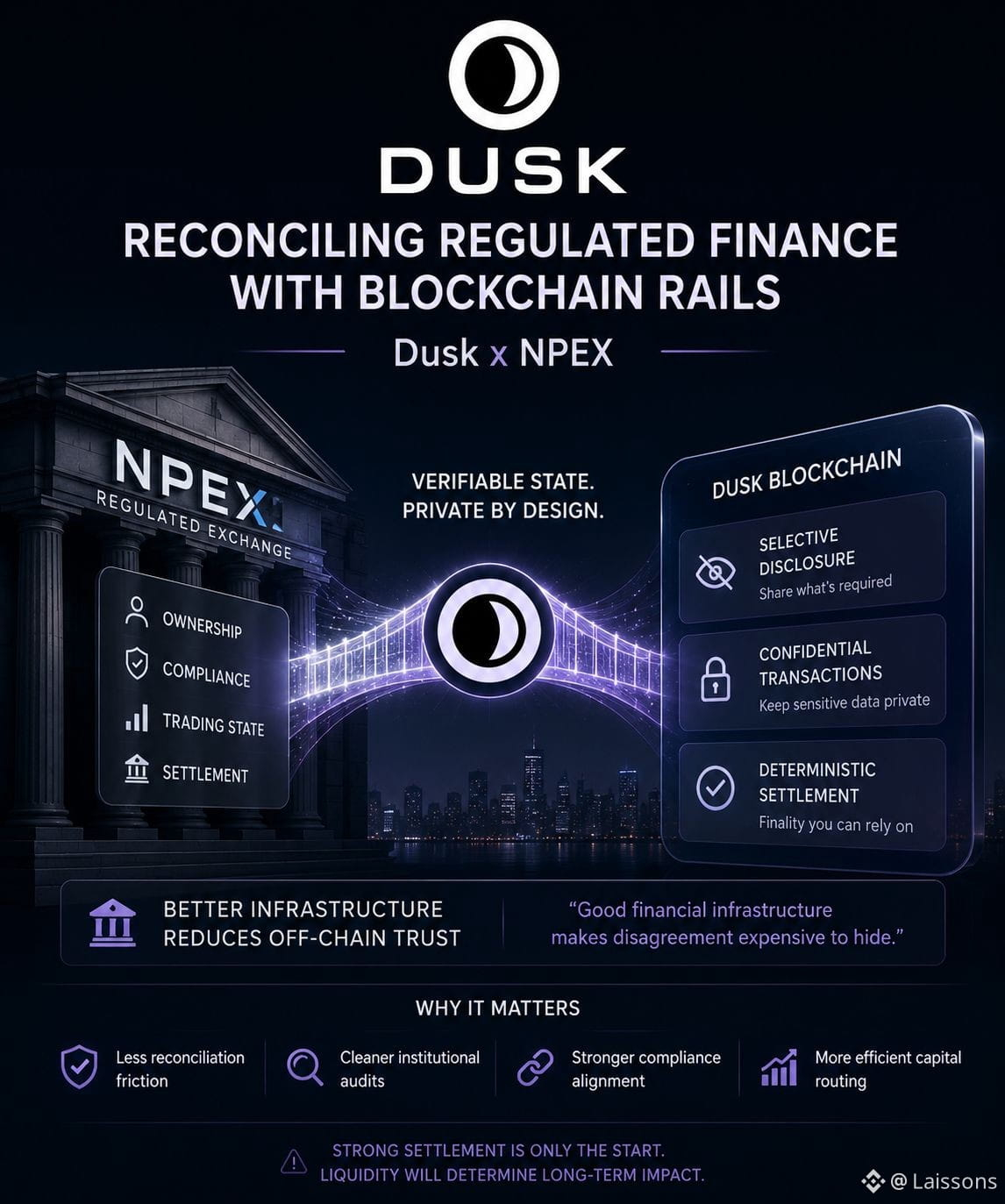
الأصل الذي ينتقل على السلسلة لا يكون مفيدًا إلا إذا أمكن الحفاظ على ملكيته، وحالة امتثاله، وحالته التداولية، وتسويته على نحو ثابت عبر دورة حياته الكاملة.
إن الجمع الذي تقدمه Dusk بين الإفصاح الانتقائي، والمعاملات السرية، والتسوية الحتمية أمر مثير للاهتمام لأنها تعالج الفجوة التشغيلية بين ما يُسمح للمؤسسة المالية بإظهاره وما تحتاجه البلوكشين للتحقق منه.
والنتيجة بالنسبة للمستثمر دقيقة: يجب أن تقلل البنية التحتية الأفضل من مقدار الثقة التي يحتاج المستخدمون إلى وضعها في التوفيق خارج السلسلة.
“البنية التحتية المالية الجيدة تجعل من الصعب إخفاء الخلاف.”
وهذا هو المكان الذي أعتقد أن لدى Dusk شيئًا يستحق الاختبار. إذا أمكن تمثيل نشاط NPEX بشكل متزايد عبر حالة على السلسلة قابلة للتحقق مع بقاء المعلومات الحساسة محصورة، فقد تحصل المؤسسات على طريقة أنظف لتدقيق المراكز دون كشف كل شيء علنًا.
الضعف يتمثل في السيولة. إن تحسين التسوية لا يؤدي تلقائيًا إلى خلق أسواق ثانوية نشطة. إذا ظلت الأوراق المالية المنظمة تُتداول بشكل خفيف، فقد تكون البنية التحتية قوية تقنيًا بينما تظل كفاءة رأس المال محدودة.
لذا أنا أراقب ما إذا كانت Dusk تقلل احتكاك التوفيق بدرجة كافية لتغيير كيفية توجيه المؤسسات لرأس المال والاحتفاظ به فعليًا.
#dusk #Dusk $DUSK
$AKE
هذا التمييز مهم مع NPEX.
الأصل الذي ينتقل على السلسلة لا يكون مفيدًا إلا إذا أمكن الحفاظ على ملكيته، وحالة امتثاله، وحالته التداولية، وتسويته على نحو ثابت عبر دورة حياته الكاملة.
إن الجمع الذي تقدمه Dusk بين الإفصاح الانتقائي، والمعاملات السرية، والتسوية الحتمية أمر مثير للاهتمام لأنها تعالج الفجوة التشغيلية بين ما يُسمح للمؤسسة المالية بإظهاره وما تحتاجه البلوكشين للتحقق منه.
والنتيجة بالنسبة للمستثمر دقيقة: يجب أن تقلل البنية التحتية الأفضل من مقدار الثقة التي يحتاج المستخدمون إلى وضعها في التوفيق خارج السلسلة.
“البنية التحتية المالية الجيدة تجعل من الصعب إخفاء الخلاف.”
وهذا هو المكان الذي أعتقد أن لدى Dusk شيئًا يستحق الاختبار. إذا أمكن تمثيل نشاط NPEX بشكل متزايد عبر حالة على السلسلة قابلة للتحقق مع بقاء المعلومات الحساسة محصورة، فقد تحصل المؤسسات على طريقة أنظف لتدقيق المراكز دون كشف كل شيء علنًا.
الضعف يتمثل في السيولة. إن تحسين التسوية لا يؤدي تلقائيًا إلى خلق أسواق ثانوية نشطة. إذا ظلت الأوراق المالية المنظمة تُتداول بشكل خفيف، فقد تكون البنية التحتية قوية تقنيًا بينما تظل كفاءة رأس المال محدودة.
لذا أنا أراقب ما إذا كانت Dusk تقلل احتكاك التوفيق بدرجة كافية لتغيير كيفية توجيه المؤسسات لرأس المال والاحتفاظ به فعليًا.
#dusk #Dusk $DUSK
$AKE