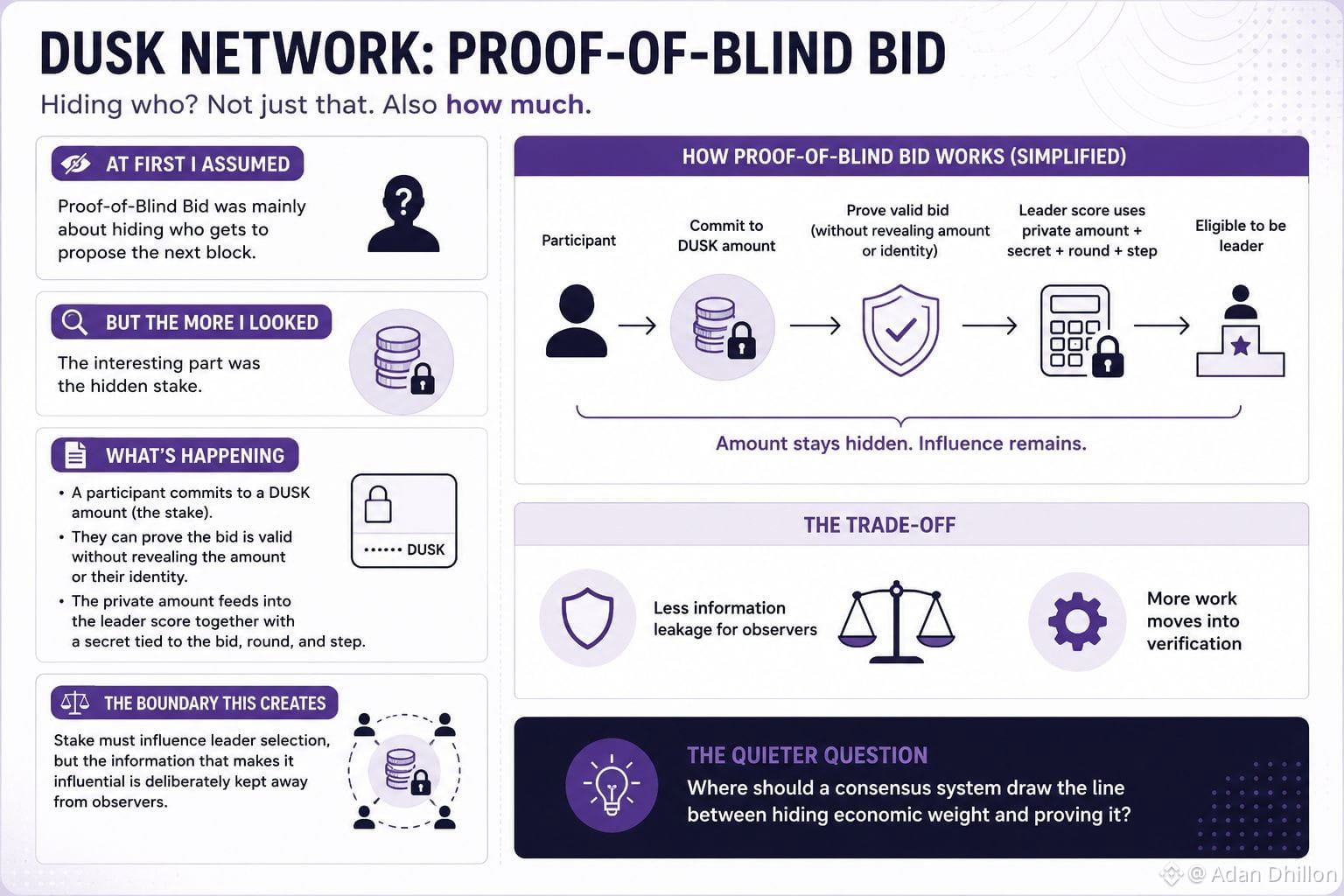
At first I assumed Dusk’s Proof-of-Blind Bid was mainly about hiding who gets to propose the next block. But the more I looked at the construction, the more interesting the hidden stake became. The bid commits to a DUSK amount, yet the participant can prove the bid is valid without exposing either the amount or identity. That private amount still feeds into the leader score alongside a secret tied to the bid, round, and step. What caught my attention is the boundary this creates. Stake still has to influence leader selection, but the information that makes it influential is deliberately kept away from observers. The mechanism therefore has to carry an economic signal and conceal that same signal at the same time. Maybe that is the real cost of this design: less information leakage means more of the work moves into verification. So the quieter question is, where should a consensus system draw the line between hiding economic weight and proving it?
@Dusk #dusk $DUSK
@Dusk #dusk $DUSK