كيف يتعامل STONfi مع العناوين القابلة للارتداد وغير القابلة للارتداد على TON
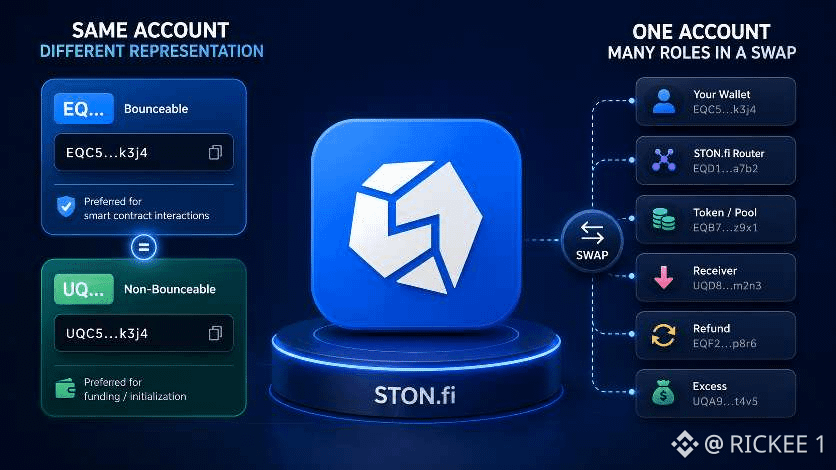
يمكن أن تبدو عناوين TON مختلفة بينما تشير إلى نفس الحساب على السلسلة. EQ... هي الصيغة القابلة للارتداد، بينما UQ... هي الصيغة غير القابلة للارتداد. عندما تكون مجموعة العُملات (workchain) ومعرّف الحساب متطابقين، يمكن لكلا الصيغتين تمثيل نفس الحساب.
ماذا يعني القابلية للارتداد
تشير القابلية للارتداد إلى سلوك الرسالة، وليس خاصية دائمة للحساب. يتضمن عنوان TON القابل للاستخدام بواسطة المستخدم علامات (flags) تساعد البرامج على تحديد كيفية التعامل مع الرسالة.
مع التسليم القابل للارتداد، إذا فشل المعالجة تحت ظروف قابلة للتطبيق، يمكن أن يعود المبلغ المتبقي باتجاه المُرسِل. وهذا يجعل الرسائل القابلة للارتداد مناسبة لتفاعلات العقود الذكية.
يُعد التسليم غير القابل للارتداد مفيدًا عند تمويل حساب لم تتم تهيئته بعد. على TON، تتمثل المحافظ بعقود ذكية، ويمكن معرفة عناوينها قبل النشر. يمكن أن يؤدي سلوك الارتداد غير المناسب للوجهة غير المُهيّأة إلى فشل عملية النقل بدلًا من تمويل الحساب.
كيف يستخدم STONfi العناوين
قد يشمل تبديل STONfi محفظة المستخدم المتصلة، ومراكز Jetton (Jetton masters)، والـ routers، والمسابح (pools)، والمستلم (receiver)، وعناوين الاسترداد (refund) والزيادة (excess).
تتمثل الوجهة المستهدفة للمعاملة الأولية في العقد الذي يستقبل رسالة المحفظة. يمكن أن تنتقل عناوين أخرى داخل الحمولة (payload) كقيم لعناوين TON.
منذ STONfi SDK v0.5.0، تستخدم معلمات الإخراج عناوين قابلة للارتداد لأن عقود البروتوكول يُفترض وجودها وتنفيذ المنطق. يتماشى ذلك مع ممارسة TON لتفاعلات العقود القائمة.
لماذا يجب على المطورين تحليل العناوين
خطأ شائع هو مقارنة EQ... و UQ... كسلاسل نصية عادية وافتراض أنهما محافظ مختلفة. بدلًا من ذلك، قم بتحليلها إلى كائنات Address مناسبة في TON ثم قارن مجموعة العُملات (workchain) ومعرّف الحساب الأساسي.
هذا مهم لعمليات التكامل والتحقق وبناء المعاملات. يجب على المطورين الحفاظ على workchain والاعتماد على أدوات TON الموثوقة لترميز العناوين.
$STON $RAY
#تحليل سعر BTC#
يمكن أن تبدو عناوين TON مختلفة بينما تشير إلى نفس الحساب على السلسلة. EQ... هي الصيغة القابلة للارتداد، بينما UQ... هي الصيغة غير القابلة للارتداد. عندما تكون مجموعة العُملات (workchain) ومعرّف الحساب متطابقين، يمكن لكلا الصيغتين تمثيل نفس الحساب.
ماذا يعني القابلية للارتداد
تشير القابلية للارتداد إلى سلوك الرسالة، وليس خاصية دائمة للحساب. يتضمن عنوان TON القابل للاستخدام بواسطة المستخدم علامات (flags) تساعد البرامج على تحديد كيفية التعامل مع الرسالة.
مع التسليم القابل للارتداد، إذا فشل المعالجة تحت ظروف قابلة للتطبيق، يمكن أن يعود المبلغ المتبقي باتجاه المُرسِل. وهذا يجعل الرسائل القابلة للارتداد مناسبة لتفاعلات العقود الذكية.
يُعد التسليم غير القابل للارتداد مفيدًا عند تمويل حساب لم تتم تهيئته بعد. على TON، تتمثل المحافظ بعقود ذكية، ويمكن معرفة عناوينها قبل النشر. يمكن أن يؤدي سلوك الارتداد غير المناسب للوجهة غير المُهيّأة إلى فشل عملية النقل بدلًا من تمويل الحساب.
كيف يستخدم STONfi العناوين
قد يشمل تبديل STONfi محفظة المستخدم المتصلة، ومراكز Jetton (Jetton masters)، والـ routers، والمسابح (pools)، والمستلم (receiver)، وعناوين الاسترداد (refund) والزيادة (excess).
تتمثل الوجهة المستهدفة للمعاملة الأولية في العقد الذي يستقبل رسالة المحفظة. يمكن أن تنتقل عناوين أخرى داخل الحمولة (payload) كقيم لعناوين TON.
منذ STONfi SDK v0.5.0، تستخدم معلمات الإخراج عناوين قابلة للارتداد لأن عقود البروتوكول يُفترض وجودها وتنفيذ المنطق. يتماشى ذلك مع ممارسة TON لتفاعلات العقود القائمة.
لماذا يجب على المطورين تحليل العناوين
خطأ شائع هو مقارنة EQ... و UQ... كسلاسل نصية عادية وافتراض أنهما محافظ مختلفة. بدلًا من ذلك، قم بتحليلها إلى كائنات Address مناسبة في TON ثم قارن مجموعة العُملات (workchain) ومعرّف الحساب الأساسي.
هذا مهم لعمليات التكامل والتحقق وبناء المعاملات. يجب على المطورين الحفاظ على workchain والاعتماد على أدوات TON الموثوقة لترميز العناوين.
$STON $RAY
#تحليل سعر BTC#