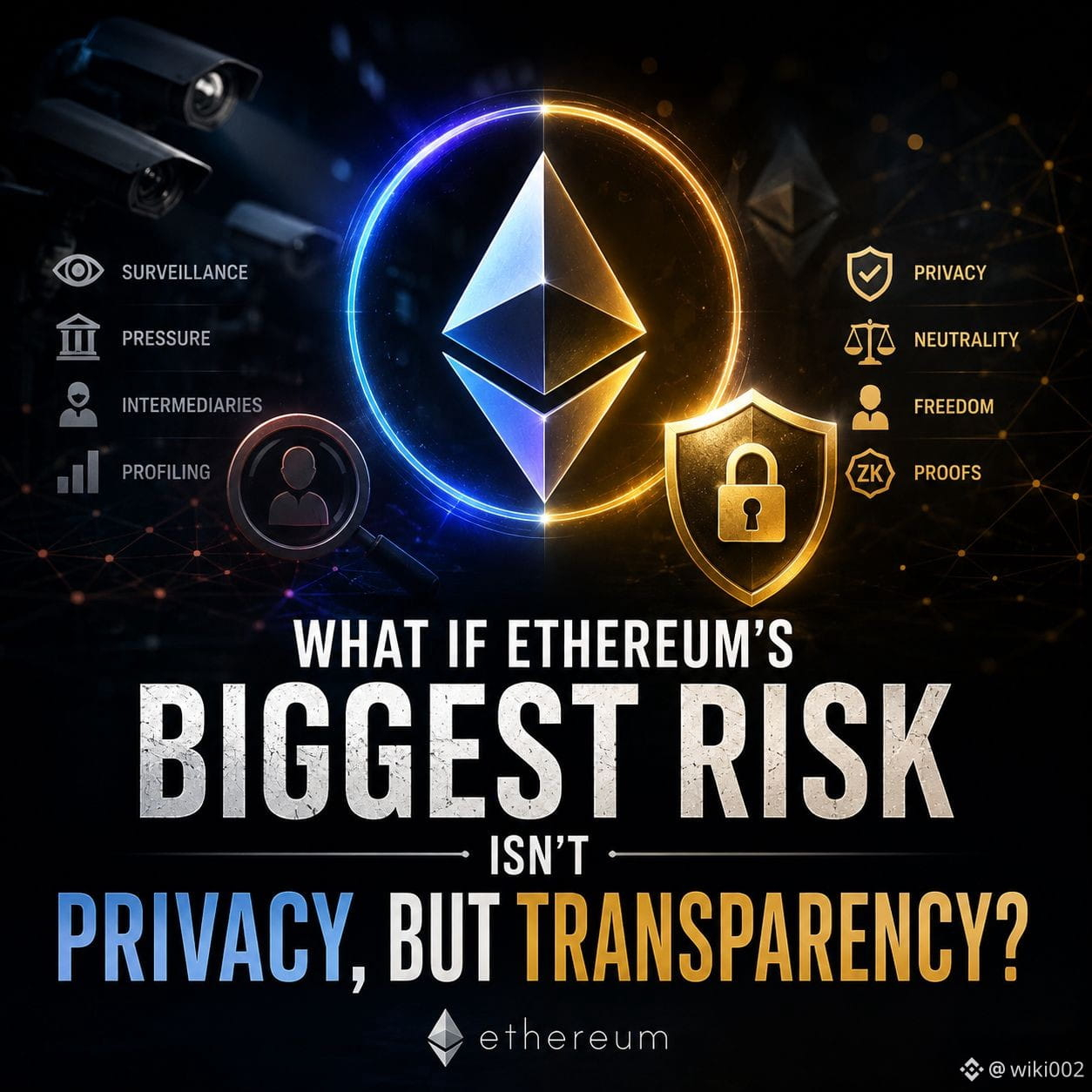
ماذا لو كانت أكبر مشكلة حياد في إيثيريوم ليست الخصوصية بل حقيقة أن كل شيء مرئي؟
كلما فكرت أكثر، زاد شعوري بعدم الارتياح تجاه الشفافية الراديكالية.
يُعدّ السجلّ العام ممتازًا للتحقق. لكن عندما يمكن ملاحظة كل معاملة، وتفاعل المحفظة، والعلاقة المالية، تصبح هذه الشفافية مفيدة لأكثر من مجرد المستخدمين.
يمكن للمدققين رؤيتها.
يمكن لشركات التحليلات رسم خريطتها.
يمكن للوسطاء اتخاذ إجراءات بناءً عليها.
يمكن للحكومات الضغط من خلالها.
ويمكن للأسواق تحويلها إلى مصدر ربح.
وهذا يخلق مشكلة لا يناقشها إيثيريوم بوضوح نادرًا
عندما يمكن للبنية التحتية رؤية كل شيء، فكم من الوقت يمكن أن تظل محايدة؟
المشكلة ليست أن الجهات التنظيمية أو المحققين أو أنظمة الامتثال يجب أن تكون عمياء.
المشكلة هي ما إذا كان ينبغي تعريض الجميع للعلن افتراضيًا حتى يكون التحقق المشروع ممكنًا.
أعتقد أن الاتجاه الأفضل هو الإفصاح الانتقائي.
أثبت أن معاملة ما تستوفي شرطًا دون كشف تاريخك المالي بالكامل.
أثبت الأهلية دون نشر بيانات هوية غير ضرورية.
أثبت الامتثال دون تحويل البلوك تشين إلى طبقة مراقبة دائمة.
وهنا تصبح إثباتات المعرفة الصفرية والاعتمادات/الشهادات المحافظة على الخصوصية مهمة.
ليس لأن الخصوصية تعني إخفاء كل شيء.
بل لأن البنية التحتية الجيدة ينبغي أن تكشف ما يلزم التحقق منه فقط، لا كل ما يمكن ملاحظته.
إذا أراد إيثيريوم الحفاظ على حيادية موثوقة على نطاق واسع، فلا يمكن للخصوصية أن تبقى ميزة صغيرة على الأطراف.
يجب أن تصبح جزءًا من المعمار.
السؤال الحقيقي ليس: هل يجب أن يكون إيثيريوم شفافًا؟
إنه
ما المعلومات التي يحتاجها “شبكة” محايدة فعلًا لرؤيتها؟
قد يصنع هذا الفرق شكل المرحلة التالية من إيثيريوم أكثر من أي ترقية أخرى لقابلية التوسع.💪
#Ethereum #Privacy #Web3 $ETH $BTC $BNB @Ethereum
كلما فكرت أكثر، زاد شعوري بعدم الارتياح تجاه الشفافية الراديكالية.
يُعدّ السجلّ العام ممتازًا للتحقق. لكن عندما يمكن ملاحظة كل معاملة، وتفاعل المحفظة، والعلاقة المالية، تصبح هذه الشفافية مفيدة لأكثر من مجرد المستخدمين.
يمكن للمدققين رؤيتها.
يمكن لشركات التحليلات رسم خريطتها.
يمكن للوسطاء اتخاذ إجراءات بناءً عليها.
يمكن للحكومات الضغط من خلالها.
ويمكن للأسواق تحويلها إلى مصدر ربح.
وهذا يخلق مشكلة لا يناقشها إيثيريوم بوضوح نادرًا
عندما يمكن للبنية التحتية رؤية كل شيء، فكم من الوقت يمكن أن تظل محايدة؟
المشكلة ليست أن الجهات التنظيمية أو المحققين أو أنظمة الامتثال يجب أن تكون عمياء.
المشكلة هي ما إذا كان ينبغي تعريض الجميع للعلن افتراضيًا حتى يكون التحقق المشروع ممكنًا.
أعتقد أن الاتجاه الأفضل هو الإفصاح الانتقائي.
أثبت أن معاملة ما تستوفي شرطًا دون كشف تاريخك المالي بالكامل.
أثبت الأهلية دون نشر بيانات هوية غير ضرورية.
أثبت الامتثال دون تحويل البلوك تشين إلى طبقة مراقبة دائمة.
وهنا تصبح إثباتات المعرفة الصفرية والاعتمادات/الشهادات المحافظة على الخصوصية مهمة.
ليس لأن الخصوصية تعني إخفاء كل شيء.
بل لأن البنية التحتية الجيدة ينبغي أن تكشف ما يلزم التحقق منه فقط، لا كل ما يمكن ملاحظته.
إذا أراد إيثيريوم الحفاظ على حيادية موثوقة على نطاق واسع، فلا يمكن للخصوصية أن تبقى ميزة صغيرة على الأطراف.
يجب أن تصبح جزءًا من المعمار.
السؤال الحقيقي ليس: هل يجب أن يكون إيثيريوم شفافًا؟
إنه
ما المعلومات التي يحتاجها “شبكة” محايدة فعلًا لرؤيتها؟
قد يصنع هذا الفرق شكل المرحلة التالية من إيثيريوم أكثر من أي ترقية أخرى لقابلية التوسع.💪
#Ethereum #Privacy #Web3 $ETH $BTC $BNB @Ethereum