
Ethereum - The Sleeping Giant
How does the rest of this cycle look for the worlds second largest Crypto?
Today I am going to go over, in detail, all of my thoughts to do with Ethereum. It’s performance this cycle, where its currently at, and what I believe is likely to happen as we move forward into the remainder of this cycle. There’s no two ways about it - this has been a very challenging cycle for Ethereum and altcoin holders so far.
The common consensus is that Ethereum is failing and has had a weak cycle. But I do not share this view whatsoever, and in Crypto, almost always, the general consensus of how good something is, simply comes down to how high the number of its token currently sits. And it is for this exact reason why the vast majority of investors never manage to secure profitable positions, because they only see value in the number going up, not what it is actually doing before the number goes up. You could have the exact same asset with the exact same attributes, and when it is priced at $10 no one thinks it’s any good, and then 3 months later when its pushed to $100, everyone thinks its good - even though the attributes haven’t changed at all. This is the kind of position I think we are at with Ethereum.
It has had a challenging cycle, with extremely trying and exhausting price action - sure. But at the exact same time, it has been building one of the strongest fundamental and adoption cases within the entire space. The crowd aren’t interested in it because the price has been difficult, and because the price has been difficult, it is seen as “dead”. But in my opinion, that could not be further from the truth.
So, within this edition, I will cover every single part of Ethereum and why I believe it is more bullish than the crowd currently perceive.
Quick note before we do - I have built some more really successful, custom designed by me, TradingView indicators, that are FREE to use for paid subscribers. All the info and where to easily download them, is provided at the end.
Check it out below.
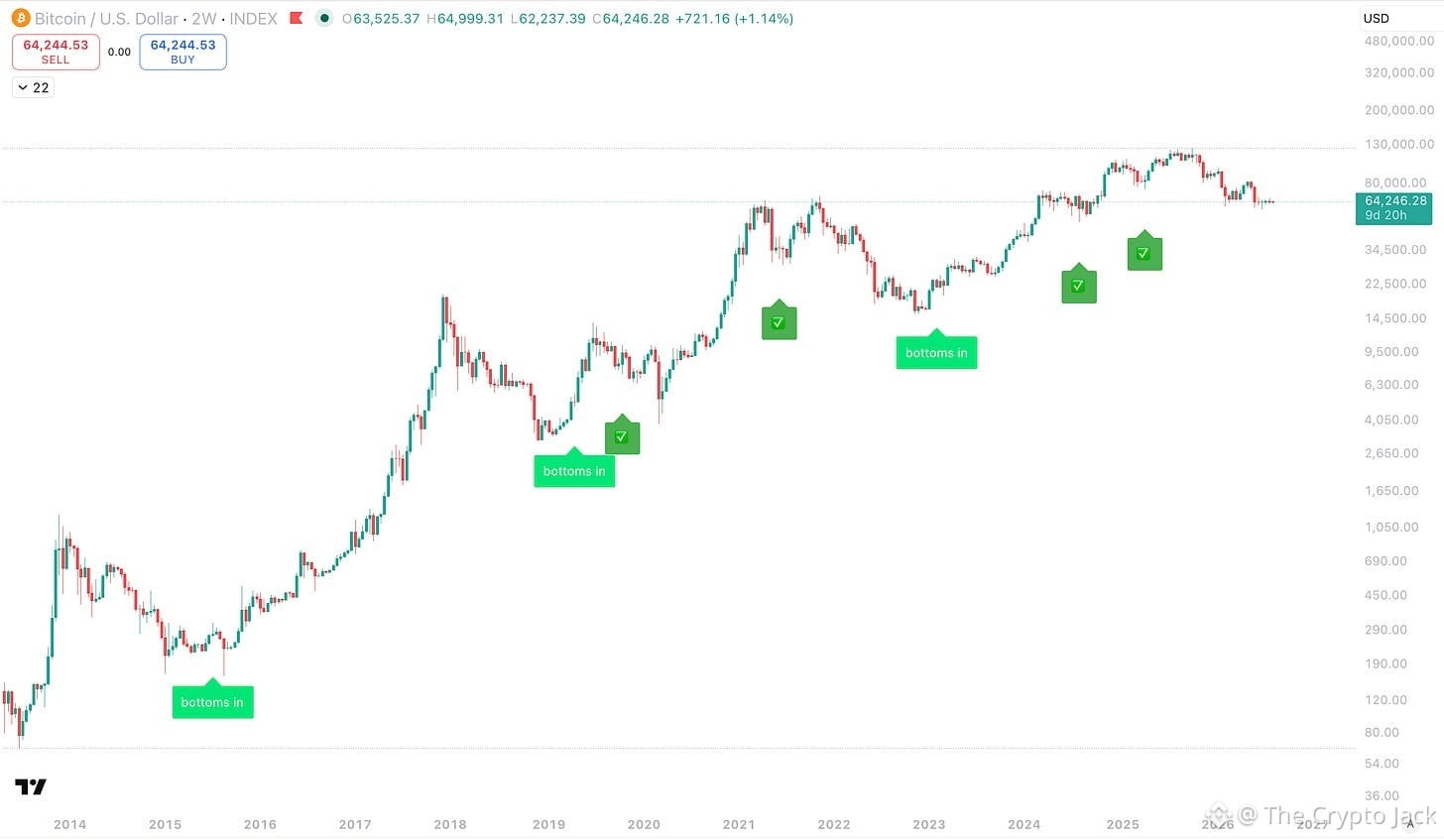
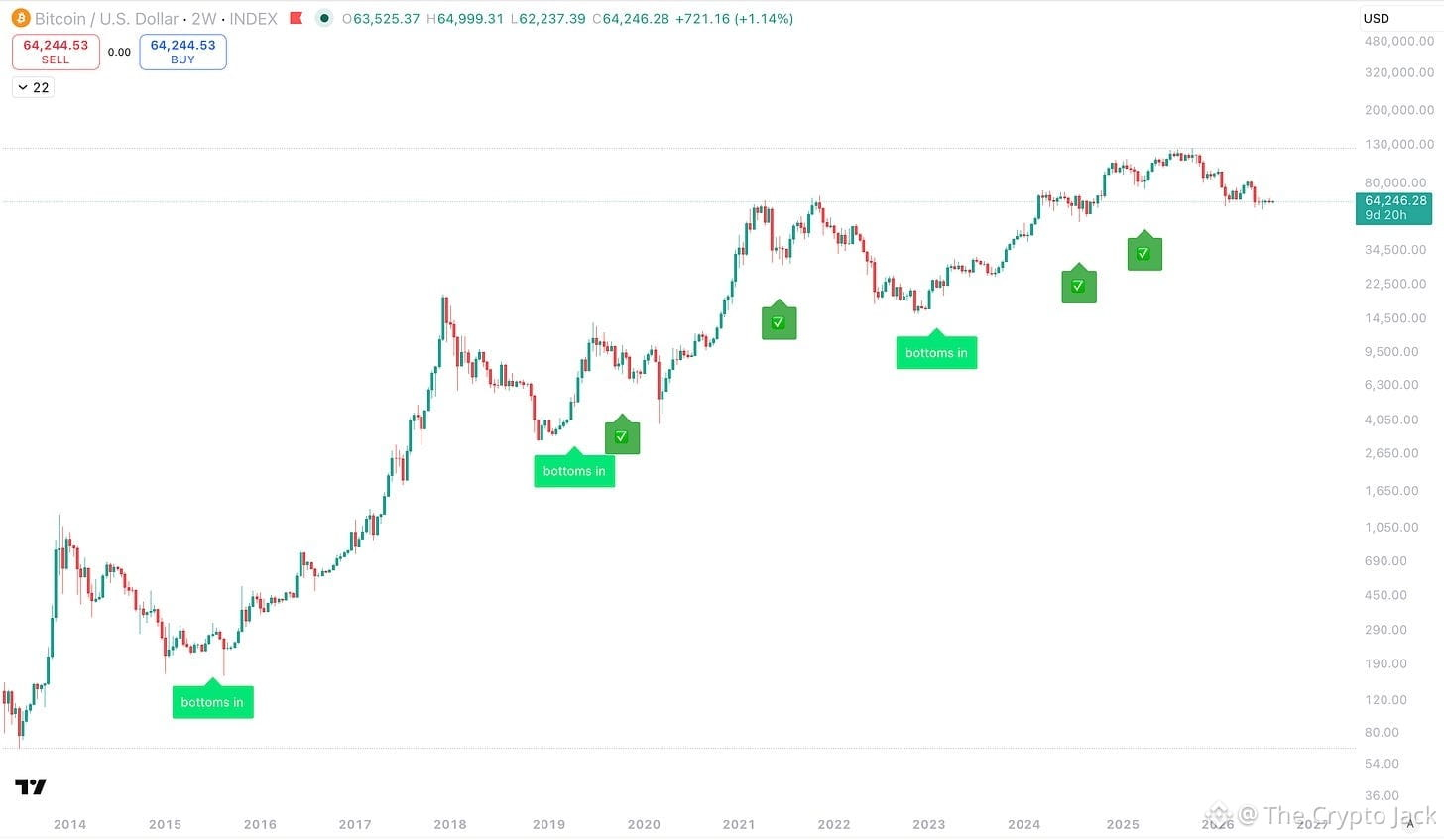
I have designed and developed a “bottoms in” + major local low indicator, that has a 100% success rate in confirming if the bottom is in, apart from the black swan event that unfolded in 2020, which is hard to count. It recognises major lows, and key swing lows in the uptrend cycle.
Mass Adoption
You hear this term every now and again in Crypto. The dream of mass adoption and how decentralised technology will end up touching every part of daily lives. And although this can sometimes be blown out of proportion, I genuinely believe Ethereum will achieve some sense of mass adoption over the next 10 years. Before you reject this idea, bare with me throughout this newsletter.
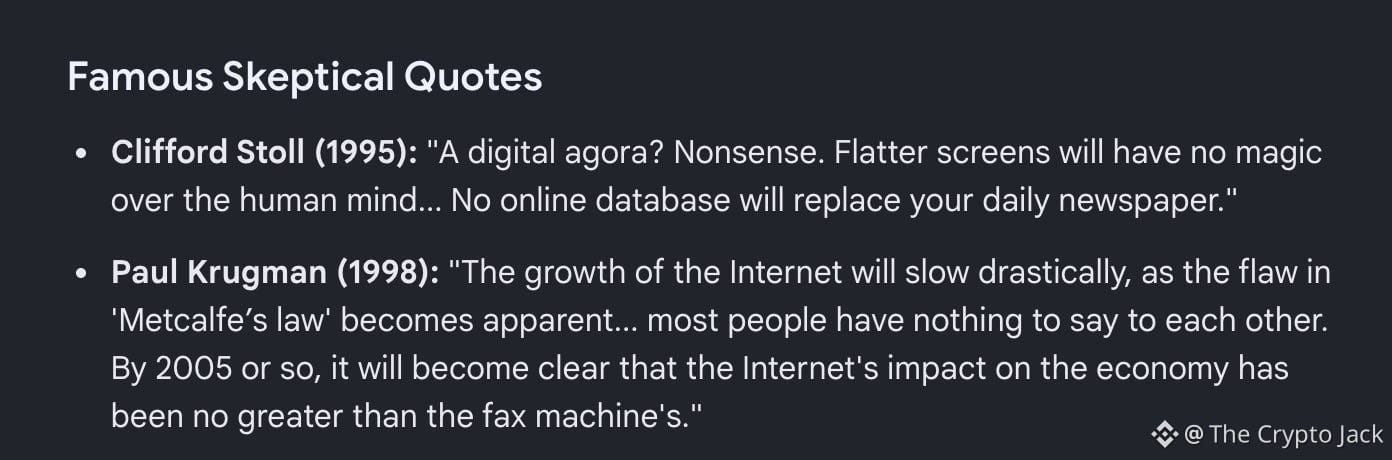
Cast your mind back 20+ years ago. A world without iphones, social media, and very basic internet. If we push back 25 years ago, there isn’t really internet at all. Now, within that relatively short space of time, our world has been revolutionised by the internet and smart phones. Every single thing we do on a daily basis is in some way connected to tthe internet and smart phones. Back then, if you had told someone that this would be the case today, you would have had many doubters, simply because in that moment they only know what they know, and struggle to see what has never been before. And this is how it is at every revolutionary jump in civilisation. The same thing would have happened with cars, electricity, telephones, aviation, the list goes on.
Decentralised tech/Tokenisation and AI is that next evolution, and it is happening right now, under our very eyes. But the crowd can’t see this because the price has not reflected it yet.
EVERYTHING IS GOING ONCHAIN
In the same way that everything moved online, everything will be moving on-chain. Everything will be tokenised. And this is simply because it is the superior evolution of the internet. The audibility, speed and trust-less nature of decentralised technology far outweigh the current systems the world is built upon. Maybe, far down the track from here, it won’t be Ethereum that wins this race, but there will be a winner.
However, as of right now, the clear winner is Ethereum.
And over the last few years, Ethereum has been building an insane level of momentum through government, institutional and enterprise level adoption, whilst the crowd continues to ignore it all, because of price.
Let’s go over the main bulk of what is happening both in front of, and behind the scenes in terms of this tokenisation and adoption with gov/institutions.
Ethereum (mainnet + L2s) has dominated tokenised real-world assets (RWAs) and funds, typically holding 60% or more of tokenised RWAs and a majority share of tokenised funds (over 57% in mid-2026 data). Tokenised fund levels expanded sharply, from low single digit billions toward $30B+ range.
BlackRock’s BUIDL (USD Institutional Digital Liquidity Fund): Remains the flagship, reaching ~$2.5–2.9B AUM.
JPMorgan: Launched MONY on public Ethereum in December 2025 (seeded with $100M of its own capital). Followed with a second fund, JLTXX (OnChain Liquidity-Token Money Market Fund), in May 2026, designed partly as a reserve asset for stablecoin issuers. JPM Coin became available to institutional clients on Base (Ethereum L2) around April 2026.
Franklin Templeton, Fidelity, Amundi, Invesco, and others: Multiple tokenised money market / government securities funds live or expanded on Ethereum. Amundi, Europe’s largest asset manager, has been actively involved in tokenised products and settlements.
Crédit Agricole: On July 1, 2026, launched the MiCA-compliant euro stablecoin EURXT on Ethereum. The first live use was settling a subscription into a tokenised Amundi Luxembourg UCITS money market fund described as a European first for euro stablecoin settlement of a tokenised UCITS fund. Initial circulation 20 million tokens, fully backed 1:1 by euro reserves.
Broader RWA activity: Ethereum mainnet alone hosted $15–17B+ in tokenised RWAs in various mid-2026 snapshots (higher when including L2s), with strong shares in Treasuries, private credit, and funds. Players like Ondo, Securitize, ChinaAMC, and others issued products. Overall on-chain RWA markets grew substantially.
Other institutional builds: Examples include tokenised stocks/ETFs (e.g., Kraken xStocks, Ondo Global Markets), Ant Group’s Jovay L2 for institutional tokenisation, ADI Chain (backed by IHC/Abu Dhabi interests), and various bank/asset manager pilots moving to production.
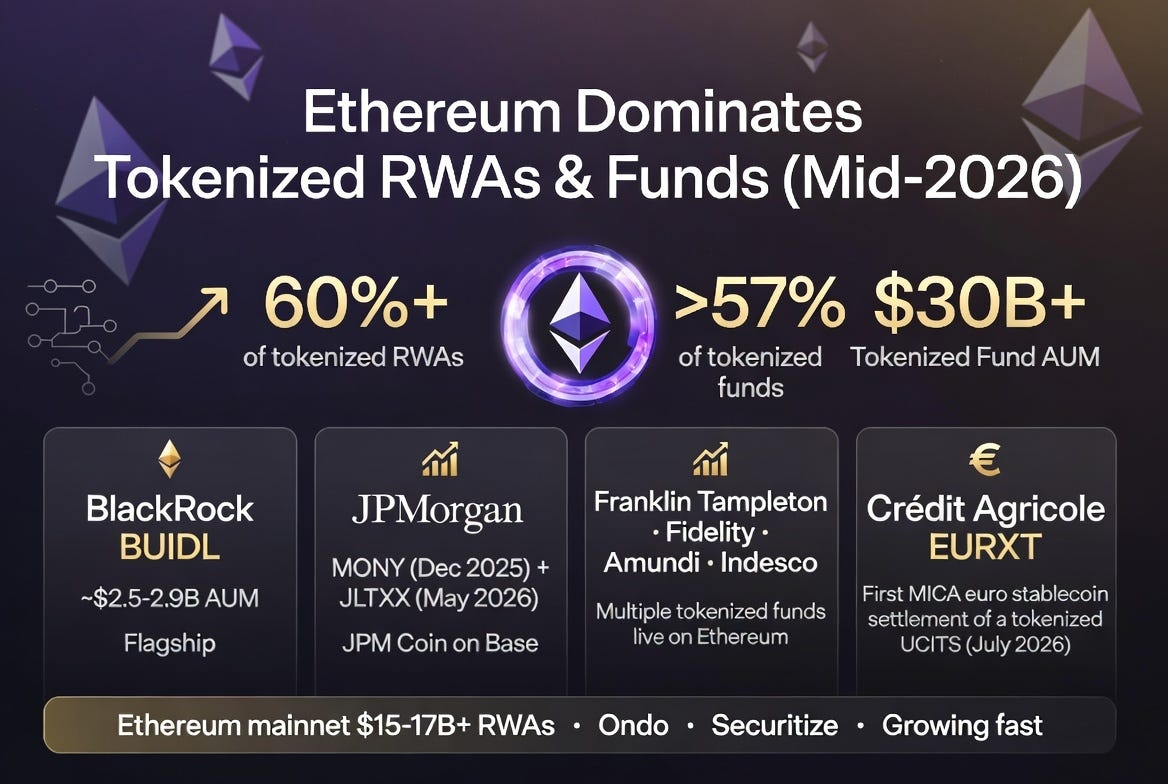
What we can see here is that the largest institutions and government bodies have already launched tokenisation on Ethereum.
Now, I know you would’ve known about some of the above, but I bet you did not know about all of them. Because a lot of this is happening quite silently, in the background, while the biggest financial bodies in the world gain traction on the Ethereum network.
LAYER 2’s & STABLECOINS
On top of all the above, Ethereum is the chain and foundation of choice for anything of true large scale significance.
Ethereum and its L2s consistently hold the largest share of global stablecoin supply, often 50% - 60% on mainnet alone, with $155–168B+ in 2026 snapshots against a global market that approached or exceeded $300B.
Robinhood Chain: Public mainnet launched around July 1, 2026. Focused on financial services, tokenised assets/stocks; quickly showed high throughput and activity. Robin Hood is one of the biggest investement platforms in the USA.
Base (Coinbase): Continued as a leading L2 by activity, users, and volume. Frequently cited in institutional contexts. Coinbase is one of Cryptos native largest companies.
Anyone who is anyone, is building their tokenisation and stable-coin services on top of Ethereum. It is already, quite literally, the home of digital finance.
It IS Crypto.
ETFs
Then we lastly have the ETFs in terms of $ETH accumulation:
U.S. spot Ethereum ETFs: Accumulated cumulative net inflows exceeding $11B with BlackRock’s ETHA being the leader. Staking-enabled products also launched, e.g BlackRock ETHB distributing staking rewards.
Corporate digital asset treasuries (e.g., BitMine, SharpLink) accumulated large ETH holdings, collectively meaningful percentages of supply in peak reports (billions of dollars). ETFs + treasuries held over 10 million ETH at points in 2025.
Broader access: Morgan Stanley / E*TRADE enabled ETH (alongside BTC/SOL) trading for eligible customers. Brokerages and platforms expanded on-chain product offerings.
Overall, the Total Value Secured On Ethereum in 2026 is $300bn+
To give us a true idea of the scale of dominance.
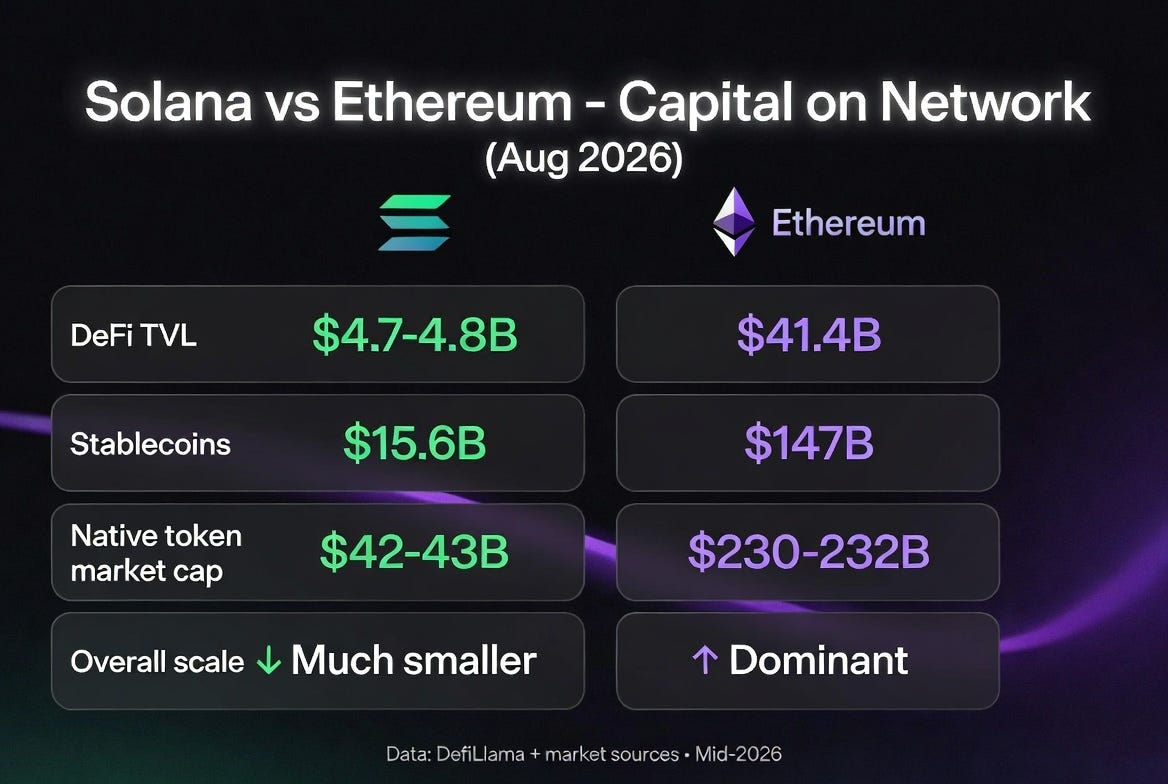
Don’t get me wrong, this is not to slight Solana - I hold $SOL. They will have different roles in the future. I am only comparing them here like this because it demonstrates the sheer scale of what Ethereum is doing in this space.
So, I think its pretty easy to establish from everything that has happened so far, and the momentum that Ethereum has gained adoption wise over the last 18 months, that this is not something that is just going to stop, regardless of price action. Tokenisation is not just all of a sudden going to not be a thing, and it is clear that Ethereum is the chosen network for any level of serious player that values their security. Ethereum is it.
Although I mentioned mass adoption at the beginning, that was mainly to make the point that the overall vision is far beyond what we see now. However, I know you guys aren’t interested in what happens by 20 years. You want to know what happens in the next 1-2 years, and rightly so! It’s great that Ethereum has all of these very positive attributes and adoptive momentum, but what about the price bro?
So let’s now talk about the chart, price, and how things may look over the next 1- 2+ years.
How Much Will The Number Go Up?
At the end of the day, that is the main thing we care about, and there is absolutely nothing wrong with that - we are investors. I genuinely enjoy the fundamental aspect of this space and the changes that are happening, but I would be hard pressed to say that I would be here as much as I am if I was not financially involved in the outcome.
So, ultimately, the fundamental and adoptive aspects of this are important because they provide the insight into value creation. But that value must reflect into the price of $ETH for it to actually mean anything.
With that in mind, before I start pulling up charts, I want to talk about the value accrual into the $ETH token, and cover off some very key FUD about that.
“The ETH Token Doesn’t Accrue Value Bro”
Don’t you find it interesting how FUD always comes out when an asset’s price is at its lows? Well, it’s not interesting, really, it’s just human emotion. Humans have a very bad habit of inventing things to fear when a situation isn’t going the way they expected.
One of the biggest critiques of the ETH token right now is that it “doesn’t accrue value” and is therefore not valuable. I want to quickly put this to bed before we even look at the chart.
In short, Ethereum is not a company. You cannot look at it like a product driven business and value it the same way you value a stock based on sales or earnings. The reason so many people fail to understand ETH’s value capture is because they are looking at it through the wrong lens.
Ethereum is a network that secures capital.
The vehicle that secures that capital is $ETH.
$ETH is not a stock. It is a token, a gateway, and a lock.
The value of $ETH is therefore directly connected to the amount of capital the Ethereum network secures. If Ethereum is going to secure trillions of dollars, you cannot have the token that does the securing only worth a few tens of billions. That would be an economic vulnerability.
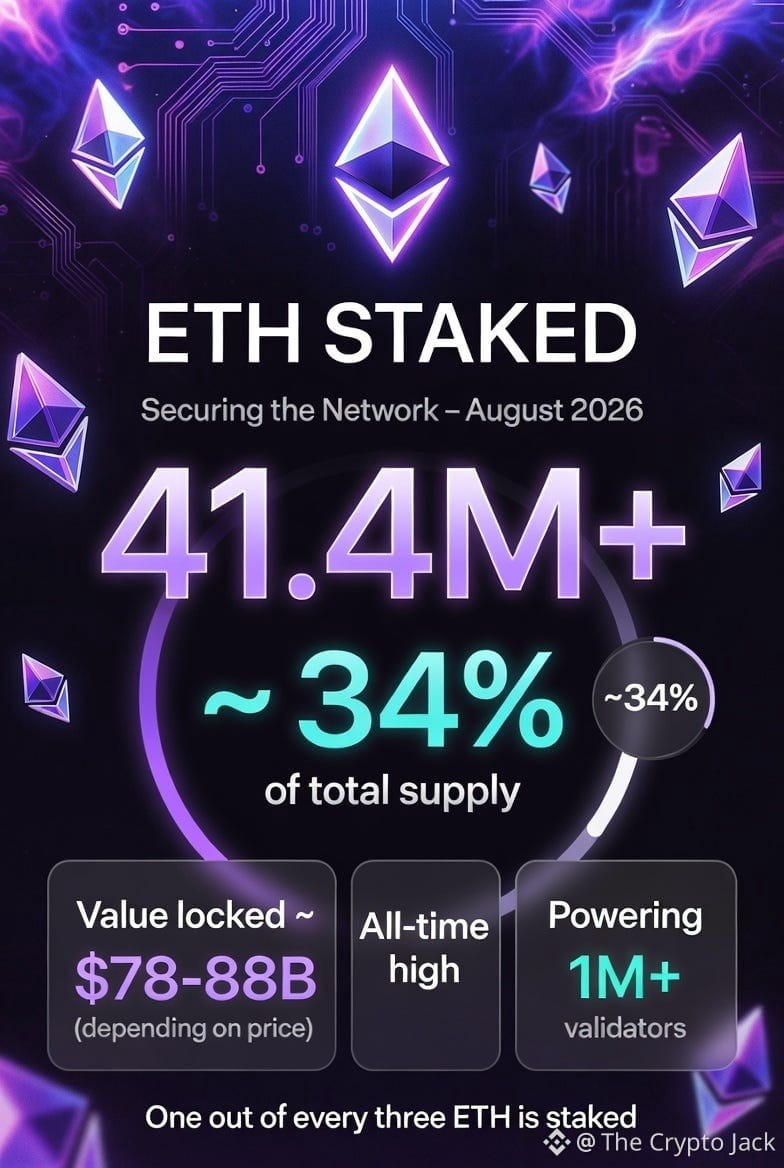
$ETH is the economic security layer of the network and It does this primarily through staking.
Roughly 41.4 million ETH (about 34% of the total supply) is currently staked, locking down over $78–88 billion in pure economic security. That staked ETH is what makes attacking the network prohibitively expensive. The more capital the network secures (stablecoins, RWAs, DeFi, L2s, tokenised funds, etc.), the more valuable the security layer needs to be, and the more demand there is for ETH itself = high value.
On top of staking there are multiple ongoing demand sinks:
Gas fees (even at low levels, every transaction still requires ETH)
L2 settlement and data availability
Collateral in DeFi
The growing tokenised RWA and fund market that prefers to settle on Ethereum
All of these create continuous structural demand for the token that sits at the base of the stack. So when people say “ETH doesn’t accrue value,” what they usually mean is “I don’t see a traditional P/E ratio.” They’re right, there isn’t one. But that doesn’t mean there’s no value accrual. It just means the value accrues through economic security and network demand rather than corporate profits. The more capital Ethereum secures, the more valuable the lock that secures it must become.
That lock is $ETH.
I hope that breakdown has helped you understand the value capture and proposition, friends.
The Ethereum Chart
There are many people out there who disagree with me, but imo, $ETH is vastly undervalued.
Remember, when we are making this judgement we are not just thinking about today. We are thinking about what has happened up until today, and where that momentum takes us 1, 3, 5, and 10 years down the line. And based on the position Ethereum is taking in the global shift to tokenisation, its token is very undervalued.
$ETH will be the lock that secures the global digital financial system - all of the largest institutions are already building on it.
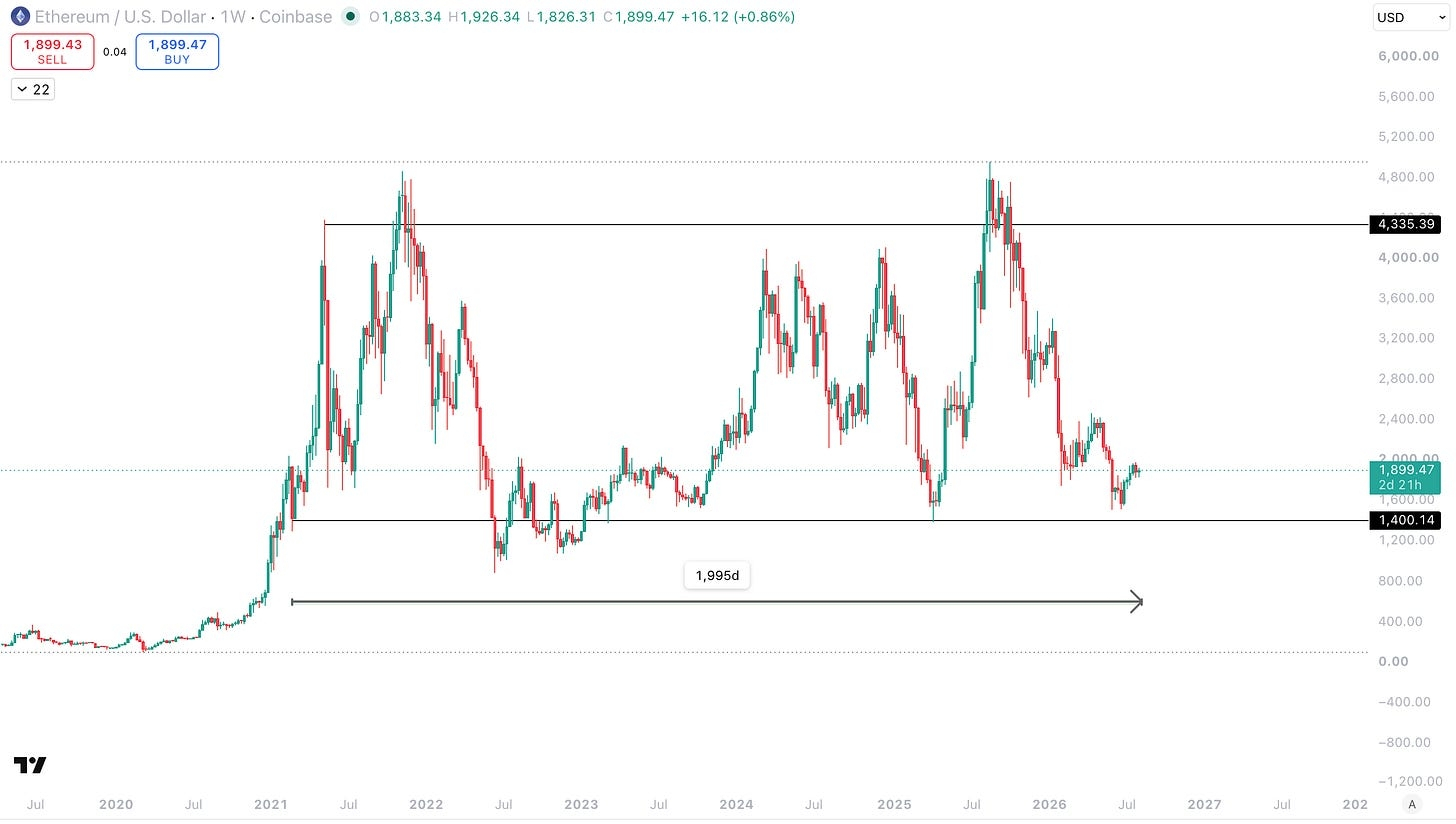
However, we cannot deny the fact that the chart is not reflecting this. BUT that is exactly the kind of opportunity that you want as an investor.
The entire game here is finding an asset that is undervalued based on its current position and future, and buying it before that value is actualised into reality. If you cannot see why that is the objective, then you should not be investing your money, because you do not understand how to play.
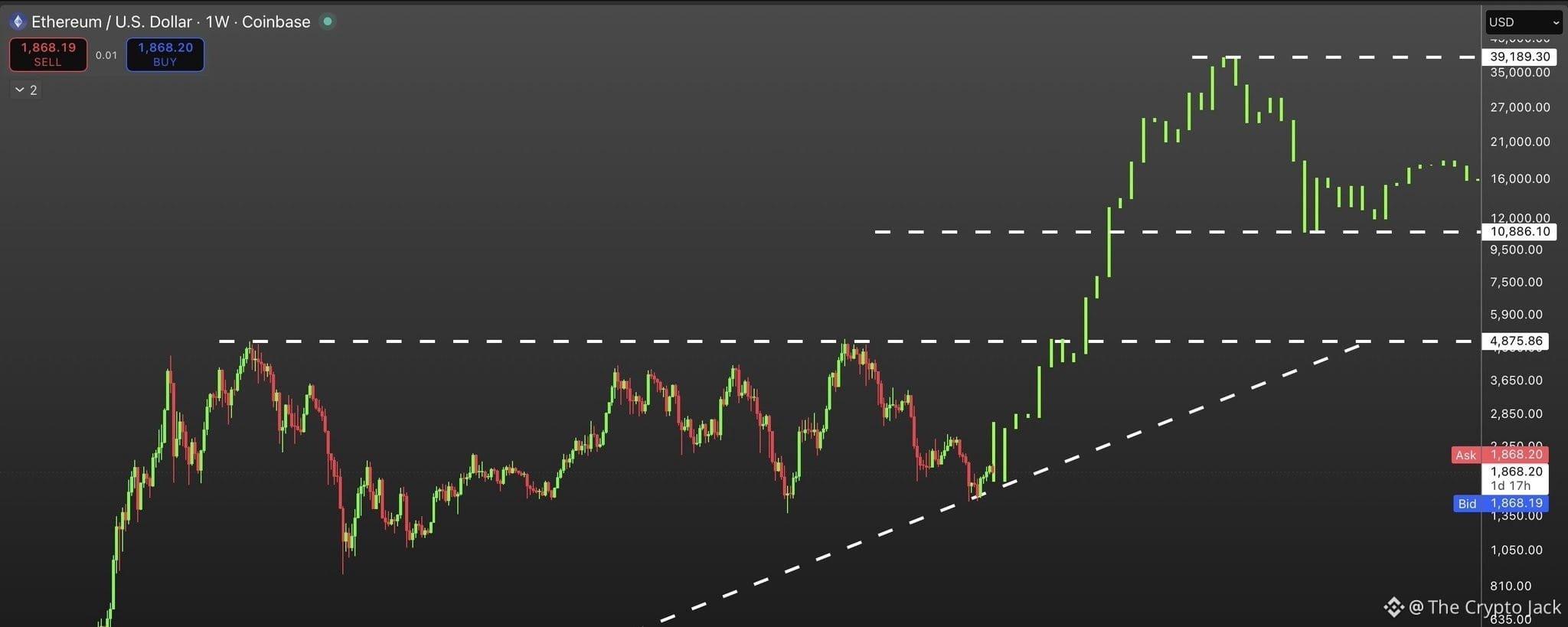
$ETH has been building one of the largest ever bases for any asset I have ever seen. I am not sure there is an asset that like this that has a base as long as this, at 5.5 years. And these kinds of bases are very boring during them, but VERY explosive and strong once they are done.
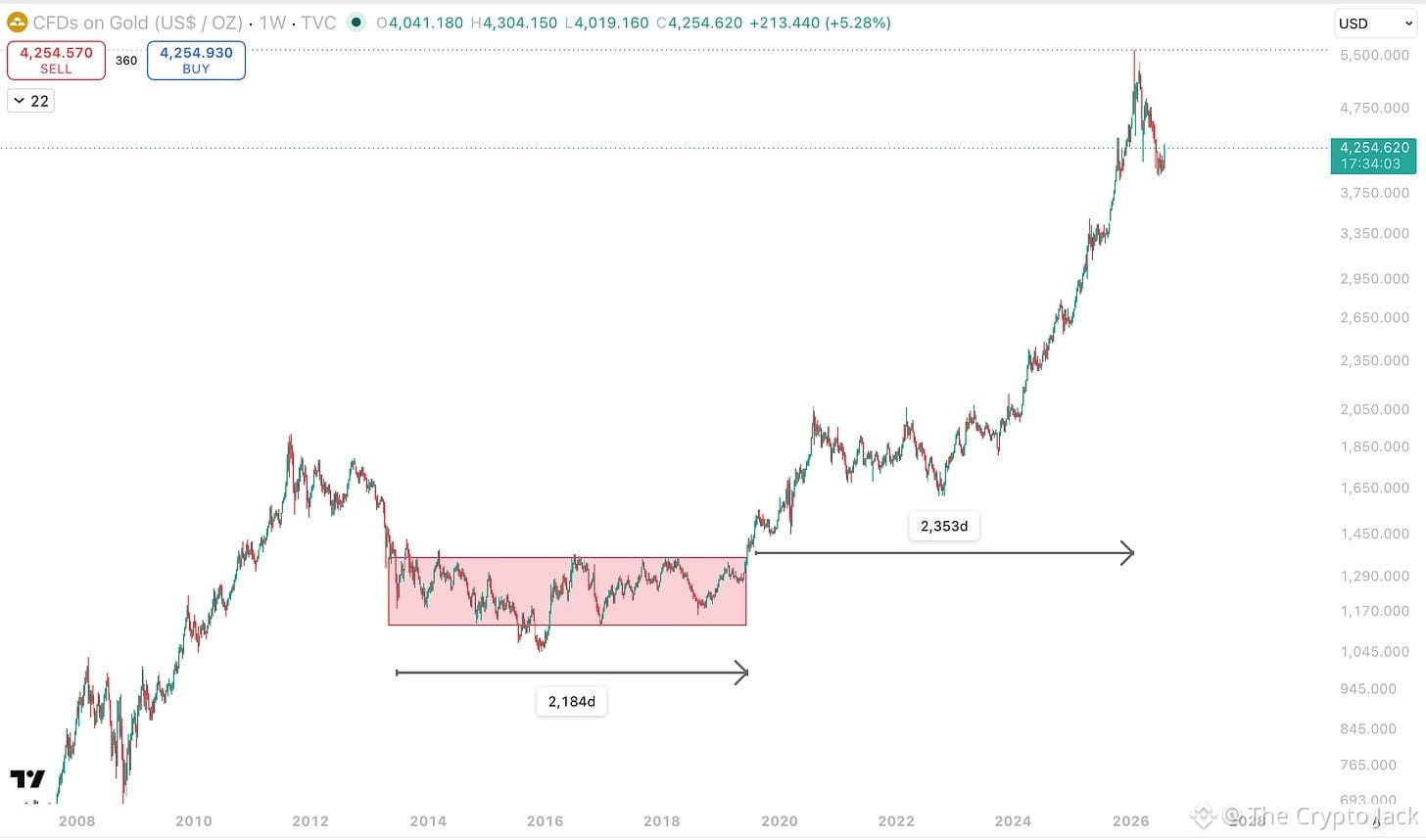
As an example, and one of the main ones I can find with a longer consolidation, GOLD had a very similarly shaped range at 2,184 days. From there, it went on to push in price for even longer than that at 2,353 days.
I’m not saying that $ETH will pump for 7 years straight. The point I’m making here is that these kinds of ranges are almost always an asset building extremely strong foundations for the next phase of their price cycle.
“The bigger the base, the higher in space”.
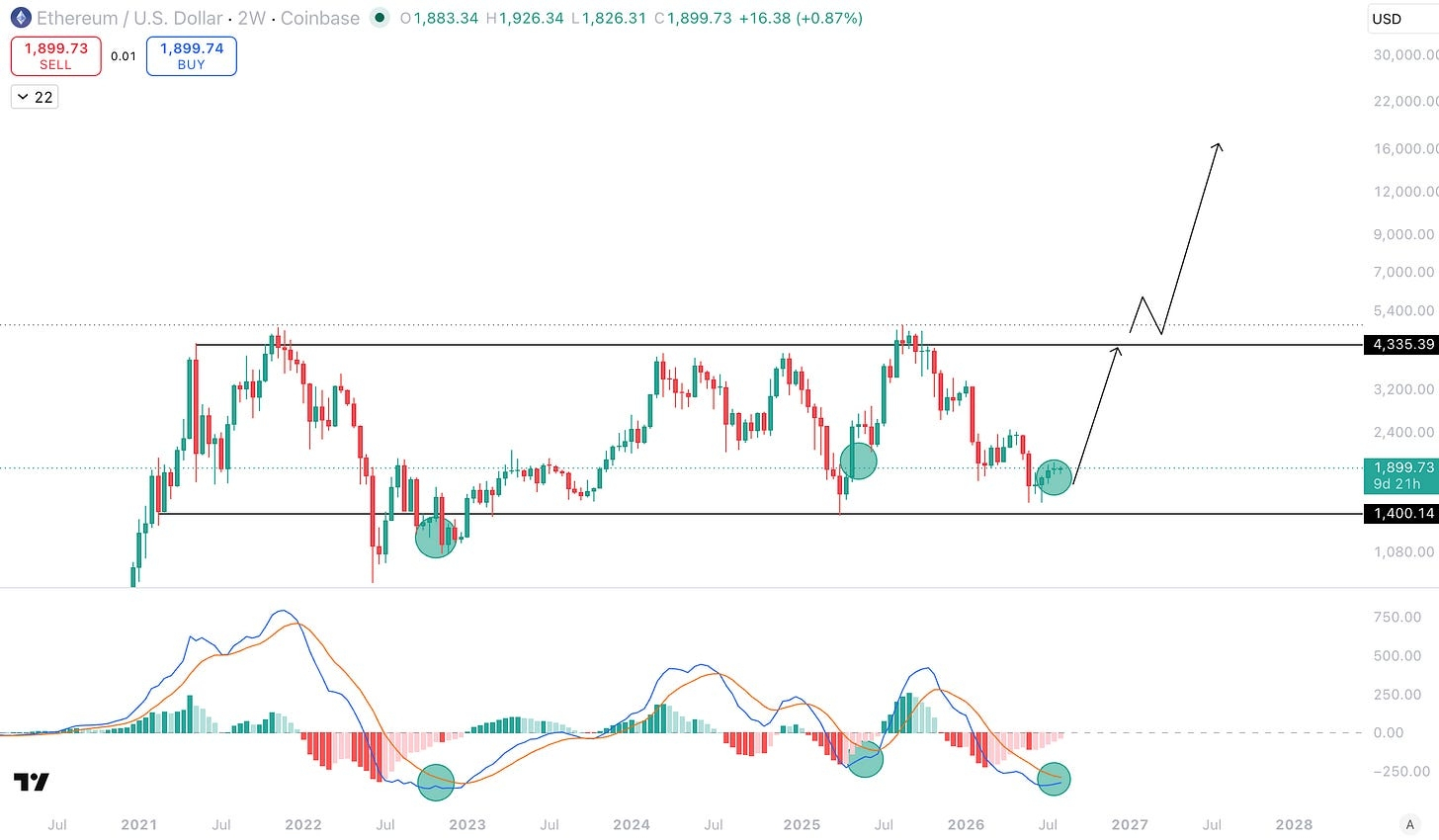
One thing I have to admit and be clear on is that I did not expect $ETH to get back to this low level. The range dropped further than I thought and that has indeed lengthened out the timeframe for the eventual expansion of the price again.
But is is my view that the suppression of the price can only go on for so long, and the longer it goes on, the more violent the repricing will be.
With everything that is happening within the overall Crypto market, and the adoption we are seeing, and the range in which Ethereum is developing, we are getting very close to the end of this range bound price action.
This is most evident when we deeply analyse the ETH/BTC chart.
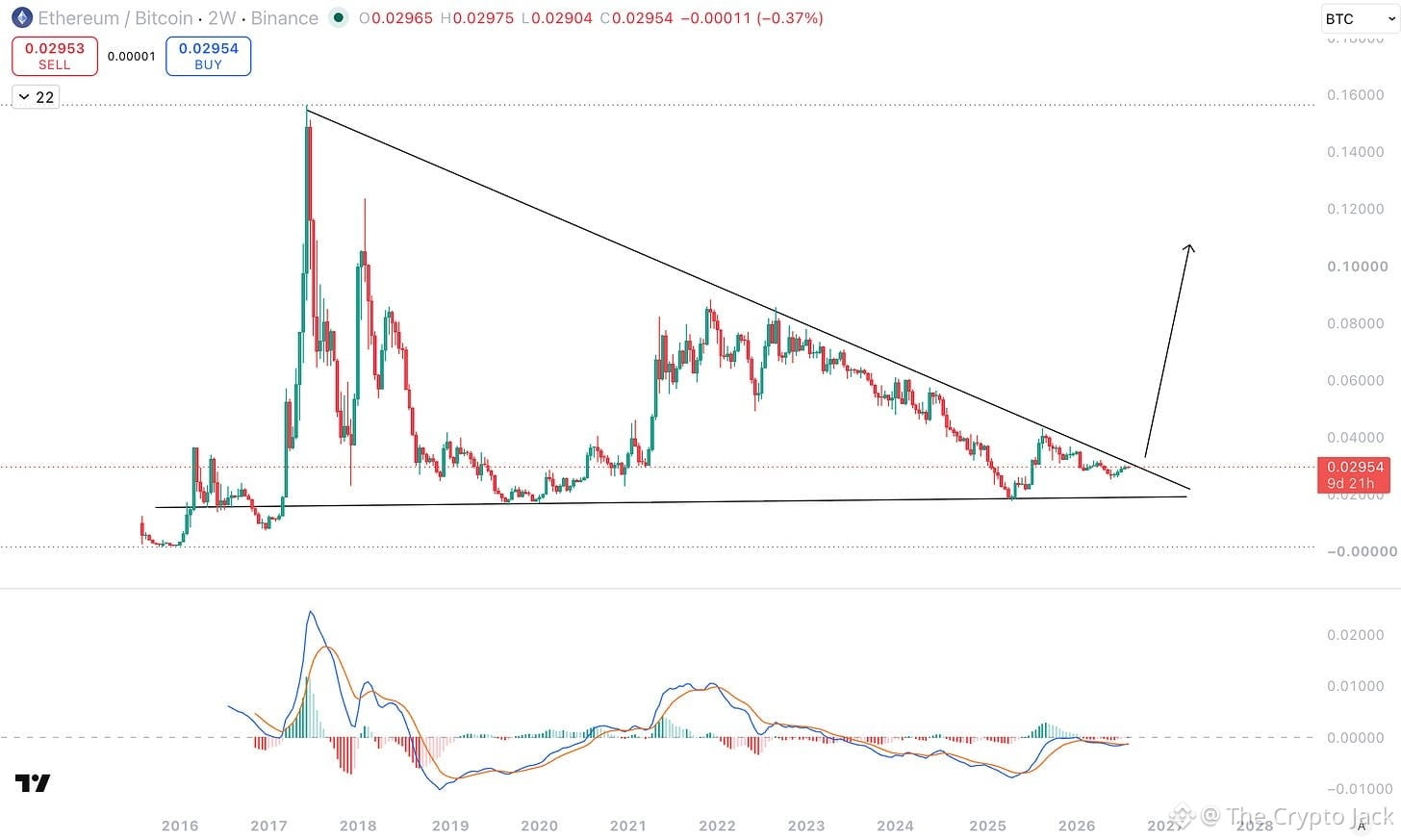
ETH/BTC tells us the story.
It has been in a breakdown/consolidation since 2017. It has not had a bull cycle since 2017. For these last 9 years ETH/BTC has been compressing, and at this stage, is getting very close to breaking above that 9 years resistance.
Multi-year descending triangles/wedges of this duration almost always resolve in the direction of the preceding major trend (which for ETH/BTC was strongly up from 2016–2017), and the longer and tighter the compression, the more explosive the eventual move tends to be.
This all aligns with the $ETH chart and how the overall range is reaching its climax phase. And what this shows us is that this next phase of the cycle will be the first time in 9 years that $ETH will truly outperform Bitcoin again.
PRICE PREDICTIONS
After we lost our $74,000 level on Bitcoin that invalidated the fastest and most aggressive recovery, the price path forward changed for Crypto overall.
However, I believe this is very much the low point for $ETH. In the instance we get the push down to the Realised Cap on BTC at $54,000, I think the worst case for $ETH would be a sweep of the current $1,500 low. But I do not think that as a high probability. Just like $54,000 on BTC, I see that as a worst case scenario.
What I expect for $ETH here is a relatively steady rise back towards the highs for the rest of this year, closing out 2026 above $3,000 - $3,500, with Bitcoin back around $100,000. This is a much lower target than what I anticipated at the beginning of this year, but a great deal has changed within 2026 and we have to adapt.
Moving into 2027 and 2028, my base case is that we will see a true cycle high on $ETH of a minimum of $10,000. More likely, $15,000.
I understand these kinds of price targets can sound unreasonable, especially now. Everyone has forgotten that price do actually go up, and you only need to look at each cycle end period to remind yourself how quickly and aggressively they go. That will happen again, friends.
$10,000 is a 2x from its ATH, which is not a high target for an asset with such incredible fundamentals and future growth.
In short - $10,000 - $15,000 cycle high is a conservative target. If we get a 2017 style blow off top with ETH/BTC breaking out of the huge triangle, $15,000+ is possible.
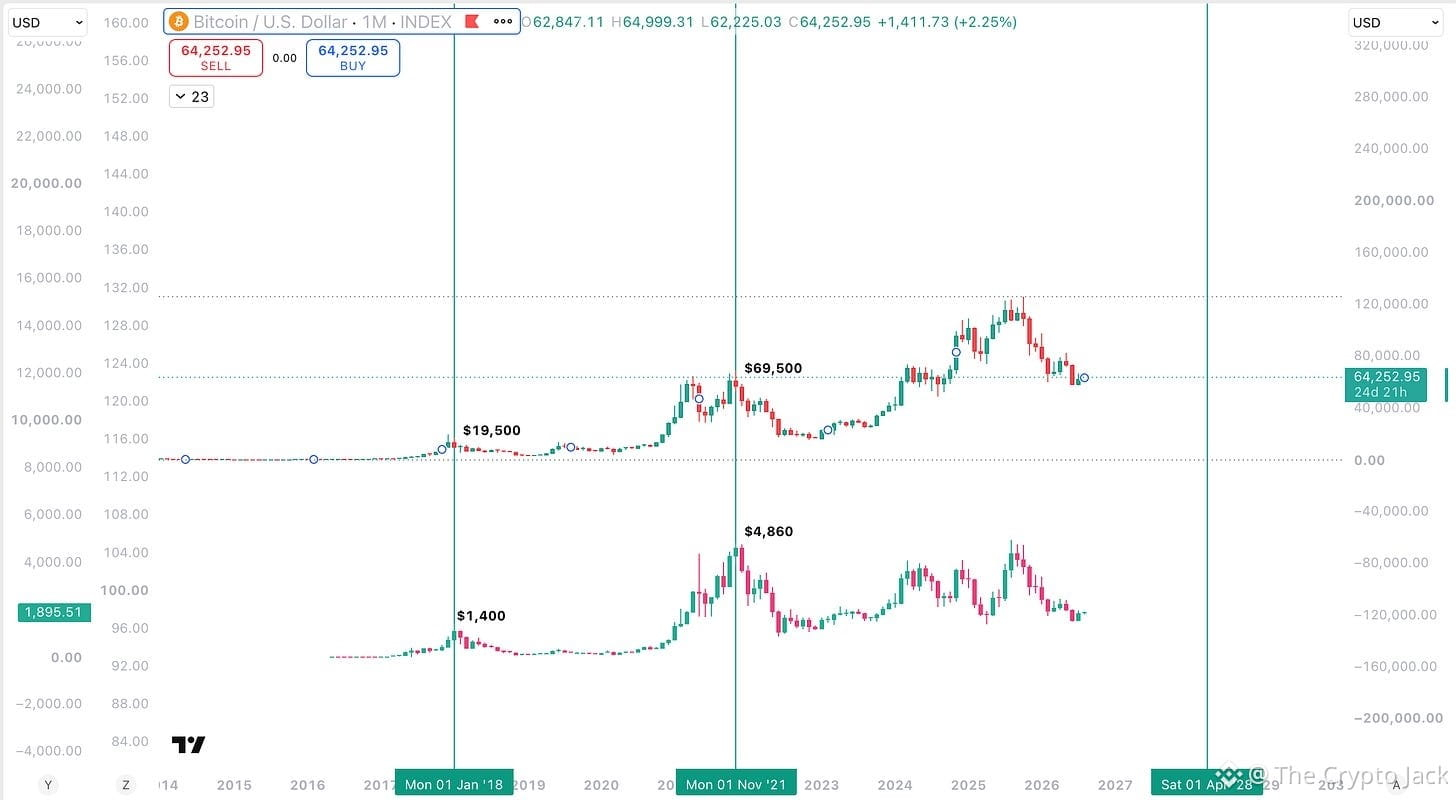
A very important piece of data that you might not be aware of here, is that in each cycle high, ETH has topped out 14x lesser than Bitcoin.
2017:
BTC - $19,500
ETH - $1,400
$1,440 X 14 = $19,600
2021:
BTC - $69,500
ETH - $4,860
$4,860 X 14 = $68,040
You can see clearly there has been a certain correlation between the assets and their topping out behaviour.
If we were to end up with our minimum BTC top target of $300,000 in 2028, that would give us a top for ETH at $21,400.
Now, of course, I am not going to predict that to happen. Even though I truly believe all the pieces are there for that to not be out of the question, it is just a correlation from two previous cycles. Very interesting though, don’t you think?
However, overall, the future looks very bullish for Ethereum. Timeframes can always take longer, and price predictions are just that… predictions. But the one thing that is undeniable is the trajectory of ETH and the scale at which is it being adopted.
At the end of the day, the price can only lag for so long.