
يبدو منبّه الحريق مطمئنًا على الحائط. نادرًا ما تفكر في من يُسمح له بالضغط عليه، أو ما إذا كان متاحًا، أو ماذا يحدث إذا وصل الشخص الخطأ إليه أولًا.
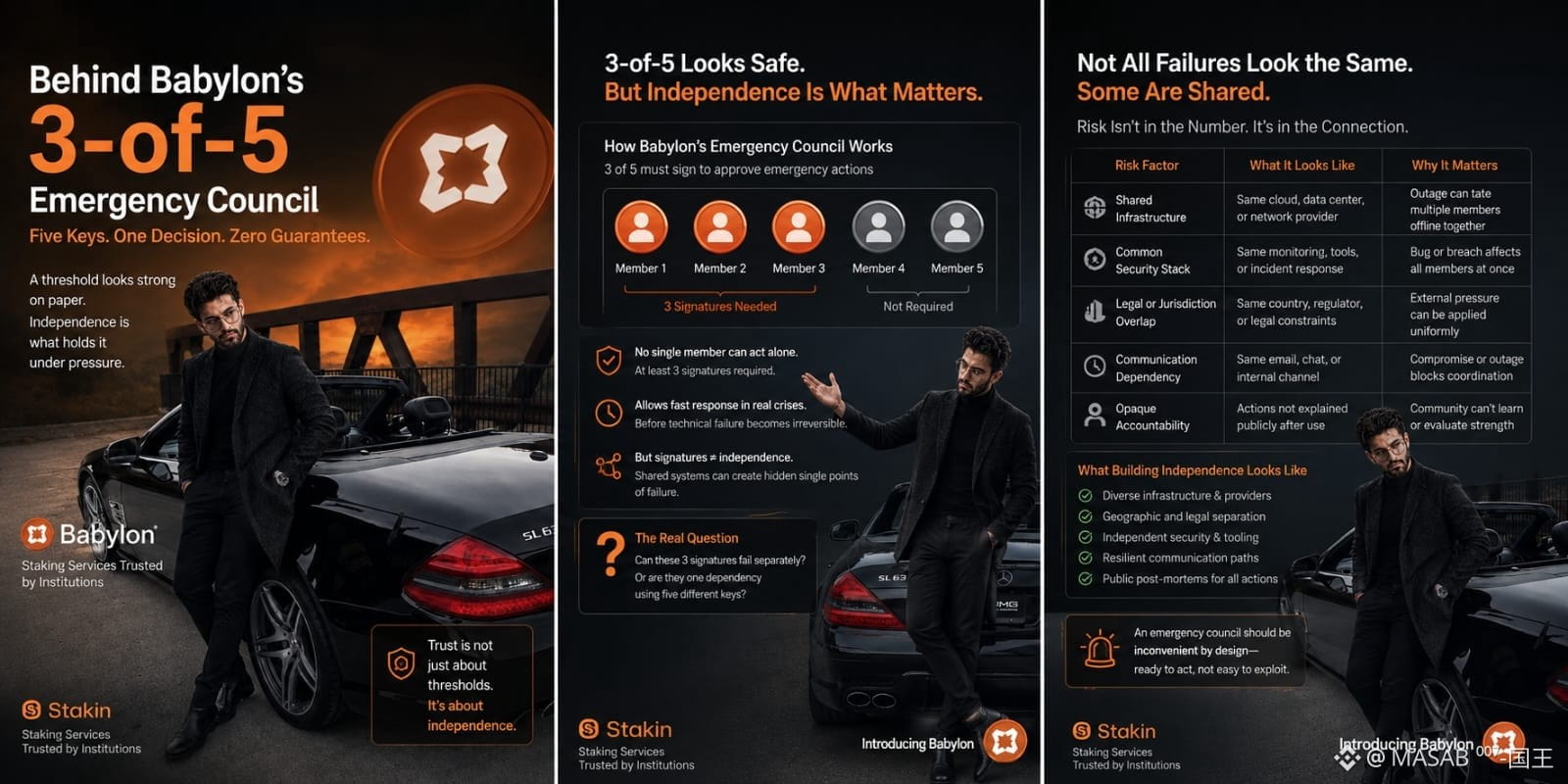
هكذا بدأت أفكر في مجلس الطوارئ في بابل بنظام 3 من 5. العدد يبدو منطقيًا. لا يستطيع أي عضو واحد أن يتصرف بمفرده، بينما يمكن لثلاثة أشخاص الاستجابة قبل أن يصبح أي عطل تقني لا رجعة فيه. على الورق، يمنح BABY كلاً من السرعة والضبط.
لكن العتبة لا تحسب سوى التواقيع. لا يمكنها قياس الاستقلالية.
قد يحتفظ ثلاثة من أعضاء المجلس بمفاتيح منفصلة ولا يزالون يعتمدون على موفر سحابي واحد، أو شركة أمن واحدة، أو اختصاص قانوني واحد، أو قناة اتصال داخلية واحدة. في الظروف العادية تبقى هذه الصلة غير مرئية. لكن تحت الضغط يمكن أن تحوّل خمسة مفترضين صناع قرار إلى وحدة تشغيلية واحدة. قد يؤدي تعطل مشترك إلى تعطيل التدخل. وقد يسمح تواطؤ مشترك بإجراء ذلك.
يقيس معظم الناس المجلس عبر سؤال ما إذا كانت ثلاث تواقيع أكثر أمانًا من توقيع واحد. أرى أن السؤال الأصعب هو ما إذا كانت هذه التواقيع الثلاثة يمكن أن تفشل بشكل منفصل. هل اختبرت بابل أعضاءها عند انقطاعهم عن العمل دون إنذار؟ هل تُشرح إجراءات الطوارئ علنًا بعد وقوعها؟ هل يمكن للمجتمع أن يرى ما إذا كانت طبقة الأزمات لدى BABY تزداد قوة، أم أنها أصبحت فحسب أكثر راحة للاستخدام؟
يجب أن يشعر مجلس الطوارئ بعدم الإزعاج. بطيئًا بما يكفي ليطلب إثباتًا، لكن جاهزًا بما يكفي لاتخاذ إجراء عندما تصبح مدة الانتظار خطرة.
لست قلقًا من أن بابل لديها مفتاح طوارئ. إنني أراقب ما إذا كانت خمس مفاتيح تمثل خمس دفاعات مستقلة حقًا—أم قرارًا واحدًا يرتدي خمس تسميات مختلفة.
@BabylonLabs_io #baby $BABY
هكذا بدأت أفكر في مجلس الطوارئ في بابل بنظام 3 من 5. العدد يبدو منطقيًا. لا يستطيع أي عضو واحد أن يتصرف بمفرده، بينما يمكن لثلاثة أشخاص الاستجابة قبل أن يصبح أي عطل تقني لا رجعة فيه. على الورق، يمنح BABY كلاً من السرعة والضبط.
لكن العتبة لا تحسب سوى التواقيع. لا يمكنها قياس الاستقلالية.
قد يحتفظ ثلاثة من أعضاء المجلس بمفاتيح منفصلة ولا يزالون يعتمدون على موفر سحابي واحد، أو شركة أمن واحدة، أو اختصاص قانوني واحد، أو قناة اتصال داخلية واحدة. في الظروف العادية تبقى هذه الصلة غير مرئية. لكن تحت الضغط يمكن أن تحوّل خمسة مفترضين صناع قرار إلى وحدة تشغيلية واحدة. قد يؤدي تعطل مشترك إلى تعطيل التدخل. وقد يسمح تواطؤ مشترك بإجراء ذلك.
يقيس معظم الناس المجلس عبر سؤال ما إذا كانت ثلاث تواقيع أكثر أمانًا من توقيع واحد. أرى أن السؤال الأصعب هو ما إذا كانت هذه التواقيع الثلاثة يمكن أن تفشل بشكل منفصل. هل اختبرت بابل أعضاءها عند انقطاعهم عن العمل دون إنذار؟ هل تُشرح إجراءات الطوارئ علنًا بعد وقوعها؟ هل يمكن للمجتمع أن يرى ما إذا كانت طبقة الأزمات لدى BABY تزداد قوة، أم أنها أصبحت فحسب أكثر راحة للاستخدام؟
يجب أن يشعر مجلس الطوارئ بعدم الإزعاج. بطيئًا بما يكفي ليطلب إثباتًا، لكن جاهزًا بما يكفي لاتخاذ إجراء عندما تصبح مدة الانتظار خطرة.
لست قلقًا من أن بابل لديها مفتاح طوارئ. إنني أراقب ما إذا كانت خمس مفاتيح تمثل خمس دفاعات مستقلة حقًا—أم قرارًا واحدًا يرتدي خمس تسميات مختلفة.
@BabylonLabs_io #baby $BABY