#baby @BabylonLabs_io $BABY
كنت أتصفح تقرير تدقيق لبروتوكول خزنة الليلة الماضية بدل أن أنام، وأوقفتني عبارة واحدة: الخزنة لا تحتفظ بالـ BTC إطلاقًا بالمعنى الذي يفترضه أغلب الناس. إنها تحتفظ بسكربت.
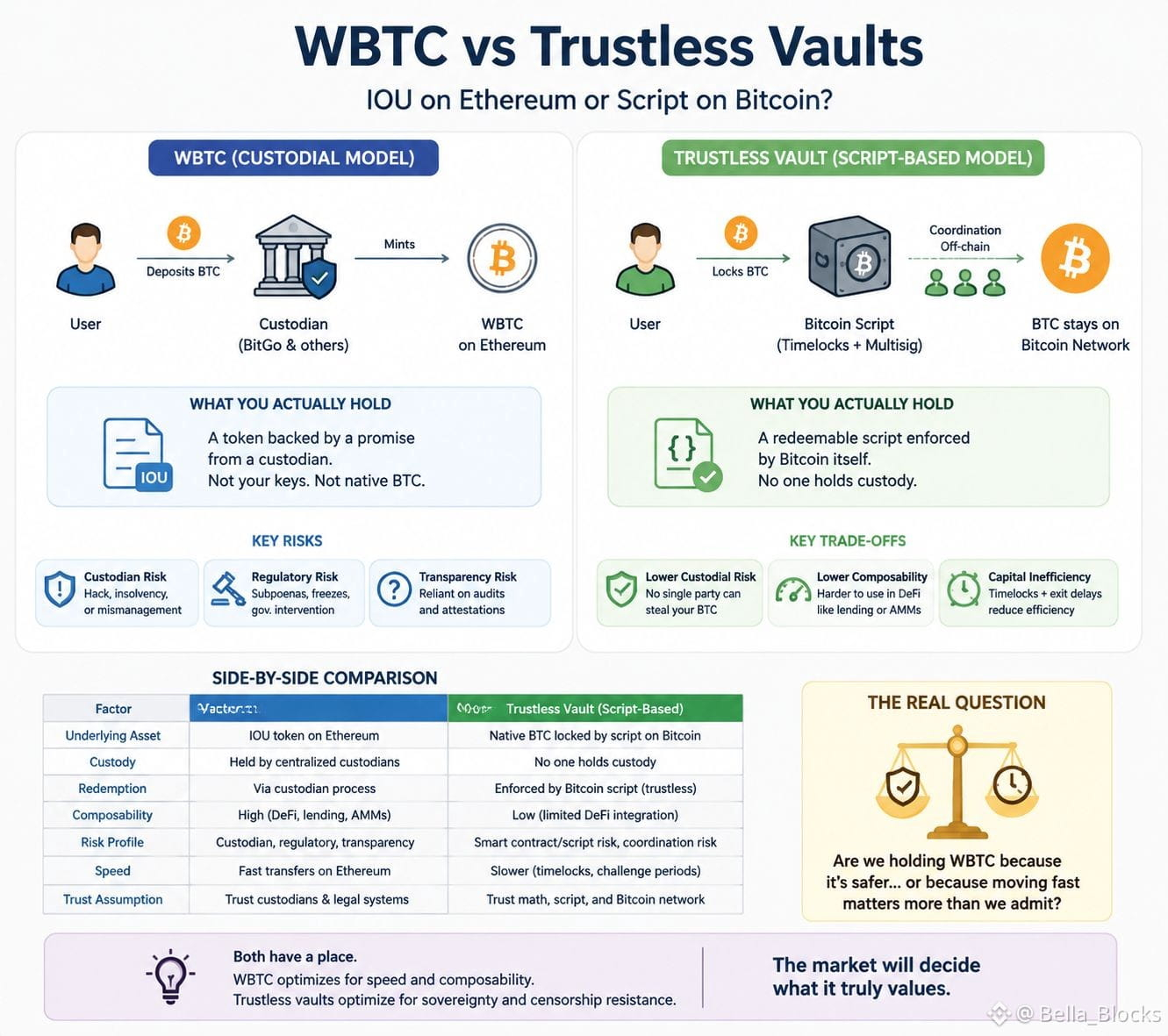
هذه هي التفاصيل التي يتخطاها الناس حين يخلطون "الخزائن عديمة الثقة" مع WBTC أو renBTC. الـ Wrapped BTC عبارة عن تعهّد/إقرار (IOU). أنت ترسل البيتكوين إلى الأمناء (BitGo وأمثالهم، في حالة WBTC)، وهم يَصنعون/يُصدرون توكنًا على إيثيريوم، وأنت الآن تثق بأن جهة الأمانة لا يتم اختراقها، ولا يتم استدعاؤها عبر أمر قضائي، ولا تصبح بين ليلة وضحاها غير قادرة على الوفاء. إنها حفظ مركزي يرتدي ملابس لامركزية.
أما الخزنة عديمة الثقة، فبدلًا من ذلك تحاول فرض الاسترداد عبر سكربت البيتكوين نفسه — مؤقتات زمنية (timelocks)، معاملات موقعة مسبقًا (presigned transactions)، وعتبات متعددة التوقيعات (multisig) يتم تنسيقها خارج السلسلة لكن تطبيقها على السلسلة. لا يحتفظ أي طرف بوصول/حيازة أحادية. ولا يغادر البيتكوين سجلّه الأصلي على بيتكوين.
الأقل تقديرًا هو المقايضة التي لا يروّج لها أحد: هذه الخزائن تضحي بقابلية التوافق/التراكمية (composability) مقابل ذلك الضمان. لا يمكنك إيداع BTC الأصلي في حوض إقراض بالطريقة التي يمكنك بها إيداع WBTC. كل تصميم عديم الثقة قرأته — خصوصًا تلك المبنية على BitVM — يحرق كفاءة رأس المال لتفادي مخاطر الحفظ.
لذلك، السؤال الحقيقي ليس أيهما أكثر أمانًا. بل ما إذا كان السوق يقيّم مخاطر الحفظ بالطريقة الصحيحة فعلًا، أم أننا جميعًا نمسك بـ WBTC فقط لأن سرعة الحركة تهم أكثر مما نعترف.
كنت أتصفح تقرير تدقيق لبروتوكول خزنة الليلة الماضية بدل أن أنام، وأوقفتني عبارة واحدة: الخزنة لا تحتفظ بالـ BTC إطلاقًا بالمعنى الذي يفترضه أغلب الناس. إنها تحتفظ بسكربت.
هذه هي التفاصيل التي يتخطاها الناس حين يخلطون "الخزائن عديمة الثقة" مع WBTC أو renBTC. الـ Wrapped BTC عبارة عن تعهّد/إقرار (IOU). أنت ترسل البيتكوين إلى الأمناء (BitGo وأمثالهم، في حالة WBTC)، وهم يَصنعون/يُصدرون توكنًا على إيثيريوم، وأنت الآن تثق بأن جهة الأمانة لا يتم اختراقها، ولا يتم استدعاؤها عبر أمر قضائي، ولا تصبح بين ليلة وضحاها غير قادرة على الوفاء. إنها حفظ مركزي يرتدي ملابس لامركزية.
أما الخزنة عديمة الثقة، فبدلًا من ذلك تحاول فرض الاسترداد عبر سكربت البيتكوين نفسه — مؤقتات زمنية (timelocks)، معاملات موقعة مسبقًا (presigned transactions)، وعتبات متعددة التوقيعات (multisig) يتم تنسيقها خارج السلسلة لكن تطبيقها على السلسلة. لا يحتفظ أي طرف بوصول/حيازة أحادية. ولا يغادر البيتكوين سجلّه الأصلي على بيتكوين.
الأقل تقديرًا هو المقايضة التي لا يروّج لها أحد: هذه الخزائن تضحي بقابلية التوافق/التراكمية (composability) مقابل ذلك الضمان. لا يمكنك إيداع BTC الأصلي في حوض إقراض بالطريقة التي يمكنك بها إيداع WBTC. كل تصميم عديم الثقة قرأته — خصوصًا تلك المبنية على BitVM — يحرق كفاءة رأس المال لتفادي مخاطر الحفظ.
لذلك، السؤال الحقيقي ليس أيهما أكثر أمانًا. بل ما إذا كان السوق يقيّم مخاطر الحفظ بالطريقة الصحيحة فعلًا، أم أننا جميعًا نمسك بـ WBTC فقط لأن سرعة الحركة تهم أكثر مما نعترف.