

(And Why Computer Science Has Been Trying to Solve This for 40+ Years)
🧠 The Storage Problem Is Older Than Crypto
Long before blockchains existed, distributed systems researchers were already struggling with one brutal reality:
The more machines you add, the harder it becomes to keep data alive.
In classical computer science, this problem appears under:
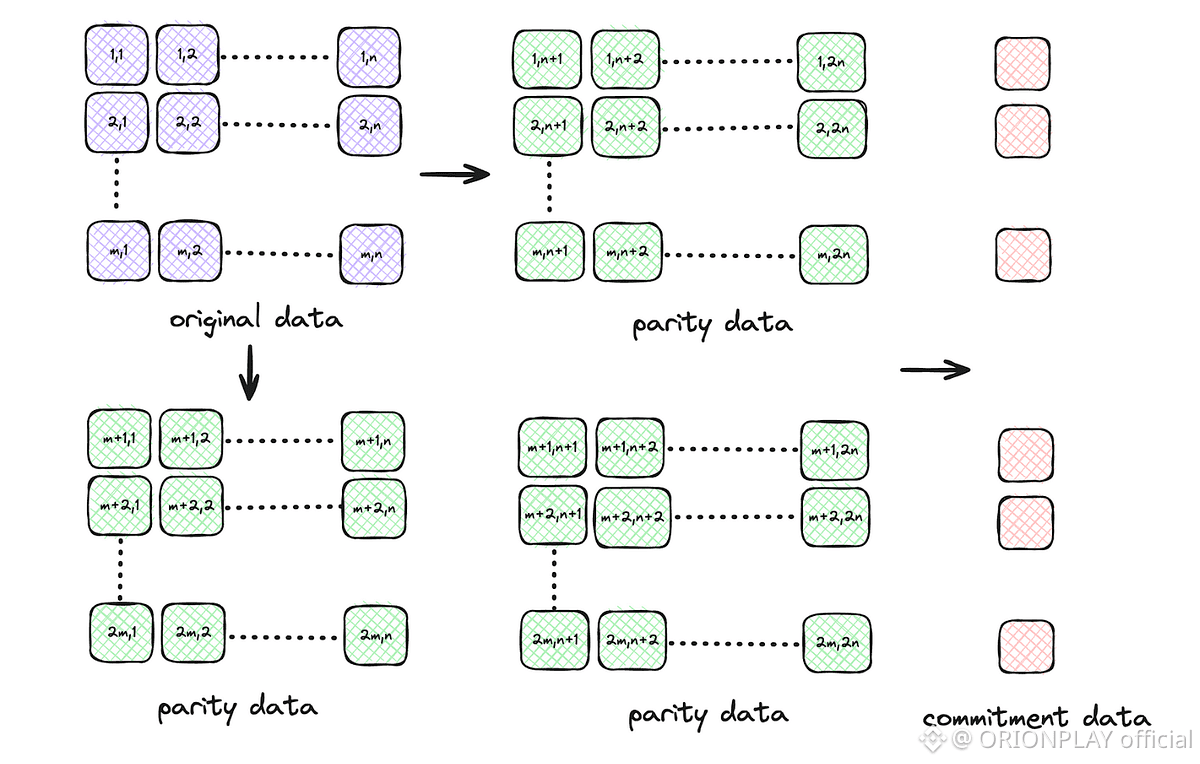
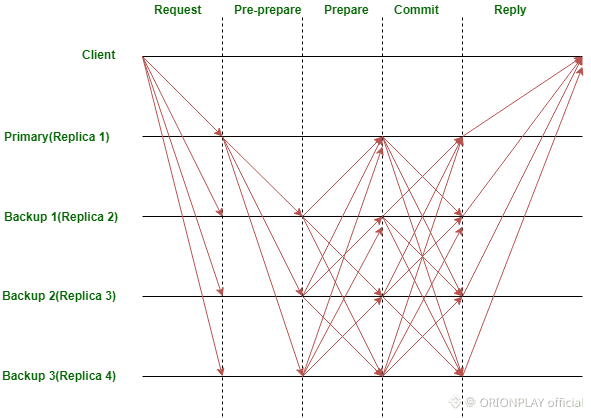
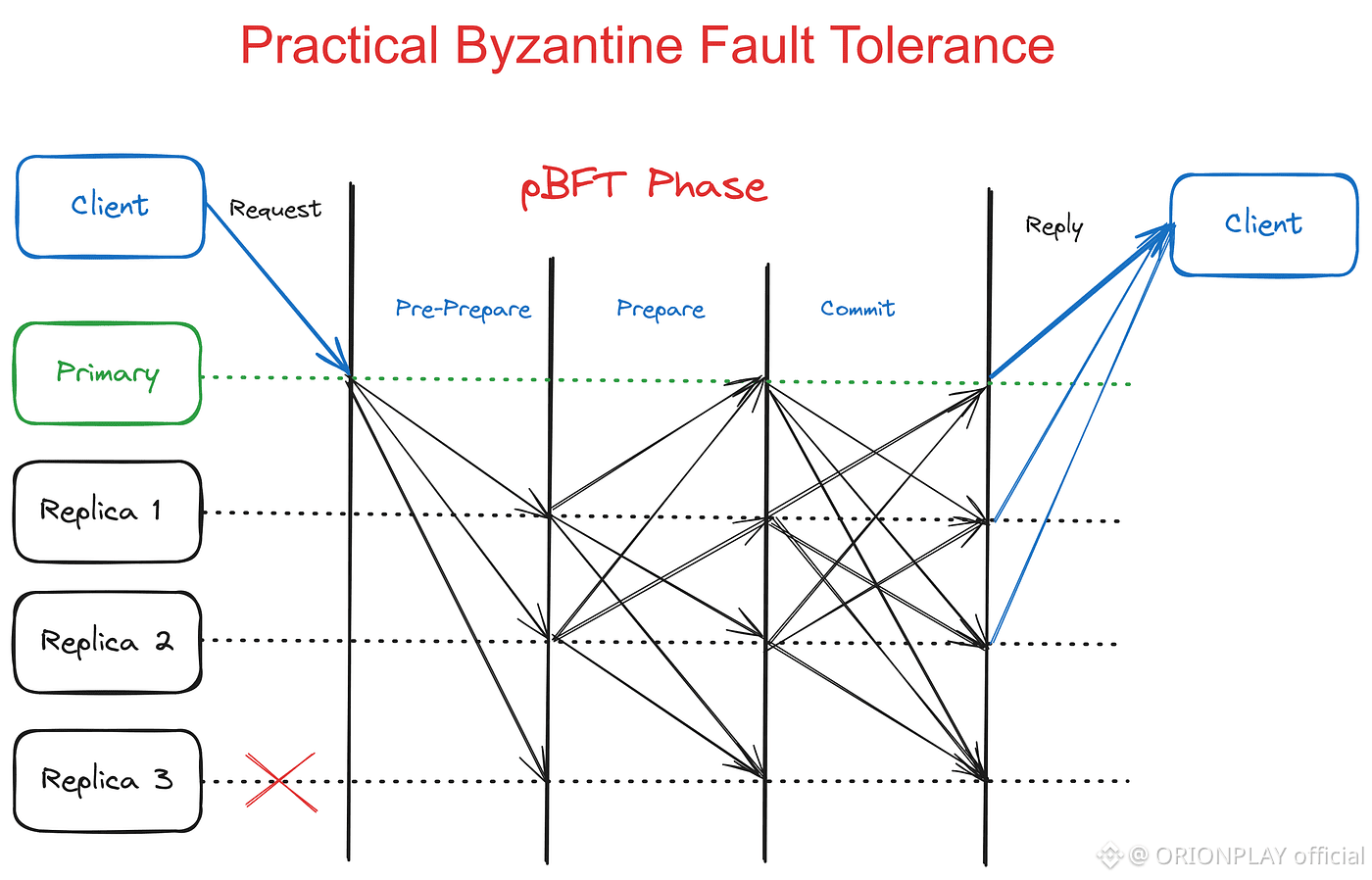
Byzantine Fault Tolerance (Lamport et al.)
Asynchronous networks (FLP impossibility)
Erasure coding vs replication trade-offs
Crypto did not invent this problem.
Crypto merely re-exposed it at global scale.
This is the exact problem space where Walrus Protocol operates — and why it looks very different from typical “Web3 storage” projects.
All core mechanics discussed here are grounded in the Walrus whitepaper
🪤 The Replication Trap (Why Copying Data Fails at Scale)
📦 Replication Sounds Safe — Until Math Shows Up
Traditional decentralized storage systems rely on replication:
Store many full copies of the same file
Assume at least one copy survives
This model comes directly from early fault-tolerant systems — but it carries a hidden cost.
Academic analysis shows:
To survive Byzantine faults, replication grows exponentially
With 1/3 faulty nodes, 25+ replicas are needed for extreme safety
That means:
1 GB file → 25 GB stored
Bandwidth grows linearly
Cost grows relentlessly
This is not an implementation flaw.
It is a mathematical consequence.
📉 Why Decentralization Makes Replication Worse
Here’s the paradox:
• More nodes → more decentralization
• More nodes → higher replication needed
• Higher replication → higher cost
This is why many systems:
Quietly cap node counts
Rely on semi-trusted operators
Centralize behind “gateways”
Walrus rejects that compromise.
🧮 Reed–Solomon: A Partial Escape That Still Leaks
To reduce replication, many systems adopted Reed–Solomon erasure coding.
Used by:
Filecoin
Storj
Sia
RS encoding:
Splits data into fragments
Allows reconstruction from a subset
Reduces storage overhead to ~3×
So why isn’t that enough?
⚠️ The Two RS Problems Researchers Already Know
1️⃣ Recovery Is Expensive
When a node disappears, RS recovery often requires:
Downloading the entire blob again
Bandwidth cost: O(|blob|)
2️⃣ Churn Breaks the Model
In permissionless networks:
Nodes leave constantly
Recovery happens often
Savings evaporate
This issue is well-documented in distributed storage research — and it’s why RS never fully solved decentralized storage.
🟥 Red Stuff: Why Walrus Introduced a New Encoding Class
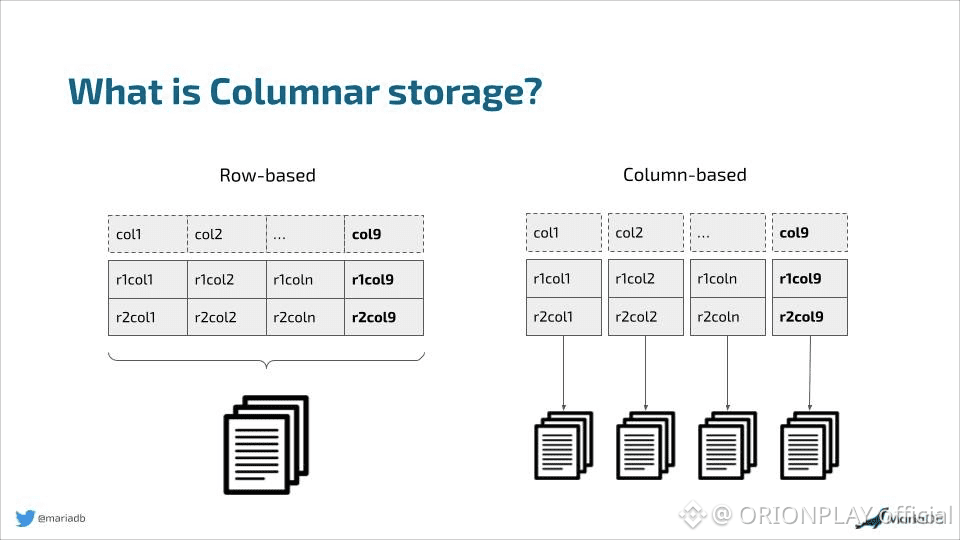
Walrus introduces Red Stuff, a two-dimensional erasure coding system.
This is not a tweak.
It is a structural redesign.
🧩 2D Encoding Explained (Without Hand-Waving)
Instead of slicing data once, Red Stuff slices data twice.
Think of data as a grid:
Rows → encoded
Columns → encoded
Each node stores:
One row (primary sliver)
One column (secondary sliver)
This approach is inspired by:
Fountain codes (used in high-loss networks)
Twin-code frameworks from distributed systems research
The key difference:
Recovery traffic scales with what is lost — not with total data size
⚡ Why Fountain Codes Matter Here
Unlike Reed–Solomon, fountain codes:
Use XOR-style operations
Avoid heavy polynomial math
Scale efficiently for large blobs
They are already used in:
Satellite broadcasting
Content delivery networks
High-loss environments
Walrus applies them to permissionless storage.
🔁 Recovery Without Network Collapse
Traditional Recovery:
“A node failed? Rebuild the whole file.”
Walrus Recovery:
“Recover only the missing intersections.”
Bandwidth cost becomes:
O(|blob| / n) per node
O(|blob|) total for the network
This is the single property that allows Walrus to:
Support constant churn
Avoid recovery storms
Remain stable as it grows
🧠 Byzantine Reality: Nodes Lie, Writers Cheat
Most storage explanations ignore this part.
Walrus does not.
Walrus assumes:
Writers may upload inconsistent data
Nodes may serve incorrect slivers
Messages may be delayed indefinitely
These are classic Byzantine conditions, formalized in computer science decades ago.
🔐 Commitments Turn Chaos into Verifiability
Every sliver in Walrus:
Is cryptographically committed
Is independently verifiable
Maps back to a single blob commitment
Readers:
Collect slivers
Reconstruct data
Re-encode
Re-check commitments
Mismatch?
👉 Output ⊥ — safely and consistently.
No silent corruption.
No trust assumptions.
🔗 Why Walrus Uses a Blockchain (But Not Like Others)
Walrus uses a blockchain only as a control plane.
It handles:
Blob registration
Storage obligations
Epoch changes
Incentives & penalties
It does not store blob data.
This design mirrors modern modular blockchain architecture:
Execution layer
Data layer
Control layer
Walrus simply applies that philosophy to storage.
📍 Point of Availability (PoA): A Research-Grade Guarantee
Once enough nodes acknowledge storage:
A Point of Availability is created
The blob is now provably live
The writer can disappear
From this point:
Availability is guaranteed
Enforcement is economic
Proofs are public
This turns storage into a verifiable contract, not a hope.
😄 Analogy (Because Humans Remember These)
Replication systems:
“Make 25 full photocopies.”
Walrus:
“Split the page into a crossword puzzle.”
Lose some pieces —
still read the sentence.
🧠 Why This Matters Beyond Storage
Walrus enables:
AI dataset provenance
NFT media integrity
Rollup data availability
Public record preservation
Anywhere trust breaks down, Walrus remains correct.