كلما قرأت أكثر عن تصميم خزائن البيتكوين، كلما أدركت أن انطباعي الأول كان مبسطًا جدًا.
في البداية، افترضت أنه يعمل على هذا النحو: إيداع BTC، قفله، الاقتراض مقابلَه، انتهى الأمر.
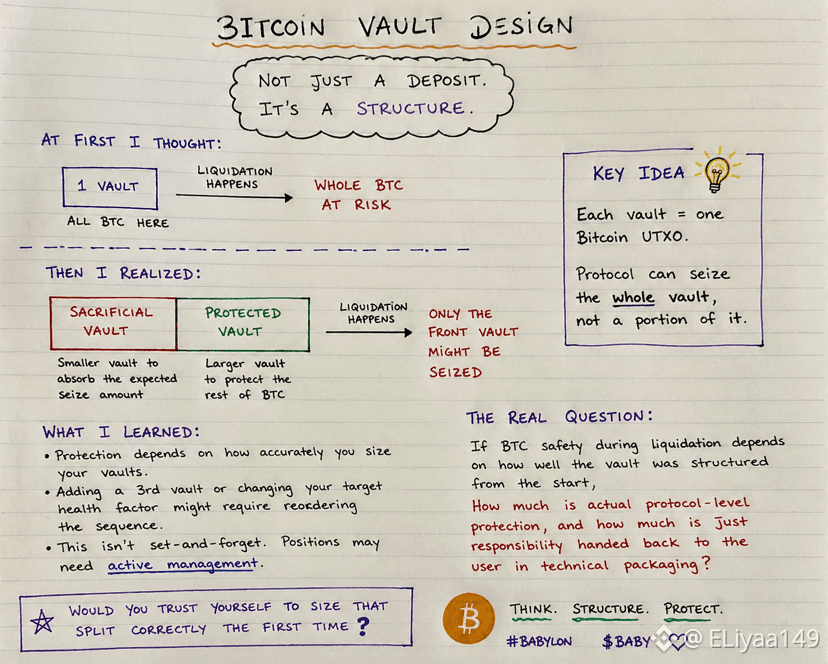
ثم علمت أن الإيداع يمكن تقسيمه عبر عدة خزائن، وهذا غيّر تمامًا طريقة تفكيري حول عمليات التصفية.
بدلًا من وضع كل BTC في خزانة واحدة، يمكن للتصميم أن يفصلها إلى:
* خزانة أصغر مخصّصة لامتصاص مقدار مصادرة متوقع.
* خزانة أكبر تبقى محمية ما لم تكن هناك حاجة فعلية إليها.
هذا مهم لأن كل خزانة تقابل UTXO واحدًا فقط من بيتكوين. إذا استهدفت عملية التصفية خزانةً ما، فلا يمكنها أخذ جزء فقط من UTXO—بل تتفاعل مع الخزانة ككل.
المقايضة هنا مثيرة للاهتمام.
قد يقلل تخطيط الخزائن بشكل جيد من مقدار BTC المعرض خلال عمليات التصفية الأصغر. لكن هذا أيضًا يعني أن حجم الخزانة في البداية يصبح جزءًا مهمًا من إدارة المخاطر. إذا تغيّر وضعك بمرور الوقت، فقد لا يكون الهيكل الأصلي هو الأمثل بعد الآن.
ما يعجبني في هذا التصميم أنه يعمل مع نموذج UTXO الأصلي في بيتكوين بدلًا من محاولة الالتفاف عليه. وفي الوقت نفسه، يذكرني أن فهم الآليات بقدر أهمية فهم العائد.
أي شخص يخطط لاستخدام الإقراض المدعوم بالبيتكوين يجب أن يقضي وقتًا في تعلم معمارية الخزائن بقدر ما يقضيه في مقارنة APYs.
هل تفضل الحصول على مرونة أكبر مع تعقيد إضافي، أم نموذجًا أبسط مع أجزاء أقل تتحرك؟
@BabylonLabs_io #BABY $BABY $BEETS $RAY
في البداية، افترضت أنه يعمل على هذا النحو: إيداع BTC، قفله، الاقتراض مقابلَه، انتهى الأمر.
ثم علمت أن الإيداع يمكن تقسيمه عبر عدة خزائن، وهذا غيّر تمامًا طريقة تفكيري حول عمليات التصفية.
بدلًا من وضع كل BTC في خزانة واحدة، يمكن للتصميم أن يفصلها إلى:
* خزانة أصغر مخصّصة لامتصاص مقدار مصادرة متوقع.
* خزانة أكبر تبقى محمية ما لم تكن هناك حاجة فعلية إليها.
هذا مهم لأن كل خزانة تقابل UTXO واحدًا فقط من بيتكوين. إذا استهدفت عملية التصفية خزانةً ما، فلا يمكنها أخذ جزء فقط من UTXO—بل تتفاعل مع الخزانة ككل.
المقايضة هنا مثيرة للاهتمام.
قد يقلل تخطيط الخزائن بشكل جيد من مقدار BTC المعرض خلال عمليات التصفية الأصغر. لكن هذا أيضًا يعني أن حجم الخزانة في البداية يصبح جزءًا مهمًا من إدارة المخاطر. إذا تغيّر وضعك بمرور الوقت، فقد لا يكون الهيكل الأصلي هو الأمثل بعد الآن.
ما يعجبني في هذا التصميم أنه يعمل مع نموذج UTXO الأصلي في بيتكوين بدلًا من محاولة الالتفاف عليه. وفي الوقت نفسه، يذكرني أن فهم الآليات بقدر أهمية فهم العائد.
أي شخص يخطط لاستخدام الإقراض المدعوم بالبيتكوين يجب أن يقضي وقتًا في تعلم معمارية الخزائن بقدر ما يقضيه في مقارنة APYs.
هل تفضل الحصول على مرونة أكبر مع تعقيد إضافي، أم نموذجًا أبسط مع أجزاء أقل تتحرك؟
@BabylonLabs_io #BABY $BABY $BEETS $RAY