
I used to assume that a valid zero-knowledge proof settled the compliance question.
If a transaction could show that it passed a risk threshold, stayed within an approved limit, and met an eligibility rule withOut exposing private data, that seemed close to ideal. You get a clear result without turning compliance into permanent surveillance.
Then a harder question came up: what happens when someone needs to examine that decision later?
A proof can confirm that a policy passed. But it may not explain what sat behind that result. An auditor might need to know which data source was used, how fresh it was, which policy version was active, what parameters applied, and whether the prOof belongs to the transaction now being challenged.
That gap matters. Proving an outcome is not the same as preserving the evidence that produced it.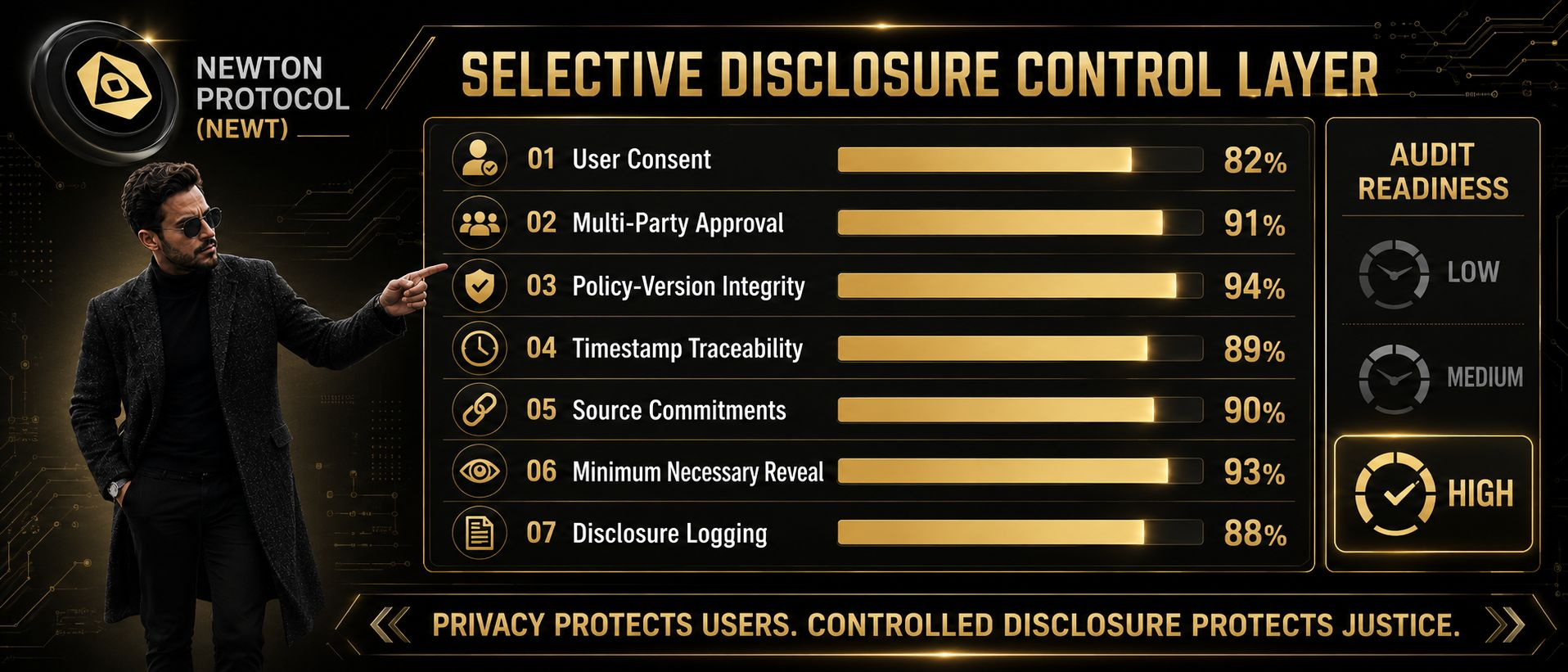
This is where the proof–audit paradox begins. The stronger the privacy layer becomes, the harder it may be to reconstruct a decision during a dispute. A regulator, court, or investigator may not accept a simple “compliant” result. They may need timestamps, data lineage, source commitments, and assurance that the underlying context was not changed afterward.
The deeper value in Newton Protocol may sit in this uncomfortable middle ground. Not just private compliance, but a way to preserve institutional mEmory without placing every user’s information on public displAy forever.
One possible approach would pair each proof with an encrypted audit package. The public side would show only that the policy evaluation was valid. The hidden package could retain a policy-version hash, timestamp, transaction identifier, and cryptographic commitments to the external data used. If an investigation began later, a controlled process could reveal only the pieces needed to review the decision.
That sounds sensible. Then the access problem appears.
Who can request disclosure? Who approves it? Should one regulator hold the key, or should several independent parties have to agree? What happens if those keys leak, access becomes politically selective, or an emergency process slowly becomes normal practice?
Selective disclosure protects users from public exposure, but it also creates a privileged doorway into the evidence layer. Newton Protocol would need clear rules for that doorway: who may ask, who may approve, what may be revealed, how each request is recorded, and how the system shows that nothing beyond the minimum necessary information was exposed.
User consent may work in ordinary cases. Serious investigations may need threshold-controlled access. Either way, the process for revealing that evidence must also be open to scrutiny, becAuse oversight carried out in the dark can be more dangerous than surveillance everyone can see.
Most privacy narratives stop too early. They explain how to hide information at execution, but not how to preserve enough trustworthy context for the moment someone disputes it.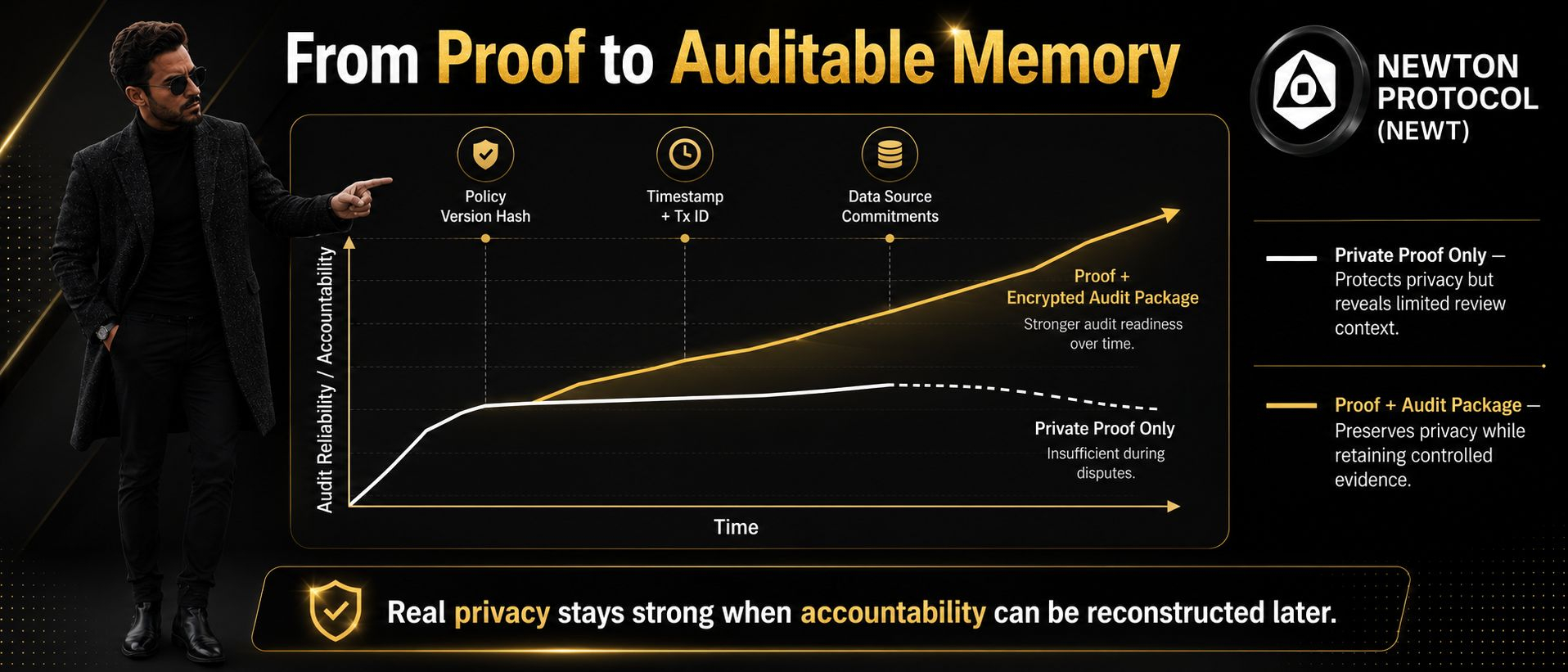
The real challenge is not choosing privacy over accOuntability. It is building both carefully enough that neither quietly destroys the other.
A privacy system is not strong because it hides everything. It is strong when it can reveal exactly what justice requires—and nothing more.