


لم أكن أخطط لقراءة شيء عن بروتوكول نيوتن في ذلك اليوم. كنت أُمرّر عدة تحديثات للسوق، وانتهيتُ إلى قراءة مقالة عن وكلاء ذكاء اصطناعي يمكنهم أتمتة التداول. قادتني مقالة إلى أخرى، وضمن كل ذلك، ظهر بروتوكول نيوتن. في البداية كدتُ أتجاوزه لأنني رأيتُ كثيرًا من المشاريع تحاول دمج الذكاء الاصطناعي والبلوك تشين لدرجة أنها غالبًا ما تبدأ بالنغمة نفسها.
لكن هذه المرة جعلتني أتوقف للحظة.
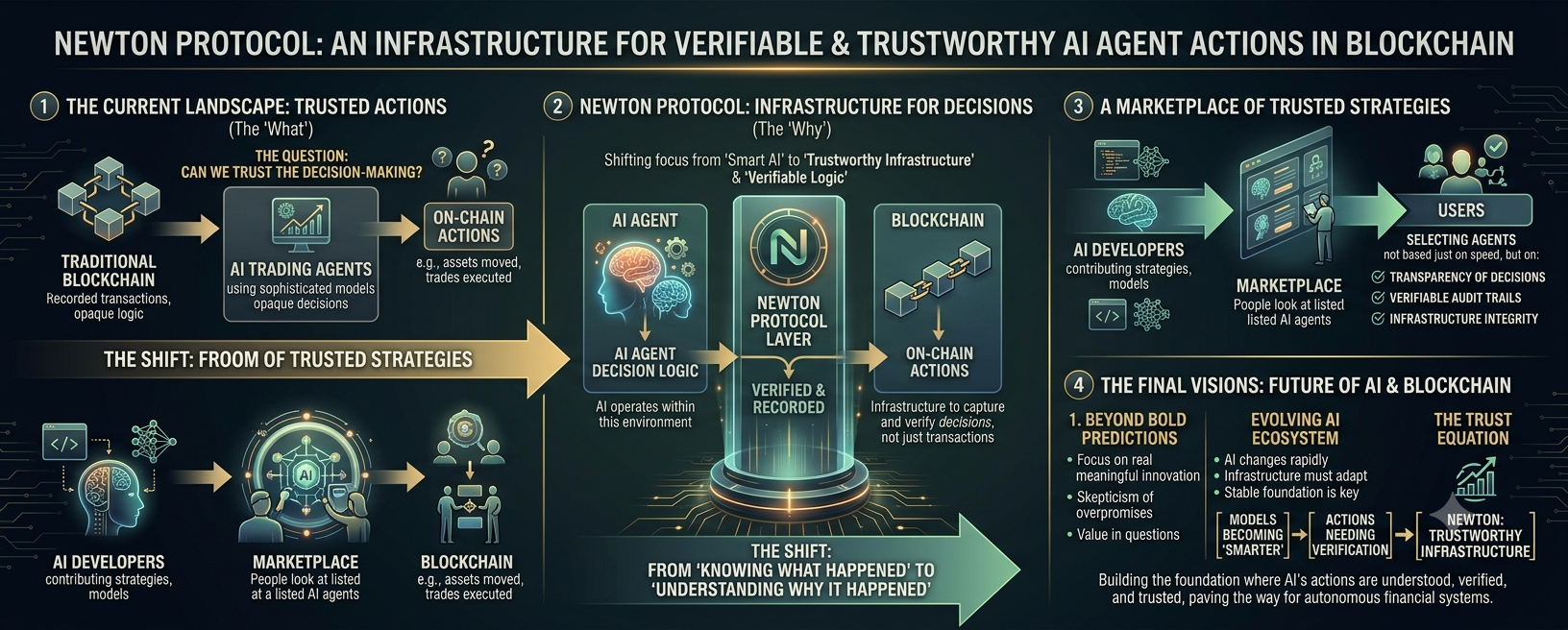
لم يكن ذلك لأنه وعد بذكاء اصطناعي أفضل أو تداول أسرع. ما شد انتباهي هو أنه بدا مهتمًا أكثر بالمكان الذي يعمل فيه الذكاء الاصطناعي، لا بالذكاء الاصطناعي نفسه. لقد شعرتُ أنها طريقة مختلفة للنظر إلى المشكلة.
كلما فكرت في الأمر أكثر، بدا لي الأمر منطقيًا أكثر. يتحدث الجميع عن جعل الذكاء الاصطناعي أكثر ذكاءً، لكن إذا كانت هذه الأنظمة في النهاية ستتحرك أصولًا، أو تنفذ صفقات، أو تتخذ قرارات دون أن ينقر شخصٌ ما على كل زر، فإن البيئة التي تعمل فيها تكتسب أهمية بقدر أهمية الذكاء نفسه. النظام الذكي ليس بالضرورة نظامًا جديرًا بالثقة.
ظلت تلك الفكرة البسيطة في رأسي مدة أطول مما توقعت.
لقد كنت أظن دائمًا أن سلاسل الكتل هي أماكن تُسجَّل فيها المعاملات، لكن عندما قرأت عن نيوتن تساءلت ما إذا كان يمكن أن تصبح في النهاية أماكن تُسجَّل فيها القرارات أيضًا. هناك فرق بين معرفة أن شيئًا ما حدث، وفهم كيف حدث أو لماذا حدث. ومع زيادة انخراط الذكاء الاصطناعي في الأنظمة المالية، يبدأ هذا الفرق في أن يصبح مهمًا.
طبعًا، لا أعتقد أن أي تقنية يمكنها حل مشكلة الثقة بالكامل. سيظل لدى الناس دائمًا أسئلة، خصوصًا عندما يكون البرنامج قد يختار قرارات تؤثر في أموال حقيقية. لكن بناء البنية التحتية مع وضع هذا القلق في الحسبان يبدو أكثر معنى من مجرد إضافة ذكاء اصطناعي إلى منتج قائم والآمل في أن يتقبله الناس.
ومن الأشياء الأخرى التي ظلت تراودني التفكير بها: سوق مطوري الذكاء الاصطناعي. من الناحية النظرية، يبدو مكانًا يمكن للمطورين مشاركة أعمالهم فيه، لكنه يبدو أيضًا شيئًا أكثر من ذلك. فأنت لا تشارك برمجيات فقط. أنت تشارك طريقة تفكير، أو استراتيجية، أو نظامًا يتخذ قرارات بالنيابة عن شخص آخر.
وهذا يغيّر العلاقة بين المستخدمين والتقنية.
لن يفحص معظم الناس كل سطر من الكود أو يفهموا بالكامل كيف يصل نموذج ذكاء اصطناعي إلى استنتاجاته. سيعتمدون على عمل النظام كما هو متوقع. وهنا تبدأ أهمية البنية التحتية الأساسية. إذا حدث خطأ ما، يجب أن تكون هناك طريقة لفهم ما الذي حدث بدل الاكتفاء بالثقة بأن كل شيء كان على ما يرام.
وفي الوقت نفسه، لا أظن أنه من الحكمة افتراض أن كل بروتوكول جديد سيصبح جزءًا أساسيًا من المستقبل. لقد علّمتنا العملات المشفّرة أن نكون حذرين تجاه الوعود الكبيرة. فالكثير من الأفكار الجيدة تكابد عند اصطدامها بالمستخدمين الحقيقيين أو ظروف السوق غير المتوقعة، أو بالواقع المربك لاعتمادها.
يتغير الذكاء الاصطناعي بسرعة مذهلة أيضًا. ما يبدو وكأنه النهج الصحيح اليوم قد يحتاج إلى التطور بعد عام من الآن. وللمشاريع المتعلقة بالبنية التحتية مهمة أصعب حتى من ذلك، لأنها تحاول بناء شيءٍ مستقر في مجال لا يتوقف نادرًا عن الحركة.
ربما لهذا السبب وجدت بروتوكول نيوتن مثيرًا للاهتمام. لم يجعلني أفكر كثيرًا في اتجاه السوق القادم بقدر ما جعلني أفكر في إلى أين يتجه كل هذا. إذا استمر الذكاء الاصطناعي في تحمل مسؤوليات أكبر، فسنقضي على الأرجح وقتًا أقل في التساؤل عما إذا كان النموذج ذكيًا، وأكثر وقتًا في التساؤل عما إذا كانت أفعاله يمكن فهمها والتحقق منها والوثوق بها.
أغلقت تبويبًا دون أن أشعر أنني اكتشفت الشيء الكبير التالي، وبشكل غريب، أعجبني ذلك. لقد تركني مع أسئلة بدل اليقين. عادةً ما تكون هذه هي المشاريع التي أتذكرها أطول. فهي لا تقنعني فورًا؛ بل تجعلني أنظر إلى شيء مألوف من زاوية مختلفة، وأحيانًا تكون هذه أكثر قيمة من أي تنبؤ جريء.