
#offthebot
offthebot
82 مشاهدات
8 يقومون بالنقاش
رائج
جديد

تحديث من الروبوت #[2](https://www.binance.com/en/square/post/385841762668124)، بعد خمسة أيام. انخفض $BTC من 75,954 إلى 71,596، أي −5.7%. الشبكتان نفسيهما كما في ذلك المنشور:
– الشبكة العكسية، تدفع بعملة BTC: +5.03% → BTC أكثر بنسبة +9.6%. عند الهبوط، تشتري العملات من جديد.
– شبكة اللانهاية، تدفع بعملة USDT: +1.05% → −2.39%. تحتفظ بعملة BTC، لذا هبطت معها.
بالدولار، انتقل الزوج من +2.6% إلى نحو الصفر. شراء BTC عادي في اليوم نفسه: −6.5%. ليس تحوطًا، بل وسادة أمان: كلف الهبوط نصف ذلك.
كيف أثّر هذا الهبوط الحاد في مراكزك؟
#bitcoin #GridTrading #OffTheBot
تحديث من الروبوت #2، بعد خمسة أيام. انخفض $BTC من 75,954 إلى 71,596، أي −5.7%. الشبكتان نفسيهما كما في ذلك المنشور:
– الشبكة العكسية، تدفع بعملة BTC: +5.03% → BTC أكثر بنسبة +9.6%. عند الهبوط، تشتري العملات من جديد.
– شبكة اللانهاية، تدفع بعملة USDT: +1.05% → −2.39%. تحتفظ بعملة BTC، لذا هبطت معها.
بالدولار، انتقل الزوج من +2.6% إلى نحو الصفر. شراء BTC عادي في اليوم نفسه: −6.5%. ليس تحوطًا، بل وسادة أمان: كلف الهبوط نصف ذلك.
كيف أثّر هذا الهبوط الحاد في مراكزك؟
#bitcoin #GridTrading #OffTheBot
Up or flat
Down less than 5%
Down more than 5%
In cash, now buying
16 ساعة (ساعات) مُتبقية
538
مقالة
عرض الترجمة
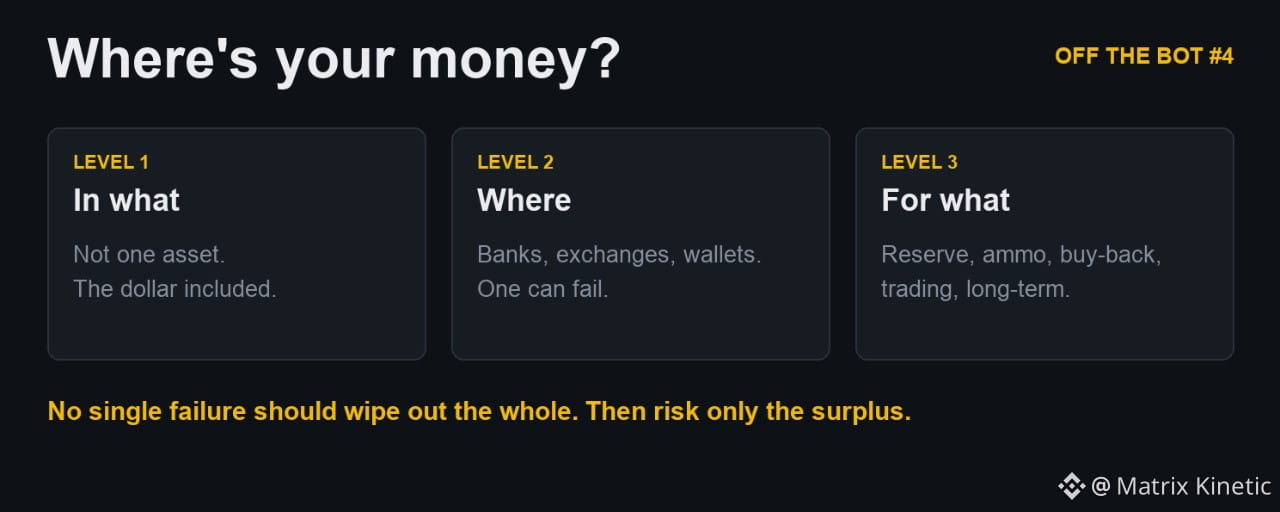
Where's your money?Off the bot # [4](https://www.binance.com/en/square/post/384308244291606). Everyone asks what to buy. Almost nobody asks why, or with what money.
Until you know where your capital sits, what it's made of, and how much of it you can spend or lose, nothing else matters. You're not trading. You're playing a casino with the whole stack, and against yourself.
My rule fits in one line: no single failure should wipe out all my capital, or even a big part of it. Not a bank, not an exchange, not a wallet, not a position, not a price move. So I split it three ways.
Level 1: in what
Not one asset. That includes the dollar. I count my portfolio in $BTC , but I live on fiat, so my cash sits in several currencies: the ones I earn in and the ones I pay my bills in. My crypto isn't one coin either.
Level 2: where
Not one place. Banks, exchanges, wallets. Any of them can freeze, fail or lock you out, and 2022 reminded everyone. If one goes, I lose a part, not everything.
Level 3: for what
The level most people skip, and the one that matters most. Every part of the capital has a job:
– Reserve: months of expenses. Untouchable.
– Ammo: cash above the reserve, waiting for its moment.
– For buy-back: money from what I sold, waiting to become coins again.
– Trading: spot and futures. Losses here are part of the plan, and they can't reach beyond this slice.
– Long-term: investments. I count them in BTC: if my BTC balance grows, I'm doing it right. You can count in dollars or anything else.
A daily recurring buy isn't another job. It's a pipe from ammo into trading.
And every part splits further. My capital is a molecule: it's made of atoms, the atoms split too, and each piece has its own job. Trading alone holds spot, grids, futures margin and a small experimental cell for my bots.
How it plays out
On Oct 29 my futures bot was liquidated in $TIA : −$49. That bot lives in the experimental cell, a small part of the trading part. The loss hit that cell and nothing else.
A year ago, for the first time in my life, I sold all my alts and the BTC from the last rally, on a monthly close below the 12-month average, roughly the 365-day one. My old BTC stayed where it was. Today 89% of that portfolio is cash, not counting futures and old BTC. That's not running from the market. Every dollar has a job.
I'm coming back in drops, not in one move. In 2022 $BTC spent months below its 200-week EMA, so near that line I switched on a daily recurring buy instead of going all in at once. It buys double on fear, so I size it by that: what it spends if it buys double every single day.
Right now BTC is about 6% above that line, and CoinMarketCap's Fear & Greed index reads 26, fear. My recurring buy is buying double.
The panel
This is my capital allocator. The numbers on it are placeholders, not mine. What matters is what it does. I enter my cash, my coins and the job of each part, plus income and expenses. One screen then shows where I am and with what:
– the BTC cycle: last month against the 12-month average, and the distance to the 200-week EMA;
– every bucket in dollars and as a share, the reserve in months of expenses;
– trading against the target share for this phase of the cycle;
– what different daily buying paces leave me in 12 months, after living costs, and in a stress case where income drops;
– what's left to buy back from what I sold, and where I break even.
I built it to make these calls right on the chart. Mine has my numbers, and every day they answer one question: what job does each dollar have?
The blue stripes are the months BTC spent below its 200-week EMA this year. That's why I come back in drops.
Why drops? Because I don't know whether price will dip under the 200-week EMA once more or turn up from here. The last cycle ran from 16K at the low to 126K at the high. Sold at 126K, an average of 16K, 20K or 30K means ×7.9, ×6.3 or ×4.2. All three win. Only the first one needed you to guess the bottom. My own BTC from that cycle averages about 28K. Not the bottom, and it didn't need to be. I don't catch tops either. I build in drops and exit through a grid, for the same reason: I don't know where the low or the high is, and chasing either one is greed.
So why don't I hold TIA?
I see no reason to keep it in my investment portfolio. Why do I trade it? Because it's volatile. Same coin, different cell.
Why did you buy it?
Bought FIL or TIA? Then answer one question first: why. To hold, or to trade? The answer picks the cell, the size and the exit.
And leave emotions out of it. Regret a 10% take when the coin then ran 100%? That's greed for the top, the same as hunting the bottom. Next time set a trailing take that starts at +10% and go to sleep. Automate everything you can.
First the budget: your expenses and what covers them. Then a job for each cell. Then risk, but only the surplus, and with a reason, not with hope.
So, where's your money? Don't answer with the total. Answer for each part: where it sits and what job it has.
#money #RiskManagement #InvestSmartly #OffTheBot
Where's your money?
Off the bot # 4. Everyone asks what to buy. Almost nobody asks why, or with what money.
Until you know where your capital sits, what it's made of, and how much of it you can spend or lose, nothing else matters. You're not trading. You're playing a casino with the whole stack, and against yourself.
My rule fits in one line: no single failure should wipe out all my capital, or even a big part of it. Not a bank, not an exchange, not a wallet, not a position, not a price move. So I split it three ways.
Level 1: in what
Not one asset. That includes the dollar. I count my portfolio in $BTC , but I live on fiat, so my cash sits in several currencies: the ones I earn in and the ones I pay my bills in. My crypto isn't one coin either.
Level 2: where
Not one place. Banks, exchanges, wallets. Any of them can freeze, fail or lock you out, and 2022 reminded everyone. If one goes, I lose a part, not everything.
Level 3: for what
The level most people skip, and the one that matters most. Every part of the capital has a job:
– Reserve: months of expenses. Untouchable.
– Ammo: cash above the reserve, waiting for its moment.
– For buy-back: money from what I sold, waiting to become coins again.
– Trading: spot and futures. Losses here are part of the plan, and they can't reach beyond this slice.
– Long-term: investments. I count them in BTC: if my BTC balance grows, I'm doing it right. You can count in dollars or anything else.
A daily recurring buy isn't another job. It's a pipe from ammo into trading.
And every part splits further. My capital is a molecule: it's made of atoms, the atoms split too, and each piece has its own job. Trading alone holds spot, grids, futures margin and a small experimental cell for my bots.
How it plays out
On Oct 29 my futures bot was liquidated in $TIA : −$49. That bot lives in the experimental cell, a small part of the trading part. The loss hit that cell and nothing else.
A year ago, for the first time in my life, I sold all my alts and the BTC from the last rally, on a monthly close below the 12-month average, roughly the 365-day one. My old BTC stayed where it was. Today 89% of that portfolio is cash, not counting futures and old BTC. That's not running from the market. Every dollar has a job.
I'm coming back in drops, not in one move. In 2022 $BTC spent months below its 200-week EMA, so near that line I switched on a daily recurring buy instead of going all in at once. It buys double on fear, so I size it by that: what it spends if it buys double every single day.
Right now BTC is about 6% above that line, and CoinMarketCap's Fear & Greed index reads 26, fear. My recurring buy is buying double.
The panel
This is my capital allocator. The numbers on it are placeholders, not mine. What matters is what it does. I enter my cash, my coins and the job of each part, plus income and expenses. One screen then shows where I am and with what:
– the BTC cycle: last month against the 12-month average, and the distance to the 200-week EMA;
– every bucket in dollars and as a share, the reserve in months of expenses;
– trading against the target share for this phase of the cycle;
– what different daily buying paces leave me in 12 months, after living costs, and in a stress case where income drops;
– what's left to buy back from what I sold, and where I break even.
I built it to make these calls right on the chart. Mine has my numbers, and every day they answer one question: what job does each dollar have?
The blue stripes are the months BTC spent below its 200-week EMA this year. That's why I come back in drops.
Why drops? Because I don't know whether price will dip under the 200-week EMA once more or turn up from here. The last cycle ran from 16K at the low to 126K at the high. Sold at 126K, an average of 16K, 20K or 30K means ×7.9, ×6.3 or ×4.2. All three win. Only the first one needed you to guess the bottom. My own BTC from that cycle averages about 28K. Not the bottom, and it didn't need to be. I don't catch tops either. I build in drops and exit through a grid, for the same reason: I don't know where the low or the high is, and chasing either one is greed.
So why don't I hold TIA?
I see no reason to keep it in my investment portfolio. Why do I trade it? Because it's volatile. Same coin, different cell.
Why did you buy it?
Bought FIL or TIA? Then answer one question first: why. To hold, or to trade? The answer picks the cell, the size and the exit.
And leave emotions out of it. Regret a 10% take when the coin then ran 100%? That's greed for the top, the same as hunting the bottom. Next time set a trailing take that starts at +10% and go to sleep. Automate everything you can.
First the budget: your expenses and what covers them. Then a job for each cell. Then risk, but only the surplus, and with a reason, not with hope.
So, where's your money? Don't answer with the total. Answer for each part: where it sits and what job it has.
#money #RiskManagement #InvestSmartly #OffTheBot
214
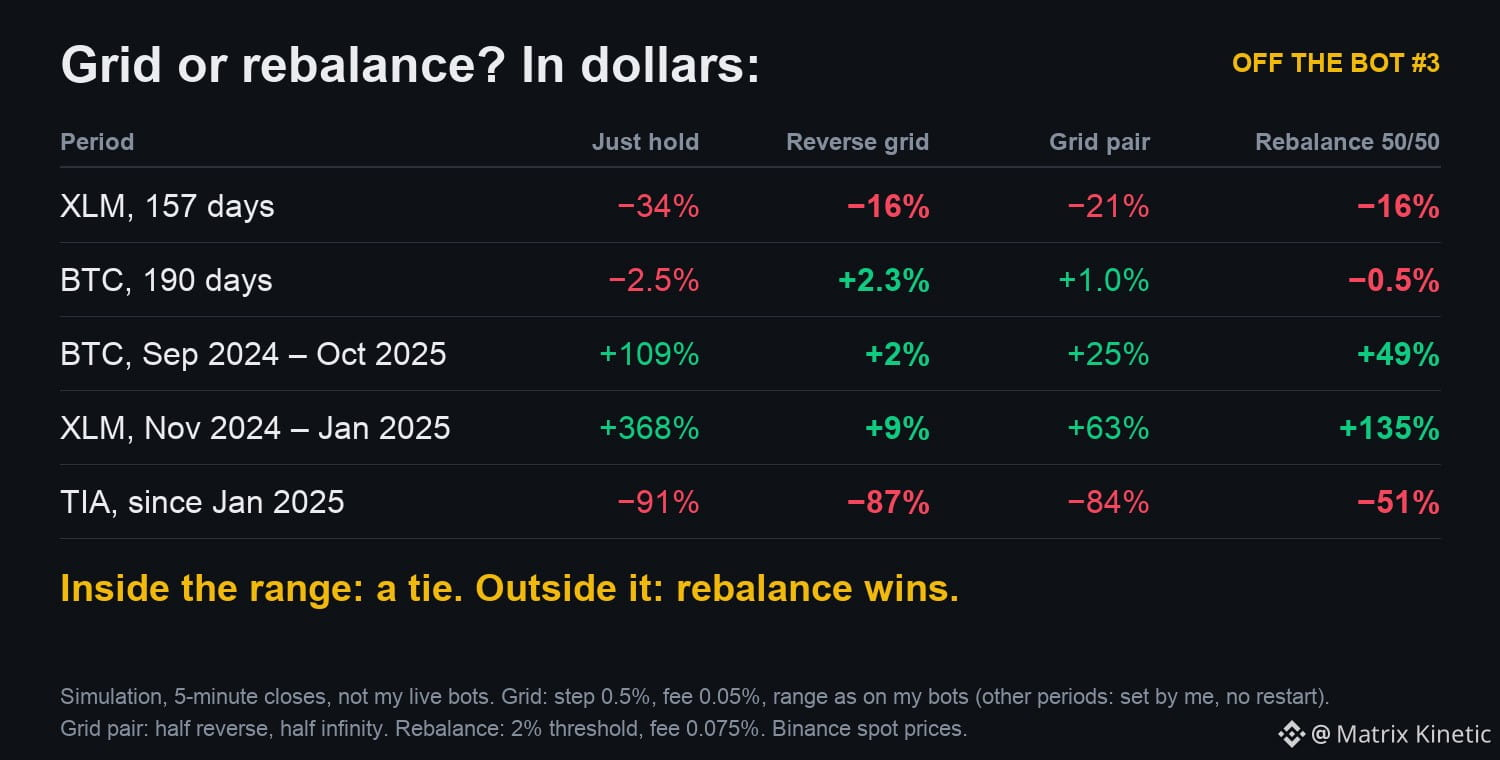
أوقفت البوت # [3](https://www.binance.com/ru-UA/square/post/385841762668124). شبكة أم إعادة موازنة؟ على BTC +109%: +2% مقابل +49%.
في المرة السابقة استبدلت التخزين بشبكة عكسية. وهناك أداة أبسط: بوت إعادة موازنة بنسبة 50/50. عملة وعملة مستقرة، تعودان إلى نصفين متساويين كلما ابتعدت إحداهما عن ذلك. لدى Binance بوت مدمج (الحد الأدنى 200 USDC).
لا حد أدنى ولا حد أقصى.
إنها في الأساس شبكة بلا حدود: العتبة تحدد الخطوة، وحجم التداول يتقلص مع المحفظة، لذا لا ينفد النقد أبدًا.
حاكيت كليهما باستخدام أسعار بفواصل 5 دقائق. وبالعملات، تصل نتائج النموذج إلى أقل من نقطة واحدة من نتائج شبكتي الفعلية على BTC وTRX، وإلى 5 نقاط أقل على XLM.
داخل النطاق، تعادل. $XLM −34%: الشبكة −16%، وإعادة الموازنة −16%.
أما خارجه، فالنطاق هو ما يحسم النتيجة. $BTC +109%: باعت الشبكة العكسية كل شيء قرب حدها الأعلى وبقيت محتفظة بالنقد، فحققت +2%. إعادة الموازنة حققت +49%. $TIA −91%: الشبكة −87%، وإعادة الموازنة −51%. ما زالت −51%.
هناك أمران توقعت أن يكون لهما أثر، لكنهما لم يؤثرا. العتبة: من 0.25% إلى 10%، لم تتغير النتيجة تقريبًا على عملاتي. الرسوم: 0.05% أو 0.075%، النتيجة واحدة. كما أن خطوة الشبكة الأصغر كانت أسوأ: خسرت خطوة 0.1% أمام 1% في كل مرة.
فلماذا أواصل استخدام الشبكات؟ لأنني أحسب بالـ BTC. خلال 190 يومًا، أضافت الشبكة العكسية +4.9% بالعملات، مقابل +2.0% لإعادة الموازنة. توزّع إعادة الموازنة الأرباح المحققة على الجانبين، ولا ترى كليهما ينموان إلا إذا عاد السعر.
لكن يسهل التعامل مع إعادة الموازنة. اضبط BTC/BNB/TRX/USDT على 25% لكل منها وانسَ الأمر. تتيح لك بعض البوتات إضافة الأموال أو سحبها أو تغيير الإعدادات دون إيقافها. وأنا أشغّل واحدًا أيضًا.
هذا ليس نصحًا ماليًا. ماذا ستستخدم بدلًا من التخزين؟
#trading #RiskManagement #bitcoin #Binance #OffTheBot
أوقفت البوت # 3. شبكة أم إعادة موازنة؟ على BTC +109%: +2% مقابل +49%.
في المرة السابقة استبدلت التخزين بشبكة عكسية. وهناك أداة أبسط: بوت إعادة موازنة بنسبة 50/50. عملة وعملة مستقرة، تعودان إلى نصفين متساويين كلما ابتعدت إحداهما عن ذلك. لدى Binance بوت مدمج (الحد الأدنى 200 USDC).
لا حد أدنى ولا حد أقصى.
إنها في الأساس شبكة بلا حدود: العتبة تحدد الخطوة، وحجم التداول يتقلص مع المحفظة، لذا لا ينفد النقد أبدًا.
حاكيت كليهما باستخدام أسعار بفواصل 5 دقائق. وبالعملات، تصل نتائج النموذج إلى أقل من نقطة واحدة من نتائج شبكتي الفعلية على BTC وTRX، وإلى 5 نقاط أقل على XLM.
داخل النطاق، تعادل. $XLM −34%: الشبكة −16%، وإعادة الموازنة −16%.
أما خارجه، فالنطاق هو ما يحسم النتيجة. $BTC +109%: باعت الشبكة العكسية كل شيء قرب حدها الأعلى وبقيت محتفظة بالنقد، فحققت +2%. إعادة الموازنة حققت +49%. $TIA −91%: الشبكة −87%، وإعادة الموازنة −51%. ما زالت −51%.
هناك أمران توقعت أن يكون لهما أثر، لكنهما لم يؤثرا. العتبة: من 0.25% إلى 10%، لم تتغير النتيجة تقريبًا على عملاتي. الرسوم: 0.05% أو 0.075%، النتيجة واحدة. كما أن خطوة الشبكة الأصغر كانت أسوأ: خسرت خطوة 0.1% أمام 1% في كل مرة.
فلماذا أواصل استخدام الشبكات؟ لأنني أحسب بالـ BTC. خلال 190 يومًا، أضافت الشبكة العكسية +4.9% بالعملات، مقابل +2.0% لإعادة الموازنة. توزّع إعادة الموازنة الأرباح المحققة على الجانبين، ولا ترى كليهما ينموان إلا إذا عاد السعر.
لكن يسهل التعامل مع إعادة الموازنة. اضبط BTC/BNB/TRX/USDT على 25% لكل منها وانسَ الأمر. تتيح لك بعض البوتات إضافة الأموال أو سحبها أو تغيير الإعدادات دون إيقافها. وأنا أشغّل واحدًا أيضًا.
هذا ليس نصحًا ماليًا. ماذا ستستخدم بدلًا من التخزين؟
#trading #RiskManagement #bitcoin #Binance #OffTheBot
1
258
سؤال سريع. لو جمّدت منصتك الرئيسية لتداول العملات الرقمية عمليات السحب غدًا، فكم من أموالك سيظل عالقًا؟
هذا هو المستوى الثاني من قاعدتي: يجب ألا يؤدي أي عطل منفرد إلى خسارة كل شيء. إليك كيف أقسّم أموالي: خارج البوت №[4](https://www.binance.com/en/square/post/387085931998648).
#money #RiskManagement #OffTheBot
سؤال سريع. لو جمّدت منصتك الرئيسية لتداول العملات الرقمية عمليات السحب غدًا، فكم من أموالك سيظل عالقًا؟
هذا هو المستوى الثاني من قاعدتي: يجب ألا يؤدي أي عطل منفرد إلى خسارة كل شيء. إليك كيف أقسّم أموالي: خارج البوت №4.
#money #RiskManagement #OffTheBot
هذا هو المستوى الثاني من قاعدتي: يجب ألا يؤدي أي عطل منفرد إلى خسارة كل شيء. إليك كيف أقسّم أموالي: خارج البوت №4.
#money #RiskManagement #OffTheBot
Almost all of it
About half
A small part
Nothing, I spread it out
16 ساعة (ساعات) مُتبقية
150
خائف؟ $BTC منخفض للأسبوع السادس على التوالي. مؤشر الخوف والطمع: 21.
الليلة الماضية، عند 71.5 ألف، خصصت جزءًا من عملة BTC الخاصة بي لشبكة عقود آجلة شراء: أمر الشراء الأدنى عند 57.8 ألف، وهو قاع هذه الدورة، والأعلى عند 75 ألف، مع تحريك الحد الأعلى صعودًا. الرافعة 10 أضعاف على الورق، لكن معظم الهامش محفوظ كاحتياطي، لذا يكون سعر التصفية 51,956.
بعد 11 ساعة: −6.69%. مخيف؟ هذا يعني أن السعر أقل من متوسط سعري بنسبة 0.7%، مضروبة في 10. اشترت الشبكة الانخفاض بالفعل وخفضت متوسط السعر إلى 69.7 ألف. عند 60 ألفًا سأضاعف الكمية.
لماذا لا أبيع: هيمنة BTC تتراجع لا ترتفع، وجزء كبير من أفضل 100 عملة يسجل ارتفاعًا. الاستسلام الحقيقي يبدو مختلفًا. قد أكون مخطئًا، وسيكشف الروبوت ذلك مباشرة.
ماذا تفعلون الآن؟
#fearandgreed #WhatWillDriveCryptoandStocks’NextRebound? #OffTheBot
Selling
Holding
Buying
Sitting in cash
16 ساعة (ساعات) مُتبقية
1
648
عرض الترجمة
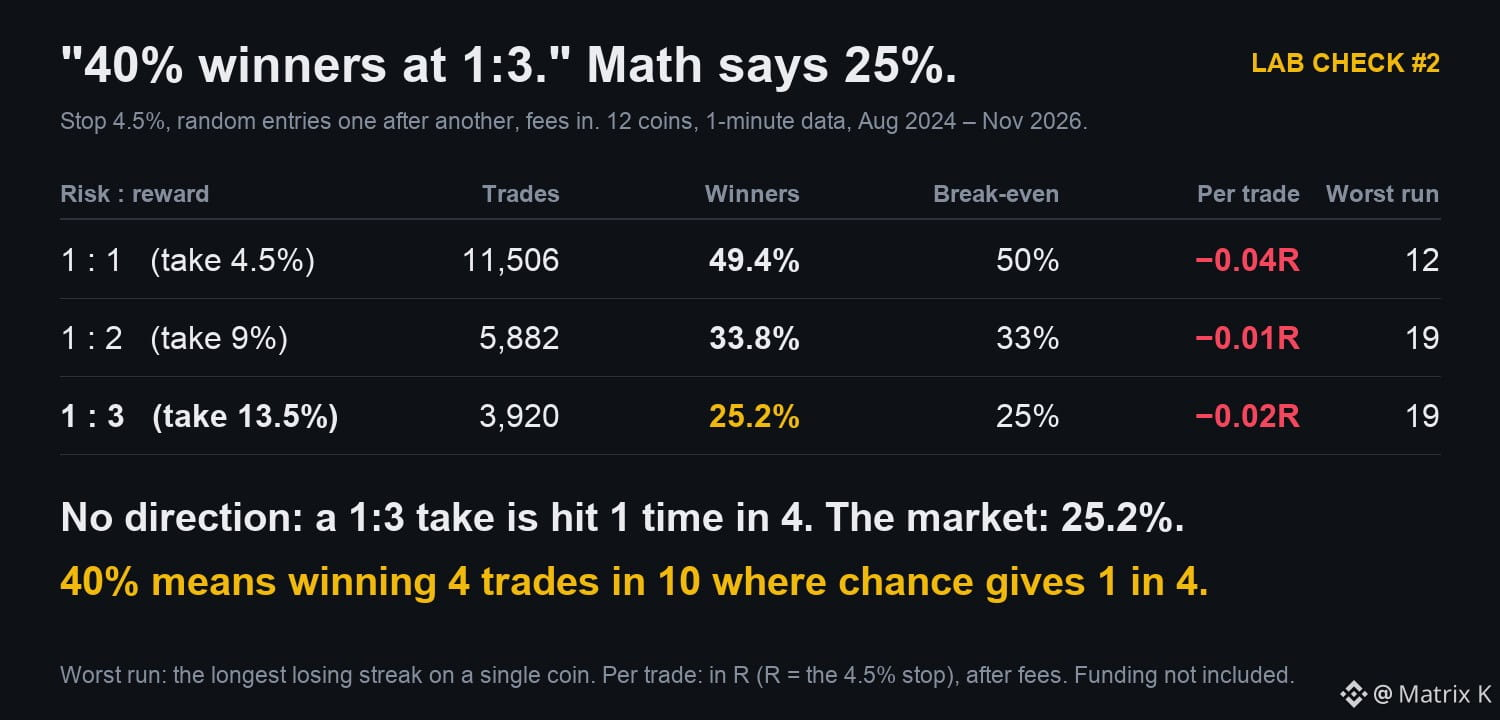
Lab check #2. "40% winners at 1:3": everyone quotes it. Math answers it before any backtest.
The risk rule in this post is sound: isolated margin, $10 at risk on $1,000. The 40% is the problem.
If price has no direction, a stop 1 step away is mathematically hit 3 times more often than a take 3 steps away. At 1:3 that's 25% winners, at 1:1 it's 50%. R:R doesn't create an edge: it only sets the break-even win rate. 40% is a wish, not a result.
I checked it anyway: 12 coins, including $ADA $ENA $AVAX , 1-minute data, Aug 2024 to Nov 2026. Stop 4.5%, take 13.5%, random entries, fees in. 3,920 trades, 25.2% winners. 1:1 gave 49.4%, 1:2 gave 33.8%. The market agrees with the math, and fees push it below zero.
So 40% at 1:3 isn't a rule. It means winning 4 trades in 10 where chance gives 1 in 4. The best entry I've measured, with an ATR stop, won about 3 in 10.
And the losing runs: up to 19 in a row on one coin.
Where does your win rate come from?
#RiskManagement #trading #OffTheBot

Maxim S
·
--
كيف تتداول بمبالغ كبيرة وتخاطر بالقليل؟ 🧠
سأشرح ببساطة كيفية التداول بميزانية قدرها $1000 (على سبيل المثال)! 👇
يعتقد معظم المبتدئين أن الرافعة المالية وسيلة لمضاعفة الإيداع بسرعة. وفي النهاية، يستخدمون رافعة 20x ويدخلون بكل ما لديهم، فتتم تصفيتهم عند أول تقلب في السوق.
ينبغي استخدام الرافعة المالية لتحرير رأس مالك، لا لزيادة مستوى المخاطرة.
يعتقد معظم المبتدئين أن الرافعة المالية وسيلة لمضاعفة الإيداع بسرعة. وفي النهاية، يستخدمون رافعة 20x ويدخلون بكل ما لديهم، فتتم تصفيتهم عند أول تقلب في السوق.
ينبغي استخدام الرافعة المالية لتحرير رأس مالك، لا لزيادة مستوى المخاطرة.
1
582
عرض الترجمة
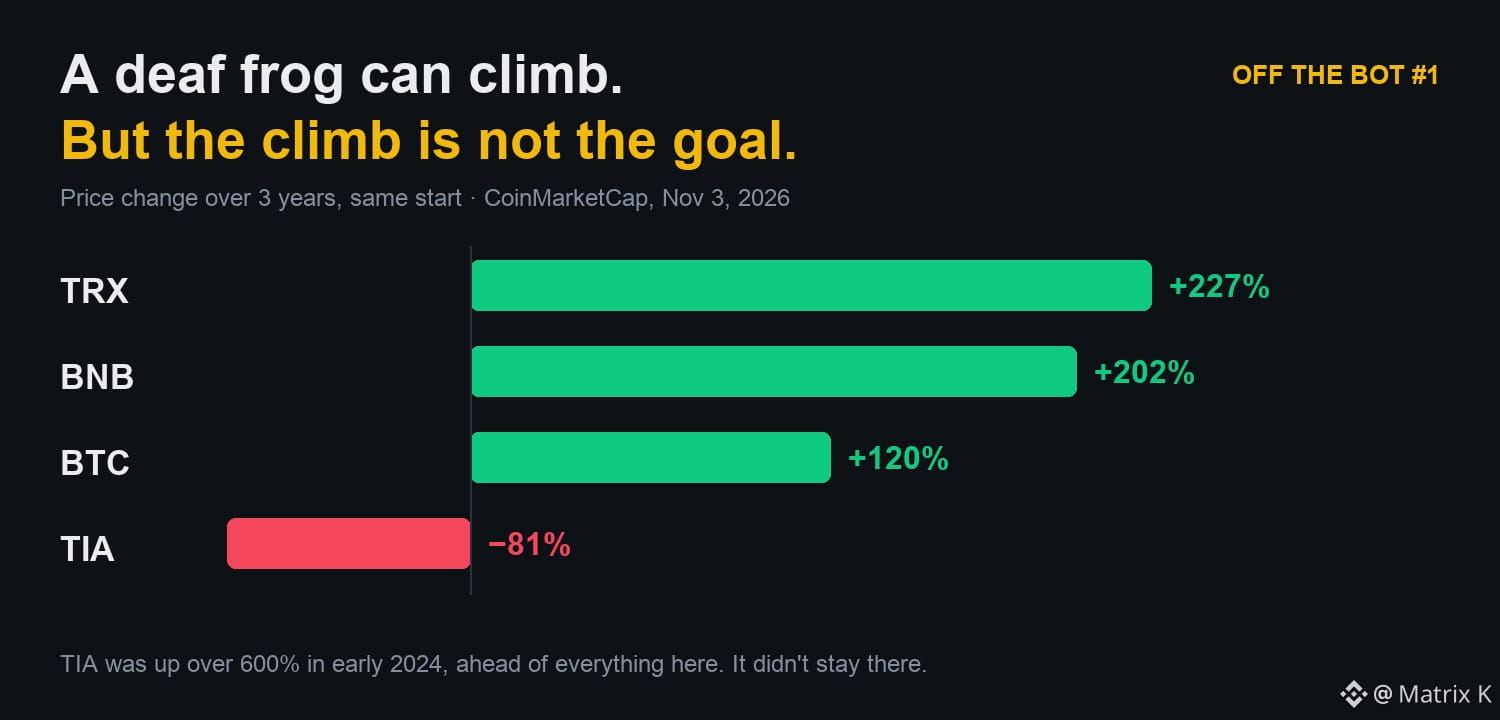
Off the bot #1. A deaf frog can climb. But the climb is not the goal.
A reader staked 30,000 $TIA in [Keplr](https://www.binance.com/en/square/post/383914064424624?sqb=1) and sent me a Chinese fable: "Only a deaf frog can climb to the top of a tall tower."
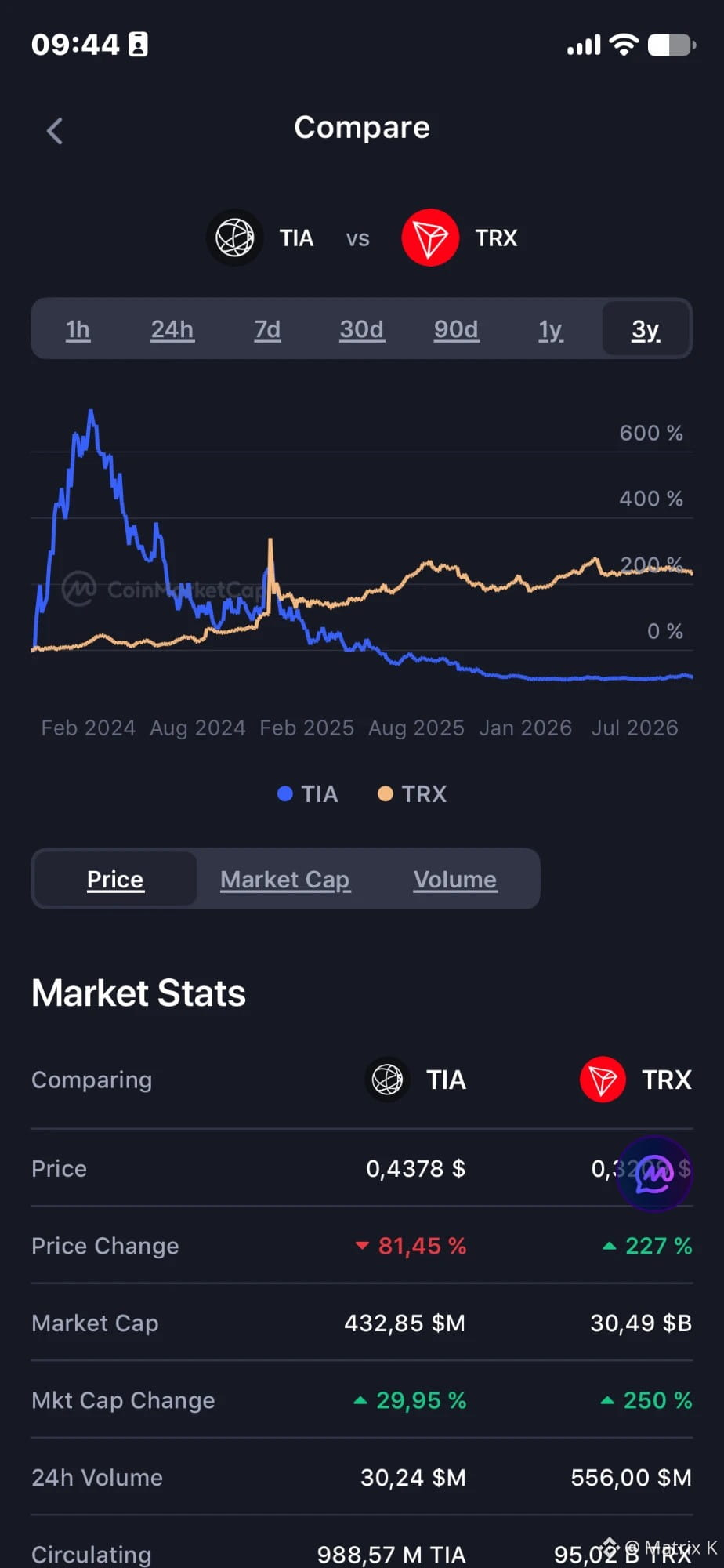
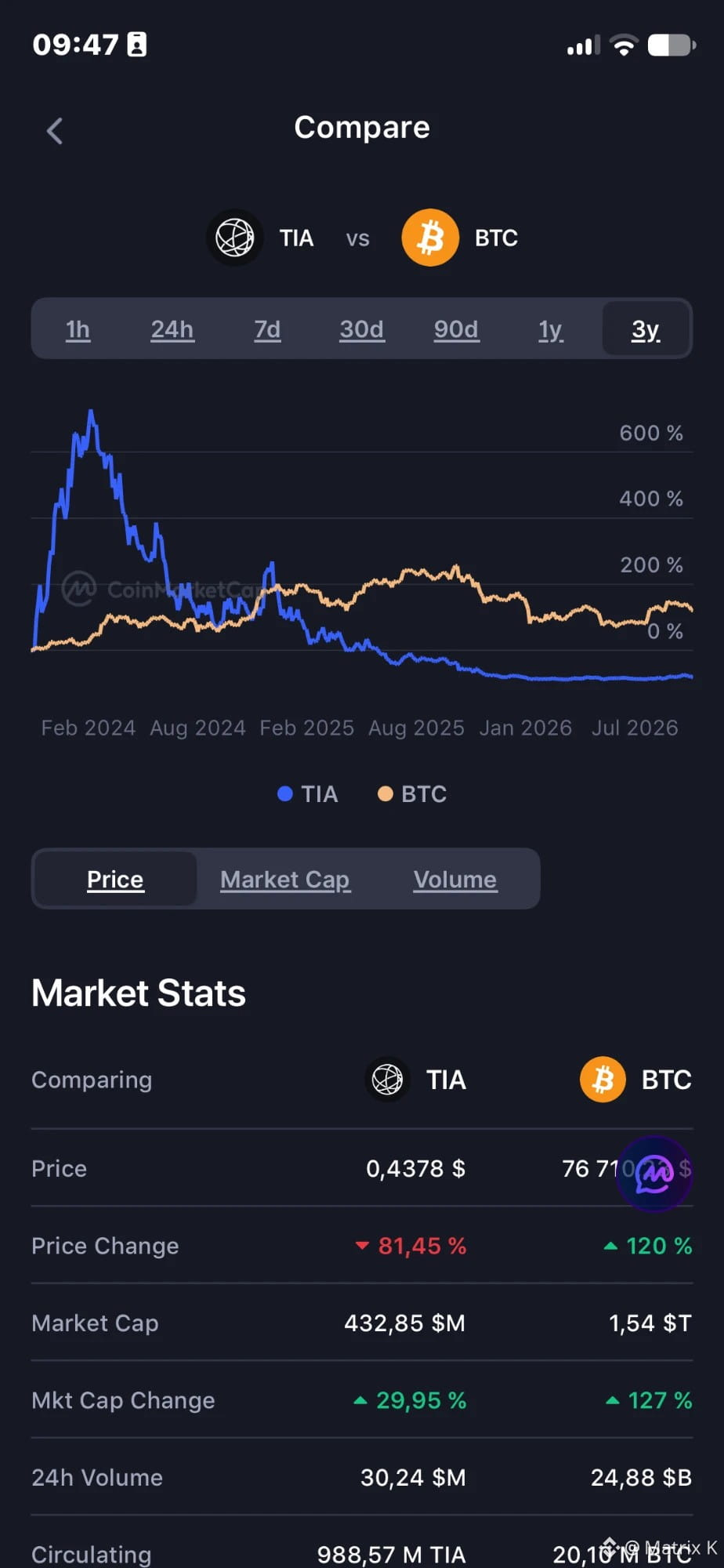
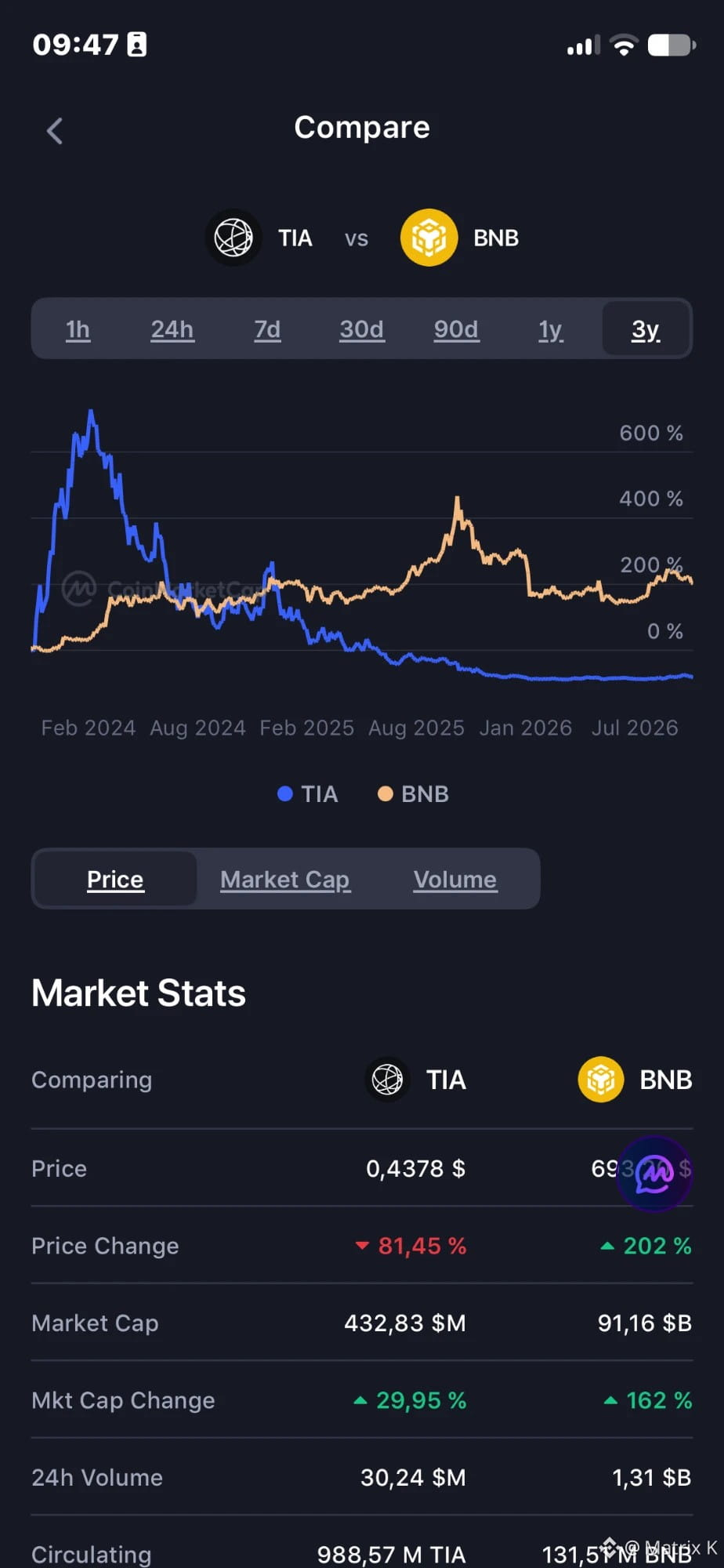
I respect his choice. Let's just open the charts. Three years, same start, price change on CoinMarketCap:
$TRX +227% $BNB +202% $BTC +120% TIA −81%
TIA did climb: in early 2024 it was up over 600%, ahead of everything on this list. I don't know when my reader bought his 30,000, near the top or at some local bottom. But an alt sitting on a bottom is not a reason to buy it. Some towers are Babel: a staircase up that leads down.
I know that tower. TIA and ATOM sat in my Keplr too. A year ago I sold everything except BTC from the previous cycle (average around 28K). The trigger: BTC closed a month below its 12-month average. For me, that's where a bull market ends. Not a feeling, a rule.
The same rule is bringing me back. BTC closed a month above that average again, and I'm returning to speculative positions in alts. Not at the bottom of 57.7K, but later and higher. The right price isn't the lowest one. It's the confirmed one.
Exceptions to this rule? There are. But that's another story.
Long-term buying is a separate track. When BTC fell below its 200-week EMA, the cycle bottom for me, I switched on regular buys of my favorites. What I buy doesn't sit as dead weight: it goes to spot grid bots and keeps working.
A deaf frog can climb. But the climb is a path, not a goal. I know my goals. Does the frog know its own? I can't tell. If the goal is to catch a few X's by buying some bottom, that's not a goal. That's hope. And hope and a goal are different things.
What's the goal behind the coin you hold?
#RiskManagement #InvestSmart #bitcoin #OffTheBot
P.S. The market is sleepy and my bot has nothing new to report. A good excuse to talk about everything around it. Hence the #1.
Off the bot #1. A deaf frog can climb. But the climb is not the goal.
A reader staked 30,000 $TIA in Keplr and sent me a Chinese fable: "Only a deaf frog can climb to the top of a tall tower."
I respect his choice. Let's just open the charts. Three years, same start, price change on CoinMarketCap:
$TRX +227% $BNB +202% $BTC +120% TIA −81%
TIA did climb: in early 2024 it was up over 600%, ahead of everything on this list. I don't know when my reader bought his 30,000, near the top or at some local bottom. But an alt sitting on a bottom is not a reason to buy it. Some towers are Babel: a staircase up that leads down.
I know that tower. TIA and ATOM sat in my Keplr too. A year ago I sold everything except BTC from the previous cycle (average around 28K). The trigger: BTC closed a month below its 12-month average. For me, that's where a bull market ends. Not a feeling, a rule.
The same rule is bringing me back. BTC closed a month above that average again, and I'm returning to speculative positions in alts. Not at the bottom of 57.7K, but later and higher. The right price isn't the lowest one. It's the confirmed one.
Exceptions to this rule? There are. But that's another story.
Long-term buying is a separate track. When BTC fell below its 200-week EMA, the cycle bottom for me, I switched on regular buys of my favorites. What I buy doesn't sit as dead weight: it goes to spot grid bots and keeps working.
A deaf frog can climb. But the climb is a path, not a goal. I know my goals. Does the frog know its own? I can't tell. If the goal is to catch a few X's by buying some bottom, that's not a goal. That's hope. And hope and a goal are different things.
What's the goal behind the coin you hold?
#RiskManagement #InvestSmart #bitcoin #OffTheBot
P.S. The market is sleepy and my bot has nothing new to report. A good excuse to talk about everything around it. Hence the #1.
1
408
سجّل الدخول لاستكشاف المزيد من المُحتوى
انضم إلى مُستخدمي العملات الرقمية حول العالم على Binance Square
⚡️ احصل على أحدث المعلومات المفيدة عن العملات الرقمية.
💬 موثوقة من قبل أكبر منصّة لتداول العملات الرقمية في العالم.
👍 اكتشف الرؤى الحقيقية من صنّاع المُحتوى الموثوقين.
البريد الإلكتروني / رقم الهاتف
المواضيع الرائجة
1
#USPPIMissMayEaseBTCPressure
18,407 مشاهدات
478 يقومون بالنقاش
2
#BitcoinCoreDisclosesTorTrafficVulnerability
5,225 مشاهدات
208 يقومون بالنقاش
3
#WhatWillDriveCryptoandStocks’NextRebound?
116,971 مشاهدات
1,398 يقومون بالنقاش
4
#BitcoinBreaksBelow200WeekMovingAverage
30,399 مشاهدات
380 يقومون بالنقاش
5
#SpaceXTeslaMergerTalksWouldCombine30220BTC
10,369 مشاهدات
195 يقومون بالنقاش
6
#Anthropic’s6xIPODemandSignalsPotentialRecordRaise
38,641 مشاهدات
639 يقومون بالنقاش
7
#USCryptoETFsLose$1.48BInFiveDays
1,869 مشاهدات
39 يقومون بالنقاش
8
#KoreaDigitalAssetBasicActFinalDraftExpectedEarlyJanuary
3,396 مشاهدات
19 يقومون بالنقاش
9
#RippleRLUSDMarketCapSurpassesPayPalPYUSD
5,956 مشاهدات
110 يقومون بالنقاش
10
#JaneStreetNearlyOctuplesFidelityBitcoinETFHoldings
14,551 مشاهدات
224 يقومون بالنقاش