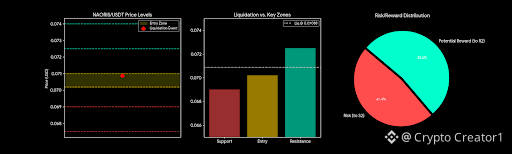
$BNB Attestation Service $BAS shows renewed momentum as price trades around $0.0066, gaining over ten percent with strong on-chain participation and nearly 184k holders. Liquidity remains healthy, suggesting traders are actively positioning for continuation if volume sustains above moving averages. My trading view favors cautious dip entries while monitoring resistance near $0.0071 and support around $0.0061. Short-term volatility is expected, so risk management and partial profit-taking remain essential. Projects with growing ecosystem utility often reward patient traders, but discipline matters more than hype. Always track volume shifts, wallet growth, and broader market sentiment before committing capital in fast-moving conditions globally.#BNB #BAS #BTC
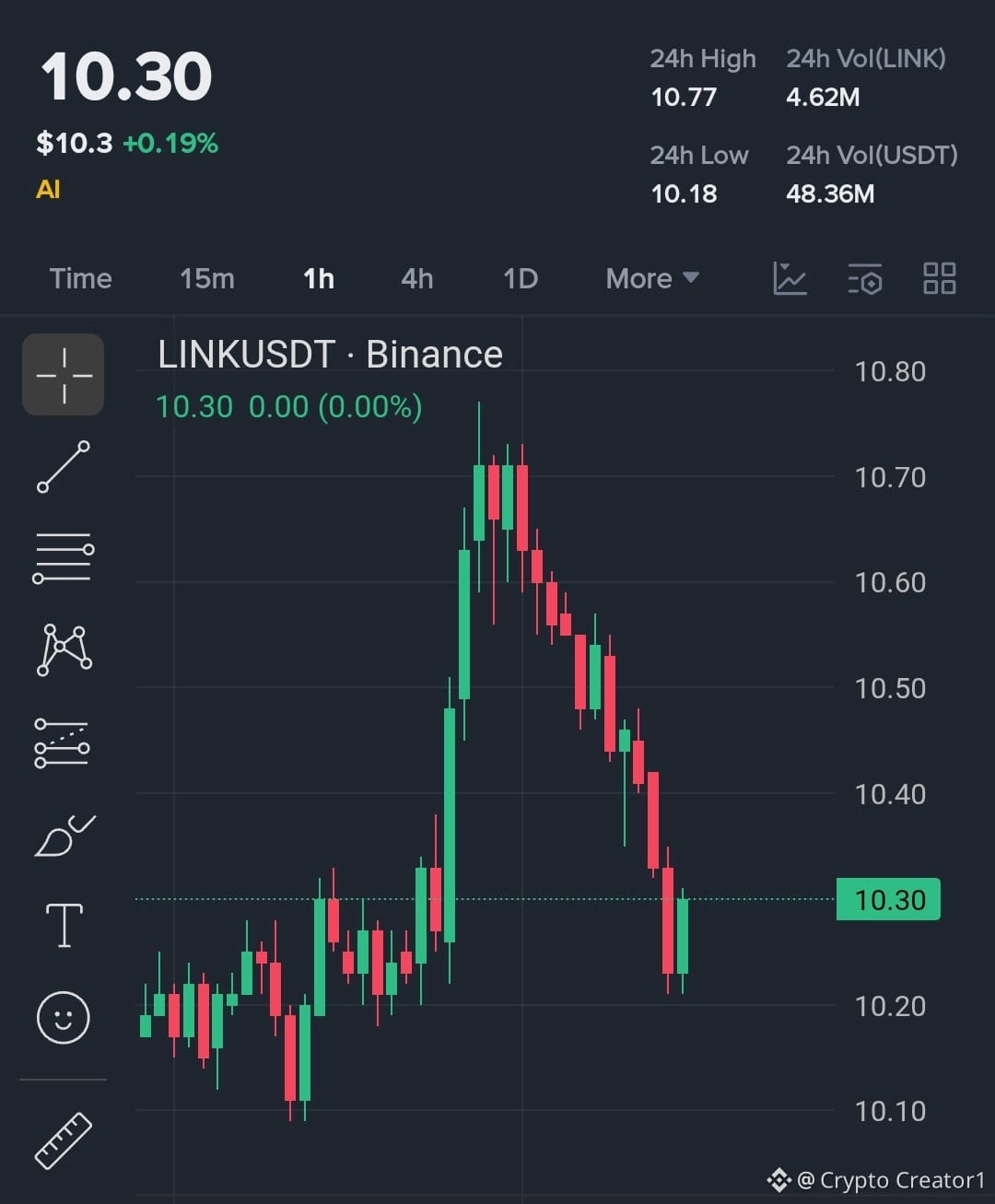
Market watch update $SUI trades near $0.94, showing mild pressure as broader crypto sentiment cools. $TRX remains relatively stable, reflecting strong network activity despite small declines. LTC continues to face resistance, yet long-term holders see value at current levels. $ZEC volatility reminds traders to manage risk carefully, while LINK’s pullback could offer accumulation opportunities for patient investors. My approach is cautious buying on dips, strict stop-loss placement, and focusing on projects with real utility. Short-term fluctuations are normal, but disciplined strategy and proper research help traders navigate uncertainty and prepare for the next recovery phase ahead across global markets soon.#SUİ #TRX #ZEC
Today $VANRY USDT shows volatility as price trades near support after a recent pullback, creating short-term opportunities for disciplined traders. My approach is watching volume and holding above the 0.0056 zone before considering entries, while keeping stop-loss tight in case momentum weakens. Breakouts above resistance could trigger quick recovery moves, but patience remains key as market sentiment still fluctuates. Smart risk management and clear profit targets help traders survive dips and capture upside when confidence returns across crypto markets, supporting steady portfolio growth through consistent strategy execution over coming sessions for confident and prepared participants seeking sustainable long-term trading success globally.#vanry #BTC #ETH
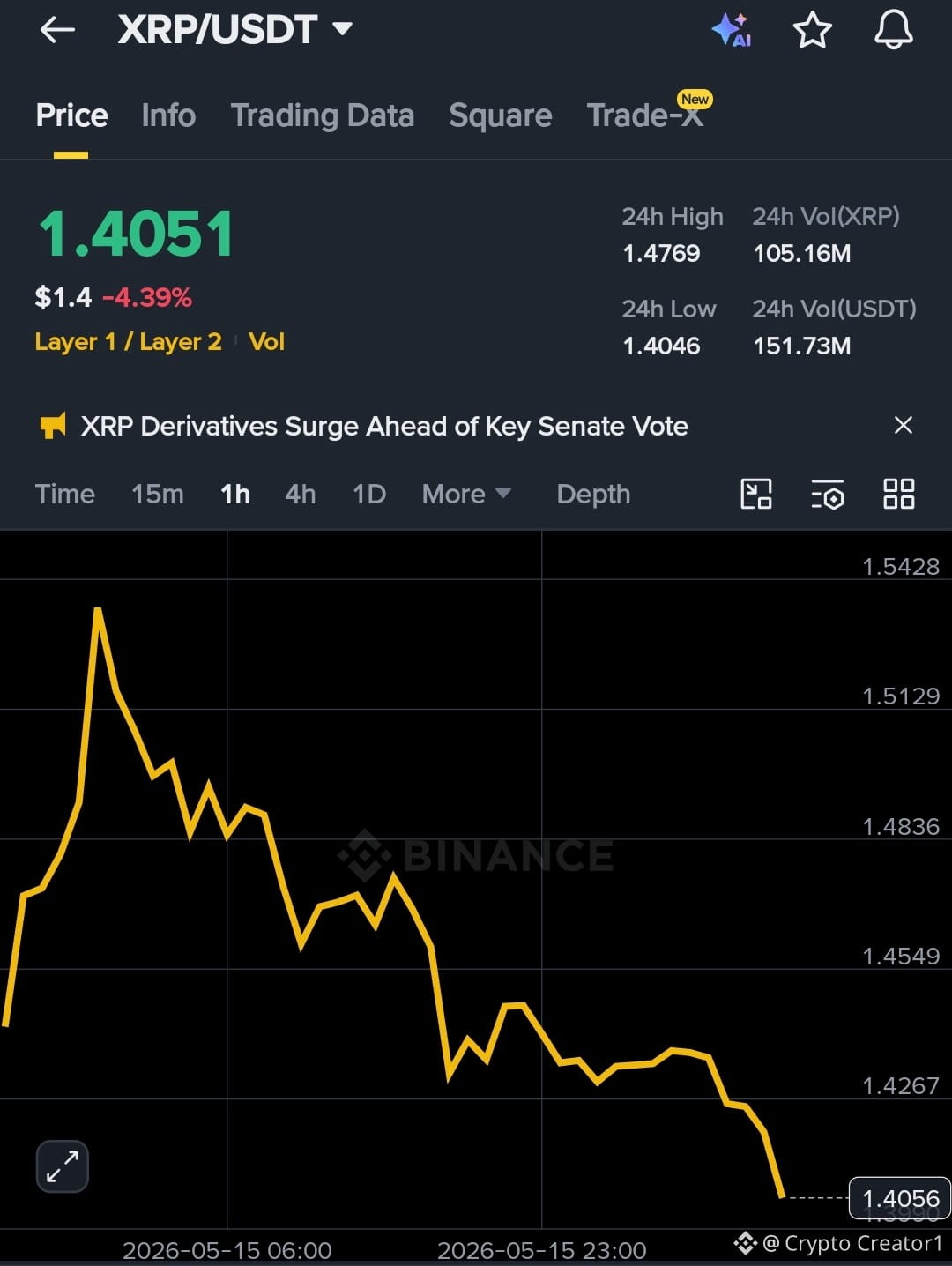
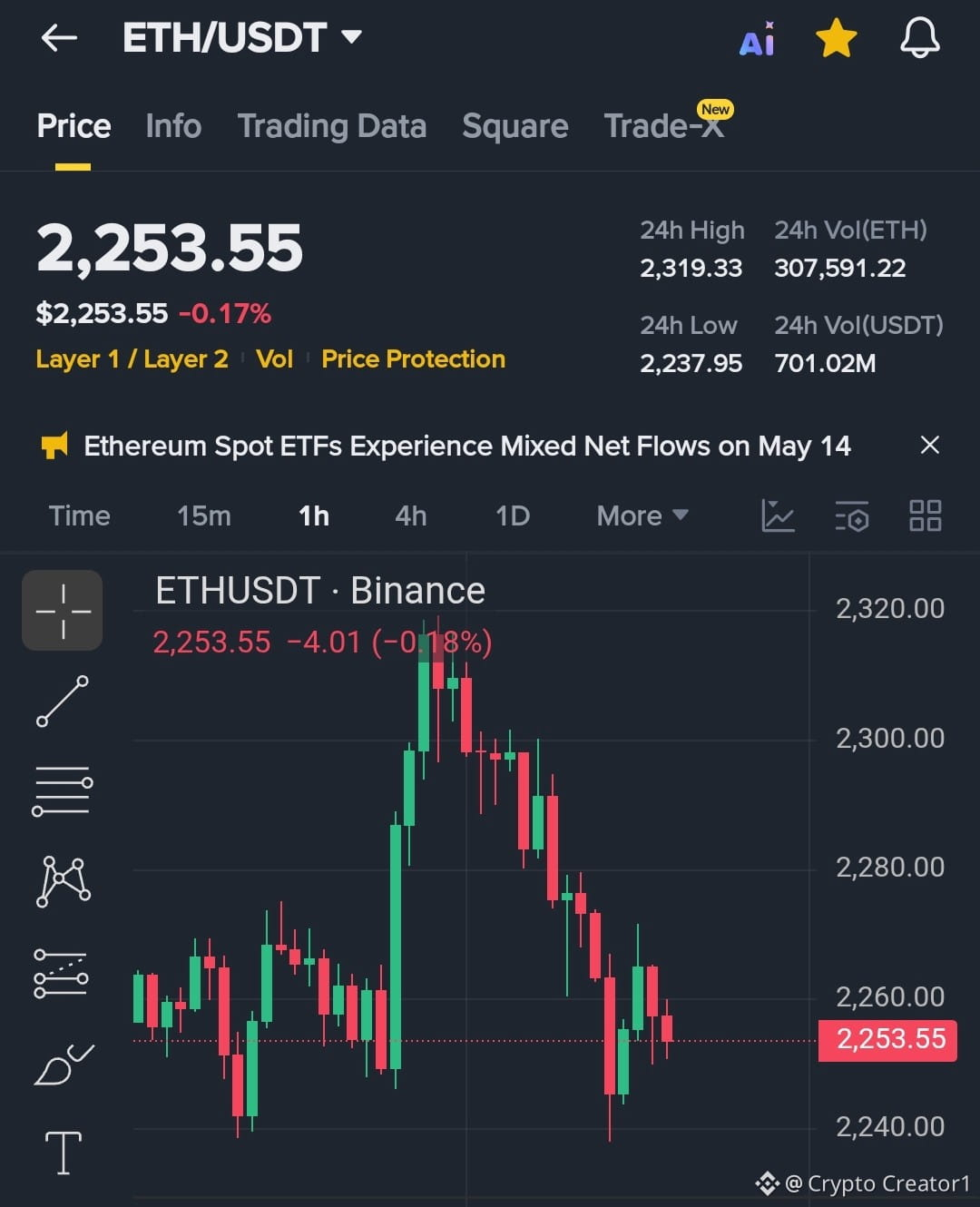
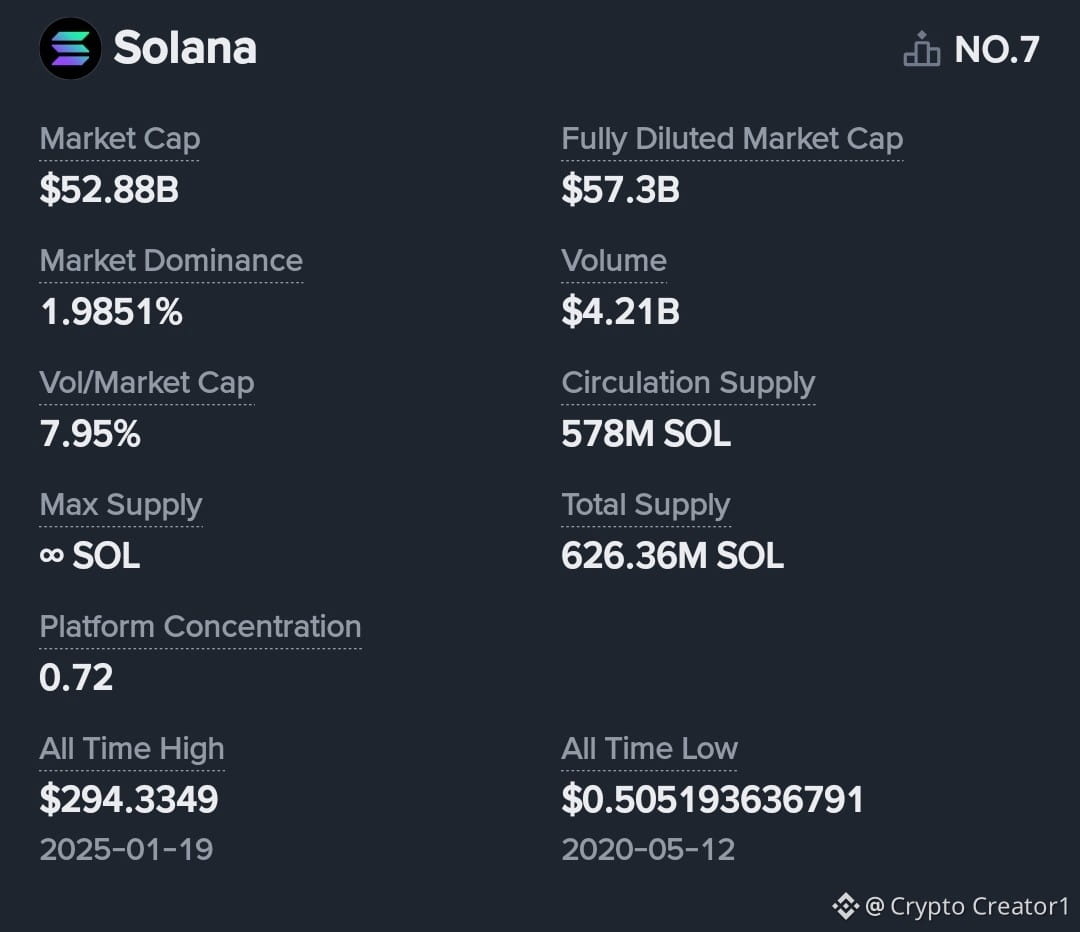
Today markets show pressure as $ETH $SOL and $XRP trade lower, reminding traders that volatility is constant in crypto. My strategy during dips is simple: protect capital, avoid panic, and look for strong support zones before adding positions. I also reduce leverage and keep cash ready for opportunities created by fear. Patience, risk control, and research help survive corrections while preparing for the next recovery wave that often rewards disciplined traders who follow plans instead of emotions, ensuring steady long-term growth despite short-term uncertainty across global digital asset markets worldwide for resilient portfolio performance over many trading cycles ahead patiently.#ETH #solana #xrp
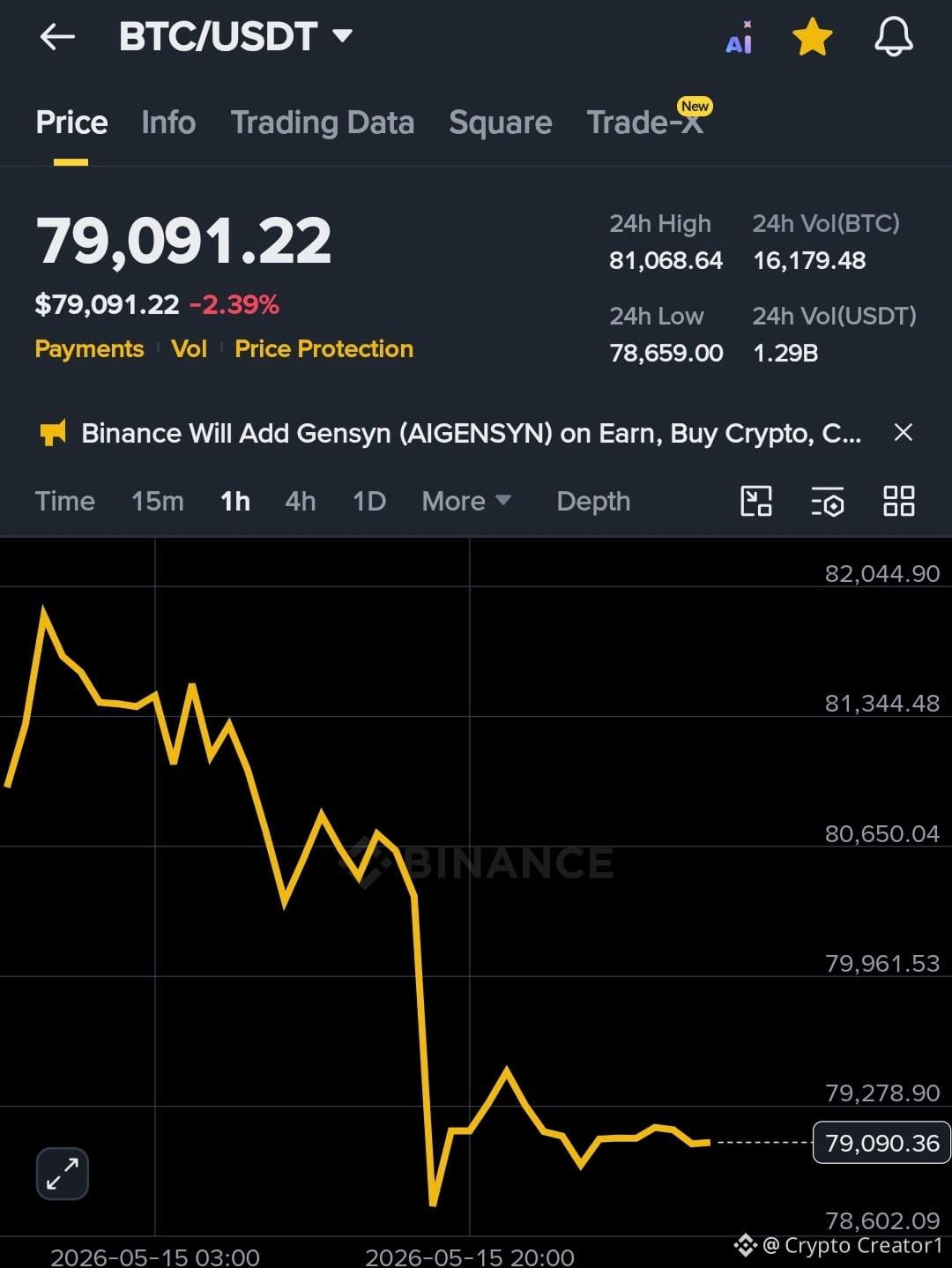
$BTC is currently trading near 66,490 USDT, down around -2.25% in the last 24 hours. The session high touched 68,476, while price found short-term support around 66,200. On lower timeframes (15m–1h), volatility remains elevated as volume stays strong, with over 13,900 BTC traded in 24h. The short-term trend shows mild bearish pressure after rejection near 68.6k resistance. If $BTC holds above 66.2k, we could see a bounce toward 67.6k–68k. A breakdown below support may open room for deeper correction. Traders should monitor liquidity zones and confirm direction with volume before entering positions.#BTC #StrategyBTCPurchase #OpenClawFounderJoinsOpenAI
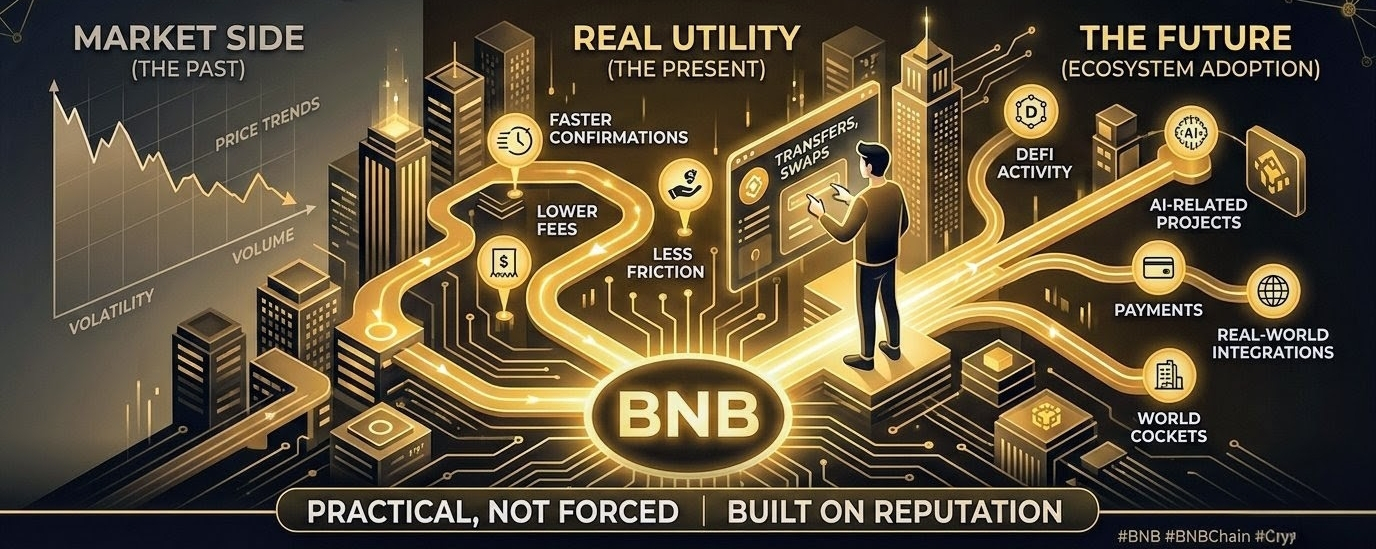
#BNB is trading around $613 after facing rejection near $626 resistance. The immediate support zone sits between $607 and $600. If price holds above support and reclaims $622, we may see another attempt toward $633. However, a clean breakdown below $600 could trigger further downside pressure. Current structure shows range-bound movement with short-term volatility. Traders should avoid mid-range entries and wait for breakout confirmation. Using low leverage and placing strict stop-loss levels is essential in this type of market condition. Patience remains key.
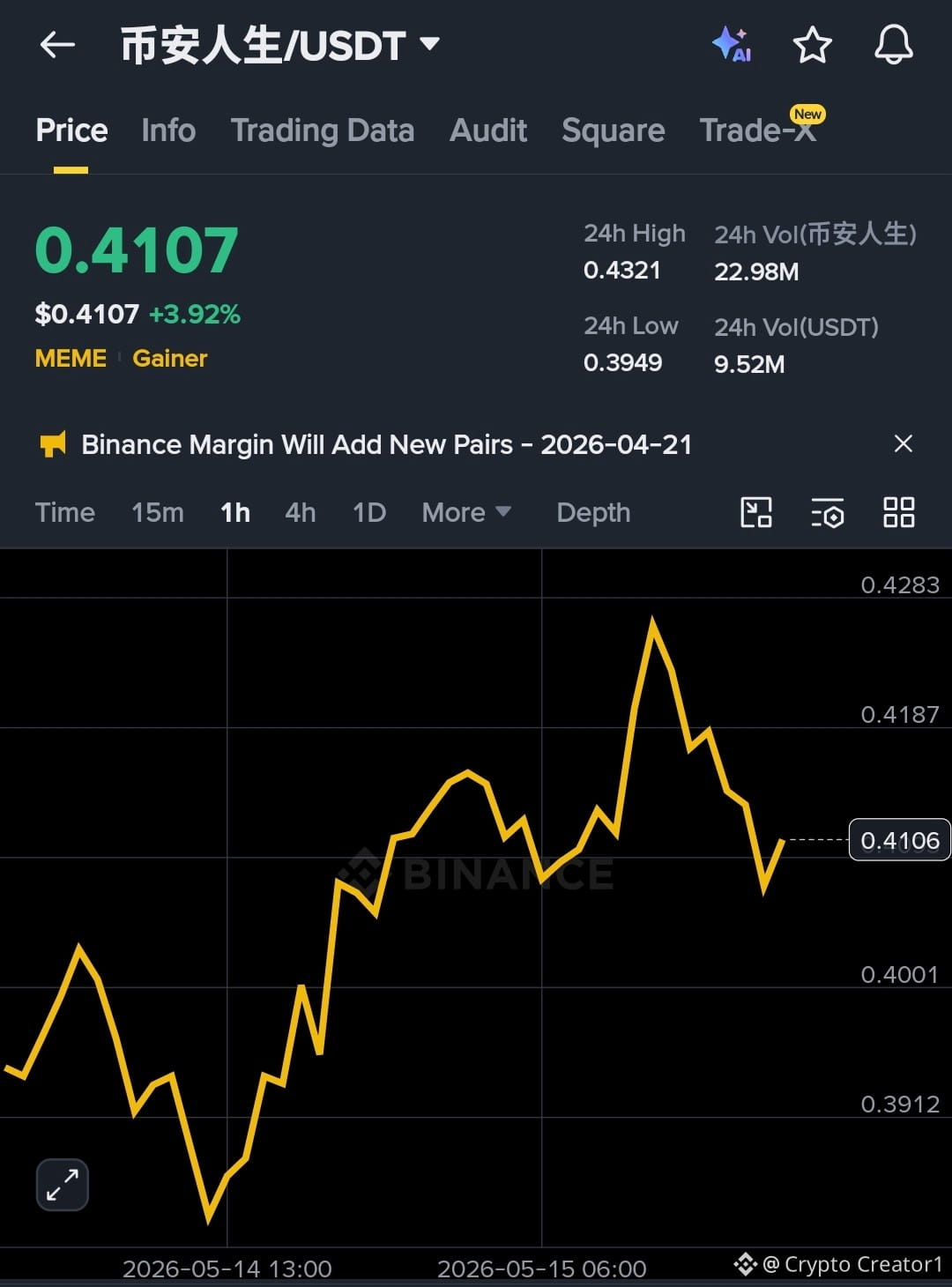
$WLFI $GUN #FOGO #KITE , and $币安人生 show strong bullish momentum, with WLFI +21% and GUN +24%. Key support/resistance zones guide entries: buy near recent support, sell near highs. Volume spikes confirm buying interest. Traders should watch MA(5/10) and 24h ranges for short-term trend continuation.
The piece effectively emphasizes realworld use cases but it could further expand on specific industries or applications where Fogo’s speed and low fees provide a competitive advant
SK_Rajput
·
--
Why @fogo Is Gaining Attention in the Web3 Ecosystem 🚀
The evolution of Web3 is no longer just about speed or scalability — it’s about creating real value, strong communities, and sustainable token utility. That’s where @fogo and Fogo stand out. Fogo is building more than just hype; it is focusing on long-term ecosystem growth, transparency, and strong community engagement. The structure behind Fogo reflects a commitment to balanced tokenomics, ensuring that holders, builders, and contributors all benefit from the ecosystem’s expansion. What makes #fogo interesting is the way it connects innovation with accessibility. Instead of targeting only developers or whales, it encourages broader participation. This kind of inclusive approach is critical for any project aiming to thrive in today’s competitive crypto environment. Community activity around @fogo is steadily increasing, showing organic interest rather than artificial momentum. Projects that prioritize real engagement over short-term pumps often build stronger foundations — and $FOGO appears to be aligning with that vision. As the campaign continues daily, it’s important to watch how the ecosystem develops, partnerships expand, and utilities evolve. Consistency, transparency, and execution will define long-term success. For anyone researching emerging Web3 ecosystems, keeping an eye on @fogo and the growth of $FOGO could be worthwhile. The journey is just getting started. 🔥 #fogo
To strengthen the article further a brief comparison with other L1s could help contextualize Fogo’s performance highlighting its unique selling points in a crowded market.
Eric Carson
·
--
FOGO Is Not Another L1 — It’s a Direct Challenge to Centralized Exchanges
When I look at Fogo, I don’t see another Layer-1 chasing TPS headlines. I see a deliberate narrowing of ambition. And in infrastructure, narrowing is often strength. Fogo is not trying to be a universal settlement layer for games, NFTs, identity, and every experimental app category. It is designed around a single question: Can on-chain trading match the execution certainty of centralized exchanges without giving up self-custody? That framing changes everything — architecture, validator design, liquidity model, and ultimately tokenomics. Built on Proven Rails, Optimized for Execution Technically, Fogo does not reinvent the foundations laid by Solana. It retains Proof of History as a global clock, Tower BFT for consensus, Turbine for block propagation, the Solana Virtual Machine for execution, and rotating leader architecture. Instead of rewriting the rulebook, Fogo tightens it. Its bespoke client is built around Firedancer, originally developed by Jump Crypto. Firedancer’s parallelized execution model, optimized networking stack, and hardware-aware design make it one of the fastest blockchain clients ever engineered. Fogo standardizes around that philosophy: performance is not optional — it is the product. This matters because most chains degrade under load. As validator heterogeneity increases, latency becomes unpredictable. Fogo’s answer is controversial but coherent: curate the validator environment, normalize performance expectations, and reduce latency variance. That is not maximal decentralization. It is deterministic infrastructure. Multi-Local Consensus: Reducing Geography, Not Sovereignty One of Fogo’s most interesting innovations is its zone-based, multi-local consensus model. Validators cluster geographically, often within the same data center region, to reduce physical signal latency. These regions rotate epochs to preserve diversity and reduce capture risk. The result is reduced geographical delay, preserved jurisdictional spread, and predictable block propagation. In capital markets, microseconds matter. In DeFi, unpredictability is more damaging than raw slowness. Fogo optimizes for predictability. That makes it resemble financial market infrastructure more than a general blockchain. Enshrined Market Structure Most DeFi trading today is fragmented. Liquidity sits across multiple DEXs, with external oracle dependencies introducing latency and risk. Fogo’s model includes an enshrined central limit order book at protocol level, native price feeds maintained by validators, high-performance hardware expectations, and unified liquidity pools. This is a structural decision. Instead of letting dozens of exchanges compete for liquidity, the protocol embeds market structure directly. That is not ideological decentralization. It is execution engineering. Community Distribution Without Venture Dominance Where the architecture optimizes for speed and certainty, the token distribution optimizes for ownership breadth. Rather than relying heavily on concentrated venture allocations, Fogo distributed tokens through Echo raises, a Binance Prime Sale, and broad community participation. Community allocation stands at 16.68% of total supply, with structured vesting and unlocked portions for early contributors and launch incentives. Institutional investors hold 12.06%, fully locked until 2026. Core contributors hold 34%, vested over four years with a 12-month cliff. Advisors follow a similar long-term schedule. Over 63% of supply was locked at genesis, reducing early sell pressure. This structure signals something important. Fogo is not optimized for a fast token cycle. It is optimized for a multi-year build phase. Vesting extending to 2029 aligns technical contributors with protocol survival, not short-term price performance. Utility: Gas, Security, and Governance Flywheel The $FOGO token functions across three layers. It is required for transaction execution, with Sessions enabling dApps to sponsor fees. It secures the network through staking, allowing validators and delegators to earn rewards. It also governs protocol parameters, validator regions, and strategic direction. If the chain succeeds in attracting serious trading volume, token demand becomes structurally tied to execution rather than speculation. That is a subtle but important distinction. The Real Competitor Is Not Another L1 Most people compare Fogo to Solana or other SVM chains. That comparison misses the point. The true competitor is centralized exchanges. Centralized venues dominate because they offer near-instant matching engines, deep liquidity, mature risk management systems, and predictable execution under stress. Professional capital does not optimize for ideology. It optimizes for certainty. Even today, during volatility events, liquidity often migrates back to platforms like Binance. Not because users prefer custody risk, but because execution reliability wins during chaos. Fogo’s strategy can be described as CEX-ification on-chain. It attempts to replicate matching speed, liquidity aggregation, and risk predictability while retaining self-custody and programmable transparency. If successful, that shifts the battlefield from which Layer-1 is faster to whether on-chain infrastructure can replace centralized trading rails. That is a much bigger question. Why This Is an Unpopular Opinion The industry narrative often rewards maximal decentralization, experimental architecture, or novel virtual machines. Fogo takes a more pragmatic stance. It uses proven SVM infrastructure, optimizes the execution client, curates validator performance, embeds market structure, and locks supply to reduce short-term volatility. It sacrifices ideological purity for performance determinism. That trade-off will not please everyone. But capital markets rarely reward purity. They reward reliability. Can It Work? The real test will not be marketing cycles or token price spikes. It will be whether latency remains stable under peak load, whether liquidity consolidates rather than fragments, whether execution remains consistent during volatility, and whether professional traders stay on-chain during crashes. If Fogo proves resilient when markets stress, the narrative shifts. The debate moves away from TPS comparisons and toward structural competition between decentralized infrastructure and centralized exchanges. That would be a far more consequential battle. Final Thought Fogo is not trying to win the Layer-1 race. It is trying to win the execution war. If it can deliver CEX-level reliability with DeFi-level custody, it will not just be another high-performance chain. It will become financial market infrastructure. And infrastructure, unlike hype, compounds quietly until it becomes indispensable. @Fogo Official #fogo #FOGO $FOGO {spot}(FOGOUSDT)
The article maintains a friendly and professional tone, making it engaging. Breaking down technical concepts into short clear paragraphs helps in retaining reader attention.
DX _SUPARI
·
--
صاعد
@Fogo Official Network is redefining what high performance Layer 1 truly means. Powered by the Solana Virtual Machine, it delivers exceptional speed, ultra low latency, and seamless scalability. Built for serious builders and next generation applications, #Fogo Network unlocks efficiency, precision, and the future of decentralized innovation. @Fogo Official $FOGO {spot}(FOGOUSDT) #fogo
Including details about the Fogo token and its ecosystem role adds value. Consider elaborating more on token incentives for validators and developers to give readers a full picture
GHUFRAN Habib
·
--
Fogo’s Structural Edge in On-Chain Market Design
Every new blockchain usually follows the same playbook. First, it markets speed transactions per second, low fees, fast finality. Then it spends millions trying to attract developers and apps to build on top of it.
But a blockchain alone is just infrastructure like a road. It only becomes valuable when real economic activity flows through it.
Fogo approached this problem differently.
What stands out isn’t just performance it’s design philosophy. Fogo isn’t a blockchain that hosts a decentralized exchange… it is the exchange. Trading infrastructure is built directly into the chain itself, not layered on as an external application.
This structural shift matters more than it sounds.
On traditional blockchains, DEXs operate like independent apps. They rely on external price feeds, fragmented liquidity sources, and compete with other apps for block space. That can introduce latency, slippage, and execution risk all critical problems for professional traders.
Fogo removes these bottlenecks by integrating market structure into the base layer:
• Price data originates inside the chain • Liquidity connects natively to the system • Validators are optimized for trading performance
So instead of being “a faster DEX,” Fogo becomes a purpose-built trading environment.
For institutional or high-frequency traders, this changes the risk model. Concerns around oracle delays, smart contract exploits, or congested blockspace are reduced because execution logic and settlement live in the same system.
That alignment is also why trading firms chose to invest early. They’re not just speculating they’re backing infrastructure that directly improves their execution environment.
Of course, adoption is the real test. Fogo launched its chain in January 2026, and the ecosystem is still early. More applications, integrations, and liquidity layers need to develop.
But the valuation gap is notable. Large trading ecosystems on general-purpose chains are worth tens of billions, while Fogo a chain purpose-built for exchange activity is still valued far lower.
If it captures even a fraction of on-chain trading volume, the upside narrative changes quickly.
Most blockchains build platforms and hope finance arrives.
Fogo built finance infrastructure first and called it a blockchain.
From DeFi applications to NFT marketplaces Fogo enables fast reliable transactions across multiple sectors.
Devil9
·
--
Can Fogo’s zone-based consensus stay fast without centralizing validators?
When I judge a “fast” L1, I don’t start with TPS charts. I start with three operator questions: (1) where do validators have to live (network-wise) to hit the promised latency, (2) what happens on the worst day packet loss, a datacenter incident, or a sudden fee spike, and (3) who can change the parameters that decide which transactions land first. If a chain can answer those three without hand-waving, the speed claims become meaningful. Fogo’s core bet is that geography and tail latency are consensus parameters, so it builds speed by organizing validators into zones instead of pretending distance doesn’t matter.Fogo keeps the Solana Virtual Machine execution model (so programs, tooling, and the account model feel familiar), but changes the “shape” of consensus. Validators co-locate in “zones” (ideally a single datacenter) so quorum messages travel short, predictable paths; that compresses the slowest-tail delays that dominate globally distributed agreement. The network still needs to be globally usable, so the plan is to rotate and diversify zones over time so no single region is the permanent center of gravity.Fogo’s docs describe a zone-based architecture where validators co-locate geographically to reach ultra-low-latency consensus, with zones as geographic areas and the ideal being a single datacenter. The Litepaper frames the protocol as an adaptation of Solana that adds a globally accessible settlement layer using zoned consensus and standardized high-performance validation, explicitly calling out network distance and tail latency as the core constraints. The MiCA whitepaper describes validators operating in coordinated geographic zones (multi-local consensus), a Firedancer-based client with Fogo-specific modifications, and a transaction market where validators can order transactions by priority fees; it also states the token is used as gas consumed by validators to process transactions.
This design shifts risk from “global latency” to “correlated locality.” If too much stake concentrates in one or two datacenters or providers, outages and routing events stop being rare edge cases—they become consensus events. Zone rotation helps, but it introduces coordination surface area: changing zones is an operational migration, not just a parameter flip. And “performance enforcement” (standardizing a high-performance validator client and operator requirements) can quietly narrow who can participate at all.Priority fees are another trade: they reduce spam and let urgent transactions win, but they also create a “pay or wait” moment in volatility, which can price out smaller users unless wallets and apps label congestion honestly. You run a validator and consider joining a new zone to capture better block-time performance. Your monitoring looks perfect in normal weeks, but you also plan for the day that zone’s provider has a partial outage: do you fail over fast enough to avoid missed votes, and do your delegators accept that “fast” sometimes means “more sensitive to local incidents”?
Meanwhile, a DeFi app in that zone spikes priority fees to land liquidations first your node earns more, but user support tickets jump when cheap transactions keep getting delayed.
The first real adopters are likely DeFi teams and market makers who value deterministic, low-latency settlement and the validator operators willing to run serious infra to support them. What they’re buying isn’t just speed; it’s a shorter, more predictable window between “submitted” and “settled,” which lets risk systems, liquidators, and quoting bots behave more like they do in traditional low-latency venues.
It fails if zones become de facto permissioned through cost, vendor lock-in, or social coordination (a small club deciding the “right” datacenters). It also fails if zone changes are rare or messy: users won’t care about the theory of decentralization if the practical experience is that one region’s incident pauses or distorts the whole economy.
If you had to pick one, would you rather Fogo prioritize (A) more zones worldwide or (B) fewer, denser zones? @Fogo Official
With ultra low latency and robust throughput Fogo ensures seamless decentralized app experiences for developers and users alike.
sOldier365
·
--
FOGO Security, Staking & Network Stability
🛡️ FOGO – Security, Staking, and Long-Term Network Stability
Security is one of the most important pillars of any blockchain network. Without strong security, even the fastest and most scalable infrastructure cannot sustain long-term trust. FOGO recognizes this reality and integrates staking-based validation mechanisms to protect the network while maintaining high performance and low latency.
At the core of FOGO’s security model is staking. Validators are required to lock FOGO tokens in order to participate in transaction validation and block production. By committing economic value to the network, validators have a financial incentive to act honestly. Any malicious behavior risks penalties, making attacks costly and discouraging bad actors. This economic alignment strengthens decentralization and builds long-term network resilience.
Staking also creates opportunities for participants to earn rewards. Validators receive incentives for maintaining uptime, validating transactions accurately, and contributing to network health. In some systems, delegators may also participate indirectly by staking tokens with validators, helping to decentralize power across the ecosystem. This reward mechanism promotes community involvement and long-term token holding.
Another key element of FOGO’s security strategy is balancing performance with protection. Many networks struggle with the trade-off between speed and security. Faster block times can sometimes introduce vulnerabilities if not properly engineered. FOGO’s architecture is designed to maintain rapid confirmation times while preserving the integrity of transaction validation.
Transparency is another security advantage. Because transactions occur on-chain, all activity can be publicly verified. This reduces reliance on centralized intermediaries and minimizes counterparty risk. On-chain order-book functionality further increases transparency in trading environments, allowing users to verify order execution directly.
Economic stability is closely tied to security. The FOGO token is used for gas fees, staking, and ecosystem participation. As network activity grows, token utility increases, which can reinforce the incentive structure supporting validators and developers. Sustainable tokenomics contribute to long-term stability rather than short-term speculation.
Of course, like all blockchain networks, FOGO must continuously adapt to evolving threats. Security audits, community oversight, and responsible development practices are critical components of maintaining trust. No blockchain is immune to risk, but strong economic incentives and decentralization significantly reduce vulnerabilities.
In conclusion, FOGO’s staking model, economic alignment, and transparent on-chain architecture create a foundation for long-term network stability. By combining security with high-performance infrastructure, FOGO aims to deliver a blockchain ecosystem that is both fast and resilient. If successfully maintained and expanded, this security-focused approach can help establish FOGO as a trustworthy platform for DeFi and advanced trading applications. @Fogo Official $FOGO #fogo #Write2Earn
And if you’ve traded seriously, you know this matters more than slogans.
Professional capital doesn’t care about ideology during volatility. It cares about fills. It cares about latency staying consistent. It cares about whether the system behaves the same under stress as it does in calm markets.
That’s where I think $FOGO is aiming.
The token side is also structured in a way that feels long-term. A large portion locked, multi-year vesting stretching toward 2029, delayed unlocks for core contributors and institutions — that doesn’t look like a quick flip design. It looks like a runway.
Utility-wise, it’s straightforward: – Gas for network activity – Staking for security and yield – Governance and ecosystem participation
Nothing exotic. Just infrastructure mechanics.
But here’s the real question I keep asking myself:
If Fogo manages to deliver predictable, exchange-grade performance on-chain… what happens when traders no longer need to run back to CEX during chaos?
That’s the real competition.
Not Solana. Not other SVM chains.
Binance. The centralized giants.
If $FOGO can even partially close that reliability gap while keeping self-custody intact, the narrative changes from “another fast L1” to “on-chain market infrastructure.”
$BTC Meta CEO Mark Zuckerberg is scheduled to testify in a high-profile social media safety trial in Los Angeles, drawing attention to ongoing concerns over the company’s platform policies and user protections. The case focuses on allegations that Meta, which owns Facebook, Instagram, and WhatsApp, failed to adequately safeguard users, particularly minors, from harmful content and potential online risks.
Zuckerberg’s testimony is expected to provide insight into how Meta develops and enforces safety protocols across its platforms. Legal experts suggest that his statements could influence both the outcome of the trial and broader regulatory discussions around social media accountability. The trial underscores the increasing scrutiny tech companies face as governments, parents, and advocacy groups push for stronger protections and clearer transparency about content moderation practices.
The proceedings also highlight the growing tension between innovation and regulation. Social media platforms have become central to daily communication, entertainment, and commerce, but they also carry risks related to privacy, mental health, and misinformation. Courts and regulators are now evaluating how companies balance these responsibilities with their business models.
Investors and industry watchers are closely monitoring the trial, as high-profile litigation can affect public perception, stock performance, and future operational policies. Zuckerberg’s testimony may also set precedents for how tech executives are held accountable for platform safety in legal settings.
The outcome of this trial could have far-reaching implications not only for Meta but for the broader tech industry as regulators continue to shape rules around digital safety and user protection.