

EquityPlainTalk
1k منشورات

EquityPlainTalk
إبلاغ
حظر المُستخدم
Clear, common-sense market notes for U.S. stock investors navigating noise, data, and human behavior.
0 تتابع
133 المتابعون
256 إعجاب
منشورات
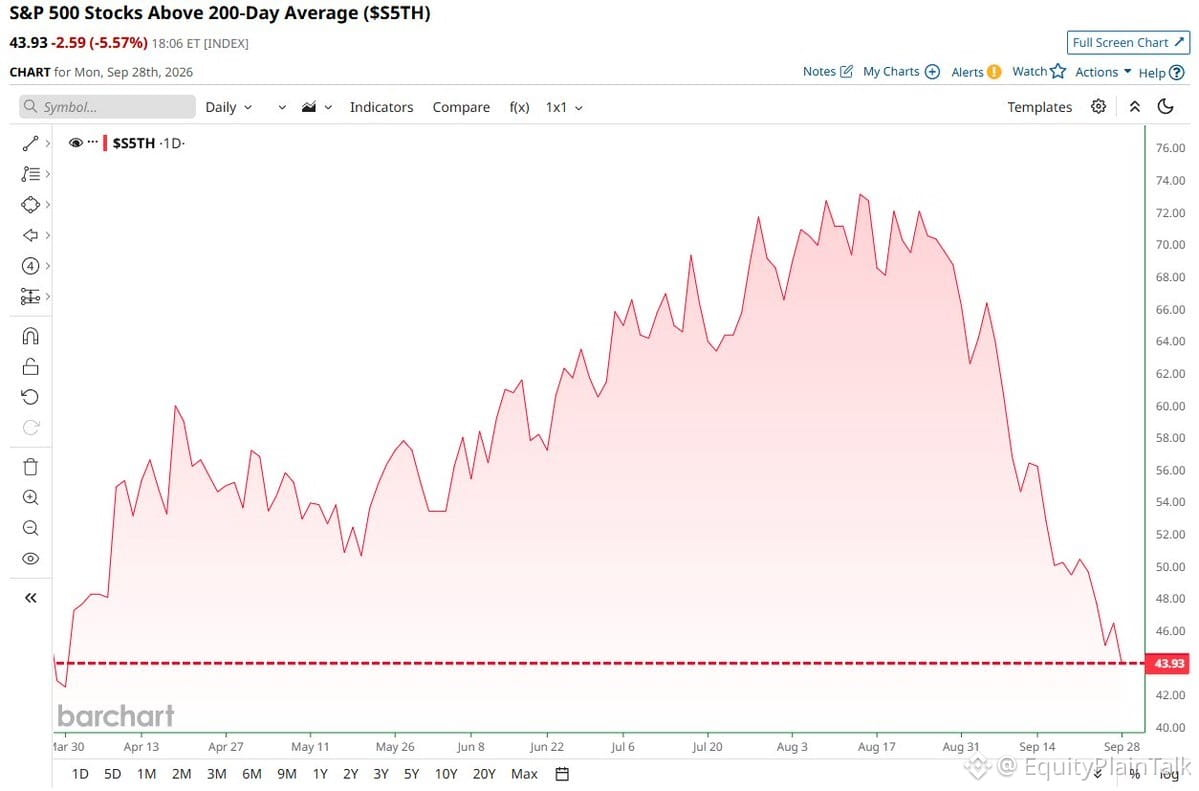
أكثر من نصف مؤشر $SPX الآن تحت الماء مقارنةً بمتوسطه المتحرك لمدة 200 يوم. يتداول 56% تحت هذه الخط—أضعف توازن عرضي (breadth) رأيناه منذ مارس.
هذا ليس مجرد رقم تراجع في العنوان. إنه يخبرك أن الصعود كان ضيقًا منذ فترة، والآن حتى ذلك بدأ يتشقق. عندما يسوء الـbreadth بهذه الصورة، فهذا يعني أن عددًا أقل من الأسهم يشارك في أي صعود محتمل. قد يحافظ المؤشر على مستواه، لكن من الداخل الأمور تتعقّد.
كان مارس وضعًا مختلفًا—كنا قادمين من توتر في القطاع المصرفي وذعر أسعار الفائدة. هذه المرة يحدث ذلك بعد فترة طويلة من التركّز على الأسهم العملاقة (mega caps). محاولات تدوير المراكز فشلت. الآن نرى ضعفًا واسعًا بدلًا من ذلك.
راقب ما إذا كان ذلك سيتثبت أو يستمر في التدهور. إذا واصل الـbreadth الانزلاق، يصبح من الصعب الوثوق بالصعود. وإذا تحسّن، فهذه هي الإشارة إلى أن المشترين يعودون للدخول على نطاق أوسع في السوق.
أكثر من نصف مؤشر $SPX الآن تحت الماء مقارنةً بمتوسطه المتحرك لمدة 200 يوم. يتداول 56% تحت هذه الخط—أضعف توازن عرضي (breadth) رأيناه منذ مارس.
هذا ليس مجرد رقم تراجع في العنوان. إنه يخبرك أن الصعود كان ضيقًا منذ فترة، والآن حتى ذلك بدأ يتشقق. عندما يسوء الـbreadth بهذه الصورة، فهذا يعني أن عددًا أقل من الأسهم يشارك في أي صعود محتمل. قد يحافظ المؤشر على مستواه، لكن من الداخل الأمور تتعقّد.
كان مارس وضعًا مختلفًا—كنا قادمين من توتر في القطاع المصرفي وذعر أسعار الفائدة. هذه المرة يحدث ذلك بعد فترة طويلة من التركّز على الأسهم العملاقة (mega caps). محاولات تدوير المراكز فشلت. الآن نرى ضعفًا واسعًا بدلًا من ذلك.
راقب ما إذا كان ذلك سيتثبت أو يستمر في التدهور. إذا واصل الـbreadth الانزلاق، يصبح من الصعب الوثوق بالصعود. وإذا تحسّن، فهذه هي الإشارة إلى أن المشترين يعودون للدخول على نطاق أوسع في السوق.
هذا ليس مجرد رقم تراجع في العنوان. إنه يخبرك أن الصعود كان ضيقًا منذ فترة، والآن حتى ذلك بدأ يتشقق. عندما يسوء الـbreadth بهذه الصورة، فهذا يعني أن عددًا أقل من الأسهم يشارك في أي صعود محتمل. قد يحافظ المؤشر على مستواه، لكن من الداخل الأمور تتعقّد.
كان مارس وضعًا مختلفًا—كنا قادمين من توتر في القطاع المصرفي وذعر أسعار الفائدة. هذه المرة يحدث ذلك بعد فترة طويلة من التركّز على الأسهم العملاقة (mega caps). محاولات تدوير المراكز فشلت. الآن نرى ضعفًا واسعًا بدلًا من ذلك.
راقب ما إذا كان ذلك سيتثبت أو يستمر في التدهور. إذا واصل الـbreadth الانزلاق، يصبح من الصعب الوثوق بالصعود. وإذا تحسّن، فهذه هي الإشارة إلى أن المشترين يعودون للدخول على نطاق أوسع في السوق.
102
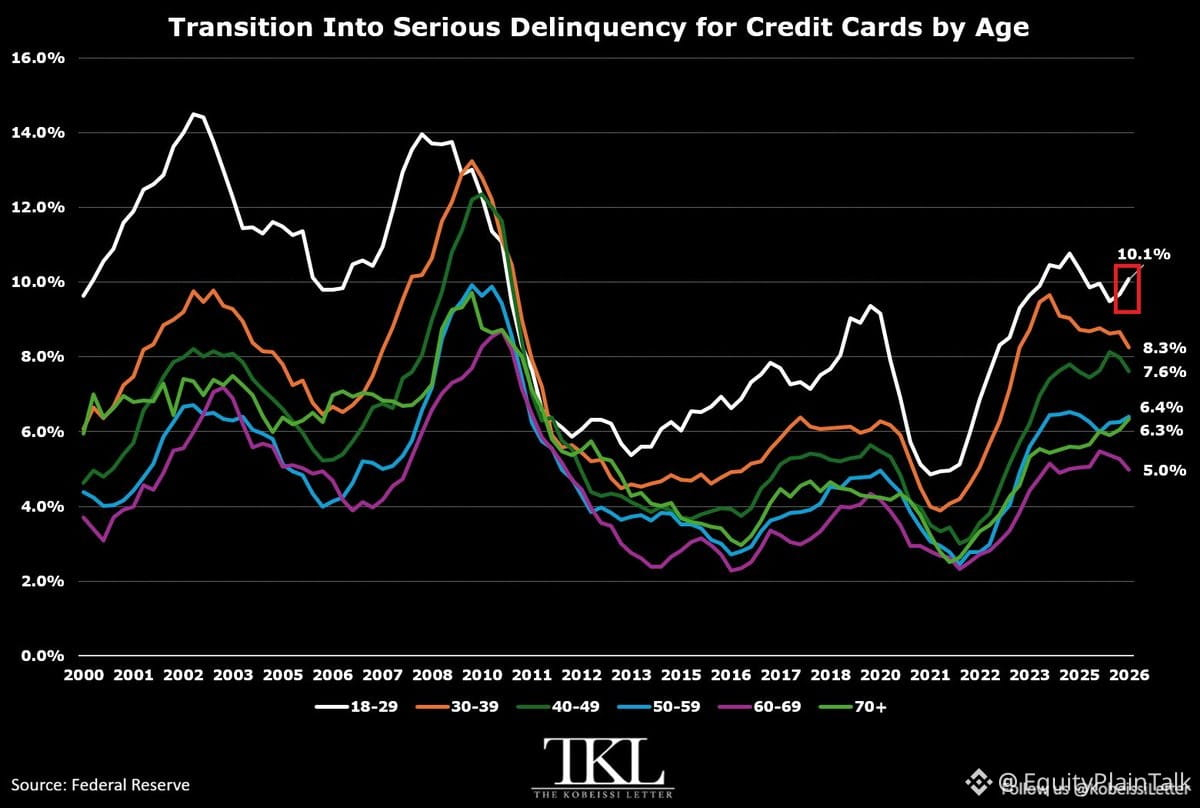
يغرق الأميركيون الشبان في ديون بطاقات الائتمان.
يُسجّل من تتراوح أعمارهم بين 18 و29 عامًا معدل تعثّر جاد بنسبة 10.1% في الربع الثاني—الأعلى منذ أوائل 2025. وهذا أكثر من الضِعف مما كان عليه في الربع الثاني من عام 2021.
لكن إليك ما هو مدهش: الأمر لم يعد مقتصرًا على الشباب فقط.
فقد قفزت نسبة التعثّر لدى كبار السن (70+) إلى 6.3% (أسوأ مستوى منذ 2011). وبلغت نسبة الفئة العمرية 50-59 نحو 6.4%، وهي الأعلى منذ أواخر 2024.
إنها تنتشر عبر الأجيال. عندما يعاني العاملون الأصغر سنًا والمتقاعدون أيضًا مع الدفع عبر البلاستيك، فهذا ليس مجرد مشكلة ديموغرافية—بل هو مؤشر ضغط منهجي.
إن «قنبلة» ديون بطاقات الائتمان لم تعد مجرد فرضية. لقد بدأت بالفعل تعمل، وببطء، عبر كل الفئات العمرية.
يغرق الأميركيون الشبان في ديون بطاقات الائتمان.
يُسجّل من تتراوح أعمارهم بين 18 و29 عامًا معدل تعثّر جاد بنسبة 10.1% في الربع الثاني—الأعلى منذ أوائل 2025. وهذا أكثر من الضِعف مما كان عليه في الربع الثاني من عام 2021.
لكن إليك ما هو مدهش: الأمر لم يعد مقتصرًا على الشباب فقط.
فقد قفزت نسبة التعثّر لدى كبار السن (70+) إلى 6.3% (أسوأ مستوى منذ 2011). وبلغت نسبة الفئة العمرية 50-59 نحو 6.4%، وهي الأعلى منذ أواخر 2024.
إنها تنتشر عبر الأجيال. عندما يعاني العاملون الأصغر سنًا والمتقاعدون أيضًا مع الدفع عبر البلاستيك، فهذا ليس مجرد مشكلة ديموغرافية—بل هو مؤشر ضغط منهجي.
إن «قنبلة» ديون بطاقات الائتمان لم تعد مجرد فرضية. لقد بدأت بالفعل تعمل، وببطء، عبر كل الفئات العمرية.
يُسجّل من تتراوح أعمارهم بين 18 و29 عامًا معدل تعثّر جاد بنسبة 10.1% في الربع الثاني—الأعلى منذ أوائل 2025. وهذا أكثر من الضِعف مما كان عليه في الربع الثاني من عام 2021.
لكن إليك ما هو مدهش: الأمر لم يعد مقتصرًا على الشباب فقط.
فقد قفزت نسبة التعثّر لدى كبار السن (70+) إلى 6.3% (أسوأ مستوى منذ 2011). وبلغت نسبة الفئة العمرية 50-59 نحو 6.4%، وهي الأعلى منذ أواخر 2024.
إنها تنتشر عبر الأجيال. عندما يعاني العاملون الأصغر سنًا والمتقاعدون أيضًا مع الدفع عبر البلاستيك، فهذا ليس مجرد مشكلة ديموغرافية—بل هو مؤشر ضغط منهجي.
إن «قنبلة» ديون بطاقات الائتمان لم تعد مجرد فرضية. لقد بدأت بالفعل تعمل، وببطء، عبر كل الفئات العمرية.
1
322
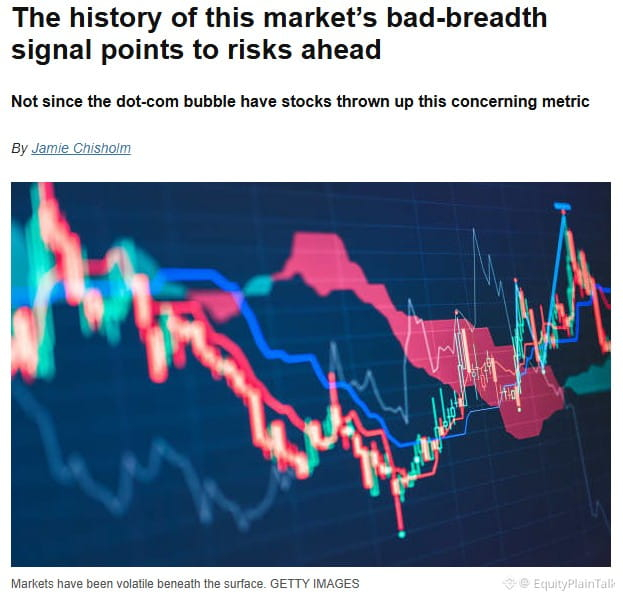
معلومة سريعة: أكثر من 50% من أسهم $SPX تتداول تحت متوسطها المتحرك لعدد 200 يوم، ومع ذلك فإن المؤشر نفسه قريب من أعلى مستوياته خلال 52 أسبوعًا.
متى رأينا ذلك مرة أخرى؟ فقاعة الدوت كوم.
هذه هي القيادة الضيقة الكلاسيكية. حفنة من الأسماء العملاقة (mega-cap) تحمل السوق بأكمله بينما يعاني السهم المتوسط. التوزّع (breadth) سيّئ للغاية.
عندما تكون المشاركة ضعيفة إلى هذا الحد والتركيز شديدًا إلى هذه الدرجة، تجدر الإشارة إلى سؤال: ماذا يحدث عندما يتعثر هؤلاء القادة القليلون أخيرًا؟
معلومة سريعة: أكثر من 50% من أسهم $SPX تتداول تحت متوسطها المتحرك لعدد 200 يوم، ومع ذلك فإن المؤشر نفسه قريب من أعلى مستوياته خلال 52 أسبوعًا.
متى رأينا ذلك مرة أخرى؟ فقاعة الدوت كوم.
هذه هي القيادة الضيقة الكلاسيكية. حفنة من الأسماء العملاقة (mega-cap) تحمل السوق بأكمله بينما يعاني السهم المتوسط. التوزّع (breadth) سيّئ للغاية.
عندما تكون المشاركة ضعيفة إلى هذا الحد والتركيز شديدًا إلى هذه الدرجة، تجدر الإشارة إلى سؤال: ماذا يحدث عندما يتعثر هؤلاء القادة القليلون أخيرًا؟
متى رأينا ذلك مرة أخرى؟ فقاعة الدوت كوم.
هذه هي القيادة الضيقة الكلاسيكية. حفنة من الأسماء العملاقة (mega-cap) تحمل السوق بأكمله بينما يعاني السهم المتوسط. التوزّع (breadth) سيّئ للغاية.
عندما تكون المشاركة ضعيفة إلى هذا الحد والتركيز شديدًا إلى هذه الدرجة، تجدر الإشارة إلى سؤال: ماذا يحدث عندما يتعثر هؤلاء القادة القليلون أخيرًا؟
21
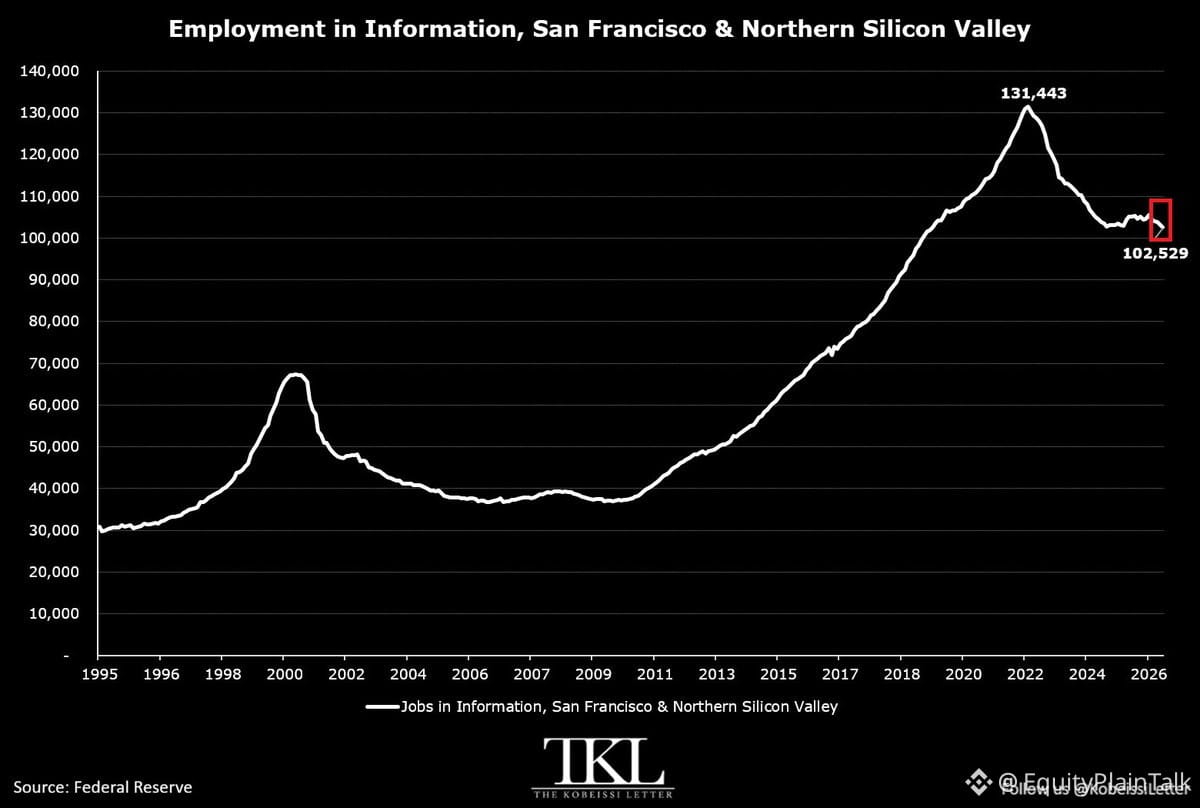
وصلت سوق الوظائف التقنية في وادي السيليكون إلى معلمٍ لم يكن يرغب فيه أحد.
انخفضت العمالة في قطاع المعلومات في سان فرانسيسكو وشمال وادي السيليكون إلى 102,529 وظيفة—وهو أدنى مستوى منذ أكتوبر 2019. بانخفاض قدره 3,007 وظائف منذ مارس وحده.
الصورة الأوسع: منذ ذروة أغسطس 2022، فقد القطاع 28,914 وظيفة (-22%). وهذا يمحو بالكامل طفرة التوظيف خلال فترة الجائحة.
للتوضيح: خلال ركود عام 2001، كان الانخفاض 17,719 وظيفة (-26%). نحن نقترب من منطقة مماثلة.
وفي الوقت نفسه، فقد قطاع الخدمات المهنية والعلمية والتقنية 35,500 وظيفة منذ يونيو 2022 (-13.2%)، ليصل الآن إلى 198,800—وهو أدنى مستوى منذ مارس 2019.
بعد انهيار الدوت-كوم في عام 2000، انخفض هذا القطاع بنسبة 28% بحلول أكتوبر 2003.
حمّى التوظيف التقنية بعد الجائحة؟ لقد انعكست تمامًا.
لم يعد الأمر مجرد عناوين تسريح موظفين. التحول الهيكلي حقيقي، وسوق العمل في منطقة الخليج يعكس ذلك بأرقام صعبة.
وصلت سوق الوظائف التقنية في وادي السيليكون إلى معلمٍ لم يكن يرغب فيه أحد.
انخفضت العمالة في قطاع المعلومات في سان فرانسيسكو وشمال وادي السيليكون إلى 102,529 وظيفة—وهو أدنى مستوى منذ أكتوبر 2019. بانخفاض قدره 3,007 وظائف منذ مارس وحده.
الصورة الأوسع: منذ ذروة أغسطس 2022، فقد القطاع 28,914 وظيفة (-22%). وهذا يمحو بالكامل طفرة التوظيف خلال فترة الجائحة.
للتوضيح: خلال ركود عام 2001، كان الانخفاض 17,719 وظيفة (-26%). نحن نقترب من منطقة مماثلة.
وفي الوقت نفسه، فقد قطاع الخدمات المهنية والعلمية والتقنية 35,500 وظيفة منذ يونيو 2022 (-13.2%)، ليصل الآن إلى 198,800—وهو أدنى مستوى منذ مارس 2019.
بعد انهيار الدوت-كوم في عام 2000، انخفض هذا القطاع بنسبة 28% بحلول أكتوبر 2003.
حمّى التوظيف التقنية بعد الجائحة؟ لقد انعكست تمامًا.
لم يعد الأمر مجرد عناوين تسريح موظفين. التحول الهيكلي حقيقي، وسوق العمل في منطقة الخليج يعكس ذلك بأرقام صعبة.
انخفضت العمالة في قطاع المعلومات في سان فرانسيسكو وشمال وادي السيليكون إلى 102,529 وظيفة—وهو أدنى مستوى منذ أكتوبر 2019. بانخفاض قدره 3,007 وظائف منذ مارس وحده.
الصورة الأوسع: منذ ذروة أغسطس 2022، فقد القطاع 28,914 وظيفة (-22%). وهذا يمحو بالكامل طفرة التوظيف خلال فترة الجائحة.
للتوضيح: خلال ركود عام 2001، كان الانخفاض 17,719 وظيفة (-26%). نحن نقترب من منطقة مماثلة.
وفي الوقت نفسه، فقد قطاع الخدمات المهنية والعلمية والتقنية 35,500 وظيفة منذ يونيو 2022 (-13.2%)، ليصل الآن إلى 198,800—وهو أدنى مستوى منذ مارس 2019.
بعد انهيار الدوت-كوم في عام 2000، انخفض هذا القطاع بنسبة 28% بحلول أكتوبر 2003.
حمّى التوظيف التقنية بعد الجائحة؟ لقد انعكست تمامًا.
لم يعد الأمر مجرد عناوين تسريح موظفين. التحول الهيكلي حقيقي، وسوق العمل في منطقة الخليج يعكس ذلك بأرقام صعبة.
352
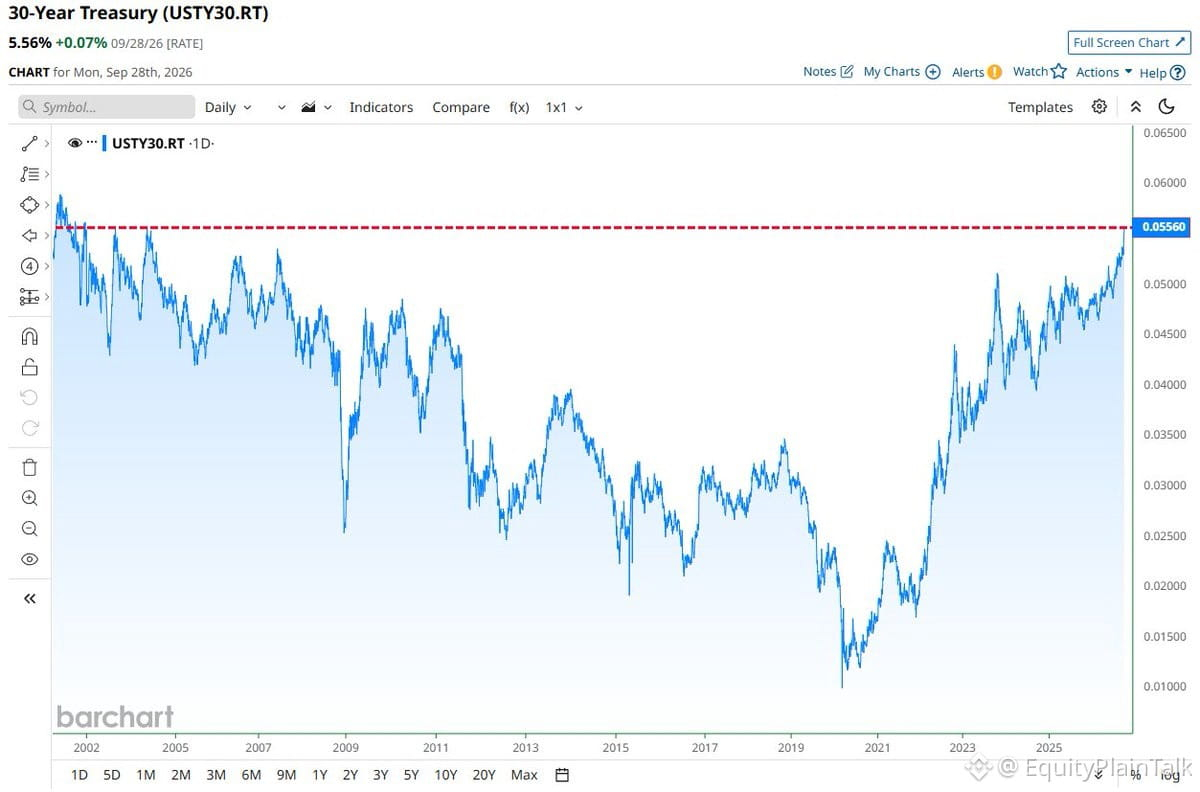
عائد سندات الخزانة الأمريكية لأجل 30 عامًا وصل للتو إلى 5.56% — أعلى إغلاق منذ أغسطس 2003.
وهذا يزيد عن 20 عامًا. فكّر في ما يعنيه ذلك بالنسبة لأسعار الرهون العقارية وتكاليف الاقتراض للشركات وتقييمات الأسهم. عندما تتحرك الفائدة الخالية من المخاطر بهذا الشكل، يجب أن تُعاد تسعير كل الأمور الأخرى.
عودة «الجلادين» في سوق السندات.
عائد سندات الخزانة الأمريكية لأجل 30 عامًا وصل للتو إلى 5.56% — أعلى إغلاق منذ أغسطس 2003.
وهذا يزيد عن 20 عامًا. فكّر في ما يعنيه ذلك بالنسبة لأسعار الرهون العقارية وتكاليف الاقتراض للشركات وتقييمات الأسهم. عندما تتحرك الفائدة الخالية من المخاطر بهذا الشكل، يجب أن تُعاد تسعير كل الأمور الأخرى.
عودة «الجلادين» في سوق السندات.
وهذا يزيد عن 20 عامًا. فكّر في ما يعنيه ذلك بالنسبة لأسعار الرهون العقارية وتكاليف الاقتراض للشركات وتقييمات الأسهم. عندما تتحرك الفائدة الخالية من المخاطر بهذا الشكل، يجب أن تُعاد تسعير كل الأمور الأخرى.
عودة «الجلادين» في سوق السندات.
TLTETF-٠٫٨٥%
IEFETF-٠٫٤٢%
52
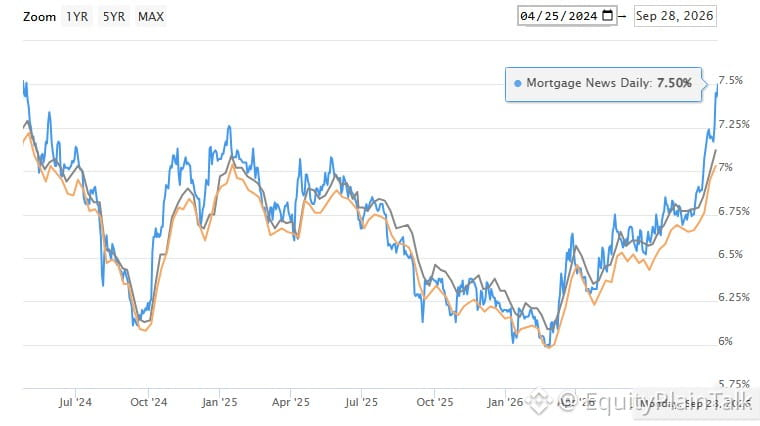
ارتفعت أسعار الرهون العقارية لمدة 30 عامًا للتو إلى أكثر من 7.50% — أعلى مستوى منذ أبريل.
هذا مهم لأن القدرة على تحمل تكاليف السكن أصبحت بالفعل ممتدة. ارتفاع الفائدة يعني:
• ارتفاع الدفعة الشهرية بنحو ~200 دولار على قرض بقيمة 400 ألف دولار مقارنةً بـ 6.5%
• عدد أقل من المشترين يمكنهم التأهل
• الملاك الحاليون المرتبطون بفائدة 3-4% لن يبيعوا
• استمرار شحّ المعروض
ستتأثر أسهم قطاع العقارات وشركات البناء والمقرضون العقاريون بهذا. راقب $DHI $LEN $RKT.
إذا استمرت الأسعار في الارتفاع، فسيزيد تجمّد سوق الإسكان أكثر. وإذا انخفضت، ستعود الطلبات المكبوتة لتتدفق من جديد.
ارتفعت أسعار الرهون العقارية لمدة 30 عامًا للتو إلى أكثر من 7.50% — أعلى مستوى منذ أبريل.
هذا مهم لأن القدرة على تحمل تكاليف السكن أصبحت بالفعل ممتدة. ارتفاع الفائدة يعني:
• ارتفاع الدفعة الشهرية بنحو ~200 دولار على قرض بقيمة 400 ألف دولار مقارنةً بـ 6.5%
• عدد أقل من المشترين يمكنهم التأهل
• الملاك الحاليون المرتبطون بفائدة 3-4% لن يبيعوا
• استمرار شحّ المعروض
ستتأثر أسهم قطاع العقارات وشركات البناء والمقرضون العقاريون بهذا. راقب $DHI $LEN $RKT.
إذا استمرت الأسعار في الارتفاع، فسيزيد تجمّد سوق الإسكان أكثر. وإذا انخفضت، ستعود الطلبات المكبوتة لتتدفق من جديد.
هذا مهم لأن القدرة على تحمل تكاليف السكن أصبحت بالفعل ممتدة. ارتفاع الفائدة يعني:
• ارتفاع الدفعة الشهرية بنحو ~200 دولار على قرض بقيمة 400 ألف دولار مقارنةً بـ 6.5%
• عدد أقل من المشترين يمكنهم التأهل
• الملاك الحاليون المرتبطون بفائدة 3-4% لن يبيعوا
• استمرار شحّ المعروض
ستتأثر أسهم قطاع العقارات وشركات البناء والمقرضون العقاريون بهذا. راقب $DHI $LEN $RKT.
إذا استمرت الأسعار في الارتفاع، فسيزيد تجمّد سوق الإسكان أكثر. وإذا انخفضت، ستعود الطلبات المكبوتة لتتدفق من جديد.
RKTUS-٤٫٣١%
59
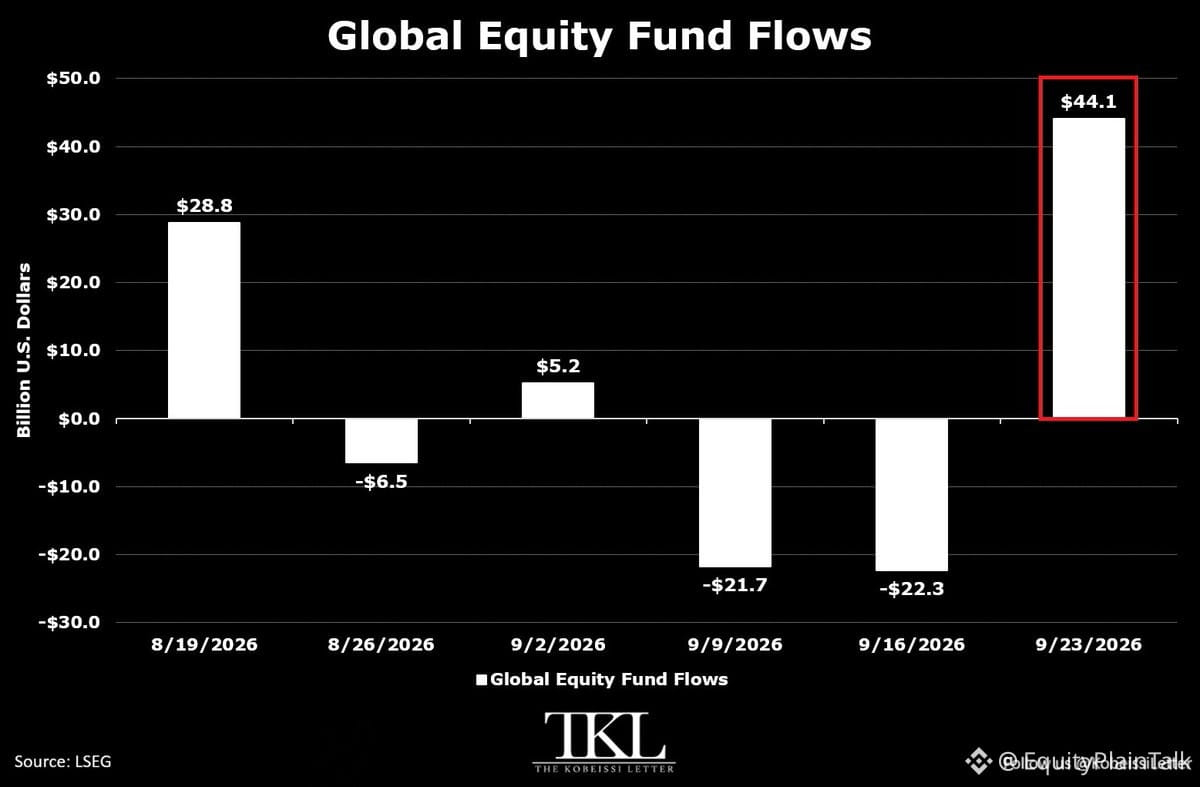
صناديق الأسهم العالمية جلبت للتو 44.1 مليار دولار في الأسبوع الماضي—أكبر تدفق أسبوعي منذ أوائل يوليو.
الأمر المثير: في الأسبوع السابق، شهدت 22.3 مليار دولار تدفقات خارجة (أسوأ وتيرة في 9 أشهر). تقلبات حادة كلاسيكية.
هيمنت الصناديق الأميركية، حيث استقطبت 37.6 مليار دولار من أموال جديدة. واستحوذت أوروبا وآسيا على 2.3 مليار و2.2 مليار دولار على التوالي.
قاد قطاع التكنولوجيا تدفقات بقيمة 5.3 مليارات دولار (الأكبر منذ أواخر يوليو)، تلاه الرعاية الصحية والسلع الاستهلاكية الاختيارية.
الرسالة واضحة: المستثمرون يعودون للتكدس في الأسهم الأميركية بعد حالة هلع سريعة. تبدّل شهية المخاطرة بقوة خلال أسبوع واحد.
صناديق الأسهم العالمية جلبت للتو 44.1 مليار دولار في الأسبوع الماضي—أكبر تدفق أسبوعي منذ أوائل يوليو.
الأمر المثير: في الأسبوع السابق، شهدت 22.3 مليار دولار تدفقات خارجة (أسوأ وتيرة في 9 أشهر). تقلبات حادة كلاسيكية.
هيمنت الصناديق الأميركية، حيث استقطبت 37.6 مليار دولار من أموال جديدة. واستحوذت أوروبا وآسيا على 2.3 مليار و2.2 مليار دولار على التوالي.
قاد قطاع التكنولوجيا تدفقات بقيمة 5.3 مليارات دولار (الأكبر منذ أواخر يوليو)، تلاه الرعاية الصحية والسلع الاستهلاكية الاختيارية.
الرسالة واضحة: المستثمرون يعودون للتكدس في الأسهم الأميركية بعد حالة هلع سريعة. تبدّل شهية المخاطرة بقوة خلال أسبوع واحد.
الأمر المثير: في الأسبوع السابق، شهدت 22.3 مليار دولار تدفقات خارجة (أسوأ وتيرة في 9 أشهر). تقلبات حادة كلاسيكية.
هيمنت الصناديق الأميركية، حيث استقطبت 37.6 مليار دولار من أموال جديدة. واستحوذت أوروبا وآسيا على 2.3 مليار و2.2 مليار دولار على التوالي.
قاد قطاع التكنولوجيا تدفقات بقيمة 5.3 مليارات دولار (الأكبر منذ أواخر يوليو)، تلاه الرعاية الصحية والسلع الاستهلاكية الاختيارية.
الرسالة واضحة: المستثمرون يعودون للتكدس في الأسهم الأميركية بعد حالة هلع سريعة. تبدّل شهية المخاطرة بقوة خلال أسبوع واحد.
49
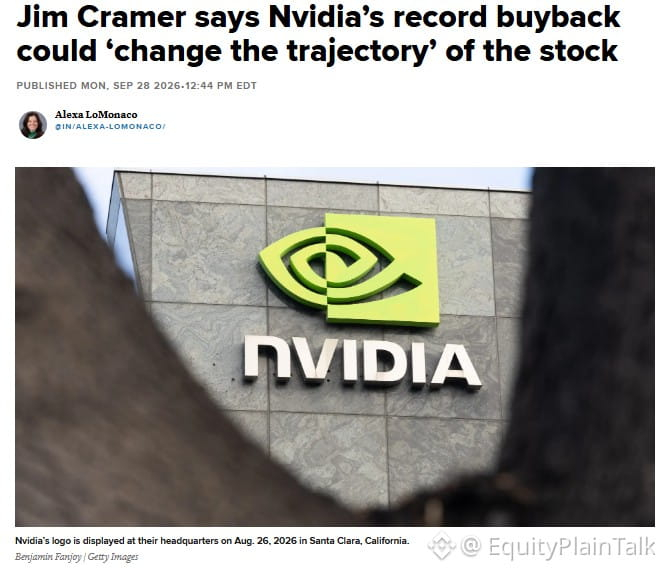
تدرس إنفيديا إلغاء ما قد يكون أكبر برنامج إعادة شراء في التاريخ.
توقيت طريف—بعد تصريحات كرامر مباشرةً بأن هذا بالضبط ما ينبغي على الشركة فعله.
لعنة كرامر تضرب مجددًا. عندما يؤيد شيئًا، غالبًا ما يحدث العكس.
يبدو أن مساهمي <t-2/>NVDA ربما يتذمرون الآن. تعني عمليات إعادة الشراء الثقة وتعيد الأموال إلى المستثمرين. إلغاء واحدة بهذا الحجم؟ ستكون رسالة مختلفة تمامًا.
من الجدير بالمتابعة كيف ستعرض الإدارة هذا الأمر إن حدث. السوق لن يحب الانطباعات البصرية.
تدرس إنفيديا إلغاء ما قد يكون أكبر برنامج إعادة شراء في التاريخ.
توقيت طريف—بعد تصريحات كرامر مباشرةً بأن هذا بالضبط ما ينبغي على الشركة فعله.
لعنة كرامر تضرب مجددًا. عندما يؤيد شيئًا، غالبًا ما يحدث العكس.
يبدو أن مساهمي <t-2/>NVDA ربما يتذمرون الآن. تعني عمليات إعادة الشراء الثقة وتعيد الأموال إلى المستثمرين. إلغاء واحدة بهذا الحجم؟ ستكون رسالة مختلفة تمامًا.
من الجدير بالمتابعة كيف ستعرض الإدارة هذا الأمر إن حدث. السوق لن يحب الانطباعات البصرية.
توقيت طريف—بعد تصريحات كرامر مباشرةً بأن هذا بالضبط ما ينبغي على الشركة فعله.
لعنة كرامر تضرب مجددًا. عندما يؤيد شيئًا، غالبًا ما يحدث العكس.
يبدو أن مساهمي <t-2/>NVDA ربما يتذمرون الآن. تعني عمليات إعادة الشراء الثقة وتعيد الأموال إلى المستثمرين. إلغاء واحدة بهذا الحجم؟ ستكون رسالة مختلفة تمامًا.
من الجدير بالمتابعة كيف ستعرض الإدارة هذا الأمر إن حدث. السوق لن يحب الانطباعات البصرية.
152
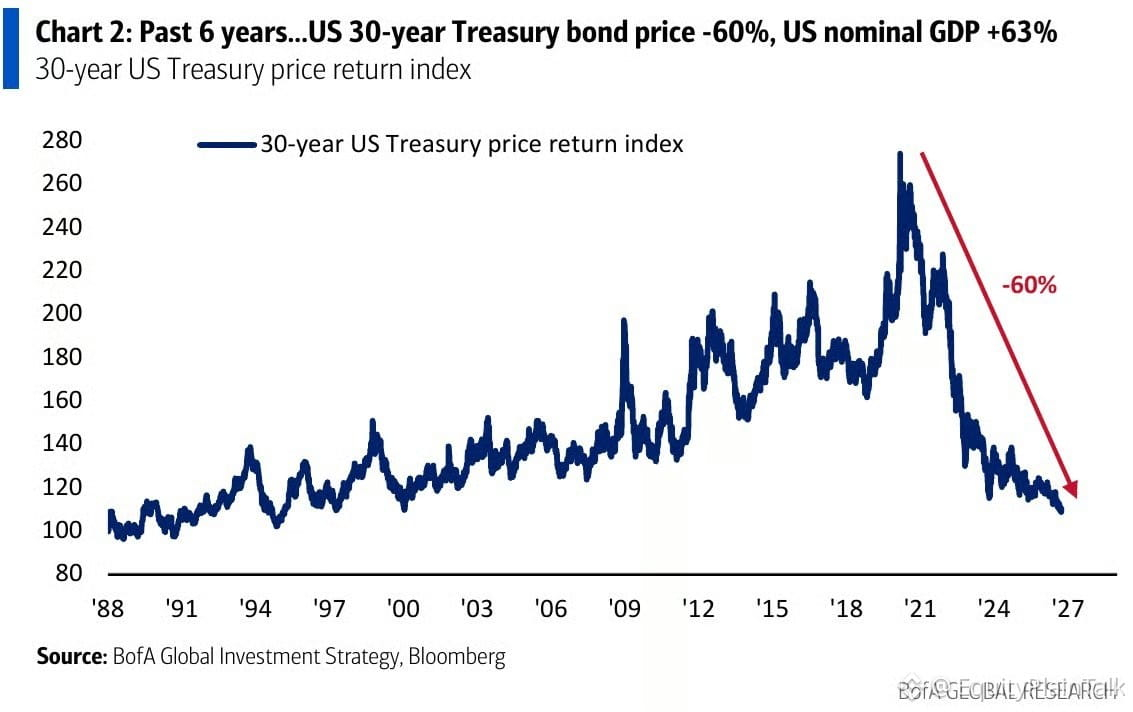
سندات الخزانة الأمريكية لأجل 30 عامًا وصلت إلى مستويات لم تُرَ منذ عام 2000. بانخفاض 60% عن ذروة عام 2020.
هذا هبوط أكبر من الأزمة المالية في 2008. حينها تراجعت السندات 35%. وهذه المرة؟ قرابة الضعف.
المعادلة قاسية: ارتفعت عوائد السندات لأجل 30 عامًا بمقدار 478 نقطة أساس منذ أن بلغت القاع عند 0.71% في مارس 2020. وفي الوقت نفسه، ارتفع الناتج المحلي الإجمالي الاسمي بنسبة 63% خلال الفترة نفسها.
أي أن الاقتصاد نما، لكن أسعار السندات انهارت. ست سنوات من الخسائر محَت مكاسبَ عقدين.
الأمر ليس مجرد سنة سيئة للدخل الثابت. بل إنه واحد من أسوأ أسواق الديون الهابطة في التاريخ الحديث. ومعظم المستثمرين الأفراد ما زالوا يعتقدون أن السندات هي الجزء "الآمن" من محافظهم.
خفض الفائدة لن يصلح هذا بين ليلة وضحاها. مخاطر المدة حقيقية، وكثيرون تعلّموا ذلك بالطريقة الصعبة.
سندات الخزانة الأمريكية لأجل 30 عامًا وصلت إلى مستويات لم تُرَ منذ عام 2000. بانخفاض 60% عن ذروة عام 2020.
هذا هبوط أكبر من الأزمة المالية في 2008. حينها تراجعت السندات 35%. وهذه المرة؟ قرابة الضعف.
المعادلة قاسية: ارتفعت عوائد السندات لأجل 30 عامًا بمقدار 478 نقطة أساس منذ أن بلغت القاع عند 0.71% في مارس 2020. وفي الوقت نفسه، ارتفع الناتج المحلي الإجمالي الاسمي بنسبة 63% خلال الفترة نفسها.
أي أن الاقتصاد نما، لكن أسعار السندات انهارت. ست سنوات من الخسائر محَت مكاسبَ عقدين.
الأمر ليس مجرد سنة سيئة للدخل الثابت. بل إنه واحد من أسوأ أسواق الديون الهابطة في التاريخ الحديث. ومعظم المستثمرين الأفراد ما زالوا يعتقدون أن السندات هي الجزء "الآمن" من محافظهم.
خفض الفائدة لن يصلح هذا بين ليلة وضحاها. مخاطر المدة حقيقية، وكثيرون تعلّموا ذلك بالطريقة الصعبة.
هذا هبوط أكبر من الأزمة المالية في 2008. حينها تراجعت السندات 35%. وهذه المرة؟ قرابة الضعف.
المعادلة قاسية: ارتفعت عوائد السندات لأجل 30 عامًا بمقدار 478 نقطة أساس منذ أن بلغت القاع عند 0.71% في مارس 2020. وفي الوقت نفسه، ارتفع الناتج المحلي الإجمالي الاسمي بنسبة 63% خلال الفترة نفسها.
أي أن الاقتصاد نما، لكن أسعار السندات انهارت. ست سنوات من الخسائر محَت مكاسبَ عقدين.
الأمر ليس مجرد سنة سيئة للدخل الثابت. بل إنه واحد من أسوأ أسواق الديون الهابطة في التاريخ الحديث. ومعظم المستثمرين الأفراد ما زالوا يعتقدون أن السندات هي الجزء "الآمن" من محافظهم.
خفض الفائدة لن يصلح هذا بين ليلة وضحاها. مخاطر المدة حقيقية، وكثيرون تعلّموا ذلك بالطريقة الصعبة.
TLTETF-٠٫٨٥%
87
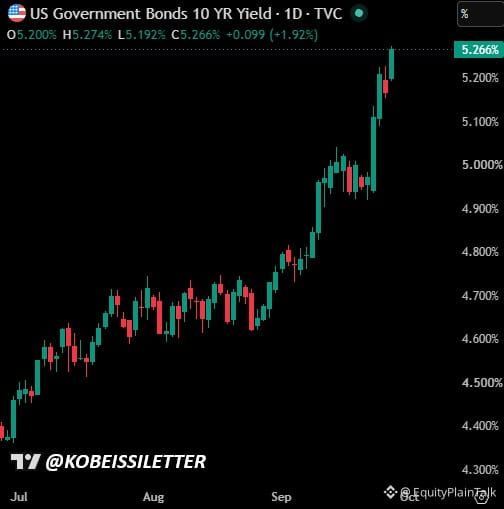
عائد سندات الخزانة الأميركية لأجل 10 سنوات وصل للتو إلى 5.27% — وهو أعلى مستوى منذ 19 عامًا.
وهذا يعني قفزة قدرها 135 نقطة أساس في غضون 6 أشهر فقط. ولتضع ذلك في سياقه: أسعار السندات تتعرض لضربة قوية، وأسعار الرهن العقاري ترتفع، ونوافذ إعادة التمويل تغلق بسرعة.
بالنسبة للأسهم، فإن ارتفاع العوائد يعني:
• تتأثر شركات التكنولوجيا/النمو أكثر (لأن التدفقات النقدية المستقبلية تصبح أقل قيمة)
• قد تستفيد قطاعات مالية (تحسن هوامش صافي الفائدة)
• انكماش مضاعفات السوق بشكل عام
السؤال الذي يتساءل عنه الجميع: أين الخزانة في كل ما يحدث؟ سوق السندات يصرخ برسالة ما، وليست خافتة.
إذا كنت تمتلك سندات طويلة الأجل أو أسهمًا حساسة للفائدة، فهذه الحركة تهم. كثيرًا.
عائد سندات الخزانة الأميركية لأجل 10 سنوات وصل للتو إلى 5.27% — وهو أعلى مستوى منذ 19 عامًا.
وهذا يعني قفزة قدرها 135 نقطة أساس في غضون 6 أشهر فقط. ولتضع ذلك في سياقه: أسعار السندات تتعرض لضربة قوية، وأسعار الرهن العقاري ترتفع، ونوافذ إعادة التمويل تغلق بسرعة.
بالنسبة للأسهم، فإن ارتفاع العوائد يعني:
• تتأثر شركات التكنولوجيا/النمو أكثر (لأن التدفقات النقدية المستقبلية تصبح أقل قيمة)
• قد تستفيد قطاعات مالية (تحسن هوامش صافي الفائدة)
• انكماش مضاعفات السوق بشكل عام
السؤال الذي يتساءل عنه الجميع: أين الخزانة في كل ما يحدث؟ سوق السندات يصرخ برسالة ما، وليست خافتة.
إذا كنت تمتلك سندات طويلة الأجل أو أسهمًا حساسة للفائدة، فهذه الحركة تهم. كثيرًا.
وهذا يعني قفزة قدرها 135 نقطة أساس في غضون 6 أشهر فقط. ولتضع ذلك في سياقه: أسعار السندات تتعرض لضربة قوية، وأسعار الرهن العقاري ترتفع، ونوافذ إعادة التمويل تغلق بسرعة.
بالنسبة للأسهم، فإن ارتفاع العوائد يعني:
• تتأثر شركات التكنولوجيا/النمو أكثر (لأن التدفقات النقدية المستقبلية تصبح أقل قيمة)
• قد تستفيد قطاعات مالية (تحسن هوامش صافي الفائدة)
• انكماش مضاعفات السوق بشكل عام
السؤال الذي يتساءل عنه الجميع: أين الخزانة في كل ما يحدث؟ سوق السندات يصرخ برسالة ما، وليست خافتة.
إذا كنت تمتلك سندات طويلة الأجل أو أسهمًا حساسة للفائدة، فهذه الحركة تهم. كثيرًا.
IEFETF-٠٫٤٢%
28
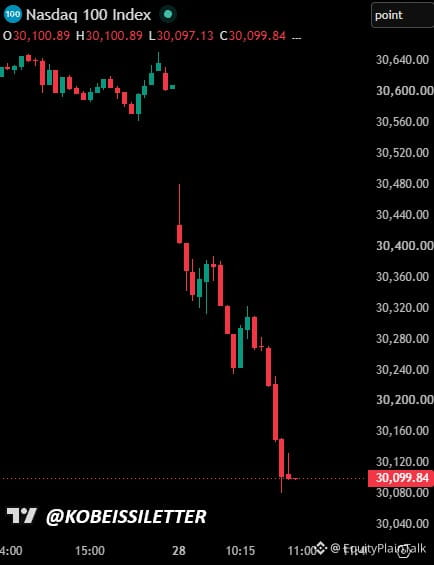
انخفض مؤشر ناسداك 100 بنسبة 1.6% اليوم مع ارتفاع عوائد سندات الخزانة لأجل 10 سنوات إلى مستويات لم نشهدها منذ 2006. كما أن ارتفاع أسعار النفط باتجاه 100 دولار للبرميل لا يساعد أيضًا.
لقد تراجعت قيمة S&P 500 السوقية بمقدار 700 مليار دولار في جلسة واحدة.
عندما تقفز الفوائد وتتزامن مع ارتفاع تكاليف الطاقة، تتضرر أسهم النمو أكثر من غيرها. تنكمش مضاعفات التكنولوجيا بسرعة عندما يرتفع سعر الفائدة الخالي من المخاطر. أضف إلى ذلك ارتفاع التكاليف الداخلة من النفط، وستواجه الهوامش ضغطًا في مختلف القطاعات.
هذا ليس بيعًا هلِعًا—بل إعادة تسعير. يتكيف السوق مع عالم تصبح فيه تكلفة الاقتراض أعلى وتصبح مزاولة الأعمال أكثر كلفة. معادلة بسيطة.
انخفض مؤشر ناسداك 100 بنسبة 1.6% اليوم مع ارتفاع عوائد سندات الخزانة لأجل 10 سنوات إلى مستويات لم نشهدها منذ 2006. كما أن ارتفاع أسعار النفط باتجاه 100 دولار للبرميل لا يساعد أيضًا.
لقد تراجعت قيمة S&P 500 السوقية بمقدار 700 مليار دولار في جلسة واحدة.
عندما تقفز الفوائد وتتزامن مع ارتفاع تكاليف الطاقة، تتضرر أسهم النمو أكثر من غيرها. تنكمش مضاعفات التكنولوجيا بسرعة عندما يرتفع سعر الفائدة الخالي من المخاطر. أضف إلى ذلك ارتفاع التكاليف الداخلة من النفط، وستواجه الهوامش ضغطًا في مختلف القطاعات.
هذا ليس بيعًا هلِعًا—بل إعادة تسعير. يتكيف السوق مع عالم تصبح فيه تكلفة الاقتراض أعلى وتصبح مزاولة الأعمال أكثر كلفة. معادلة بسيطة.
لقد تراجعت قيمة S&P 500 السوقية بمقدار 700 مليار دولار في جلسة واحدة.
عندما تقفز الفوائد وتتزامن مع ارتفاع تكاليف الطاقة، تتضرر أسهم النمو أكثر من غيرها. تنكمش مضاعفات التكنولوجيا بسرعة عندما يرتفع سعر الفائدة الخالي من المخاطر. أضف إلى ذلك ارتفاع التكاليف الداخلة من النفط، وستواجه الهوامش ضغطًا في مختلف القطاعات.
هذا ليس بيعًا هلِعًا—بل إعادة تسعير. يتكيف السوق مع عالم تصبح فيه تكلفة الاقتراض أعلى وتصبح مزاولة الأعمال أكثر كلفة. معادلة بسيطة.
1
246
خفضت الولايات المتحدة والصين للتو صفقة تجارية بقيمة 60 مليار دولار—30 مليارًا من كل جانب مع خفض الرسوم.
الصين تغطي 1,619 فئة من السلع الأمريكية. وماذا عن الجانب الأمريكي؟ 77 فئة فقط من المنتجات الصينية. هذه قائمة غير متكافئة إلى حد كبير.
كما التزمت الصين بشراء ما لا يقل عن 10 ملايين طن متري من الفحم الأمريكي في الفترة 2027-2028. الفحم عاد إلى قائمة الخيارات.
تحب الأسواق عناوين التهدئة، لكن الاختبار الحقيقي هو التنفيذ. رأينا إعلانات كبيرة من قبل ذابت. راقب كيف سيتجسد ذلك فعليًا في تدفقات التجارة وما إذا كان يستمر بعد بيان الصحافة.
في الوقت الحالي، من المحتمل أن يكون المصدرون وتداولات السلع قد تسعّر بعض التفاؤل.
خفضت الولايات المتحدة والصين للتو صفقة تجارية بقيمة 60 مليار دولار—30 مليارًا من كل جانب مع خفض الرسوم.
الصين تغطي 1,619 فئة من السلع الأمريكية. وماذا عن الجانب الأمريكي؟ 77 فئة فقط من المنتجات الصينية. هذه قائمة غير متكافئة إلى حد كبير.
كما التزمت الصين بشراء ما لا يقل عن 10 ملايين طن متري من الفحم الأمريكي في الفترة 2027-2028. الفحم عاد إلى قائمة الخيارات.
تحب الأسواق عناوين التهدئة، لكن الاختبار الحقيقي هو التنفيذ. رأينا إعلانات كبيرة من قبل ذابت. راقب كيف سيتجسد ذلك فعليًا في تدفقات التجارة وما إذا كان يستمر بعد بيان الصحافة.
في الوقت الحالي، من المحتمل أن يكون المصدرون وتداولات السلع قد تسعّر بعض التفاؤل.
الصين تغطي 1,619 فئة من السلع الأمريكية. وماذا عن الجانب الأمريكي؟ 77 فئة فقط من المنتجات الصينية. هذه قائمة غير متكافئة إلى حد كبير.
كما التزمت الصين بشراء ما لا يقل عن 10 ملايين طن متري من الفحم الأمريكي في الفترة 2027-2028. الفحم عاد إلى قائمة الخيارات.
تحب الأسواق عناوين التهدئة، لكن الاختبار الحقيقي هو التنفيذ. رأينا إعلانات كبيرة من قبل ذابت. راقب كيف سيتجسد ذلك فعليًا في تدفقات التجارة وما إذا كان يستمر بعد بيان الصحافة.
في الوقت الحالي، من المحتمل أن يكون المصدرون وتداولات السلع قد تسعّر بعض التفاؤل.
1
437
روسيا تمد حظر تصدير الديزل حتى أكتوبر — في الوقت نفسه الذي تبلغ فيه ذروة الطلب في الولايات المتحدة.
أسعار الديزل في الولايات المتحدة مرتفعة بالفعل بنسبة 100%+ مقارنةً بأدنى مستويات يناير. لقد كان ترامب يشير بأصابع الاتهام إلى روسيا بسبب النقص.
هذه ليست مجرد عنوان. الديزل يحرك كل شيء — الشاحنات والقطارات والمصانع. عندما يرتفع سعر الديزل، تتبعها التضخم. تُمرَّر التكاليف بسرعة على طول سلسلة الإمداد.
توقعات التضخم المرتبطة بالطاقة في صعود. إذا استمر هذا، فسيؤثر على هوامش الربح عبر النقل والخدمات اللوجستية والتصنيع. راقب أسهم الطاقة وشركات التكرير وأي شيء مرتبط بتكاليف الوقود.
السوق يراهن على ارتفاع أطول للطاقة. ليس هلعًا بعد، لكن الضغط يتزايد.
روسيا تمد حظر تصدير الديزل حتى أكتوبر — في الوقت نفسه الذي تبلغ فيه ذروة الطلب في الولايات المتحدة.
أسعار الديزل في الولايات المتحدة مرتفعة بالفعل بنسبة 100%+ مقارنةً بأدنى مستويات يناير. لقد كان ترامب يشير بأصابع الاتهام إلى روسيا بسبب النقص.
هذه ليست مجرد عنوان. الديزل يحرك كل شيء — الشاحنات والقطارات والمصانع. عندما يرتفع سعر الديزل، تتبعها التضخم. تُمرَّر التكاليف بسرعة على طول سلسلة الإمداد.
توقعات التضخم المرتبطة بالطاقة في صعود. إذا استمر هذا، فسيؤثر على هوامش الربح عبر النقل والخدمات اللوجستية والتصنيع. راقب أسهم الطاقة وشركات التكرير وأي شيء مرتبط بتكاليف الوقود.
السوق يراهن على ارتفاع أطول للطاقة. ليس هلعًا بعد، لكن الضغط يتزايد.
أسعار الديزل في الولايات المتحدة مرتفعة بالفعل بنسبة 100%+ مقارنةً بأدنى مستويات يناير. لقد كان ترامب يشير بأصابع الاتهام إلى روسيا بسبب النقص.
هذه ليست مجرد عنوان. الديزل يحرك كل شيء — الشاحنات والقطارات والمصانع. عندما يرتفع سعر الديزل، تتبعها التضخم. تُمرَّر التكاليف بسرعة على طول سلسلة الإمداد.
توقعات التضخم المرتبطة بالطاقة في صعود. إذا استمر هذا، فسيؤثر على هوامش الربح عبر النقل والخدمات اللوجستية والتصنيع. راقب أسهم الطاقة وشركات التكرير وأي شيء مرتبط بتكاليف الوقود.
السوق يراهن على ارتفاع أطول للطاقة. ليس هلعًا بعد، لكن الضغط يتزايد.
1
358
تمّ التحقق
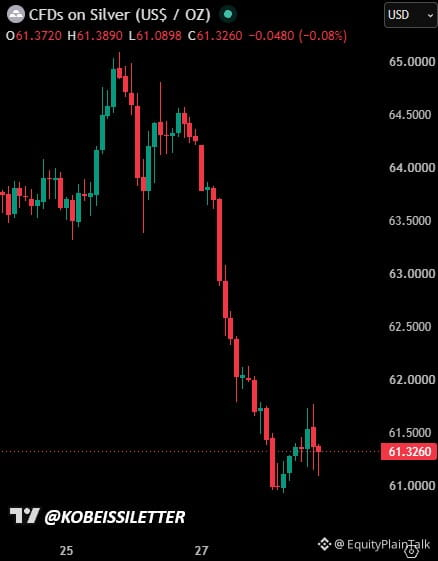
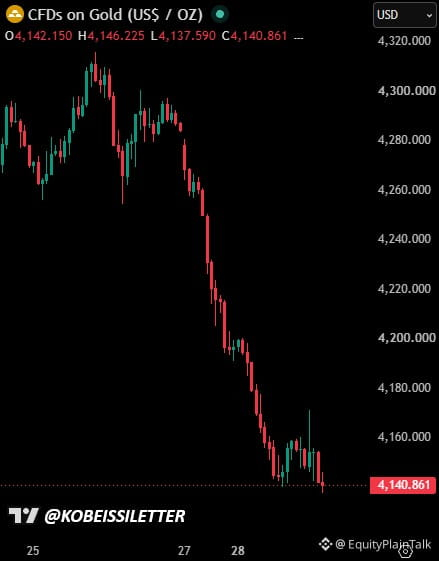
الذهب ينخفض 4% والفضة تتراجع 5% اليوم، مع وصول عائد سندات الخزانة الأميركية لأجل 10 سنوات إلى أعلى مستوى له خلال 19 عاماً.
المعادلة قاسية: 1.2 تريليون دولار من إجمالي القيمة السوقية تبخّرت للتو.
عندما تقفز العوائد الحقيقية بهذا الشكل، تُسحق المعادن الثمينة. يختار المستثمرون عائداً خالياً من المخاطر بنسبة 5% أو أكثر، بدلاً من تخزين القيمة في صخور لامعة.
هذا يندرج تحت “الملاذ الآمن” بشكل واضح—لكن ليس النوع الذي كان يتوقعه عشّاق الذهب. صفقة الأمان الآن هي تثبيت عوائد سندات الخزانة، لا التحوّط بالمعادن.
إذا استمر ارتفاع عائد 10 سنوات، فتوقّع المزيد من الألم في السلع عبر مختلف القطاعات.
الذهب ينخفض 4% والفضة تتراجع 5% اليوم، مع وصول عائد سندات الخزانة الأميركية لأجل 10 سنوات إلى أعلى مستوى له خلال 19 عاماً.
المعادلة قاسية: 1.2 تريليون دولار من إجمالي القيمة السوقية تبخّرت للتو.
عندما تقفز العوائد الحقيقية بهذا الشكل، تُسحق المعادن الثمينة. يختار المستثمرون عائداً خالياً من المخاطر بنسبة 5% أو أكثر، بدلاً من تخزين القيمة في صخور لامعة.
هذا يندرج تحت “الملاذ الآمن” بشكل واضح—لكن ليس النوع الذي كان يتوقعه عشّاق الذهب. صفقة الأمان الآن هي تثبيت عوائد سندات الخزانة، لا التحوّط بالمعادن.
إذا استمر ارتفاع عائد 10 سنوات، فتوقّع المزيد من الألم في السلع عبر مختلف القطاعات.
المعادلة قاسية: 1.2 تريليون دولار من إجمالي القيمة السوقية تبخّرت للتو.
عندما تقفز العوائد الحقيقية بهذا الشكل، تُسحق المعادن الثمينة. يختار المستثمرون عائداً خالياً من المخاطر بنسبة 5% أو أكثر، بدلاً من تخزين القيمة في صخور لامعة.
هذا يندرج تحت “الملاذ الآمن” بشكل واضح—لكن ليس النوع الذي كان يتوقعه عشّاق الذهب. صفقة الأمان الآن هي تثبيت عوائد سندات الخزانة، لا التحوّط بالمعادن.
إذا استمر ارتفاع عائد 10 سنوات، فتوقّع المزيد من الألم في السلع عبر مختلف القطاعات.
1
1
821
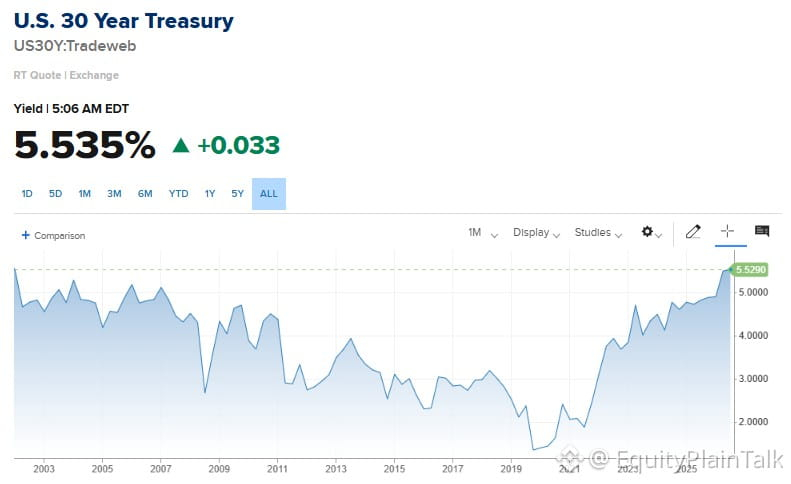
وصل عائد سندات الخزانة الأميركية لأجل 30 عاماً للتو إلى أعلى مستوى له منذ أكثر من 22 عاماً.
وهذا مهم لأنه يؤثر مباشرة على معدلات الرهن العقاري وتكاليف الاقتراض للشركات وكيفية تقييم المستثمرين للأسهم. عندما تقفز الفوائد طويلة الأجل مثل هذا، فإنها تضغط على تقييمات الأسهم—خصوصاً أسهم النمو التي تعتمد على التدفقات النقدية المستقبلية الرخيصة.
تاريخياً، تزامنت التحركات المستمرة فوق 5% على سندات 30 عاماً مع أحداث كبرى لإعادة تسعير السوق. نحن نراقب فروق الائتمان، ونشاط إعادة التمويل، وما إذا كانت الاحتياطي الفيدرالي يعترف بذلك باعتباره مصدر قلق للسياسة.
إذا كنت تمتلك قطاعات حساسة للفائدة مثل صناديق الاستثمار العقاري (REITs) أو المرافق، فانتبه. وإذا كنت تبحث في السندات، فقد تكون هذه نقطة دخول جيلية—أو إشارة إلى أن توقعات التضخم تتجه إلى الارتفاع أكثر مما كان يأمل السوق.
وصل عائد سندات الخزانة الأميركية لأجل 30 عاماً للتو إلى أعلى مستوى له منذ أكثر من 22 عاماً.
وهذا مهم لأنه يؤثر مباشرة على معدلات الرهن العقاري وتكاليف الاقتراض للشركات وكيفية تقييم المستثمرين للأسهم. عندما تقفز الفوائد طويلة الأجل مثل هذا، فإنها تضغط على تقييمات الأسهم—خصوصاً أسهم النمو التي تعتمد على التدفقات النقدية المستقبلية الرخيصة.
تاريخياً، تزامنت التحركات المستمرة فوق 5% على سندات 30 عاماً مع أحداث كبرى لإعادة تسعير السوق. نحن نراقب فروق الائتمان، ونشاط إعادة التمويل، وما إذا كانت الاحتياطي الفيدرالي يعترف بذلك باعتباره مصدر قلق للسياسة.
إذا كنت تمتلك قطاعات حساسة للفائدة مثل صناديق الاستثمار العقاري (REITs) أو المرافق، فانتبه. وإذا كنت تبحث في السندات، فقد تكون هذه نقطة دخول جيلية—أو إشارة إلى أن توقعات التضخم تتجه إلى الارتفاع أكثر مما كان يأمل السوق.
وهذا مهم لأنه يؤثر مباشرة على معدلات الرهن العقاري وتكاليف الاقتراض للشركات وكيفية تقييم المستثمرين للأسهم. عندما تقفز الفوائد طويلة الأجل مثل هذا، فإنها تضغط على تقييمات الأسهم—خصوصاً أسهم النمو التي تعتمد على التدفقات النقدية المستقبلية الرخيصة.
تاريخياً، تزامنت التحركات المستمرة فوق 5% على سندات 30 عاماً مع أحداث كبرى لإعادة تسعير السوق. نحن نراقب فروق الائتمان، ونشاط إعادة التمويل، وما إذا كانت الاحتياطي الفيدرالي يعترف بذلك باعتباره مصدر قلق للسياسة.
إذا كنت تمتلك قطاعات حساسة للفائدة مثل صناديق الاستثمار العقاري (REITs) أو المرافق، فانتبه. وإذا كنت تبحث في السندات، فقد تكون هذه نقطة دخول جيلية—أو إشارة إلى أن توقعات التضخم تتجه إلى الارتفاع أكثر مما كان يأمل السوق.
TLTETF-٠٫٨٥%
IEFETF-٠٫٤٢%
423
تمّ التحقق
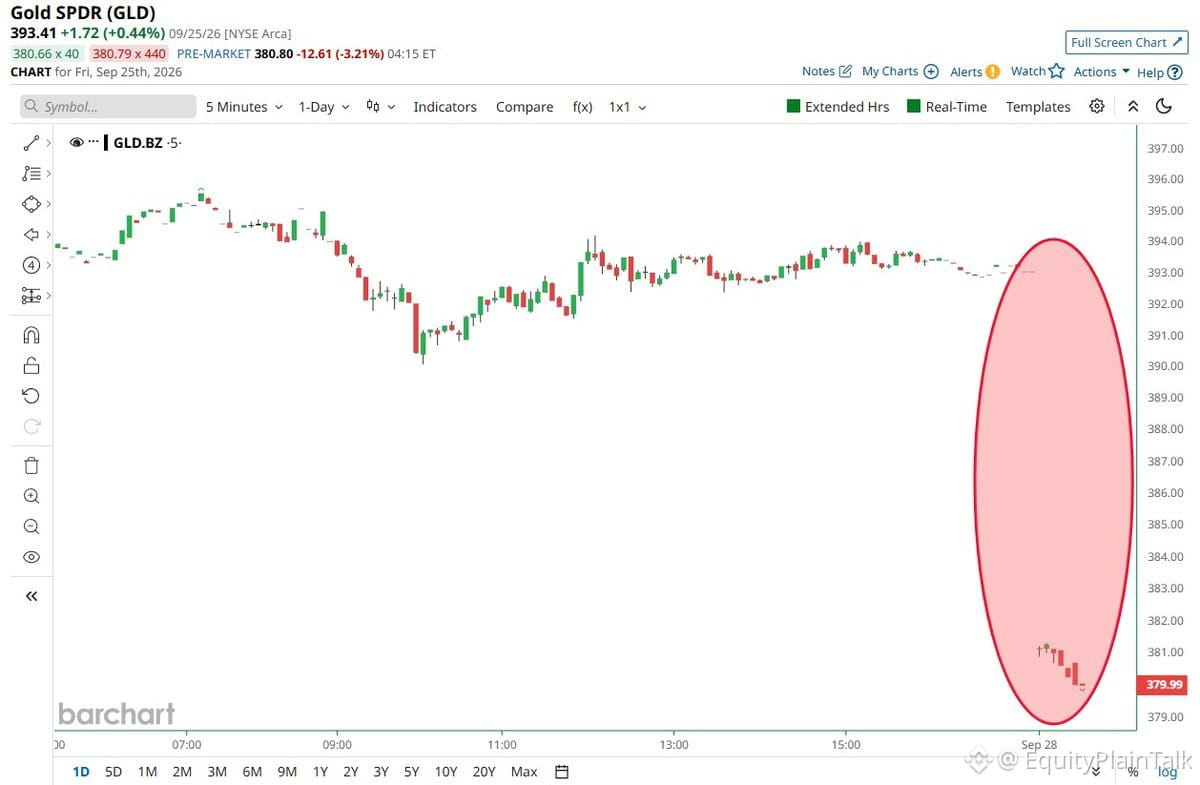
$GLD يشهد تراجعًا حادًا اليوم. لقد كان الذهب مرتفعًا بقوة منذ أشهر مع تزايد رهانات خفض الفائدة من جانب الاحتياطي الفيدرالي والطلب على الملاذ الآمن، لكننا نرى الآن انعكاسًا سريعًا. قد يكون ذلك جني أرباح بعد الارتفاع الأخير، أو قيام المتداولين بإعادة تموضع مع تقوية الدولار. راقب مستوى الدعم عند $180 على GLD—إذا كسره، فقد نشهد مزيدًا من الهبوط. يتم اختبار محبي الذهب الآن.
$GLD يشهد تراجعًا حادًا اليوم. لقد كان الذهب مرتفعًا بقوة منذ أشهر مع تزايد رهانات خفض الفائدة من جانب الاحتياطي الفيدرالي والطلب على الملاذ الآمن، لكننا نرى الآن انعكاسًا سريعًا. قد يكون ذلك جني أرباح بعد الارتفاع الأخير، أو قيام المتداولين بإعادة تموضع مع تقوية الدولار. راقب مستوى الدعم عند $180 على GLD—إذا كسره، فقد نشهد مزيدًا من الهبوط. يتم اختبار محبي الذهب الآن.
3
1
961
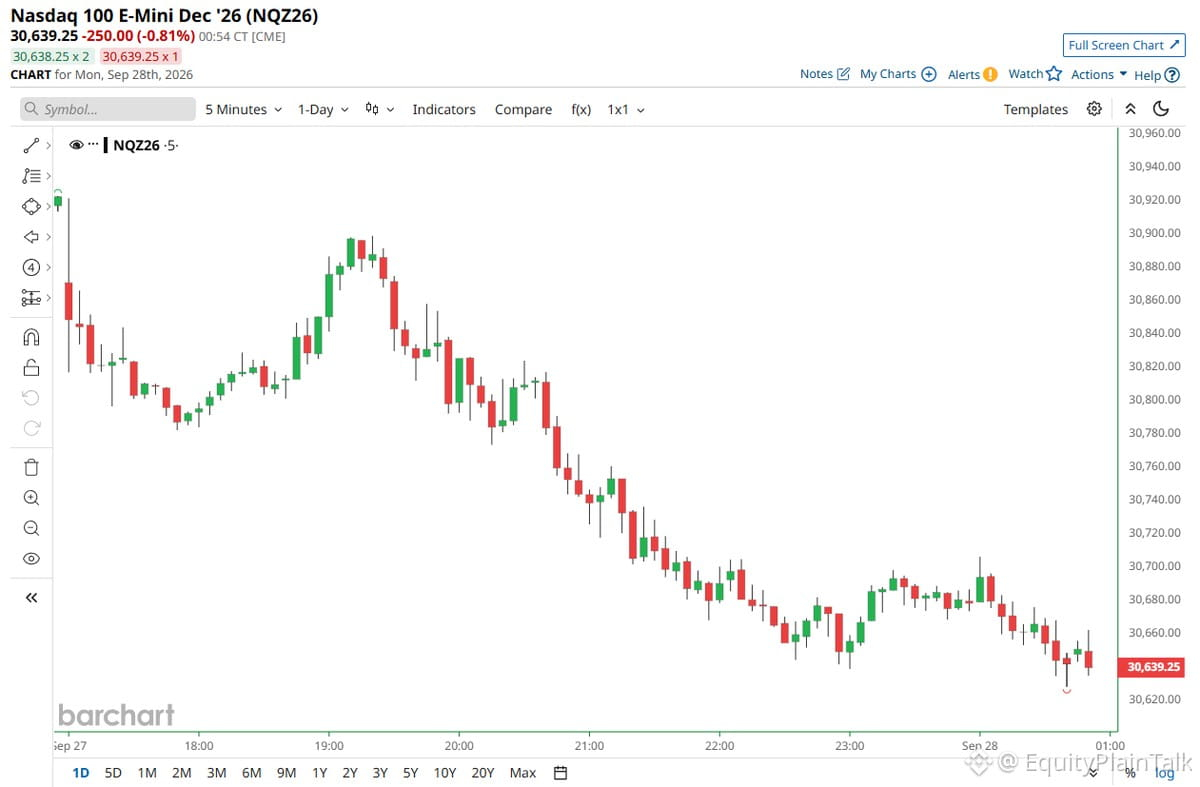
جاءت العقود الآجلة تحت ضغط شديد هذا الصباح. اللون الأحمر يهيمن على جميع القطاعات.
بداية غير جيدة للجلسة. راقب الافتتاح—قد يحدد نبرة اليوم.
جاءت العقود الآجلة تحت ضغط شديد هذا الصباح. اللون الأحمر يهيمن على جميع القطاعات.
بداية غير جيدة للجلسة. راقب الافتتاح—قد يحدد نبرة اليوم.
بداية غير جيدة للجلسة. راقب الافتتاح—قد يحدد نبرة اليوم.
1
311
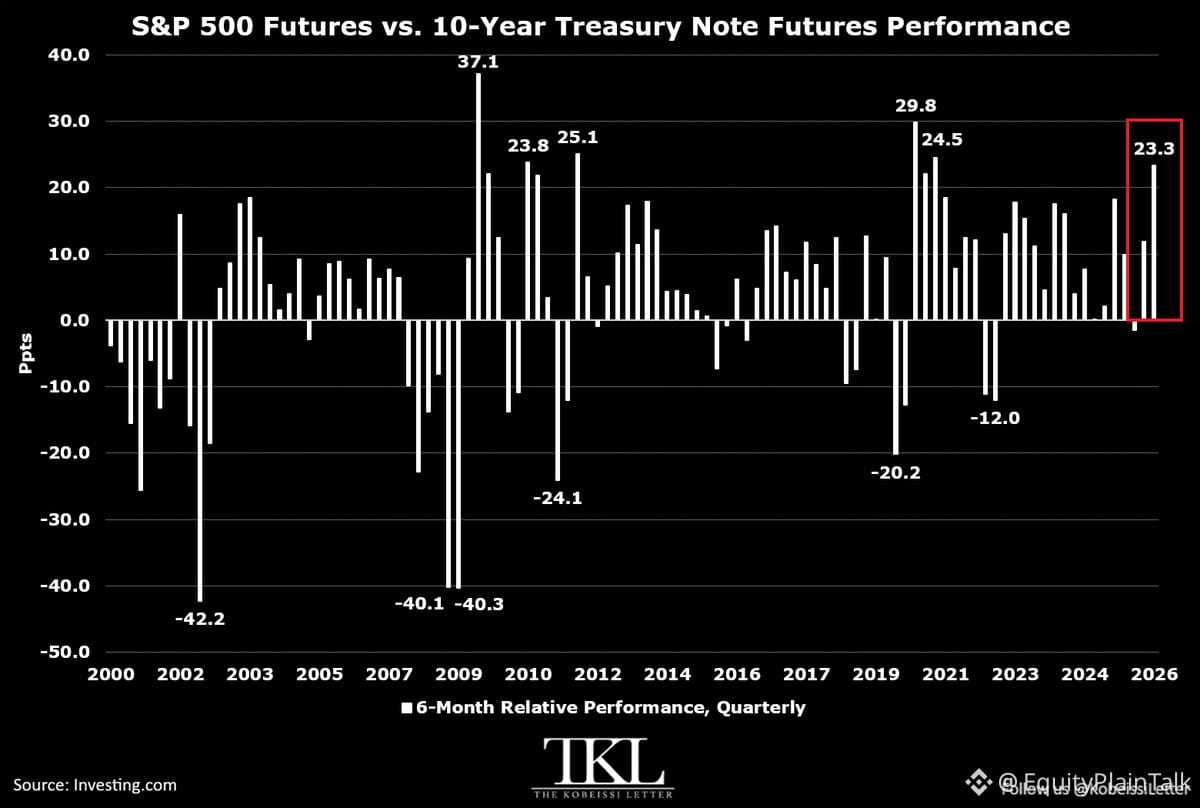
تنفصل الأسهم والسندات عن بعضهما بطريقة لم نشهدها منذ سنوات.
ارتفاع عقود S&P 500 بنسبة 17.6% خلال آخر 6 أشهر، لتقترب من أعلى مستوياتها على الإطلاق. وفي المقابل، هبطت عقود سندات الخزانة الأمريكية لأجل 10 سنوات بنسبة 5.7%، مسجلة أدنى مستوى لها منذ يونيو 2007.
يمثل ذلك فجوة قدرها 23.3 نقطة مئوية — أكبر تفوق للأسهم على السندات منذ 2021، وثاني أكبر تراجع للسندات على مستوى هذا القرن.
للمقارنة: خلال الأزمة المالية في 2008، تفوقت السندات الحكومية على الأسهم بـ 40.3 نقطة مئوية في فترة 6 أشهر، عندما فرّ المستثمرون إلى الأمان.
الآن يحدث العكس. الأصول عالية المخاطر تحلق بينما تتعرض السندات للضرب. إما أن السوق يعتقد أننا في سيناريو “بدون هبوط” مع نمو قوي وتضخم مترسخ، أو أن هناك ما سيُحدث تحولًا.
تاريخيًا، عندما تنحرف الأسهم والسندات بهذا القدر، يكون أحدهما على خطأ.
تنفصل الأسهم والسندات عن بعضهما بطريقة لم نشهدها منذ سنوات.
ارتفاع عقود S&P 500 بنسبة 17.6% خلال آخر 6 أشهر، لتقترب من أعلى مستوياتها على الإطلاق. وفي المقابل، هبطت عقود سندات الخزانة الأمريكية لأجل 10 سنوات بنسبة 5.7%، مسجلة أدنى مستوى لها منذ يونيو 2007.
يمثل ذلك فجوة قدرها 23.3 نقطة مئوية — أكبر تفوق للأسهم على السندات منذ 2021، وثاني أكبر تراجع للسندات على مستوى هذا القرن.
للمقارنة: خلال الأزمة المالية في 2008، تفوقت السندات الحكومية على الأسهم بـ 40.3 نقطة مئوية في فترة 6 أشهر، عندما فرّ المستثمرون إلى الأمان.
الآن يحدث العكس. الأصول عالية المخاطر تحلق بينما تتعرض السندات للضرب. إما أن السوق يعتقد أننا في سيناريو “بدون هبوط” مع نمو قوي وتضخم مترسخ، أو أن هناك ما سيُحدث تحولًا.
تاريخيًا، عندما تنحرف الأسهم والسندات بهذا القدر، يكون أحدهما على خطأ.
ارتفاع عقود S&P 500 بنسبة 17.6% خلال آخر 6 أشهر، لتقترب من أعلى مستوياتها على الإطلاق. وفي المقابل، هبطت عقود سندات الخزانة الأمريكية لأجل 10 سنوات بنسبة 5.7%، مسجلة أدنى مستوى لها منذ يونيو 2007.
يمثل ذلك فجوة قدرها 23.3 نقطة مئوية — أكبر تفوق للأسهم على السندات منذ 2021، وثاني أكبر تراجع للسندات على مستوى هذا القرن.
للمقارنة: خلال الأزمة المالية في 2008، تفوقت السندات الحكومية على الأسهم بـ 40.3 نقطة مئوية في فترة 6 أشهر، عندما فرّ المستثمرون إلى الأمان.
الآن يحدث العكس. الأصول عالية المخاطر تحلق بينما تتعرض السندات للضرب. إما أن السوق يعتقد أننا في سيناريو “بدون هبوط” مع نمو قوي وتضخم مترسخ، أو أن هناك ما سيُحدث تحولًا.
تاريخيًا، عندما تنحرف الأسهم والسندات بهذا القدر، يكون أحدهما على خطأ.
IEFETF-٠٫٤٢%
SPYB-٠٫٦٠%
467
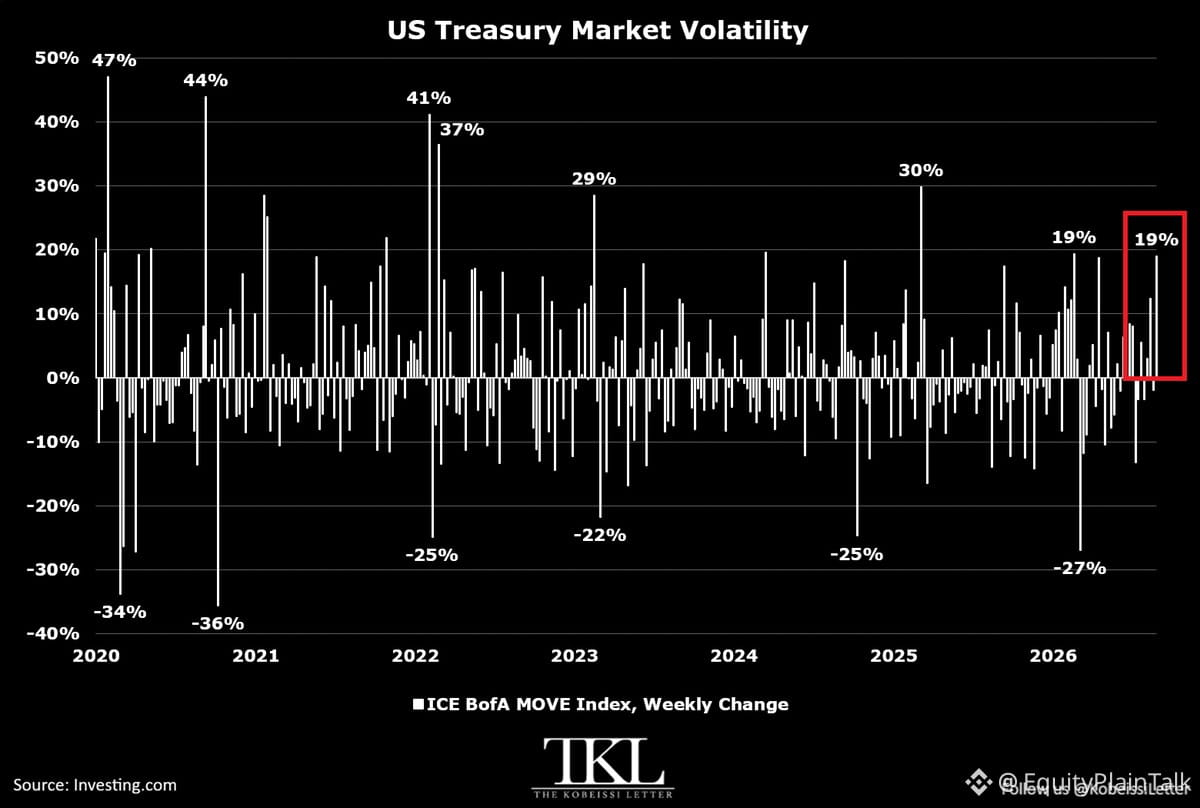
سوق السندات يلمع باللون الأحمر.
قفز مؤشر MOVE (فكر به مثل VIX لكن للسندات) بنسبة 19% الأسبوع الماضي—أكبر قفزة منذ أبريل. ويقيس تذبذبات العوائد عبر سندات الخزانة لأجل سنتين و5 سنوات و10 سنوات و30 سنة.
هذه هي المرة الثالثة التي تسجل فيها هذه القفزة الأسبوعية الأكبر منذ سوق هابطة عام 2022.
وفي الوقت نفسه:
• وصل عائد سندات 10 سنوات إلى 5.17% (الأعلى منذ يونيو 2007)
• تجاوز عائد سندات 30 سنة 5.50% (لأول مرة منذ يونيو 2004)
للتوضيح: عندما قفز مؤشر MOVE بنسبة 29% في مارس 2023، كانت ثلاث بنوك إقليمية قد انهارت للتو.
نحن نشهد الآن تذبذبات بمستوى الأزمات في السندات الحكومية—دون وجود أزمة واضحة. وهذه هي النقطة التي ينبغي أن تجعلك تنتبه.
عندما تصبح أسواق السندات شديدة الاضطراب بهذه الدرجة، فهذا يعني عادةً أن شيئًا ما قد انكسر أو أنه على وشك الانكسار. حافظ على أعينك مفتوحة.
سوق السندات يلمع باللون الأحمر.
قفز مؤشر MOVE (فكر به مثل VIX لكن للسندات) بنسبة 19% الأسبوع الماضي—أكبر قفزة منذ أبريل. ويقيس تذبذبات العوائد عبر سندات الخزانة لأجل سنتين و5 سنوات و10 سنوات و30 سنة.
هذه هي المرة الثالثة التي تسجل فيها هذه القفزة الأسبوعية الأكبر منذ سوق هابطة عام 2022.
وفي الوقت نفسه:
• وصل عائد سندات 10 سنوات إلى 5.17% (الأعلى منذ يونيو 2007)
• تجاوز عائد سندات 30 سنة 5.50% (لأول مرة منذ يونيو 2004)
للتوضيح: عندما قفز مؤشر MOVE بنسبة 29% في مارس 2023، كانت ثلاث بنوك إقليمية قد انهارت للتو.
نحن نشهد الآن تذبذبات بمستوى الأزمات في السندات الحكومية—دون وجود أزمة واضحة. وهذه هي النقطة التي ينبغي أن تجعلك تنتبه.
عندما تصبح أسواق السندات شديدة الاضطراب بهذه الدرجة، فهذا يعني عادةً أن شيئًا ما قد انكسر أو أنه على وشك الانكسار. حافظ على أعينك مفتوحة.
قفز مؤشر MOVE (فكر به مثل VIX لكن للسندات) بنسبة 19% الأسبوع الماضي—أكبر قفزة منذ أبريل. ويقيس تذبذبات العوائد عبر سندات الخزانة لأجل سنتين و5 سنوات و10 سنوات و30 سنة.
هذه هي المرة الثالثة التي تسجل فيها هذه القفزة الأسبوعية الأكبر منذ سوق هابطة عام 2022.
وفي الوقت نفسه:
• وصل عائد سندات 10 سنوات إلى 5.17% (الأعلى منذ يونيو 2007)
• تجاوز عائد سندات 30 سنة 5.50% (لأول مرة منذ يونيو 2004)
للتوضيح: عندما قفز مؤشر MOVE بنسبة 29% في مارس 2023، كانت ثلاث بنوك إقليمية قد انهارت للتو.
نحن نشهد الآن تذبذبات بمستوى الأزمات في السندات الحكومية—دون وجود أزمة واضحة. وهذه هي النقطة التي ينبغي أن تجعلك تنتبه.
عندما تصبح أسواق السندات شديدة الاضطراب بهذه الدرجة، فهذا يعني عادةً أن شيئًا ما قد انكسر أو أنه على وشك الانكسار. حافظ على أعينك مفتوحة.
TLTETF-٠٫٨٥%
SHYETF-٠٫١٢%
IEFETF-٠٫٤٢%
1
75
صحيح جزئيًا
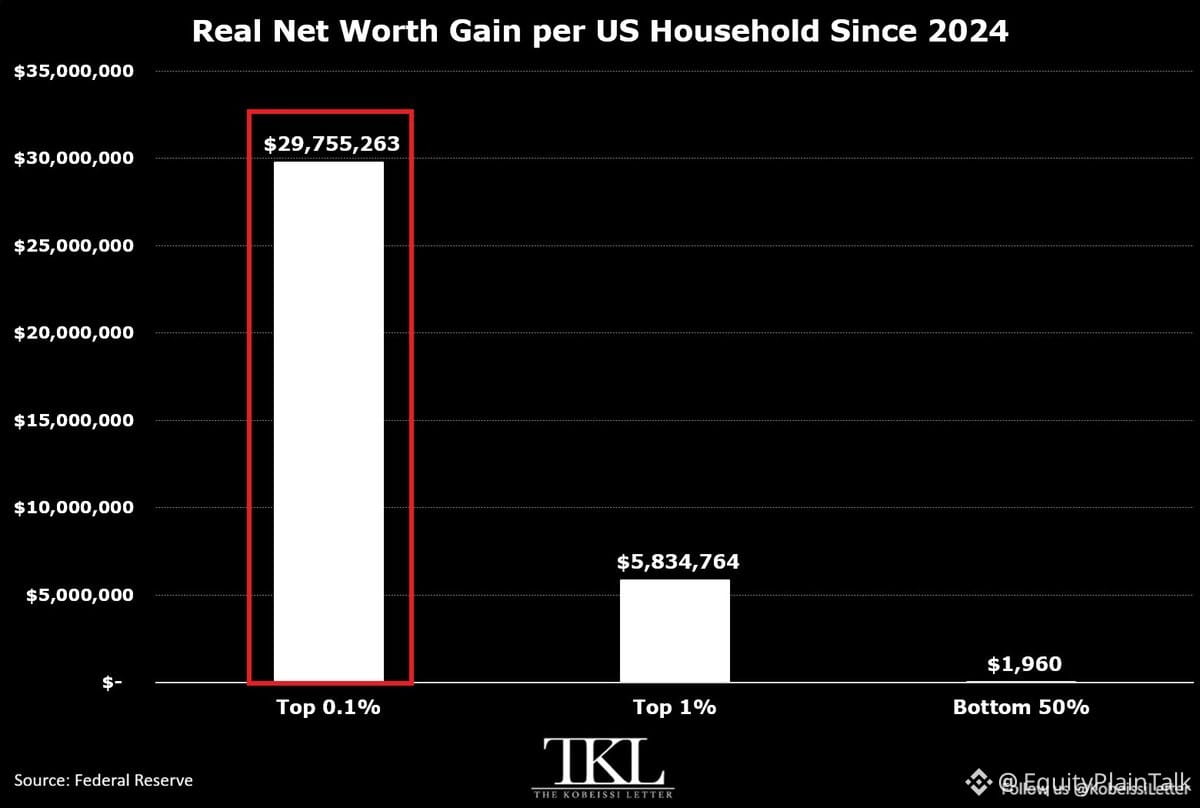
فجوة الثروة ليست فقط آخذة في الاتساع—بل تتسارع بوتيرة يصعب استيعابها.
من أواخر عام 2024، أضافت الشريحة الأعلى 0.1% ما يقرب من 30 مليون دولار لكل أسرة بالقيمة الحقيقية. وحصلت الشريحة الأعلى 1% على ما يقرب من 6 ملايين دولار لكل أسرة.
في المقابل، شهدت الشريحة الأدنى 50% ارتفاعًا في صافي ثروتها بأقل من 2000 دولار لكل أسرة.
إنها فجوة تبلغ 15,000 ضعف.
ربحت الشريحة الأعلى 0.1% بشكل جماعي 4.4 تريليون دولار. وماذا عن النصف الأدنى؟ 198 مليار دولار إجمالًا.
ليس الأمر متعلقًا بالعمل الجاد أو الحظ بعد الآن. إنه يتعلق بالملكية. الأسهم والعقارات والأعمال—هذه هي الأصول التي تتراكم وتُضاعف الثروة بينما تتباطأ الأجور وتلتهم التضخمات قيمة النقد.
إذا لم تكن متموقعًا في أصول ترتفع قيمتها، فأنت تتراجع عمدًا. الاقتصاد يكافئ المالكين، لا العاملين.
الحسابات قاسية، لكنها أيضًا واضحة: امتلك شيئًا، أو شاهد الفجوة تكبر.
فجوة الثروة ليست فقط آخذة في الاتساع—بل تتسارع بوتيرة يصعب استيعابها.
من أواخر عام 2024، أضافت الشريحة الأعلى 0.1% ما يقرب من 30 مليون دولار لكل أسرة بالقيمة الحقيقية. وحصلت الشريحة الأعلى 1% على ما يقرب من 6 ملايين دولار لكل أسرة.
في المقابل، شهدت الشريحة الأدنى 50% ارتفاعًا في صافي ثروتها بأقل من 2000 دولار لكل أسرة.
إنها فجوة تبلغ 15,000 ضعف.
ربحت الشريحة الأعلى 0.1% بشكل جماعي 4.4 تريليون دولار. وماذا عن النصف الأدنى؟ 198 مليار دولار إجمالًا.
ليس الأمر متعلقًا بالعمل الجاد أو الحظ بعد الآن. إنه يتعلق بالملكية. الأسهم والعقارات والأعمال—هذه هي الأصول التي تتراكم وتُضاعف الثروة بينما تتباطأ الأجور وتلتهم التضخمات قيمة النقد.
إذا لم تكن متموقعًا في أصول ترتفع قيمتها، فأنت تتراجع عمدًا. الاقتصاد يكافئ المالكين، لا العاملين.
الحسابات قاسية، لكنها أيضًا واضحة: امتلك شيئًا، أو شاهد الفجوة تكبر.
من أواخر عام 2024، أضافت الشريحة الأعلى 0.1% ما يقرب من 30 مليون دولار لكل أسرة بالقيمة الحقيقية. وحصلت الشريحة الأعلى 1% على ما يقرب من 6 ملايين دولار لكل أسرة.
في المقابل، شهدت الشريحة الأدنى 50% ارتفاعًا في صافي ثروتها بأقل من 2000 دولار لكل أسرة.
إنها فجوة تبلغ 15,000 ضعف.
ربحت الشريحة الأعلى 0.1% بشكل جماعي 4.4 تريليون دولار. وماذا عن النصف الأدنى؟ 198 مليار دولار إجمالًا.
ليس الأمر متعلقًا بالعمل الجاد أو الحظ بعد الآن. إنه يتعلق بالملكية. الأسهم والعقارات والأعمال—هذه هي الأصول التي تتراكم وتُضاعف الثروة بينما تتباطأ الأجور وتلتهم التضخمات قيمة النقد.
إذا لم تكن متموقعًا في أصول ترتفع قيمتها، فأنت تتراجع عمدًا. الاقتصاد يكافئ المالكين، لا العاملين.
الحسابات قاسية، لكنها أيضًا واضحة: امتلك شيئًا، أو شاهد الفجوة تكبر.
2
1.4k
سجّل الدخول لاستكشاف المزيد من المُحتوى
انضم إلى مُستخدمي العملات الرقمية حول العالم على Binance Square
⚡️ احصل على أحدث المعلومات المفيدة عن العملات الرقمية.
💬 موثوقة من قبل أكبر منصّة لتداول العملات الرقمية في العالم.
👍 اكتشف الرؤى الحقيقية من صنّاع المُحتوى الموثوقين.
البريد الإلكتروني / رقم الهاتف
المواضيع الرائجة
UKFCAWinsCourtOrderToRecover851400Pounds
42,648 مشاهدات
860 يقومون بالنقاش
#UKFCAWinsCourtOrderToRecover851400Pounds
#UKFCAWinsCourtOrderToRecover851400Pounds
هيئة الرقابة المالية البريطانية FCA تفوز بأمر قضائي لاسترداد 851400 باوند
في انتصار كبير للعدالة المالية في بريطانيا
التفاصيل الكاملة
المحتال جون بيرفورد 86 سنة عالم سابق في ناسا
نصب على اكثر من 100 مستثمر بمبلغ مليون باوند
عرض صناديق استثمار وهمية بدون ترخيص من FCA
اخفى الخسائر واستخدم اموال الناس لشراء منزل لنفسه
حكم عليه بالسجن سنتين في سبتمبر 2025
قرار المحكمة الجديد
محكمة Southwark في لندن امرت بدفع 655951.40 باوند
هذا المبلغ هو كل الاصول القابلة للاسترداد
الاموال ستعود مباشرة للضحايا
مع المدفوعات السابقة سيسترد الضحايا 99% من اموالهم
اذا لم يدفع خلال 3 اشهر سيضاف 5 سنوات سجن اضافية
رسالة FCA
قال ستيف سمارت مدير التنفيذ في FCA
السيد بيرفورد احتال على المستثمرين لتمويل اسلوب حياته الفاخر
استرداد الاموال المسروقة واعادتها للضحايا يرسل رسالة واضحة ان الجريمة لا تفيد
هذا يثبت قوة القانون البريطاني في حماية المستثمرين
#UKFCAWinsCourtOrderToRecover851400Pounds #UKFCA #بريطانيا #FCA #BinanceSquare
Mohammed _crypto sniper
·1 إعجاب
·81 مشاهدات
ChainlinkLaunchesCCIP2WithEnterpriseVerification
54,206 مشاهدات
1,016 يقومون بالنقاش
GoldFallsTo$4144
17,744 مشاهدات
170 يقومون بالنقاش