Binance Square

G R I F F I N

image
صانع مُحتوى مُعتمد
I've adaptable mind who grows through every challenge with ease...
فتح تداول
حائز على FOGO
حائز على FOGO
مُتداول بمُعدّل مرتفع
1.3 سنوات
197 تتابع
31.2K+ المتابعون
33.3K+ إعجاب
2.7K+ مُشاركة
منشورات
الحافظة الاستثمارية
·
--
$ENSO is showing a prolonged corrective structure after rejecting from 1.286. Price trended downward and found support near 1.147, where buyers stepped in to stabilize the move. Since then, the chart is forming a tight consolidation range around 1.15–1.17. Momentum is neutral to slightly weak on the 15m timeframe. RSI remains in the lower-mid zone, reflecting limited buying pressure. MACD is flat near the zero line, signaling indecision rather than strong trend continuation. Trade Setup (Long – Range Break Play): Entry: 1.150 – 1.165 Targets: 1.200 — 1.240 — 1.285 Stop-Loss: 1.135 This setup depends on holding the 1.147 demand zone. As long as price remains above that level, the structure supports a recovery attempt toward prior resistance levels. If momentum builds and volume expands above 1.17, continuation toward the 1.20+ zone becomes more likely. Stay disciplined, respect your stop, and manage risk properly. 🚀🔥 Click below to Take Trade #USNFPBlowout #USRetailSalesMissForecast
$ENSO is showing a prolonged corrective structure after rejecting from 1.286. Price trended downward and found support near 1.147, where buyers stepped in to stabilize the move. Since then, the chart is forming a tight consolidation range around 1.15–1.17.

Momentum is neutral to slightly weak on the 15m timeframe. RSI remains in the lower-mid zone, reflecting limited buying pressure. MACD is flat near the zero line, signaling indecision rather than strong trend continuation.

Trade Setup (Long – Range Break Play):
Entry: 1.150 – 1.165
Targets: 1.200 — 1.240 — 1.285
Stop-Loss: 1.135

This setup depends on holding the 1.147 demand zone. As long as price remains above that level, the structure supports a recovery attempt toward prior resistance levels.

If momentum builds and volume expands above 1.17, continuation toward the 1.20+ zone becomes more likely.

Stay disciplined, respect your stop, and manage risk properly. 🚀🔥

Click below to Take Trade

#USNFPBlowout #USRetailSalesMissForecast
$FUN is attempting a short-term recovery after sweeping the 0.001271 low. Price formed a base and is now printing higher lows on the 15m timeframe, showing early buyer interest returning. The structure has shifted from strong selling pressure to gradual accumulation. Recent candles show controlled upward movement rather than impulsive spikes, which supports a steady recovery setup. Trade Setup (Long): Entry: 0.001285 – 0.001305 Targets: 0.001330 — 0.001360 — 0.001400 Stop-Loss: 0.001260 RSI is climbing toward bullish territory without being extreme, leaving room for continuation. MACD is crossing into positive momentum with histogram expanding slightly, indicating improving strength. Volume increased during the bounce phase and is stabilizing during consolidation. As long as price holds above the 0.00127 support zone, continuation toward higher resistance levels remains valid. Stay disciplined, respect your stop, and manage risk properly. 🚀🔥 Click below to Take Trade #USNFPBlowout #WhaleDeRiskETH
$FUN is attempting a short-term recovery after sweeping the 0.001271 low. Price formed a base and is now printing higher lows on the 15m timeframe, showing early buyer interest returning.

The structure has shifted from strong selling pressure to gradual accumulation. Recent candles show controlled upward movement rather than impulsive spikes, which supports a steady recovery setup.

Trade Setup (Long):
Entry: 0.001285 – 0.001305
Targets: 0.001330 — 0.001360 — 0.001400
Stop-Loss: 0.001260

RSI is climbing toward bullish territory without being extreme, leaving room for continuation. MACD is crossing into positive momentum with histogram expanding slightly, indicating improving strength. Volume increased during the bounce phase and is stabilizing during consolidation.

As long as price holds above the 0.00127 support zone, continuation toward higher resistance levels remains valid.

Stay disciplined, respect your stop, and manage risk properly. 🚀🔥

Click below to Take Trade

#USNFPBlowout #WhaleDeRiskETH
$DOLO is showing a clean recovery structure after sweeping the 0.03436 low. Price formed a base and is now printing higher lows on the 15m timeframe, signaling short-term buyer control returning. The rebound toward 0.0355 is supported by steady momentum expansion. Structure is shifting from corrective to constructive as long as the recent higher low holds. Trade Setup (Long): Entry: 0.0350 – 0.0355 Targets: 0.0365 — 0.0372 — 0.0390 Stop-Loss: 0.0342 RSI remains elevated but not extreme, leaving room for continuation. MACD histogram is positive and expanding gradually, confirming improving momentum. Volume increased during the upside move and remains stable during consolidation — a healthy sign. As long as price sustains above the 0.0343 support zone, continuation toward the 0.037+ region remains valid. Stay disciplined, respect your stop, and manage risk properly. 🚀🔥 Click below to Take Trade #TrumpCanadaTariffsOverturned #USNFPBlowout
$DOLO is showing a clean recovery structure after sweeping the 0.03436 low. Price formed a base and is now printing higher lows on the 15m timeframe, signaling short-term buyer control returning.

The rebound toward 0.0355 is supported by steady momentum expansion. Structure is shifting from corrective to constructive as long as the recent higher low holds.

Trade Setup (Long):
Entry: 0.0350 – 0.0355
Targets: 0.0365 — 0.0372 — 0.0390
Stop-Loss: 0.0342

RSI remains elevated but not extreme, leaving room for continuation. MACD histogram is positive and expanding gradually, confirming improving momentum. Volume increased during the upside move and remains stable during consolidation — a healthy sign.

As long as price sustains above the 0.0343 support zone, continuation toward the 0.037+ region remains valid.

Stay disciplined, respect your stop, and manage risk properly. 🚀🔥

Click below to Take Trade

#TrumpCanadaTariffsOverturned #USNFPBlowout
$RIF is showing signs of a short-term recovery after a sharp selloff from the 0.0356 region. Price found support at 0.0328 and is now printing higher lows on the 15m timeframe, indicating early stabilization. The recent bounce is supported by improving momentum, and buyers are slowly stepping back in after the strong downside move. Trade Setup (Long): Entry: 0.0330 – 0.0336 Targets: 0.0348 — 0.0362 — 0.0380 Stop-Loss: 0.0322 RSI has pushed into higher territory, showing renewed strength. MACD is curling upward with histogram turning positive, suggesting momentum shift. Volume is gradually increasing during the bounce phase, supporting recovery structure. As long as price holds above the 0.0328 support zone, continuation toward higher resistance levels remains valid. Stay disciplined, respect your stop, and manage risk properly. 🚀🔥 Click below to Take Trade #MarketRebound #WhaleDeRiskETH
$RIF is showing signs of a short-term recovery after a sharp selloff from the 0.0356 region. Price found support at 0.0328 and is now printing higher lows on the 15m timeframe, indicating early stabilization.

The recent bounce is supported by improving momentum, and buyers are slowly stepping back in after the strong downside move.

Trade Setup (Long):
Entry: 0.0330 – 0.0336
Targets: 0.0348 — 0.0362 — 0.0380
Stop-Loss: 0.0322

RSI has pushed into higher territory, showing renewed strength. MACD is curling upward with histogram turning positive, suggesting momentum shift. Volume is gradually increasing during the bounce phase, supporting recovery structure.

As long as price holds above the 0.0328 support zone, continuation toward higher resistance levels remains valid.

Stay disciplined, respect your stop, and manage risk properly. 🚀🔥

Click below to Take Trade

#MarketRebound #WhaleDeRiskETH
$GUN is showing short-term weakness after a failed push toward the 0.0260 zone. Price attempted a breakout but faced rejection and is now drifting back toward the 0.0250 support area. Structure on the 15m timeframe is forming lower highs, signaling seller pressure in the short term. Momentum indicators are cooling, and RSI is hovering in the lower range, reflecting reduced buying strength. Trade Setup (Long – Support Reaction Play): Entry: 0.02470 – 0.02510 Targets: 0.02600 — 0.02720 — 0.02850 Stop-Loss: 0.02380 This setup relies on a clean reaction from the 0.0245 demand zone (recent low). If price stabilizes and prints higher lows from this level, a bounce continuation becomes valid. MACD is flattening near the zero line, suggesting potential stabilization. Volume remains moderate, so confirmation through strong bullish candles is key. As long as 0.0245 holds, rebound potential remains open. Breakdown below that level would invalidate the structure. Stay disciplined, respect your stop, and manage risk properly. 🚀🔥 Click below to Take Trade #MarketRebound #TrumpCanadaTariffsOverturned
$GUN is showing short-term weakness after a failed push toward the 0.0260 zone. Price attempted a breakout but faced rejection and is now drifting back toward the 0.0250 support area.

Structure on the 15m timeframe is forming lower highs, signaling seller pressure in the short term. Momentum indicators are cooling, and RSI is hovering in the lower range, reflecting reduced buying strength.

Trade Setup (Long – Support Reaction Play):
Entry: 0.02470 – 0.02510
Targets: 0.02600 — 0.02720 — 0.02850
Stop-Loss: 0.02380

This setup relies on a clean reaction from the 0.0245 demand zone (recent low). If price stabilizes and prints higher lows from this level, a bounce continuation becomes valid.

MACD is flattening near the zero line, suggesting potential stabilization. Volume remains moderate, so confirmation through strong bullish candles is key.

As long as 0.0245 holds, rebound potential remains open. Breakdown below that level would invalidate the structure.

Stay disciplined, respect your stop, and manage risk properly. 🚀🔥

Click below to Take Trade

#MarketRebound #TrumpCanadaTariffsOverturned
$PYTH just delivered a strong bullish breakout on the 15m timeframe. Price expanded aggressively from the 0.052 zone and tapped 0.0590 with clear momentum and volume confirmation. The breakout candle shows strong buyer commitment, and structure is printing higher highs with continuation strength. Short-term pullbacks are being absorbed quickly. Trade Setup (Long): Entry: 0.0565 – 0.0585 Targets: 0.0610 — 0.0640 — 0.0680 Stop-Loss: 0.0535 RSI is elevated, signaling strong momentum, but continuation remains valid while price holds above the 0.055 support zone. MACD momentum is expanding to the upside, and volume spike confirms breakout participation. As long as price sustains above the breakout base, buyers remain in control and continuation toward higher targets remains likely. Stay disciplined, respect your levels, and manage risk properly. 🚀🔥 Click below to Take Trade #MarketRebound #TrumpCanadaTariffsOverturned
$PYTH just delivered a strong bullish breakout on the 15m timeframe. Price expanded aggressively from the 0.052 zone and tapped 0.0590 with clear momentum and volume confirmation.

The breakout candle shows strong buyer commitment, and structure is printing higher highs with continuation strength. Short-term pullbacks are being absorbed quickly.

Trade Setup (Long):
Entry: 0.0565 – 0.0585
Targets: 0.0610 — 0.0640 — 0.0680
Stop-Loss: 0.0535

RSI is elevated, signaling strong momentum, but continuation remains valid while price holds above the 0.055 support zone. MACD momentum is expanding to the upside, and volume spike confirms breakout participation.

As long as price sustains above the breakout base, buyers remain in control and continuation toward higher targets remains likely.

Stay disciplined, respect your levels, and manage risk properly. 🚀🔥

Click below to Take Trade

#MarketRebound #TrumpCanadaTariffsOverturned
$VIRTUAL is maintaining a strong bullish intraday structure after a clean breakout from the 0.61 region. Price pushed aggressively toward 0.6961 and is now consolidating just below the highs, showing strength rather than rejection. Higher highs and higher lows remain intact, confirming buyer control. The recent pullback was shallow, indicating dip-buying interest. Trade Setup (Long): Entry: 0.6750 – 0.6900 Targets: 0.7050 — 0.7250 — 0.7500 Stop-Loss: 0.6550 RSI is elevated but not extreme, leaving room for continuation. MACD momentum remains positive, and volume expanded during the upside move, supporting the breakout structure. As long as price holds above the 0.655–0.660 support zone, bullish continuation remains valid. Structure favors continuation after consolidation. Stay disciplined, respect your stop, and manage risk properly. 🚀🔥 Click below to Take Trade #MarketRebound #USTechFundFlows
$VIRTUAL is maintaining a strong bullish intraday structure after a clean breakout from the 0.61 region. Price pushed aggressively toward 0.6961 and is now consolidating just below the highs, showing strength rather than rejection.

Higher highs and higher lows remain intact, confirming buyer control. The recent pullback was shallow, indicating dip-buying interest.

Trade Setup (Long):
Entry: 0.6750 – 0.6900
Targets: 0.7050 — 0.7250 — 0.7500
Stop-Loss: 0.6550

RSI is elevated but not extreme, leaving room for continuation. MACD momentum remains positive, and volume expanded during the upside move, supporting the breakout structure.

As long as price holds above the 0.655–0.660 support zone, bullish continuation remains valid. Structure favors continuation after consolidation.

Stay disciplined, respect your stop, and manage risk properly. 🚀🔥

Click below to Take Trade

#MarketRebound #USTechFundFlows
$TAO printed a strong bullish expansion toward 208.8 before entering a controlled pullback phase. Price corrected from the highs and is now stabilizing around the 195–196 area, showing early signs of short-term base formation. The uptrend structure remains intact on the intraday frame as long as higher lows continue to hold. The recent retracement appears corrective rather than a full trend reversal. Trade Setup (Long): Entry: 192.0 – 196.0 Targets: 205.0 — 212.0 — 225.0 Stop-Loss: 185.0 RSI has cooled down from elevated levels, creating room for another push. MACD momentum is slowing but beginning to flatten, suggesting potential stabilization. Volume expanded during the upside move and is now normalizing during the pullback — a healthy sign. As long as price holds above the 185–188 support zone, bullish continuation remains valid. Structure favors buyers on dips. Stay disciplined, respect your levels, and manage risk properly. 🚀🔥 Click below to Take Trade #MarketRebound #TrumpCanadaTariffsOverturned
$TAO printed a strong bullish expansion toward 208.8 before entering a controlled pullback phase. Price corrected from the highs and is now stabilizing around the 195–196 area, showing early signs of short-term base formation.

The uptrend structure remains intact on the intraday frame as long as higher lows continue to hold. The recent retracement appears corrective rather than a full trend reversal.

Trade Setup (Long):
Entry: 192.0 – 196.0
Targets: 205.0 — 212.0 — 225.0
Stop-Loss: 185.0

RSI has cooled down from elevated levels, creating room for another push. MACD momentum is slowing but beginning to flatten, suggesting potential stabilization. Volume expanded during the upside move and is now normalizing during the pullback — a healthy sign.

As long as price holds above the 185–188 support zone, bullish continuation remains valid. Structure favors buyers on dips.

Stay disciplined, respect your levels, and manage risk properly. 🚀🔥

Click below to Take Trade

#MarketRebound #TrumpCanadaTariffsOverturned
$MUBARAK is forming a strong intraday bullish structure after a clean breakout from the 0.0165 base. Price expanded with momentum toward 0.01923 and is now consolidating near highs, showing controlled pullback rather than aggressive rejection. Buyers stepped in with strong volume during the push, confirming participation. Current candles show tightening range, which suggests absorption before the next move. Trade Setup (Long): Entry: 0.01820 – 0.01860 Targets: 0.01920 — 0.02000 — 0.02120 Stop-Loss: 0.01740 RSI is neutral to slightly bullish, leaving room for continuation. MACD remains positive, and structure shows higher lows intact. As long as price holds above 0.0175 support, bullish continuation remains valid. Momentum favors buyers. Stay sharp, execute cleanly, and manage risk properly. 🚀🔥 Click below to Take Trade #MarketRebound #CPIWatch
$MUBARAK is forming a strong intraday bullish structure after a clean breakout from the 0.0165 base. Price expanded with momentum toward 0.01923 and is now consolidating near highs, showing controlled pullback rather than aggressive rejection.

Buyers stepped in with strong volume during the push, confirming participation. Current candles show tightening range, which suggests absorption before the next move.

Trade Setup (Long):
Entry: 0.01820 – 0.01860
Targets: 0.01920 — 0.02000 — 0.02120
Stop-Loss: 0.01740

RSI is neutral to slightly bullish, leaving room for continuation. MACD remains positive, and structure shows higher lows intact. As long as price holds above 0.0175 support, bullish continuation remains valid.

Momentum favors buyers. Stay sharp, execute cleanly, and manage risk properly. 🚀🔥

Click below to Take Trade

#MarketRebound #CPIWatch
$COW is showing explosive bullish momentum after a powerful breakout. Price expanded aggressively from consolidation and tapped 0.2900 before pulling back slightly. Buyers remain dominant while price holds above the breakout zone. Trade Setup (Long): Entry: 0.2550 – 0.2650 Targets: 0.2800 — 0.2900 — 0.3050 Stop-Loss: 0.2440 Volume expansion confirms strong participation during the breakout. Although short-term indicators are elevated, structure remains bullish as long as price sustains above the 0.25 support area. Momentum favors continuation after healthy consolidation. Stay disciplined, respect your stop, and manage risk properly. 🚀🔥 Click below to Take Trade #MarketRebound #BTCVSGOLD
$COW is showing explosive bullish momentum after a powerful breakout. Price expanded aggressively from consolidation and tapped 0.2900 before pulling back slightly. Buyers remain dominant while price holds above the breakout zone.

Trade Setup (Long):
Entry: 0.2550 – 0.2650
Targets: 0.2800 — 0.2900 — 0.3050
Stop-Loss: 0.2440

Volume expansion confirms strong participation during the breakout. Although short-term indicators are elevated, structure remains bullish as long as price sustains above the 0.25 support area.

Momentum favors continuation after healthy consolidation. Stay disciplined, respect your stop, and manage risk properly. 🚀🔥

Click below to Take Trade

#MarketRebound #BTCVSGOLD
Fogo and the Quiet Race to Make On-Chain Trading Feel NormalThere’s a certain moment every active crypto trader recognizes: the market starts moving fast, everyone piles in at once, and the chain you’re using begins to feel like it’s breathing through a straw. Orders land late. Cancels don’t behave the way you expected. Confirmations become unpredictable. The screen still looks like trading, but the experience turns into something closer to guesswork. That gap—between what a market should feel like and what on-chain trading often feels like under pressure—is the real problem Fogo is trying to solve. Fogo is presented as a high-performance Layer-1 built around the Solana Virtual Machine (SVM). That choice immediately tells you what kind of world it wants to live in. The SVM has already shaped an ecosystem where developers think in terms of fast execution, tight loops, and programs that can handle high-frequency state changes. It’s an environment where the “market-style” design space—order books, perps engines, auctions, liquidation systems—has been explored more deeply than in many other VM ecosystems. Fogo’s angle isn’t to fight that reality or reinvent it. It’s to work within it and push it closer to something trading systems can rely on day after day. The difference between “fast” and “tradable” is stability. A chain can be impressive in ideal conditions and still fail the moment the crowd arrives. For markets, average performance is less important than worst-case behavior. Traders don’t remember the quiet hours; they remember what happened when volatility hit. If a network’s confirmation timing swings wildly, you get outcomes that feel inconsistent: a strategy that worked five minutes ago suddenly fails, not because the trader made a different decision, but because the underlying system stopped behaving predictably. That is exactly where infrastructure either earns trust or loses it. Fogo’s story leans into that reality by focusing on the parts of blockchain performance that aren’t glamorous but matter the most: validator software, networking, propagation, and execution under load. This is where terms like “Firedancer” enter the conversation—not as a buzzword, but as a signal about priorities. When a team emphasizes the validator/client side of the stack, it usually means they believe the path to better user experience is engineering discipline around the machinery that produces blocks, not a marketing layer on top. In trading, that matters. A faster UI or a prettier interface doesn’t help if the chain itself has timing jitter. The chain has to deliver the same kind of steady heartbeat whether it’s a calm Sunday or a chaotic liquidation cascade. Another theme tied to Fogo is locality—reducing latency by being deliberate about where execution happens and how the network is arranged geographically. In normal consumer apps, latency is a comfort problem. In trading, latency is an outcome problem. If you’re consistently a few hundred milliseconds behind the fastest path, you don’t just feel delayed—you get worse fills, you miss exits, and your risk increases. The challenge, of course, is that markets also require shared truth. If you push too hard toward locality, you risk splitting the experience into pockets where some participants see the market “sooner” than others, or where coordination becomes messy. Done well, a locality-aware approach can reduce unnecessary delay without turning liquidity into islands. Done poorly, it can create subtle advantages that feel like the chain has a hidden pecking order. Fogo’s design direction suggests it wants the benefits of proximity without sacrificing the shared, single-market feeling that makes order-based finance work. This is where the conversation about fairness comes in. “Fair” is easy to say and hard to define in a system where ordering, priority, and propagation are part of the product. In practice, fairness in a trading environment is not about perfect equality—someone will always have a better connection, better infrastructure, or better code. It’s about whether the chain’s rules create a clean game or a messy one. A clean game has understandable mechanics: you can reason about what happens when you send a transaction, you can anticipate how congestion affects you, and you don’t feel like outcomes depend on private lanes or unpredictable queue behavior. A messy game is where normal users feel perpetually late, cancels fail at the worst times, and priority becomes a black box. If Fogo is serious about being a chain for real markets, the “fairness” part will eventually be judged in live conditions: how transaction ordering behaves during stress, how spam is handled, how fee/priority dynamics evolve, and whether the network remains usable when everyone wants the same blockspace at once. It also explains why Fogo’s positioning feels narrower than the typical “general-purpose L1” pitch. A general-purpose chain can survive with broad messaging because it can win in multiple categories: NFTs, casual apps, gaming, social, payments, and DeFi. A chain that quietly aims at trading infrastructure is choosing a tougher arena. Markets are unforgiving. If the chain is inconsistent, users leave. If it’s expensive or unclear under load, volume migrates. If it cannot maintain coherent behavior during volatility, builders stop trusting it for serious products. But the upside is real too: if a chain can deliver reliable market-grade execution, it becomes a default home for applications where latency and throughput are not optional features but foundational requirements. That’s where the token, $FOGO, becomes more than a label. On a chain built for active markets, the token typically sits at the center of security and incentives: validators need reasons to do the hard work of running infrastructure, and the network needs economic alignment to maintain performance over time. It also tends to relate to how resources are priced—fees, execution costs, and how scarce blockspace is rationed when demand spikes. And because the parameters that shape congestion behavior and market usability are often protocol-level choices, governance can matter as well. None of that guarantees anything on its own, but it frames how $FOGO’s role should be understood: if the chain wants to be treated like infrastructure, the token needs to support long-term reliability and honest resource pricing, not just short bursts of attention. When you zoom out, Fogo’s thesis is simple in a way that’s almost rare in crypto. It’s not trying to be everything. It’s trying to be the place where on-chain trading feels less like a compromise. That doesn’t mean copying centralized exchanges. It means making the base layer stable enough that builders can create markets with clear, consistent behavior—and users can trade without feeling like the network is an unpredictable participant in every decision. If Fogo succeeds, the most important change won’t be a number on a dashboard. It will be a feeling: that placing an order on-chain doesn’t come with a mental asterisk, that cancels behave when they need to, that confirmations don’t turn into a lottery during volatility, and that the market remains a market even when the chain is busiest. That’s a hard standard, but it’s the standard that matters if you want finance to live on-chain in a way that pe ople take seriously. @fogo $FOGO #fogo

Fogo and the Quiet Race to Make On-Chain Trading Feel Normal

There’s a certain moment every active crypto trader recognizes: the market starts moving fast, everyone piles in at once, and the chain you’re using begins to feel like it’s breathing through a straw. Orders land late. Cancels don’t behave the way you expected. Confirmations become unpredictable. The screen still looks like trading, but the experience turns into something closer to guesswork. That gap—between what a market should feel like and what on-chain trading often feels like under pressure—is the real problem Fogo is trying to solve.

Fogo is presented as a high-performance Layer-1 built around the Solana Virtual Machine (SVM). That choice immediately tells you what kind of world it wants to live in. The SVM has already shaped an ecosystem where developers think in terms of fast execution, tight loops, and programs that can handle high-frequency state changes. It’s an environment where the “market-style” design space—order books, perps engines, auctions, liquidation systems—has been explored more deeply than in many other VM ecosystems. Fogo’s angle isn’t to fight that reality or reinvent it. It’s to work within it and push it closer to something trading systems can rely on day after day.

The difference between “fast” and “tradable” is stability. A chain can be impressive in ideal conditions and still fail the moment the crowd arrives. For markets, average performance is less important than worst-case behavior. Traders don’t remember the quiet hours; they remember what happened when volatility hit. If a network’s confirmation timing swings wildly, you get outcomes that feel inconsistent: a strategy that worked five minutes ago suddenly fails, not because the trader made a different decision, but because the underlying system stopped behaving predictably. That is exactly where infrastructure either earns trust or loses it.

Fogo’s story leans into that reality by focusing on the parts of blockchain performance that aren’t glamorous but matter the most: validator software, networking, propagation, and execution under load. This is where terms like “Firedancer” enter the conversation—not as a buzzword, but as a signal about priorities. When a team emphasizes the validator/client side of the stack, it usually means they believe the path to better user experience is engineering discipline around the machinery that produces blocks, not a marketing layer on top. In trading, that matters. A faster UI or a prettier interface doesn’t help if the chain itself has timing jitter. The chain has to deliver the same kind of steady heartbeat whether it’s a calm Sunday or a chaotic liquidation cascade.

Another theme tied to Fogo is locality—reducing latency by being deliberate about where execution happens and how the network is arranged geographically. In normal consumer apps, latency is a comfort problem. In trading, latency is an outcome problem. If you’re consistently a few hundred milliseconds behind the fastest path, you don’t just feel delayed—you get worse fills, you miss exits, and your risk increases. The challenge, of course, is that markets also require shared truth. If you push too hard toward locality, you risk splitting the experience into pockets where some participants see the market “sooner” than others, or where coordination becomes messy. Done well, a locality-aware approach can reduce unnecessary delay without turning liquidity into islands. Done poorly, it can create subtle advantages that feel like the chain has a hidden pecking order. Fogo’s design direction suggests it wants the benefits of proximity without sacrificing the shared, single-market feeling that makes order-based finance work.

This is where the conversation about fairness comes in. “Fair” is easy to say and hard to define in a system where ordering, priority, and propagation are part of the product. In practice, fairness in a trading environment is not about perfect equality—someone will always have a better connection, better infrastructure, or better code. It’s about whether the chain’s rules create a clean game or a messy one. A clean game has understandable mechanics: you can reason about what happens when you send a transaction, you can anticipate how congestion affects you, and you don’t feel like outcomes depend on private lanes or unpredictable queue behavior. A messy game is where normal users feel perpetually late, cancels fail at the worst times, and priority becomes a black box. If Fogo is serious about being a chain for real markets, the “fairness” part will eventually be judged in live conditions: how transaction ordering behaves during stress, how spam is handled, how fee/priority dynamics evolve, and whether the network remains usable when everyone wants the same blockspace at once.

It also explains why Fogo’s positioning feels narrower than the typical “general-purpose L1” pitch. A general-purpose chain can survive with broad messaging because it can win in multiple categories: NFTs, casual apps, gaming, social, payments, and DeFi. A chain that quietly aims at trading infrastructure is choosing a tougher arena. Markets are unforgiving. If the chain is inconsistent, users leave. If it’s expensive or unclear under load, volume migrates. If it cannot maintain coherent behavior during volatility, builders stop trusting it for serious products. But the upside is real too: if a chain can deliver reliable market-grade execution, it becomes a default home for applications where latency and throughput are not optional features but foundational requirements.

That’s where the token, $FOGO , becomes more than a label. On a chain built for active markets, the token typically sits at the center of security and incentives: validators need reasons to do the hard work of running infrastructure, and the network needs economic alignment to maintain performance over time. It also tends to relate to how resources are priced—fees, execution costs, and how scarce blockspace is rationed when demand spikes. And because the parameters that shape congestion behavior and market usability are often protocol-level choices, governance can matter as well. None of that guarantees anything on its own, but it frames how $FOGO ’s role should be understood: if the chain wants to be treated like infrastructure, the token needs to support long-term reliability and honest resource pricing, not just short bursts of attention.

When you zoom out, Fogo’s thesis is simple in a way that’s almost rare in crypto. It’s not trying to be everything. It’s trying to be the place where on-chain trading feels less like a compromise. That doesn’t mean copying centralized exchanges. It means making the base layer stable enough that builders can create markets with clear, consistent behavior—and users can trade without feeling like the network is an unpredictable participant in every decision.

If Fogo succeeds, the most important change won’t be a number on a dashboard. It will be a feeling: that placing an order on-chain doesn’t come with a mental asterisk, that cancels behave when they need to, that confirmations don’t turn into a lottery during volatility, and that the market remains a market even when the chain is busiest. That’s a hard standard, but it’s the standard that matters if you want finance to live on-chain in a way that pe
ople take seriously.

@Fogo Official $FOGO #fogo
When a Blockchain Stops Trying to Impress Other BlockchainsVanar is easiest to understand if you picture where it wants to live: not in developer-only spaces, not in endless “tech for tech” debates, but inside products people already spend time in—games, entertainment experiences, digital collectibles, and brand communities. Those environments are unforgiving. Users there don’t care how elegant a consensus mechanism sounds. They care whether the app feels smooth, whether actions complete quickly, and whether the cost of doing something makes sense every single time. Vanar’s entire pitch feels built around that reality: if Web3 is ever going to feel normal to everyday users, the infrastructure has to stop behaving like an experiment and start behaving like something dependable. A lot of chains say they want “adoption,” but they often build like their main customer is the crypto-native crowd. Vanar seems to be working from a different starting point: the next wave of users won’t arrive because they suddenly fall in love with wallets, gas, and signing prompts. They’ll arrive because they’re enjoying a game, collecting something that has meaning inside a community, or accessing an experience tied to an entertainment brand—and the blockchain part sits quietly underneath. That’s why Vanar repeatedly connects itself to mainstream verticals rather than niche DeFi culture. It’s trying to build a base layer that can support frequent, low-friction actions without making the user feel like they’re doing finance. That focus naturally pushes the project toward three practical priorities: cost predictability, speed that feels instant, and onboarding that doesn’t punish beginners. Cost predictability is deeper than “cheap fees.” Many networks are cheap sometimes. What breaks consumer trust is unpredictability. If a user presses a button and can’t confidently guess what it will cost next week, they treat the system as unstable even if it’s technically functioning. In a game or marketplace, unpredictability doesn’t just annoy; it kills retention because small actions stop feeling worth it. Vanar’s emphasis on keeping the experience economical and consistent is really about protecting the user’s sense of control. People can tolerate small costs when they understand them. They don’t tolerate surprises. Speed is the second silent killer of mainstream experience. Most people don’t measure block times. They measure emotions. When something resolves quickly, it feels safe. When it lingers, even for a short time, doubt appears: “Did it work?” “Did I lose something?” “Should I try again?” In entertainment and gaming, that pause is disruptive in a way it isn’t for slow-moving financial activity. A chain can have strong engineering and still fail at adoption simply because interactions feel slightly tense. Vanar’s positioning suggests it cares about responsiveness not as a bragging metric, but as a psychological requirement for consumer apps. Then there’s onboarding, where most “next billion users” dreams quietly collapse. Crypto’s default onboarding asks a beginner to accept responsibilities that even experienced internet users don’t want: managing seed phrases, understanding gas, interpreting signing prompts, and learning what “network” they’re on. It’s a lot of cognitive weight just to play a game or claim a digital item. When Vanar talks about making the experience easier for normal users, the important part isn’t the buzzword; it’s the direction. If onboarding doesn’t become simpler, adoption stays stuck in a loop where only motivated enthusiasts persist. This is where Vanar’s ecosystem pieces—like Virtua Metaverse and the VGN games network—become more than names. They represent the kind of real usage patterns that force infrastructure to prove itself. A marketplace or gaming environment generates constant micro-actions: minting, transferring, trading, upgrading, unlocking, claiming, sometimes repeating the same behaviors daily. These are the exact scenarios where a chain’s design either holds up or falls apart. If fees are unpredictable, users hesitate. If confirmations feel slow, users get anxious. If onboarding is confusing, user growth stalls before it even begins. So when Vanar points to these products, the meaningful interpretation is that it’s trying to build in a direction where those high-frequency consumer flows don’t feel like “crypto transactions” at all—they feel like normal app interactions. Now bring in the token, $VANRY, because the token only matters if its role is clear and anchored to real behavior. The cleanest way to look at $VANRY is as the operating asset of the network. It exists to keep the chain moving: paying for transactions, supporting staking and validation, and aligning network participants through incentives. That isn’t flashy, and it shouldn’t be. The healthiest token designs usually aren’t the ones that rely on complicated stories. They’re the ones where the token’s relevance grows naturally with usage, because the token is tied to the system’s basic functioning. In practice, this means the most important question for $VANRY isn’t “how loud is the community today?” It’s “what kind of activity is this network realistically built to host, and can it host it consistently?” If Vanar succeeds at being the base layer for consumer-facing ecosystems—especially ones with frequent, small actions—then demand for network usage becomes less about speculation and more about ongoing activity. That doesn’t guarantee price outcomes, but it does create a more grounded relationship between token utility and real-world behavior. When a network is used as infrastructure, the token doesn’t need constant storytelling to stay relevant; it stays relevant because the system needs it. The team’s experience with games, entertainment, and brands also matters in a subtle way. These industries have different constraints from pure crypto startups. Deadlines are real. User support matters. Brand reputation matters. A confusing user experience isn’t just inconvenient—it can become a PR problem. That pressure tends to push product teams toward reliability and simplicity rather than complexity for its own sake. If Vanar is genuinely building for those worlds, then the chain’s design philosophy has to be measured by how it handles the boring details: stability, cost structure, developer accessibility, and user experience. What makes Vanar interesting isn’t a promise to “change everything.” It’s that it tries to treat Web3 like a utility layer for mainstream digital experiences, where the best blockchain is the one people barely notice. That’s not a romantic vision, but it’s a realistic one. The path to mass adoption probably won’t feel like a dramatic turning point. It will look like apps getting smoother, fees becoming forgettable, onboarding becoming simpler, and users participating without needing a crash course in crypto. So the fairest way to judge Vanar is also the most practical one: can it support consumer-scale products where users make lots of small actions, repeatedly, without friction or surprise? If it can, then Vanar becomes more than a concept—it becomes infrastructure. And if it becomes infrastructure, $VANRY’s relevance follows naturally, not because of hype, but because the network’s daily activity gives it a reason to exist. @Vanar $VANRY #Vanar

When a Blockchain Stops Trying to Impress Other Blockchains

Vanar is easiest to understand if you picture where it wants to live: not in developer-only spaces, not in endless “tech for tech” debates, but inside products people already spend time in—games, entertainment experiences, digital collectibles, and brand communities. Those environments are unforgiving. Users there don’t care how elegant a consensus mechanism sounds. They care whether the app feels smooth, whether actions complete quickly, and whether the cost of doing something makes sense every single time. Vanar’s entire pitch feels built around that reality: if Web3 is ever going to feel normal to everyday users, the infrastructure has to stop behaving like an experiment and start behaving like something dependable.

A lot of chains say they want “adoption,” but they often build like their main customer is the crypto-native crowd. Vanar seems to be working from a different starting point: the next wave of users won’t arrive because they suddenly fall in love with wallets, gas, and signing prompts. They’ll arrive because they’re enjoying a game, collecting something that has meaning inside a community, or accessing an experience tied to an entertainment brand—and the blockchain part sits quietly underneath. That’s why Vanar repeatedly connects itself to mainstream verticals rather than niche DeFi culture. It’s trying to build a base layer that can support frequent, low-friction actions without making the user feel like they’re doing finance.

That focus naturally pushes the project toward three practical priorities: cost predictability, speed that feels instant, and onboarding that doesn’t punish beginners. Cost predictability is deeper than “cheap fees.” Many networks are cheap sometimes. What breaks consumer trust is unpredictability. If a user presses a button and can’t confidently guess what it will cost next week, they treat the system as unstable even if it’s technically functioning. In a game or marketplace, unpredictability doesn’t just annoy; it kills retention because small actions stop feeling worth it. Vanar’s emphasis on keeping the experience economical and consistent is really about protecting the user’s sense of control. People can tolerate small costs when they understand them. They don’t tolerate surprises.

Speed is the second silent killer of mainstream experience. Most people don’t measure block times. They measure emotions. When something resolves quickly, it feels safe. When it lingers, even for a short time, doubt appears: “Did it work?” “Did I lose something?” “Should I try again?” In entertainment and gaming, that pause is disruptive in a way it isn’t for slow-moving financial activity. A chain can have strong engineering and still fail at adoption simply because interactions feel slightly tense. Vanar’s positioning suggests it cares about responsiveness not as a bragging metric, but as a psychological requirement for consumer apps.

Then there’s onboarding, where most “next billion users” dreams quietly collapse. Crypto’s default onboarding asks a beginner to accept responsibilities that even experienced internet users don’t want: managing seed phrases, understanding gas, interpreting signing prompts, and learning what “network” they’re on. It’s a lot of cognitive weight just to play a game or claim a digital item. When Vanar talks about making the experience easier for normal users, the important part isn’t the buzzword; it’s the direction. If onboarding doesn’t become simpler, adoption stays stuck in a loop where only motivated enthusiasts persist.

This is where Vanar’s ecosystem pieces—like Virtua Metaverse and the VGN games network—become more than names. They represent the kind of real usage patterns that force infrastructure to prove itself. A marketplace or gaming environment generates constant micro-actions: minting, transferring, trading, upgrading, unlocking, claiming, sometimes repeating the same behaviors daily. These are the exact scenarios where a chain’s design either holds up or falls apart. If fees are unpredictable, users hesitate. If confirmations feel slow, users get anxious. If onboarding is confusing, user growth stalls before it even begins. So when Vanar points to these products, the meaningful interpretation is that it’s trying to build in a direction where those high-frequency consumer flows don’t feel like “crypto transactions” at all—they feel like normal app interactions.

Now bring in the token, $VANRY , because the token only matters if its role is clear and anchored to real behavior. The cleanest way to look at $VANRY is as the operating asset of the network. It exists to keep the chain moving: paying for transactions, supporting staking and validation, and aligning network participants through incentives. That isn’t flashy, and it shouldn’t be. The healthiest token designs usually aren’t the ones that rely on complicated stories. They’re the ones where the token’s relevance grows naturally with usage, because the token is tied to the system’s basic functioning.

In practice, this means the most important question for $VANRY isn’t “how loud is the community today?” It’s “what kind of activity is this network realistically built to host, and can it host it consistently?” If Vanar succeeds at being the base layer for consumer-facing ecosystems—especially ones with frequent, small actions—then demand for network usage becomes less about speculation and more about ongoing activity. That doesn’t guarantee price outcomes, but it does create a more grounded relationship between token utility and real-world behavior. When a network is used as infrastructure, the token doesn’t need constant storytelling to stay relevant; it stays relevant because the system needs it.

The team’s experience with games, entertainment, and brands also matters in a subtle way. These industries have different constraints from pure crypto startups. Deadlines are real. User support matters. Brand reputation matters. A confusing user experience isn’t just inconvenient—it can become a PR problem. That pressure tends to push product teams toward reliability and simplicity rather than complexity for its own sake. If Vanar is genuinely building for those worlds, then the chain’s design philosophy has to be measured by how it handles the boring details: stability, cost structure, developer accessibility, and user experience.

What makes Vanar interesting isn’t a promise to “change everything.” It’s that it tries to treat Web3 like a utility layer for mainstream digital experiences, where the best blockchain is the one people barely notice. That’s not a romantic vision, but it’s a realistic one. The path to mass adoption probably won’t feel like a dramatic turning point. It will look like apps getting smoother, fees becoming forgettable, onboarding becoming simpler, and users participating without needing a crash course in crypto.

So the fairest way to judge Vanar is also the most practical one: can it support consumer-scale products where users make lots of small actions, repeatedly, without friction or surprise? If it can, then Vanar becomes more than a concept—it becomes infrastructure. And if it becomes infrastructure, $VANRY ’s relevance follows naturally, not because of hype, but because the network’s daily activity gives
it a reason to exist.

@Vanarchain $VANRY #Vanar
·
--
هابط
Fogo is shaping up as an SVM-based L1 built for the kind of on-chain activity where speed and consistency actually matter: trading. Instead of chasing flashy narratives, it leans into practical performance—tight execution, low-latency confirmation, and infrastructure choices aimed at staying stable under heavy load. For builders coming from Solana tooling, the SVM angle keeps the environment familiar while targeting a smoother market experience for users. If $FOGO delivers on predictable execution during volatility, it can become a serious home for order-book apps, perps, and other latency-sensitive DeFi where reliability matters more than hype. @fogo $FOGO #fogo
Fogo is shaping up as an SVM-based L1 built for the kind of on-chain activity where speed and consistency actually matter: trading. Instead of chasing flashy narratives, it leans into practical performance—tight execution, low-latency confirmation, and infrastructure choices aimed at staying stable under heavy load. For builders coming from Solana tooling, the SVM angle keeps the environment familiar while targeting a smoother market experience for users. If $FOGO delivers on predictable execution during volatility, it can become a serious home for order-book apps, perps, and other latency-sensitive DeFi where reliability matters more than hype.

@Fogo Official $FOGO #fogo
Vanar isn’t trying to be a “crypto-only” chain. It’s built as an L1 that makes sense for real users in gaming, entertainment, and brand experiences—places where speed, low fees, and smooth onboarding matter more than slogans. The ecosystem already points toward consumer use cases through products like Virtua Metaverse and the VGN games network. $VANRY powers the network through fees and staking, so its relevance grows with actual activity on-chain, not just narratives. If Vanar keeps transactions predictable and fast at scale, it can become the kind of infrastructure people use without thinking about blockchain at all. @Vanar $VANRY #Vanar
Vanar isn’t trying to be a “crypto-only” chain. It’s built as an L1 that makes sense for real users in gaming, entertainment, and brand experiences—places where speed, low fees, and smooth onboarding matter more than slogans. The ecosystem already points toward consumer use cases through products like Virtua Metaverse and the VGN games network. $VANRY powers the network through fees and staking, so its relevance grows with actual activity on-chain, not just narratives. If Vanar keeps transactions predictable and fast at scale, it can become the kind of infrastructure people use without thinking about blockchain at all.

@Vanarchain $VANRY #Vanar
·
--
هابط
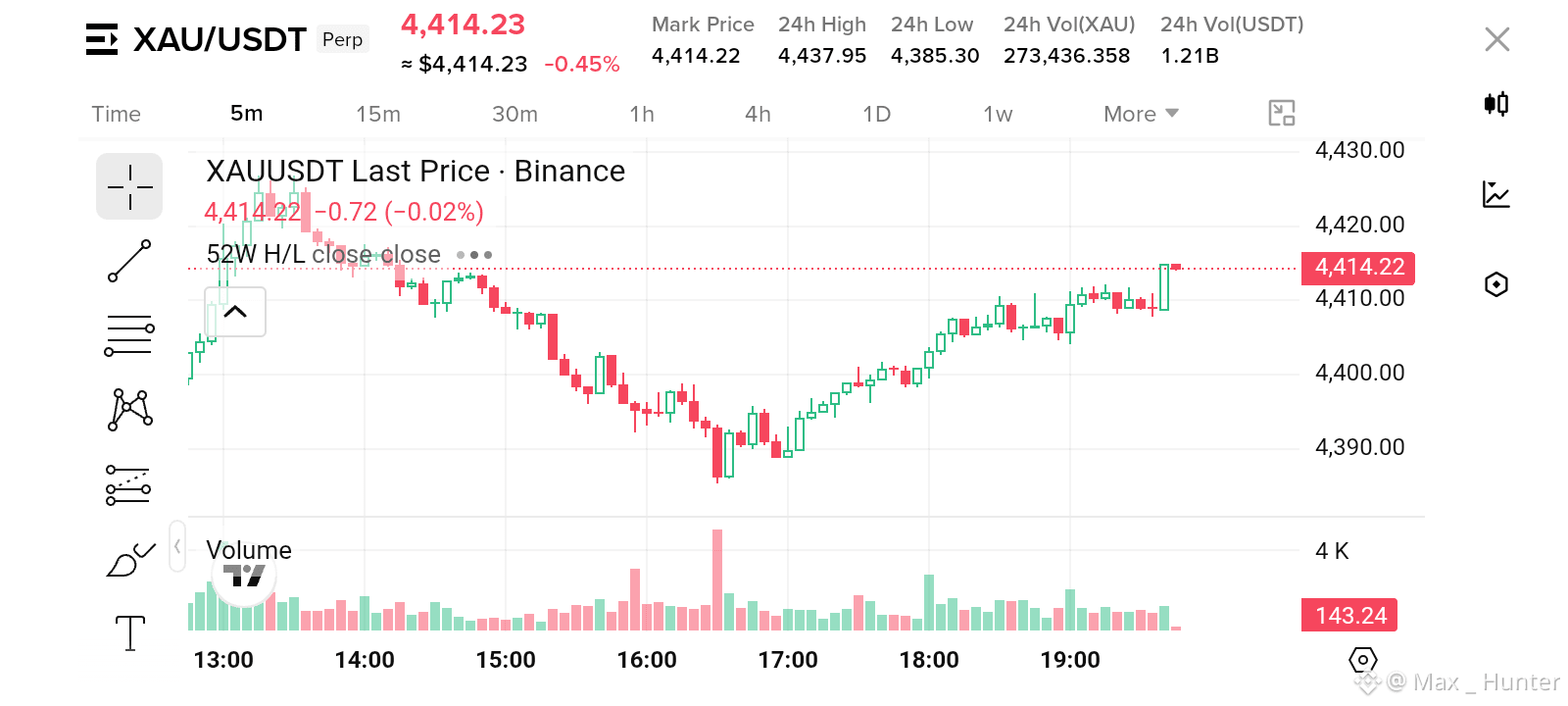
$XAU is showing short-term weakness after rejecting from 5,043.96. The initial push from 4,974.50 was strong, but price has now formed lower highs on the 15m timeframe and is drifting back toward 5,035. Momentum is fading, and structure is shifting into a mild corrective phase. Trade Setup (Short – Pullback Play): Entry: 5,030 – 5,055 Targets: 5,000 — 4,975 — 4,940 Stop-Loss: 5,085 RSI is near 21, reflecting oversold pressure, but momentum remains tilted downward. MACD is negative with expanding bearish histogram, confirming short-term downside bias. Volume has decreased slightly, suggesting controlled selling rather than panic liquidation. As long as price stays below 5,060 resistance, bearish pressure remains active. A clean break below 5,000 can accelerate continuation toward deeper support. Stay disciplined, respect volatility, and execute with clear risk control. 🔥📉
$XAU is showing short-term weakness after rejecting from 5,043.96. The initial push from 4,974.50 was strong, but price has now formed lower highs on the 15m timeframe and is drifting back toward 5,035. Momentum is fading, and structure is shifting into a mild corrective phase.

Trade Setup (Short – Pullback Play):
Entry: 5,030 – 5,055
Targets: 5,000 — 4,975 — 4,940
Stop-Loss: 5,085

RSI is near 21, reflecting oversold pressure, but momentum remains tilted downward. MACD is negative with expanding bearish histogram, confirming short-term downside bias. Volume has decreased slightly, suggesting controlled selling rather than panic liquidation.

As long as price stays below 5,060 resistance, bearish pressure remains active. A clean break below 5,000 can accelerate continuation toward deeper support.

Stay disciplined, respect volatility, and execute with clear risk control. 🔥📉
Assets Allocation
أعلى رصيد
BTC
87.81%
·
--
هابط
$arc is showing a weak recovery attempt after a heavy selloff from 0.1013 down to 0.0788. Price is currently hovering around 0.0807, but the overall 15m structure still reflects lower highs and controlled distribution. The bounce lacks strong momentum, suggesting sellers are still active on minor rallies. Trade Setup (Short – Continuation Bias): Entry: 0.0805 – 0.0830 Targets: 0.0785 — 0.0750 — 0.0710 Stop-Loss: 0.0865 RSI is near 31, approaching oversold levels, but momentum remains soft with no confirmed bullish reversal. MACD stays slightly negative, indicating underlying bearish pressure despite temporary stabilization. Volume has declined, showing reduced buying aggression during the bounce. As long as price remains below 0.0850 resistance, bearish structure remains dominant. A breakdown below 0.0788 can trigger another leg lower toward deeper support zones. Stay disciplined, manage risk tightly, and let structure confirm continuation. 🔥📉
$arc is showing a weak recovery attempt after a heavy selloff from 0.1013 down to 0.0788. Price is currently hovering around 0.0807, but the overall 15m structure still reflects lower highs and controlled distribution. The bounce lacks strong momentum, suggesting sellers are still active on minor rallies.

Trade Setup (Short – Continuation Bias):
Entry: 0.0805 – 0.0830
Targets: 0.0785 — 0.0750 — 0.0710
Stop-Loss: 0.0865

RSI is near 31, approaching oversold levels, but momentum remains soft with no confirmed bullish reversal. MACD stays slightly negative, indicating underlying bearish pressure despite temporary stabilization. Volume has declined, showing reduced buying aggression during the bounce.

As long as price remains below 0.0850 resistance, bearish structure remains dominant. A breakdown below 0.0788 can trigger another leg lower toward deeper support zones.

Stay disciplined, manage risk tightly, and let structure confirm continuation. 🔥📉
Assets Allocation
أعلى رصيد
BTC
87.81%
·
--
هابط
$RIVER is in a strong bearish breakdown phase on the 15m timeframe. After rejecting from 19.35, price printed consistent lower highs and lower lows, accelerating sharply toward 14.10. The structure is clearly dominated by sellers, with no meaningful bullish reaction yet. Trade Setup (Short – Trend Continuation): Entry: 14.20 – 14.60 Targets: 13.80 — 13.20 — 12.50 Stop-Loss: 15.30 RSI is extremely oversold near 4, reflecting intense selling pressure. While this can trigger short-term bounces, momentum remains heavily bearish. MACD is deeply negative with expanding histogram bars, confirming downside continuation. Volume has increased during the drop, validating distribution and panic selling. As long as price remains below 15.00 resistance, bearish structure stays intact. Any weak bounce into resistance can offer continuation opportunities toward lower support zones. Trade carefully, manage volatility, and let structure guide execution. 🔥📉
$RIVER is in a strong bearish breakdown phase on the 15m timeframe. After rejecting from 19.35, price printed consistent lower highs and lower lows, accelerating sharply toward 14.10. The structure is clearly dominated by sellers, with no meaningful bullish reaction yet.

Trade Setup (Short – Trend Continuation):
Entry: 14.20 – 14.60
Targets: 13.80 — 13.20 — 12.50
Stop-Loss: 15.30

RSI is extremely oversold near 4, reflecting intense selling pressure. While this can trigger short-term bounces, momentum remains heavily bearish. MACD is deeply negative with expanding histogram bars, confirming downside continuation. Volume has increased during the drop, validating distribution and panic selling.

As long as price remains below 15.00 resistance, bearish structure stays intact. Any weak bounce into resistance can offer continuation opportunities toward lower support zones.

Trade carefully, manage volatility, and let structure guide execution. 🔥📉
Assets Allocation
أعلى رصيد
BTC
87.81%
·
--
هابط
$AIA is showing a sharp rejection after topping at 0.1541. The strong impulsive rally was followed by consistent lower highs and lower lows, shifting short-term structure into bearish control. Price is now hovering around 0.1297 after a steady decline, suggesting distribution rather than healthy consolidation. Trade Setup (Short – Continuation): Entry: 0.1285 – 0.1310 Targets: 0.1230 — 0.1180 — 0.1120 Stop-Loss: 0.1365 RSI is near 23, reflecting oversold conditions, but momentum remains weak with no strong reversal confirmation yet. MACD is negative and expanding to the downside, signaling sustained bearish pressure. Volume increased during the selloff phase, confirming active distribution. As long as price stays below 0.1370 resistance, bearish structure remains intact. A breakdown below 0.1280 can accelerate continuation toward deeper support zones. Stay disciplined, manage leverage carefully, and let momentum confirm follow-through. 🔥📉
$AIA is showing a sharp rejection after topping at 0.1541. The strong impulsive rally was followed by consistent lower highs and lower lows, shifting short-term structure into bearish control. Price is now hovering around 0.1297 after a steady decline, suggesting distribution rather than healthy consolidation.

Trade Setup (Short – Continuation):
Entry: 0.1285 – 0.1310
Targets: 0.1230 — 0.1180 — 0.1120
Stop-Loss: 0.1365

RSI is near 23, reflecting oversold conditions, but momentum remains weak with no strong reversal confirmation yet. MACD is negative and expanding to the downside, signaling sustained bearish pressure. Volume increased during the selloff phase, confirming active distribution.

As long as price stays below 0.1370 resistance, bearish structure remains intact. A breakdown below 0.1280 can accelerate continuation toward deeper support zones.

Stay disciplined, manage leverage carefully, and let momentum confirm follow-through. 🔥📉
Assets Allocation
أعلى رصيد
BTC
87.80%
·
--
هابط
$SOL is consolidating after a strong impulsive move from 81.04 toward 85.59. The initial breakout showed solid expansion, but price is now ranging tightly around 84.80–85.00, suggesting short-term equilibrium. The structure remains constructive as higher lows are intact, but momentum has cooled. Trade Setup (Long – Breakout Continuation): Entry: 83.80 – 84.90 Targets: 85.60 — 88.00 — 92.00 Stop-Loss: 82.90 RSI is near 42, reflecting mild cooling after the push, leaving room for another expansion leg. MACD is slightly negative but flattening, indicating that bearish pressure is losing strength. Volume has decreased during consolidation, which typically precedes a volatility expansion. As long as 83.50 support holds, bullish structure remains valid. A decisive break above 85.60 can trigger renewed upside momentum toward higher resistance levels. Stay disciplined, respect key levels, and let breakout confirmation lead the trade. 🚀🔥
$SOL is consolidating after a strong impulsive move from 81.04 toward 85.59. The initial breakout showed solid expansion, but price is now ranging tightly around 84.80–85.00, suggesting short-term equilibrium. The structure remains constructive as higher lows are intact, but momentum has cooled.

Trade Setup (Long – Breakout Continuation):
Entry: 83.80 – 84.90
Targets: 85.60 — 88.00 — 92.00
Stop-Loss: 82.90

RSI is near 42, reflecting mild cooling after the push, leaving room for another expansion leg. MACD is slightly negative but flattening, indicating that bearish pressure is losing strength. Volume has decreased during consolidation, which typically precedes a volatility expansion.

As long as 83.50 support holds, bullish structure remains valid. A decisive break above 85.60 can trigger renewed upside momentum toward higher resistance levels.

Stay disciplined, respect key levels, and let breakout confirmation lead the trade. 🚀🔥
Assets Allocation
أعلى رصيد
BTC
87.80%
·
--
هابط
$TAKE is showing strong recovery momentum after bouncing from the 0.0406 base and reclaiming mid-range levels. The recent pullback from 0.0616 toward 0.0488 was absorbed quickly, and price has now rotated back up toward 0.0557. This shift suggests buyers are defending higher lows and rebuilding bullish pressure. Trade Setup (Long): Entry: 0.0530 – 0.0560 Targets: 0.0616 — 0.0680 — 0.0750 Stop-Loss: 0.0485 RSI is near 68, reflecting strong upside momentum without extreme exhaustion. MACD is crossing back toward positive territory, signaling early continuation strength. Volume expanded during the rebound phase, confirming participation behind the move. As long as 0.0520 support holds, the bullish structure remains intact. A clean breakout above 0.0616 can trigger another expansion leg toward higher resistance zones. Trade smart, respect volatility, and let momentum confirm continuation. 🚀🔥
$TAKE is showing strong recovery momentum after bouncing from the 0.0406 base and reclaiming mid-range levels. The recent pullback from 0.0616 toward 0.0488 was absorbed quickly, and price has now rotated back up toward 0.0557. This shift suggests buyers are defending higher lows and rebuilding bullish pressure.

Trade Setup (Long):
Entry: 0.0530 – 0.0560
Targets: 0.0616 — 0.0680 — 0.0750
Stop-Loss: 0.0485

RSI is near 68, reflecting strong upside momentum without extreme exhaustion. MACD is crossing back toward positive territory, signaling early continuation strength. Volume expanded during the rebound phase, confirming participation behind the move.

As long as 0.0520 support holds, the bullish structure remains intact. A clean breakout above 0.0616 can trigger another expansion leg toward higher resistance zones.

Trade smart, respect volatility, and let momentum confirm continuation. 🚀🔥
Assets Allocation
أعلى رصيد
BTC
87.80%
سجّل الدخول لاستكشاف المزيد من المُحتوى
استكشف أحدث أخبار العملات الرقمية
⚡️ كُن جزءًا من أحدث النقاشات في مجال العملات الرقمية
💬 تفاعل مع صنّاع المُحتوى المُفضّلين لديك
👍 استمتع بالمحتوى الذي يثير اهتمامك
البريد الإلكتروني / رقم الهاتف
خريطة الموقع
تفضيلات ملفات تعريف الارتباط
شروط وأحكام المنصّة