Binance Square
Efe Crypto Kid
13 منشورات

Efe Crypto Kid

تم التحقُّق من Square
Teen Analyst | Cypherpunk | Binancian • Posts are only my opinion.
5 تتابع
43 المتابعون
117 إعجاب
منشورات
PINNED
·
--
Finally! I'm old enough to open an account on #BinanceSquare As my first post, I wanted to re-share an incredible interview with the one and only Mr. CZ. In the interview, CZ opens up about writing his book, the "Freedom of Money", while in jail, his time navigating pressure in the U.S., what truly makes him happy, and why he believes crypto is a way to escape 'the matrix'. We also get into whether it’s possible to get rich quickly in crypto, and his advice for young entrepreneurs looking to follow a similar path. Enjoy!
Finally! I'm old enough to open an account on #BinanceSquare

As my first post, I wanted to re-share an incredible interview with the one and only Mr. CZ.

In the interview, CZ opens up about writing his book, the "Freedom of Money", while in jail, his time navigating pressure in the U.S., what truly makes him happy, and why he believes crypto is a way to escape 'the matrix'.

We also get into whether it’s possible to get rich quickly in crypto, and his advice for young entrepreneurs looking to follow a similar path.

Enjoy!
·
--
صاعد
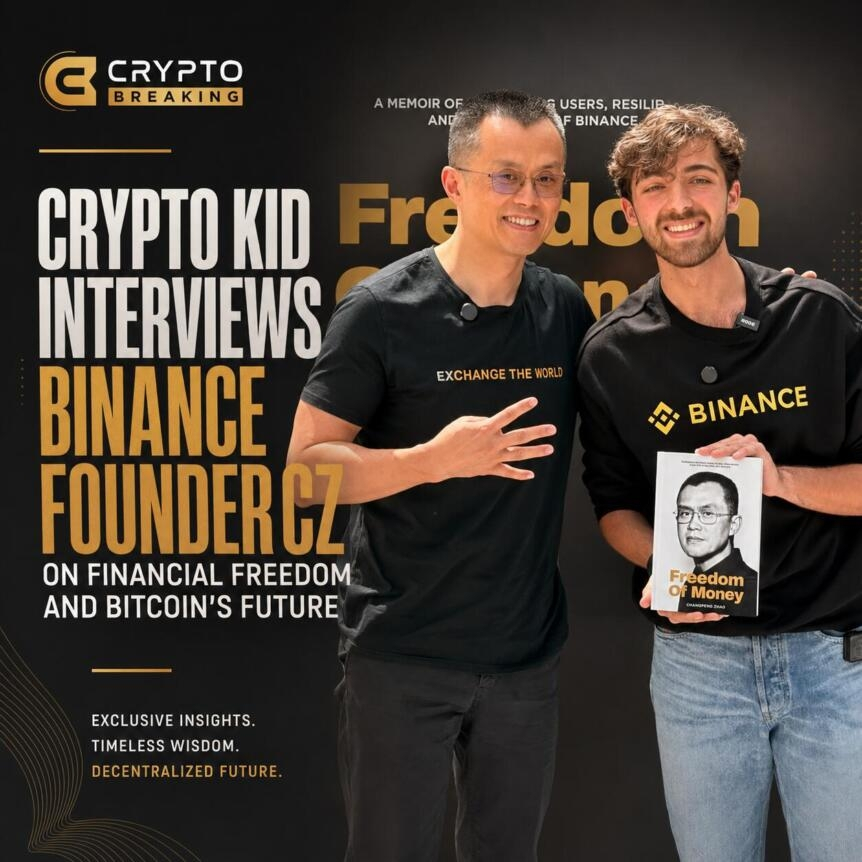
Our conversation with @CZ featured on Crypto Breaking! $BNB holders, have you watched it yet? 🤔
Our conversation with @CZ featured on Crypto Breaking!

$BNB holders, have you watched it yet? 🤔
Crypto Breaking
·
--
Crypto Kid Interviews Binance Founder CZ on Financial Freedom and Bitcoin’s Future
At just 18 years old, Efe Kelemci, better known as Crypto Kid, sat down with Changpeng Zhao (CZ), the co-founder of Binance and one of the world’s richest men.

The rare conversation took place around the launch of CZ’s book, Freedom of Money, but quickly expanded into a broader discussion about how the financial system works, the limitations of traditional money and the role Bitcoin and blockchain could play in giving individuals greater control over their wealth.

Rather than concentrating entirely on Bitcoin’s price or the next cryptocurrency market cycle, Crypto Kid asks CZ to explain the principles behind financial freedom in a way that can be understood by younger people and readers who may not yet be familiar with digital assets.

The result is a brief but substantive interview between Crypto Kid and CZ covering monetary sovereignty, inflation, cryptocurrency adoption and the importance of understanding the financial system before approaching crypto purely as an investment.

A Young Perspective on Money and Financial Freedom

Crypto Kid approaches the conversation from the perspective of a generation that has grown up alongside Bitcoin and digital assets.

At the beginning of the interview, he explains just how early his interest in the industry began:

“I’ve been in crypto since I was 12.”

Now 18, his questions reflect many of the concerns younger people have when they begin thinking about money, investing and their financial future.

What does it mean to have genuine control over personal wealth? Why can money held within the traditional financial system lose purchasing power? Should cryptocurrency be viewed primarily as an investment, or does the underlying technology serve a more fundamental purpose?

By placing these questions at the centre of the discussion, Crypto Kid gives CZ an opportunity to explain the ideas behind Freedom of Money to an audience extending beyond experienced cryptocurrency investors.

Why CZ Believes People Misunderstand Money

One of CZ’s strongest arguments is that society rarely encourages people to examine the nature of money itself.

“We’re brainwashed to think about money in a very simplistic way.”

Most people earn money, deposit it into a bank, spend it and invest what remains. Yet comparatively few stop to consider what their bank balance represents, what guarantees their access to it or how monetary policy affects its purchasing power.

CZ challenges the assumption that money held within the traditional system always provides complete ownership. He points to the possibility of frozen accounts, restrictions on certain transactions and the cost and delay involved in transferring significant amounts internationally.

He also describes conventional currency as a form of debt, arguing that what people commonly treat as money ultimately depends on promises made and enforced by institutions.

“Paper money is actually debt.”

The problem becomes even more visible when the supply of that money expands. When additional currency enters circulation, the nominal balance in an account may remain unchanged while its real purchasing power declines.

From CZ’s perspective, this creates a form of financial dependence that many people accept without questioning.

“You don’t have a lot of freedom with your money.”

This is the central problem that Freedom of Money attempts to explore. Financial freedom cannot be measured only by the amount someone possesses. It must also consider the degree of control that person has over storing, protecting and transferring it.

How Crypto Could Give People More Control Over Money

In the interview, CZ does not describe cryptocurrency merely as an asset capable of appreciating in price. He presents it as an alternative monetary infrastructure.

Blockchain enables people to hold digital assets directly, transfer value across borders and interact with a global financial network that does not operate according to all the same limitations as conventional banking systems.

That does not eliminate risk or personal responsibility. It changes where responsibility is placed.

With direct ownership comes the need to understand custody, security and the technology being used. However, it may also give individuals a level of control that is not always available when every transaction depends on an intermediary.

“You want sovereignty. You want control over your money.”

The word sovereignty is crucial here. CZ is not simply describing the ability to make profitable investments. He is describing money that individuals can store themselves, move internationally and use without another party being able to create additional units of it at will.

In that sense, the case for cryptocurrency is not solely financial. It is also technological and philosophical.

“The blockchain increases the freedom of money.”

CZ places this development within a wider historical pattern. Civilisation has repeatedly advanced by expanding different forms of freedom, including freedom of speech, freedom of the press, freedom of information and access to knowledge through the internet.

Blockchain, in his view, represents another step in that progression by expanding the freedom associated with owning and transferring value.

Financial Freedom Is Not the Same as Getting Rich Quickly

Crypto Kid then raises a question that reflects how many newcomers first approach the industry.

“How do I get rich quick?”

It is a simple question, but it exposes one of the biggest contradictions in cryptocurrency.

Bitcoin was created as an alternative to a monetary system based on centralised control. Yet many people enter the market with the sole objective of accumulating more of the same fiat currency from which Bitcoin was designed to provide an alternative.

CZ’s response redirects the discussion away from rapid gains.

“The freedom is really the key.”

Someone may generate a large profit and still remain dependent on a system capable of restricting access, expanding the money supply or reducing the value of their savings.

From this perspective, wealth without sovereignty is incomplete. The real objective is not simply to increase the number displayed in an account, but to gain greater control over what that value represents and how it can be used.

CZ argues that when people focus exclusively on maximising their holdings in traditional currency, they remain trapped within the same framework they claim to be escaping.

The conversation therefore reframes financial freedom. It is not a winning trade, an early retirement target or a particular Bitcoin price. It is the ability to make informed decisions about money while reducing dependence on systems over which the individual has little influence.

CZ’s Advice to Young People: Understand the Financial System First

The interview becomes especially relevant when Crypto Kid asks what younger people should do when entering the industry.

Cryptocurrency content aimed at new investors often concentrates on charts, tokens and opportunities to generate rapid returns. CZ gives almost the opposite advice.

Speaking about highly speculative trading, he says:

“I would actually recommend youngsters not to try that.”

Instead of beginning with price speculation, CZ encourages young people to learn how money and blockchain technology work, experiment on a small scale and explore the problems the technology could solve.

He points towards practical applications such as micropayments, international transfers and payments performed by artificial intelligence agents.

“Look at more of the utility value of crypto.”

This distinction between utility and speculation may be one of the most valuable lessons in the interview.

Trading asks what an asset might be worth tomorrow. Building asks what the technology could make possible over the next decade.

For young people entering the space, the second question may create far more meaningful opportunities. The cryptocurrency industry still needs developers, entrepreneurs, educators, researchers, product designers and creators capable of turning blockchain infrastructure into applications that ordinary people can use.

CZ compares the present stage of crypto development to the earlier days of the internet, when the basic protocols existed but many of the products that would eventually transform everyday life had not yet been created.

His message is not that young people must ignore cryptocurrency markets entirely. It is that they should first develop a strong understanding of the financial system, the technology and its possible uses, so that price is no longer their only reason to participate.

Bitcoin’s Price May Be Disappointing, but Adoption Is Still Early

Towards the end of the conversation, Crypto Kid asks CZ about Bitcoin’s recent price performance and the frustration felt by investors who expected the market to move higher.

CZ acknowledges that he shared those expectations. He had also believed Bitcoin would be trading at a higher level.

However, he notes that a significant amount of speculative capital moved towards artificial intelligence. While this may have weakened crypto momentum in the short term, he suggests that it could ultimately allow the market to grow on more stable foundations.

The more important point is that CZ does not measure Bitcoin’s future solely through its latest market cycle.

“Less than 1% of the world” currently uses cryptocurrency.

Whatever the precise figure, his broader point is clear: CZ believes the industry remains far from mass adoption.

Billions of people still do not directly own cryptocurrency, use blockchain-based payments or interact with decentralised financial infrastructure. Many businesses and institutions are also only beginning to explore how digital assets could fit into their operations.

From that perspective, Bitcoin’s present price becomes one data point inside a much larger adoption story.

The long-term opportunity depends less on whether the market reaches a particular target this year and more on whether blockchain technology becomes genuinely useful to a wider section of the global population.

The Story Behind Freedom of Money

The interview also briefly addresses the personal circumstances surrounding the creation of CZ’s book.

CZ explains that he began writing its first draft while in prison, where the lack of distractions gave him time to reflect on his journey and the evolution of the cryptocurrency industry.

The conversation does not remain focused on that period. Instead, it uses the experience as context for understanding why the themes of freedom, uncertainty and personal control became central to the book.

CZ later spent considerable time revising and completing the manuscript. The finished work combines his personal experience with his perspective on how cryptocurrency has developed since he entered the industry in 2013.

For readers, the book provides CZ’s personal account of a period that took Bitcoin from a relatively small technological experiment to a globally recognised financial asset and infrastructure layer.

Financial Freedom Begins With Better Questions

The strongest message from the conversation is not that people should buy cryptocurrency immediately or expect Bitcoin to make them rich.

It is that they should understand the money they already use.

Who controls it? What can reduce its value? Under what circumstances can access to it be limited? How easily can it move across borders? And which alternatives now exist?

Blockchain does not automatically answer every financial problem. It does, however, introduce new choices around custody, scarcity, payments and ownership.

For CZ, those choices are the foundation of monetary freedom. For Crypto Kid and the younger generation he represents, the opportunity is to understand that technology early enough to help shape what comes next.

The conversation ultimately encourages viewers to replace the question “How quickly can crypto make me rich?” with a more important one:

How much freedom do I really have over my money?

Watch the Full Interview

Watch Crypto Kid’s complete interview with Binance co-founder CZ on YouTube.

Follow Crypto Kid

Learn more about Efe Kelemci and his work through the official Crypto Kid website. You can also follow Crypto Kid on X, Instagram and LinkedIn.

Follow CZ

Follow Changpeng Zhao on X for his latest perspectives on Bitcoin, cryptocurrency adoption, entrepreneurship and the future of finance.

This article was originally published as Crypto Kid Interviews Binance Founder CZ on Financial Freedom and Bitcoin’s Future on Crypto Breaking News – your trusted source for crypto news, Bitcoin news, and blockchain updates.
SAD NEWS👎 $ETH created a high in January 2018 at $1,430. When adjusted to inflation, the purchasing power of $1,430 in 2026 translates to $1,915. Meaning, Ethereum holders LOST 17% of value over 8 years.
SAD NEWS👎

$ETH created a high in January 2018 at $1,430.

When adjusted to inflation, the purchasing power of $1,430 in 2026 translates to $1,915.

Meaning,

Ethereum holders LOST 17% of value over 8 years.
·
--
صاعد
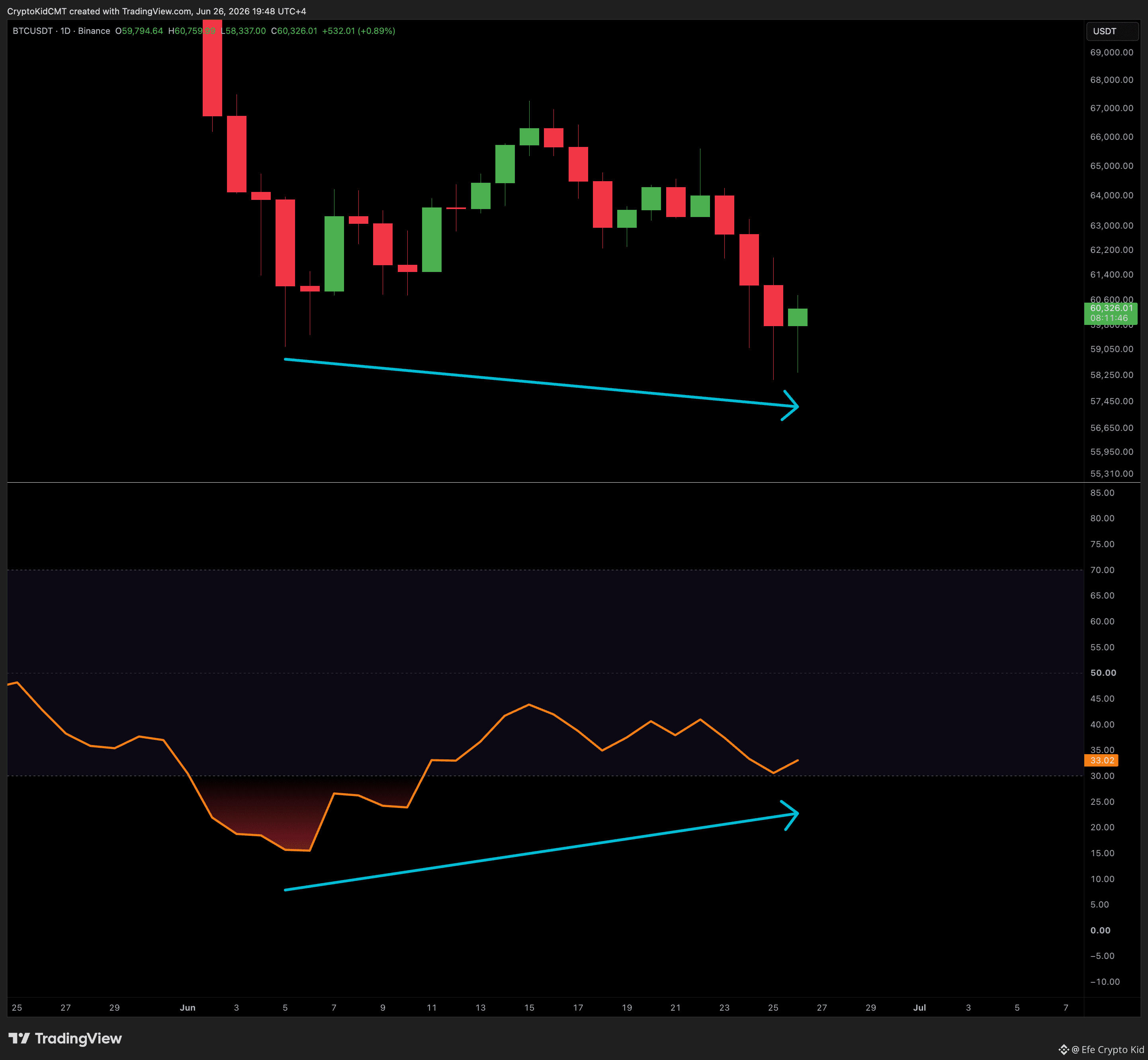
Huge $BTC daily bullish divergence!
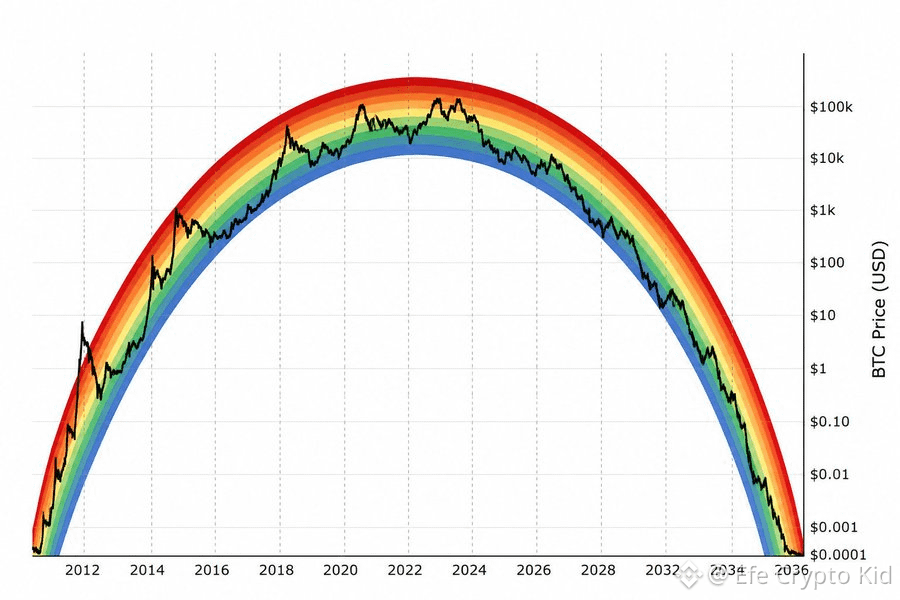
The REAL Bitcoin rainbow chart 😂
·
--
هابط
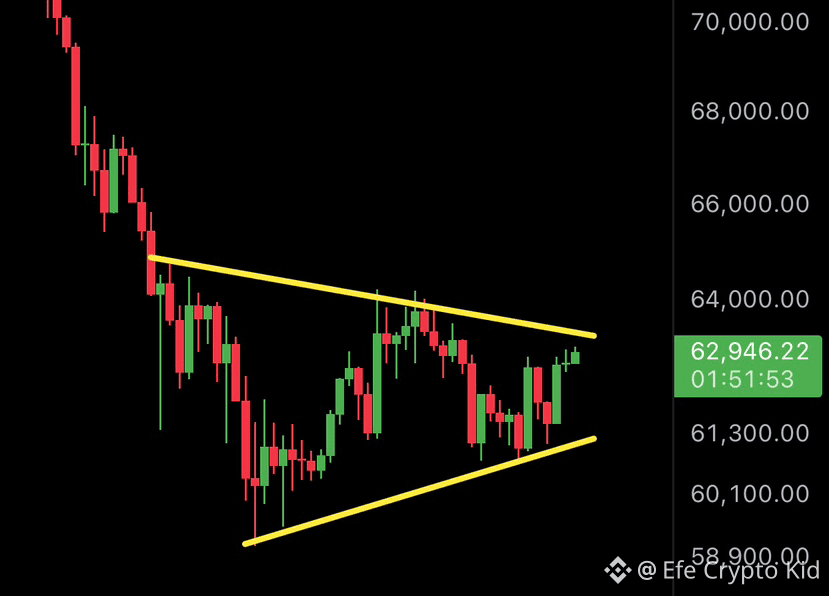
⚠️ BITCOIN BEARISH PENNANT! On the 4H, $BTC is completing a trend continuation pattern. With the current geopolitical landscape and higher inflation, I’m straying away from longing for now.
⚠️ BITCOIN BEARISH PENNANT!

On the 4H, $BTC is completing a trend continuation pattern.

With the current geopolitical landscape and higher inflation, I’m straying away from longing for now.
BREAKING FROM BENJAMIN COWEN! Ben says that Bitcoin is "not getting a supercycle" EVER. And ALSO claims that Santa Claus is NOT real. DREAMS HAVE BEEN SHATTERED TODAY.
BREAKING FROM BENJAMIN COWEN!

Ben says that Bitcoin is "not getting a supercycle"

EVER.

And ALSO claims that Santa Claus is NOT real.

DREAMS HAVE BEEN SHATTERED TODAY.
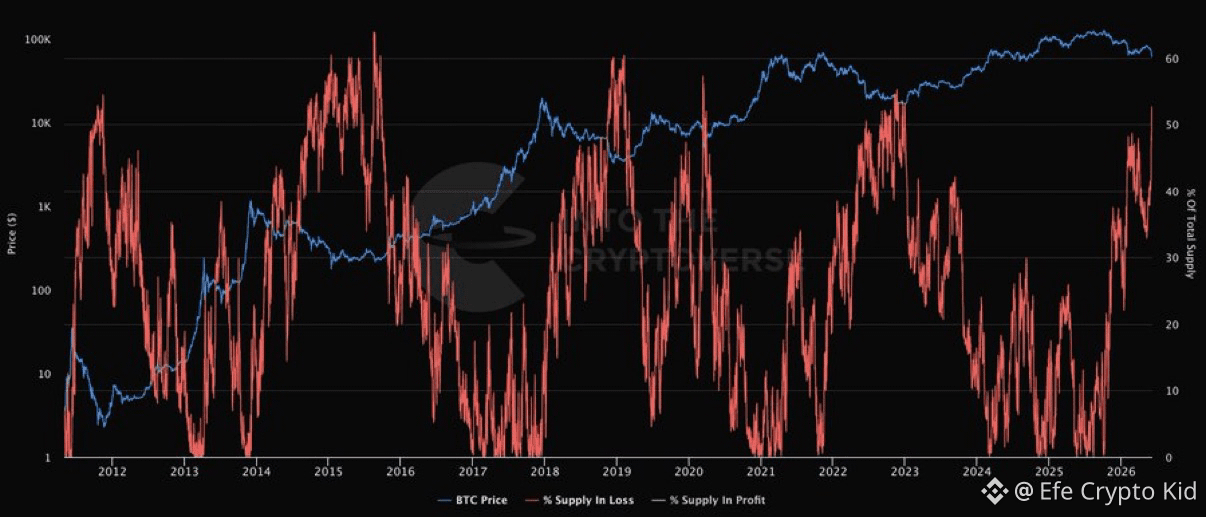
Currently, 52% of all bitcoin holders are in a LOSS. Meaning the average Joe who owns BTC has overall reached a NET NEGATIVE on their investment. The GOOD NEWS is, historically, over 50% of holders being in a loss suggests the bottom being in soon. KEEP STACKING IN THE BEAR!
Currently, 52% of all bitcoin holders are in a LOSS.

Meaning the average Joe who owns BTC has overall reached a NET NEGATIVE on their investment.

The GOOD NEWS is, historically, over 50% of holders being in a loss suggests the bottom being in soon.

KEEP STACKING IN THE BEAR!
تمّ التحقق
CPI DATA IS SET TO RELEASE TOMORROW. The current expectation is 4.2% YoY. That would be OVER DOUBLE the Fed's mandate. Expecting rate cuts in this environment would be ridiculous. HIGHER INFLATION = HIGHER RATES = LOWER PRICES
CPI DATA IS SET TO RELEASE TOMORROW.

The current expectation is 4.2% YoY.

That would be OVER DOUBLE the Fed's mandate.

Expecting rate cuts in this environment would be ridiculous.

HIGHER INFLATION = HIGHER RATES = LOWER PRICES
تمّ التحقق
Bull markets end with choppy distribution phases. And bear markets end with choppy accumulation phases. The bottom won’t be a 1 hour dip opportunity to catch. It will form over time. No FOMO, DCA-in, and be patient.
Bull markets end with choppy distribution phases.

And bear markets end with choppy accumulation phases.

The bottom won’t be a 1 hour dip opportunity to catch.

It will form over time.

No FOMO, DCA-in, and be patient.
Bitcoin… your phone is ringing 👀
Bitcoin has returned to its 2021 all-time-high in nominal value. BUT $69,100 from 2021 does NOT equal $69,100 in 2026. When you adjusted to inflation, you find out that $BTC is actually down 24%! DISCOUNT.
Bitcoin has returned to its 2021 all-time-high in nominal value.

BUT $69,100 from 2021 does NOT equal $69,100 in 2026.

When you adjusted to inflation, you find out that $BTC is actually down 24%!

DISCOUNT.
·
--
هابط
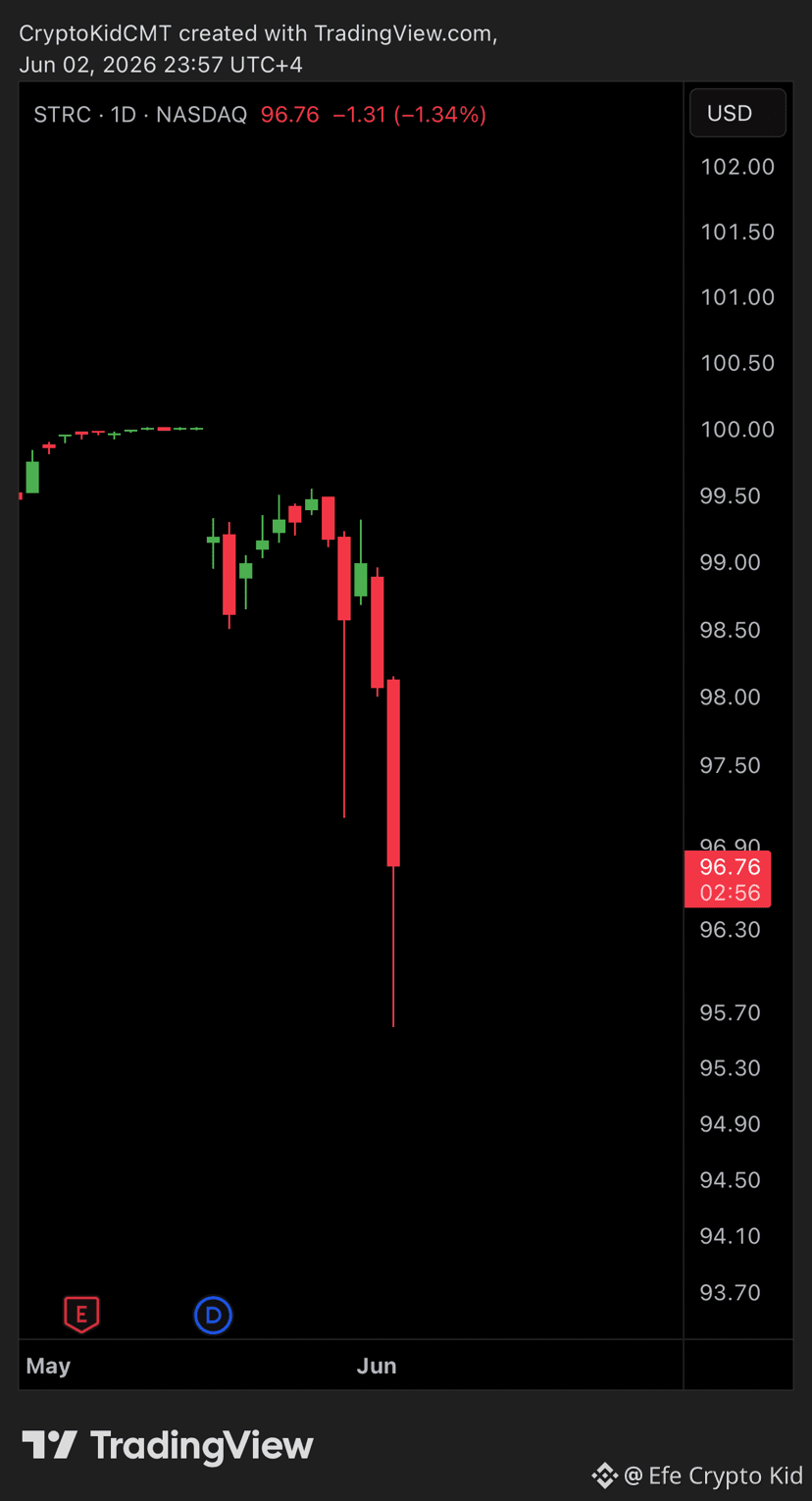
Strategy’s $STRC has lost its parity to $100. Meaning, they will need to increase the dividends from 11.5% p/a to a relatively much higher percentage. In turn creating a need for more cash to pay off elevated dividends. Concerning…
Strategy’s $STRC has lost its parity to $100.

Meaning, they will need to increase the dividends from 11.5% p/a to a relatively much higher percentage.

In turn creating a need for more cash to pay off elevated dividends.

Concerning…
مقالة
Big Money Likes Hyperliquid More Than Ethereum or Solana.I believe that this is only the beginning for Hyperliquid as a product, and its respective token, $HYPE What makes Hyperliquid special? Hyperliquid operates as a real business generating substantial revenue. In 2025, the platform recorded roughly $850 million in revenue, with 99% of that directed toward buying and burning HYPE tokens. This creates a powerful flywheel: more usage drives more burns, reducing supply and supporting price appreciation. Rapid Rise to Top 10 In less than 18 months since its token launch in November 2024, HYPE has climbed into the top 10 cryptocurrencies by market cap. This rapid ascent stands in stark contrast to the broader crypto market, which faced average major declines over the past 8 months (with $BTC down 42% and $ETH down 57% from their October 2025 peaks). Despite these significant headwinds, HYPE delivered an inspiringly strong performance with a 164% price increase since the start of 2025 while its market capitalization actually shrunk by 24%. This reflects clear market recognition of Hyperliquid’s genuine revenue generation, battle-tested infrastructure, and dominant position in decentralized perpetuals trading. CoinMarketCap ranking showing HYPE in the top 10 cryptocurrencies (Source: CoinMarketCap via KuCoin News) In its first 10 trading days, the Bitwise HYPE ETF ($BHYP) and related HYPE products absorbed 1.04% of Hyperliquid’s total market capitalization in net inflows and trading activity. This marked the strongest debut of any spot crypto ETF on record excluding Bitcoin and outperformed the Bitwise Ethereum ETF’s 0.41% and Bitwise Solana ETF’s 0.31% absorption rates in their first 10 days. Notably, this impressive performance occurred during a broader crypto bear market, with Bitcoin and Ethereum down significantly from their all-time highs, in contrast to the bull market conditions when the Ethereum and Solana ETFs launched. Hyperliquid ETF cumulative flows showing strong early institutional interest (Source: Bitget News) The more traders use Hyperliquid, the more fees are generated, leading to greater token burns and, theoretically, increased price upside for holders. Why Choose Hyperliquid for Trading? Centralized exchanges have frequently encountered major challenges, such as liquidation cascades and user interface failures, due to their reliance on centralized order books. Hyperliquid, by contrast, processed half of all liquidations seamlessly on 10 October, with every liquidation verified transparently on chain so that nobody lost more money than they should have and no one saw unexpected zero balances in their wallets. Additional benefits include: - No custodial risk: Users maintain control without entrusting assets to a central party. - Token utility: Holding HYPE provides discounts on trading fees. - Privacy: The only information you share with the exchange is your wallet address. I see Hyperliquid as one of the first examples of a cryptocurrency with a sustainable, revenue-generating business model. Hyperliquid vs dYdX and Uniswap: Why It Wins dYdX and Uniswap are two of the most established decentralized exchanges. Hyperliquid stands apart due to its purpose-built Layer-1 blockchain called HyperCore, which is optimized for high-speed orderbook trading. HyperCore runs a custom consensus mechanism that allows the entire orderbook and matching engine to operate fully on-chain. Nodes on the network validate and execute orders and liquidations directly, with every action recorded and verifiable by anyone. This architecture enables up to 200,000 transactions per second with sub-10 millisecond latency. At peak capacity, the system can theoretically handle hundreds of thousands of trades simultaneously while maintaining full transparency. In contrast, dYdX runs on its own Cosmos-based Layer 1 chain and processes around 2,000 transactions per second. Uniswap, while highly successful for spot trading, relies on an automated market maker model that can result in higher slippage for larger trades. Hyperliquid’s on-chain orderbook and verified liquidation system delivered clear advantages over both platforms. Hyperliquid also differentiates itself through its token economics. The majority of platform revenue is directed toward buying and burning HYPE tokens, creating direct value for holders. Combined with trading fee discounts for token holders and zero custodial risk, Hyperliquid offers a more scalable and aligned model than either dYdX or Uniswap. Long-Term Price Potential If Hyperliquid scales to the trading volumes of Tier-1 exchanges and successfully launches spot trading, its fee revenue would grow substantially. Reaching a market capitalization similar to Robinhood’s current level of roughly $70 billion would already imply a token price well above $300 based on current circulating supply. The token burning mechanism could allow it to soar much further than $300 if volume growth sustains. Regulatory Developments The environment is becoming more favorable. With new leadership at the SEC and recent CFTC regulations that enabled perpetual futures trading in the U.S. for the first time last week, DeFi is gaining clearer pathways forward. As one market observer noted on X: “The CFTC just opened the door for American traders to access perps legally for the first time. This is huge for DeFi.” I expect Hyperliquid’s offerings to eventually become available to American customers, which would drive substantially more business to the platform from both retail and high-volume trading desks. Important Caveats While the outlook for Hyperliquid is compelling, several risks should be considered. A significant portion of the total token supply remains subject to vesting and unlock schedules. At launch, a large share of tokens allocated to the team, early investors, and the foundation were subject to cliffs and linear vesting, with many tranches unlocking monthly over 24 to 36 months following a one-year cliff. As of May 2026, meaningful unlocks are still scheduled through the remainder of 2026 and into 2027, which could create periodic selling pressure if not absorbed by growing demand. The project’s success also depends heavily on sustaining high trading volumes to support the burn mechanism. Competition in decentralized perpetuals remains intense, and regulatory uncertainty around derivatives trading persists in many regions. Like many early Layer-1 networks, Hyperliquid carries some centralization risk in its current validator set and governance structure. These factors warrant careful evaluation alongside the project’s strengths. Bottom Line I do not believe the upside for HYPE has finished yet for the long term. However, I'm not buying in aggressively just yet, due to the bearish divergence currently taking place on HYPEUSDT's 4H timeframe. From CryptoKid on X, displaying a bearish RSI divergence on HYPE's 4-hourly price chart. The combination of strong fundamentals, proven infrastructure, supportive regulation, standout ETF performance, rapid rise to top-10 status, and a superior competitive position versus dYdX and Uniswap positions it well for continued growth.

Big Money Likes Hyperliquid More Than Ethereum or Solana.

I believe that this is only the beginning for Hyperliquid as a product, and its respective token, $HYPE
What makes Hyperliquid special?
Hyperliquid operates as a real business generating substantial revenue. In 2025, the platform recorded roughly $850 million in revenue, with 99% of that directed toward buying and burning HYPE tokens. This creates a powerful flywheel: more usage drives more burns, reducing supply and supporting price appreciation.
Rapid Rise to Top 10
In less than 18 months since its token launch in November 2024, HYPE has climbed into the top 10 cryptocurrencies by market cap. This rapid ascent stands in stark contrast to the broader crypto market, which faced average major declines over the past 8 months (with $BTC down 42% and $ETH down 57% from their October 2025 peaks). Despite these significant headwinds, HYPE delivered an inspiringly strong performance with a 164% price increase since the start of 2025 while its market capitalization actually shrunk by 24%. This reflects clear market recognition of Hyperliquid’s genuine revenue generation, battle-tested infrastructure, and dominant position in decentralized perpetuals trading.
CoinMarketCap ranking showing HYPE in the top 10 cryptocurrencies (Source: CoinMarketCap via KuCoin News)
In its first 10 trading days, the Bitwise HYPE ETF ($BHYP) and related HYPE products absorbed 1.04% of Hyperliquid’s total market capitalization in net inflows and trading activity. This marked the strongest debut of any spot crypto ETF on record excluding Bitcoin and outperformed the Bitwise Ethereum ETF’s 0.41% and Bitwise Solana ETF’s 0.31% absorption rates in their first 10 days. Notably, this impressive performance occurred during a broader crypto bear market, with Bitcoin and Ethereum down significantly from their all-time highs, in contrast to the bull market conditions when the Ethereum and Solana ETFs launched.
Hyperliquid ETF cumulative flows showing strong early institutional interest (Source: Bitget News)
The more traders use Hyperliquid, the more fees are generated, leading to greater token burns and, theoretically, increased price upside for holders.
Why Choose Hyperliquid for Trading?
Centralized exchanges have frequently encountered major challenges, such as liquidation cascades and user interface failures, due to their reliance on centralized order books. Hyperliquid, by contrast, processed half of all liquidations seamlessly on 10 October, with every liquidation verified transparently on chain so that nobody lost more money than they should have and no one saw unexpected zero balances in their wallets.
Additional benefits include:
- No custodial risk: Users maintain control without entrusting assets to a central party.
- Token utility: Holding HYPE provides discounts on trading fees.
- Privacy: The only information you share with the exchange is your wallet address.
I see Hyperliquid as one of the first examples of a cryptocurrency with a sustainable, revenue-generating business model.
Hyperliquid vs dYdX and Uniswap: Why It Wins
dYdX and Uniswap are two of the most established decentralized exchanges. Hyperliquid stands apart due to its purpose-built Layer-1 blockchain called HyperCore, which is optimized for high-speed orderbook trading. HyperCore runs a custom consensus mechanism that allows the entire orderbook and matching engine to operate fully on-chain. Nodes on the network validate and execute orders and liquidations directly, with every action recorded and verifiable by anyone.
This architecture enables up to 200,000 transactions per second with sub-10 millisecond latency. At peak capacity, the system can theoretically handle hundreds of thousands of trades simultaneously while maintaining full transparency. In contrast, dYdX runs on its own Cosmos-based Layer 1 chain and processes around 2,000 transactions per second. Uniswap, while highly successful for spot trading, relies on an automated market maker model that can result in higher slippage for larger trades. Hyperliquid’s on-chain orderbook and verified liquidation system delivered clear advantages over both platforms.
Hyperliquid also differentiates itself through its token economics. The majority of platform revenue is directed toward buying and burning HYPE tokens, creating direct value for holders. Combined with trading fee discounts for token holders and zero custodial risk, Hyperliquid offers a more scalable and aligned model than either dYdX or Uniswap.
Long-Term Price Potential
If Hyperliquid scales to the trading volumes of Tier-1 exchanges and successfully launches spot trading, its fee revenue would grow substantially. Reaching a market capitalization similar to Robinhood’s current level of roughly $70 billion would already imply a token price well above $300 based on current circulating supply. The token burning mechanism could allow it to soar much further than $300 if volume growth sustains.
Regulatory Developments
The environment is becoming more favorable. With new leadership at the SEC and recent CFTC regulations that enabled perpetual futures trading in the U.S. for the first time last week, DeFi is gaining clearer pathways forward. As one market observer noted on X:
“The CFTC just opened the door for American traders to access perps legally for the first time. This is huge for DeFi.”
I expect Hyperliquid’s offerings to eventually become available to American customers, which would drive substantially more business to the platform from both retail and high-volume trading desks.
Important Caveats
While the outlook for Hyperliquid is compelling, several risks should be considered. A significant portion of the total token supply remains subject to vesting and unlock schedules. At launch, a large share of tokens allocated to the team, early investors, and the foundation were subject to cliffs and linear vesting, with many tranches unlocking monthly over 24 to 36 months following a one-year cliff. As of May 2026, meaningful unlocks are still scheduled through the remainder of 2026 and into 2027, which could create periodic selling pressure if not absorbed by growing demand.
The project’s success also depends heavily on sustaining high trading volumes to support the burn mechanism. Competition in decentralized perpetuals remains intense, and regulatory uncertainty around derivatives trading persists in many regions. Like many early Layer-1 networks, Hyperliquid carries some centralization risk in its current validator set and governance structure. These factors warrant careful evaluation alongside the project’s strengths.
Bottom Line
I do not believe the upside for HYPE has finished yet for the long term. However, I'm not buying in aggressively just yet, due to the bearish divergence currently taking place on HYPEUSDT's 4H timeframe.
From CryptoKid on X, displaying a bearish RSI divergence on HYPE's 4-hourly price chart.
The combination of strong fundamentals, proven infrastructure, supportive regulation, standout ETF performance, rapid rise to top-10 status, and a superior competitive position versus dYdX and Uniswap positions it well for continued growth.
سجّل الدخول لاستكشاف المزيد من المُحتوى
انضم إلى مُستخدمي العملات الرقمية حول العالم على Binance Square
⚡️ احصل على أحدث المعلومات المفيدة عن العملات الرقمية.
💬 موثوقة من قبل أكبر منصّة لتداول العملات الرقمية في العالم.
👍 اكتشف الرؤى الحقيقية من صنّاع المُحتوى الموثوقين.
البريد الإلكتروني / رقم الهاتف
خريطة الموقع
تفضيلات ملفات تعريف الارتباط
شروط وأحكام المنصّة