Vanar: Powering the Next Wave of Real-World Web3 Adoption
Vanar is a next-generation Layer-1 blockchain created with a practical mission: to make Web3 technology useful, accessible, and invisible to everyday users. Instead of focusing only on crypto trading or financial speculation, the project is built around industries already serving billions of people — gaming, entertainment, digital ownership, AI services, and brand engagement. The team behind Vanar brings experience from gaming and entertainment technology, shaping a strategy centered on consumer adoption rather than purely technical experimentation.
The idea behind Vanar is simple but powerful: people should not need to understand blockchain to benefit from it. Users should enjoy games, digital experiences, and online services as usual while blockchain operates quietly in the background, enabling ownership, security, and digital economies without adding complexity.
Vanar operates as an independent Layer-1 blockchain, meaning it is not dependent on another chain for its core infrastructure. This allows it to optimize performance specifically for consumer applications, supporting faster transaction speeds and lower costs. These features are especially important for environments like games or digital platforms where users might perform thousands of small transactions daily, such as buying items, transferring assets, or interacting with digital marketplaces.
The network is also compatible with Ethereum development tools, allowing developers to deploy smart contracts and applications without needing to learn an entirely new programming environment. This compatibility makes it easier for projects to move into the Vanar ecosystem and helps accelerate application growth.
One of Vanar’s strengths lies in keeping transaction fees low while maintaining high performance. Many popular blockchains become expensive when network demand increases, which makes them unsuitable for microtransactions or consumer platforms. Vanar’s architecture aims to prevent this bottleneck so that in-game purchases, NFT minting, digital asset transfers, and subscription payments remain affordable even at scale.
Vanar also promotes infrastructure that supports AI-friendly data handling and intelligent automation. Applications built on the network can potentially automate decisions, manage workflows, and interact with data in smarter ways than traditional smart contracts, which usually execute fixed instructions without adaptation. This opens doors to AI-powered services, automated payment systems, and more responsive decentralized applications.
There has been discussion in blockchain circles about performance solutions like Firedancer, a validator client designed to improve network efficiency in certain ecosystems. However, Vanar itself does not officially rely on Firedancer integration, choosing instead to pursue performance improvements through its own network design and optimizations.
Similarly, Vanar does not include a protocol-level order book mechanism where trade matching occurs directly within the blockchain’s core rules. Trading platforms and exchanges can still operate on Vanar using smart contracts, allowing developers to build flexible decentralized marketplaces without restricting how trading systems must function.
The network also does not embed native price oracle systems directly in its consensus layer. Instead, applications can integrate price feeds and data services through external oracle networks or custom solutions. This approach allows flexibility while avoiding unnecessary complexity within the base protocol.
Vanar’s ecosystem is strongly oriented toward practical use cases. Gaming and immersive environments play a central role, supported by platforms such as Virtua Metaverse, where users can explore virtual worlds and own digital assets secured by blockchain technology. Another important ecosystem component is VGN Games Network, which enables blockchain integration across multiple gaming experiences and allows players to own and trade in-game assets.
Gaming is one of the most natural gateways into blockchain adoption because players already purchase digital items. Blockchain simply adds true ownership and portability to those purchases, letting players retain value beyond individual games.
Vanar also supports AI-driven automation, programmable finance, and payment systems that can enable subscription services, pay-per-use models, digital content payments, and microtransactions. These models become practical when transaction fees are low and confirmations are fast, making decentralized payments viable for everyday use.
Another emerging opportunity lies in tokenizing real-world assets and digital records, allowing documents or ownership rights to be verified and transferred on-chain. Brands can also leverage the ecosystem for loyalty programs, digital collectibles, and customer engagement campaigns without forcing customers to understand blockchain technology.
For users, this approach brings several advantages. Transactions remain affordable, interactions are faster, developers can build familiar user experiences, and blockchain benefits appear without requiring technical knowledge. Gaming, entertainment, and consumer applications provide natural entry points, allowing adoption to happen organically rather than through technical onboarding.
The VANRY token powers the Vanar ecosystem. It is used to pay network transaction fees, support staking and validator rewards, and facilitate participation in network operations. As the ecosystem grows, the token’s role expands across games, applications, and services built on the network. Wrapped versions of VANRY also allow cross-chain activity, enabling interaction with other blockchain ecosystems.
Vanar and its token have gained exposure through exchange listings and educational initiatives on platforms such as Binance, where users can learn about emerging blockchain projects while engaging in reward-based campaigns. Exchange availability also improves access and liquidity, allowing global users to participate more easily.
In the broader picture, Vanar represents a shift in blockchain development away from speculation toward consumer-oriented infrastructure. By focusing on gaming, AI services, payments, and brand engagement, the network attempts to integrate decentralized technology into experiences people already understand and enjoy.
Its success will depend on ecosystem growth, developer adoption, and whether applications built on the network truly deliver value to everyday users. Yet the direction is clear: blockchain adoption will likely accelerate when technology becomes invisible and practical rather than complex and intimidating. If Vanar continues executing its consumer-first strategy effectively, it could play a significant role in bringing Web3 technology to mainstream audiences worldwide. @Vanarchain #vanar $VANRY
@Vanarchain is an L1 blockchain designed from the ground up to make sense for real-world adoption. The Vanar team has experience working with games, entertainment and brands; their technology approach is focused on bringing the next 3 billion consumers to Web3. Vanar incorporates a series of products which cross multiple mainstream verticals, including gaming, metaverse, AI, eco and brand solutions. Known Vanar products include Virtua Metaverse and VGN games network. Vanar is powered by the VANRY token. #vanar $VANRY
$FOGO (Futures Only) 1. What Shorting Means: You borrow FOGO to sell at the current price, hoping the price drops. Later, you buy back cheaper to return the borrowed tokens, pocketing the difference. Only possible in futures/derivatives markets, not spot. 2. How to Short FOGO on Binance (example): Go to Futures > USDT-M Futures (or COIN-M if available). Select FOGO/USDT pair. Choose Sell/Short. Set leverage carefully (high leverage = high risk). Use stop-loss to protect yourself if the price rises. 3. Risks of Shorting: Unlimited loss potential if $FOGO price keeps rising. Liquidation occurs if margin is depleted. Market can be volatile @Fogo Official FOGO is new, so swings can be big. 4. Tips for Safer Shorting: Keep leverage low (2x–5x is safer for volatile coins). Set tight stop-loss. Only risk money you can afford to lose. Monitor news/market sentiment — new projects can spike unexpectedly.#fogo
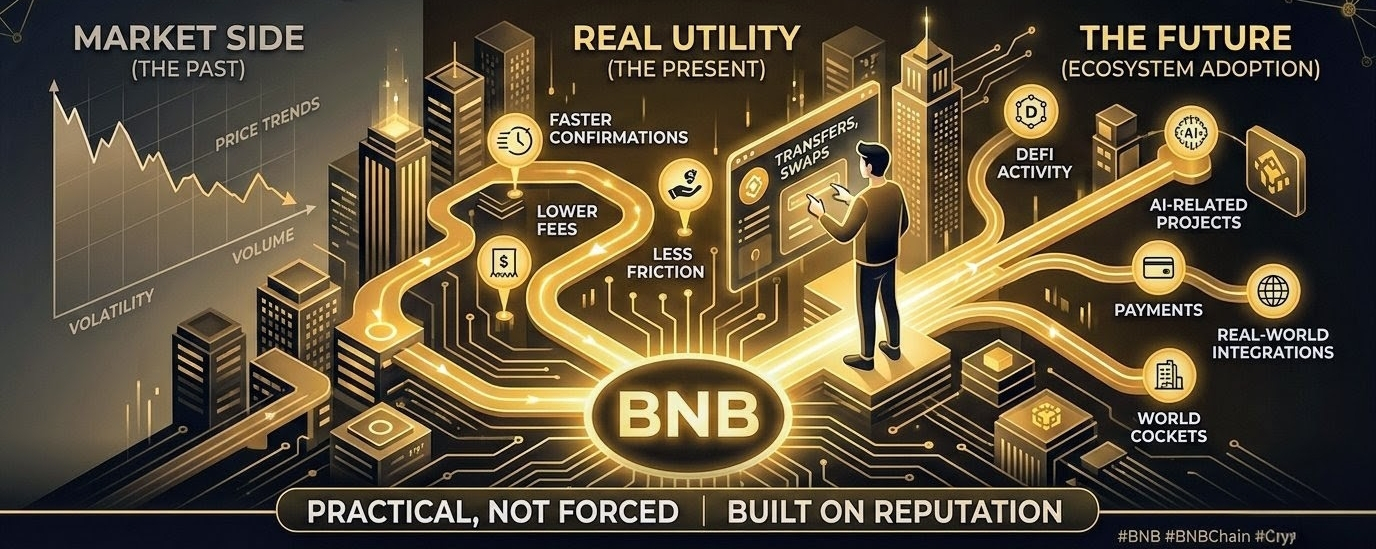
$BNB looks exciting today, momentum building, traders watching breakout, next move may push price higher if volume stays strong, so stay alert and plan entries carefully for smart profit opportunities.
Buy zone: 610–620 area on small dips for safer entry.
Target zone: 640–660 for quick swing profits if breakout continues.
Stop loss: 590–600 to control risk during sudden market drops.#bnb
Fogo: The Network Trying to Make On-Chain Trading Feel Instant.
Blockchain technology has come a long way, yet many users still notice a gap between decentralized finance and traditional trading platforms. Centralized exchanges feel fast and seamless, while many blockchains slow down or become expensive when activity increases. This difference becomes especially obvious during market volatility, when speed and execution quality matter most.
Fogo is being built to close that gap. Instead of trying to become a general-purpose blockchain for everything, it focuses on one core mission: making on-chain finance and trading fast enough to compete with traditional systems while still keeping decentralization and transparency intact.
At its foundation, Fogo is a high-performance Layer-1 blockchain that runs using the same execution environment popularized across the ecosystem supported by the Solana Foundation. This compatibility allows developers already building within that ecosystem to move or expand their applications onto Fogo without starting from zero. Tools, smart contracts, and developer workflows feel familiar, which helps projects migrate more easily.
However, Fogo isn’t simply copying existing infrastructure. Its architecture is tuned specifically for financial performance. Everything from validator performance to transaction execution is designed to support trading, liquidity operations, and applications where milliseconds can make a difference. The network aims to deliver fast confirmations, stable performance, and consistent execution even when activity spikes.
A major part of this performance comes from the validator technology used to run the network. Many blockchains slow down because validator software struggles to process large volumes of transactions efficiently. Fogo integrates highly optimized validator approaches influenced by performance work led by Jump Crypto, which focuses on maximizing execution speed and hardware efficiency. By improving how validators process transactions in parallel, the network avoids common bottlenecks seen elsewhere.
Another improvement lies in how validators communicate. Network nodes are strategically located near major internet and financial hubs, reducing communication delays across regions. Faster communication between nodes helps maintain consistent block production and reduces latency for users globally. For applications like trading, where timing directly affects outcomes, this infrastructure design matters significantly.
Fogo also tries to improve everyday user experience. One of the frustrations in Web3 is repeatedly signing transactions and managing small amounts of gas fees for every action. To reduce this friction, Fogo introduces session-style interaction models that allow users to perform multiple actions within an application without constant confirmations. This makes decentralized apps feel closer to modern web platforms while still keeping control in users’ hands.
One of Fogo’s most interesting features is its protocol-level order book. Many decentralized exchanges today use automated liquidity pools, which work well but sometimes lead to inefficient pricing or slippage during large trades. Fogo instead embeds a central limit order book directly into the blockchain protocol. Orders are matched at the network level rather than through slower smart contracts.
This approach provides clearer pricing, fairer order matching, and a trading experience that feels closer to centralized exchanges while maintaining transparency. Traders can place precise buy and sell orders, and professional liquidity strategies become more practical on-chain.
Reliable pricing is also crucial for financial applications. Many networks rely on external oracle systems to deliver market data, which can introduce delays or complexity. Fogo aims to provide native price tools within the protocol itself, giving decentralized applications quicker access to reliable data without depending entirely on third-party infrastructure. This simplifies development and improves responsiveness for financial apps.
Because of its performance characteristics, Fogo opens doors for several advanced use cases. Decentralized exchanges can operate with faster execution and deeper liquidity. Derivatives and perpetual futures platforms become more viable when network latency is reduced. Lending platforms benefit from faster liquidation processes, improving risk management. NFT marketplaces and digital asset trading platforms can also operate more smoothly, especially during high-demand events. Even real-time applications like blockchain gaming may benefit from the network’s speed.
For everyday users, these improvements translate into faster transactions, lower fees, and smoother interactions. Trading becomes more reliable, applications respond more quickly, and markets feel fairer thanks to transparent matching mechanisms. Developers also gain flexibility because applications already built in compatible ecosystems can be adapted to run on Fogo without extensive rewrites.
The ecosystem is powered by the FOGO token, which functions as the network’s utility and governance asset. It is used to pay transaction fees, secure the network through staking, participate in governance decisions, and support ecosystem incentives. As new applications are built, the token’s role could expand across different network services.
FOGO gained wider exposure after being listed on Binance, giving traders around the world easier access to the asset. Listings on large exchanges typically increase liquidity and awareness, helping ecosystems grow by making participation more accessible.
In many ways, Fogo represents a shift in blockchain design thinking. Instead of trying to serve every possible use case, it focuses deeply on performance for finance and trading. By combining compatibility with existing development ecosystems, optimized validator performance, and protocol-level trading infrastructure, it attempts to bring decentralized markets closer to the speed and efficiency users expect from modern financial platforms.
Whether Fogo ultimately becomes a major hub for decentralized finance will depend on adoption, liquidity growth, and developer interest. But its performance-first approach makes it one of the more interesting new networks to watch as the industry continues evolving toward faster, more practical on-chain financial systems. @Fogo Official #fogo $FOGO
$BCH Buy zone 545–555, momentum strong, bulls active, next breakout possible if volume holds, traders accumulate carefully for upcoming surge today globally.
Target zone 600–630, rally continuation expected, profit booking near resistance, watch strength, scale positions gradually for maximum gains ahead soon.
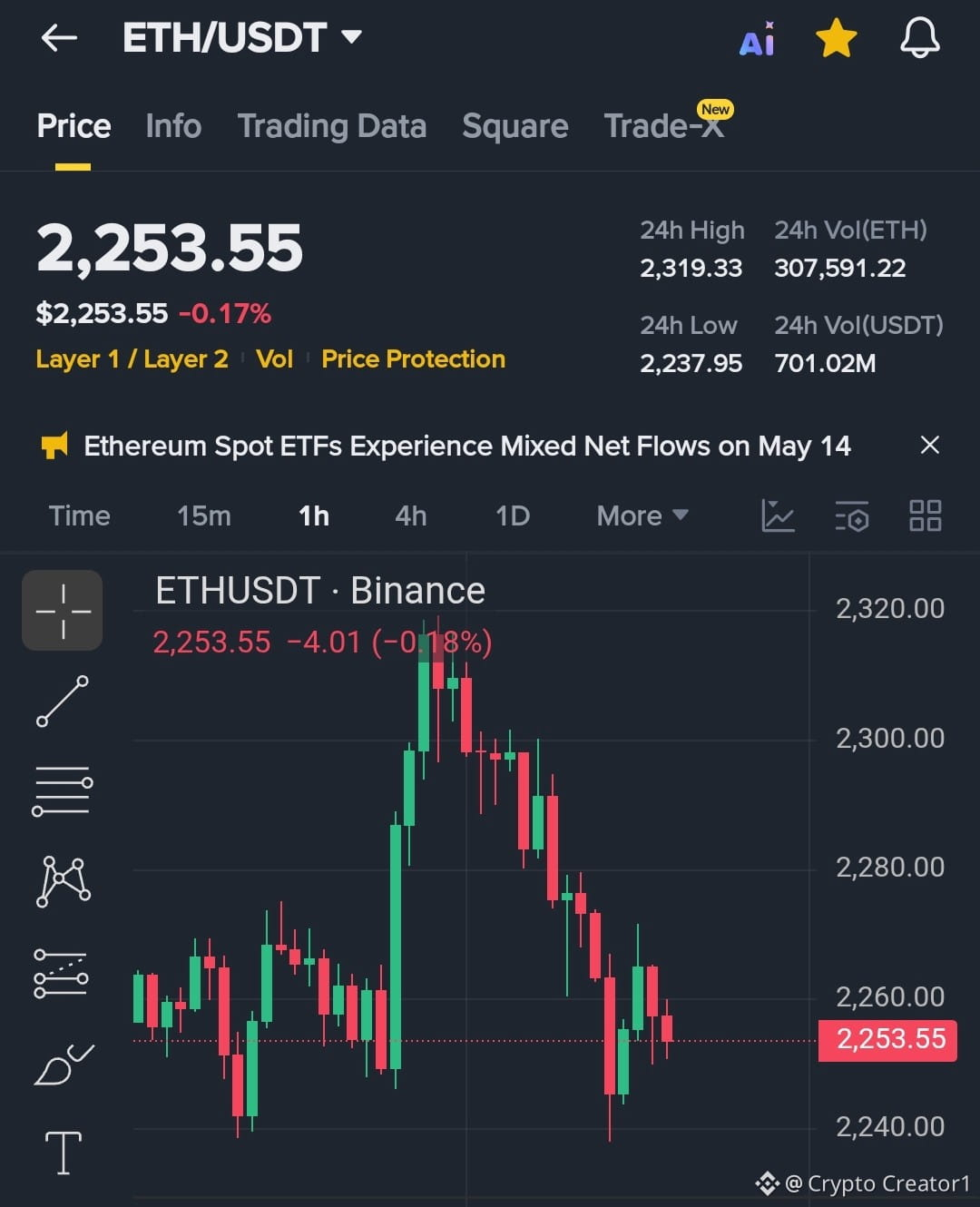
$ETH USDT is testing support near 1,940–1,960 on Binance. Buy zone: 1,940–1,960. Targets: 1,995 first, then 2,020 if momentum holds. Stop loss: 1,920 to control risk. Monitor volume for breakout signals, scale entries carefully, and secure profits at key resistance levels while staying alert to sudden market swings in volatile sessions.#ETH
$BTC USDT shows consolidation near strong support at 66,400–67,000 on Binance. Buy zone: 66,400–67,000. Targets: 68,400 first, then 69,200 on bullish momentum. Stop loss: 65,800 to limit risk. Watch volume spikes for breakout confirmation. Trade with discipline, scale positions, and lock profits while monitoring key resistance levels in volatile market conditions.#BTC
$BNB USDT traders on Binance watch momentum building as price rebounds from support. Buy zone: 592–600. Targets: 620 then 645 if volume expands. Stop loss: 580 to manage risk. Breakout above 618 could trigger fast upside. Stay disciplined, scale entries, secure profits, and monitor volume for confirmation in volatile sessions ahead while protecting capital and adapting strategies to rapid market shifts.#bnb
Vanar is a Layer-1 blockchain built to make Web-3 usable for everyday consumers, not just crypto users. The project focuses on real-world adoption across gaming, entertainment, brands, AI, and digital experiences, aiming to onboard the next billions of users through familiar platforms rather than complex crypto tools.
Vanar powers ecosystems like Virtua and VGN Games Network, which bring blockchain into gaming and meta verse experiences. The network is designed for fast, scalable, and user-friendly applications where blockchain runs in the background while users enjoy seamless experiences.
Its native token, VANRY, is used for transactions, ecosystem incentives, staking, and network activity. Accessibility is supported through major exchanges such as Binance, helping new users enter the ecosystem easily.
In short, Vanar’s goal is simple: make blockchain technology practical, invisible, and useful for mainstream digital products rather than keeping it limited to crypto-native use cases. @Vanarchain .
Binance Square has launched a new CreatorPad campaign with a 2,000,000 FOGO token voucher reward pool, running from Feb 13, 2026 (01:00 UTC) to Feb 27, 2026 (01:00 UTC).
Verified users can join by clicking “Join Now” and completing tasks such as posting original content (minimum 100 characters) with #Fogo, $FOGO, and mentioning the project account, following Fogo on Binance Square and X, and trading at least $10 in FOGO on Spot, Futures, or Convert.
Rewards will be distributed to the Top 50 Global creators and Top 100 eligible Chinese creators based on leaderboard rankings. KYC is required, and rewards will be sent within 14 working days after the campaign ends.@Fogo Official #fogo $FOGO
Binance Square has launched a new CreatorPad campaign with a 2,000,000 FOGO token voucher reward pool, running from Feb 13, 2026 (01:00 UTC) to Feb 27, 2026 (01:00 UTC).
Verified users can join by clicking “Join Now” and completing tasks such as posting original content (minimum 100 characters) with #Fogo, $FOGO , and mentioning the project account, following Fogo on Binance Square and X, and trading at least $10 in FOGO on Spot, Futures, or Convert.
Rewards will be distributed to the Top 50 Global creators and Top 100 eligible Chinese creators based on leaderboard rankings. KYC is required, and rewards will be sent within 14 working days after the campaign ends.@Fogo Official #fogo $FOGO
Vanar Chain (VANRY): Quietly Building the Human Layer of Web3
When most people think about blockchain, they think about trading charts, volatile prices, and technical jargon. But outside of crypto circles, everyday users don’t care about gas optimization or liquidity pools. They care about experiences. They care about ownership. They care about whether technology makes their lives more interesting, more rewarding, or more creative. That is the space where Vanar Chain is positioning itself.
Vanar is a Layer 1 blockchain, but it doesn’t behave like a typical one. It wasn’t designed primarily for financial speculation. Instead, it was built with a long-term goal in mind: onboarding the next wave of global internet users into Web3 through gaming, entertainment, AI, brand experiences, and immersive digital environments. At the center of this ecosystem is the VANRY token, which quietly powers transactions, staking, governance, and ecosystem incentives behind the scenes.
The roots of Vanar go back to Virtua, a metaverse and digital collectibles platform focused on interactive entertainment and branded virtual experiences. As the platform expanded, limitations of existing blockchains became more visible—transaction costs fluctuated, scalability was unpredictable, and performance constraints made it difficult to deliver seamless consumer experiences. Rather than adapt to those constraints, the team chose to build infrastructure that matched their ambition. The transition from TVK to VANRY marked more than a token swap; it represented a strategic evolution from product-based ecosystem to full blockchain infrastructure.
Technically, Vanar operates as an independent Layer 1 network. This independence allows it to optimize for specific use cases like gaming and immersive applications. With block times of roughly three seconds and extremely low transaction fees—often fractions of a cent—the network is structured to support high-frequency interactions. That matters in environments where users expect instant feedback, such as multiplayer games or metaverse platforms. At the same time, Vanar maintains compatibility with Ethereum tooling, allowing developers to migrate applications without starting from zero. This balance between independence and compatibility reduces friction for builders entering the ecosystem.
Gaming plays a central role in Vanar’s growth strategy. Through the VGN Games Network, the ecosystem supports true digital ownership, NFT-based in-game items, and scalable microtransactions. For players, this means assets are no longer locked inside centralized servers. For developers, it provides infrastructure designed specifically for interactive environments. Gaming is emotional and social, which makes it one of the most natural gateways to broader Web3 adoption.
Meanwhile, the Virtua Metaverse continues as a living digital world within the Vanar ecosystem. It combines virtual land, collectibles, social interaction, and branded experiences into a cohesive environment. Now powered by its own Layer 1 infrastructure, it benefits from tighter integration and greater scalability. Instead of operating as a standalone metaverse project, it becomes part of a broader blockchain ecosystem designed to support consumer engagement at scale.
Another forward-looking element of Vanar’s vision is its exploration of AI integration. Concepts such as Neutron, focused on advanced on-chain data compression, and Kayon, aimed at decentralized AI reasoning, reflect an attempt to push blockchain beyond simple value transfer. The ambition is to enable richer data storage and intelligent interaction directly within the network’s architecture. If executed successfully, this could open new types of applications that blend artificial intelligence with decentralized infrastructure in meaningful ways.
The VANRY token acts as the economic backbone of this system. It is used for transaction fees, validator staking, governance decisions, and incentives across applications. With a maximum supply in the range of approximately 2.4 billion tokens, the structure is designed for long-term ecosystem sustainability rather than aggressive short-term inflation. As more applications launch and usage grows, the token’s utility is directly tied to network activity.
Vanar’s roadmap can be understood as a progression. It began with foundational infrastructure and validator onboarding, moved into ecosystem expansion through gaming and partnerships, and is now exploring AI-driven capabilities and cross-sector integrations. The next phase focuses on simplifying user experience—wallet abstraction, smoother onboarding, and enterprise-level integrations that make blockchain invisible to the end user. The philosophy is clear: if Web3 is going to reach billions, it cannot feel technical or intimidating.
Sustainability is also part of the broader narrative. Energy-efficient operations and environmentally conscious infrastructure choices are increasingly important in a world where blockchain energy consumption remains under scrutiny. By aligning with modern sustainability expectations, Vanar strengthens its appeal to enterprises and brands seeking responsible digital innovation.
Ultimately, Vanar is attempting something ambitious but grounded. It is not trying to dominate headlines with extreme transaction-per-second claims. Instead, it is focusing on usability, integration, and real-world consumer engagement. Whether through gaming ecosystems, metaverse environments, AI-driven tools, or brand partnerships, the core objective remains consistent: make blockchain feel natural.
If blockchain is going to power the next generation of digital experiences, it must fade into the background. It must support creativity without overwhelming users with complexity. In that sense, Vanar Chain is less about competing for attention and more about building quietly for scale. The real measure of success will not be speculation cycles but adoption—when people use Web3 products powered by VANRY without even realizing they are interacting with a blockchain. @Vanarchain #vanar $VANRY
Speed in crypto isn’t just a luxury — it’s survival. When markets move fast, seconds feel like minutes, and delays cost real money. That’s the environment where Fogo was born. It wasn’t created to follow hype cycles or compete for every narrative in Web3. It was built with one clear focus: make on-chain trading feel as smooth and responsive as professional financial systems.
Most blockchains promise high performance, but performance during quiet network periods is different from performance during chaos. During volatility, congestion appears, confirmations slow down, and execution risks increase. Even advanced networks like Ethereum and Solana were not originally designed purely for ultra-low-latency trading environments. They serve broader ecosystems. Fogo narrows the mission.
At its core, Fogo runs on the Solana Virtual Machine (SVM). This means developers familiar with Solana’s architecture can migrate easily. Rust-based programs, tooling, and wallet integrations transition smoothly. Instead of rebuilding a new virtual machine, Fogo enhances an existing powerful one and tunes the surrounding infrastructure for speed.
Performance is where Fogo becomes especially interesting. It integrates a customized version of Firedancer, originally engineered by Jump Crypto to dramatically improve validator efficiency. Firedancer is written in C and optimized for hardware-level performance, allowing higher throughput, reduced bottlenecks, and faster block production. Fogo targets block times around 40 milliseconds — not just as a marketing number, but as a design principle. In trading environments, that difference changes execution quality.
Another thoughtful design choice is its multi-local consensus approach. Instead of relying solely on globally synchronized validators for every block, Fogo organizes validators into optimized zones. This reduces physical network latency caused by geographic distance. It’s a practical engineering solution that acknowledges a simple truth: data traveling across continents takes time. By structuring consensus intelligently, Fogo reduces that delay while maintaining resilience.
The validator model itself is curated. Rather than allowing unlimited random participation, Fogo enforces strict performance standards for validators. This ensures consistent block production and prevents slower nodes from dragging down execution speed. It does introduce a decentralization tradeoff, but it aligns with Fogo’s primary goal — delivering stable, predictable performance for trading-heavy use cases.
User experience also matters. Anyone who has traded on-chain knows the frustration of repeated wallet approvals and gas interruptions. Fogo introduces session-based interactions that allow scoped permissions and smoother workflows. The idea is simple: make DeFi feel less like constant confirmation pop-ups and more like a fluid trading interface — while maintaining self-custody.
The native FOGO token powers the ecosystem through transaction fees, staking, governance, and incentives. It has gained visibility through listings on exchanges such as Binance and OKX. Like all emerging Layer-1 assets, its long-term value will depend on real adoption, liquidity depth, and sustained ecosystem growth rather than short-term excitement.
What makes Fogo stand out isn’t just raw speed metrics. It’s clarity of purpose. It does not aim to replace every blockchain use case. It aims to excel at one: high-performance, execution-sensitive financial infrastructure. In a future where decentralized markets compete directly with traditional finance, that specialization could matter more than broad generalization.#Fogo
Of course, challenges remain. Competition is intense. Liquidity is crucial. Real-world stress testing over time will determine whether its architecture consistently delivers under pressure. But innovation in blockchain often begins with focused experimentation, and Fogo represents a bold step toward performance-first design.
As crypto infrastructure evolves, we’re entering an era where not every chain tries to do everything. Some optimize for privacy, some for gaming, some for scalability at large. Fogo optimizes for speed and execution quality. If decentralized finance continues maturing into a global financial layer, systems built with this level of performance focus may become essential.
Fogo isn’t trying to be loud. It’s trying to be fast. And in trading, fast changes everything.@fogo
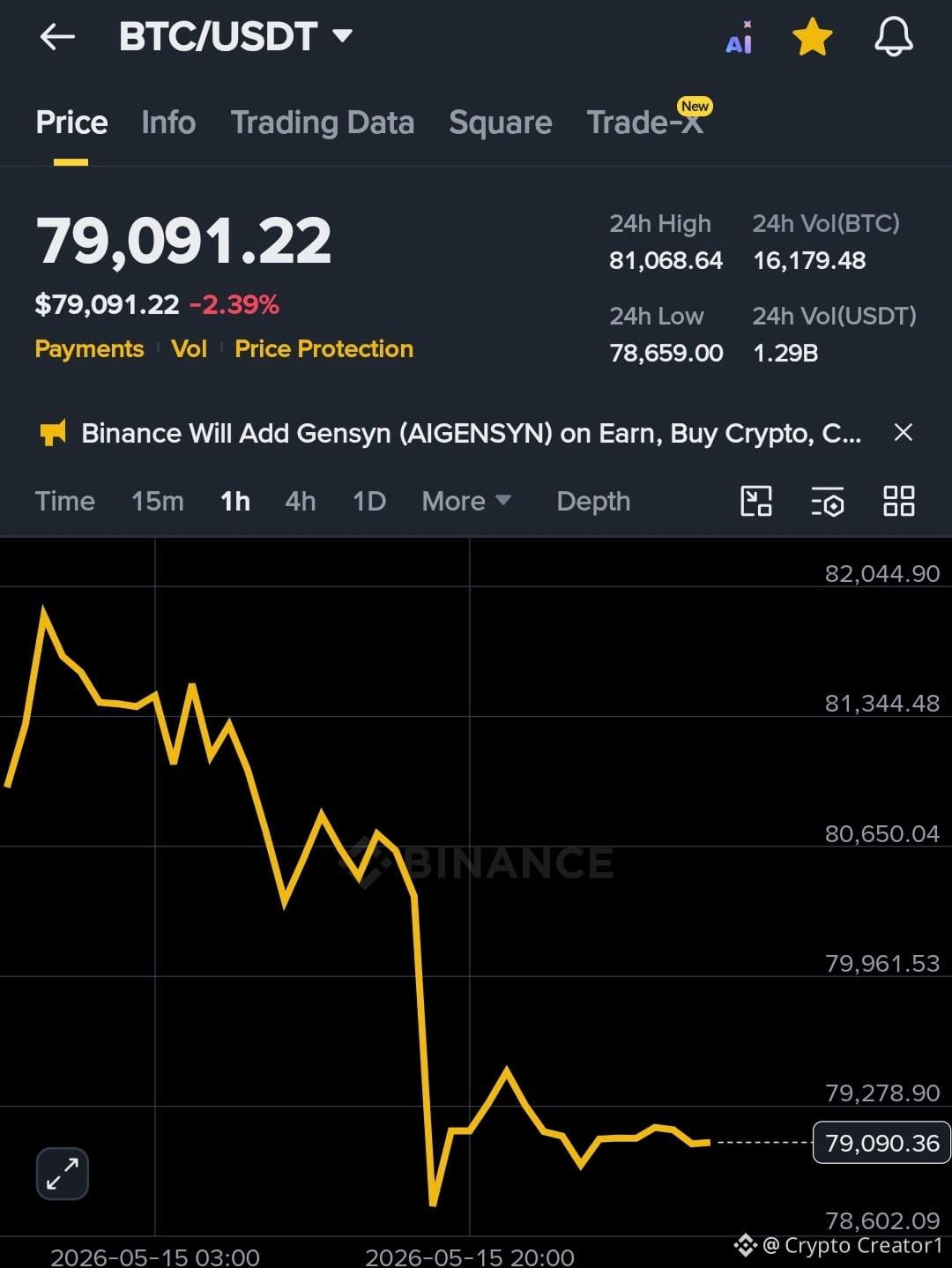
The post references BNB,BTC, and $ETH , which are major cryptocurrencies: Binance Coin (BNB), Bitcoin (BTC), and Ethereum (ETH).
It includes hashtags #bnb and #BTC, indicating a focus on Binance Coin and Bitcoin.
The context suggests the post is likely about trading or market updates for these cryptocurrencies, possibly sharing price movements or trading data.https://x.com/i/status/2022012362270949377 $BNB $BTC $ETH #bnb #BTC