
Zain 扎因
290 منشورات

Zain 扎因
143 تتابع
1.0K+ المتابعون
279 إعجاب
منشورات
الكل
Live
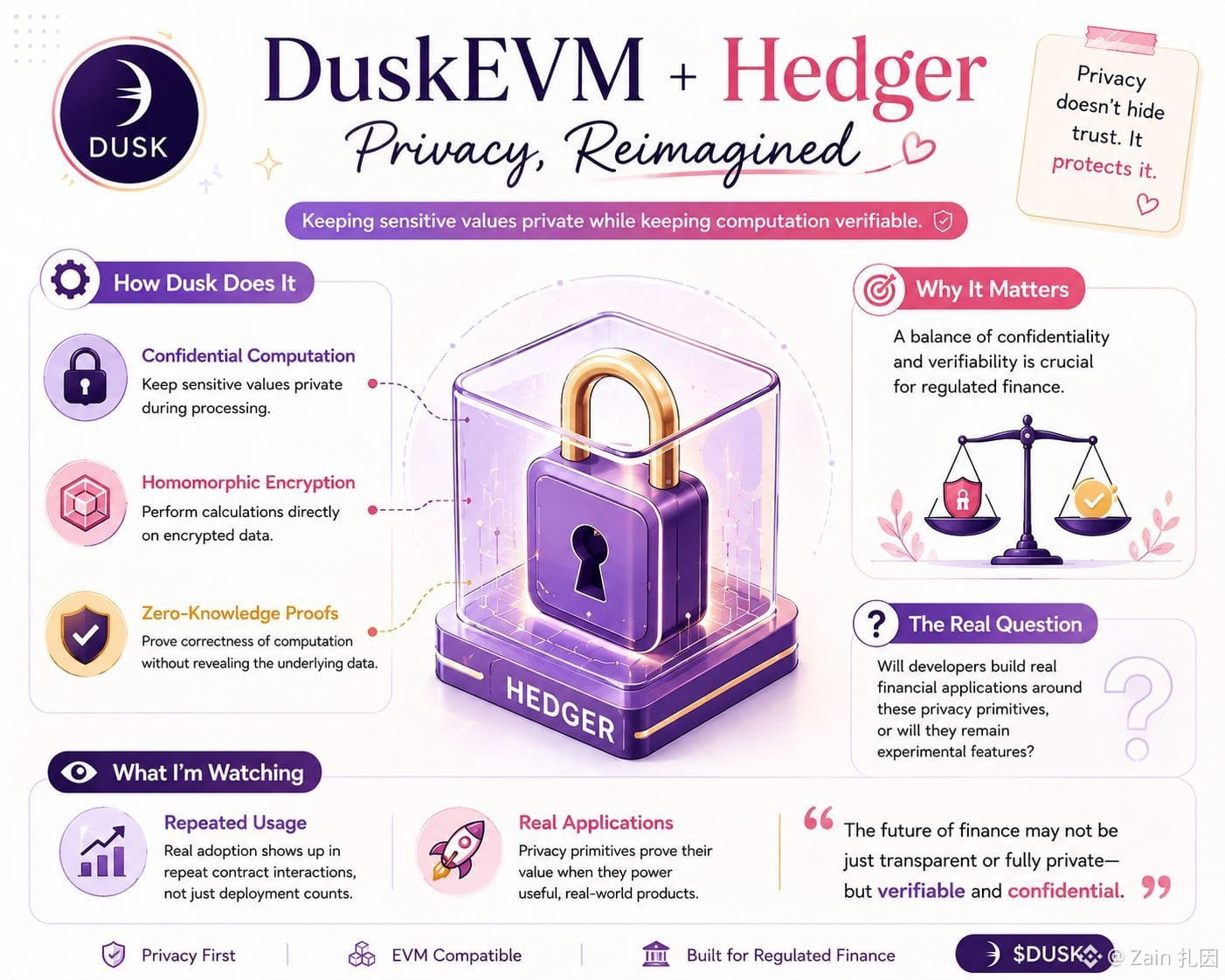
I’ve been looking into how DuskEVM approaches privacy, and one thing really stands out: privacy isn’t simply about hiding data. 🔐
Through Hedger, Dusk combines confidential computation with homomorphic encryption and zero-knowledge proofs, aiming to keep sensitive values private while still allowing computation to be verified.
That could be especially interesting for regulated finance, where confidentiality and verifiability both matter.
The bigger question is adoption: will developers actually build real financial applications around these privacy primitives, or will they remain experimental features?
That’s what I’ll be watching repeated usage and real applications, not just deployment numbers.
@Dusk $DUSK #dusk
Through Hedger, Dusk combines confidential computation with homomorphic encryption and zero-knowledge proofs, aiming to keep sensitive values private while still allowing computation to be verified.
That could be especially interesting for regulated finance, where confidentiality and verifiability both matter.
The bigger question is adoption: will developers actually build real financial applications around these privacy primitives, or will they remain experimental features?
That’s what I’ll be watching repeated usage and real applications, not just deployment numbers.
@Dusk $DUSK #dusk
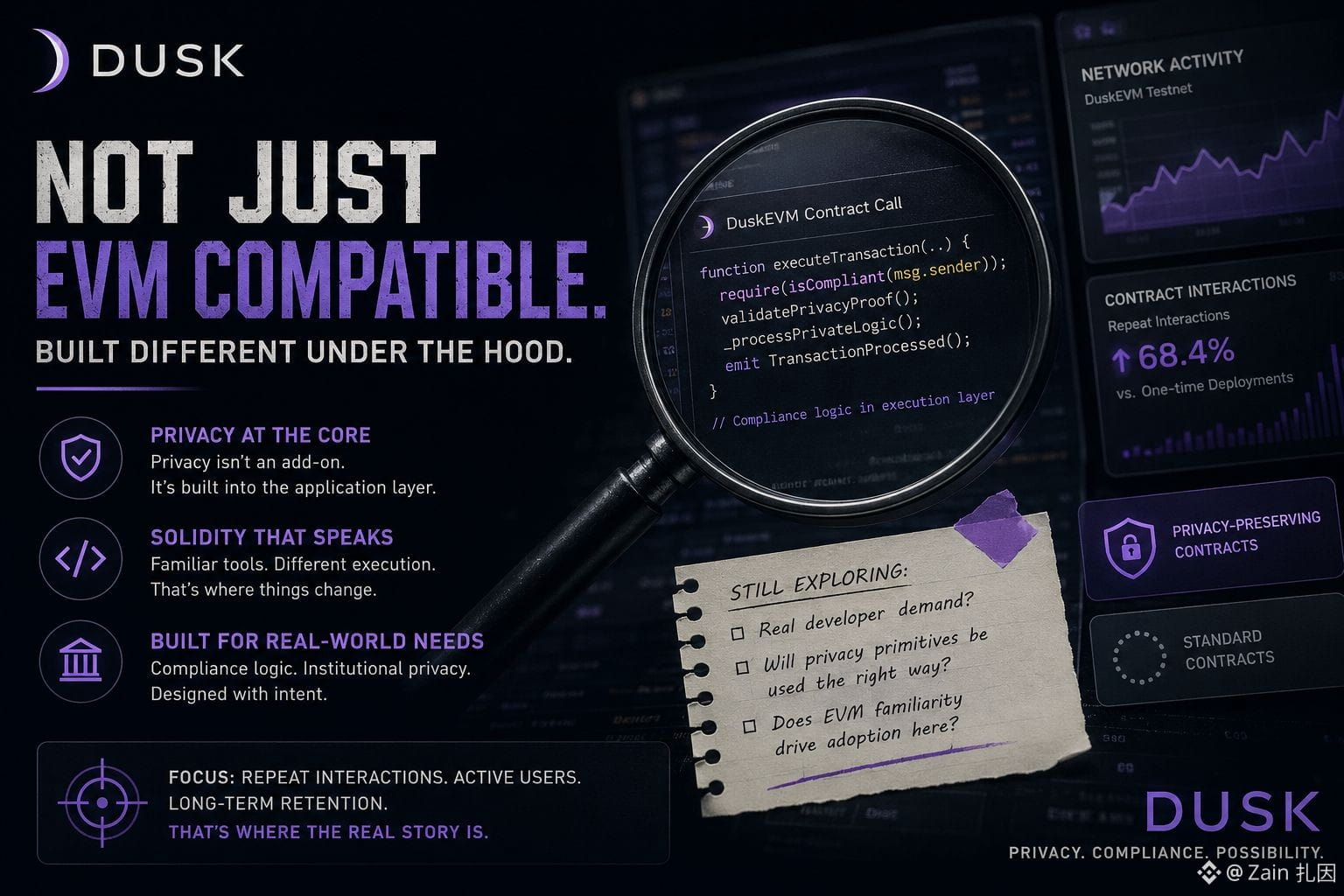
While analyzing gas activity across several EVM testnets recently, DuskEVM’s contract patterns immediately caught my attention.
Then I actually looked at the contract calls and... nah. These weren't the usual generic test tokens or forked dApp copy-paste jobs you see everywhere. Some of them had compliance logic built straight into the execution layer. That's not something you stumble into by accident, someone designed it that way.
Went down the rabbit hole on how DUSK handles privacy and turns out it's not bolted on top like most chains do it, it's built into the application layer itself. Which honestly changed how I think about the whole "EVM compatible" label.
Here's the thing people keep missing — compatible and equivalent are NOT the same thing. A chain can speak perfect Solidity and still be running a totally different privacy/settlement model under the hood. That's a big deal for how builders should be designing apps, not just deploying them.
What I genuinely don't know yet: is there real developer demand for this? Institutional-grade privacy sounds great on paper but devs usually take the path of least resistance. Will teams actually put in the work to use privacy-aware primitives right, or just treat @Dusk as another cheap deployment target?
Gonna be watching repeat contract interactions instead of deployment counts going forward, that's the number that actually tells you if something has product-market fit. Also curious if privacy contracts hold onto users better than standard ones over time.
Still not sure if familiarity with EVM alone is enough to pull serious builders into a privacy-first world, or if it needs its own incentive structure entirely.
No firm conclusion here, just something worth watching closely.
Anyone else digging into #dusk contracts seeing similar patterns? Curious what you're finding!
@Dusk #dusk $DUSK
$QNTB
$BANK
Then I actually looked at the contract calls and... nah. These weren't the usual generic test tokens or forked dApp copy-paste jobs you see everywhere. Some of them had compliance logic built straight into the execution layer. That's not something you stumble into by accident, someone designed it that way.
Went down the rabbit hole on how DUSK handles privacy and turns out it's not bolted on top like most chains do it, it's built into the application layer itself. Which honestly changed how I think about the whole "EVM compatible" label.
Here's the thing people keep missing — compatible and equivalent are NOT the same thing. A chain can speak perfect Solidity and still be running a totally different privacy/settlement model under the hood. That's a big deal for how builders should be designing apps, not just deploying them.
What I genuinely don't know yet: is there real developer demand for this? Institutional-grade privacy sounds great on paper but devs usually take the path of least resistance. Will teams actually put in the work to use privacy-aware primitives right, or just treat @Dusk as another cheap deployment target?
Gonna be watching repeat contract interactions instead of deployment counts going forward, that's the number that actually tells you if something has product-market fit. Also curious if privacy contracts hold onto users better than standard ones over time.
Still not sure if familiarity with EVM alone is enough to pull serious builders into a privacy-first world, or if it needs its own incentive structure entirely.
No firm conclusion here, just something worth watching closely.
Anyone else digging into #dusk contracts seeing similar patterns? Curious what you're finding!
@Dusk #dusk $DUSK
$QNTB
$BANK
Ok so if you're trading ETH or SOL futures, seriously stop staring at the 15M or 30M charts. I used to do that too and honestly it's mostly just noise, you end up reacting to every little wick instead of actually trading.
1HR is where you get real clarity. You can actually see where price wants to go instead of getting faked out every 10 minutes. Since I switched to 1HR my entries got way cleaner, less stress too, not gonna lie.
But this doesn't work the same for everything. Coins like CYS, SOL, RAVE and other smaller names, forget this theory, it just doesn't apply there. Their charts are all over the place no matter what timeframe you use.
Here's my honest opinion, ETH and SOL have way more liquidity and consistent volume so the higher timeframe actually means something. Low cap coins can get pumped or dumped by literally one big wallet, so even 1HR won't save you there. With those you just gotta be extra careful with your position size and never go in heavy, doesn't matter what setup you're looking at.
Also one thing I always tell people, timeframe alone won't make you profitable, it just filters out garbage signals. You still need proper risk management or none of this matters anyway.
Trade smart, not fast.
$ETH
$SOL
$CYS
1HR is where you get real clarity. You can actually see where price wants to go instead of getting faked out every 10 minutes. Since I switched to 1HR my entries got way cleaner, less stress too, not gonna lie.
But this doesn't work the same for everything. Coins like CYS, SOL, RAVE and other smaller names, forget this theory, it just doesn't apply there. Their charts are all over the place no matter what timeframe you use.
Here's my honest opinion, ETH and SOL have way more liquidity and consistent volume so the higher timeframe actually means something. Low cap coins can get pumped or dumped by literally one big wallet, so even 1HR won't save you there. With those you just gotta be extra careful with your position size and never go in heavy, doesn't matter what setup you're looking at.
Also one thing I always tell people, timeframe alone won't make you profitable, it just filters out garbage signals. You still need proper risk management or none of this matters anyway.
Trade smart, not fast.
$ETH
$SOL
$CYS
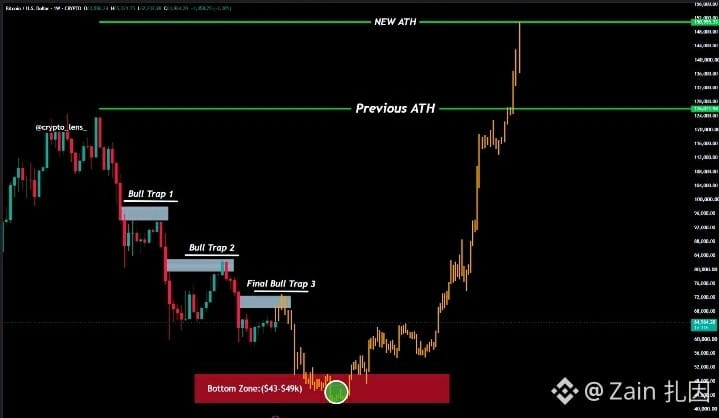
🚨 BTC LOOKS RISKY HERE.
I know the market still looks strong to many people, but I’m not fully convinced this move is safe.
There’s a possibility that we’re watching another bull trap play out, and if that happens, I’m expecting a sharp BTC correction next week toward ~$53,000.
The bigger picture I’m watching for 2026 is:
$64K → $70K → $53K → $49K → $43K
Near-term target:
→ ~$53K within days
Bigger target:
→ ~$43K by October
I mentioned the bull trap around $82K before, along with the summer downside move, and I’m still keeping that view on the table.
Personally, I wouldn’t feel comfortable chasing BTC after every bounce here. If the support starts breaking, things could get ugly pretty quickly.
This is just how I’m reading the chart right now — the market can always prove me wrong.
But if this setup plays out, my next call could be one of the biggest calls of this cycle.
$BTC
I know the market still looks strong to many people, but I’m not fully convinced this move is safe.
There’s a possibility that we’re watching another bull trap play out, and if that happens, I’m expecting a sharp BTC correction next week toward ~$53,000.
The bigger picture I’m watching for 2026 is:
$64K → $70K → $53K → $49K → $43K
Near-term target:
→ ~$53K within days
Bigger target:
→ ~$43K by October
I mentioned the bull trap around $82K before, along with the summer downside move, and I’m still keeping that view on the table.
Personally, I wouldn’t feel comfortable chasing BTC after every bounce here. If the support starts breaking, things could get ugly pretty quickly.
This is just how I’m reading the chart right now — the market can always prove me wrong.
But if this setup plays out, my next call could be one of the biggest calls of this cycle.
$BTC
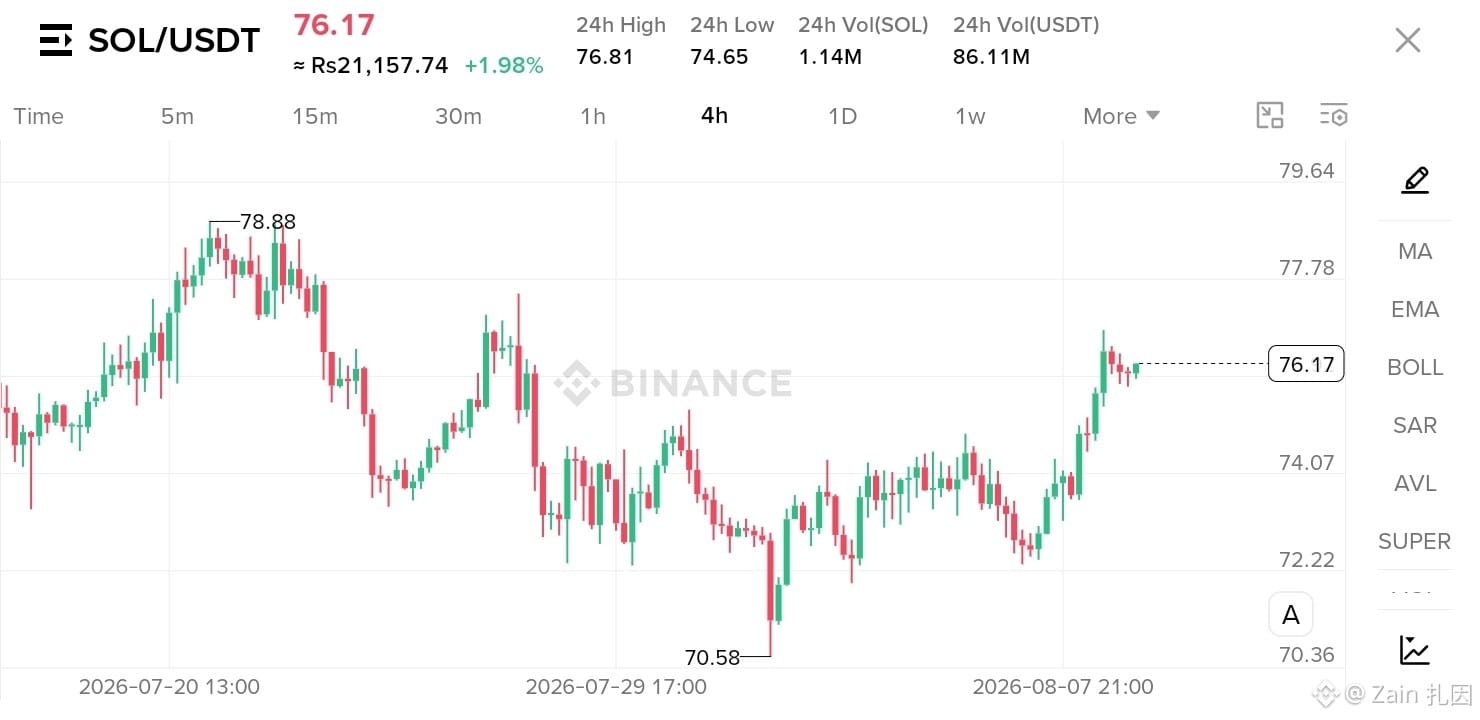
Honestly, after looking at the 4H chart, $SOL looks pretty good to me right now.
It has made a strong recovery from $70.58 and slowly moved back above $74. Now it is trading around $76.17.
The main level I’m watching is $76.80–$77.00.
If SOL breaks this area and stays above it, I think we could see $77.78 and maybe even $78.88 next.
But I wouldn’t rush into a trade here. SOL has already moved up quite fast, so a small pullback or retest would actually be better for me.
If price holds the breakout, that gives me more confidence.
If it gets rejected around $77, I’d rather wait and see where it finds support.
For me, the trend looks bullish on 4H, but I’m not treating it as a guaranteed move.
$SOL
It has made a strong recovery from $70.58 and slowly moved back above $74. Now it is trading around $76.17.
The main level I’m watching is $76.80–$77.00.
If SOL breaks this area and stays above it, I think we could see $77.78 and maybe even $78.88 next.
But I wouldn’t rush into a trade here. SOL has already moved up quite fast, so a small pullback or retest would actually be better for me.
If price holds the breakout, that gives me more confidence.
If it gets rejected around $77, I’d rather wait and see where it finds support.
For me, the trend looks bullish on 4H, but I’m not treating it as a guaranteed move.
$SOL
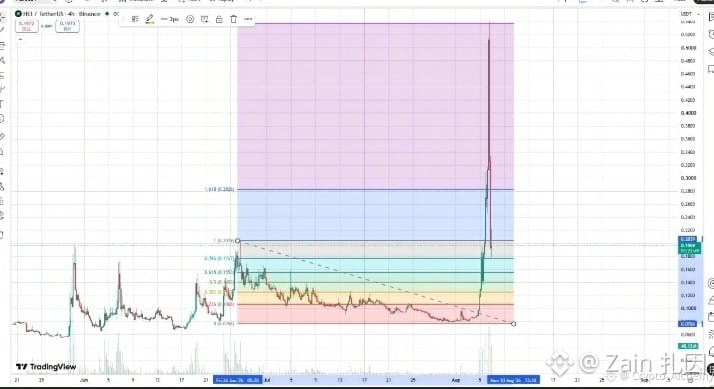
$HEI looked pretty strong earlier, and for a while I really thought it had a good chance of reaching the 0.53 area based on the Fibonacci setup. But the market had other plans, and the move turned around much faster than I expected.
Right now, I'm more interested in watching the 0.10–0.14 zone. If buyers start showing up there, I might consider getting back in and see if the price can make its way toward 0.18–0.19. For now, my stop-loss stays at 0.25.
I could be wrong, but this feels more like a healthy shakeout than the end of the trend. I'll let the price confirm the next move instead of rushing into a trade.
$HEI
Right now, I'm more interested in watching the 0.10–0.14 zone. If buyers start showing up there, I might consider getting back in and see if the price can make its way toward 0.18–0.19. For now, my stop-loss stays at 0.25.
I could be wrong, but this feels more like a healthy shakeout than the end of the trend. I'll let the price confirm the next move instead of rushing into a trade.
$HEI
Most people think trust is built through promises.
I think it's built through time.
Bitcoin didn't become valuable because it moved fast. It became valuable because it remained reliable while everything around it changed.
That's why @BabylonLabs_io caught my attention.
Babylon isn't trying to change Bitcoin.
It's trying to extend the trust that Bitcoin has spent years building.
The real question isn't whether the technology works.
The real question is whether trust can continue to scale as more networks become connected.
Strong foundations rarely attract attention.
People notice them only when they fail.
The future isn't always built by the loudest projects.
Sometimes it's built by the ones that keep working quietly.
@BabylonLabs_io $BABY #baby
I think it's built through time.
Bitcoin didn't become valuable because it moved fast. It became valuable because it remained reliable while everything around it changed.
That's why @BabylonLabs_io caught my attention.
Babylon isn't trying to change Bitcoin.
It's trying to extend the trust that Bitcoin has spent years building.
The real question isn't whether the technology works.
The real question is whether trust can continue to scale as more networks become connected.
Strong foundations rarely attract attention.
People notice them only when they fail.
The future isn't always built by the loudest projects.
Sometimes it's built by the ones that keep working quietly.
@BabylonLabs_io $BABY #baby

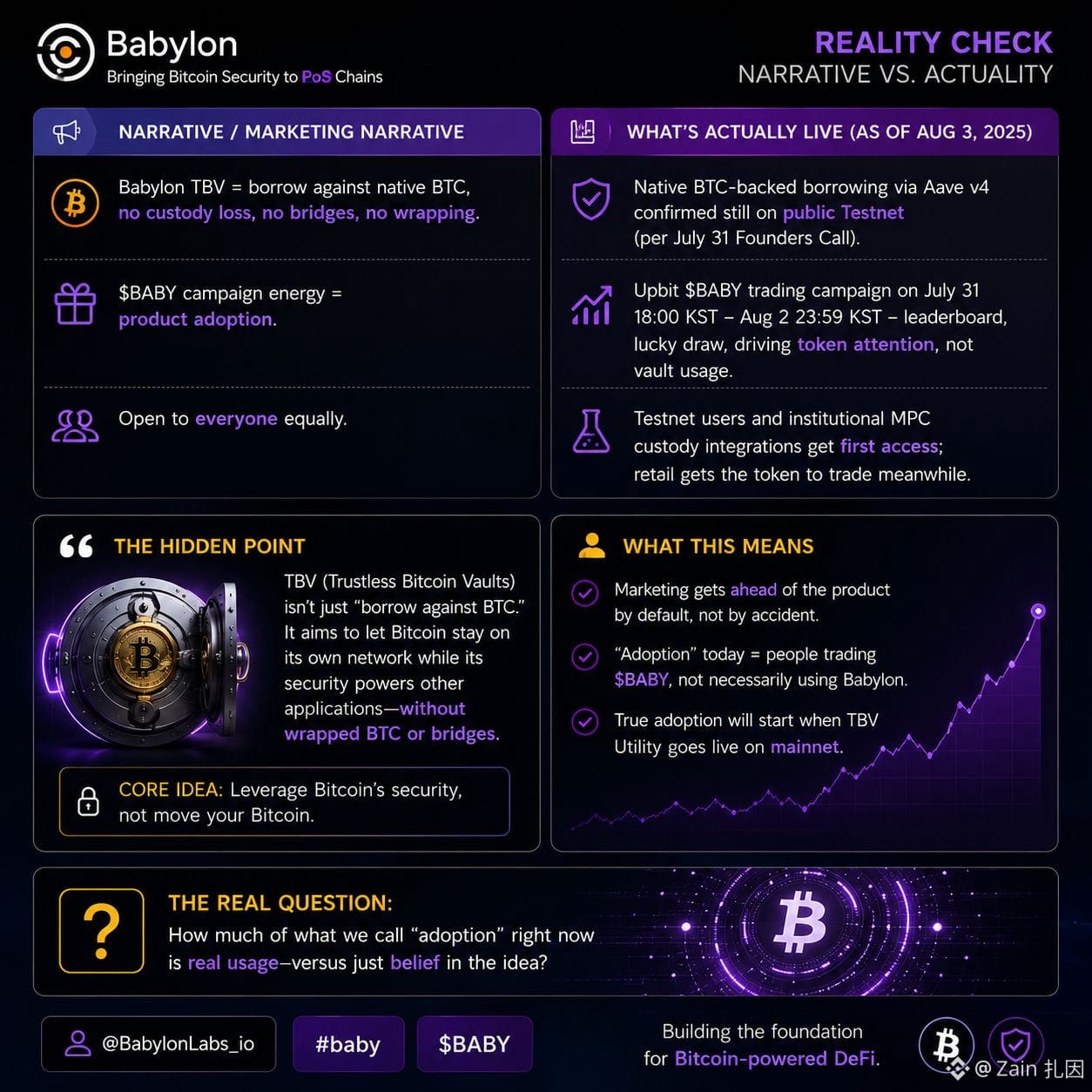
I started reading about @BabylonLabs_io because of the $BABY campaign. But after spending some time on the docs, I realized the campaign wasn't the most interesting part.
TBV (Trustless Bitcoin Vaults) caught my attention instead.
The idea isn't simply "use Bitcoin as collateral."
It's trying to let Bitcoin stay on its own network while its security can support other applications, without relying on wrapped BTC or traditional bridges. That feels like a much bigger goal than just another DeFi feature.
The interesting part is that this vision is still on public testnet, while most of the attention today is already around the token.
Personally, I don't think that's unusual. Infrastructure usually takes longer than narratives.
But it did make me think 🤔 Maybe the biggest value of TBV isn't borrowing against BTC.
Maybe it's proving that BTC can become more useful without asking people to trust another version of Bitcoin.
One question stayed with me. The Question is :
Which matters more in the long run.
Trading the token or understanding what the technology is actually trying to solve?
#baby
TBV (Trustless Bitcoin Vaults) caught my attention instead.
The idea isn't simply "use Bitcoin as collateral."
It's trying to let Bitcoin stay on its own network while its security can support other applications, without relying on wrapped BTC or traditional bridges. That feels like a much bigger goal than just another DeFi feature.
The interesting part is that this vision is still on public testnet, while most of the attention today is already around the token.
Personally, I don't think that's unusual. Infrastructure usually takes longer than narratives.
But it did make me think 🤔 Maybe the biggest value of TBV isn't borrowing against BTC.
Maybe it's proving that BTC can become more useful without asking people to trust another version of Bitcoin.
One question stayed with me. The Question is :
Which matters more in the long run.
Trading the token or understanding what the technology is actually trying to solve?
#baby
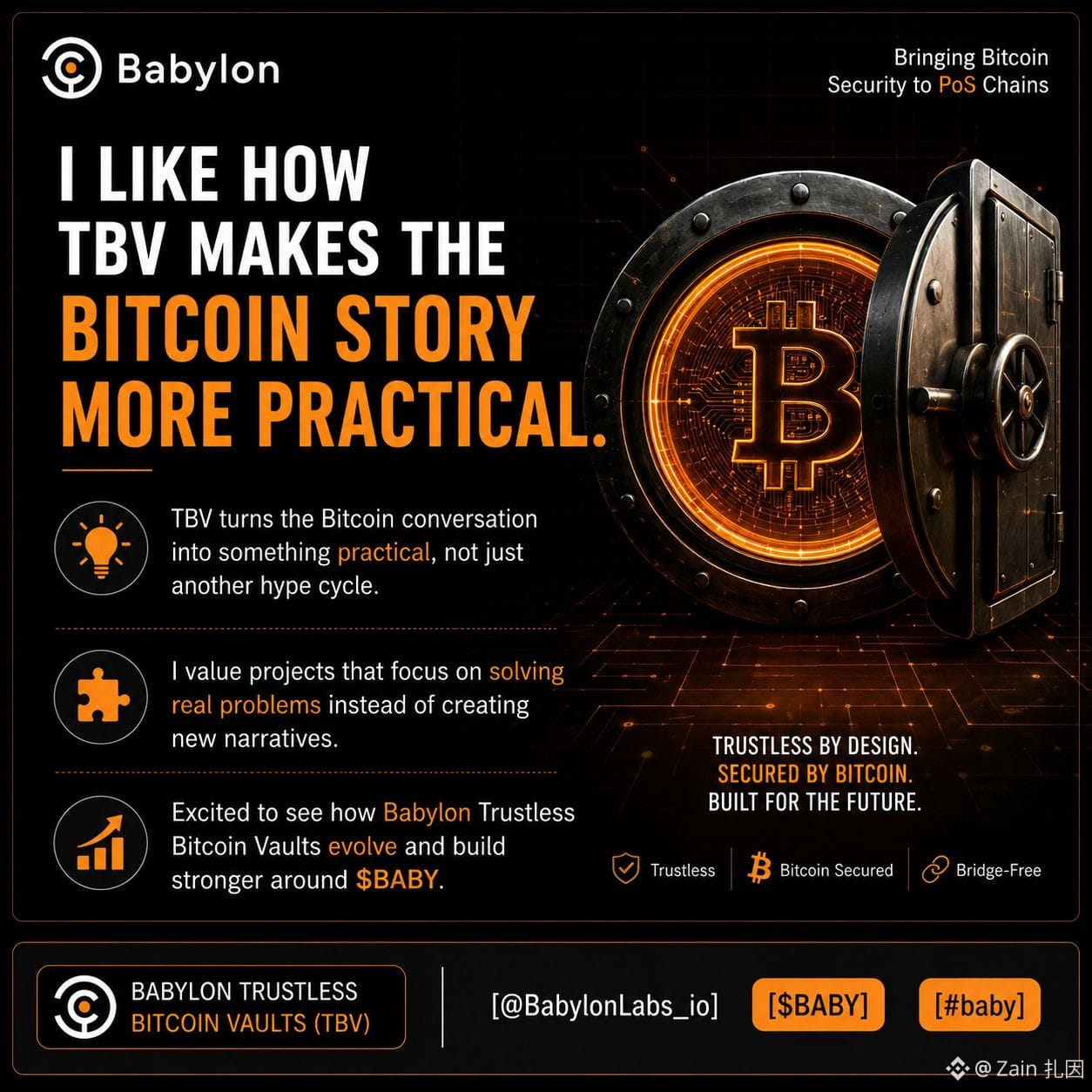
What I like about @BabylonLabs_io is that the TBV concept makes the BTC conversation feel more practical instead of just another hype story.
Personally, I enjoy projects that try to solve real problems rather than simply adding new narratives.
I'm curious to see how Babylon Trustless Bitcoin Vaults continue to evolve and how they strengthen the ecosystem around $BABY
@BabylonLabs_io #baby
Personally, I enjoy projects that try to solve real problems rather than simply adding new narratives.
I'm curious to see how Babylon Trustless Bitcoin Vaults continue to evolve and how they strengthen the ecosystem around $BABY
@BabylonLabs_io #baby
I spent some time reading about @BabylonLabs_io and its Trustless Bitcoin Vault today.
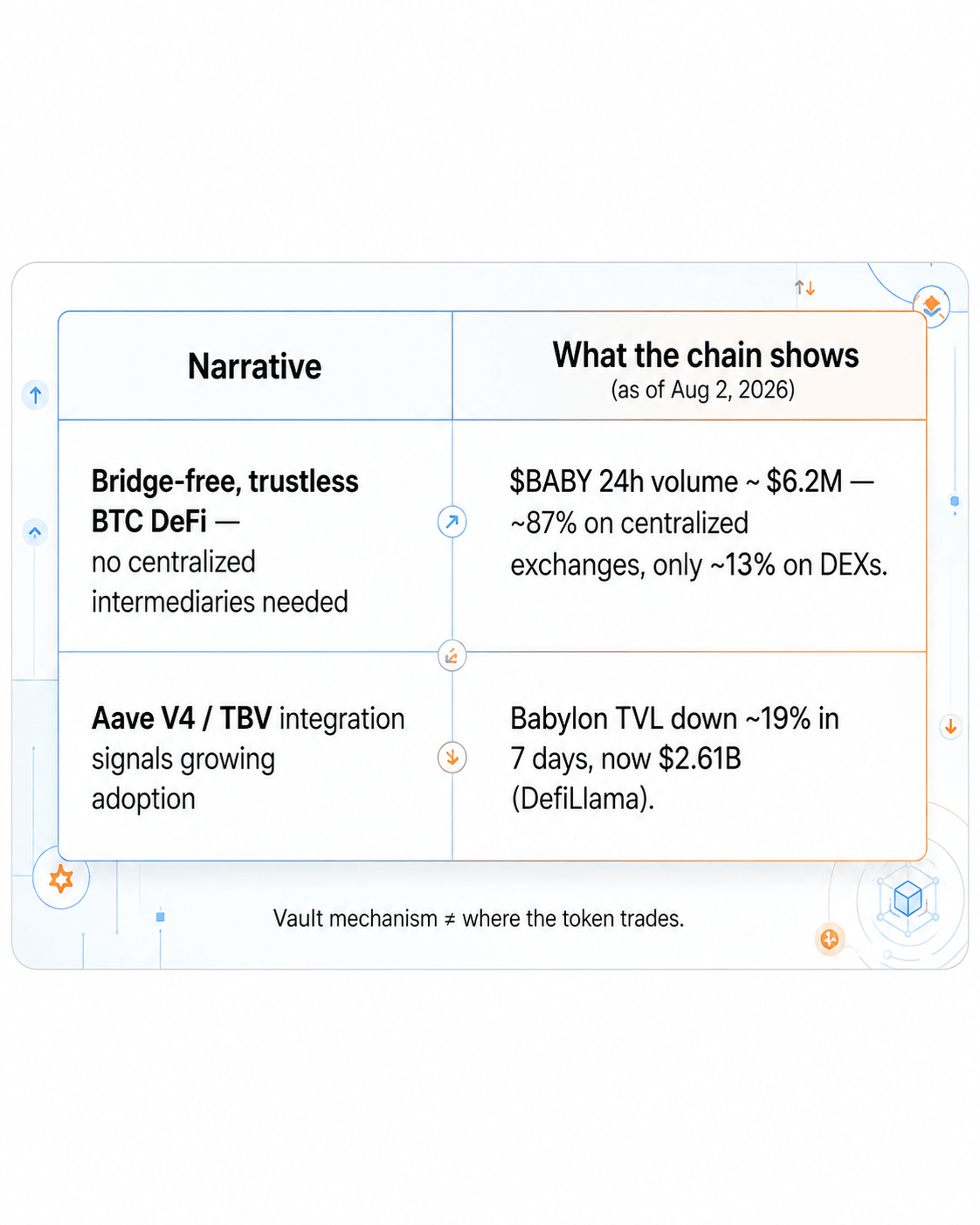
The main idea sounded simple: bridge-free BTC collateral, with @BabylonLabs_io presenting it as an alternative to wrapped assets for $BABY 's staking ecosystem. Instead of stopping at the explanation, I checked the live data.
According to DefiLlama, around $2.61B is still locked, but TVL has fallen nearly 19% over the last 7 days.
That immediately caught my attention.
Then I looked at $BABY 's trading activity.
Around $6.2M was traded in the last 24 hours, yet only about 13% came from DEXs. The remaining ~87% was still happening on centralized exchanges.
In my opinion, that's where the discussion becomes more interesting.
The protocol is designed to reduce trust in the infrastructure, but most of the token's liquidity still depends on traditional trading venues.
I'm not saying TBV doesn't work. The Taproot + ZK vault design is a completely different layer from where BABY is traded.
But I hadn't noticed this contrast before.
A protocol can be technically trustless...
while the market around it still behaves in a centralized way. Maybe that's completely normal during this stage or maybe it's the detail most people skip.
One question is still on my mind...
Should "trustless" be judged only by how the collateral works,
or also by where the market discovers its price?
#baby
The main idea sounded simple: bridge-free BTC collateral, with @BabylonLabs_io presenting it as an alternative to wrapped assets for $BABY 's staking ecosystem. Instead of stopping at the explanation, I checked the live data.
According to DefiLlama, around $2.61B is still locked, but TVL has fallen nearly 19% over the last 7 days.
That immediately caught my attention.
Then I looked at $BABY 's trading activity.
Around $6.2M was traded in the last 24 hours, yet only about 13% came from DEXs. The remaining ~87% was still happening on centralized exchanges.
In my opinion, that's where the discussion becomes more interesting.
The protocol is designed to reduce trust in the infrastructure, but most of the token's liquidity still depends on traditional trading venues.
I'm not saying TBV doesn't work. The Taproot + ZK vault design is a completely different layer from where BABY is traded.
But I hadn't noticed this contrast before.
A protocol can be technically trustless...
while the market around it still behaves in a centralized way. Maybe that's completely normal during this stage or maybe it's the detail most people skip.
One question is still on my mind...
Should "trustless" be judged only by how the collateral works,
or also by where the market discovers its price?
#baby
I wasn't expecting one simple question to change the way I look at Bitcoin
For a few minutes, I just kept thinking about it.
Babylon asked:
"How do we make Bitcoin productive without breaking its trust model?"
At first, I thought this was only about BTC staking. But the more I thought about it, the more I felt the real discussion is somewhere else.
In my opinion, making Bitcoin more useful isn't the hardest part.
The real challenge is doing it without changing the reason people trusted Bitcoin in the first place. Maybe I'm overthinking it.
But that's how I see it for now.
One last thought 🤔:
If Bitcoin were launched today
Would people improve it first or trust it first?
@BabylonLabs_io $BABY #baby
For a few minutes, I just kept thinking about it.
Babylon asked:
"How do we make Bitcoin productive without breaking its trust model?"
At first, I thought this was only about BTC staking. But the more I thought about it, the more I felt the real discussion is somewhere else.
In my opinion, making Bitcoin more useful isn't the hardest part.
The real challenge is doing it without changing the reason people trusted Bitcoin in the first place. Maybe I'm overthinking it.
But that's how I see it for now.
One last thought 🤔:
If Bitcoin were launched today
Would people improve it first or trust it first?
@BabylonLabs_io $BABY #baby
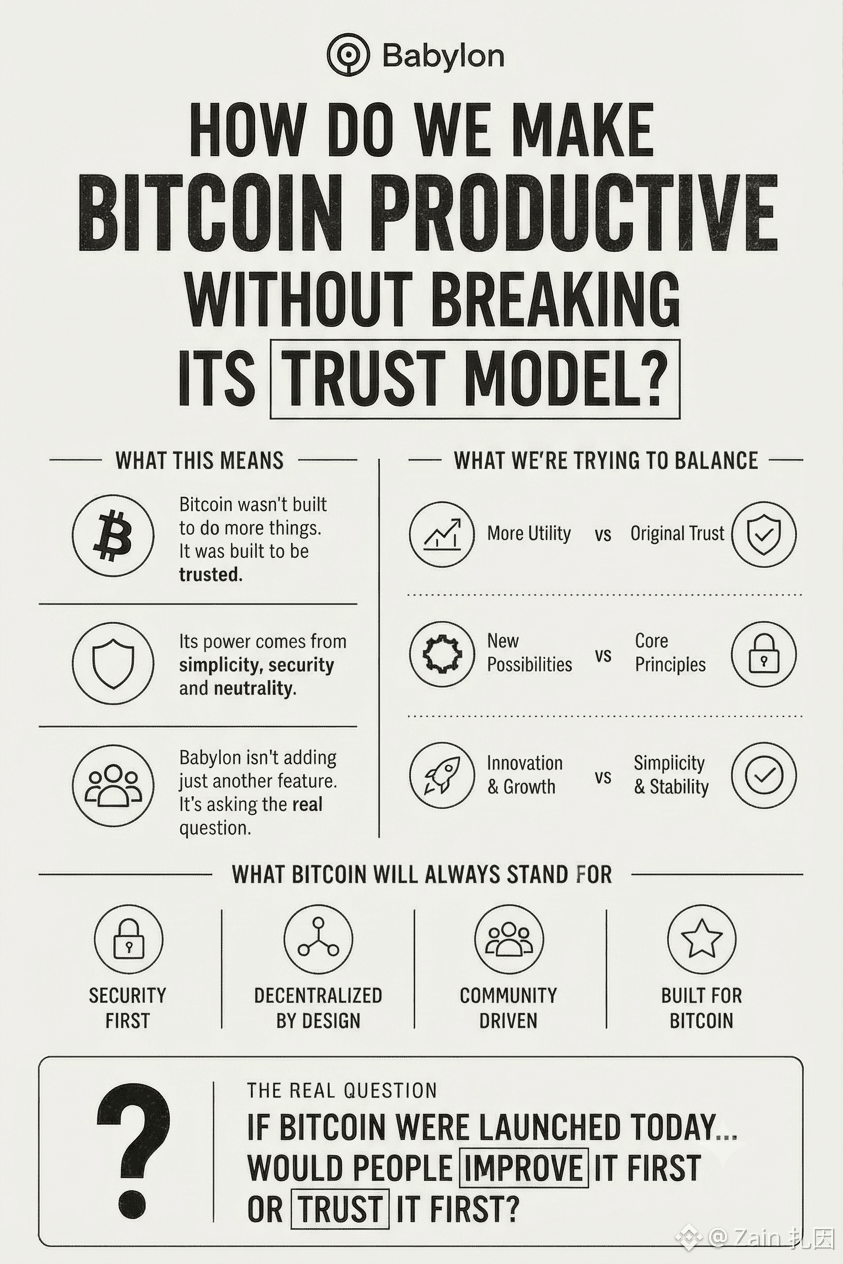

Yesterday I read an official post from @BabylonLabs_io and moved on.
Today I realized something the interesting part was not its answer.
It was a question:
"How do we make Bitcoin productive without breaking its trust model?"
At first, I thought it was only about BTC staking.
Now I'm not so sure.
The more I think about it, the more it feels like the real discussion is not about rewards it's about balance.
Making Bitcoin more useful is a good thing.
But every new solution brings its own new trade-offs.
Maybe that's why I find this topic interesting.
In my view, bringing productivity without sacrificing simplicity is the real challenge.
What do you think...🤔
Is making Bitcoin productive more important or preserving its simplicity?
@BabylonLabs_io $BABY #baby
Today I realized something the interesting part was not its answer.
It was a question:
"How do we make Bitcoin productive without breaking its trust model?"
At first, I thought it was only about BTC staking.
Now I'm not so sure.
The more I think about it, the more it feels like the real discussion is not about rewards it's about balance.
Making Bitcoin more useful is a good thing.
But every new solution brings its own new trade-offs.
Maybe that's why I find this topic interesting.
In my view, bringing productivity without sacrificing simplicity is the real challenge.
What do you think...🤔
Is making Bitcoin productive more important or preserving its simplicity?
@BabylonLabs_io $BABY #baby
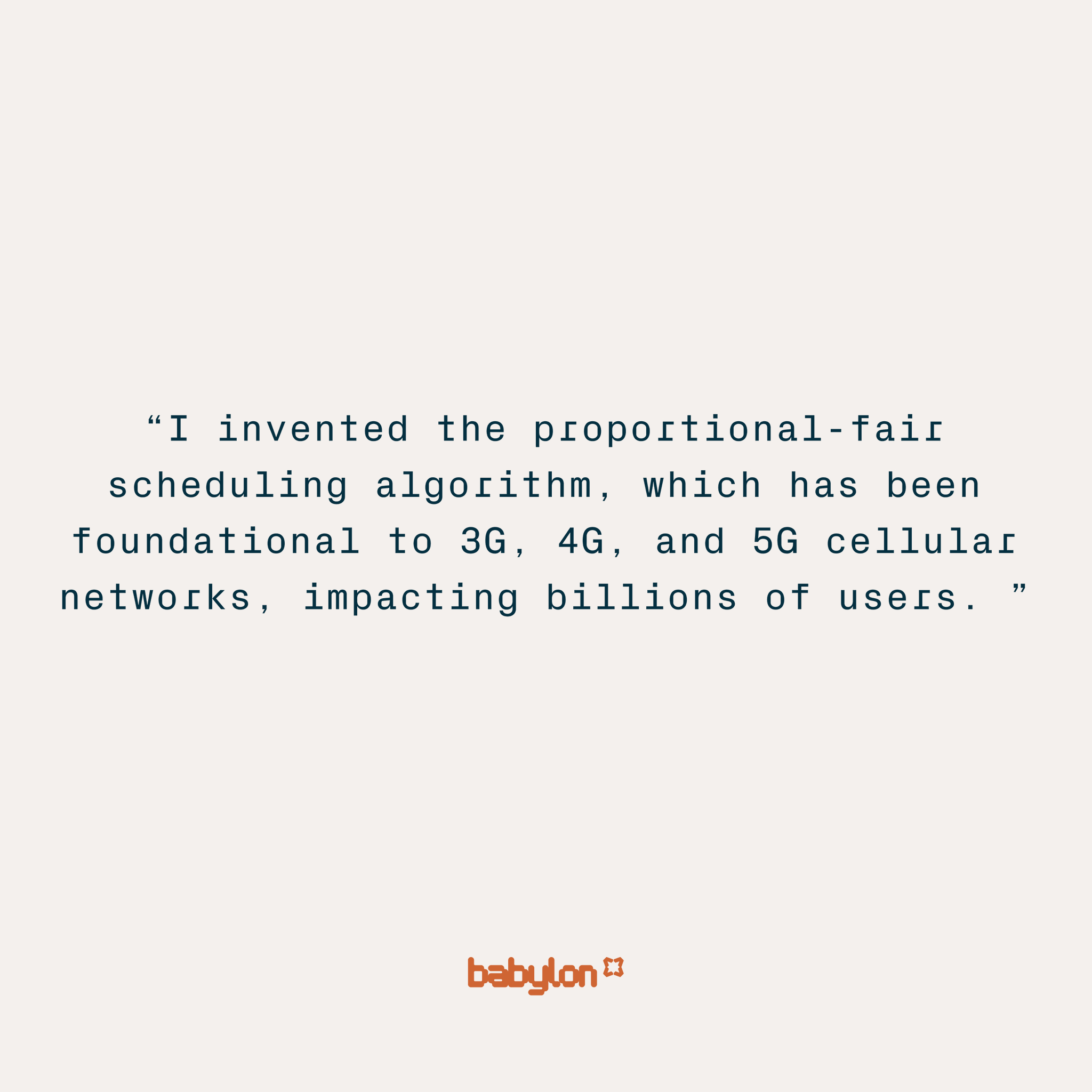
"Bitcoin is the only trust assumption."
Then I read the docs.
Honestly... the picture turned out to be a bit more layered.
BTC doesn't go to any custodian, and that is the strongest point. But the protocol still is not completely free from committees, governance, and other network assumptions.
That's not a bad thing. I just found one thing interesting. In crypto, temporary systems often end up more permanent than expected.
So for me, the real question isn't whether multisig exists today.
The question is...
When will the deadline to remove it actually become reality?
That is when we will know how is architecture really Mature
@BabylonLabs_io $BABY #baby
Then I read the docs.
Honestly... the picture turned out to be a bit more layered.
BTC doesn't go to any custodian, and that is the strongest point. But the protocol still is not completely free from committees, governance, and other network assumptions.
That's not a bad thing. I just found one thing interesting. In crypto, temporary systems often end up more permanent than expected.
So for me, the real question isn't whether multisig exists today.
The question is...
When will the deadline to remove it actually become reality?
That is when we will know how is architecture really Mature
@BabylonLabs_io $BABY #baby
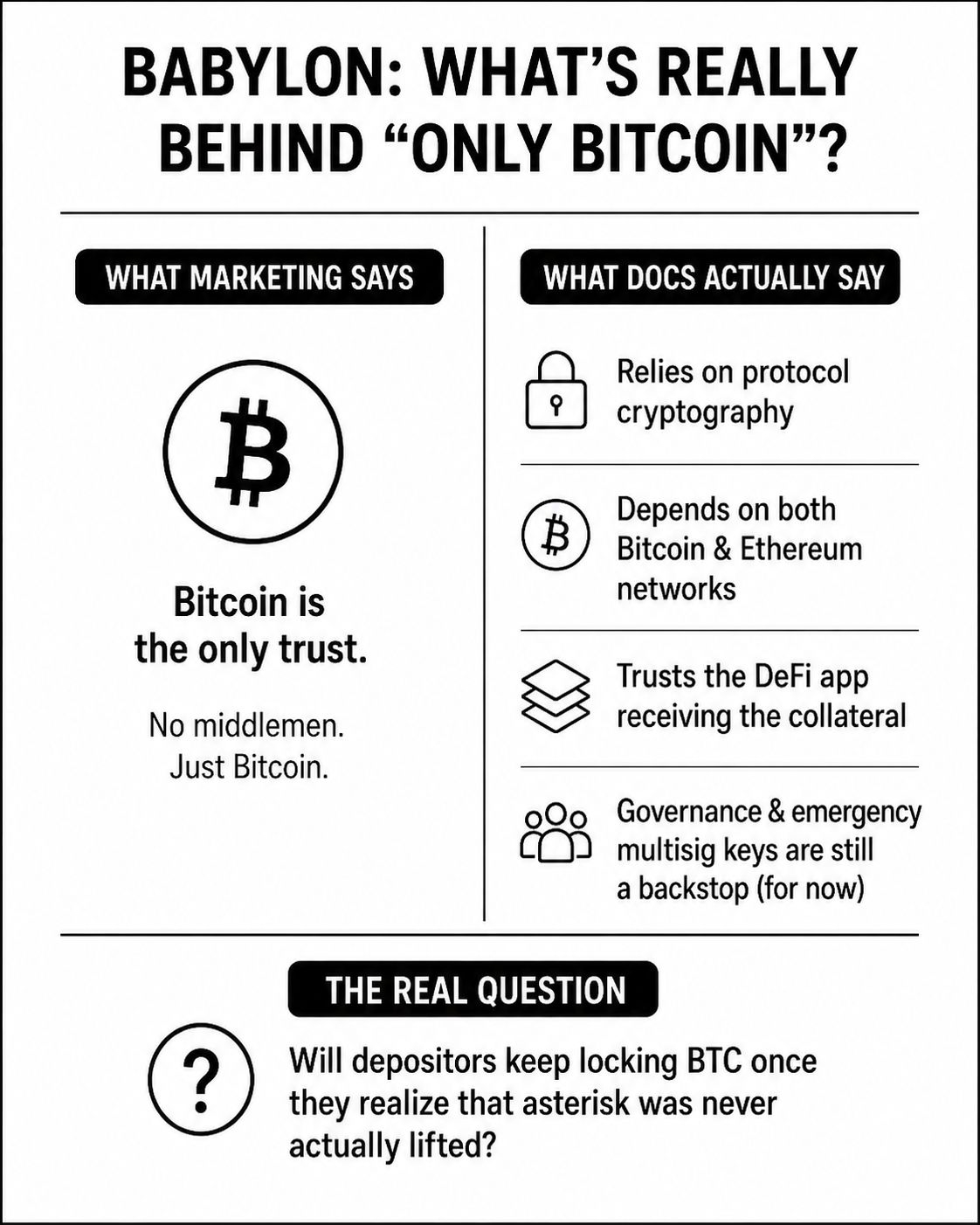
I thought let's ask AI "What is @BabylonLabs_io protocol in simple words?" ChatGPT said in 3 seconds: "It's a Bitcoin staking layer" Just that🤔? My heart didn't accept it, I opened the docs. And then they tell me "Good Try to chatgpt👍", 20 tabs open, coffee cold, and mind heated.
Once I got into the docs, I found out this isn't just a simple "stake and earn yield" story. Babylon is actually building a trustless way to extend Bitcoin's security to other chains, without a custodian, without wrapping.
The thing that seemed interesting was this that BTC, which for so many years has just been sitting as "digital gold" can now become an active security provider. just like that friend who used to stand quietly in the corner at the party, and one day it turned out he has the most connections.
AI's answer was surface, the docs' answer was depth. This is the difference that happens between research and scrolling.
Now tell me the truth do you guys also take the shortcut from AI first or do you open the docs directly?
@BabylonLabs_io
#babylon $BABY
Once I got into the docs, I found out this isn't just a simple "stake and earn yield" story. Babylon is actually building a trustless way to extend Bitcoin's security to other chains, without a custodian, without wrapping.
The thing that seemed interesting was this that BTC, which for so many years has just been sitting as "digital gold" can now become an active security provider. just like that friend who used to stand quietly in the corner at the party, and one day it turned out he has the most connections.
AI's answer was surface, the docs' answer was depth. This is the difference that happens between research and scrolling.
Now tell me the truth do you guys also take the shortcut from AI first or do you open the docs directly?
@BabylonLabs_io
#babylon $BABY
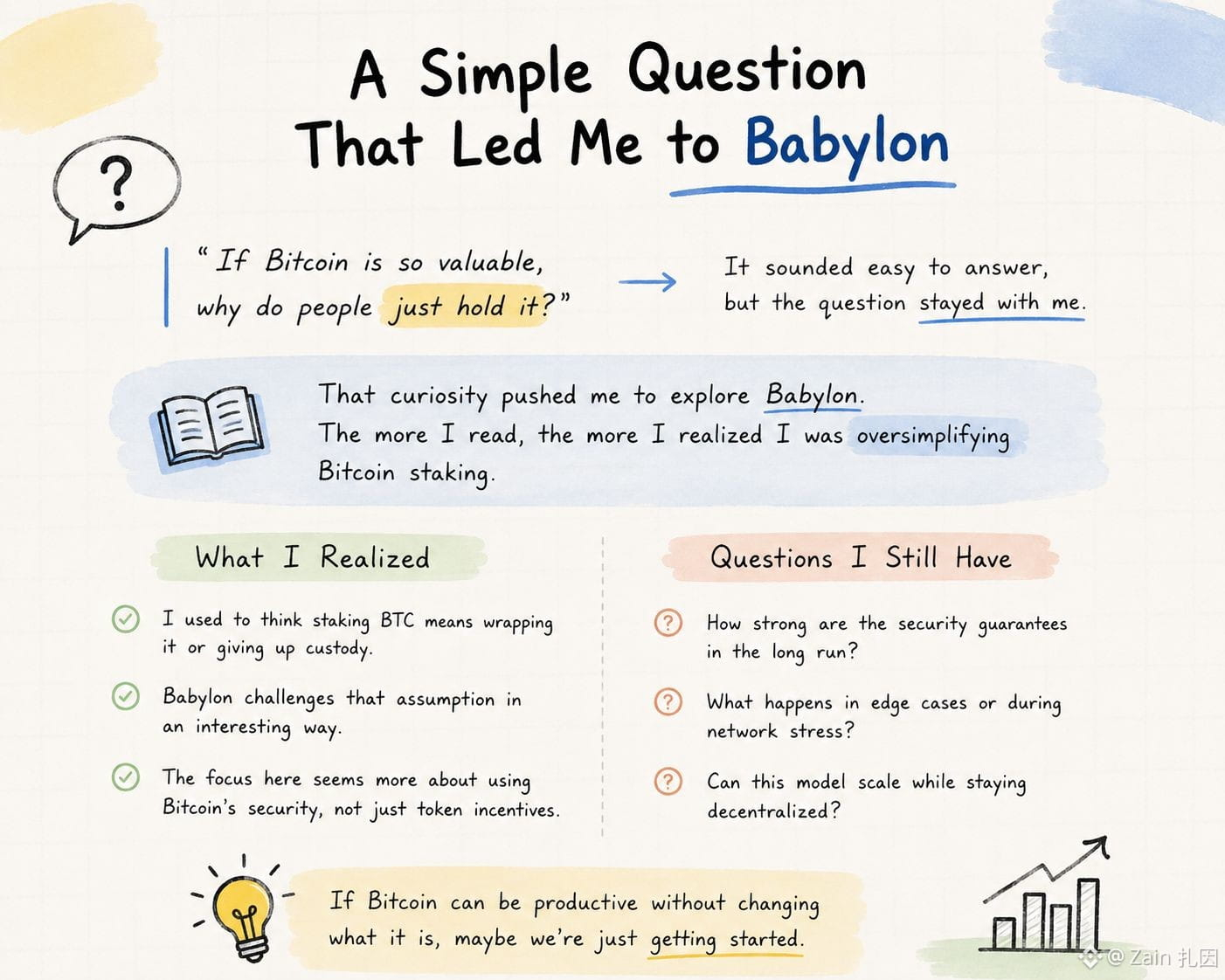
Last week a friend asked me "If Bitcoin is so valuable then why do people only hold it?" I immediately said "store of value," but the matter didn't end there. After coming home the same question kept circling in my mind and that same curiosity brought me to @BabylonLabs_io documentation.
The more I was reading, the more I realized that I used to think BTC staking was very simple. I previously thought that either you have to wrap Bitcoin or you have to give custody. Babylon forced me to at least rethink this assumption.
I still don't agree with everything. I still have questions about trust assumptions and some design choices. Maybe that's why this topic seemed interesting.
Now I'm curious,if Bitcoin can be made productive, then how much will its original philosophy change?
@BabylonLabs_io
#baby $BABY
The more I was reading, the more I realized that I used to think BTC staking was very simple. I previously thought that either you have to wrap Bitcoin or you have to give custody. Babylon forced me to at least rethink this assumption.
I still don't agree with everything. I still have questions about trust assumptions and some design choices. Maybe that's why this topic seemed interesting.
Now I'm curious,if Bitcoin can be made productive, then how much will its original philosophy change?
@BabylonLabs_io
#baby $BABY
what i actually wanted to know about @BabylonLabs_io and bitcoin secure a POS chain without someone quietly wrapping it, bridging it or just taking custody. that's it. that is he whole rabbit hole i fell into for like three weeks BTC does not move. stays put on the base chain. security comes from proofs slashing instead of shipping liquidity off to some bridge contract that gets exploited in 18 months, we've seen this movie
cleaner trust model. sure. not magic though
and can we stop with "self custodial "trustless" not the same claim. not even close. one is about who holds the keys, the other is about who you have to trust not to screw you because there's still committee design. validator behavior.
The boring edge cases nobody thinks about until 3am when something breaks and twitter's on fire shrinking the trust surface, ok, that's real. that's actual progress. saying it's gone though. that's just marketing with extra steps price of BABY, don't care. what i care about is whether this thing survives actual stress, not a testnet, not a nice diagram in someone's deck. production's a different animal entirely.
if bitcoin can back other chains without spawning some new wrapped-BTC clone every quarter, fine, that's meaningful
if the same old assumptions just sneak back in through a side door we didn't label
then congrats, we rebuilt the same thing. just better copywriting this time.
@BabylonLabs_io #baby $BABY
cleaner trust model. sure. not magic though
and can we stop with "self custodial "trustless" not the same claim. not even close. one is about who holds the keys, the other is about who you have to trust not to screw you because there's still committee design. validator behavior.
The boring edge cases nobody thinks about until 3am when something breaks and twitter's on fire shrinking the trust surface, ok, that's real. that's actual progress. saying it's gone though. that's just marketing with extra steps price of BABY, don't care. what i care about is whether this thing survives actual stress, not a testnet, not a nice diagram in someone's deck. production's a different animal entirely.
if bitcoin can back other chains without spawning some new wrapped-BTC clone every quarter, fine, that's meaningful
if the same old assumptions just sneak back in through a side door we didn't label
then congrats, we rebuilt the same thing. just better copywriting this time.
@BabylonLabs_io #baby $BABY
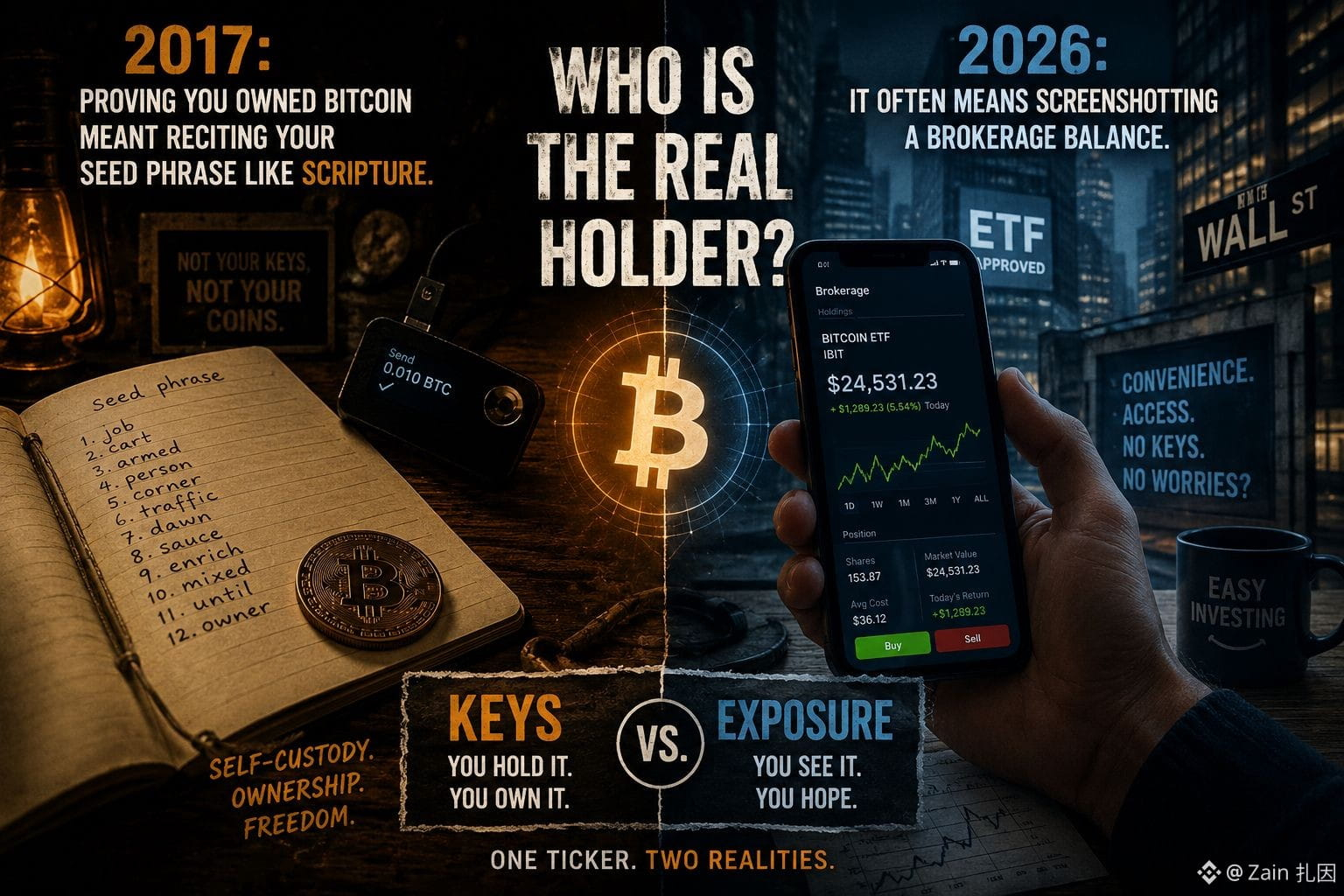
2017: proving you owned bitcoin meant reciting your seed phrase like scripture.
2026: it often means screenshotting a brokerage balance.
I keep coming back to this, and I'm still not sure what to make of it. Since the ETFs launched, a lot of new bitcoin exposure seems to be sitting in custodial wrappers. No wallet. No keys. None of the old rituals that used to mark someone as "in."
Nobody's forcing that, by the way. People are choosing convenience. Honestly, I get it. Most people don't want to manage keys.
But I remember when self-custody wasn't a footnote for this crowd. It was basically the entire argument. Holding something without asking a bank or broker for permission.
Take that away for a big enough chunk of holders and you end up with two different assets sharing one ticker. Property for some people. A price bet for others.
Maybe custody now just means "step one" and people move to self-custody eventually. I want that to be true. I just haven't seen anything that confirms it at scale.
So the question I keep sitting with: if most bitcoin never leaves an exchange or a brokerage, whose definition of "holder" actually wins — the one with the keys, or the one with the exposure?
@BabylonLabs_io #baby $BABY
2026: it often means screenshotting a brokerage balance.
I keep coming back to this, and I'm still not sure what to make of it. Since the ETFs launched, a lot of new bitcoin exposure seems to be sitting in custodial wrappers. No wallet. No keys. None of the old rituals that used to mark someone as "in."
Nobody's forcing that, by the way. People are choosing convenience. Honestly, I get it. Most people don't want to manage keys.
But I remember when self-custody wasn't a footnote for this crowd. It was basically the entire argument. Holding something without asking a bank or broker for permission.
Take that away for a big enough chunk of holders and you end up with two different assets sharing one ticker. Property for some people. A price bet for others.
Maybe custody now just means "step one" and people move to self-custody eventually. I want that to be true. I just haven't seen anything that confirms it at scale.
So the question I keep sitting with: if most bitcoin never leaves an exchange or a brokerage, whose definition of "holder" actually wins — the one with the keys, or the one with the exposure?
@BabylonLabs_io #baby $BABY
·
--
🎙️ Learn and Earn || Trading Strategy || Grow together ||
إنهاء
01 ساعة 13 دقيقة 25 ثانية
229
0
سجّل الدخول لاستكشاف المزيد من المُحتوى