Binance Square

jujucrypt

just here to learn and share ideas
فتح تداول
حائز على USD1
حائز على USD1
مُتداول عرضي
4.2 سنوات
19 تتابع
308 المتابعون
878 إعجاب
185 تمّت مُشاركتها
منشورات
الحافظة الاستثمارية
·
--
How Binance's 20% APY Grew USD1 to $5.4B in 10 Months (And Why a $10M Whale Is Now Buying WLFI)"Most people aren't paying attention to $USD1 . They should be. In just 10 months since launch, World Liberty Financial's stablecoin USD1 has grown from $0 to $5.4 billion in market cap. That makes it the 5th largest stablecoin in crypto sitting above household names and competing with coins that have been around for years. But here's the part that's really interesting: A whale just deployed $10 million $USDC into WLFI buys. And that's not random. When liquidity expands (USD1 growing to $5.4B) and whale positioning heats up ($10M fresh capital) at the same time, it usually signals something bigger is brewing. Let me break down what's happening and why Binance's dominance of USD1 might be the most important part of this story. USD1: From Zero to $5.4B in 10 Months Let's put this growth in perspective. The Numbers Launch: March 2025 Current market cap: $5.4 billion Timeframe: 10 months Ranking: 5th largest stablecoin globally For context, here's the full top 5: $USDT (Tether): $184.5 billionUSDC (Circle): $75 billionDAI (MakerDAO): $6 billionPYUSD (PayPal): $5.5 billionUSD1 (World Liberty): $5.4 billion ← We are here USD1 just overtook established players like FDUSD and is now neck-and-neck with PayPal's PYUSD. That's not normal growth. That's explosive growth. What Made This Possible? USD1 didn't just appear out of nowhere and hit $5.4B. There were specific catalysts: 1. Binance Integration (The Big One) In December 2025, Binance launched 20% APY on USD1 holdings. That's not a typo. Twenty percent annual yield on a stablecoin. For comparison: USDT on Binance: 3-5% APYUSDC on most platforms: 4-6% APYTraditional savings accounts: 0.5-2% 20% APY was a game-changer. Suddenly, holding USD1 wasn't just safe it was profitable. Massively profitable. Capital flooded in. Within weeks, USD1's market cap doubled, then tripled. 2. World Liberty Financial's Backing USD1 isn't just another algorithmic stablecoin or DeFi experiment. It's backed by World Liberty Financial a project with serious institutional ambitions: Applied for a US trust bank charterHosting the World Liberty Forum on February 18 at Mar-a-LagoBuilding infrastructure for real-world asset tokenizationFocused on compliance and regulation from day one This isn't a fly-by-night operation. It's positioned as a serious competitor to Circle and Tether. 3. Liquidity Begets Liquidity Once USD1 hit critical mass ($1-2B), network effects kicked in. More holders → More trading pairs → More DeFi integrations → More demand → Higher market cap The flywheel started spinning. And now, at $5.4B, USD1 has enough liquidity to be taken seriously by institutions, exchanges, and protocols. Binance's 87% Stranglehold on USD1 Here's where it gets really interesting. The Dominance Numbers Out of $5.4 billion in total USD1 supply: $4.7 billion sits on Binance. That's 87% of the entire supply. The remaining 13% is split between: Other exchanges: 8%DeFi protocols and wallets: 5% No other major stablecoin has this level of single-exchange concentration. For comparison: USDT on Binance: 10% of total supplyUSDC on Binance: 12% of total supplyFDUSD on Binance: 50% of total supplyUSD1 on Binance: 87% of total supply ← Unprecedented Why This Matters 1. Binance Controls USD1's Fate With 87% of supply, Binance essentially controls USD1's liquidity, trading volume, and adoption. If Binance maintains the 20% APY? USD1 keeps growing. If Binance reduces the yield? Growth slows. If Binance delists USD1? The project is in serious trouble. This is both a strength and a risk. 2. The 20% APY Question Everyone's wondering: How long can Binance sustain 20% APY? Possible answers: Subsidized growth: Binance is paying to bootstrap USD1 adoptionLending revenue: Binance lends out USD1 at higher rates, passes 20% to usersStrategic partnership: World Liberty Financial compensates Binance to drive growthTemporary promotion: The rate will drop once critical mass is reached The truth is likely a mix of all four. But here's what we know for sure: As long as the 20% APY continues, USD1 will keep growing. 3. Binance's Incentive Why would Binance want USD1 to succeed? Diversification away from USDT/USDC dominance Tether (USDT) and Circle (USDC) are the duopoly of stablecoins. They control 90%+ of the market. Binance has tried to break this with BUSD (failed, regulatory pressure) and FDUSD (moderate success). USD1 might be their best shot yet especially with: World Liberty's regulatory-first approachUS trust bank charter applicationInstitutional backing and compliance focus If USD1 succeeds, Binance gets a compliant, US-friendly stablecoin that it has significant influence over. That's strategic. The $10M WLFI Whale Buy: What's Really Happening Now let's talk about the WLFI token and why a $10 million whale buy is a big deal. The Whale Activity What happened: A newly created wallet address started buying WLFI on February 1st. Over the next 10 days, this wallet: Deployed $10 million USDC into WLFI purchasesAccumulated 47.6 million WLFI tokensAverage entry price: $0.109 per tokenCurrent holdings value: ~$5.2 million (at current prices)Remaining capital: $4.83 million USDC (still ready to deploy) Why This Is Significant 1. Fresh Capital, Not Rotation This isn't an existing holder moving tokens around. This is a brand new wallet funded with fresh USDC. That means new money entering the ecosystem not internal shuffling. 2. Size Matters $10 million is whale-sized capital in crypto. For context: Most retail buys: $100-$10,000Small whales: $100K-$1MBig whales: $1M-$10MInstitutional/mega whales: $10M+ This wallet is in the institutional/mega whale category. 3. Strategic Accumulation The whale didn't market buy $10M all at once (which would spike price immediately). Instead, they accumulated slowly over 10 days, averaging $0.109 per token. This is patient, strategic accumulation not FOMO buying. And they still have $4.83M USDC left. They're not done. The Market Response WLFI's price jumped +11% in 24 hours after the whale activity became public. Trading volume surged to $227 million/day a 100% increase from the prior week. Translation: Other traders are noticing. They're front-running what they think comes next. What This Signals: Liquidity + Whale Positioning = Bigger Expectations Here's the pattern to watch: When two things happen simultaneously: 1. Liquidity expands (USD1 growing to $5.4B) 2. Whale positioning increases ($10M deployed into WLFI) It usually means bigger expectations are forming behind the scenes. Let me explain why. Why Whales Buy When Liquidity Grows Whales don't buy randomly. They buy when: Fundamentals are strongLiquidity is deep enough to support large positionsCatalysts are comingInsider information suggests upside USD1 hitting $5.4B provides the liquidity foundation. If a whale wants to build a $10M WLFI position, they need to know there's enough market depth to eventually EXIT that position. USD1's growth to $5.4B proves there's real liquidity in the World Liberty ecosystem. That gives whales confidence to deploy capital into WLFI. The Catalysts Whales Might Be Positioning For What could this whale know that we don't? Possible catalysts: 1. World Liberty Forum (February 18) World Liberty Financial is hosting a major event at Mar-a-Lago on February 18th. Expected attendees: Institutional investors, crypto executives, policymakers. If major announcements are coming, positioning BEFORE the event makes sense. 2. US Trust Bank Charter World Liberty applied for a US trust bank charter. If approved, that would be MASSIVE it would give them legitimacy and regulatory clarity that most crypto projects can never achieve. 3. WLFI Utility Expansion WLFI is the governance and utility token for the World Liberty ecosystem. As USD1 grows, WLFI's utility could expand: Governance over USD1 reservesRevenue sharing from USD1 feesStaking rewards tied to USD1 growthAccess to World Liberty banking services If USD1 is at $5.4B now, what's it worth at $10B? $20B? And what's WLFI worth if it captures value from that growth? The whale might be betting on this. The Bigger Picture: Is World Liberty Building Something Real? Let's zoom out. USD1 didn't just appear. It's part of a bigger vision: World Liberty Financial's goal: Build a compliant, institutional-grade crypto banking infrastructure. The components: USD1: Stablecoin for payments and savings (currently $5.4B)WLFI: Governance and utility token (whale accumulation happening)Trust bank charter: Regulatory legitimacy (applied, pending approval)Binance partnership: Distribution and liquidity (87% of USD1 supply)Institutional events: World Liberty Forum on Feb 18 This isn't just a stablecoin project. This is an attempt to build a regulated crypto bank. And if they pull it off, the $5.4B in USD1 supply is just the beginning. The Risks You Need to Know Before you get too excited, let's talk about what could go wrong. Risk #1: Binance Dependency 87% of USD1 sits on Binance. If Binance: Reduces the 20% APY → Growth stallsFaces regulatory issues → USD1 gets dragged downDelists USD1 → Project faces existential crisis Concentration risk is real. Risk #2: Regulatory Uncertainty World Liberty applied for a US trust bank charter. What if it's denied? What if regulators decide USD1 doesn't meet compliance standards? What if the 20% APY is deemed unsustainable or misleading? Regulatory risk is always present in crypto. Risk #3: WLFI Token Utility WLFI's value depends on utility. Right now, it's mostly speculative. If concrete utility (governance, revenue share, staking rewards) doesn't materialize, the token could underperform. The whale might be wrong. Risk #4: Sustainability of 20% APY Can Binance really sustain 20% APY long-term? If the yield drops to 8%, 5%, or even 3%, will users stay? Or will they rotate back to USDT/USDC? Yield sustainability is questionable. What Should You Watch? If you're interested in USD1 and WLFI, here's what to monitor: Key Metrics to Track 1. USD1 market cap growth Currently $5.4BIf it hits $10B, momentum is realIf it stalls or declines, red flag 2. Binance APY changes Currently 20%Any reduction signals a shift in strategyWatch for announcements 3. WLFI whale activity The $10M whale still has $4.83M to deployAre more whales accumulating?Or are they exiting? 4. World Liberty Forum (Feb 18) Major announcements?Institutional partnerships?Trust bank charter update? 5. WLFI token utility Does governance launch?Is there revenue sharing?Are staking rewards introduced? The Key Question Is this whale right? Are bigger expectations justified? Or is this just another speculative bet that doesn't pan out? We'll know soon. The Bottom Line USD1 grew from $0 to $5.4 billion in 10 months. Binance controls 87% of the supply with 20% APY. A $10M whale just accumulated 47.6M WLFI tokens. When liquidity expands and whale positioning heats up simultaneously, it signals something. Maybe it's: Institutional positioning before the Feb 18 eventAnticipation of the trust bank charter approvalBelief that USD1 will hit $10B+ and WLFI captures value from that growth Or maybe it's just a well-capitalized speculator making a big bet. But either way, the data is clear: The World Liberty ecosystem is growing faster than most people expected. And smart money is starting to pay attention. What's your take is USD1's growth sustainable, or is this just yield-chasing that ends when the APY drops? And is the WLFI whale onto something, or early to a party that never starts? Let me know your thoughts below.

How Binance's 20% APY Grew USD1 to $5.4B in 10 Months (And Why a $10M Whale Is Now Buying WLFI)"

Most people aren't paying attention to $USD1 .
They should be.
In just 10 months since launch, World Liberty Financial's stablecoin USD1 has grown from $0 to $5.4 billion in market cap.

That makes it the 5th largest stablecoin in crypto sitting above household names and competing with coins that have been around for years.
But here's the part that's really interesting:
A whale just deployed $10 million $USDC into WLFI buys.

And that's not random. When liquidity expands (USD1 growing to $5.4B) and whale positioning heats up ($10M fresh capital) at the same time, it usually signals something bigger is brewing.
Let me break down what's happening and why Binance's dominance of USD1 might be the most important part of this story.

USD1: From Zero to $5.4B in 10 Months

Let's put this growth in perspective.
The Numbers

Launch: March 2025
Current market cap: $5.4 billion
Timeframe: 10 months
Ranking: 5th largest stablecoin globally
For context, here's the full top 5:

$USDT (Tether): $184.5 billionUSDC (Circle): $75 billionDAI (MakerDAO): $6 billionPYUSD (PayPal): $5.5 billionUSD1 (World Liberty): $5.4 billion ← We are here

USD1 just overtook established players like FDUSD and is now neck-and-neck with PayPal's PYUSD.

That's not normal growth. That's explosive growth.

What Made This Possible?
USD1 didn't just appear out of nowhere and hit $5.4B. There were specific catalysts:
1. Binance Integration (The Big One)
In December 2025, Binance launched 20% APY on USD1 holdings.
That's not a typo. Twenty percent annual yield on a stablecoin.
For comparison:
USDT on Binance: 3-5% APYUSDC on most platforms: 4-6% APYTraditional savings accounts: 0.5-2%
20% APY was a game-changer.

Suddenly, holding USD1 wasn't just safe it was profitable. Massively profitable.
Capital flooded in. Within weeks, USD1's market cap doubled, then tripled.

2. World Liberty Financial's Backing
USD1 isn't just another algorithmic stablecoin or DeFi experiment.
It's backed by World Liberty Financial a project with serious institutional ambitions:

Applied for a US trust bank charterHosting the World Liberty Forum on February 18 at Mar-a-LagoBuilding infrastructure for real-world asset tokenizationFocused on compliance and regulation from day one
This isn't a fly-by-night operation. It's positioned as a serious competitor to Circle and Tether.

3. Liquidity Begets Liquidity
Once USD1 hit critical mass ($1-2B), network effects kicked in.
More holders → More trading pairs → More DeFi integrations → More demand → Higher market cap
The flywheel started spinning.
And now, at $5.4B, USD1 has enough liquidity to be taken seriously by institutions, exchanges, and protocols.

Binance's 87% Stranglehold on USD1
Here's where it gets really interesting.

The Dominance Numbers
Out of $5.4 billion in total USD1 supply:
$4.7 billion sits on Binance.
That's 87% of the entire supply.

The remaining 13% is split between:
Other exchanges: 8%DeFi protocols and wallets: 5%
No other major stablecoin has this level of single-exchange concentration.

For comparison:

USDT on Binance: 10% of total supplyUSDC on Binance: 12% of total supplyFDUSD on Binance: 50% of total supplyUSD1 on Binance: 87% of total supply ← Unprecedented

Why This Matters
1. Binance Controls USD1's Fate
With 87% of supply, Binance essentially controls USD1's liquidity, trading volume, and adoption.
If Binance maintains the 20% APY? USD1 keeps growing.
If Binance reduces the yield? Growth slows.
If Binance delists USD1? The project is in serious trouble.

This is both a strength and a risk.
2. The 20% APY Question
Everyone's wondering: How long can Binance sustain 20% APY?
Possible answers:
Subsidized growth: Binance is paying to bootstrap USD1 adoptionLending revenue: Binance lends out USD1 at higher rates, passes 20% to usersStrategic partnership: World Liberty Financial compensates Binance to drive growthTemporary promotion: The rate will drop once critical mass is reached
The truth is likely a mix of all four.

But here's what we know for sure: As long as the 20% APY continues, USD1 will keep growing.

3. Binance's Incentive
Why would Binance want USD1 to succeed?
Diversification away from USDT/USDC dominance
Tether (USDT) and Circle (USDC) are the duopoly of stablecoins. They control 90%+ of the market.
Binance has tried to break this with BUSD (failed, regulatory pressure) and FDUSD (moderate success).
USD1 might be their best shot yet especially with:

World Liberty's regulatory-first approachUS trust bank charter applicationInstitutional backing and compliance focus

If USD1 succeeds, Binance gets a compliant, US-friendly stablecoin that it has significant influence over.
That's strategic.
The $10M WLFI Whale Buy: What's Really Happening
Now let's talk about the WLFI token and why a $10 million whale buy is a big deal.

The Whale Activity
What happened:

A newly created wallet address started buying WLFI on February 1st.
Over the next 10 days, this wallet:

Deployed $10 million USDC into WLFI purchasesAccumulated 47.6 million WLFI tokensAverage entry price: $0.109 per tokenCurrent holdings value: ~$5.2 million (at current prices)Remaining capital: $4.83 million USDC (still ready to deploy)
Why This Is Significant
1. Fresh Capital, Not Rotation
This isn't an existing holder moving tokens around. This is a brand new wallet funded with fresh USDC.
That means new money entering the ecosystem not internal shuffling.

2. Size Matters
$10 million is whale-sized capital in crypto.
For context:
Most retail buys: $100-$10,000Small whales: $100K-$1MBig whales: $1M-$10MInstitutional/mega whales: $10M+
This wallet is in the institutional/mega whale category.

3. Strategic Accumulation
The whale didn't market buy $10M all at once (which would spike price immediately).
Instead, they accumulated slowly over 10 days, averaging $0.109 per token.
This is patient, strategic accumulation not FOMO buying.
And they still have $4.83M USDC left. They're not done.
The Market Response
WLFI's price jumped +11% in 24 hours after the whale activity became public.
Trading volume surged to $227 million/day a 100% increase from the prior week.
Translation: Other traders are noticing. They're front-running what they think comes next.

What This Signals: Liquidity + Whale Positioning = Bigger Expectations
Here's the pattern to watch:

When two things happen simultaneously:
1. Liquidity expands (USD1 growing to $5.4B)

2. Whale positioning increases ($10M deployed into WLFI)

It usually means bigger expectations are forming behind the scenes.
Let me explain why.
Why Whales Buy When Liquidity Grows
Whales don't buy randomly.
They buy when:

Fundamentals are strongLiquidity is deep enough to support large positionsCatalysts are comingInsider information suggests upside
USD1 hitting $5.4B provides the liquidity foundation.
If a whale wants to build a $10M WLFI position, they need to know there's enough market depth to eventually EXIT that position.
USD1's growth to $5.4B proves there's real liquidity in the World Liberty ecosystem.
That gives whales confidence to deploy capital into WLFI.
The Catalysts Whales Might Be Positioning For
What could this whale know that we don't?

Possible catalysts:
1. World Liberty Forum (February 18)
World Liberty Financial is hosting a major event at Mar-a-Lago on February 18th.
Expected attendees: Institutional investors, crypto executives, policymakers.
If major announcements are coming, positioning BEFORE the event makes sense.

2. US Trust Bank Charter
World Liberty applied for a US trust bank charter.
If approved, that would be MASSIVE it would give them legitimacy and regulatory clarity that most crypto projects can never achieve.

3. WLFI Utility Expansion
WLFI is the governance and utility token for the World Liberty ecosystem.
As USD1 grows, WLFI's utility could expand:

Governance over USD1 reservesRevenue sharing from USD1 feesStaking rewards tied to USD1 growthAccess to World Liberty banking services
If USD1 is at $5.4B now, what's it worth at $10B? $20B?

And what's WLFI worth if it captures value from that growth?

The whale might be betting on this.
The Bigger Picture: Is World Liberty Building Something Real?

Let's zoom out.
USD1 didn't just appear. It's part of a bigger vision:

World Liberty Financial's goal: Build a compliant, institutional-grade crypto banking infrastructure.
The components:
USD1: Stablecoin for payments and savings (currently $5.4B)WLFI: Governance and utility token (whale accumulation happening)Trust bank charter: Regulatory legitimacy (applied, pending approval)Binance partnership: Distribution and liquidity (87% of USD1 supply)Institutional events: World Liberty Forum on Feb 18
This isn't just a stablecoin project. This is an attempt to build a regulated crypto bank.

And if they pull it off, the $5.4B in USD1 supply is just the beginning.
The Risks You Need to Know

Before you get too excited, let's talk about what could go wrong.
Risk #1: Binance Dependency
87% of USD1 sits on Binance.
If Binance:

Reduces the 20% APY → Growth stallsFaces regulatory issues → USD1 gets dragged downDelists USD1 → Project faces existential crisis
Concentration risk is real.
Risk #2: Regulatory Uncertainty
World Liberty applied for a US trust bank charter. What if it's denied?
What if regulators decide USD1 doesn't meet compliance standards?
What if the 20% APY is deemed unsustainable or misleading?

Regulatory risk is always present in crypto.
Risk #3: WLFI Token Utility
WLFI's value depends on utility.
Right now, it's mostly speculative. If concrete utility (governance, revenue share, staking rewards) doesn't materialize, the token could underperform.
The whale might be wrong.
Risk #4: Sustainability of 20% APY
Can Binance really sustain 20% APY long-term?
If the yield drops to 8%, 5%, or even 3%, will users stay? Or will they rotate back to USDT/USDC?
Yield sustainability is questionable.
What Should You Watch?
If you're interested in USD1 and WLFI, here's what to monitor:
Key Metrics to Track
1. USD1 market cap growth
Currently $5.4BIf it hits $10B, momentum is realIf it stalls or declines, red flag

2. Binance APY changes
Currently 20%Any reduction signals a shift in strategyWatch for announcements
3. WLFI whale activity
The $10M whale still has $4.83M to deployAre more whales accumulating?Or are they exiting?
4. World Liberty Forum (Feb 18)
Major announcements?Institutional partnerships?Trust bank charter update?
5. WLFI token utility
Does governance launch?Is there revenue sharing?Are staking rewards introduced?
The Key Question
Is this whale right?
Are bigger expectations justified? Or is this just another speculative bet that doesn't pan out?
We'll know soon.

The Bottom Line
USD1 grew from $0 to $5.4 billion in 10 months.
Binance controls 87% of the supply with 20% APY.
A $10M whale just accumulated 47.6M WLFI tokens.

When liquidity expands and whale positioning heats up simultaneously, it signals something.

Maybe it's:
Institutional positioning before the Feb 18 eventAnticipation of the trust bank charter approvalBelief that USD1 will hit $10B+ and WLFI captures value from that growth
Or maybe it's just a well-capitalized speculator making a big bet.

But either way, the data is clear:
The World Liberty ecosystem is growing faster than most people expected.

And smart money is starting to pay attention.

What's your take is USD1's growth sustainable, or is this just yield-chasing that ends when the APY drops? And is the WLFI whale onto something, or early to a party that never starts?

Let me know your thoughts below.
Bitcoin's Hash Rate Is at ATH. Active Addresses Are Up. So Why Is Price Down 46%?Bitcoin is at $68,500. That’s a 46% drop from the $126,210 all-time high we saw in October. Fear & Greed Index: 9 (Extreme Fear). Twitter sentiment: "The bubble finally popped." Retail investors: Total capitulation. But here is the data that is confusing everyone: The #bitcoin network has never been stronger. While the price chart looks like a disaster, the internal engine of the network is screaming growth. Hash rate is hitting new highs, active addresses are climbing, and the network hasn't skipped a beat. Let’s explain the massive disconnect and why this "Value Gap" matters more than the daily candle. The Data Everyone Is Ignoring Price is down 46%. But look at the actual health of the system: 1. Hash Rate (Network Security) Current: 1.06 Zettahash/s (1,060 EH/s)Change: +24% increase from the price peak.Bitcoin's hash rate the total computing power securing the network hit multiple all-time highs in early 2026. Despite a recent 11% difficulty drop due to U.S. winter storms and miner "de-leveraging," the long-term trend is up. Translation: Miners are still deploying billions in hardware. They are betting on the next 10 years, not the next 10 days. 2. Active Addresses (Network Usage) Current: 733,000 daily active addresses (7-day average)Change: +23% increase.More people are moving Bitcoin now at $68K than when it was at $126K. This isn't just "HODLing"; it's utility. Translation: Network adoption is accelerating even as speculators flee. 3. Institutional Stability (The ETF Factor) Context: We saw massive outflows of $1.9B year-to-date.The Shift: As of yesterday, spot ETFs recorded $145M in net inflows, marking a third straight day of positive momentum. Translation: The "forced selling" phase is cooling off. Institutions are starting to buy the "blood in the streets." Why the Disconnect? Sentiment vs. Reality Right now, the market and the network are playing two different games. The Market (Short-Term): Driven by leverage, liquidations, and fear. When $5.5B in leveraged positions get wiped out, fundamentals don't matter. Forced selling doesn't care about hash rate.The Network (Long-Term): Driven by security, utility, and scarcity. The network is growing while the price is weak. This creates a "coiled spring" effect. Historically, when the network grows and the price falls, the price eventually catches up. We saw this in the 2018 crash, the 2020 COVID dip, and the 2022 FTX collapse. Every single time, the fundamental strength was the leading indicator of the next bull run. The "Phase" of the Market We are currently moving out of Phase 1 (Leverage Unwind) and into Phase 2 (Capitulation/Bottoming). The Fear & Greed Index hitting 9 is a historic signal. In 2022, it hit 6 before we bottomed. We are deep in the "darkest before the dawn" zone. While retail investors are asking if Bitcoin is dead, smart money is looking at the 100% uptime and record security and asking, "How much can I buy at this discount?" What This Means For You Are you watching the candle or the engine? If you are a Trader: Respect the trend. $68K is a psychological battleground, and macro uncertainty from the delayed Jobs Report is keeping things volatile. Fundamentals won't save your margin call.If you are an Investor: This is the "Value Gap." The foundation of the house is getting stronger (Hash Rate) while the market price of the house is being slashed. This is where wealth is historically built. The Bottom Line Bitcoin’s network is flawless. Its security is at an all-time high. Its adoption is growing. Only the price is "broken." This disconnect won't last forever. Eventually, price aligns with the network. It always has. The question isn't if the fundamentals will matter, but when. What’s your take? Are you a Network Bull (buying the fundamental strength ) or a Macro Bear (waiting for a deeper flush )? Which data point are you watching most closely right now? Let me know in the comments below.

Bitcoin's Hash Rate Is at ATH. Active Addresses Are Up. So Why Is Price Down 46%?

Bitcoin is at $68,500.
That’s a 46% drop from the $126,210 all-time high we saw in October.
Fear & Greed Index: 9 (Extreme Fear).
Twitter sentiment: "The bubble finally popped."
Retail investors: Total capitulation.
But here is the data that is confusing everyone: The #bitcoin network has never been stronger.

While the price chart looks like a disaster, the internal engine of the network is screaming growth.
Hash rate is hitting new highs, active addresses are climbing, and the network hasn't skipped a beat.
Let’s explain the massive disconnect and why this "Value Gap" matters more than the daily candle.
The Data Everyone Is Ignoring
Price is down 46%. But look at the actual health of the system:
1. Hash Rate (Network Security)
Current: 1.06 Zettahash/s (1,060 EH/s)Change: +24% increase from the price peak.Bitcoin's hash rate the total computing power securing the network hit multiple all-time highs in early 2026. Despite a recent 11% difficulty drop due to U.S. winter storms and miner "de-leveraging," the long-term trend is up.

Translation: Miners are still deploying billions in hardware. They are betting on the next 10 years, not the next 10 days.

2. Active Addresses (Network Usage)
Current: 733,000 daily active addresses (7-day average)Change: +23% increase.More people are moving Bitcoin now at $68K than when it was at $126K. This isn't just "HODLing"; it's utility.

Translation: Network adoption is accelerating even as speculators flee.

3. Institutional Stability (The ETF Factor)
Context: We saw massive outflows of $1.9B year-to-date.The Shift: As of yesterday, spot ETFs recorded $145M in net inflows, marking a third straight day of positive momentum.

Translation: The "forced selling" phase is cooling off. Institutions are starting to buy the "blood in the streets."

Why the Disconnect? Sentiment vs. Reality

Right now, the market and the network are playing two different games.
The Market (Short-Term): Driven by leverage, liquidations, and fear. When $5.5B in leveraged positions get wiped out, fundamentals don't matter. Forced selling doesn't care about hash rate.The Network (Long-Term): Driven by security, utility, and scarcity. The network is growing while the price is weak. This creates a "coiled spring" effect.

Historically, when the network grows and the price falls, the price eventually catches up.
We saw this in the 2018 crash, the 2020 COVID dip, and the 2022 FTX collapse. Every single time, the fundamental strength was the leading indicator of the next bull run.
The "Phase" of the Market
We are currently moving out of Phase 1 (Leverage Unwind) and into Phase 2 (Capitulation/Bottoming).
The Fear & Greed Index hitting 9 is a historic signal. In 2022, it hit 6 before we bottomed. We are deep in the "darkest before the dawn" zone. While retail investors are asking if Bitcoin is dead, smart money is looking at the 100% uptime and record security and asking, "How much can I buy at this discount?"
What This Means For You
Are you watching the candle or the engine?
If you are a Trader: Respect the trend. $68K is a psychological battleground, and macro uncertainty from the delayed Jobs Report is keeping things volatile. Fundamentals won't save your margin call.If you are an Investor: This is the "Value Gap." The foundation of the house is getting stronger (Hash Rate) while the market price of the house is being slashed. This is where wealth is historically built.
The Bottom Line
Bitcoin’s network is flawless. Its security is at an all-time high. Its adoption is growing. Only the price is "broken."
This disconnect won't last forever. Eventually, price aligns with the network. It always has. The question isn't if the fundamentals will matter, but when.
What’s your take?
Are you a Network Bull (buying the fundamental strength ) or a Macro Bear (waiting for a deeper flush )? Which data point are you watching most closely right now?
Let me know in the comments below.
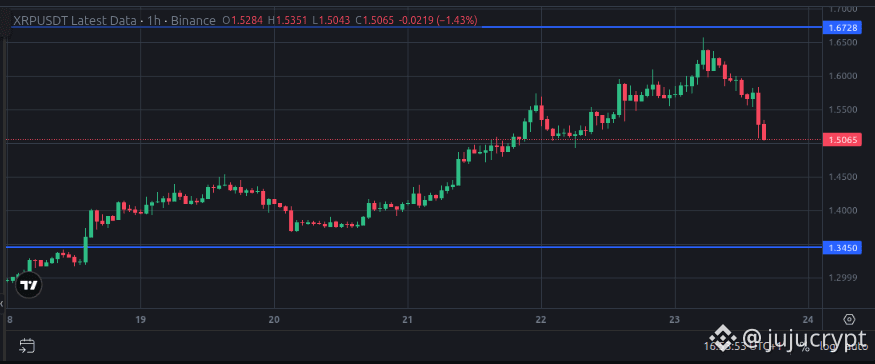
$XRP ’s key support right now sits around $1.28. Price is currently ranging between $1.30 and $1.40, and you can feel the tension on the chart. This zone is a real battlefield. Buyers are trying to defend structure, while sellers are clearly pressing to push price lower. As long as XRP stays above $1.28, the range still holds. But if that level gives way, momentum could shift quickly. For now, it’s a waiting game watching how price reacts inside this range before the next clear move shows itself. #RippleUpdate #XRPRealityCheck
$XRP ’s key support right now sits around $1.28. Price is currently ranging between $1.30 and $1.40, and you can feel the tension on the chart.

This zone is a real battlefield. Buyers are trying to defend structure, while sellers are clearly pressing to push price lower.

As long as XRP stays above $1.28, the range still holds. But if that level gives way, momentum could shift quickly.

For now, it’s a waiting game watching how price reacts inside this range before the next clear move shows itself.
#RippleUpdate #XRPRealityCheck
If you caught the $DUSK short and you’re still in the trade, price is currently going sideways around the same region. That usually tells me the market is pausing, not reversing yet. This kind of consolidation often happens after a strong move, as buyers and sellers battle for control. As long as DUSK keeps failing to reclaim the key level above, the downside bias remains intact in my view. For now, I’m still watching for a continuation toward the 0.093 area. If that level gets tested, that’s where we’ll really see whether sellers are still in control or if buyers finally step in. Until then, patience matters more than forcing a move.
If you caught the $DUSK short and you’re still in the trade, price is currently going sideways around the same region.

That usually tells me the market is pausing, not reversing yet.

This kind of consolidation often happens after a strong move, as buyers and sellers battle for control.

As long as DUSK keeps failing to reclaim the key level above, the downside bias remains intact in my view.

For now, I’m still watching for a continuation toward the 0.093 area. If that level gets tested, that’s where we’ll really see whether sellers are still in control or if buyers finally step in. Until then, patience matters more than forcing a move.
jujucrypt
·
--
There might be a short opportunity setting up on $DUSK around the 0.1124 level. That area feels important, so it’s worth waiting to see how price reacts there instead of rushing in.

If sellers step in and price rejects that level, the short makes sense. But if it fails to reject and buyers keep pushing through, then it’s probably a sign of continuation to the upside instead.

For now, it’s a wait-and-watch situation. Let the level decide the next move.
$3.5B worth of $USDT  was burned today, and that’s a quiet but important signal. In simple terms, it means excess stablecoin supply is being removed from the market. There’s less “idle money” sitting around, which usually happens after volatility or heavy selling. For the market, this points to tighter liquidity. Big moves may slow down for now, but it also means sell pressure is easing. For traders, it’s a reminder that this is a reset phase patience matters here. USDT burns don’t spark instant pumps, but they often show the market is clearing itself out before the next real move. #stablecoin
$3.5B worth of $USDT  was burned today, and that’s a quiet but important signal.

In simple terms, it means excess stablecoin supply is being removed from the market. There’s less “idle money” sitting around, which usually happens after volatility or heavy selling.

For the market, this points to tighter liquidity. Big moves may slow down for now, but it also means sell pressure is easing.

For traders, it’s a reminder that this is a reset phase patience matters here.

USDT burns don’t spark instant pumps, but they often show the market is clearing itself out before the next real move.
#stablecoin
Tom Lee’s BitMine just added another $41.08M worth of $ETH today, and at this point it’s hard not to notice the pattern. He keeps buying, regardless of whether the market is calm, dumping, or going sideways. That’s usually how big money moves. They’re not chasing green candles or trying to time the perfect bottom. They DCA through uncertainty, build positions quietly, and let time do the heavy lifting. We’ve seen this play out before with large holders who accumulated during boring or painful periods, only for the narrative to flip months later. To me, this doesn’t scream “short-term trade.” It looks more like long-term conviction. While price action shakes out weak hands, some of the biggest bags in the room are still stacking. That contrast alone is worth paying attention to. #ETH
Tom Lee’s BitMine just added another $41.08M worth of $ETH today, and at this point it’s hard not to notice the pattern. He keeps buying, regardless of whether the market is calm, dumping, or going sideways.

That’s usually how big money moves. They’re not chasing green candles or trying to time the perfect bottom.

They DCA through uncertainty, build positions quietly, and let time do the heavy lifting. We’ve seen this play out before with large holders who accumulated during boring or painful periods, only for the narrative to flip months later.

To me, this doesn’t scream “short-term trade.” It looks more like long-term conviction. While price action shakes out weak hands, some of the biggest bags in the room are still stacking. That contrast alone is worth paying attention to.
#ETH
#Ethereum✅ ETFs just recorded $57M in inflows yesterday, which tells you demand is still very much alive despite all the noise in the market. What really stands out is Fidelity stepping in with a $67.3M $ETH purchase. That’s not a retail move, that’s long-term capital positioning while price action looks boring and sentiment is shaky. Moments like this usually show the disconnect between headlines and what big players are actually doing. While most people are focused on short-term volatility, institutions are slowly building exposure, likely betting on Ethereum’s role in ETFs, on-chain activity, and future adoption. It doesn’t mean price goes up immediately, but it does suggest ETH is still being treated as a serious long-term asset behind the scenes.
#Ethereum✅ ETFs just recorded $57M in inflows yesterday, which tells you demand is still very much alive despite all the noise in the market.

What really stands out is Fidelity stepping in with a $67.3M $ETH purchase. That’s not a retail move, that’s long-term capital positioning while price action looks boring and sentiment is shaky.

Moments like this usually show the disconnect between headlines and what big players are actually doing.

While most people are focused on short-term volatility, institutions are slowly building exposure, likely betting on Ethereum’s role in ETFs, on-chain activity, and future adoption.

It doesn’t mean price goes up immediately, but it does suggest ETH is still being treated as a serious long-term asset behind the scenes.
Something serious is going on in the market right now. Ahead of today’s emergency Fed announcement, reports are circulating that #BlackRock rapidly sold over $250M worth of $BTC  and $ETH  within minutes. The speed alone is what’s raising eyebrows this wasn’t a slow rebalance, it looked urgent. When big players move like that, it usually means they’re de-risking before uncertainty, not chasing price. Whether this is about interest rates, liquidity stress, or something macro breaking behind the scenes, the timing matters. For now, the market is on edge. Volatility is picking up, sentiment is shaky, and everyone’s waiting to hear what the Fed says next. This feels like one of those moments where you stop forcing trades and just watch closely. #ETH
Something serious is going on in the market right now.

Ahead of today’s emergency Fed announcement, reports are circulating that #BlackRock rapidly sold over $250M worth of $BTC  and $ETH  within minutes. The speed alone is what’s raising eyebrows this wasn’t a slow rebalance, it looked urgent.

When big players move like that, it usually means they’re de-risking before uncertainty, not chasing price. Whether this is about interest rates, liquidity stress, or something macro breaking behind the scenes, the timing matters.

For now, the market is on edge. Volatility is picking up, sentiment is shaky, and everyone’s waiting to hear what the Fed says next.

This feels like one of those moments where you stop forcing trades and just watch closely.
#ETH
where do you think $BTC is heading to this week
BTC to 60k
55%
BTC to 75K
45%
101 صوت • تمّ إغلاق التصويت
After a brief period of consolidation on the $XRP  chart, bears are starting to apply pressure again. Price is now being pushed toward the $1.30 level, and if that area fails to hold, a move toward $1.00 isn’t off the table. That said, I’m still keeping a close eye on $1.3866, as it remains a key level to watch. For now, it’s all about how price reacts around these zones on the 1-hour timeframe. Let’s see how it plays out. #Ripple
After a brief period of consolidation on the $XRP  chart, bears are starting to apply pressure again.

Price is now being pushed toward the $1.30 level, and if that area fails to hold, a move toward $1.00 isn’t off the table. That said, I’m still keeping a close eye on $1.3866, as it remains a key level to watch.

For now, it’s all about how price reacts around these zones on the 1-hour timeframe. Let’s see how it plays out.
#Ripple
$BTC just slipped below the $70,000 level, and that shift matters. Right now, all eyes are on $68,000, which has acted as a strong support in the past. This is the kind of level where buyers usually try to step in and slow things down. If Bitcoin can hold here, we might see some stability or a bounce. But if this level gives way, the door opens for a deeper correction. For now, it’s a wait-and-watch moment the next move will likely set the tone. #bitcoin
$BTC just slipped below the $70,000 level, and that shift matters.

Right now, all eyes are on $68,000, which has acted as a strong support in the past.

This is the kind of level where buyers usually try to step in and slow things down.

If Bitcoin can hold here, we might see some stability or a bounce. But if this level gives way, the door opens for a deeper correction.

For now, it’s a wait-and-watch moment the next move will likely set the tone.
#bitcoin
It almost feels like someone copy-pasted the $BTC chart. When you line up this cycle with the previous one, the similarities are hard to ignore. Same kind of structure, same pauses, same shakeouts. It’s not perfect, but the rhythm feels familiar. Doesn’t mean history will repeat exactly, but when Bitcoin starts moving like this, it’s usually worth paying attention. Sometimes the market loves to rhyme. #bitcoin
It almost feels like someone copy-pasted the $BTC chart.

When you line up this cycle with the previous one, the similarities are hard to ignore. Same kind of structure, same pauses, same shakeouts. It’s not perfect, but the rhythm feels familiar.

Doesn’t mean history will repeat exactly, but when Bitcoin starts moving like this, it’s usually worth paying attention. Sometimes the market loves to rhyme.
#bitcoin
There might be a short opportunity setting up on $DUSK around the 0.1124 level. That area feels important, so it’s worth waiting to see how price reacts there instead of rushing in. If sellers step in and price rejects that level, the short makes sense. But if it fails to reject and buyers keep pushing through, then it’s probably a sign of continuation to the upside instead. For now, it’s a wait-and-watch situation. Let the level decide the next move.
There might be a short opportunity setting up on $DUSK around the 0.1124 level. That area feels important, so it’s worth waiting to see how price reacts there instead of rushing in.

If sellers step in and price rejects that level, the short makes sense. But if it fails to reject and buyers keep pushing through, then it’s probably a sign of continuation to the upside instead.

For now, it’s a wait-and-watch situation. Let the level decide the next move.
Top worst performers of 2026 so far 2026 hasn’t been kind to everyone. While a few assets managed to hold up or recover, some names have clearly struggled from the start of the year. Between weak sentiment, fading narratives, and broader market pressure, these assets have consistently underperformed and failed to attract strong dip-buying. For most of them, rallies have been short-lived and sold into quickly, showing that confidence is still fragile. Whether this turns into long-term damage or a delayed recovery will depend on how market conditions shift in the coming months but for now, these are the laggards setting the tone for how tough 2026 has been. $TRX $PROM
Top worst performers of 2026 so far

2026 hasn’t been kind to everyone. While a few assets managed to hold up or recover, some names have clearly struggled from the start of the year.

Between weak sentiment, fading narratives, and broader market pressure, these assets have consistently underperformed and failed to attract strong dip-buying.

For most of them, rallies have been short-lived and sold into quickly, showing that confidence is still fragile.

Whether this turns into long-term damage or a delayed recovery will depend on how market conditions shift in the coming months but for now, these are the laggards setting the tone for how tough 2026 has been.

$TRX $PROM
What Actually Caused Bitcoin's 50% Crash? Breaking Down Every FactorBitcoin dropped from $126,210 to $67,500. A 46% crash in four months. Trillions in market cap gone. Everyone has a theory about what caused it. Macro. ETFs. Whales. Metals. Tech correlation. Geopolitics. Leverage. But here's the truth: It wasn't just one thing. It was a perfect storm of forces that all converged at once. And when they did, Bitcoin didn't stand a chance. Let me break down EVERY major factor what caused the spark, what fueled the fire, and which one mattered most. The Full List of Crash Causes Here are all the reasons analysts, traders, and institutions have cited for the crash: Massive deleveraging triggered liquidation cascades in futures and optionsSpot #BitcoinETFs saw heavy net outflows as institutions reduced riskHigh interest rates and sticky inflation pushed markets into risk-off modeBitcoin failed as "digital gold," badly lagging traditional safe havensCorporate treasury holders faced margin calls and sold aggressivelyHong Kong hedge funds and Yen carry trades collapsed, forcing liquidationsCrypto moved in lockstep with falling tech and AI stocks after weak earningsGeopolitical tensions, tariff threats, and policy uncertainty scared investorsNegative Coinbase premium signaled persistent U.S. institutional sellingWhale transfers and large outflows added steady downward pressureProfit-taking accelerated after Bitcoin's parabolic 2025 run peaked Every single one of these played a role. But they didn't all matter equally. Let me show you which was THE trigger and which were just amplifiers. My Take: Deleveraging Was the Spark, Everything Else Was Fuel Here's what I believe happened: The core driver was forced deleveraging and liquidation cascades. Once leverage snapped, everything else ETF outflows, whale selling, correlation with tech became fuel, not the spark. Leverage was the match. The rest was gasoline. Let me explain why. Factor #1: Deleveraging & Liquidation Cascades (THE SPARK - 35%) This is where it all started. What Happened Bitcoin hit $126K in October 2025. Euphoria was at peak levels. And what do traders do during euphoria? They leverage up. 50x leverage became common. 100x wasn't rare. Everyone was long, everyone was confident, and everyone assumed "$150K by year-end." Then Bitcoin started dropping. At first, it was manageable. A pullback to $100K? Normal. Healthy even. But then $100K broke. Then $90K. Then $84K. And that's when the death spiral began. How the Cascade Works Here's the mechanics of a liquidation cascade: Step 1: Small Drop BTC drops 5% from $100K to $95K. No big deal, right? Wrong. At 20x leverage, a 5% move liquidates your position. Suddenly, thousands of highly leveraged longs get force-closed. Step 2: Forced Selling When you get liquidated, the exchange sells your position AT MARKET. This adds selling pressure, pushing price down further. Step 3: More Liquidations Price drops to $88K. Now the 10x leverage positions get liquidated. More forced selling. Price drops to $78K. Step 4: Panic At this point, even traders who weren't liquidated start panic-selling to avoid getting liquidated. More selling. Price crashes to $67K. Step 5: Capitulation Even low-leverage positions (3x-5x) start getting liquidated. Total wipeout. The Numbers $5.42 billion in liquidations since January 29Open interest dropped to 9-month lowsFunding rates flipped massively negative (shorts paying longs) This wasn't organic selling. This was forced selling. And forced selling doesn't care about fundamentals, narratives, or support levels. It just hunts liquidity. Why This Was THE Spark Every other factor on the list ETF outflows, whale selling, macro requires voluntary action. Someone decides to sell. Someone chooses to reduce risk. Leverage doesn't give you a choice. When your position hits liquidation price, it sells automatically. No emotions. No hesitation. Just pure, mechanical selling pressure. That's why deleveraging was the spark. It created unavoidable, cascading sell pressure that triggered everything else. Factor #2: Spot ETF Outflows (FUEL - 15%) Once the leverage cascade started, institutions pulled the plug. What Happened U.S. spot Bitcoin ETFs saw: $817 million in outflows in a single day (one of the largest since launch)$1.33 billion in outflows the week before the crash (largest since February 2025)Sustained net negative flows throughout January-February BlackRock's IBIT, Fidelity's FBTC, Grayscale's GBTC all bleeding capital. Why It Mattered ETFs were supposed to be the "diamond hands" of the market. Institutional buyers with long time horizons. When they started selling, it sent a clear message: Smart money is exiting. Retail saw this and panicked. "If BlackRock is selling, why am I holding?" But It Was Fuel, Not Spark ETF outflows didn't START the crash. They happened DURING the crash. Institutions saw Bitcoin dropping (from leverage cascade), reassessed risk, and reduced exposure. The outflows amplified the move down. But they didn't trigger it. Factor #3: Macro Environment - High Rates & Inflation (FUEL - 12%) The macroeconomic backdrop was terrible for risk assets. What Happened Kevin Warsh nominated as Fed chair (hawkish, tighter policy expected)Inflation staying sticky (2.9%-3.1% range, not falling to 2% target)Interest rates staying higher for longer (no rate cuts in sight)Dollar strength crushing risk assets (inverse relationship with BTC) Why It Mattered Bitcoin thrives in loose monetary conditions. When money is cheap and flowing, speculative assets pump. But in tight conditions? Risk-off. Capital flees to safety. The Liquidity Problem High rates = expensive borrowing = less leverage = less speculation = lower prices. It's not a coincidence that Bitcoin's biggest bull runs happened during: 2020-2021: Zero rates, massive QE2024-2025: Rate cut expectations, liquidity returning And the crashes happened during: 2022: Aggressive rate hikes2026: Hawkish Fed, no cuts But Again, It Was Fuel Macro conditions don't change overnight. Rates were already high in December. Inflation was already sticky. These created the environment for a crash. But they didn't pull the trigger. The leverage cascade did. Factor #4: Tech Stock Correlation (FUEL - 10%) Bitcoin moved in perfect lockstep with falling tech and AI stocks. What Happened Nasdaq down 12% from January highsAI stocks bleeding after disappointing earnings (NVDA, TSLA, etc.)Tech sector rotation into defensive playsBitcoin correlation with QQQ hit 0.85+ (almost perfect) Why It Mattered Bitcoin is treated as a risk-on asset, not a safe haven. When tech falls, Bitcoin falls. When AI hype cools, crypto cools. Institutional portfolios that hold both tech and crypto? They sell both at the same time during risk-off. The "Digital Gold" Failure Bitcoin was supposed to decouple. It was supposed to be an inflation hedge, a safe haven, uncorrelated. Instead, it moved exactly like a leveraged tech stock. But It Was Fuel Tech stocks didn't crash Bitcoin. They crashed together WITH Bitcoin—both driven by the same underlying force (risk-off deleveraging). Correlation isn't causation. They're symptoms of the same disease, not cause-and-effect. Factor #5: Whale Selling & Large Transfers (FUEL - 8%) Big holders started moving Bitcoin to exchanges. What Happened Large whale addresses transferred tens of thousands of BTC to exchangesExchange inflows spiked during the crashKnown corporate holders and early adopters reduced positions Why It Mattered When whales move Bitcoin to exchanges, it signals intent to sell. And when they sell, it's not $1,000 market orders. It's millions. Tens of millions. Hundreds of millions. That kind of selling creates instant downward pressure. But It Was Fuel Whales didn't wake up one day and randomly decide to sell. They saw: Price dropping (leverage cascade)ETFs exiting (institutional fear)Macro deteriorating (risk-off) And they reacted. Their selling accelerated the crash. But it didn't start it. Factor #6: Profit-Taking After $126K Peak (FUEL - 7%) Bitcoin had a parabolic 2025 run. It was due for profit-taking. What Happened $BTC went from $40K (early 2025) to $126K (October 2025). That's a 215% gain in 10 months. Everyone who bought below $100K was massively in profit. And profits eventually get taken. Why It Mattered When Bitcoin is up 3x in a year, weak hands start selling. "I'm up 200%. Time to lock in gains." This creates natural resistance at highs and selling pressure on any weakness. But It Was Fuel Profit-taking is gradual. It doesn't cause 46% crashes in 4 months. It creates topping patterns, consolidation, slow bleeds. The crash wasn't slow. It was violent. That's leverage, not profit-taking. Factor #7: "Digital Gold" Narrative Failure (FUEL - 5%) Bitcoin was supposed to be a safe haven. It wasn't. What Happened When gold and silver crashed: Gold fell 20% (from $5,595 to $4,400)Silver fell 38% (worst day since 1980)Bitcoin fell with them (not against them) Why It Mattered The entire "Bitcoin is digital gold" narrative died. If Bitcoin can't act as a safe haven when traditional safe havens fail, what's the point? Investors lost faith in the store-of-value thesis. But It Was Fuel The metals crash happened in late January. Bitcoin was already falling before that. The metals crash accelerated Bitcoin's decline (contagion, forced selling). But it didn't cause the initial drop. Factor #8: Geopolitical Uncertainty (FUEL - 5%) Trade tensions, policy uncertainty, and geopolitical risk scared investors. What Happened Tariff threats escalatingGovernment shutdown concernsMiddle East tensionsChina-U.S. relations deteriorating Why It Mattered Geopolitical uncertainty = volatility. And volatility scares institutional capital away. "We can't hold risky assets when the world is unstable." But It Was Fuel Geopolitics is always uncertain. It's a constant background factor. It creates the CONDITIONS for crashes, but it doesn't TRIGGER them. Factor #9: Hong Kong Hedge Funds & Yen Carry Trades (FUEL - 3%) Niche but impactful: leveraged funds unwinding positions. What Happened Hong Kong-based hedge funds that were long Bitcoin (via carry trades funded in Yen) faced margin calls when: Bitcoin price droppedYen strengthened (carry trade unwind) They were forced to liquidate Bitcoin holdings. Why It Mattered These are institutional-sized positions. When they unwind, it's not retail-level selling. But It Was Fuel This was a small, specific subset of the market. Important? Yes. But not the primary driver. Putting It All Together: The Timeline Here's how the crash actually unfolded: October 2025: Bitcoin hits $126K ATH. Leverage at peak levels. Everyone's bullish. November 2025: First correction to $103K. Some leverage clears, but most hold on. December 2025: Consolidation around $100K. Leverage builds back up. January 2026: Macro shifts (hawkish Fed fears). Price drops to $84K. Warning signs. Late January 2026: Metals crash. Contagion spreads. Bitcoin drops to $78K. February 1, 2026: Cascade begins. $5.42 billion liquidated. Price crashes to $75K. February 5, 2026: Current price $67.5K. Still bleeding. The pattern: Leverage builds during euphoriaPrice drops trigger first wave of liquidationsForced selling creates cascadeEverything else (ETFs, whales, macro) reacts and amplifiesPrice collapses Why Deleveraging Mattered Most Let me be crystal clear about why leverage was THE spark: 1. It Was Unavoidable Voluntary selling can be delayed. Institutions can "wait it out." Whales can "diamond hand." But liquidations? They happen automatically. No choice. No delay. 2. It Was Cascading One liquidation triggers the next. Creates a feedback loop. Mechanical, relentless selling pressure. 3. It Hunted Liquidity Leverage doesn't care about support levels or narratives. It just finds liquidity (stop losses, liquidation clusters) and destroys them. 4. It Triggered Everything Else Once leverage snapped: ETFs saw the bloodbath and exitedWhales saw weakness and soldMacro fears intensifiedTech correlation kicked in Deleveraging was the domino that knocked over all the others. The Uncomfortable Truth Here's what people don't want to hear: Bitcoin's crash wasn't about fundamentals. It wasn't about adoption slowing, or technology failing, or regulation crushing innovation. It was about leverage destroying over-leveraged traders. The Bitcoin network? Still running perfectly. Transactions? Still processing. Hash rate? Still secure. Adoption? Still growing. None of that mattered when $5.42 billion in leveraged positions got liquidated. Because when leverage unwinds, narratives stop mattering and price just hunts liquidity. What This Means Going Forward If deleveraging was the primary cause, what does that mean for the future? Good News: Leverage has been flushed. Open interest at 9-month lows. The overleveraged longs are gone.No more cascade fuel. You can't liquidate positions that don't exist anymore.Foundation is cleaner. The next move up (when it happens) will be on healthier footing. Bad News: It can happen again. As soon as price rallies, leverage will build back up. And the cycle repeats.Macro is still bad. Even without leverage cascade, high rates and risk-off sentiment cap upside.Confidence is shaken. Many retail traders got wrecked. They won't come back quickly. The Bottom Line Bitcoin crashed 46% because: 35% - Deleveraging cascade (THE SPARK) 15% - ETF outflows 12% - Macro (rates/inflation) 10% - Tech correlation 8% - Whale selling 7% - Profit-taking 5% - Digital gold failure 5% - Geopolitics 3% - Carry trade unwinds The spark was leverage. Everything else was fuel. And once that spark lit, the whole thing went up in flames. What's your take was it leverage, macro, or something else that caused the crash? Which factor do you think mattered most? Let me know below.

What Actually Caused Bitcoin's 50% Crash? Breaking Down Every Factor

Bitcoin dropped from $126,210 to $67,500.
A 46% crash in four months.

Trillions in market cap gone.

Everyone has a theory about what caused it. Macro. ETFs. Whales. Metals. Tech correlation. Geopolitics. Leverage.

But here's the truth: It wasn't just one thing.
It was a perfect storm of forces that all converged at once. And when they did, Bitcoin didn't stand a chance.

Let me break down EVERY major factor what caused the spark, what fueled the fire, and which one mattered most.
The Full List of Crash Causes
Here are all the reasons analysts, traders, and institutions have cited for the crash:
Massive deleveraging triggered liquidation cascades in futures and optionsSpot #BitcoinETFs saw heavy net outflows as institutions reduced riskHigh interest rates and sticky inflation pushed markets into risk-off modeBitcoin failed as "digital gold," badly lagging traditional safe havensCorporate treasury holders faced margin calls and sold aggressivelyHong Kong hedge funds and Yen carry trades collapsed, forcing liquidationsCrypto moved in lockstep with falling tech and AI stocks after weak earningsGeopolitical tensions, tariff threats, and policy uncertainty scared investorsNegative Coinbase premium signaled persistent U.S. institutional sellingWhale transfers and large outflows added steady downward pressureProfit-taking accelerated after Bitcoin's parabolic 2025 run peaked

Every single one of these played a role.
But they didn't all matter equally.
Let me show you which was THE trigger and which were just amplifiers.
My Take: Deleveraging Was the Spark, Everything Else Was Fuel

Here's what I believe happened:
The core driver was forced deleveraging and liquidation cascades.
Once leverage snapped, everything else ETF outflows, whale selling, correlation with tech became fuel, not the spark.
Leverage was the match. The rest was gasoline.
Let me explain why.
Factor #1: Deleveraging & Liquidation Cascades (THE SPARK - 35%)
This is where it all started.
What Happened
Bitcoin hit $126K in October 2025. Euphoria was at peak levels. And what do traders do during euphoria?

They leverage up.
50x leverage became common. 100x wasn't rare. Everyone was long, everyone was confident, and everyone assumed "$150K by year-end."

Then Bitcoin started dropping.
At first, it was manageable. A pullback to $100K? Normal. Healthy even.
But then $100K broke. Then $90K. Then $84K.

And that's when the death spiral began.

How the Cascade Works
Here's the mechanics of a liquidation cascade:
Step 1: Small Drop
BTC drops 5% from $100K to $95K. No big deal, right?

Wrong. At 20x leverage, a 5% move liquidates your position. Suddenly, thousands of highly leveraged longs get force-closed.

Step 2: Forced Selling
When you get liquidated, the exchange sells your position AT MARKET. This adds selling pressure, pushing price down further.

Step 3: More Liquidations
Price drops to $88K. Now the 10x leverage positions get liquidated. More forced selling. Price drops to $78K.

Step 4: Panic
At this point, even traders who weren't liquidated start panic-selling to avoid getting liquidated. More selling. Price crashes to $67K.

Step 5: Capitulation
Even low-leverage positions (3x-5x) start getting liquidated. Total wipeout.
The Numbers
$5.42 billion in liquidations since January 29Open interest dropped to 9-month lowsFunding rates flipped massively negative (shorts paying longs)
This wasn't organic selling. This was forced selling.

And forced selling doesn't care about fundamentals, narratives, or support levels. It just hunts liquidity.
Why This Was THE Spark
Every other factor on the list ETF outflows, whale selling, macro requires voluntary action.
Someone decides to sell. Someone chooses to reduce risk.
Leverage doesn't give you a choice. When your position hits liquidation price, it sells automatically. No emotions. No hesitation. Just pure, mechanical selling pressure.
That's why deleveraging was the spark. It created unavoidable, cascading sell pressure that triggered everything else.
Factor #2: Spot ETF Outflows (FUEL - 15%)
Once the leverage cascade started, institutions pulled the plug.
What Happened
U.S. spot Bitcoin ETFs saw:
$817 million in outflows in a single day (one of the largest since launch)$1.33 billion in outflows the week before the crash (largest since February 2025)Sustained net negative flows throughout January-February
BlackRock's IBIT, Fidelity's FBTC, Grayscale's GBTC all bleeding capital.
Why It Mattered
ETFs were supposed to be the "diamond hands" of the market. Institutional buyers with long time horizons.
When they started selling, it sent a clear message: Smart money is exiting.
Retail saw this and panicked. "If BlackRock is selling, why am I holding?"
But It Was Fuel, Not Spark
ETF outflows didn't START the crash. They happened DURING the crash.
Institutions saw Bitcoin dropping (from leverage cascade), reassessed risk, and reduced exposure.
The outflows amplified the move down. But they didn't trigger it.
Factor #3: Macro Environment - High Rates & Inflation (FUEL - 12%)
The macroeconomic backdrop was terrible for risk assets.
What Happened
Kevin Warsh nominated as Fed chair (hawkish, tighter policy expected)Inflation staying sticky (2.9%-3.1% range, not falling to 2% target)Interest rates staying higher for longer (no rate cuts in sight)Dollar strength crushing risk assets (inverse relationship with BTC)
Why It Mattered
Bitcoin thrives in loose monetary conditions. When money is cheap and flowing, speculative assets pump.
But in tight conditions? Risk-off. Capital flees to safety.
The Liquidity Problem
High rates = expensive borrowing = less leverage = less speculation = lower prices.
It's not a coincidence that Bitcoin's biggest bull runs happened during:
2020-2021: Zero rates, massive QE2024-2025: Rate cut expectations, liquidity returning
And the crashes happened during:
2022: Aggressive rate hikes2026: Hawkish Fed, no cuts
But Again, It Was Fuel

Macro conditions don't change overnight. Rates were already high in December. Inflation was already sticky.
These created the environment for a crash. But they didn't pull the trigger.
The leverage cascade did.
Factor #4: Tech Stock Correlation (FUEL - 10%)

Bitcoin moved in perfect lockstep with falling tech and AI stocks.
What Happened
Nasdaq down 12% from January highsAI stocks bleeding after disappointing earnings (NVDA, TSLA, etc.)Tech sector rotation into defensive playsBitcoin correlation with QQQ hit 0.85+ (almost perfect)
Why It Mattered
Bitcoin is treated as a risk-on asset, not a safe haven.
When tech falls, Bitcoin falls. When AI hype cools, crypto cools.
Institutional portfolios that hold both tech and crypto? They sell both at the same time during risk-off.
The "Digital Gold" Failure
Bitcoin was supposed to decouple. It was supposed to be an inflation hedge, a safe haven, uncorrelated.
Instead, it moved exactly like a leveraged tech stock.
But It Was Fuel
Tech stocks didn't crash Bitcoin. They crashed together WITH Bitcoin—both driven by the same underlying force (risk-off deleveraging).
Correlation isn't causation. They're symptoms of the same disease, not cause-and-effect.
Factor #5: Whale Selling & Large Transfers (FUEL - 8%)
Big holders started moving Bitcoin to exchanges.
What Happened

Large whale addresses transferred tens of thousands of BTC to exchangesExchange inflows spiked during the crashKnown corporate holders and early adopters reduced positions
Why It Mattered
When whales move Bitcoin to exchanges, it signals intent to sell.
And when they sell, it's not $1,000 market orders. It's millions. Tens of millions. Hundreds of millions.
That kind of selling creates instant downward pressure.
But It Was Fuel
Whales didn't wake up one day and randomly decide to sell.
They saw:

Price dropping (leverage cascade)ETFs exiting (institutional fear)Macro deteriorating (risk-off)
And they reacted.
Their selling accelerated the crash. But it didn't start it.
Factor #6: Profit-Taking After $126K Peak (FUEL - 7%)
Bitcoin had a parabolic 2025 run. It was due for profit-taking.
What Happened
$BTC went from $40K (early 2025) to $126K (October 2025).
That's a 215% gain in 10 months.
Everyone who bought below $100K was massively in profit. And profits eventually get taken.
Why It Mattered
When Bitcoin is up 3x in a year, weak hands start selling.
"I'm up 200%. Time to lock in gains."
This creates natural resistance at highs and selling pressure on any weakness.
But It Was Fuel
Profit-taking is gradual. It doesn't cause 46% crashes in 4 months.
It creates topping patterns, consolidation, slow bleeds.
The crash wasn't slow. It was violent. That's leverage, not profit-taking.
Factor #7: "Digital Gold" Narrative Failure (FUEL - 5%)
Bitcoin was supposed to be a safe haven. It wasn't.
What Happened
When gold and silver crashed:
Gold fell 20% (from $5,595 to $4,400)Silver fell 38% (worst day since 1980)Bitcoin fell with them (not against them)
Why It Mattered
The entire "Bitcoin is digital gold" narrative died.
If Bitcoin can't act as a safe haven when traditional safe havens fail, what's the point?
Investors lost faith in the store-of-value thesis.
But It Was Fuel
The metals crash happened in late January. Bitcoin was already falling before that.
The metals crash accelerated Bitcoin's decline (contagion, forced selling). But it didn't cause the initial drop.
Factor #8: Geopolitical Uncertainty (FUEL - 5%)
Trade tensions, policy uncertainty, and geopolitical risk scared investors.
What Happened

Tariff threats escalatingGovernment shutdown concernsMiddle East tensionsChina-U.S. relations deteriorating
Why It Mattered
Geopolitical uncertainty = volatility.
And volatility scares institutional capital away.
"We can't hold risky assets when the world is unstable."
But It Was Fuel
Geopolitics is always uncertain. It's a constant background factor.
It creates the CONDITIONS for crashes, but it doesn't TRIGGER them.
Factor #9: Hong Kong Hedge Funds & Yen Carry Trades (FUEL - 3%)
Niche but impactful: leveraged funds unwinding positions.
What Happened
Hong Kong-based hedge funds that were long Bitcoin (via carry trades funded in Yen) faced margin calls when:
Bitcoin price droppedYen strengthened (carry trade unwind)
They were forced to liquidate Bitcoin holdings.
Why It Mattered
These are institutional-sized positions. When they unwind, it's not retail-level selling.
But It Was Fuel
This was a small, specific subset of the market. Important? Yes. But not the primary driver.
Putting It All Together: The Timeline

Here's how the crash actually unfolded:
October 2025: Bitcoin hits $126K ATH. Leverage at peak levels. Everyone's bullish.
November 2025: First correction to $103K. Some leverage clears, but most hold on.
December 2025: Consolidation around $100K. Leverage builds back up.
January 2026: Macro shifts (hawkish Fed fears). Price drops to $84K. Warning signs.
Late January 2026: Metals crash. Contagion spreads. Bitcoin drops to $78K.
February 1, 2026: Cascade begins. $5.42 billion liquidated. Price crashes to $75K.
February 5, 2026: Current price $67.5K. Still bleeding.
The pattern:

Leverage builds during euphoriaPrice drops trigger first wave of liquidationsForced selling creates cascadeEverything else (ETFs, whales, macro) reacts and amplifiesPrice collapses
Why Deleveraging Mattered Most
Let me be crystal clear about why leverage was THE spark:
1. It Was Unavoidable
Voluntary selling can be delayed. Institutions can "wait it out." Whales can "diamond hand."
But liquidations? They happen automatically. No choice. No delay.
2. It Was Cascading
One liquidation triggers the next. Creates a feedback loop. Mechanical, relentless selling pressure.
3. It Hunted Liquidity
Leverage doesn't care about support levels or narratives. It just finds liquidity (stop losses, liquidation clusters) and destroys them.
4. It Triggered Everything Else
Once leverage snapped:
ETFs saw the bloodbath and exitedWhales saw weakness and soldMacro fears intensifiedTech correlation kicked in
Deleveraging was the domino that knocked over all the others.
The Uncomfortable Truth
Here's what people don't want to hear:
Bitcoin's crash wasn't about fundamentals.
It wasn't about adoption slowing, or technology failing, or regulation crushing innovation.
It was about leverage destroying over-leveraged traders.
The Bitcoin network? Still running perfectly.

Transactions? Still processing.

Hash rate? Still secure.

Adoption? Still growing.
None of that mattered when $5.42 billion in leveraged positions got liquidated.
Because when leverage unwinds, narratives stop mattering and price just hunts liquidity.
What This Means Going Forward
If deleveraging was the primary cause, what does that mean for the future?
Good News:
Leverage has been flushed. Open interest at 9-month lows. The overleveraged longs are gone.No more cascade fuel. You can't liquidate positions that don't exist anymore.Foundation is cleaner. The next move up (when it happens) will be on healthier footing.
Bad News:
It can happen again. As soon as price rallies, leverage will build back up. And the cycle repeats.Macro is still bad. Even without leverage cascade, high rates and risk-off sentiment cap upside.Confidence is shaken. Many retail traders got wrecked. They won't come back quickly.
The Bottom Line
Bitcoin crashed 46% because:
35% - Deleveraging cascade (THE SPARK)

15% - ETF outflows

12% - Macro (rates/inflation)

10% - Tech correlation

8% - Whale selling

7% - Profit-taking

5% - Digital gold failure

5% - Geopolitics

3% - Carry trade unwinds

The spark was leverage. Everything else was fuel.
And once that spark lit, the whole thing went up in flames.
What's your take was it leverage, macro, or something else that caused the crash? Which factor do you think mattered most? Let me know below.
Bitcoin is at a real decision point right now. After that sharp move, $BTC is starting to go sideways and cool off around this level. This kind of consolidation usually doesn’t last long price is just building energy for the next move. From here, it’s pretty binary. A clean push and hold could open the door for a run toward the $80K area. But if momentum fades and buyers step back, a pullback toward the $62K region isn’t off the table. For now, it’s a waiting game. Let the market show its hand before getting too confident either way. #bitcoin
Bitcoin is at a real decision point right now.

After that sharp move, $BTC is starting to go sideways and cool off around this level. This kind of consolidation usually doesn’t last long price is just building energy for the next move.

From here, it’s pretty binary. A clean push and hold could open the door for a run toward the $80K area. But if momentum fades and buyers step back, a pullback toward the $62K region isn’t off the table.

For now, it’s a waiting game. Let the market show its hand before getting too confident either way.
#bitcoin
$XRP Quick Update Here’s how I’m looking at it. XRP doesn’t move in isolation it still follows Bitcoin’s lead. If $BTC ends up sliding into the $40k–$30k range, it’s hard to see XRP holding above $1 in that kind of environment. Risk-off phases usually hit alts harder, and XRP is no exception. Liquidity dries up, support levels get tested, and price tends to overshoot to the downside before finding real demand. For now, this isn’t a prediction just a reminder to stay realistic, manage risk, and watch Bitcoin first. Whatever BTC decides to do next will likely set the tone for XRP. #bitcoin #MarketRally
$XRP Quick Update

Here’s how I’m looking at it.

XRP doesn’t move in isolation it still follows Bitcoin’s lead. If $BTC ends up sliding into the $40k–$30k range, it’s hard to see XRP holding above $1 in that kind of environment.

Risk-off phases usually hit alts harder, and XRP is no exception. Liquidity dries up, support levels get tested, and price tends to overshoot to the downside before finding real demand.

For now, this isn’t a prediction just a reminder to stay realistic, manage risk, and watch Bitcoin first. Whatever BTC decides to do next will likely set the tone for XRP.
#bitcoin #MarketRally
After all the noise around Vitalik selling $ETH , he comes out and posts this: “ETH is a store of value and one of the most important apps on Ethereum.” And honestly… that hits differently when you zoom out. People see wallets moving and instantly panic. But Vitalik isn’t trading ETH like a degen on 50x. He’s talking from a long-term, fundamentals-first angle. To him, ETH isn’t just a coin it’s the base asset powering an entire financial system: DeFi, stablecoins, RWAs, NFTs, rollups… everything runs through ETH. That “store of value” line matters. It suggests ETH’s value isn’t just price action, but utility + scarcity + usage over time. Fees get burned, supply tightens, and the network keeps getting more important whether price is up or down. So yeah, the irony is loud sell pressure on one side, conviction on the other. But maybe that’s the point. Short-term moves don’t change the long-term thesis. Market is emotional. Builders think in decades. #ETH #MarketSentimentToday
After all the noise around Vitalik selling $ETH , he comes out and posts this:

“ETH is a store of value and one of the most important apps on Ethereum.”

And honestly… that hits differently when you zoom out.

People see wallets moving and instantly panic. But Vitalik isn’t trading ETH like a degen on 50x. He’s talking from a long-term, fundamentals-first angle.

To him, ETH isn’t just a coin it’s the base asset powering an entire financial system: DeFi, stablecoins, RWAs, NFTs, rollups… everything runs through ETH.

That “store of value” line matters. It suggests ETH’s value isn’t just price action, but utility + scarcity + usage over time.

Fees get burned, supply tightens, and the network keeps getting more important whether price is up or down.

So yeah, the irony is loud sell pressure on one side, conviction on the other. But maybe that’s the point. Short-term moves don’t change the long-term thesis.

Market is emotional. Builders think in decades.
#ETH #MarketSentimentToday
Here’s something interesting I’ve noticed, and it keeps showing up. Whenever $USDT dominance starts pushing up, Bitcoin usually struggles or pulls back. But when USDT starts dropping, that’s often when Bitcoin finds strength and starts moving higher. It’s like capital stepping out of stables and back into risk. Right now, USDT is approaching its range high a zone where it has historically met resistance and rolled over. And when that happens, we usually see some kind of reaction in $BTC . Does that mean it plays out the same way this time? Nobody knows for sure. But patterns like this are worth paying attention to, especially when the market feels uncertain. Make of it what you will and yeah, this might be one to bookmark. #stable
Here’s something interesting I’ve noticed, and it keeps showing up.

Whenever $USDT dominance starts pushing up, Bitcoin usually struggles or pulls back.

But when USDT starts dropping, that’s often when Bitcoin finds strength and starts moving higher.

It’s like capital stepping out of stables and back into risk.

Right now, USDT is approaching its range high a zone where it has historically met resistance and rolled over.

And when that happens, we usually see some kind of reaction in $BTC .

Does that mean it plays out the same way this time? Nobody knows for sure. But patterns like this are worth paying attention to, especially when the market feels uncertain.

Make of it what you will and yeah, this might be one to bookmark.
#stable
Everyone's Calling $59K as Bitcoin's Bottom. Here's Why They're Probably Wrong.$BTC is at $67,811, and suddenly, everyone's an expert on where the bottom is. "$59K is the floor!" says one analyst, pointing to the 200-week moving average. "$60K that's where we bounce!" claims another, referencing the 2021 cycle high. Polymarket traders are 95% confident #bitcoin drops below $65K. Bernstein analysts say $60K is the bottom. Michael Burry's chart pattern suggests low $50Ks. Everyone has A number. Nobody has THE number. And here's the uncomfortable truth: calling bottoms is where portfolios go to die. The Pattern That Keeps Repeating Let me show you something that should make you very, very cautious about anyone confidently calling a bottom right now. 2018: "$6K is the Floor!" December 2017: Bitcoin hits $20,000 all-time high. Throughout 2018, as Bitcoin bleeds, analysts start calling levels: "$15K is strong support!" (Lost)"$10K psychological level!" (Lost)"$6K is THE bottom!" (Consensus formed here) Everyone agreed: $6K was the line. It had been tested multiple times. It was previous resistance-turned-support. The charts were screaming it. Actual bottom: $3,122. The consensus was wrong by 48%. 2022: "$20K is the Floor!" November 2021: Bitcoin hits $69,000 all-time high. Throughout 2022, the same playbook: "$30K strong support!" (Lost)"$20K is THE floor!" (Everyone believed this) $20K was the previous cycle high from 2017. It was a textbook support level. Every analyst had it marked. Retail bought aggressively there. Actual bottom: $15,479. The consensus was wrong by 23%. 2026: "$59K is the Floor!" October 2025: Bitcoin hits $126,210 all-time high. Now, February 2026, Bitcoin at $67,500. And here we go again: Analysts: "$59K-$60K is the bottom!"Bears: "$50K worst case!"Extreme bears: "$40K possible!" Actual bottom: ??? But if history rhymes and it usually does the consensus is early. Again. Why $59K Sounds So Convincing (And Why That's Dangerous) Let me be clear: $59K-$60K IS a significant level. The arguments for it aren't stupid. Here's why people are calling it: 1. The 200-Week Moving Average Sits around $58K-$60K. Historically, Bitcoin has bounced hard from this level in every bear market. 2. Previous Cycle High $69K was the 2021 ATH. Bitcoin often finds support near old cycle highs. 3. Realized Price The average cost basis of all Bitcoin is near $60K. "Long-term holders defend this," they say. 4. Psychological Level Clean, round number. Feels right. 5. Bernstein's Call Credible analysts at Bernstein explicitly said, "$60K is where we bottom." All of these are VALID technical reasons. But here's the problem: They were ALL valid in 2018 and 2022, too. In 2018, analysts had equally strong reasons for $6K: Previous support tested multiple times ✓Psychological round number ✓"Whales defending this level" ✓ Result: Wrong by 48%. In 2022, analysts had equally strong reasons for $20K: Previous cycle high ✓Strong psychological level ✓"Institutions accumulating here" ✓ Result: Wrong by 23%. Technical levels don't care about your analysis. They break when sellers overwhelm buyers. And in bear markets, that happens more than people expect. The Full Spectrum of Predictions (Everyone Has a Price) Let's look at who's calling what: The Optimists ($70K-$75K): Bit Mining's Youwei Yang: "$75K possible low"Some retail: "We already bottomed at $67K!" The Consensus ($55K-$65K): Bernstein: "$60K bottom, last cycle high"Many analysts: "$59K, the 200-week MA"Standard Chartered: "$55K worst-case scenario"Polymarket: 95% chance we go below $65K The Bears ($45K-$55K): Michael Burry: Pattern suggests low $50Ks10X Research: "$52K possible"Tyler Richey: "$50K-$57K in severe macro downturn" The Extreme Bears ($40K and lower): John Blank (Zacks): "$40K within 8 months"Perma-bears: "Going to zero!" (Always wrong, but loud) Notice the problem? The range is $40K to $75K. That's a 46% spread. If "the bottom" can be anywhere in a 46% range, does anyone actually know? No. They're all guessing with different levels of confidence. What Actually Happens When You Call Bottoms Too Early Here's the real cost of being wrong. Scenario: You have $10,000 to invest. You see Bitcoin at $85K and think, "This is it! The bottom!" You buy $3,000 worth. Bitcoin drops to $75K. "Okay, THIS is the real bottom!" You buy another $3,000. Bitcoin drops to $67K. You buy another $2,000. Now you only have $2,000 left. Bitcoin drops to $59K. You deploy your last $2,000. Then Bitcoin hits the ACTUAL bottom at $52K. You're out of money. You can't buy. You watch others accumulate at levels you'd LOVE to have, but you're tapped out. This is the cost of calling bottoms early: You run out of capitalYour average cost is higher than it needed to beYou feel psychological pain watching it drop furtherYou either panic sell (worst move) or sit paralyzed The traders who waited? They have dry powder at $52K. They get the best price. They win. The Four Mistakes Bottom Callers Make Mistake #1: Confusing "Support" with "THE Bottom" The trap: "This level has held before, so it MUST hold again!" The reality: Support levels are probabilities, not guarantees. They hold until they don't. In 2018, $6K held... until it didn't. Then it crashed to $3K. In 2022, $20K held... until it didn't. Then it crashed to $15.5K. Lesson: Support can become resistance. Nothing is a "floor" until price proves it by reversing. Mistake #2: Anchoring to Round Numbers The trap: "$60K feels right. It's a clean number." The reality: Markets don't care about your round numbers. Bottoms often occur at ugly prices like $15,479 or $3,122 not $15,000 or $3,000. Lesson: If everyone's watching the same round number, smart money will push it just past that to trigger stops and create panic. Mistake #3: Ignoring Historical Precedent The trap: "This time is different. We have ETFs now. Institutions are here." The reality: Every cycle, people say "this time is different." And every cycle, bottoms are lower than the consensus predicted. 2018: "We have futures now!" (Still crashed) 2022: "We have institutional adoption!" (Still crashed) 2026: "We have spot ETFs!" (Still...) Lesson: New infrastructure doesn't prevent bear markets. It just changes WHO is selling. Mistake #4: Betting the Farm on One Level The trap: "I KNOW $59K is the bottom, so I'm going all-in there!" The reality: You don't know. Nobody knows. If you deploy 100% of capital at one level and it breaks, you're done. Lesson: Layer your buys. Have a plan for IF your bottom call is wrong. So What Should You Actually Do? If calling bottoms is dangerous, what's the alternative? Option 1: Wait for Confirmation Don't try to catch the exact bottom. Let price PROVE it bottomed first. How do you know it bottomed? Price makes a higher lowVolume dries up on dumps, spikes on bouncesFear & Greed stays below 10 for weeks, then starts risingOn-chain: Long-term holders start accumulating aggressively You'll "miss" 10-20% of the move. But you'll avoid catching falling knives. Better to enter at $65K on the way UP than $59K on the way DOWN to $52K. Option 2: Layer Your Entries (DCA on Steroids) Don't go all-in at one level. Spread your buys across a range. Example with $10,000: $67K (current): $0 (wait)$65K: $1,000 (10%)$60K: $2,000 (20%)$55K: $3,000 (30%)$50K: $4,000 (40%) This way: If it bottoms at $60K, you got someIf it goes to $50K, you have the most at the best priceYou never run out of capital Option 3: Set Conditions, Not Prices Instead of "I'll buy at $59K," use conditions: "I'll buy when Fear & Greed hits 5""I'll buy when RSI is oversold for 2+ weeks""I'll buy when long-term holder supply increases""I'll buy when we see capitulation wicks with immediate recovery" Conditions are more flexible than rigid price targets. My Personal Take (And What I'm Actually Doing) Here's my honest position: I'm not calling $59K the bottom. Could it be? Sure. The technicals support it. But I've seen this movie before. In 2022, I was convinced $20K would hold. It didn't. That experience cost me. Here's what I'm doing instead: Holding cash. I'm not deploying heavily until I see confirmation.Watching $66K, $60K, $52K. These are my levels of interest—NOT my "guaranteed bottom calls."Scaling in, not going all-in. If we hit $60K, I'll deploy 20-30%. If we hit $52K, I'll deploy more. If we bounce before that, I'll enter on confirmation.Monitoring signals:Long-term holder accumulation (on-chain data)Volume patterns (exhaustion)Sentiment extremes (Fear & Greed)Macro shifts (Fed, dollar, metals)Accepting I might be early OR late. I'm okay missing the exact bottom if it means I avoid the pain of being early. The goal isn't to time the perfect bottom. The goal is to survive the bear market with capital intact so I can deploy when the odds shift in my favor. The Uncomfortable Truth Nobody and I mean NOBODY knows where Bitcoin will bottom in 2026. Not Bernstein analysts. Not Michael Burry. Not the "experts" on Twitter. Not me. The only thing we know for sure is this: Bottoms happen when sellers are exhausted, not when analysts say soHistorical bottom calls have been early by 20-50%Markets punish overconfidenceCash is a position (and often the best one in uncertainty) $59K might be the bottom. It has all the technical hallmarks. But $52K might be the bottom. Or $45K. Or $67.5K was it and we're already bouncing. The point is: You don't have to know. You just have to have a plan for multiple scenarios and the discipline not to blow all your capital chasing the first level that "looks like a bottom." The Bottom Line (Pun Intended) If you're reading this and thinking, "But I KNOW $59K is it!" I respect that conviction. Just remember: In 2018, people KNEW $6K was it. They were wrong.In 2022, people KNEW $20K was it. They were wrong. You might be right. Or you might be wrong. The best traders don't bet on being right. They plan for being wrong. They layer entries. They keep dry powder. They wait for confirmation. And when the dust settles and the bottom is actually in, they're still standing with capital to deploy. That's how you survive bear markets. Not by calling the bottom perfectly. But by not getting destroyed trying to. What's your take are you buying now, waiting for $59K, or holding cash until you see confirmation? Let me know your strategy below. #btc70k

Everyone's Calling $59K as Bitcoin's Bottom. Here's Why They're Probably Wrong.

$BTC is at $67,811, and suddenly, everyone's an expert on where the bottom is.

"$59K is the floor!" says one analyst, pointing to the 200-week moving average.

"$60K that's where we bounce!" claims another, referencing the 2021 cycle high.

Polymarket traders are 95% confident #bitcoin drops below $65K. Bernstein analysts say $60K is the bottom. Michael Burry's chart pattern suggests low $50Ks.
Everyone has A number. Nobody has THE number.
And here's the uncomfortable truth: calling bottoms is where portfolios go to die.
The Pattern That Keeps Repeating
Let me show you something that should make you very, very cautious about anyone confidently calling a bottom right now.

2018: "$6K is the Floor!"
December 2017: Bitcoin hits $20,000 all-time high.
Throughout 2018, as Bitcoin bleeds, analysts start calling levels:

"$15K is strong support!" (Lost)"$10K psychological level!" (Lost)"$6K is THE bottom!" (Consensus formed here)

Everyone agreed: $6K was the line. It had been tested multiple times. It was previous resistance-turned-support. The charts were screaming it.
Actual bottom: $3,122.
The consensus was wrong by 48%.
2022: "$20K is the Floor!"
November 2021: Bitcoin hits $69,000 all-time high.
Throughout 2022, the same playbook:
"$30K strong support!" (Lost)"$20K is THE floor!" (Everyone believed this)
$20K was the previous cycle high from 2017. It was a textbook support level. Every analyst had it marked. Retail bought aggressively there.
Actual bottom: $15,479.
The consensus was wrong by 23%.
2026: "$59K is the Floor!"
October 2025: Bitcoin hits $126,210 all-time high.
Now, February 2026, Bitcoin at $67,500. And here we go again:
Analysts: "$59K-$60K is the bottom!"Bears: "$50K worst case!"Extreme bears: "$40K possible!"

Actual bottom: ???
But if history rhymes and it usually does the consensus is early. Again.
Why $59K Sounds So Convincing (And Why That's Dangerous)
Let me be clear: $59K-$60K IS a significant level. The arguments for it aren't stupid.
Here's why people are calling it:
1. The 200-Week Moving Average
Sits around $58K-$60K. Historically, Bitcoin has bounced hard from this level in every bear market.
2. Previous Cycle High
$69K was the 2021 ATH. Bitcoin often finds support near old cycle highs.
3. Realized Price
The average cost basis of all Bitcoin is near $60K. "Long-term holders defend this," they say.
4. Psychological Level
Clean, round number. Feels right.
5. Bernstein's Call
Credible analysts at Bernstein explicitly said, "$60K is where we bottom." All of these are VALID technical reasons.
But here's the problem: They were ALL valid in 2018 and 2022, too.
In 2018, analysts had equally strong reasons for $6K:
Previous support tested multiple times ✓Psychological round number ✓"Whales defending this level" ✓
Result: Wrong by 48%.

In 2022, analysts had equally strong reasons for $20K:
Previous cycle high ✓Strong psychological level ✓"Institutions accumulating here" ✓
Result: Wrong by 23%.

Technical levels don't care about your analysis. They break when sellers overwhelm buyers. And in bear markets, that happens more than people expect.
The Full Spectrum of Predictions (Everyone Has a Price)

Let's look at who's calling what:

The Optimists ($70K-$75K):
Bit Mining's Youwei Yang: "$75K possible low"Some retail: "We already bottomed at $67K!"

The Consensus ($55K-$65K):
Bernstein: "$60K bottom, last cycle high"Many analysts: "$59K, the 200-week MA"Standard Chartered: "$55K worst-case scenario"Polymarket: 95% chance we go below $65K

The Bears ($45K-$55K):
Michael Burry: Pattern suggests low $50Ks10X Research: "$52K possible"Tyler Richey: "$50K-$57K in severe macro downturn"

The Extreme Bears ($40K and lower):
John Blank (Zacks): "$40K within 8 months"Perma-bears: "Going to zero!" (Always wrong, but loud)
Notice the problem?
The range is $40K to $75K. That's a 46% spread.
If "the bottom" can be anywhere in a 46% range, does anyone actually know?
No. They're all guessing with different levels of confidence.
What Actually Happens When You Call Bottoms Too Early
Here's the real cost of being wrong.

Scenario: You have $10,000 to invest.
You see Bitcoin at $85K and think, "This is it! The bottom!"
You buy $3,000 worth. Bitcoin drops to $75K.
"Okay, THIS is the real bottom!" You buy another $3,000.
Bitcoin drops to $67K. You buy another $2,000. Now you only have $2,000 left.
Bitcoin drops to $59K. You deploy your last $2,000.

Then Bitcoin hits the ACTUAL bottom at $52K.
You're out of money. You can't buy. You watch others accumulate at levels you'd LOVE to have, but you're tapped out.

This is the cost of calling bottoms early:
You run out of capitalYour average cost is higher than it needed to beYou feel psychological pain watching it drop furtherYou either panic sell (worst move) or sit paralyzed
The traders who waited? They have dry powder at $52K. They get the best price. They win.

The Four Mistakes Bottom Callers Make
Mistake #1: Confusing "Support" with "THE Bottom"
The trap: "This level has held before, so it MUST hold again!"
The reality: Support levels are probabilities, not guarantees. They hold until they don't.
In 2018, $6K held... until it didn't. Then it crashed to $3K.

In 2022, $20K held... until it didn't. Then it crashed to $15.5K.
Lesson: Support can become resistance. Nothing is a "floor" until price proves it by reversing.
Mistake #2: Anchoring to Round Numbers
The trap: "$60K feels right. It's a clean number."
The reality: Markets don't care about your round numbers. Bottoms often occur at ugly prices like $15,479 or $3,122 not $15,000 or $3,000.
Lesson: If everyone's watching the same round number, smart money will push it just past that to trigger stops and create panic.
Mistake #3: Ignoring Historical Precedent
The trap: "This time is different. We have ETFs now. Institutions are here."
The reality: Every cycle, people say "this time is different." And every cycle, bottoms are lower than the consensus predicted.
2018: "We have futures now!" (Still crashed)

2022: "We have institutional adoption!" (Still crashed)

2026: "We have spot ETFs!" (Still...)
Lesson: New infrastructure doesn't prevent bear markets. It just changes WHO is selling.
Mistake #4: Betting the Farm on One Level
The trap: "I KNOW $59K is the bottom, so I'm going all-in there!"
The reality: You don't know. Nobody knows. If you deploy 100% of capital at one level and it breaks, you're done.
Lesson: Layer your buys. Have a plan for IF your bottom call is wrong.
So What Should You Actually Do?
If calling bottoms is dangerous, what's the alternative?
Option 1: Wait for Confirmation
Don't try to catch the exact bottom. Let price PROVE it bottomed first.
How do you know it bottomed?
Price makes a higher lowVolume dries up on dumps, spikes on bouncesFear & Greed stays below 10 for weeks, then starts risingOn-chain: Long-term holders start accumulating aggressively
You'll "miss" 10-20% of the move. But you'll avoid catching falling knives.
Better to enter at $65K on the way UP than $59K on the way DOWN to $52K.
Option 2: Layer Your Entries (DCA on Steroids)
Don't go all-in at one level. Spread your buys across a range.
Example with $10,000:
$67K (current): $0 (wait)$65K: $1,000 (10%)$60K: $2,000 (20%)$55K: $3,000 (30%)$50K: $4,000 (40%)
This way:
If it bottoms at $60K, you got someIf it goes to $50K, you have the most at the best priceYou never run out of capital

Option 3: Set Conditions, Not Prices
Instead of "I'll buy at $59K," use conditions:
"I'll buy when Fear & Greed hits 5""I'll buy when RSI is oversold for 2+ weeks""I'll buy when long-term holder supply increases""I'll buy when we see capitulation wicks with immediate recovery"
Conditions are more flexible than rigid price targets.
My Personal Take (And What I'm Actually Doing)
Here's my honest position:
I'm not calling $59K the bottom.
Could it be? Sure. The technicals support it.
But I've seen this movie before. In 2022, I was convinced $20K would hold. It didn't. That experience cost me.

Here's what I'm doing instead:
Holding cash. I'm not deploying heavily until I see confirmation.Watching $66K, $60K, $52K. These are my levels of interest—NOT my "guaranteed bottom calls."Scaling in, not going all-in. If we hit $60K, I'll deploy 20-30%. If we hit $52K, I'll deploy more. If we bounce before that, I'll enter on confirmation.Monitoring signals:Long-term holder accumulation (on-chain data)Volume patterns (exhaustion)Sentiment extremes (Fear & Greed)Macro shifts (Fed, dollar, metals)Accepting I might be early OR late. I'm okay missing the exact bottom if it means I avoid the pain of being early.
The goal isn't to time the perfect bottom. The goal is to survive the bear market with capital intact so I can deploy when the odds shift in my favor.
The Uncomfortable Truth
Nobody and I mean NOBODY knows where Bitcoin will bottom in 2026.
Not Bernstein analysts.

Not Michael Burry.

Not the "experts" on Twitter.

Not me.
The only thing we know for sure is this:
Bottoms happen when sellers are exhausted, not when analysts say soHistorical bottom calls have been early by 20-50%Markets punish overconfidenceCash is a position (and often the best one in uncertainty)
$59K might be the bottom. It has all the technical hallmarks.
But $52K might be the bottom. Or $45K. Or $67.5K was it and we're already bouncing.
The point is: You don't have to know.
You just have to have a plan for multiple scenarios and the discipline not to blow all your capital chasing the first level that "looks like a bottom."
The Bottom Line (Pun Intended)
If you're reading this and thinking, "But I KNOW $59K is it!" I respect that conviction.
Just remember:
In 2018, people KNEW $6K was it. They were wrong.In 2022, people KNEW $20K was it. They were wrong.
You might be right. Or you might be wrong.
The best traders don't bet on being right. They plan for being wrong.
They layer entries. They keep dry powder. They wait for confirmation.
And when the dust settles and the bottom is actually in, they're still standing with capital to deploy.
That's how you survive bear markets.
Not by calling the bottom perfectly. But by not getting destroyed trying to.
What's your take are you buying now, waiting for $59K, or holding cash until you see confirmation? Let me know your strategy below.
#btc70k
سجّل الدخول لاستكشاف المزيد من المُحتوى
استكشف أحدث أخبار العملات الرقمية
⚡️ كُن جزءًا من أحدث النقاشات في مجال العملات الرقمية
💬 تفاعل مع صنّاع المُحتوى المُفضّلين لديك
👍 استمتع بالمحتوى الذي يثير اهتمامك
البريد الإلكتروني / رقم الهاتف
خريطة الموقع
تفضيلات ملفات تعريف الارتباط
شروط وأحكام المنصّة