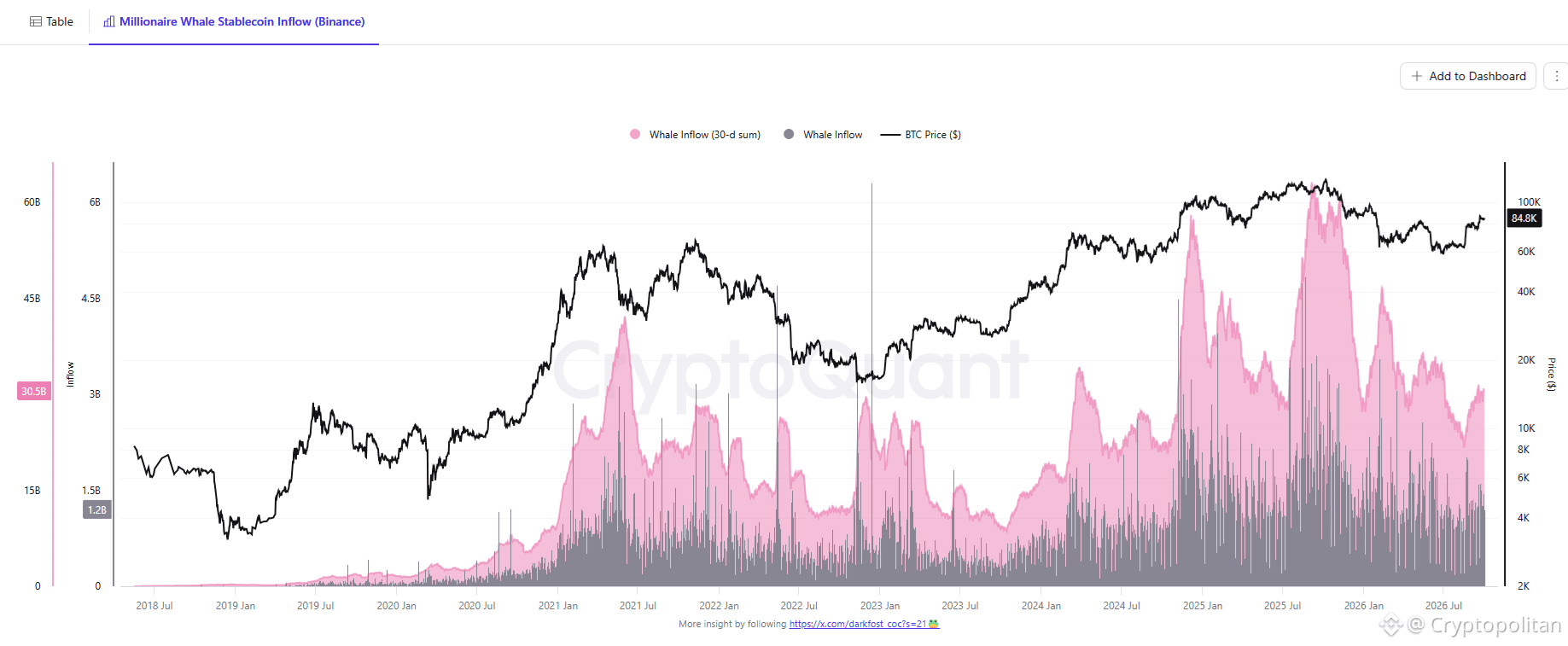
Despite a deep correction today, Bitcoin still remains rangebound in the consolidation pocket between $80.5K and $95k for the 11th week running. From tariff escalations to geopolitical friction, these macro headwinds have weighed heavily toward a risk off sentiment and discouraged any early momentum we saw during the start of the year.
This sentiment has seemingly spilled over into the institutional side. Spot Bitcoin ETFs in the U.S. have seen a pickup in sell side pressure since January 16th, with sustained outflows culminating in last week marking the second largest weekly net outflows to date. Despite the heavy outflows, ever since the deleveraging event on October 10th last year, Bitcoin has weathered this sell side pressure adamantly so far and continues to hold its broader consolidation range.
The question that bears answering now turns to what is propping up the price for BTC at the moment. For traders and investors, this is an important question to ask because prolonged consolidation in the face of constant macro headwinds and ETF outflows suggest that underlying demand is coming from somewhere more structural than short term speculation. Identifying current demand also gives perspective on any future price moves as it allows you to assess the quality and durability of any swings.
It’s clear that Bitcoin at the moment is looking for clear and decisive directionality. The lack of a breakout, however, does not imply a lack of demand. The sell side pressure from the ETFs are currently being absorbed by three pronged dynamic: demand from corporate treasuries, specifically Strategy, a cohort of whales continuing to accumulate and a quieter derivatives market.
Corporate Treasuries Providing a Bid
Bitcoin is currently around 13% down from the top of its consolidation zone it’s been in since November 16th. Within this timeframe, BTC Spot ETFs have seen a negative net flow of -$3.34 Billion. At current prices (~$83K), this equates to roughly 40.241 BTC of sell-side pressure, with the important caveat that ETF outflows occurred across multiple price levels, making this a BTC-equivalent approximation.
U.S. BTC Spot ETFs net daily flows from November 16th to 29th January. Source: SoSoValue
Source: The Block
On the other hand, since November 16, data from the block shows that cumulative Bitcoin holdings of treasury companies rose from 809.02k BTC to 881.04k BTC, an increase of 72,020 BTC, representing a roughly 8.9% growth over the period. In net terms, treasury buying alone exceeds ETF-driven selling by around 1.8x, helping explain why BTC remains constricted in a zone rather than breaking down in the face of consistent macro and outflow driven news.
Long Term Holder Net Position Change
Source: Checkonchain
Another key data point that explains why Bitcoin remains range bound for now is that selling pressure among long term holders has now dried up and in fact flipped positive since the start of the month. In on-chain analysis, Long Term Holders (LTH) are typically referred to as wallets holding Bitcoin for 155 days or longer. The chart seen above tracks the 30-day net change in LTH supply over BTC’s price. In simple words, it shows us whether patient, higher conviction holders are adding or removing exposure to their positions.
After a long period of LTH selling that accelerated after November last year, this dynamic has started to shift. The 30-day net position change has now flipped into the positive territory, standing at +177.08K BTC, meaning these holders, over the past month, have added that much to their collective holdings.
This not only marks a clear change from distribution to accumulation but also signals that coins sold into weakness are now being reabsorbed by holders with longer term outlook. What’s more is that, historically, positive shifts in LTH supply change have acted as a leading indicator of broader trend reversals.
That said, it’s important to be wary of the fact this is not a bottom signal or call for an immediate breakout. LTH accumulation can persist but macro conditions still play a crucial role in shaping short term price action and subsequent reactions from this group.
Derivatives Pressure Being Released
Source: The Block
Another important factor helping explain Bitcoin’s consolidation is the steady release of derivatives pressure. Over the last year, aggregate open interest in Bitcoin futures across the top 15 centralized exchanges peaked at approximately $64.52 billion on October 7, showing a heavily leveraged market with elevated speculative positioning.
However, following the liquidation event that unfolded after October 10, open interest fell off a cliff and has continued to go lower. As of now, aggregate open interest stands at around $37.53 billion, representing a sizable reduction in leverage across the system.
This decline in open interest suggests that excess leverage has been systematically flushed out, reducing both forced liquidations and reflexive momentum-driven moves. In such an environment, price action tends to compress: without aggressive long positioning to fuel upside or crowded shorts to trigger squeezes, Bitcoin is more likely to trade sideways as spot flows absorb residual supply.
In that sense, the current rangebound behavior is not necessarily a sign of indecision alone, but rather a reflection of a market that is resetting positioning and rebuilding from a cleaner base, where directional moves are more likely to emerge once leverage and conviction begin to re-accumulate.
What the Range is Actually Signalling
Bitcoin is currently correcting sharply to the downside. The fact, however, is that we still remain in a long term market structure. The market is still in a period of testing acceptance, albeit under increasing downside momentum, rather than resolving direction.
That said, there is the ETF realized price currently sitting at 86.6k, which is a key level that Bitcoin needs to reclaim. This zone has historically acted as a stabilization and accumulation area. A prolonged period below this zone will likely add sell side pressure as ETF holders are net underwater.
OpenAI targets year end IPO as rivalry with Anthropic intensifies
OpenAI has revealed plans for an IPO in Q4 2026 as the race to a public listing against rival Anthropic enters the final stretch. The AI company has been quietly growing its finance team ahead of the IPO, including hiring Ajmere Dale as the chief accounting officer and Cynthia Gaylor as the corporate business finance officer, who will oversee investor relations.
OpenAI’s chief executive, Sam Altman, is also likely to delegate some of his responsibilities in taking the company public to former Instacart CEO Fidji Simo. Simo is currently leading the product and business teams as OpenAI’s CEO of Applications.
Meanwhile, Altman does not seem excited about the AI company going public, based on his remarks on the Big Technology podcast last December. He actually thinks it would be really annoying. However, 2026 is expected to be a blockbuster year for stock-market debuts after the recent drought, according to the WSJ.
OpenAI executives express concern about Anthropic’s competition
Despite Altman’s half-hearted support for OpenAI’s public listing, the company’s executives have expressed concerns about losing to Anthropic in the race for an IPO. Part of the reason OpenAI’s executives are this worried is that Anthropic was founded by former OpenAI leaders, and it has already told its financial partners it is open to a public listing by the end of the year.
Both OpenAI and Anthropic are also competing with Elon Musk’s SpaceX, which is also aiming for a Summer IPO. SpaceX is hoping to raise over $1 trillion in the IPO, while OpenAI aims to raise over $100 billion in a pre-IPO round that would value the AI firm at $830 billion.
Meanwhile, Softbank is also discussing investing nearly $30 billion in OpenAI, and Amazon has already held talks with the AI company for an investment of up to $50 billion. OpenAI’s Sam Altman and Amazon CEO Andy Jassy are personally steering the negotiations. Other companies reportedly considering investing up to $40 billion in OpenAI include Microsoft and Nvidia.
On the other hand, Anthropic is in the process of raising a funding round that is likely to surpass its initial $10 billion target. The company has also held discussions with banks interested in helping with its IPO.
Anthropic follows OpenAI’s covert finance hiring
Similar to OpenAI’s strategy, Anthropic has also made several finance department hires behind the scenes in preparation for the anticipated end-of-year IPO. Anthropic has hired Andrew Zloto to lead capital markets and Blackstone investor Kevin Chang, whose employment has not been officially announced.
However, media reports suggest that both Anthropic and OpenAI are losing billions of dollars annually as they work to power existing products and build new AI models. Meanwhile, Anthropic is expected to break even for the first time in 2028, approximately two years ahead of OpenAI.
Therefore, whichever company lists first will probably benefit from a large number of public market investors. Individual investors seeking exposure to generative AI companies are also expected to participate in large numbers.
“We’re going to get into a period of potentially unprecedented I.P.O. deal sizes…But we are confident they’re executable given the scale of these companies and the investor interest.”
–Eddie Molloy, Global co-head of equity capital markets at Morgan Stanley
Molloy also believes that these listings could trigger a “feeding frenzy” among public market investors who have been waiting to gain from the AI boom. His sentiment is supported by Jeremy Abelson, an investor at Irvin Investors, who notes that it is the first time in 20 years that private companies have been this impactful and meaningful.
Meanwhile, Renaissance Capital observes that IPOs have been in a slump since 2021, when nearly 397 companies in the U.S. raised over $142 billion. It also notes that roughly 202 companies went public in the U.S. in 2025, raising $44 billion. However, this momentum has been affected by the uncertainty around tariffs.
Don’t just read crypto news. Understand it. Subscribe to our newsletter. It's free.
Securitize sees 841% revenue jump as it prepares to go public
Tokenization company Securitize announced an 841% increase in revenue for the nine months ended September 30, 2025, as it gets closer to going public through its planned merger with Cantor Equity Partners II (CEPT).
In the announcement, Securitize and Cantor Equity Partners II have publicly filed a Form S-4 registration statement with the U.S. Securities and Exchange Commission (SEC). This filing follows Pubco’s secret submission of a draft registration statement on Form S-4, which was previously revealed on November 13, 2025.
Securitize announced that the registration statement includes a combined proxy statement relating to the proposed business combination. It also includes Securitize’s most recent historical financial data up until September 30 of last year.
For the nine months ending September 30 of last year, Securitize reported total revenue of $55.6 million, an 841% increase from $5.9 million for the same period in 2024. Revenue increased by 129% to $18.8 million for the entire year ending December 31, 2024, from $8.2 million in 2023.
However, Securitize confirmed that the registration statement remains under SEC review. The leading platform went on to say that the completion of the proposed merger is subject to customary closing conditions, such as approval by CEPT shareholders and the registration statement becoming effective, after which Securitize Holdings is expected to list publicly.
If approved, Securitize would go public and start trading on Nasdaq under the SECZ ticker.
This deal between Securitize and Cantor Equity Partners II occurs at a time when tokenization is becoming more popular in traditional finance. Tokenized assets are becoming increasingly popular among international banks and asset managers such as JPMorgan and BlackRock.
On January 21, Investment giant BlackRock identified bitcoin and tokenization as the “themes driving markets” in 2026. In its 2026 Thematic Outlook, the investment firm pointed out that tokenization, or the digital representation of physical assets like stocks and real estate, is becoming more popular.
According to BlackRock, this adjustment is part of a shift in how investors access markets. A stablecoin, like one backed by the U.S dollar, is an early example of a tokenized asset.
Against this backdrop, BlackRock’s tokenized U.S. dollar money market fund (BUIDL), issued by Securitize, is increasingly used in decentralized finance (DeFi) and has nearly $2 billion in assets under management.
“In our view, as tokenization continues to rise, so will the opportunity to access assets beyond cash and U.S. Treasuries via the blockchain,” the report stated. Meanwhile, a Cryptopolitan report noted that BlackRock specifically identified the Ethereum blockchain as a potential beneficiary of tokenization expansion given its extensive use in creating decentralized applications and token infrastructure.
Institutional momentum is also building elsewhere. On December 15, JPMorgan Chase announced the launch of a tokenized money-market fund on Ethereum in response to increasing demand from institutional clients. The move represented JPMorgan’s first tokenized money market fund, making it the largest GSIB, or Global Systemically Important Bank, to construct such a vehicle on a public blockchain.
“Tokenization can fundamentally change the speed and efficiency of transactions, adding new capabilities to traditional products,” Donohue said in a statement.
Looking further ahead, the market for tokenized financial instruments, or real-world assets (RWAs), could reach $18.9 trillion by 2033, according to a joint analysis by Boston Consulting Group (BCG) and payments-focused digital asset infrastructure company Ripple.
That projection represents a compound annual growth rate (CAGR) of 53%, falling between the report’s cautious estimate of $12 trillion in tokenized assets over the next eight years and its more optimistic estimate of $23.4 trillion.
The joint report outlined tokenized government bonds, specifically U.S. Treasuries, as an early success for tokenization. These products will enable corporate treasurers to easily transfer stalled capital from digital wallets into tokenized short-term government bonds without the need for middlemen, maintaining liquidity continuously and in real time.
Beyond sovereign debt, BCG and Ripple noted that private credit is another sector attracting attention.
Get seen where it counts. Advertise in Cryptopolitan Research and reach crypto’s sharpest investors and builders.
Microsoft stock dropped 10%, wiping out $357 billion in value.
Microsoft shares got hammered on Thursday, falling 10% and slicing off $357 billion in value in what is now the biggest one-day drop for the company since the world went into lockdown in March 2020.
By the end of Thursday trading session, Microsoft’s total value landed at $3.22 trillion, down from just under $3.6 trillion the day before.
The selloff came right after Microsoft’s earnings report hit the wire. A lot of traders weren’t impressed. The reaction was brutal. Software-focused investors ran for the exit, dragging the iShares Expanded Tech-Software ETF down 5%.
The Nasdaq Composite dropped 0.7%. Meta stock didn’t get caught in the mess. It actually shot up 10% after solid earnings and upbeat guidance the day before. But the heat stayed on Microsoft, and every weak spot in its numbers got picked apart.
Traders unhappy with cloud growth, Windows forecast, and lower margins
The biggest problem was Azure. The growth rate for Azure and other cloud services came in at 39%, just under the 39.4% Wall Street had expected. Not a huge gap, but enough to rattle confidence. On top of that, the company predicted $12.6 billion in revenue for its Windows and hardware business, officially called the More Personal Computing segment. That’s well below the $13.7 billion expected. The new quarter’s profit margin also came in lighter than some analysts hoped.
CFO Amy Hood tried to explain why cloud growth wasn’t stronger. She said if they’d handed more GPUs to Azure instead of keeping them for internal use, the numbers would’ve looked better. “If I had taken the GPUs that just came online in Q1 and Q2 and allocated them all to Azure, the KPI would have been over 40,” Amy said.
Ben Reitzes from Melius Research told CNBC the real issue is infrastructure. “I think that there’s an execution issue here with Azure, where they need to literally stand up buildings a little faster,” Ben said, pointing at Microsoft’s slow data center rollout.
AI spending raises concerns as Copilot fails to boost revenue
Some analysts are now raising questions about how Microsoft is spending on artificial intelligence. Karl Keirstead and his team at UBS said they weren’t seeing much traction with Microsoft 365 Copilot, the paid AI add-on tied to the Office suite. “M365 revs growth is not accelerating due to Copilot,” the team wrote, adding that many of their usage checks didn’t show strong demand. “We think Microsoft needs to ‘prove’ that these are good investments.”
Others on Wall Street took a more patient view. Mark Moerdler’s team at Bernstein said the company made a conscious choice to think long-term, not just chase quarterly pops. “Investors need, we believe, to understand that management made a cognizant decision to focus on what is best for the company long term,” the note said. But that didn’t stop the selloff.
Amy also mentioned that capital expenses would tick down slightly this quarter. That was one of the few soft landings in a report that knocked Microsoft off balance in a big way.
If you're reading this, you’re already ahead. Stay there with our newsletter.
The U.S. Department of Justice (DOJ) has finalized the seizure of more than $400 million in cryptocurrencies and related assets tied to the now-defunct darknet cryptocurrency mixer Helix.
Before the DOJ’s involvement, Helix worked to combine cryptocurrency from various users and pass it through numerous transactions to obscure its origin, destination, and ownership.
Earlier, federal authorities had already seized control of assets belonging to Larry Dean Harmon, who managed Helix as it moved more than $300 million in crypto from 2014 to 2017. In August 2021, Harmon admitted to conspiring to launder money. He was sentenced in November 2024 to 36 months in prison, 3 years of supervised release, and the forfeiture of funds and property.
Helix had managed over 350000 BTC for customers
Court records show Helix was among the most widely used darknet mixers, especially popular with online drug sellers looking to clean their illegal earnings. The mixer handled close to 354,468 BTC on behalf of users, which at that time was about $300 million. Much of the digital currency was linked to illegal drug platforms on the darknet, and Harmon made money by taking a share of each transaction.
Helix and Grams were built to connect with most darknet marketplaces, including the infamous AlphaBay, with Helix’s API making it easy for platforms to route withdrawals through the mixer. Investigators later traced large sums totaling tens of millions of dollars to the service. The Internal Revenue Service Criminal Investigation (IRS-CI) and Homeland Security Investigations (HSI) played a central role in cracking the case.
Regarding the Helix asset forfeiture, a federal prosecutor specializing in cybercrime cases said the focus wasn’t solely on punishment but on dismantling the economic networks behind crime. He added, “The inclusion of real estate and traditional financial assets shows investigators are following the money wherever it goes.”
The U.S. Treasury had earlier sanctioned Tornado Cash, but later removed the sanctions
Earlier, the U.S. Department of the Treasury’s Office of Foreign Assets Control (OFAC) imposed sanctions on Tornado Cash, a platform that has facilitated the movement of billions in virtual currency for illicit purposes.
Over $455 million of the laundered total was stolen funds from the Lazarus Group, a North Korean state-backed hacking organization sanctioned by the U.S. The mixer also helped launder more than $96 million from the Harmony Bridge hack on June 24, 2022, and at least $7.8 million from the Nomad hack on August 2, 2022, according to the DOJ records.
In 2025, however, the Treasury Department said it had lifted sanctions on Tornado Cash, after the Trump administration examined the unique legal and policy challenges involved.
Treasury Secretary Scott Bessent noted, “Digital assets present enormous opportunities for innovation and value creation for the American people. Securing the digital asset industry from abuse by North Korea and other illicit actors is essential to establishing U.S. leadership and ensuring that the American people can benefit from financial innovation and inclusion.”
At the time, some crypto executives welcomed the decision, including Coinbase CEO Brian Armstrong. He argued, “No one wants to see bad folks use crypto. But privacy is an important feature for many law-abiding citizens, and you can’t sanction open source code.”
Claim your free seat in an exclusive crypto trading community - limited to 1,000 members.
Kevin’s path from Wall Street to the Fed’s inner circle
Donald Trump told reporters he would name the new Federal Reserve chair on Friday morning, but the thing is, he already has.
“It’s going to be somebody that lot of people think could have been there a few years ago,” he said. That somebody is Kevin Warsh. None of the other nominees (Rick Rieder, Chris Waller, and Kevin Hassett) fit that description, because Trump considered Kevin eight years ago before picking Jerome Powell.
For those of us obsessed with Wall Street, Kevin is a name that has been very well-known for at least 2.5 decades, especially after the 2008-09 financial crash when he worked behind closed doors trying to keep markets stable.
Kevin’s path from Wall Street to the Fed’s inner circle
Before the Fed, Kevin worked at Morgan Stanley from 1995 to 2002, rising to executive director in the firm’s mergers and acquisitions unit.Then he made the jump to the White House.
From 2002 to 2006, he was Special Assistant to the President for Economic Policy and Executive Secretary of the National Economic Council.
Kevin focused on domestic finance, banking rules, and consumer protection. He was also the main bridge between the White House and independent financial regulators.
By January 2006, President George W. Bush nominated Kevin and Randall Kroszner to fill two open seats on the Federal Reserve Board. At just 35, Kevin became the youngest person ever nominated to the Fed, which somehow triggered criticism.
Preston Martin, a former Fed vice chair, said it was “not a good idea” and that he’d vote no if he could. Bernanke later wrote, “His youth generated some criticism… but Kevin’s political and markets savvy and many contacts on Wall Street would prove to be invaluable.”
During his confirmation hearing in February 2006, Kevin leaned on his market background. “I hope that my prior experience on Wall Street, particularly my nearly 7 years at Morgan Stanley, would prove beneficial to the deliberations and communications of the Federal Reserve,” he said.
By March 2006, he attended his first Federal Open Market Committee (FOMC) meeting.
Warsh warned of liquidity risks and was early critic of long-term stimulus
Less than a year before Bear Stearns collapsed, Kevin spoke about market liquidity. In March 2007, he told the FOMC:-
“The benefits of greater liquidity are substantial… But markets can become far less liquid due to increases in investor risk aversion and uncertainty. While policymakers and market participants know with certainty that these episodes will occur, they must be humble in their ability to predict the timing, scope, and duration.”
As 2009 came, unemployment hit 9.5%. The Fed was still trying to help the economy recover. But Kevin said it might be time to stop. “If policymakers insist on waiting until the level of real activity has plainly and substantially returned to normal… they will almost certainly have waited too long,” he warned.
Kevin pointed to high bank reserves and excess liquidity. “There is a risk… that the unusually high level of reserves… could fuel an unanticipated, excessive surge in lending.”
That surge never came. Tim Duy, an economics professor, fired back. He said the Fed seemed “more willing to use unconventional monetary policy to support Wall Street than Main Street.” Still, Kevin kept raising doubts about the Fed’s approach.
In November 2010, the Fed planned to push down long-term interest rates in a second round of quantitative easing (QE2). Unemployment was near 10%, but Kevin was not on board. He only agreed to vote yes “out of respect” for Bernanke. “If I were in your chair, I would not be leading the Committee in this direction,” he said. “And frankly, if I were in the chair of most people around this room, I would dissent.”
He continued, “I think we are removing much of the burden from those that could actually help reach these objectives… and we are putting that onus strangely on ourselves rather than letting it rest where it should lie.”
Kevin didn’t want monetary policy to cover for weak action from Congress. It was rare for a Fed governor to suggest holding back support to push other parts of government to do their job.
Exit from the Fed and what comes next for monetary policy
Ben Bernanke, in his memoir, wrote about the QE2 debate. He said, “Kevin Warsh had substantial reservations… Now that financial markets were functioning more normally, he believed that monetary policy was reaching its limits… and that it was time for others in Washington to take on some of the policy burden.”
Bernanke said Kevin voted in favor “as he had promised,” but soon after, he gave a speech in New York and published an op-ed in The Wall Street Journal. In it, Kevin said the Fed couldn’t fix everything alone and called for tax and regulatory reforms to grow the economy. Bernanke agreed that infrastructure spending and other government actions would help more. But none of those things happened.
The Fed, Bernanke wrote, “was the only game in town.” Three months later, Kevin left. He had said from the start he’d stay about five years. Bernanke added, “We remain close to this day.”
Kevin sent his resignation letter to President Obama on February 10, 2011. His exit became official around March 31 that year. CNBC’s Larry Kudlow reacted by calling him a “hard money hawk,” a label often used for people who don’t like easy money policies.
Trump passed over Kevin once. He didn’t a second time. And now in 2026, Kevin finally runs the Fed. This is a full-circle moment for a man who’s spent years criticizing the institution he now leads. His record is packed with dissent, sharp comments, and refusal to go along with popular policies just to fit in.
Trump accuses the IRS and Treasury of failing to protect tax records.
The Trump family and organization are suing the IRS and the US Treasury Department for $10 billion, alleging that they failed to protect their confidential records.
According to the lawsuit, which was filed in a Miami federal court, the tax data was shared in 2019 and 2020 by a former contractor who worked with the IRS and then published in the news media.
Trump accuses the IRS and Treasury of failing to protect tax records.
According to the lawsuit, the IRS and the Treasury Department ignored critical safeguards for private tax information, allowing anyone to access or share it without authorization.
Trump and other plaintiffs claim they were unable to implement mandatory safeguards to prevent the theft or sharing of tax information, as strict rules govern its confidentiality. Because of these flaws, a former IRS contractor was able to access and leak tax information for 2019 to 2020.
The plaintiffs allege that oversight gaps enabled Littlejohn to access confidential data. Without proper monitoring, details emerged in outlets including ProPublica and the New York Times.
They also say that once the tax information was in the public domain, it spread quickly and reached millions of people, making its disclosure difficult to contain. According to the Trumps, the leaks damaged their reputation and portrayed them in a negative light, prompting people to question their business practices.
The complaint also states that the published reports hinted at misconduct and raised the possibility of fraud, even though the plaintiffs argue that the tax records do not substantiate these allegations.
Therefore, the lawsuit argues that the agencies’ failure to protect the data created a false impression and damaged the plaintiffs’ personal and business reputations.
Former IRS contractor admits to leaking tax information
A 40-year-old man, Charles Littlejohn, faces charges linked to the incident. Once employed by the IRS as a contractor, his position involved work on sensitive financial platforms.
Access to internal tax databases came through duties assigned during his tenure there. That level of entry appears connected to actions now being examined. Details continue emerging about how responsibilities tied to the role may have played a part.
From his role at Booz Allen Hamilton, access began. The company had an active contract with the US Treasury just as the tax records surfaced. That link opened the door – no separate path needed. Work ties in place, then made it possible.
In exchange for his guilty plea and testimony, Littlejohn confessed to disclosing President Trump’s tax returns to The New York Times. He also admitted to sharing tax information about other rich individuals with ProPublica, an investigative news organization.
In a 2024 deposition, Littlejohn testified that the shared information included tax returns for all of President Trump’s ventures, the lawsuit says.
Trump’s lawyers said the leaks were the actions of a politically motivated employee and pointed out that millions of people viewed the documents after they were leaked, which widened the initial breach and made the damage harder to contain.
The Treasury Department was swift in its response before the plaintiffs filed the lawsuit. Secretary of the Treasury Scott Bessent terminated the contract between the Treasury Department and Booz Allen Hamilton after learning of the leaks from the company.
This shows, as the lawsuit claims, that the government admits to oversight failures.
Don’t just read crypto news. Understand it. Subscribe to our newsletter. It's free.
Top 3 Altcoins as Cheap Cryptocurrency Market Turns Bullish
The cryptocurrency market is entering a period of revived optimism due to the increased search of high-growth assets. Although the bigger market is indicative of a bullish market, the line is becoming distinctly drawn between old and new technology. It is becoming increasingly apparent to many investors that the iconic pieces of the old are starting to have a hard time dragging their own weight.
These top altcoins have serious challenges and a new crypto is emerging with more robust growth indicators. This change will be a transition of coins being fueled by social media hype to protocols being made of sound financial frameworks. The market does not merely want a low price anymore, the market wants a resolution to the issues that continue to suspend older coins higher.
Shiba Inu (SHIB)
Shiba Inu is also one of the most famous in the category of low-cost cryptocurrencies. It had initially become known because of its huge price spikes and a culture that was able to make their small fortunes out of big fortunes.
SHIB is currently trading at very low decimals with a market capitalization that remains in the billions. The challenge posed by this huge size is now its greatest challenge. The market cap is already very high, which means that a small percentage change in price will take an amazing amount of new money to push the token.
This is what is referred to as a liquidity problem. The coin was the favorite of early investors as it rose and fell very quickly, however, the chart has been illustrating a slow movement and the failed breakout attempts recently. Whenever the price attempts to increase, it starts facing a wall of sell orders by those who want to leave.
Pepecoin (PEPE)
The same thing happened to Pepecoin, which burst into the market with tremendous hype and a steep adoption curve. It attracted the internet news and became an instant star in the meme coin industry. PEPE, however, is now experiencing a narrative problem.
The initial enthusiasm that helped it to rise is slowly disappearing and community demand is also displaying some weakness. The token does not have an obvious use case other than on the social media in jokes, and it cannot identify a reason to have a long-term recovery.
The trend is on the negative side and its future price is not optimistic by most analysts. In comparison to the projects that have a real utility, PEPE is completely dependent on the purchase of the story by new people.
Mutuum Finance (MUTM)
Mutuum Finance (MUTM) is coming out to be the solution to the issue with SHIB and PEPE. It does not take huge amounts of liquidity to induce a shift in its price, and its expansion is pegged on actual financial action as opposed to internet euphoria.
This protocol is developing a dual-market lending system which can enable instant pool based loans as well as bespoke peer-to-peer agreements. With the mtTokens, the platform will connect the value of the token to the interest paid on the protocol. This predictable form of lending will keep the system stable and operational even in the face of a change in market moods.
The project is now experiencing an epic influx at its infantile stages. It has generated more than $20.1 million funds using a sum of above 19,900 investors. In the present stage, MUTM is selling out at $0.04, and 1.82 billion tokens will be distributed during the initial phase.
More than 835 million tokens are already sold proving that the community is rushing to find their place. This framework offers a proper growth path that is facilitated by real money that is entering the system.
Roadmap Catalysts and Price Prediction
Mutuum Finance has officially moved from a development-heavy phase into testing utility with the launch of its V1 protocol on the Sepolia testnet. This milestone is essential because it allows the global community of over 19,000 holders to verify the lending mechanics and security features in a live, risk-free environment.
The V1 protocol on Sepolia serves as the foundational engine for decentralized lending and allows users to interact with several advanced financial tools. You can supply assets like ETH, USDT, LINK, and WBTC into shared liquidity pools to provide liquidity. When you deposit these assets, the protocol mints mtTokens, which act as interest-bearing receipts that grow in value automatically as borrowers pay interest back into the system.
Users can also post collateral to borrow liquidity, with the system issuing debt tokens to track the principal and the interest accrued over time. To keep the platform secure, an automated liquidator bot is active to monitor collateral ratios and manage risk during market swings.
The current MUTM entry price of $0.04 offers a final 50% discount. The crypto market change is evident, and many analysts believe MUTM is set to be a top option in the new bullish cycle. While established meme coins like PEPE and SHIB are mature assets that may see steady growth of 15% to 30%, analysts suggest MUTM has the potential for a much faster repricing. Current predictions indicate that MUTM could realistically climb to the $0.40 to $0.50 range as V1 attention accelerates and the mainnet follows. This would represent an increase of roughly 900% to 1,200% from the current phase.
For more information about Mutuum Finance (MUTM) visit the links below:
Perplexity strikes Microsoft AI cloud deal amid Amazon legal fight
Perplexity, an American AI-powered search engine company, has concluded a $750 million deal with Microsoft Corp., a leading American multinational technology company. Under this deal, the AI startup will use Microsoft’s Azure cloud service.
However, it is worth noting that this agreement was struck at a time when Perplexity was involved in a legal dispute with Amazon.com Inc., its long-standing cloud partner.
Despite this legal dispute, sources close to the situation, speaking on condition of anonymity, acknowledged that the three-year deal is a significant milestone for Perplexity, offering several key advantages. One major advantage is that the agreement will enable the AI-powered search engine firm to use AI models through Microsoft’s Foundry service, including those developed by OpenAI, Anthropic, and xAI.
Regarding the matter, a Perplexity representative commented, “We are thrilled to team up with Microsoft for access to advanced models from X, OpenAI, and Anthropic.”
Microsoft and Perplexity ink a major technology contract
Following the spokesperson’s remarks, several Perplexity investors raised concerns about the firm’s relationship with Amazon, sparking heated industry discussions. In an attempt to address this controversy, the representative argued that the AI startup will maintain its expenditure with Amazon Web Services, which has long been the firm’s preferred cloud provider, as part of the Microsoft deal.
“AWS continues to be Perplexity’s preferred cloud infrastructure provider, and we look forward to announcing further expansions of that partnership in the upcoming weeks,” while maintaining anonymity, the spokesperson said.
At this point, several reports have demonstrated heightened interest in the topic, demanding clarity from Microsoft and Amazon. However, when they contacted both firms for comment on the situation, they declined to respond.
In the meantime, reports highlighted that Perplexity has solidified its position as one of the top-tier, high-level firms but faces stiff competition from tech giants, including Alphabet Inc.’s Google and OpenAI, as it aims to revolutionize the online search experience. Another issue is that the AI startup’s funding total is lower than that of OpenAI and Anthropic, which have enabled them to secure several significant infrastructure deals.
On the other hand, sources claimed that Perplexity-Microsoft’s recently finalized deal unveils a growing trend in which big firms frequently rent infrastructure from diverse cloud service providers to unlock exclusive features and reduce their reliance on any one provider.
Notably, this trend gained significant momentum with the rise of AI, as companies experiment with new tools and enter into agreements with both model developers and cloud service providers, which play a key role as hosts of the software.
While this practice continues in the industry, reports noted that Perplexity relied on AWS for the majority of its operations, using Amazon’s Bedrock service to integrate Anthropic models into its search engine. This finding was made public following a statement from Aravind Srinivas, the Chief Executive Officer of Perplexity, at AWS conferences.
Perplexity-Amazon’s legal battle sparks heated debates in the tech industry
In 2023, during a crucial event, Srinivas admitted that he had decided to fully commit to Amazon’s cloud services. In return, AWS identified Perplexity as one of its premier AI customers.
Nonetheless, recent reports have highlighted that the two tech giants are embroiled in a legal conflict. This legal battle began in November, when Amazon filed a complaint against the AI-powered search engine company to prevent it from granting users permission to shop and buy items specifically from Amazon’s online marketplace using its AI tools.
Responding to this move, Perplexity retaliated by framing the company’s behavior as bullying and denouncing its actions as a violation of user choice. Afterwards, Srinivas issued a statement alleging that his firm had generated hundreds of millions in investment commitments to AWS.
If you're reading this, you’re already ahead. Stay there with our newsletter.
OpenAI to retire popular GPT‑4o ChatGPT model next month
Several ChatGPT AI models, including the popular GPT-4o, will be retired next month as OpenAI focuses on newer versions of GPT-5, which most users currently use.
The organization stated that it will discontinue GPT-4o from ChatGPT on February 13, along with GPT-4.1, GPT-4.1 mini, and OpenAI o4-mini. This is because the company realized that user behavior has changed, with most people using GPT-5.2 for their daily needs.
OpenAI removes GPT-4o as users switch to newer models
OpenAI launched GPT-4o in May 2024. The model was designed to convey a more natural, human feel in chat sessions. It had a warmer tone compared to other ChatGPT models and attracted people seeking a more expressive, creative experience.
This strategy helped GPT-4o attract a loyal group of Plus and Pro users. These users used the model for ideas, writing, and brainstorming, and reported that it was easier to talk to and better for open-ended work than what was available at the time.
However, over time, users’ interactions with ChatGPT have evolved. Currently, according to OpenAI, “about 0.1% of users choose GPT-4o daily,” with most users now using “GPT-5.2, which has become the default model for most daily tasks.”
Considering that very few people are using GPT-4o these days, OpenAI claims that supporting this model distracts from efforts to improve the models most people actually use. The time and resources used to support these older models can instead be devoted to improving the newer models, making them faster, more reliable, and easier to use.
By discontinuing GPT-4o and other less frequently used models, OpenAI claims it can devote more effort to improving the performance, reliability, and creativity of its new models, especially amid increasing demand for better AI tools.
The company further noted that GPT-5.2 delivers more powerful creative output and greater control over the model’s personality. Users can also fine-tune the GPT-5.2 model’s response. As a result, the need to maintain the older versions of the model, such as the GPT-4o, is reduced.
OpenAI says user feedback helped new models replace GPT-4o
GPT-4o is now ready for retirement after a period characterized by talks that began in August. This followed OpenAI’s decision to withdraw the model shortly after releasing the latest version, dubbed GPT-5. The decision was immediately opposed by the users, who felt it had come too early.
A lot of people back then felt that GPT-5 was a regression because it didn’t have the warmth, grasp, and flowing conversation that they were used to in GPT-4o.
OpenAI decided to reverse the decision and restore GPT-4o for paying subscribers. They stated that many of their subscribers required additional time to transition their critical tasks to the new models without any disruption.
However, following this reversal, OpenAI’s Chief Executive Officer, Sam Altman, promised users that the organization would give them “plenty of notice” before making a permanent decision regarding the closure of GPT-4o.
Despite GPT-4o’s presence in the market, OpenAI has been paying close attention to the feedback it has been receiving and using it to make subsequent versions even better.
The focus has been on refining GPT-5.1 and GPT-5.2 in terms of tone, creativity, and conversational style. The company states that the new versions allow users to adjust ChatGPT’s personality, letting people control the level of warmth or enthusiasm in the chat rather than being stuck with a single default setting.
OpenAI also said the previous debate on the older model touched on broader issues, such as how people tend to get emotionally attached to AI and the possibility that AI might give overly agreeable responses. They emphasized that they are working on solving these issues with the new models and versions of ChatGPT.
If you're reading this, you’re already ahead. Stay there with our newsletter.
Optimism votes to approve highly contested OP buyback program
Executives at Optimism Collective have officially passed a proposal that commits 50% of Superchain sequencer revenue to buy back the company’s OP token.
The buyback strategy will start in February and make use of over-the-counter (OTC) providers to convert the Ethereum from the sequencer into OP.
The Optimism Collective buyback strategy
The Optimism Collective has officially passed a proposal that had an 84.4% approval rating. The proposal is called OP-0017 and allows the Optimism Foundation to use half of all net profits generated by the Superchain sequencer to buy back OP tokens. The program is a 12-month pilot scheduled to begin in February 2026.
Under the approved plan, the Foundation will partner with an over-the-counter (OTC) provider to execute monthly conversions of Ethereum (ETH) into OP. These repurchased tokens will be held in the Collective treasury, and their final use, which could be staking rewards, ecosystem grants, or potential future burns, will be determined by community votes.
Cryptopolitan recently reported that the Optimism (OP) token hit a record low of $0.2519 in December 2025, leading to this “revenue-sharing” model.
Over the past year, the Superchain generated approximately 5,868 ETH in revenue. At current market valuations, the 50% allocation would represent roughly $8 million in annual buyback pressure, but conversions will pause if monthly revenue falls below $200,000.
Optimism is scheduled to unlock 31.34 million OP tokens on January 31, which accounts for approximately 1.62% of the circulating supply and is valued at roughly $9 million based on current prices.
Are buybacks effective?
By aggregating fees from dozens of chains built on the OP Stack, Optimism is betting that total volume will provide a more stable revenue base than any single network could achieve alone.
The company recently released a 10-year post-quantum roadmap showing its plans to phase out traditional wallet signatures by January 2036 to protect the Superchain against future threats from quantum computing.
Jupiter co-founder Siong Ong recently challenged the protocol’s $70 million buyback, noting that it failed to move the JUP price during the massive 2025–2026 token unlocks. Helium (HNT) also began to focus on operational expansion after finding buybacks ineffective.
Want your project in front of crypto’s top minds? Feature it in our next industry report, where data meets impact.
Is the Solana Rally Over? Whales Dump SOL to Accumulate This Cheap Crypto as V1 Protocol Activated
There has been a huge flow of capital in the top cryptocurrency market. In the past, the focus was placed on the big high-speed networks that took the lead in the charts. Nevertheless, there has been a silent but strong change in on-chain statistics in recent times. Institutional investors are starting to migrate away from established giants and into a new direction.
They are looking at a project which has already passed planning and entered into a working ecosystem. With the official launch of V1 protocol of a new lending giant the intelligent money is flowing rapidly to get first in line. The engine has just started running, the code is alive and the market is responding with the highest urgency.
Solana (SOL)
Solana has been credited with being the main threat to the leaders of the market. It had mythical early growth propelled by huge throughput and a dedicated fraternity. Solana has already increased its market capital to billions but its price movement is in a very challenging stage as of January 2026.
SOL is currently trading at approximately $124 and it has not been able to regain its previous glory. It is experiencing strong resistance at the $145 level and the momentum which served its upward actions is starting to moderate.
There is a very reserved or even negative perspective of Solana in the short run by many analysts. According to some experts, it may fall significantly deeper in case it is unable to support itself at a price of $100. That is why most of them are opting to make profits and advance to newer and higher utility protocols with more capacity to grow.
Mutuum Finance (MUTM)
Mutuum Finance (MUTM) is a new crypto, a decentralized lending and borrowing protocol developed with the next generation of lending. It is not a memo coin, but an actual financial tool. The protocol will enable users to lend their possessions to receive yield or borrow against it without ever selling their crypto. It is an actual world solution to those who require liquidity and wish to retain their long term positions.
A significant milestone has been completed by the project as it now has activated its V1 protocol on the Sepolia testnet. This is a very essential procedure as it demonstrates that the technology works. The users can now test the liquidity pools and the system of the mtTokens in a real environment.
During this testing phase, users can interact with debt tokens that track principal and interest, while also observing how the automated liquidator bot manages collateral risk to keep the system secure. These features allow for a full simulation of the lending cycle using ETH, USDT, LINK, and WBTC to ensure every component is ready for the upcoming mainnet launch.
The protocol has been audited by Halborn Security, which is among the leading companies in the globe to maintain the utmost safety. It is this degree of professional examination which makes the big investors confident in putting millions of dollars in the system.
Involvement and Universal Availability
The investment amount in Mutuum Finance has been huge, as it has collected more than $20.1 million through more than 19,000 holders. This massive fan base is one of the strongest indicators that the market shares the vision of the platform.
The project is designed to make the community engaged by providing a 24-hour leaderboard. The highest daily contributing player earns a bonus of $500 in MUTM tokens every day. This results in an unending flurry of work in the direction of the complete launch of the project.
The project is also a very easy one to join. The user is not required to be a technical professional since the site accepts direct payments via cards. It enables both the retail and institutional customers to get involved by use of a simple credit or debit card. This accessibility is one of the main factors as to why the supply is being taken so fast all over the world.
Reason Behind the Whales Shifting
The leading crypto investors are confident that MUTM is set to experience a much greater growth than SOL in terms of its token appreciation in the years 2026 and 2027. The reasoning is simple math. New investment in Solana requires billions of dollars to increase its price twice.
A protocol such as MUTM is in its infancy and therefore the growth potential is far greater. MUTM is at stage 7 and is at a price of $0.04. The participants are already considering a 50% increase in value of the tokens at a confirmed price of $0.06.
Phase 7 is selling significantly better than its predecessors, and with a recent allocation of whale-sized allocations of over $115,000. Large buyers joining the market at this point serve as a shooting aneurysm to the rest of the market. These investors are interested in having the chance to buy the MUTM at $0.04 price before the next crypto stage of the price increase.
The amount supplied is limited, and as 1.82 billion tokens are given to the initial phases, almost half of them were sold already. The closer the V1 protocol gets to the mainnet, the smaller the window of opportunity to join in with a discount is getting.
For more information about Mutuum Finance (MUTM) visit the links below:
Elon Musk's SpaceX is planning to merge with xAI ahead of the planned public offering later this ...
American aerospace manufacturer SpaceX is reportedly looking to merge with xAI ahead of the planned public offering later this year. The initiative would combine Elon Musk’s rockets, Starlink satellites, the X social media platform, and the Grok AI chatbot.
An individual briefed on the matter told Reuters that the combination of both firms would give fresh momentum to SpaceX’s effort to launch data centers into space. The merger also comes as Musk battles for supremacy in the artificial intelligence space against major tech giants, including OpenAI, Meta, and Google.
Musk sets up two entities in Nevada to facilitate merger transaction
🇺🇸 SPACEX + xAI MERGER TALKS HAPPENING
Elon’s looking to merge SpaceX with xAI ahead of a possible IPO.
This could give xAI access to SpaceX’s massive infrastructure and data power, and make the IPO even bigger.
If you thought Grok was just a chatbot, think bigger. Way bigger.… pic.twitter.com/rfj7DdDyxp
— Mario Nawfal (@MarioNawfal) January 29, 2026
According to a Reuters report, xAI shareholders would receive SpaceX shares in the proposed merger. He also disclosed that Musk has established two entities in Nevada to facilitate the transaction. However, the individual did not detail the deal’s value, its primary rationale, or its potential timing.
Corporate filings in Nevada show that Musk launched both entities on January 21. According to reports, one entity is a limited liability company, with SpaceX and its Chief Financial Officer, Bret Johnsen, listed as managing members. The other entity also lists Johnsen as its only officer. The corporate filings provided limited information about the entities’ purposes or roles in any deal.
The anonymous individual revealed that the deal offers some xAI executives the chance to receive cash instead of SpaceX shares. He also confirmed that no executive has reportedly signed any final agreement, and the timing and structure of the transaction remain fluid.
Cryptopolitan previously reported that SpaceX plans to raise more than $25 billion through an IPO later this year. The move will allegedly boost the aerospace manufacturer’s valuation to over $1 trillion. The firm is currently the world’s most valuable privately held company, with a valuation of about $800 billion. xAI’s valuation as of November is around $230 billion.
Musk also revealed plans to use xAI to establish a massive supercomputer for AI training in Memphis, Tennessee, called Colossus. The initiative follows SpaceX’s plan to invest $2 billion in xAI as part of the firm’s &$5 billion equity fundraising.
“The lowest cost place to put AI will be in space. And that will be true within two years, maybe three at the latest.”
-Elon Musk, Co-Founder and CEO of SpaceX.
Musk aims to leverage solar energy to power space-based AI processing, thereby mitigating the cost of generating the computing power needed to train AI models. Other firms are working on the same technology, with Blue Origin revealing a new high-capacity satellite backbone network. Google is also looking to establish space-based data centers with its Project Suncatcher.
SpaceX and xAI merger advances footing for defense contracts with the Pentagon
Caleb Henry from space research firm Quilty Analytics argued that combining SpaceX and xAI could advance the company’s footing for major defence contracts at the Pentagon. The Pentagon has been actively adopting AI across its military networks, already having a $200 million contract with xAI to provide Grok products.
U.S. Defense Secretary Peter Hegseth visited SpaceX‘s Starbase development site in Texas earlier this month, where he championed xAI’s language model and chatbot, Grok. He argued that the chat platform and the LLM will be integrated into military networks as part of the Pentagon’s AI acceleration strategy. The strategy aims to speed up the U.S. military’s decision-making and planning.
Musk previously combined the social media platform X with xAI in a share swap last year. The initiative gave the AI startup access to X’s data and distribution. The techpreneur also used Tesla shares in 2016 to purchase his solar energy company, SolarCity. Musk’s electric vehicle manufacturer revealed on Wednesday plans to invest approximately $2 billion in xAI.
If you're reading this, you’re already ahead. Stay there with our newsletter.
Apple reportS $143.8 billion in Q1 revenue, up 16% from last year
Apple brought in $143.8 billion for the December quarter, beating every estimate. That’s a 16% jump from last year. Profit hit $42.1 billion, or $2.84 per share, up from $2.40. Analysts were only expecting $2.67. After the report, shares rose 3% in extended trading.
The biggest reason is, of course, the iPhone 17. It drove $85.27 billion in sales, which is 23% higher than a year ago. Wall Street expected only $78.65 billion. Timmy Cook said, “The demand for iPhone was just simply… staggering.”
iPhone sales explode as China drives results
Apple made $25.53 billion in China, Taiwan, and Hong Kong. That’s up 38%. Cook said it was because of the iPhone.
“We set an all-time record for upgraders in mainland China, and we saw double digit growth on switchers.” Upgraders are old users buying new models. Switchers are those ditching Android.
Tim said, “We saw a lift that, frankly, was much greater than we thought we would see.” The jump came from the product itself, not marketing. It’s clear iPhone 17 did the work.
The number of Apple devices now active is 2.5 billion, up from 2.35 billion a year ago. That includes iPhones, Macs, and iPads. It also tells you how many users are tied into the company’s ecosystem.
That number matters for services like Apple TV, iCloud, and App Store purchases. The Mac didn’t perform as well. It brought in $8.39 billion, lower than the $8.95 billion forecast. Sales dropped 7% from the same period last year. Apple released a new MacBook Pro in November with the M4 chip. That didn’t boost results much.
The iPad did better. Sales were $8.6 billion, which is 6% higher than last year. That beat expectations of $8.13 billion. Tim mentioned that half of the people who bought an iPad were first-time buyers.
Services and wearables produce mixed outcomes
Apple made $30.01 billion from services. That includes things like Apple TV, iCloud, advertising money from Google, and AppleCare. The forecast was $30.07 billion, so the result was basically flat. But Tim said Apple TV viewership rose 36% in December compared to last year.
On wearables and accessories, the numbers dropped. This group includes AirPods, Apple Watch, Vision Pro, and others. Sales came in at $11.49 billion, down 2% from the previous year. That missed the $12.04 billion estimate. It’s the only major segment that fell.
Apple didn’t give any official forecast for the next quarter. But finance boss Kevan Parekh usually offers clues during the earnings call. This time, analysts are guessing revenue of around $104.84 billion for the current quarter.
AI spending stays low as chip costs raise concerns
Apple isn’t throwing cash at AI like other big players. Meta and Microsoft are spending hundreds of billions. Apple? Not even close. But earlier this month, the company did make a move. It announced a deal with Google to use the Gemini AI model to power its Apple Intelligence features.
“We have absolutely the best platforms in the world for AI,” Tim said. But when it came to actual spend, it’s low. Capital spending was $2.37 billion, down from $2.94 billion a year ago. Research and development, though, increased.
It was $10.89 billion, up from $8.27 billion.
Parekh said, “AI is going to require incremental investment on top of our normal product roadmap investment.”
There’s also the issue of memory prices. Devices like the iPhone, Mac, and iPad use a lot of storage and memory. Prices are up everywhere due to AI demand. Parekh didn’t give a straight answer on how Apple plans to handle that, but it’s a real cost issue coming fast.
Finally, Apple spent almost $32 billion last quarter on stock buybacks and dividends. That’s a huge chunk of capital going back to shareholders.
Get seen where it counts. Advertise in Cryptopolitan Research and reach crypto’s sharpest investors and builders.
Amazon is discussing a $50 billion investment in OpenAI, possibly becoming its biggest backer
OpenAI is trying to raise up to $100 billion in new funding. Amazon wants in, and is discussing a $50 billion stake in the company, which would make it the biggest investor in the round.
If the deal lands, it would be one of the largest private tech investments ever seen.
Andy Jassy, Amazon’s CEO, is leading the talks directly with Sam Altman, who runs OpenAI. People close to the talks say the structure of the deal could still shift.
But this would give OpenAI a massive cash boost while pushing its valuation as high as $830 billion, as earlier reported by The Wall Street Journal.
Amazon cuts jobs while spending billions on OpenAI and Anthropic
Even while Amazon is laying off workers, it’s still writing huge checks in artificial intelligence. The company just cut 16,000 corporate jobs this week and slashed 14,000 roles back in October. At the same time, it’s investing billions in AI infrastructure, AI chips, and now potentially OpenAI.
Amazon already has a big footprint in OpenAI’s rival, Anthropic, which was founded in 2021 by former OpenAI researchers, including CEO Dario Amodei. Amazon has invested $8 billion in Anthropic and gave them an $11 billion data center in Indiana. It also serves as one of Anthropic’s key cloud providers.
This means Amazon is throwing money at both sides of the AI race. Even while pushing funds into OpenAI, it’s staying close to Anthropic and its Claude model. This double-play could give Amazon control over a bigger chunk of the AI ecosystem than anyone else.
Back in November, OpenAI signed a deal with Amazon Web Services to buy $38 billion worth of compute over several years. This was a shift from its usual dependency on Microsoft’s infrastructure. The new funding talks might also include a clause where OpenAI uses Amazon’s custom AI chips.
SoftBank is also looking to invest as much as $30 billion in OpenAI, adding to its existing stake. Other investors already involved with the company include Thrive Capital, Khosla Ventures, and MGX, a fund from the UAE.
Now, OpenAI is also reaching out to sovereign wealth funds in the Middle East and more venture firms to help close the full $100 billion round.
At the same time, OpenAI is exploring the option of going public. There’s no IPO timeline yet, but it’s one of the options on the table. The company has also started testing ads as a way to bring in more revenue, especially with all the rising costs tied to building and running powerful AI models.
Founded in 2015, OpenAI has become one of the most expensive AI companies to run. It’s spent tens of billions to train its systems and keep top researchers. ChatGPT made it a household name, but the costs behind it are massive. This round of funding, if it gets filled, will take OpenAI into a whole new league.
Sharpen your strategy with mentorship + daily ideas - 30 days free access to our trading program
Visa reports GAAP net income of $5.9 billion and non‑GAAP net income of $6.1 billion
Visa reported strong numbers for the first quarter of fiscal 2026, with GAAP net income rising 14% year over year to $5.9 billion, or $3.03 per share.
Visa’s non-GAAP net income hit $6.1 billion, translating to $3.17 per share, up by 12% and 15%, respectively.
The revenue reached $10.9 billion, a 15% increase from the same time last year. On a constant-dollar basis, the increase was 13%.
The company’s growth came from higher payment volume, more cross-border activity, and an increase in processed transactions. On top of that, Visa returned $5.1 billion to shareholders through stock buybacks and dividends.
Visa sees jump in volume across all business lines
Ryan, the CEO of Visa, said the growth was powered by holiday spending and consumer demand.
“GAAP EPS was up 17%, non-GAAP EPS up 15%, and revenue up 15%, driven by strong consumer activity and momentum in value-added services and money movement,” Ryan said.
The company’s Visa as a Service payments volume rose 8% for the three months ended December 31, 2025. Volume from the prior quarter, used to calculate this quarter’s service revenue, increased 9%.
Source: Visa
Cross-border volume, excluding intra-Europe, grew 11%, while total cross-border volume jumped 12%. The company handled 69.4 billion transactions, which is a 9% increase over last year.
Breaking the revenue down: Service revenue came in at $4.8 billion, up 13%. Data processing revenue was $5.5 billion, up 17%. International transaction revenue totaled $3.7 billion, increasing 6%.
Other revenue hit $1.2 billion, a huge 33% jump. The only downer: client incentives climbed 12%, reaching $4.3 billion, which directly reduces total revenue.
Legal and tax items impact expenses and bottom line
GAAP operating expenses hit $4.2 billion, up 27% from last year, mainly due to a $707 million litigation charge tied to the ongoing interchange multidistrict litigation.
The quarter also included a $333 million deferred tax benefit from changes in how the U.S. taxes foreign earnings. Other special items were $7 million in equity investment losses and $66 million in amortization and M&A costs.
Last year’s quarter had its own mix: $213 million in severance, $39 million from lease consolidations, $27 million for legal provisions, plus $75 million in equity losses and $80 million in amortization and acquisition costs.
Strip all that out, and non-GAAP operating expenses rose 16%, driven by higher headcount, marketing, and admin costs.
GAAP non-operating expense was $11 million, including the $7 million investment hit. Non-GAAP version of that figure was $4 million. The GAAP effective tax rate was 13.0%, while the non-GAAP rate came to 18.4% for the quarter.
By the end of December, Visa said it had $16.9 billion in cash, equivalents, and investment securities, while having 1.93 billion diluted Class A shares outstanding.
Get seen where it counts. Advertise in Cryptopolitan Research and reach crypto’s sharpest investors and builders.
ALT5 Sigma Corporation has received board authorization for a stock buyback program worth up to $100 million and entered into a $15 million debt-financing agreement with World Liberty Financial.
The Nasdaq-listed company announced on Thursday that its board had approved the repurchase of up to 50 million shares, representing approximately 40% of all outstanding shares. The move comes as CEO Tony Isaac claims the stock is trading at a steep discount to the company’s net asset value, which he estimates at roughly 70% below intrinsic value.
ALT5 Sigma, which holds around 7.3 billion WLFI, World Liberty Financial’s native token, valued at an estimated $1.5 billion, also received board approval to purchase more WLFI tokens on the open market.
The company plans to leverage its $1.6 billion balance sheet to fund both initiatives, with the $15 million loan from World Liberty Financial serving as an initial catalyst for the programs.
ALT5 Sigma’s partnership with World Liberty Financial
The buyback program highlights the management’s belief that its share is undervalued, and it also points to its confidence in ALT5 Sigma’s partnership with World Liberty Financial, the cryptocurrency venture co-founded by President Donald Trump’s sons Eric, Don Jr, and Barron.
Eric Trump joined ALT5’s board in August 2025 following a $1.5 billion stock offering that established the company’s WLFI treasury strategy.
“This is a wonderful opportunity to create extraordinary value for our shareholders,” said Tony Isaac, CEO of ALT5. “We believe our shares are trading at a deep discount to NAV—approximately a 70% discount to what we view as our intrinsic value. Buying back our stock at such a bargain purchase price is a great decision which will add value to our shareholders and is an excellent use of proceeds.”
World Liberty Financial has granted ALT5 a waiver permitting the company to leverage its digital asset holdings for financing arrangements, although this is subject to mutually agreed standards.
The partnership has made ALT5 one of the largest holders of WLFI governance tokens within the World Liberty ecosystem, which includes the USD1 stablecoin.
The USD1 stablecoin’s market capitalization has risen to over $5 billion from the previous $3.4 billion high it recorded on January 12. This is roughly a 50% increase in less than three weeks.
How is the market reacting to the announcement?
ALT5 Sigma shares traded at $2.52 upon the announcement; however, it has taken a downward trend since then, trading at $2.11 as of the time of writing.
ALT5 Sigma has positioned itself as a digital asset treasury company, processing more than $8 billion in cryptocurrency transactions since 2018 through its ALT5 Pay and ALT5 Prime platforms.
Isaac stated, “The mathematics are simply too powerful to ignore, every penny of appreciation in our $WLFI token holdings will add tens of millions of dollars to our balance sheet.”
The company stated it hopes to commence its stock buyback program in the near future. However, it added in its statement that the commencement will be subject to applicable securities regulations and market conditions.
Don’t just read crypto news. Understand it. Subscribe to our newsletter. It's free.
Mutuum Finance (MUTM) Price Prediction: V1 Protocol Just Launched, Analysts See 550% Upside
The decentralized financial world is now observing a large change of momentum. Although one cannot say with certainty about the overall market, a silent tsunami is brewing in the lending market. A design that started off as a technical blueprint has, lastly, gone over the fence to become a functioning, breathing ecosystem.
This shift between idea and actuality is what frequently re-prices the value of a project by the market. With the initial blocks processed and the core engine beginning to get moving the indications of a huge valuation adjustment are turning into impossible to overlook. To the milestone trackers, the way is now becoming very clear.
What is Mutuum Finance Building?
Mutuum Finance (MUTM) is a decentralized platform of lending and borrowing without the intermediary. It is a developing financial tool that is meant to substitute banking services with code. The project has experienced enormous success at its initial stages. It has collected more than $20.1 million and has developed a locality of more than 19,000 holders.
MUTM is in the presale phase of the project. This will enable those who are early adopters to purchase the token at a discount. It began at a very low price of $0.01 at the start of the year 2025 and has been passing through a number of stages. Currently, the price is $0.04. Formal launch is fixed at $0.06. This is a massive privilege to the early entrants since the value has increased by 300% since then.
V1 Launch and the Revenue Model
The largest announcement of the protocol is the V1 release on the Sepolia testnet. This launch is just a testament that the technology is a fact and it is usable. It contains the liquidity pools with the key assets such as ETH, USDT, LINK and WBTC.
The mechanism of mtTokens is one of the most distinctive ones. These tokens increase in value when those protocols receive interest on the loans that are borrowed. This implies that your money earns you every second it is in the pool.
In order to maintain the price of the MUTM, Mutuum Finance will apply a buy-and-distribute model. The protocol will use part of its income to purchase MUTM tokens at the open market. Users that stake their mtTokens are then given these tokens. This presents a demand to make continuous purchases that will increase with the number of users on the platform.
According to this revenue structure, the analysts reckon that the token may experience a 550% upside in its current status. There are various analysts indicating that a short-term objective of $0.25-$0.45 can be achieved when the lending markets are operating in full.
Infrastructure and Future Development
Mutuum Finance has a roadmap that is made up of sophisticated applications such as a native over-collateralized stablecoin. This will enable users to borrow a dollar-pegged coin directly on the platform, which will be cheaper and more stable to lend.
The project will also incorporate Layer-2 networks such as Arbitrum to ensure that transactions are fast and almost free. Chainlink oracles support all of these features so that price data is never inaccurate or unsafe.
These infrastructure plans are highly optimistic to the bulls of analysts. They project that these characteristics have the potential to drive up the price to above $1.00 in the year 2027. This would be a 2,400% upsurge of the existing price of $0.04.
Professional Security
The greatest concern of the Mutuum Finance team is security. The protocol has already undergone a complete audit by Halborn Security. It also scores highly at 90/100, according to CertiK. This is a testament to the safety of the code and the functionality of the system. They even offer a $50000 bug bounty to anyone who discovers a possible problem, to keep themselves safe.
It also makes the community move with a 24-hour leaderboard maintained in the project. The highest daily donor is offered a prize of a $500-bonus in MUTM tokens every day. This, together with the ease of card payments has seen the presale sell out become quicker and quicker. As Phase 7 is approaching completion the time to join before the official launching of the $0.06 is closing at a very high rate.
For more information about Mutuum Finance (MUTM) visit the links below: