
AbdullRauf
8.2k منشورات

AbdullRauf
 تم التحقُّق من Square
Hi Guys i am Spot trader specialist in Intra Daytrade, DCA and Swing trade. Follow me tostay updated about market and Binance reward Campaigns.
فتح تداول
مُتداول بمُعدّل مرتفع
1.3 سنوات
1.1K+ تتابع
30.4K+ المتابعون
27.3K+ إعجاب
منشورات
الحافظة الاستثمارية
الكل
اقتباسات
مقاطع فيديو
Live
PINNED
GIVEAWAY ALERT 🧧
We're giving away 2000 gifts to our Square Family as a huge thank you for your support!
To Enter:
✅ Follow
✅ Share this post
✅ Comment "666 !"
Random winners will be selected. Good luck, everyone! 🚀
We're giving away 2000 gifts to our Square Family as a huge thank you for your support!
To Enter:
✅ Follow
✅ Share this post
✅ Comment "666 !"
Random winners will be selected. Good luck, everyone! 🚀

PINNED
تمّ التحقق
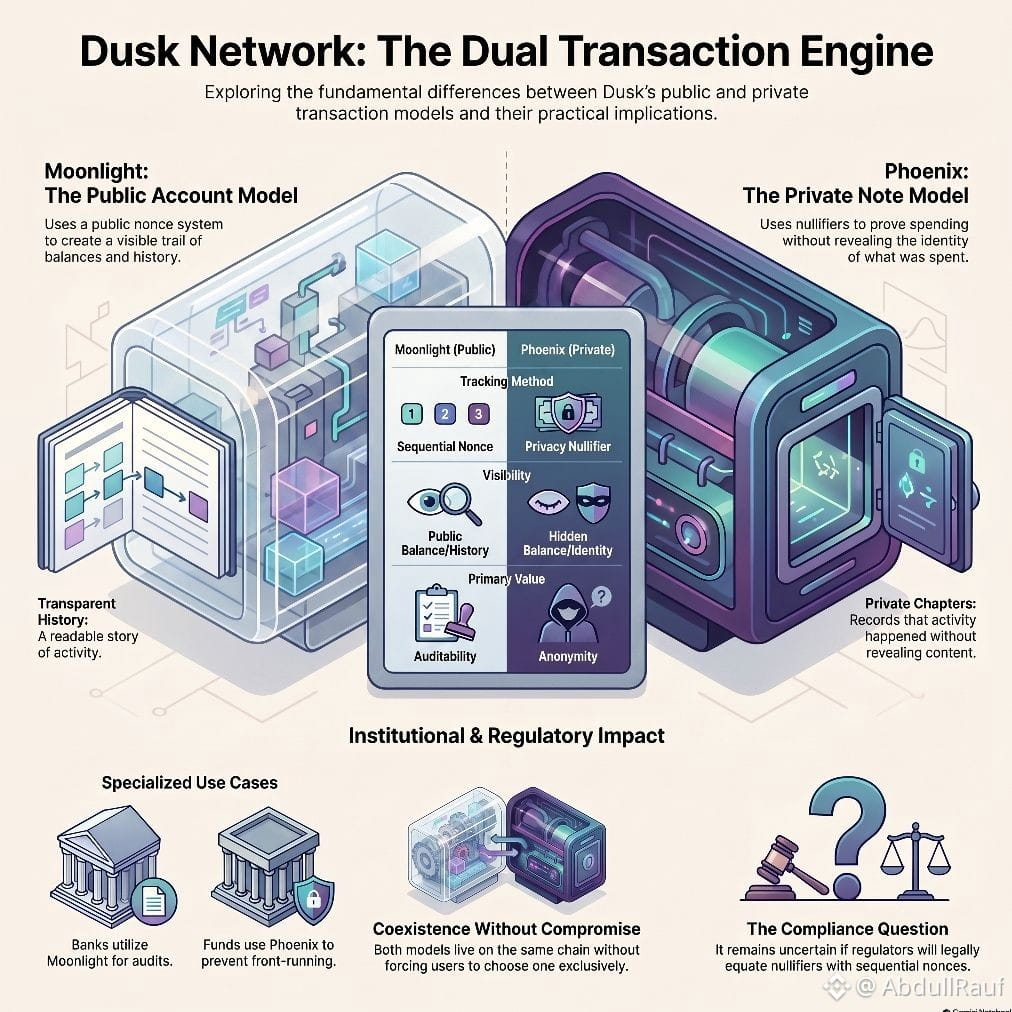
At first I assumed the two transaction models on Dusk were just a privacy toggle. Public or private. One switch. Simple choice.
The actual difference runs deeper than that.
Moonlight works like Ethereum. Your account has a nonce. Every transaction increments it publicly. Anyone can see your balance, your history, your sequence. The nonce is a counter. It is also a trail.
Phoenix works differently. There is no account. No visible balance. No sequential counter. Instead, when you spend a note, you produce a nullifier. The network records that nullifier and knows the note is gone. But it cannot link the nullifier back to the note it came from. The spending is provable. The identity of what was spent is not.
That distinction matters more than it sounds. In Moonlight, your transaction history is a readable story. In Phoenix, the network knows chapters are being written without knowing what they say.
What I keep thinking about is which institutions actually want which model. A bank processing a settlement might need Moonlight for audit trails. A fund executing a strategy might need Phoenix to avoid front-running. Both can live on the same chain. Neither forces the other to compromise.
What I cannot find in the documentation is how regulators treat nullifiers as evidence. A nonce proves sequence. A nullifier proves spending without revealing the note. Are those legally equivalent in a compliance context?
What do you think — when a regulator asks for proof of transaction, does a nullifier satisfy the requirement or does it just raise a harder question?
#dusk $DUSK @Dusk
The actual difference runs deeper than that.
Moonlight works like Ethereum. Your account has a nonce. Every transaction increments it publicly. Anyone can see your balance, your history, your sequence. The nonce is a counter. It is also a trail.
Phoenix works differently. There is no account. No visible balance. No sequential counter. Instead, when you spend a note, you produce a nullifier. The network records that nullifier and knows the note is gone. But it cannot link the nullifier back to the note it came from. The spending is provable. The identity of what was spent is not.
That distinction matters more than it sounds. In Moonlight, your transaction history is a readable story. In Phoenix, the network knows chapters are being written without knowing what they say.
What I keep thinking about is which institutions actually want which model. A bank processing a settlement might need Moonlight for audit trails. A fund executing a strategy might need Phoenix to avoid front-running. Both can live on the same chain. Neither forces the other to compromise.
What I cannot find in the documentation is how regulators treat nullifiers as evidence. A nonce proves sequence. A nullifier proves spending without revealing the note. Are those legally equivalent in a compliance context?
What do you think — when a regulator asks for proof of transaction, does a nullifier satisfy the requirement or does it just raise a harder question?
#dusk $DUSK @Dusk
Aria

Aria Bloom 阿莉娅
·
--
صاعدThe journey isn’t always about numbers, markets, and targets. Sometimes, it’s about stepping away for a moment, enjoying the beauty of nature, and appreciating the peaceful moments that make life meaningful. ✨
A beautiful view, calm waters, and my little companion by my side. 🐱🤍
Simple moments, unforgettable memories.
Keep moving forward, stay positive, and enjoy every part of the journey. 🚀✨
$BTR $GIGGLE $SOL
A beautiful view, calm waters, and my little companion by my side. 🐱🤍
Simple moments, unforgettable memories.
Keep moving forward, stay positive, and enjoy every part of the journey. 🚀✨
$BTR $GIGGLE $SOL

najaf

NAJAF_加密 143
·
--
BNB is showing strong momentum as the broader crypto market turns bullish. BNB recently climbed to around $670, gaining more than 10% over just a few days. Bitcoin’s strong weekly rally and improving market sentiment are also supporting altcoins. BNB’s utility across the Binance ecosystem remains a key fundamental strength. The market still carries volatility, so traders should watch resistance near recent highs and manage risk carefully.
#BNB #Binance #Crypto #BNBChain #Bitcoin
#BNB #Binance #Crypto #BNBChain #Bitcoin

oyster

生蚝哥Oyster
·
--
صاعدCZ全景预判:加密多条赛道齐爆发,下一个热点由创业者创造
8月27日,币安创始人CZ在Bitcoin Asia 2026大会上解读加密行业未来赛道格局。他表示,下一轮牛市中,RWA、AI赛道增长势头强劲,稳定币、中心化交易所、DEX、Meme币、DeFi均会持续扩容,NFT也有望以全新形态回归,行业多条主线将同步向上。
CZ坦言,精准预判下一个爆款赛道难度极大。历史上IC0、NFT热潮爆发前,他都无法提前预判;加密行业的下一个风口,更多依靠全球创业者的创新探索。
#bnb
8月27日,币安创始人CZ在Bitcoin Asia 2026大会上解读加密行业未来赛道格局。他表示,下一轮牛市中,RWA、AI赛道增长势头强劲,稳定币、中心化交易所、DEX、Meme币、DeFi均会持续扩容,NFT也有望以全新形态回归,行业多条主线将同步向上。
CZ坦言,精准预判下一个爆款赛道难度极大。历史上IC0、NFT热潮爆发前,他都无法提前预判;加密行业的下一个风口,更多依靠全球创业者的创新探索。
#bnb

Alone
先生-Alone
·
--
Follow Me
Comment on It
Like It
Share It 🎁🎁🎁🎁🎁
Comment on It
Like It
Share It 🎁🎁🎁🎁🎁
wiki

wiki002
·
--
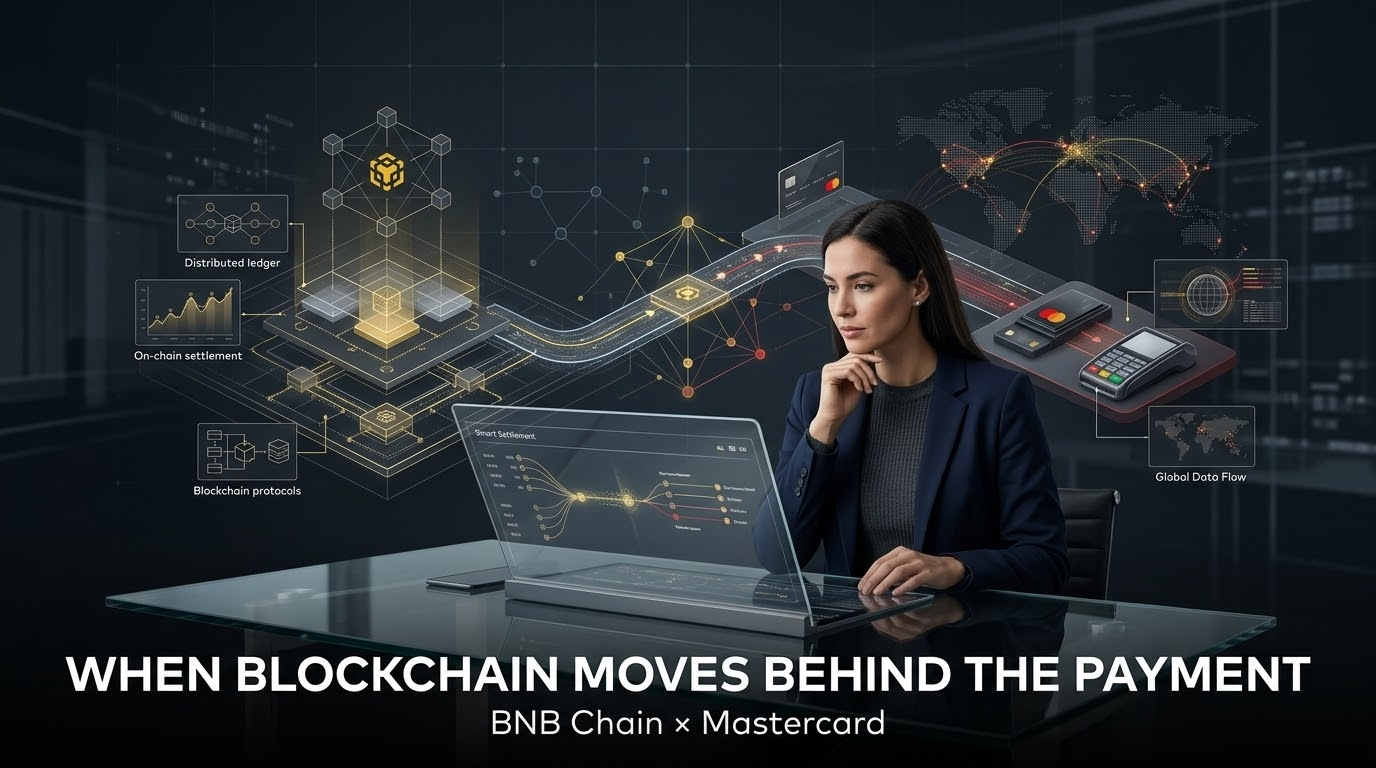
I wasn’t really focused on the partnership headline today. The part I kept thinking about was what this could change for BNB Chain.
Crypto has spent years competing on speed, fees, liquidity and users.
Payments are a different game.
A payment product doesn’t need customers to become crypto users. It needs a reliable way to move value while keeping the blockchain complexity away from the end user.
That’s why @BNB Chain joining Mastercard’s Crypto Partner Program is interesting to me.
The obvious story is access to an established payments ecosystem.
The less obvious one is who gets to decide where the transaction actually settles.
If payment applications eventually gain more choice over blockchain infrastructure, simply being compatible with a payment network won’t be enough.
The real differentiator becomes the settlement environment underneath it.
For BNB Chain, that makes things like execution cost, confirmation reliability, liquidity depth, stablecoin availability and developer tooling important factors in that competition.
And there’s a deeper consequence here.
When the payment interface becomes separated from the underlying blockchain, the chain can compete on infrastructure rather than forcing users to choose a chain first.
That changes the demand model.
Instead of
user → wallet → blockchain → application
the direction I find interesting is
financial product → payment interface → settlement infrastructure
The user may never care which chain handled the transaction.
The developer and payment provider will.
That’s why I don’t see this as proof of mainstream adoption yet.
I see it as a more interesting test
Can BNB Chain become a technically attractive settlement environment when blockchain choice moves behind the payment experience?
If it can, Mastercard’s distribution isn’t the whole story.
The bigger opportunity is competing for the financial activity underneath it. 👍
$BNB #BNB $BB $HEI @Binance Square Official
Crypto has spent years competing on speed, fees, liquidity and users.
Payments are a different game.
A payment product doesn’t need customers to become crypto users. It needs a reliable way to move value while keeping the blockchain complexity away from the end user.
That’s why @BNB Chain joining Mastercard’s Crypto Partner Program is interesting to me.
The obvious story is access to an established payments ecosystem.
The less obvious one is who gets to decide where the transaction actually settles.
If payment applications eventually gain more choice over blockchain infrastructure, simply being compatible with a payment network won’t be enough.
The real differentiator becomes the settlement environment underneath it.
For BNB Chain, that makes things like execution cost, confirmation reliability, liquidity depth, stablecoin availability and developer tooling important factors in that competition.
And there’s a deeper consequence here.
When the payment interface becomes separated from the underlying blockchain, the chain can compete on infrastructure rather than forcing users to choose a chain first.
That changes the demand model.
Instead of
user → wallet → blockchain → application
the direction I find interesting is
financial product → payment interface → settlement infrastructure
The user may never care which chain handled the transaction.
The developer and payment provider will.
That’s why I don’t see this as proof of mainstream adoption yet.
I see it as a more interesting test
Can BNB Chain become a technically attractive settlement environment when blockchain choice moves behind the payment experience?
If it can, Mastercard’s distribution isn’t the whole story.
The bigger opportunity is competing for the financial activity underneath it. 👍
$BNB #BNB $BB $HEI @Binance Square Official
Saira

S A I R A
·
--
I hope it brings you the kind of happiness that stays long after the gift is opened.
🎁✨ You truly deserve something beautiful.
#KospiClosesAtRecordHigh
#ChinaOpposesUSProposed7.5%Tariff
#XRPLeadsCryptoPullbackDropsNearly7%
#BankOfKoreaHikesRatesTo3%
#SAIRA
$BTR $DEBIT
🎁✨ You truly deserve something beautiful.
#KospiClosesAtRecordHigh
#ChinaOpposesUSProposed7.5%Tariff
#XRPLeadsCryptoPullbackDropsNearly7%
#BankOfKoreaHikesRatesTo3%
#SAIRA
$BTR $DEBIT

Maya

MAYA_
·
--
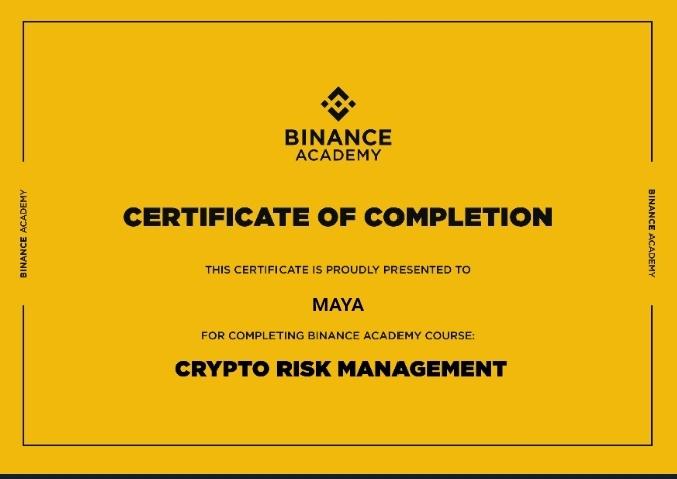
صاعدThank you #Binance 💛
It feels so good when I get a certificate. Wow, it's really a joy.
@Binance Academy
It feels so good when I get a certificate. Wow, it's really a joy.
@Binance Academy
Yash

YASH DHALIWAL 31_加密 143
·
--
🌄🌄🌄🌄🌄🌄🔥🔥🔥🔥🌹🌹🥰🌹🤠🌹🌉😊🌹🤪🌄🌄😊😁🌉😁🥰😁🌉🎂🌉😁😽🌄🤪🌄😊🥰🌄😊😊😁😽🎂😜🥰🌄😽🎉🤠

coin

CoinVision110
·
--
claim reward 🛄🛄🛄🥰😍😍😍😍
follow support
and please must repost and share among friends for support
#DollarPostsBiggestGainInNearlyFourWeeks
follow support
and please must repost and share among friends for support
#DollarPostsBiggestGainInNearlyFourWeeks
go

Ahmed Ali Nizamani
·
--
454 + 444 = 🎁🎁🎁🎁🎁✅

Privacy bolted onto EVM is not the same as privacy built in from day one.#dusk
AbdullRauf
·
--
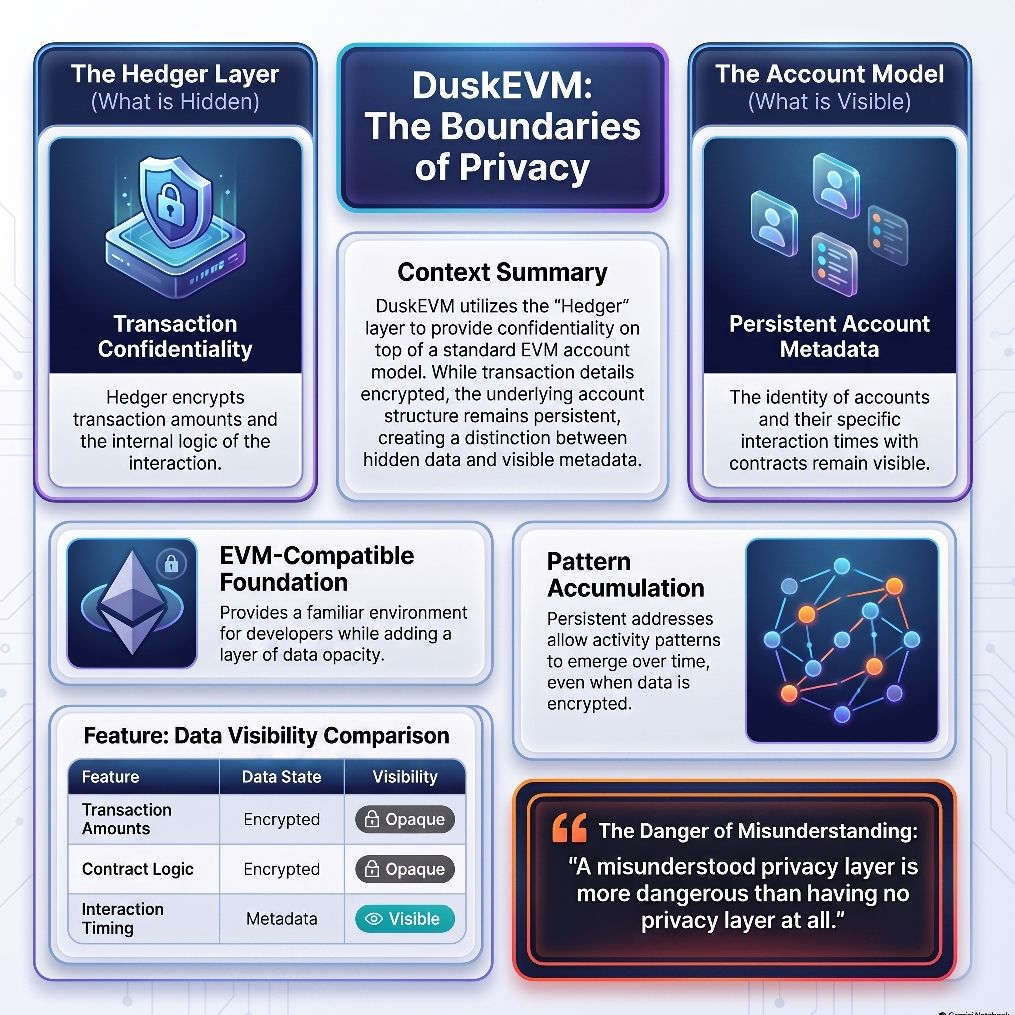
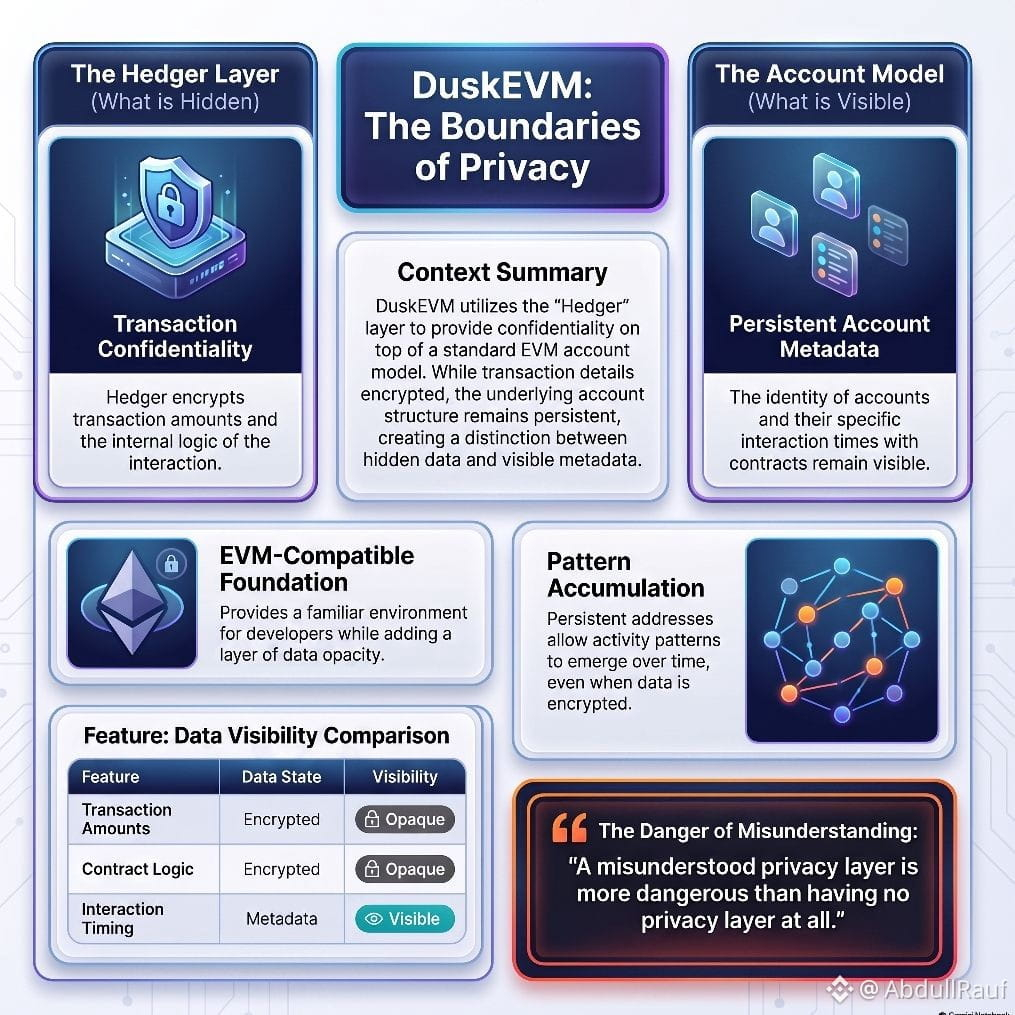
At first I assumed adding privacy to an EVM environment was the same as building privacy from the start. From the outside the two look similar. On the inside they are not.
The EVM account model carries a structural assumption. Addresses persist. Activity accumulates. Even when individual transactions are encrypted, the account itself becomes a pattern over time. Hedger adds confidentiality on top of that model. Transaction data can become opaque. The account structure remains visible.
So the real question is narrower. When Hedger encrypts a transaction, what exactly is hidden and what is not? Amounts and internal logic may stay private. The fact that this account interacted with this contract at this time is often still visible. In regulated finance, who traded with whom and when can matter as much as what they traded.
This is not a flaw in the design. Account-based EVM is practical for developers. Hedger is a real privacy layer. The risk is misunderstanding. A privacy layer that people overestimate can be more dangerous than no privacy layer at all.
Does transaction-level confidentiality give institutions enough protection, or does the account model underneath quietly limit the whole promise?
#dusk $DUSK @Dusk
The EVM account model carries a structural assumption. Addresses persist. Activity accumulates. Even when individual transactions are encrypted, the account itself becomes a pattern over time. Hedger adds confidentiality on top of that model. Transaction data can become opaque. The account structure remains visible.
So the real question is narrower. When Hedger encrypts a transaction, what exactly is hidden and what is not? Amounts and internal logic may stay private. The fact that this account interacted with this contract at this time is often still visible. In regulated finance, who traded with whom and when can matter as much as what they traded.
This is not a flaw in the design. Account-based EVM is practical for developers. Hedger is a real privacy layer. The risk is misunderstanding. A privacy layer that people overestimate can be more dangerous than no privacy layer at all.
Does transaction-level confidentiality give institutions enough protection, or does the account model underneath quietly limit the whole promise?
#dusk $DUSK @Dusk
تمّ التحقق
I used to look at a new consensus design and ask one question first. How does an attacker break this?
Studying Dusk changed that habit. With Succinct Attestation, a different scenario appears. Imagine you are already selected to generate a block in a later iteration. You are also voting on the current one. Do you help the current block succeed and take the voter reward, or stay quiet so the iteration fails and your future generator position improves?
That is the Future Generator Incentive Problem. It does not come from outside. It comes from the incentives available to a legitimate participant.
Dusk’s response was to reshape those incentives. Separate generator and voter rewards. Exclude the next-iteration generator from current voting. Limit how many iterations can run.
There is a trade-off. Every extra incentive rule adds another assumption that still needs to hold under pressure.
The real game underneath the cryptography is whether the most rational move stays the honest one.
#dusk $DUSK @Dusk
Studying Dusk changed that habit. With Succinct Attestation, a different scenario appears. Imagine you are already selected to generate a block in a later iteration. You are also voting on the current one. Do you help the current block succeed and take the voter reward, or stay quiet so the iteration fails and your future generator position improves?
That is the Future Generator Incentive Problem. It does not come from outside. It comes from the incentives available to a legitimate participant.
Dusk’s response was to reshape those incentives. Separate generator and voter rewards. Exclude the next-iteration generator from current voting. Limit how many iterations can run.
There is a trade-off. Every extra incentive rule adds another assumption that still needs to hold under pressure.
The real game underneath the cryptography is whether the most rational move stays the honest one.
#dusk $DUSK @Dusk

$DUSK Is Down 93%… Yet Holding Partnerships and a €200M+ Issuance Pipeline Most Protocols at This Price Don’t Have
AbdullRauf
·
--
Spent time trying to read two signals that point in different directions. The price is down ninety-three percent from its all-time high. The NPEX partnership is live. A confirmed issuance pipeline of over two hundred million euros exists. The Boreas upgrade shipped in May. Those two pictures do not belong to the same narrative. One suggests a project that failed to hold its launch momentum. The other suggests a project that kept building while the price declined. Infrastructure tokens have a timing problem that equity markets do not. A company's stock price and its revenue usually move in the same direction over time. A protocol's token price and its actual usage can diverge for years. The price reflects what traders think today. The usage reflects what institutions decided months ago. What I cannot reconcile is the gap between the confirmed issuance number and the daily trading volume. Two hundred million euros in pipeline against three and a half million in daily volume is a wide distance. Either the issuance has not reached the chain yet or volume is not the right measure. @Dusk has partnerships that most protocols at this price would not. Whether that eventually shows up in the price or just in the history books is the question price charts were never designed to answer. When price and adoption diverge this far, which one is lying?
#dusk $DUSK @Dusk
#dusk $DUSK @Dusk
At first I assumed adding privacy to an EVM environment was the same as building privacy from the start. From the outside the two look similar. On the inside they are not.
The EVM account model carries a structural assumption. Addresses persist. Activity accumulates. Even when individual transactions are encrypted, the account itself becomes a pattern over time. Hedger adds confidentiality on top of that model. Transaction data can become opaque. The account structure remains visible.
So the real question is narrower. When Hedger encrypts a transaction, what exactly is hidden and what is not? Amounts and internal logic may stay private. The fact that this account interacted with this contract at this time is often still visible. In regulated finance, who traded with whom and when can matter as much as what they traded.
This is not a flaw in the design. Account-based EVM is practical for developers. Hedger is a real privacy layer. The risk is misunderstanding. A privacy layer that people overestimate can be more dangerous than no privacy layer at all.
Does transaction-level confidentiality give institutions enough protection, or does the account model underneath quietly limit the whole promise?
#dusk $DUSK @Dusk
The EVM account model carries a structural assumption. Addresses persist. Activity accumulates. Even when individual transactions are encrypted, the account itself becomes a pattern over time. Hedger adds confidentiality on top of that model. Transaction data can become opaque. The account structure remains visible.
So the real question is narrower. When Hedger encrypts a transaction, what exactly is hidden and what is not? Amounts and internal logic may stay private. The fact that this account interacted with this contract at this time is often still visible. In regulated finance, who traded with whom and when can matter as much as what they traded.
This is not a flaw in the design. Account-based EVM is practical for developers. Hedger is a real privacy layer. The risk is misunderstanding. A privacy layer that people overestimate can be more dangerous than no privacy layer at all.
Does transaction-level confidentiality give institutions enough protection, or does the account model underneath quietly limit the whole promise?
#dusk $DUSK @Dusk
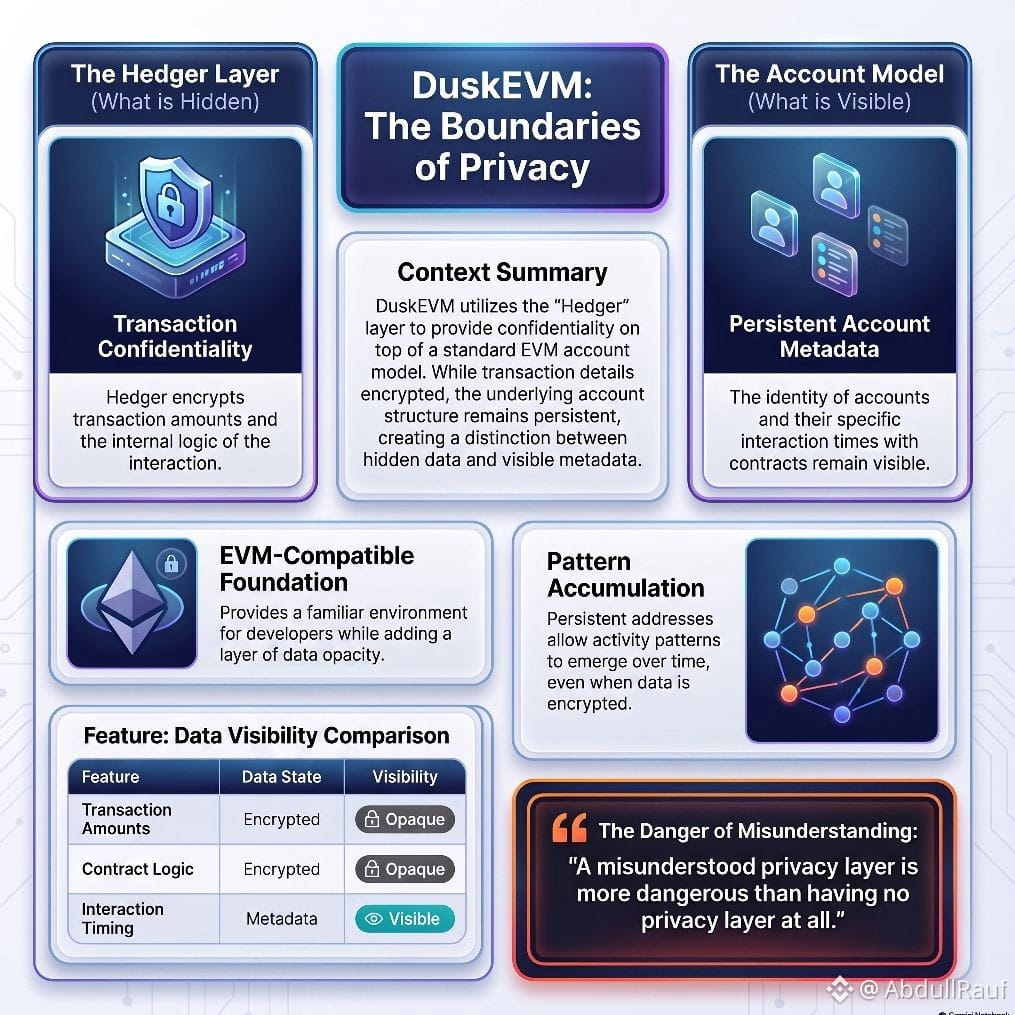
At first I assumed adding privacy to an EVM environment was the same as building privacy from the start. From the outside the two look similar. On the inside they are not.
The EVM account model carries a structural assumption. Addresses persist. Activity accumulates. Even when individual transactions are encrypted, the account itself becomes a pattern over time. Hedger adds confidentiality on top of that model. Transaction data can become opaque. The account structure remains visible.
So the real question is narrower. When Hedger encrypts a transaction, what exactly is hidden and what is not? Amounts and internal logic may stay private. The fact that this account interacted with this contract at this time is often still visible. In regulated finance, who traded with whom and when can matter as much as what they traded.
This is not a flaw in the design. Account-based EVM is practical for developers. Hedger is a real privacy layer. The risk is misunderstanding. A privacy layer that people overestimate can be more dangerous than no privacy layer at all.
Does transaction-level confidentiality give institutions enough protection, or does the account model underneath quietly limit the whole promise?
#dusk $DUSK @Dusk
The EVM account model carries a structural assumption. Addresses persist. Activity accumulates. Even when individual transactions are encrypted, the account itself becomes a pattern over time. Hedger adds confidentiality on top of that model. Transaction data can become opaque. The account structure remains visible.
So the real question is narrower. When Hedger encrypts a transaction, what exactly is hidden and what is not? Amounts and internal logic may stay private. The fact that this account interacted with this contract at this time is often still visible. In regulated finance, who traded with whom and when can matter as much as what they traded.
This is not a flaw in the design. Account-based EVM is practical for developers. Hedger is a real privacy layer. The risk is misunderstanding. A privacy layer that people overestimate can be more dangerous than no privacy layer at all.
Does transaction-level confidentiality give institutions enough protection, or does the account model underneath quietly limit the whole promise?
#dusk $DUSK @Dusk
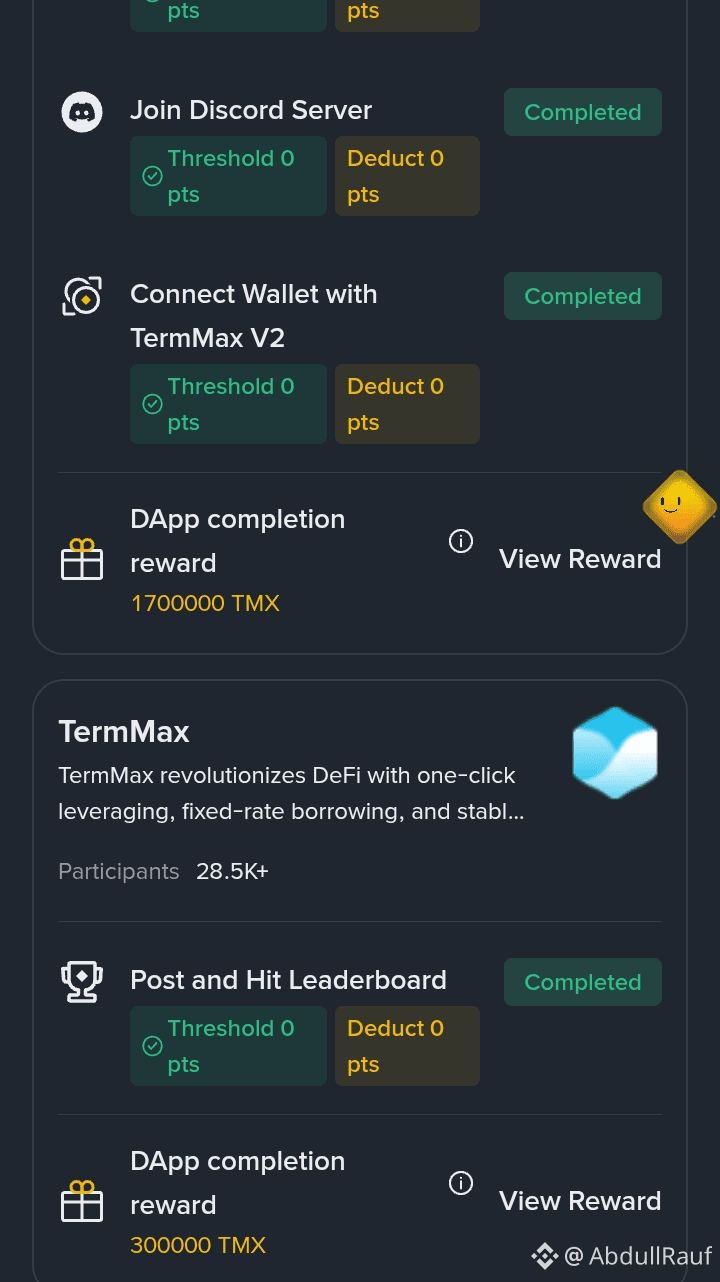
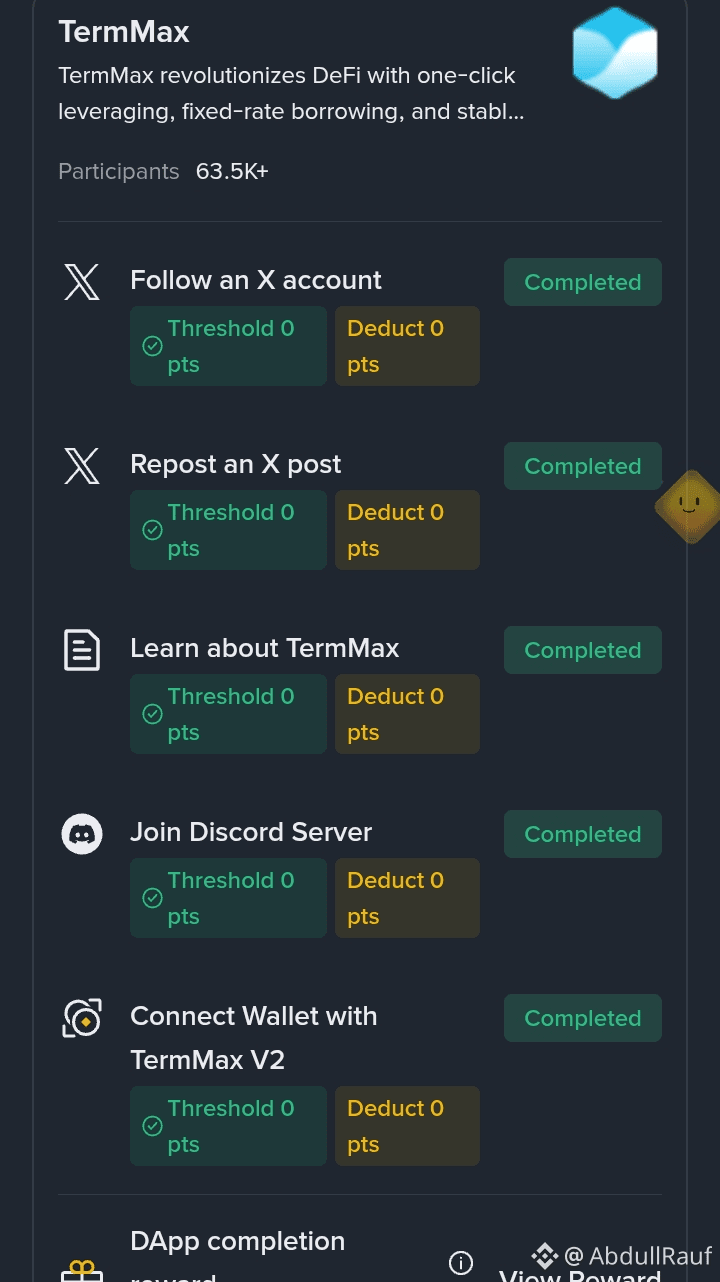
At first I assumed appearing on the leaderboard was enough.
Spent time checking the rules and realized verification is the real gate.
Today is the only window.
Binance Wallet → Discover → Booster → TermMax → Square task → Complete & Verify.
Miss this step and the ranking means nothing
The quiet work of confirming still decides who actually gets paid.
@TermMax
#TermMax
Spent time checking the rules and realized verification is the real gate.
Today is the only window.
Binance Wallet → Discover → Booster → TermMax → Square task → Complete & Verify.
Miss this step and the ranking means nothing
The quiet work of confirming still decides who actually gets paid.
@TermMax
#TermMax
تمّ التحقق
Spent time trying to read two signals that point in different directions. The price is down ninety-three percent from its all-time high. The NPEX partnership is live. A confirmed issuance pipeline of over two hundred million euros exists. The Boreas upgrade shipped in May. Those two pictures do not belong to the same narrative. One suggests a project that failed to hold its launch momentum. The other suggests a project that kept building while the price declined. Infrastructure tokens have a timing problem that equity markets do not. A company's stock price and its revenue usually move in the same direction over time. A protocol's token price and its actual usage can diverge for years. The price reflects what traders think today. The usage reflects what institutions decided months ago. What I cannot reconcile is the gap between the confirmed issuance number and the daily trading volume. Two hundred million euros in pipeline against three and a half million in daily volume is a wide distance. Either the issuance has not reached the chain yet or volume is not the right measure. @Dusk has partnerships that most protocols at this price would not. Whether that eventually shows up in the price or just in the history books is the question price charts were never designed to answer. When price and adoption diverge this far, which one is lying?
#dusk $DUSK @Dusk
#dusk $DUSK @Dusk
تمّ التحقق
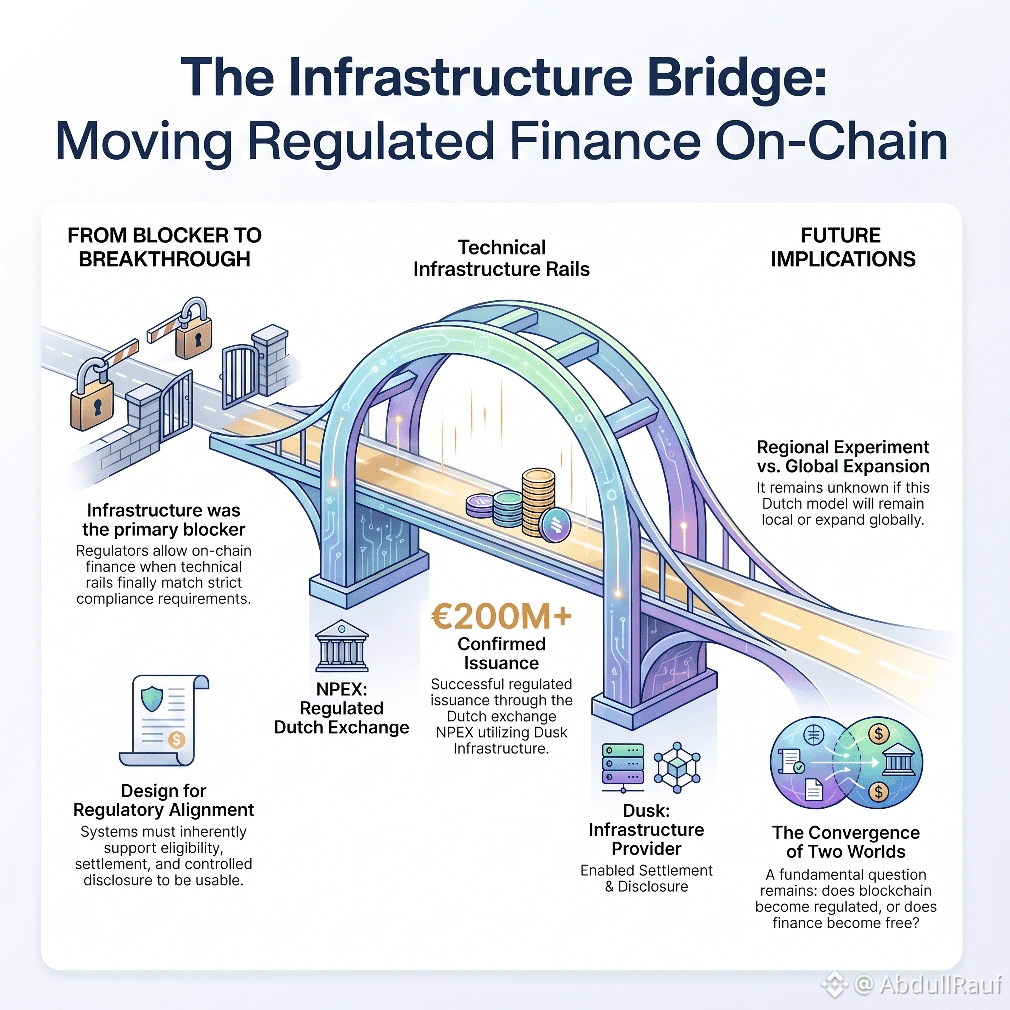
At first I assumed regulated finance could not move on-chain because regulators would never allow it. The rules were too strict. The systems were too closed. Blockchain was too open.
Then the numbers appeared. More than €200 million in confirmed issuance through NPEX, a regulated Dutch exchange working with Dusk. That did not look like resistance. It looked like the opposite.
What held me was the quieter realization underneath. Regulators were not the main blocker. Infrastructure was. When the rails could support eligibility, settlement, and controlled disclosure, the regulatory path became usable. The permission was not granted after the fact. It became possible because the design finally matched the requirements.
What I still cannot settle is how far this stays local. NPEX is a Dutch venue. Whether this model expands beyond Europe or remains a regional experiment is still open.
When regulated finance moves on-chain, does blockchain become more regulated, or does finance become more free?
#dusk $DUSK @Dusk
Then the numbers appeared. More than €200 million in confirmed issuance through NPEX, a regulated Dutch exchange working with Dusk. That did not look like resistance. It looked like the opposite.
What held me was the quieter realization underneath. Regulators were not the main blocker. Infrastructure was. When the rails could support eligibility, settlement, and controlled disclosure, the regulatory path became usable. The permission was not granted after the fact. It became possible because the design finally matched the requirements.
What I still cannot settle is how far this stays local. NPEX is a Dutch venue. Whether this model expands beyond Europe or remains a regional experiment is still open.
When regulated finance moves on-chain, does blockchain become more regulated, or does finance become more free?
#dusk $DUSK @Dusk
سجّل الدخول لاستكشاف المزيد من المُحتوى