
#bithumb
bithumb
166,766 مشاهدات
533 يقومون بالنقاش
رائج
جديد

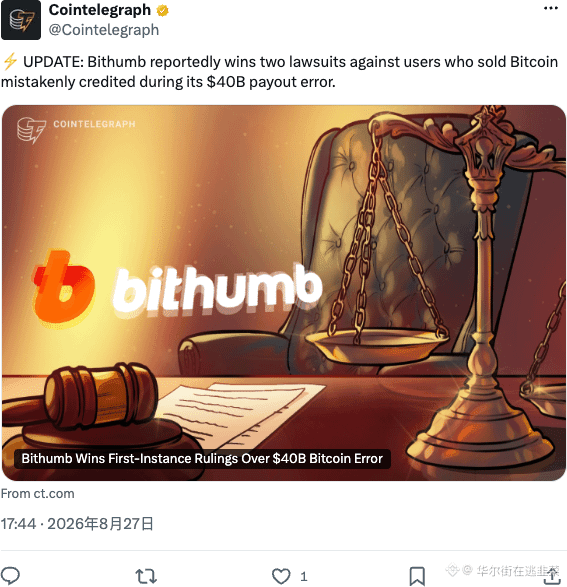
فازت Bithumb في قضيتين قضائيتين، وكان الخصم هو تلك المجموعة من المستخدمين الذين تلقّوا بيتكوينًا تم تسجيله بخطأ في الحساب ثم باعوه لاحقًا. حادثة توزيع أرباح بقيمة 4.0 مليارات دولار: المنصّة قلبت الطاولة ورفعت دعوى على المستخدمين لتربح القضية، ويجب استرداد الأموال.
شاهِد القصة كما يحلو لك، لكن هذه الواقعة تذكّر الجميع: أخطاء التسوية في البورصات لا تُعامل كأنها «حلوى» تُلتقط. فمن الناحية القانونية، الإثراء غير المشروع يجب إعادته، حتى لو كنت قد بعتَه أيضًا فعليك أن تعوّض.
لا تسأل—اسأل يعني لا تلمس مالًا يأتيك بالصدفة.🤡 #Bithumb $BTC
شاهِد القصة كما يحلو لك، لكن هذه الواقعة تذكّر الجميع: أخطاء التسوية في البورصات لا تُعامل كأنها «حلوى» تُلتقط. فمن الناحية القانونية، الإثراء غير المشروع يجب إعادته، حتى لو كنت قد بعتَه أيضًا فعليك أن تعوّض.
لا تسأل—اسأل يعني لا تلمس مالًا يأتيك بالصدفة.🤡 #Bithumb $BTC

إعلان رسمي من Bithumb: سيتم شطب 5 رموز في 18 أغسطس 2026 — Gracie (GRACY)، Tottenham Hotspur (SPURS)، GTX (ZTX)، With (WIKEN) و StepApp (FITFI).
تعد عملية التنظيف الدورية للأصول منخفضة السيولة وضعيفة النشاط من البورصات إجراءً اعتياديًا. يجب على حاملي العملات نقل أصولهم في الوقت المناسب قبل الموعد النهائي لتجنب عدم القدرة على الاسترداد. وهذا أيضًا تجسيد لمبدأ الأفضل يَخلُد والأضعف يزول في السوق، وتنبيه للمستثمرين بضرورة متابعة الأساسيات للمشاريع وبيانات السلسلة دائمًا، والابتعاد عن «العروض الوهمية».
المصدر: إعلان Bithumb الرسمي
https://feed.bithumb.com/notice/1654098
#Bithumb #العملات المشفرة
تعد عملية التنظيف الدورية للأصول منخفضة السيولة وضعيفة النشاط من البورصات إجراءً اعتياديًا. يجب على حاملي العملات نقل أصولهم في الوقت المناسب قبل الموعد النهائي لتجنب عدم القدرة على الاسترداد. وهذا أيضًا تجسيد لمبدأ الأفضل يَخلُد والأضعف يزول في السوق، وتنبيه للمستثمرين بضرورة متابعة الأساسيات للمشاريع وبيانات السلسلة دائمًا، والابتعاد عن «العروض الوهمية».
المصدر: إعلان Bithumb الرسمي
https://feed.bithumb.com/notice/1654098
#Bithumb #العملات المشفرة

【تذكير بإشعار إيقاف الإدراج من Bithumb】
وفقًا للإعلان الرسمي من Bithumb، ستقوم المنصة في 18 أغسطس 2026 بإيقاف إدراج الأنواع الخمسة التالية من التداول رسميًا:
Gracie (GRACY)
Tottenham Hotspur (SPURS)
GTX (ZTX)
With (WIKEN)
StepApp (FITFI)
يرجى من المستخدمين الذين يمتلكون عملات ذات صلة تجهيز أصولهم مسبقًا، بما في ذلك على سبيل المثال لا الحصر:
1. نقل المراكز بأسرع وقت ممكن أو بيعها يدويًا
2. متابعة الإرشادات التفصيلية من Bithumb الرسمية حول الموعد النهائي للإيداع/السحب
3. تقييم ما إذا كان يلزم إجراء ترحيل للأصول إلى منصات أخرى
يعني الإيقاف أن أزواج التداول ستتوقف عن المطابقة، كما أن دعم عمليات السحب عادةً ما يتم إغلاقه تدريجيًا خلال فترة لاحقة. تتعرض المشاريع ذات المواضيع القصيرة أو ذات القيمة السوقية الصغيرة لتضخيم واضح لمخاطر تقلب الأسعار بمجرد فقدان سيولة بورصة التداول الرئيسية، لذا يجب عدم تجاهل ذلك.
تنبيه مرة أخرى: الإيقاف لا يعني الصفر، لكن الانخفاض المفاجئ في السيولة غالبًا ما يؤدي إلى انزلاق وفروقات سعر لا يمكن التنبؤ بها. يُرجى من الجميع إتمام الفحص الذاتي قبل 18 أغسطس.
#Bithumb #交易所公告 #الأصول الرقمية
وفقًا للإعلان الرسمي من Bithumb، ستقوم المنصة في 18 أغسطس 2026 بإيقاف إدراج الأنواع الخمسة التالية من التداول رسميًا:
Gracie (GRACY)
Tottenham Hotspur (SPURS)
GTX (ZTX)
With (WIKEN)
StepApp (FITFI)
يرجى من المستخدمين الذين يمتلكون عملات ذات صلة تجهيز أصولهم مسبقًا، بما في ذلك على سبيل المثال لا الحصر:
1. نقل المراكز بأسرع وقت ممكن أو بيعها يدويًا
2. متابعة الإرشادات التفصيلية من Bithumb الرسمية حول الموعد النهائي للإيداع/السحب
3. تقييم ما إذا كان يلزم إجراء ترحيل للأصول إلى منصات أخرى
يعني الإيقاف أن أزواج التداول ستتوقف عن المطابقة، كما أن دعم عمليات السحب عادةً ما يتم إغلاقه تدريجيًا خلال فترة لاحقة. تتعرض المشاريع ذات المواضيع القصيرة أو ذات القيمة السوقية الصغيرة لتضخيم واضح لمخاطر تقلب الأسعار بمجرد فقدان سيولة بورصة التداول الرئيسية، لذا يجب عدم تجاهل ذلك.
تنبيه مرة أخرى: الإيقاف لا يعني الصفر، لكن الانخفاض المفاجئ في السيولة غالبًا ما يؤدي إلى انزلاق وفروقات سعر لا يمكن التنبؤ بها. يُرجى من الجميع إتمام الفحص الذاتي قبل 18 أغسطس.
#Bithumb #交易所公告 #الأصول الرقمية
عرض الترجمة
🇰🇷 بورصة كورية كبرى تخطط لطرح عام أولي بحلول 2028
تستعد بورصة Bithumb الكورية الجنوبية لإطلاق اكتتاب عام أولي (IPO) بحلول عام 2028. يأتي هذا التحرك بعد إعادة هيكلة داخلية للبورصة وبرنامج مدته سنتان لتعزيز الضوابط المحاسبية والامتثال وإدارة المخاطر في عملياتها.
━━━━━━━━━━━━━━
📊 التأثير: 📈 مرتفع
🏷️ EXCHANGE
#Bithumb #IPO #SouthKorea #CryptoExchange #Regulation
📰 المصدر: biztoc.com
تستعد بورصة Bithumb الكورية الجنوبية لإطلاق اكتتاب عام أولي (IPO) بحلول عام 2028. يأتي هذا التحرك بعد إعادة هيكلة داخلية للبورصة وبرنامج مدته سنتان لتعزيز الضوابط المحاسبية والامتثال وإدارة المخاطر في عملياتها.
━━━━━━━━━━━━━━
📊 التأثير: 📈 مرتفع
🏷️ EXCHANGE
#Bithumb #IPO #SouthKorea #CryptoExchange #Regulation
📰 المصدر: biztoc.com
عرض الترجمة
🗓️ Bithumb تستهدف طرحًا عامًا أوليًا بحلول عام 2028
تخطط بورصة العملات الرقمية الكورية الجنوبية Bithumb لإجراء مراجعة أولية لطرحها العام الأولي (IPO) في عام 2027، بهدف الإدراج بحلول عام 2028. يأتي هذا التطور بعد تأجيلات سابقة، مما يعكس التحديات التنظيمية في قطاع الأصول الرقمية.
━━━━━━━━━━━━━━
📊 التأثير: 📈 مرتفع
🏷️ EXCHANGE
#Bithumb #IPO #CryptoExchange #SouthKorea #Regulation
📰 المصدر: cryptobriefing.com
تخطط بورصة العملات الرقمية الكورية الجنوبية Bithumb لإجراء مراجعة أولية لطرحها العام الأولي (IPO) في عام 2027، بهدف الإدراج بحلول عام 2028. يأتي هذا التطور بعد تأجيلات سابقة، مما يعكس التحديات التنظيمية في قطاع الأصول الرقمية.
━━━━━━━━━━━━━━
📊 التأثير: 📈 مرتفع
🏷️ EXCHANGE
#Bithumb #IPO #CryptoExchange #SouthKorea #Regulation
📰 المصدر: cryptobriefing.com

تم إدراج DOS على كلٍ من Upbit وBithumb في آنٍ واحد، ما أدى إلى تضخيم أحجام التداول بشكل ملحوظ على المدى القصير. غالبًا ما تُعد «ضربة مشتركة» على نمط الإصدارات من أكبر منصتين في كوريا الجنوبية واحدة من أوضح إشارات دخول السيولة.
بالنسبة للعملات الكورية الصغيرة التي تم طرحها حديثًا، عادةً ما يتم تحويل علاوة المزاج على المدى القصير بسرعة إلى السعر، لكن استمرارية ذلك تعتمد بدرجة كبيرة على استمرار طلبات الشراء من جهة المقابل وعمق صناع السوق. ما يستحق الانتباه إليه هو:
1. لدى المستخدمين المحليين في كوريا الجنوبية تفضيل قوي لخيارات التداول مقابل الوون الكوري، ما يجعلها قادرة على تكوين اتجاه أحادي الجانب في بداية الجلسة بسهولة
2. إدراج المنصتين في الوقت نفسه يشتت السيولة، وفي الوقت ذاته يوسع نطاق الظهور الإجمالي
3. على المتداولين قصيري الأجل الانتباه إلى مخاطر «الافتتاح المرتفع ثم التراجع»، وتجنب ملاحقة السعر عند القمة المرحلية
يُنصح بمتابعة ما إذا كان حجم التداول سيستطيع الحفاظ على مستويات مرتفعة، وما إذا كانت هناك متابعة من منصات تداول أخرى لاحقًا. بمجرد أن يبدأ الحماس بالهبوط، غالبًا ما تكون سرعة التصحيح مماثلة لسرعة الارتفاع.
#DOS #Upbit #Bithumb
بالنسبة للعملات الكورية الصغيرة التي تم طرحها حديثًا، عادةً ما يتم تحويل علاوة المزاج على المدى القصير بسرعة إلى السعر، لكن استمرارية ذلك تعتمد بدرجة كبيرة على استمرار طلبات الشراء من جهة المقابل وعمق صناع السوق. ما يستحق الانتباه إليه هو:
1. لدى المستخدمين المحليين في كوريا الجنوبية تفضيل قوي لخيارات التداول مقابل الوون الكوري، ما يجعلها قادرة على تكوين اتجاه أحادي الجانب في بداية الجلسة بسهولة
2. إدراج المنصتين في الوقت نفسه يشتت السيولة، وفي الوقت ذاته يوسع نطاق الظهور الإجمالي
3. على المتداولين قصيري الأجل الانتباه إلى مخاطر «الافتتاح المرتفع ثم التراجع»، وتجنب ملاحقة السعر عند القمة المرحلية
يُنصح بمتابعة ما إذا كان حجم التداول سيستطيع الحفاظ على مستويات مرتفعة، وما إذا كانت هناك متابعة من منصات تداول أخرى لاحقًا. بمجرد أن يبدأ الحماس بالهبوط، غالبًا ما تكون سرعة التصحيح مماثلة لسرعة الارتفاع.
#DOS #Upbit #Bithumb
$BSB اليوم يقوم شخص واحد بتسجيل الدخول إلى كل من Upbit وBithumb في آنٍ واحد، وهما من أبرز منصات التداول الكورية الرئيسية. وبعد الافتتاح، شهد السعر ارتفاعًا حادًا على المدى القصير، وبلغت أعلى نسبة صعود في وقتٍ ما نحو 23.02%، ثم حصل لاحقًا على تراجع بسيط.
من ناحية قراءة حركة السوق، فإن سيناريو "إطلاق متزامن على منصتين + اندفاعة في أول يوم" ليس نادرًا، لكن القفزة الفورية التي تتجاوز 20% تشير إلى أن مشاركة المشترين داخل السوق الكوري كانت نشطة جدًا في الدقائق الأولى من الافتتاح، كما أن عمق السيولة كان قادرًا بشكل أساسي على امتصاص ضغوط البيع.
من النقاط التي تستحق الانتباه:
1. ما يزال شعور المضاربة على العملات الجديدة نشطًا في السوق الكوري. إدراج Upbit + Bithumb في الوقت نفسه يعني أن التعرض يزداد بشكل فوري، وغالبًا ما تتشكل قناعة لدى الأموال قصيرة الأجل بسرعة.
2. الارتفاع البالغ 23% مدفوع أكثر بالعاطفة/المعنويات. أما فيما إذا كان بالإمكان الحفاظ على هذا المستوى، فيتوقف على وجود مشتريات مستمرة وحجم تداول حقيقي يدعمه، وليس مجرد التركيز على شمعة الافتتاح وحدها.
3. غالبًا ما ترافق التقلبات العالية عمليات هبوط/تصحيح كبيرة. لذلك يجب توخي الحذر عند المطاردة وراء السعر، مع الانتباه إلى أزواج التداول وقواعد الإدراج/الإزالة في إعلانات المنصات.
على المدى القصير راقب المعنويات، وعلى المتوسط راقب أحجام التداول، وعلى الطويل ركّز على مدى إنجاز المشروع نفسه. وبالنسبة لهذه الإشارة/الرمز الجديد المُدرج حديثًا، يُنصح بمراقبة تدفق الأموال خلال عدة أيام تداول أولًا، ثم اتخاذ قرار بشأن الدخول.
#BSB#Upbit#Bithumb
من ناحية قراءة حركة السوق، فإن سيناريو "إطلاق متزامن على منصتين + اندفاعة في أول يوم" ليس نادرًا، لكن القفزة الفورية التي تتجاوز 20% تشير إلى أن مشاركة المشترين داخل السوق الكوري كانت نشطة جدًا في الدقائق الأولى من الافتتاح، كما أن عمق السيولة كان قادرًا بشكل أساسي على امتصاص ضغوط البيع.
من النقاط التي تستحق الانتباه:
1. ما يزال شعور المضاربة على العملات الجديدة نشطًا في السوق الكوري. إدراج Upbit + Bithumb في الوقت نفسه يعني أن التعرض يزداد بشكل فوري، وغالبًا ما تتشكل قناعة لدى الأموال قصيرة الأجل بسرعة.
2. الارتفاع البالغ 23% مدفوع أكثر بالعاطفة/المعنويات. أما فيما إذا كان بالإمكان الحفاظ على هذا المستوى، فيتوقف على وجود مشتريات مستمرة وحجم تداول حقيقي يدعمه، وليس مجرد التركيز على شمعة الافتتاح وحدها.
3. غالبًا ما ترافق التقلبات العالية عمليات هبوط/تصحيح كبيرة. لذلك يجب توخي الحذر عند المطاردة وراء السعر، مع الانتباه إلى أزواج التداول وقواعد الإدراج/الإزالة في إعلانات المنصات.
على المدى القصير راقب المعنويات، وعلى المتوسط راقب أحجام التداول، وعلى الطويل ركّز على مدى إنجاز المشروع نفسه. وبالنسبة لهذه الإشارة/الرمز الجديد المُدرج حديثًا، يُنصح بمراقبة تدفق الأموال خلال عدة أيام تداول أولًا، ثم اتخاذ قرار بشأن الدخول.
#BSB#Upbit#Bithumb

وصلت BSB إلى ارتفاع قصير الأجل عند 0.172 USDT، مع تحفيز إيجابي من خبر إدراج زوج التداول بالوون على منصة Bithumb. بلغت نسبة الزيادة خلال 24 ساعة أكثر من 23%، ثم تراجعت حاليًا إلى حوالي 0.163 USDT.
غالبًا ما يعني تداولات زوج الوون الكوري إدخال بوابة جديدة للّقْدرات النقدية المحلية (فات) وتوفير سيولة داخل السوق المحلية، ما يؤثر بشكل واضح على مرونة السعر للرموز المالية المتوسطة والصغيرة على المدى القصير. ومن خلال الصورة اللحظية للسوق، شهدت BSB قفزة على شكل نبضة لحظة صدور الخبر، ثم ردّت جزءًا من الزيادة، ما يشير إلى أن الأموال التي تسعى للمطاردة (الشراء بعد الارتفاع) تكون أكثر حذرًا عند مستوى 0.17 وما فوقه، وأن الخلاف بين قوى الشراء والبيع لا يزال قائمًا.
ما يجب الانتباه إليه هو أن موجات السوق المحفَّزة بالأحداث غالبًا ما تأتي بسرعة وتختفي أيضًا بسرعة. إذا لم يتمكن حجم التداول اللاحق من الاستمرار في الارتفاع، أو إذا لم تكن السيولة الفعلية/العمق في Bithumb كما هو متوقع، فستكون BSB عرضة للعودة بسهولة إلى نطاق التذبذب الذي كانت تتحرك ضمنه قبل صدور الخبر. على المشاركين في التداول قصير الأجل أن يركزوا أكثر على عمق الأوامر المعلقة وتغيرات معدل التمويل (Funding Rate)، مع الحذر من خطر "جني الأخبار" (أي أن الأخبار الجيدة قد تكون استُنفدت).
على المدى المتوسط والطويل، فإن القدرة على الثبات فوق مستوى دعم محوري مع اختراق بحجم تداول متزايد هي التي تحدد ما إذا كان هذا الإدراج مجرد مضاربة قصيرة، أم بداية لانعكاس اتجاه.
#BSB #Bithumb #حدث مدفوع
غالبًا ما يعني تداولات زوج الوون الكوري إدخال بوابة جديدة للّقْدرات النقدية المحلية (فات) وتوفير سيولة داخل السوق المحلية، ما يؤثر بشكل واضح على مرونة السعر للرموز المالية المتوسطة والصغيرة على المدى القصير. ومن خلال الصورة اللحظية للسوق، شهدت BSB قفزة على شكل نبضة لحظة صدور الخبر، ثم ردّت جزءًا من الزيادة، ما يشير إلى أن الأموال التي تسعى للمطاردة (الشراء بعد الارتفاع) تكون أكثر حذرًا عند مستوى 0.17 وما فوقه، وأن الخلاف بين قوى الشراء والبيع لا يزال قائمًا.
ما يجب الانتباه إليه هو أن موجات السوق المحفَّزة بالأحداث غالبًا ما تأتي بسرعة وتختفي أيضًا بسرعة. إذا لم يتمكن حجم التداول اللاحق من الاستمرار في الارتفاع، أو إذا لم تكن السيولة الفعلية/العمق في Bithumb كما هو متوقع، فستكون BSB عرضة للعودة بسهولة إلى نطاق التذبذب الذي كانت تتحرك ضمنه قبل صدور الخبر. على المشاركين في التداول قصير الأجل أن يركزوا أكثر على عمق الأوامر المعلقة وتغيرات معدل التمويل (Funding Rate)، مع الحذر من خطر "جني الأخبار" (أي أن الأخبار الجيدة قد تكون استُنفدت).
على المدى المتوسط والطويل، فإن القدرة على الثبات فوق مستوى دعم محوري مع اختراق بحجم تداول متزايد هي التي تحدد ما إذا كان هذا الإدراج مجرد مضاربة قصيرة، أم بداية لانعكاس اتجاه.
#BSB #Bithumb #حدث مدفوع
【BSB تقلبات تداول قصيرة】 بفضل الأخبار الإيجابية لإدراج زوج تداول الوون الكوري في Bithumb، ارتفع Block Street Token لفترة قصيرة إلى 0.172 USDT، ثم تراجع الآن إلى 0.163 USDT، ولا يزال الارتفاع خلال 24 ساعة يبلغ 23.02%.
من خلال شاشة التداول، غالبًا ما يؤدي ضخ السيولة من بورصات كورية رائدة إلى توفير طلب شراء ملحوظ في المدى القصير لعملات ذات قيمة سوقية صغيرة. بعد الإعلان عن خبر الإدراج هذه المرة، ظهر لدى BSB نمطٌ نموذجي لـ"تحقيق الخبر" يتمثل في ارتفاع سريع ثم تراجع. يلزم الانتباه إلى مخاطر الأجل القصير عند ملاحقة الارتفاع.
الشيء الذي يجب الحذر منه هو أن الارتفاعات الحادة في المدى القصير غالبًا ما تكون مصحوبة بتقلبات عنيفة؛ ولا يمكن تجاهل ضغوط بيع جني الأرباح بعد انتهاء سخونة التداول. عمليًا، يُنصح بمتابعة ما إذا كان حجم التداول يمكنه الاستمرار في التوسع، وما إذا كان السعر قادرًا على الثبات فوق مستويات الدعم الرئيسية.
هل كنت على هذه الموجة؟ هل ستجني الأرباح أم ستواصل الاحتفاظ؟
#BSB #Bithumb #加密行情
من خلال شاشة التداول، غالبًا ما يؤدي ضخ السيولة من بورصات كورية رائدة إلى توفير طلب شراء ملحوظ في المدى القصير لعملات ذات قيمة سوقية صغيرة. بعد الإعلان عن خبر الإدراج هذه المرة، ظهر لدى BSB نمطٌ نموذجي لـ"تحقيق الخبر" يتمثل في ارتفاع سريع ثم تراجع. يلزم الانتباه إلى مخاطر الأجل القصير عند ملاحقة الارتفاع.
الشيء الذي يجب الحذر منه هو أن الارتفاعات الحادة في المدى القصير غالبًا ما تكون مصحوبة بتقلبات عنيفة؛ ولا يمكن تجاهل ضغوط بيع جني الأرباح بعد انتهاء سخونة التداول. عمليًا، يُنصح بمتابعة ما إذا كان حجم التداول يمكنه الاستمرار في التوسع، وما إذا كان السعر قادرًا على الثبات فوق مستويات الدعم الرئيسية.
هل كنت على هذه الموجة؟ هل ستجني الأرباح أم ستواصل الاحتفاظ؟
#BSB #Bithumb #加密行情

Bithumb يَؤجّل طرحًا عامًا أوليًا (IPO) حتى عام 2028 أو بعده! هذا لا يعد مجرد تأجيلٍ عادي، بل هو إنذار أحمر بشأن الوضع الداخلي لمنصة تداول كبيرة.
لقد اعترفوا بأن عليهم تعزيز الرقابة الداخلية وسياسات المحاسبة. تذكّر حادثة "fat-finger" التي تم فيها إدخال خطأ 620,000 $BTC ؟ كانت كارثة على مستوى العلاقات العامة وأدت إلى عقوبة شديدة بسبب انتهاك قوانين AML. واضح أن المصداقية باتت محل تساؤل.
رغم أن Bithumb ما زالت تُظهر إيرادات قوية، إلا أن مشكلات الامتثال والأخطاء النظامية جعلت المستثمرين والجهات التنظيمية أكثر حذرًا بشكل بالغ. إنها دروسٌ مكلفة لأي منصة تداول كريبتو كانت تحلم بإدراجٍ في البورصة.
وهذا يُظهر أن طريق الإدراج العلني لمنصات تبادل العملات المشفّرة في كوريا، وربما على مستوى عالمي أيضًا، لا يزال مليئًا بالقيود القانونية والتحديات التشغيلية. وستصبح الرقابة أكثر تشددًا مع الوقت.
فما رأيك، هل حقًا منصات الكريبتو جاهزة لتخطو إلى السوق التقليدي؟
#Crypto #Bithumb
$BTC
لقد اعترفوا بأن عليهم تعزيز الرقابة الداخلية وسياسات المحاسبة. تذكّر حادثة "fat-finger" التي تم فيها إدخال خطأ 620,000 $BTC ؟ كانت كارثة على مستوى العلاقات العامة وأدت إلى عقوبة شديدة بسبب انتهاك قوانين AML. واضح أن المصداقية باتت محل تساؤل.
رغم أن Bithumb ما زالت تُظهر إيرادات قوية، إلا أن مشكلات الامتثال والأخطاء النظامية جعلت المستثمرين والجهات التنظيمية أكثر حذرًا بشكل بالغ. إنها دروسٌ مكلفة لأي منصة تداول كريبتو كانت تحلم بإدراجٍ في البورصة.
وهذا يُظهر أن طريق الإدراج العلني لمنصات تبادل العملات المشفّرة في كوريا، وربما على مستوى عالمي أيضًا، لا يزال مليئًا بالقيود القانونية والتحديات التشغيلية. وستصبح الرقابة أكثر تشددًا مع الوقت.
فما رأيك، هل حقًا منصات الكريبتو جاهزة لتخطو إلى السوق التقليدي؟
#Crypto #Bithumb
$BTC

🦈 $BTC 'S 620K توزيع خاطئ كاد يقتل BITHUMB — والآن عاد من أجل طرح عام أولي في 2028 ⚡
أعادت Bithumb بدء رحلة طرحها العام، والخارطة الزمنية أكثر حدّة من مشرط: 2026 لتعزيز الرقابة الداخلية واعتماد K-IFRS، و2027 لتقديم طلب الإدراج، و2028 لأول ظهور كبير. البورصة الكورية ثاني أكبر بورصة في البلاد تلعب اللعبة الطويلة. 📊
لم تكن كارثة توزيع 620,000 BTC الخاطئ مجرد عنوان — بل كانت تجربة شديدة القرب من الموت جمدت خططهم وأسقطت مطرقة الجهات التنظيمية الكورية. العبرة؟ قد يتسبب الخطر التشغيلي في تدمير ثروة أكبر من أي سوق هابطة.
الآن، على Bithumb أن تُثبت أنها قادرة على الالتزام بقواعد TradFi. هذه هي الخريطة لكل بورصة عملات رقمية تريد شرعية مؤسسية. 💬 هل سنشهد موجة من البورصات تسعى للامتثال لفتح طموحات الطرح العام الأولي؟
⚠️ ليس نصيحة مالية. دائمًا أدرِك مخاطرك. 🛡️
🏷️ #Bithumb #IPO #Crypto #Compliance
🔥
أعادت Bithumb بدء رحلة طرحها العام، والخارطة الزمنية أكثر حدّة من مشرط: 2026 لتعزيز الرقابة الداخلية واعتماد K-IFRS، و2027 لتقديم طلب الإدراج، و2028 لأول ظهور كبير. البورصة الكورية ثاني أكبر بورصة في البلاد تلعب اللعبة الطويلة. 📊
لم تكن كارثة توزيع 620,000 BTC الخاطئ مجرد عنوان — بل كانت تجربة شديدة القرب من الموت جمدت خططهم وأسقطت مطرقة الجهات التنظيمية الكورية. العبرة؟ قد يتسبب الخطر التشغيلي في تدمير ثروة أكبر من أي سوق هابطة.
الآن، على Bithumb أن تُثبت أنها قادرة على الالتزام بقواعد TradFi. هذه هي الخريطة لكل بورصة عملات رقمية تريد شرعية مؤسسية. 💬 هل سنشهد موجة من البورصات تسعى للامتثال لفتح طموحات الطرح العام الأولي؟
⚠️ ليس نصيحة مالية. دائمًا أدرِك مخاطرك. 🛡️
🏷️ #Bithumb #IPO #Crypto #Compliance
🔥

تهدف Bithumb إلى طرح عام أولي في عام 2028 بعد إعادة هيكلة كبيرة
- Bithumb، منصة تداول العملات المشفرة في كوريا الجنوبية، تضع خطة لإجراء الاكتتاب العام في عام 2028
- تجري حاليًا عملية إعادة هيكلة داخلية كبيرة قبل إدراجها
- لم يتم تحديد موقع الإدراج الرسمي بعد (حوالي 2027)
#BinanceSquare #CryptoNews #Bithumb #IPO #CryptoMarket
$btc $eth
vlikevn Titanbot
المصدر: CoinDesk
- Bithumb، منصة تداول العملات المشفرة في كوريا الجنوبية، تضع خطة لإجراء الاكتتاب العام في عام 2028
- تجري حاليًا عملية إعادة هيكلة داخلية كبيرة قبل إدراجها
- لم يتم تحديد موقع الإدراج الرسمي بعد (حوالي 2027)
#BinanceSquare #CryptoNews #Bithumb #IPO #CryptoMarket
$btc $eth
vlikevn Titanbot
المصدر: CoinDesk

🇰🇷 تهدف منصة بيتمب إلى طرحها للاكتتاب العام في عام 2028.
وقبل حدوث ذلك، تركز المنصة على تحسين الحوكمة وإعداد التقارير المالية والامتثال. ومن وجهة نظري، هذا يدل على أنهم يحاولون بناء المزيد من الثقة لدى كلٍ من الجهات التنظيمية والمستثمرين.
إذا نجحت بيتمب في طرحها للاكتتاب العام، فقد تكون خطوة كبيرة أخرى نحو جعل صناعة العملات الرقمية أكثر قبولًا من قِبل التمويل التقليدي.
السؤال الكبير هو: هل ستتبع المزيد من منصات تداول العملات الرقمية المسار نفسه، أم أن اللوائح الأكثر صرامة ستبطئها؟ 👇📊
$BICO
#Bithumb
وقبل حدوث ذلك، تركز المنصة على تحسين الحوكمة وإعداد التقارير المالية والامتثال. ومن وجهة نظري، هذا يدل على أنهم يحاولون بناء المزيد من الثقة لدى كلٍ من الجهات التنظيمية والمستثمرين.
إذا نجحت بيتمب في طرحها للاكتتاب العام، فقد تكون خطوة كبيرة أخرى نحو جعل صناعة العملات الرقمية أكثر قبولًا من قِبل التمويل التقليدي.
السؤال الكبير هو: هل ستتبع المزيد من منصات تداول العملات الرقمية المسار نفسه، أم أن اللوائح الأكثر صرامة ستبطئها؟ 👇📊
$BICO
#Bithumb

تستهدف شركة بيثوم (Bithumb) طرحًا أوليًا للاكتتاب في عام 2028 بعد عملية إعادة هيكلة داخلية كبرى. تخطط بورصة كوريا الجنوبية لبدء مراجعة الإدراج الأولية في 2027، على الرغم من أن جهة الإدراج المفضلة لديها لا تزال غير مُعلنة.
قد يشكل الإدراج العام المحتمل علامة فارقة كبرى لصناعة العملات الرقمية في كوريا. #Crypto #Bithumb #IPO
قد يشكل الإدراج العام المحتمل علامة فارقة كبرى لصناعة العملات الرقمية في كوريا. #Crypto #Bithumb #IPO

🚨 BITHUMB تكشف عن خارطة طريق لـ3 مراحل لطرحها الأولي — لحظة الاعتماد السائد للعملات المشفرة تسرّع 💥
📊 الجدول الزمني حادّ: ضوابط داخلية وتحويل K-IFRS مُثبتان بحلول 2026، وتقديم طلب ما قبل الإدراج في 2027، وإطلاق رسمي للجمهور بحلول 2028. هذه بورصة كورية تبني جسراً نحو أسواق رأس المال المُنظّمة، ويستفيد كامل القطاع من أثر المصداقية المتسرب. 🏦
🔍 مجموعة الإصلاحات أهم من التواريخ. إدارة مخاطر على مستوى النظام، وفصل Bithumb Asset من أجل حوكمة أنظف، واستقطاب شركات وساطة كبرى وشركات محاماة — هذه هي عظام شركة عامة، وليست مجرد عرض تسويقي. 💡
💬 عندما يلتزم أحد أكبر أماكن التداول في آسيا بالشفافية بمستوى المؤسسات، يجب أن يسأل المتداولون: كم سيستغرق الأمر قبل أن يُجبر بقية السوق على اللحاق؟ 👇
⚠️ ليست نصيحة مالية. دائماً أدِر مخاطرك. 🛡️
🏷️ #Bithumb #IPO #InstitutionalAdoption #Crypto #DigitalAssets
🔥 🦈
📊 الجدول الزمني حادّ: ضوابط داخلية وتحويل K-IFRS مُثبتان بحلول 2026، وتقديم طلب ما قبل الإدراج في 2027، وإطلاق رسمي للجمهور بحلول 2028. هذه بورصة كورية تبني جسراً نحو أسواق رأس المال المُنظّمة، ويستفيد كامل القطاع من أثر المصداقية المتسرب. 🏦
🔍 مجموعة الإصلاحات أهم من التواريخ. إدارة مخاطر على مستوى النظام، وفصل Bithumb Asset من أجل حوكمة أنظف، واستقطاب شركات وساطة كبرى وشركات محاماة — هذه هي عظام شركة عامة، وليست مجرد عرض تسويقي. 💡
💬 عندما يلتزم أحد أكبر أماكن التداول في آسيا بالشفافية بمستوى المؤسسات، يجب أن يسأل المتداولون: كم سيستغرق الأمر قبل أن يُجبر بقية السوق على اللحاق؟ 👇
⚠️ ليست نصيحة مالية. دائماً أدِر مخاطرك. 🛡️
🏷️ #Bithumb #IPO #InstitutionalAdoption #Crypto #DigitalAssets
🔥 🦈

$BTC AND KOREA'S BITHUMB TARGET 2028 IPO — لعبة سيولة تغيّر قواعد اللعبة؟ 🚨
🌊 طرح بورصة للاكتتاب يعيد تشكيل خريطة السيولة أكثر من أي موجة ارتفاع ناجمة عن إدراج واحد. خارطة الطريق ثلاثية المراحل لدى Bithumb — التحويل إلى K-IFRS بحلول 2026، التقديم المبدئي في 2027، ثم الإدراج الرسمي في 2028 — تشير إلى قابلية المساءلة المؤسسية على مستوى البورصة. 📊 إن فصل أصول Bithumb (Bithumb Asset) وإدارة المخاطر الجديدة على مستوى الأنظمة ليست مجرد تعديلات حوكمية؛ بل هي تعزيز بنيوي يقوّي جاذبية رؤوس الأموال كبيرة القيمة.
💡 هذه ليست إشارة ضخ. إنها نقلة في المصداقية ترفع كامل نظام الأصول الرقمية في كوريا الجنوبية. عندما تلتزم منصة من الدرجة الأولى بمعايير مالية شفافة، تمتد موجات التحقق إلى ما هو أبعد من بورصة واحدة.
💬 هل تقوم برسم كيفية توجيه اكتتابات البورصات لتدفقات التشفير المؤسسية، أم أن هذا خارج الإطار الزمني الحالي لديك؟ 👇
⚠️ ليست نصيحة مالية. دائمًا أدرِس مخاطرِك. 🛡️
🏷️ #BTC #Bithumb #IPO #CryptoNews #Institutional
🦈 💎
🌊 طرح بورصة للاكتتاب يعيد تشكيل خريطة السيولة أكثر من أي موجة ارتفاع ناجمة عن إدراج واحد. خارطة الطريق ثلاثية المراحل لدى Bithumb — التحويل إلى K-IFRS بحلول 2026، التقديم المبدئي في 2027، ثم الإدراج الرسمي في 2028 — تشير إلى قابلية المساءلة المؤسسية على مستوى البورصة. 📊 إن فصل أصول Bithumb (Bithumb Asset) وإدارة المخاطر الجديدة على مستوى الأنظمة ليست مجرد تعديلات حوكمية؛ بل هي تعزيز بنيوي يقوّي جاذبية رؤوس الأموال كبيرة القيمة.
💡 هذه ليست إشارة ضخ. إنها نقلة في المصداقية ترفع كامل نظام الأصول الرقمية في كوريا الجنوبية. عندما تلتزم منصة من الدرجة الأولى بمعايير مالية شفافة، تمتد موجات التحقق إلى ما هو أبعد من بورصة واحدة.
💬 هل تقوم برسم كيفية توجيه اكتتابات البورصات لتدفقات التشفير المؤسسية، أم أن هذا خارج الإطار الزمني الحالي لديك؟ 👇
⚠️ ليست نصيحة مالية. دائمًا أدرِس مخاطرِك. 🛡️
🏷️ #BTC #Bithumb #IPO #CryptoNews #Institutional
🦈 💎
تبدأ كوريا الجنوبية رسميًا في العد التنازلي للاكتتاب العام (IPO) للبورصة المشفرة الثانية الأكبر Bithumb.
وفقًا لإعلانها الرسمي، أصبحت معالم خارطة الطريق واضحة:
في 2026: استكمال ترقية نظام الضوابط الداخلية + الاستعداد للتحويل إلى معايير K-IFRS المحاسبية
في 2027: تقديم طلب فحص ما قبل الإدراج/الطرح (listing pre-approval) واستقبال المراجعة
في 2028: إتمام الاكتتاب العام (IPO) رسميًا
للمضي بسلاسة في التقدم، تقوم Bithumb بتنفيذ عدة خطوات رئيسية:
1. التعاون مع شركات تدقيق محاسبي رائدة في كوريا لإعادة بناء إدارة المخاطر وإجراءات الضوابط الداخلية
2. التحول من K-GAAP إلى K-IFRS المعايير المحاسبية المتداولة دوليًا
3. توضيح حدود كل جزء من خلال فصل أعمال مثل Bithumb Asset وغيرها
4. حجز/تجهيز أصول سيولة لتعزيز الاستقرار المالي
5. التعاون مع شركات وساطة كبرى داخلية وخارجية، وشركات محاماة، ومكاتب تدقيق لتقييم قيمة الشركة والمخاطر القانونية
6. إنشاء آلية إفصاح دورية لنشر معلومات مالية ومقتنيات الأصول المشفرة وغيرها
ومن منظور المشهد الحالي لصناعة التشفير في كوريا، فإن خطوة Bithumb تعني أن عملية الامتثال والمؤسسية تتسارع. وبمجرد نجاح الاكتتاب العام (IPO)، سيتم إعادة تشكيل تسعير وفهم الأصول المشفرة من قبل الأسواق الرأسمالية التقليدية بشكل أكبر، وستصبح "شهادة شركة مدرجة" ورقة استراتيجية مهمة في المنافسة بين المنصات.
قد تتغير الجداول الزمنية وفقًا لظروف السوق وتقدم التنظيم، لكن الاتجاه لا رجعة فيه—
الامتثال، أصبح فاصلاً لمرحلة المنافسة المقبلة.
#Bithumb#بورصة_تشفير#IPO
وفقًا لإعلانها الرسمي، أصبحت معالم خارطة الطريق واضحة:
في 2026: استكمال ترقية نظام الضوابط الداخلية + الاستعداد للتحويل إلى معايير K-IFRS المحاسبية
في 2027: تقديم طلب فحص ما قبل الإدراج/الطرح (listing pre-approval) واستقبال المراجعة
في 2028: إتمام الاكتتاب العام (IPO) رسميًا
للمضي بسلاسة في التقدم، تقوم Bithumb بتنفيذ عدة خطوات رئيسية:
1. التعاون مع شركات تدقيق محاسبي رائدة في كوريا لإعادة بناء إدارة المخاطر وإجراءات الضوابط الداخلية
2. التحول من K-GAAP إلى K-IFRS المعايير المحاسبية المتداولة دوليًا
3. توضيح حدود كل جزء من خلال فصل أعمال مثل Bithumb Asset وغيرها
4. حجز/تجهيز أصول سيولة لتعزيز الاستقرار المالي
5. التعاون مع شركات وساطة كبرى داخلية وخارجية، وشركات محاماة، ومكاتب تدقيق لتقييم قيمة الشركة والمخاطر القانونية
6. إنشاء آلية إفصاح دورية لنشر معلومات مالية ومقتنيات الأصول المشفرة وغيرها
ومن منظور المشهد الحالي لصناعة التشفير في كوريا، فإن خطوة Bithumb تعني أن عملية الامتثال والمؤسسية تتسارع. وبمجرد نجاح الاكتتاب العام (IPO)، سيتم إعادة تشكيل تسعير وفهم الأصول المشفرة من قبل الأسواق الرأسمالية التقليدية بشكل أكبر، وستصبح "شهادة شركة مدرجة" ورقة استراتيجية مهمة في المنافسة بين المنصات.
قد تتغير الجداول الزمنية وفقًا لظروف السوق وتقدم التنظيم، لكن الاتجاه لا رجعة فيه—
الامتثال، أصبح فاصلاً لمرحلة المنافسة المقبلة.
#Bithumb#بورصة_تشفير#IPO
منصة تبادل العملات المشفرة الكورية العريقة Bithumb تعلن رسميًا خارطة طريق للاكتتاب العام (IPO)، بهدف إتمام الإدراج في عام 2028. ومن الجدول الزمني المُفصح عنه، تبدو الوتيرة مزدحمة نسبيًا: في عام 2026 يتم إنجاز ترقية الضوابط الداخلية + التحول إلى المعايير المحاسبية الدولية K-IFRS، وفي عام 2027 يتم تقديم طلبات مراجعة ما قبل الإدراج، وفي عام 2028 يتم الإدراج في السوق. وخلال هذه الفترة، تشمل الأعمال أيضًا فصل أعمال Bithumb Asset، وبناء نظام لإدارة المخاطر، إلى جانب تعاون شامل مع شركات الأوراق المالية الكبرى والمحامين وشركات التدقيق المحاسبي.
نقاط عدة تستحق الاهتمام:
1️⃣ انتقال المعايير المحاسبية من K-GAAP إلى K-IFRS يعني أن الإفصاحات المالية ستقترب من المعايير الدولية، ما يجعلها أكثر ملاءمة للمستثمرين في الخارج، لكن تكاليف التحول ومتطلبات التدقيق ليست قليلة.
2️⃣ القيام بفصل Bithumb Asset بشكل استباقي؛ والهدف على الأرجح هو عزل مخاطر قطاعات الأعمال المختلفة، وفي الوقت نفسه جعل تقييم الشركة الأم أكثر وضوحًا، وهو إجراء شائع ضمن ممارسات الضبط الداخلي في كوريا.
3️⃣ التأكيد على الإفصاح الدوري عن محافظ الأصول المشفرة والمسائل التشغيلية؛ وفي بيئة التنظيم الحالية يُعد ذلك "ميزة إضافية" ويساعد على تخفيف الشكوك في السوق حول شفافية البورصة.
إذا سارت الأمور بسلاسة، سيتحول Bithumb بعد إدراجه إلى أصل تبادل مشفّر خالص مدرج في السوق العامة، ليكون ثاني مثال بعد Coinbase. كما سيوفر ذلك دلالة مهمة للامتثال في قطاع العملات المشفرة في كوريا وحتى في آسيا. وبالطبع، ما إذا كان بالإمكان تحقيق ذلك في الوقت المحدد ما زال يعتمد على وتيرة المراجعات التنظيمية والظروف في السوق.
#Bithumb #加密交易所IPO #السوق الكورية للعملات المشفرة
نقاط عدة تستحق الاهتمام:
1️⃣ انتقال المعايير المحاسبية من K-GAAP إلى K-IFRS يعني أن الإفصاحات المالية ستقترب من المعايير الدولية، ما يجعلها أكثر ملاءمة للمستثمرين في الخارج، لكن تكاليف التحول ومتطلبات التدقيق ليست قليلة.
2️⃣ القيام بفصل Bithumb Asset بشكل استباقي؛ والهدف على الأرجح هو عزل مخاطر قطاعات الأعمال المختلفة، وفي الوقت نفسه جعل تقييم الشركة الأم أكثر وضوحًا، وهو إجراء شائع ضمن ممارسات الضبط الداخلي في كوريا.
3️⃣ التأكيد على الإفصاح الدوري عن محافظ الأصول المشفرة والمسائل التشغيلية؛ وفي بيئة التنظيم الحالية يُعد ذلك "ميزة إضافية" ويساعد على تخفيف الشكوك في السوق حول شفافية البورصة.
إذا سارت الأمور بسلاسة، سيتحول Bithumb بعد إدراجه إلى أصل تبادل مشفّر خالص مدرج في السوق العامة، ليكون ثاني مثال بعد Coinbase. كما سيوفر ذلك دلالة مهمة للامتثال في قطاع العملات المشفرة في كوريا وحتى في آسيا. وبالطبع، ما إذا كان بالإمكان تحقيق ذلك في الوقت المحدد ما زال يعتمد على وتيرة المراجعات التنظيمية والظروف في السوق.
#Bithumb #加密交易所IPO #السوق الكورية للعملات المشفرة

أعلنت بورصة العملات المشفرة الكورية الثانية Bithumb رسميًا عن خارطة طريق للاكتتاب العام (IPO): إتمام ترقية أنظمة الرقابة الداخلية واعتماد معايير K-IFRS في 2026، وتقديم طلبات الفحص قبل الإدراج في 2027، وإتمام الـ IPO في 2028.
ومن تفاصيل الإفصاح الرسمي، يتضح أن تحضير Bithumb لهذه الخطوة ليس مجرد "تقديم المستندات وإنجاز الإجراءات" على نحو بسيط. توجد عدة إشارات تستحق الانتباه:
1. تبديل المعايير K-GAAP → K-IFRS، ما يعني أن القوائم المالية ستقترب من المعايير الدولية، بما يسهّل فهم المستثمرين المؤسسيين في الخارج والتقييم، وهو تمهيد للانتقال لاحقًا إلى الأسواق الرأسمالية العالمية.
2. إعادة تنظيم الأعمال وتقسيم Bithumb Asset وتحديد مسؤوليات كل قسم؛ جوهر ذلك هو تقليل مخاطر المعاملات مع الأطراف ذات الصلة، وتحسين وضوح أصول الشركة الأم، وهي متطلبات صارمة لعملية مراجعة الجهات التنظيمية.
3. احتياطي السيولة + الإفصاح الدوري عن ممتلكات الأصول المشفرة بعد انهيارات FTX وCelsius، أصبحت عمليات "إثبات البراءة" للبورصات درسًا إلزاميًا عند السعي إلى الإدراج؛ فالإفصاح الدوري عن الاحتياطيات يستهدف معالجة نقاط ضعف الثقة مباشرة.
4. فريق التعاون تم إدخال شركات وساطة كبرى، ومكاتب محاماة، وشركات تدقيق محاسبي؛ ما يعني أن خطوط التقييم والجانب القانوني والرقابة الداخلية يتم العمل عليها في الوقت نفسه.
من حيث الإيقاع، يبدو أن خارطة الطريق للسنوات 2026–2028 مزدحمة للغاية، لكن المسؤولين تركوا أيضًا هامشًا لـ "التعديل وفقًا لبيئة السوق وتقدم المراجعة التنظيمية". فمن المعروف أن الجهات التنظيمية المالية في كوريا تفرض عادةً متطلبات امتثال صارمة على بورصات العملات المشفرة. وسيكون مدى القدرة على تنفيذ التحول إلى K-IFRS وأنظمة الرقابة الداخلية في الموعد المحدد هو العامل الحاسم الذي سيحدد ما إذا كان بالإمكان دق جرس الإدراج في 2028.
إذا نجح Bithumb في تنفيذ IPO بسلاسة، فسيصبح—بعد Coinbase—أحد القلة من منصات العملات المشفرة الرئيسية التي نجحت في إدراجها ضمن الأسواق الرأسمالية التقليدية، الأمر الذي يحمل معنى نموذجيًا لعملية التقنين والامتثال في قطاع العملات المشفرة في كوريا وحتى في آسيا.
#Bithumb#IPO#بورصة العملات المشفرة
ومن تفاصيل الإفصاح الرسمي، يتضح أن تحضير Bithumb لهذه الخطوة ليس مجرد "تقديم المستندات وإنجاز الإجراءات" على نحو بسيط. توجد عدة إشارات تستحق الانتباه:
1. تبديل المعايير K-GAAP → K-IFRS، ما يعني أن القوائم المالية ستقترب من المعايير الدولية، بما يسهّل فهم المستثمرين المؤسسيين في الخارج والتقييم، وهو تمهيد للانتقال لاحقًا إلى الأسواق الرأسمالية العالمية.
2. إعادة تنظيم الأعمال وتقسيم Bithumb Asset وتحديد مسؤوليات كل قسم؛ جوهر ذلك هو تقليل مخاطر المعاملات مع الأطراف ذات الصلة، وتحسين وضوح أصول الشركة الأم، وهي متطلبات صارمة لعملية مراجعة الجهات التنظيمية.
3. احتياطي السيولة + الإفصاح الدوري عن ممتلكات الأصول المشفرة بعد انهيارات FTX وCelsius، أصبحت عمليات "إثبات البراءة" للبورصات درسًا إلزاميًا عند السعي إلى الإدراج؛ فالإفصاح الدوري عن الاحتياطيات يستهدف معالجة نقاط ضعف الثقة مباشرة.
4. فريق التعاون تم إدخال شركات وساطة كبرى، ومكاتب محاماة، وشركات تدقيق محاسبي؛ ما يعني أن خطوط التقييم والجانب القانوني والرقابة الداخلية يتم العمل عليها في الوقت نفسه.
من حيث الإيقاع، يبدو أن خارطة الطريق للسنوات 2026–2028 مزدحمة للغاية، لكن المسؤولين تركوا أيضًا هامشًا لـ "التعديل وفقًا لبيئة السوق وتقدم المراجعة التنظيمية". فمن المعروف أن الجهات التنظيمية المالية في كوريا تفرض عادةً متطلبات امتثال صارمة على بورصات العملات المشفرة. وسيكون مدى القدرة على تنفيذ التحول إلى K-IFRS وأنظمة الرقابة الداخلية في الموعد المحدد هو العامل الحاسم الذي سيحدد ما إذا كان بالإمكان دق جرس الإدراج في 2028.
إذا نجح Bithumb في تنفيذ IPO بسلاسة، فسيصبح—بعد Coinbase—أحد القلة من منصات العملات المشفرة الرئيسية التي نجحت في إدراجها ضمن الأسواق الرأسمالية التقليدية، الأمر الذي يحمل معنى نموذجيًا لعملية التقنين والامتثال في قطاع العملات المشفرة في كوريا وحتى في آسيا.
#Bithumb#IPO#بورصة العملات المشفرة
سجّل الدخول لاستكشاف المزيد من المُحتوى