
Block_WaveX 0
24.3k 貼文

Block_WaveX 0
Crypto Futures Trader | Risk Managed | Trend Focused | Trade Smart. Stay Ahead.
實盤交易
高頻交易者
11.3 個月
678 關注
13.0K+ 粉絲
10.0K+ 點讚數
貼文
投資組合
全部
引用
直播



VICTORIA _777
·
--
看漲就業市場剛讓聯準會(Fed)的工作變得更困難了。👀
8月NFP(非農就業人數)表現比預期更強,為162K;而失業率則維持在4.1%。
這代表經濟沒有呈現出足夠的疲弱,逼迫Fed採取更寬鬆的政策。
但現在,通膨(inflation)成為主角。
8月PPI(生產者物價指數)意外偏熱:按月(MoM)0.4%、按年(YoY)5.4%。同時,能源價格走高可能還會帶來更多壓力。
所以我對接下來CPI的走向,傾向略偏風險趨避(risk-off)。
更熱的CPI——尤其是核心(core)數據黏性較強——可能會推升利率預期、拉高美債殖利率,並強化美元。這並不是股票與黃金所想要的環境。
不過,接下來這段才有趣。
如果CPI比預期更冷,整個敘事可能幾乎在瞬間就反轉。
市場不只是交易「數字」本身。
他們交易的是「驚喜程度」。
比預期更熱=可能偏空。
比預期更冷=可能偏多。
目前我不打算站隊。
我會觀察CPI與市場預期之間的落差。
那裡才可能是實際波動開始的地方。👀
#CPIWatch
$RAYSOL
$KOMA
8月NFP(非農就業人數)表現比預期更強,為162K;而失業率則維持在4.1%。
這代表經濟沒有呈現出足夠的疲弱,逼迫Fed採取更寬鬆的政策。
但現在,通膨(inflation)成為主角。
8月PPI(生產者物價指數)意外偏熱:按月(MoM)0.4%、按年(YoY)5.4%。同時,能源價格走高可能還會帶來更多壓力。
所以我對接下來CPI的走向,傾向略偏風險趨避(risk-off)。
更熱的CPI——尤其是核心(core)數據黏性較強——可能會推升利率預期、拉高美債殖利率,並強化美元。這並不是股票與黃金所想要的環境。
不過,接下來這段才有趣。
如果CPI比預期更冷,整個敘事可能幾乎在瞬間就反轉。
市場不只是交易「數字」本身。
他們交易的是「驚喜程度」。
比預期更熱=可能偏空。
比預期更冷=可能偏多。
目前我不打算站隊。
我會觀察CPI與市場預期之間的落差。
那裡才可能是實際波動開始的地方。👀
#CPIWatch
$RAYSOL
$KOMA


Anya_X
·
--
從安雅領取獎勵 _X

Block_WaveX 0
·
--
看漲📊 CPI 通膨指數—為什麼它會影響市場
消費者物價指數(CPI)是全球金融市場中最受關注的經濟指標之一。它衡量的是消費者為一籃子商品與服務在一段時間內所支付價格的平均變動。
當 CPI 高於預期時,可能代表通膨壓力更強。市場可能會因此預期央行維持較高利率更久。這會影響貨幣、債券、股票、黃金以及整體風險環境。
另一方面,若 CPI 低於預期,則可能意味著通膨正在降溫。這可能提高對較寬鬆貨幣政策的預期,並可能支撐對利率敏感的資產。
🔥 交易者會特別留意:
• 實際 CPI vs. 市場預測
• 先前 CPI 數值
• 核心 CPI
• 月增(月對月)通膨
• 年增(年對年)通膨
• 央行利率預期
• 公布後的市場反應
⚠️ 重要:CPI 並不只是關於通膨是「高」還是「低」。市場最大的波動往往來自實際數字與市場預期之間的差距。
📈 CPI 高於預期 可能偏鷹派的利率預期
📉 CPI 低於預期 可能偏鴿派的利率預期
然而,市場反應可能會因更廣泛的經濟狀況、部位配置以及央行先前已被市場定價的內容而有所不同。
💡 對交易者而言:請始終把 CPI 公布與央行聲明、就業數據、GDP 以及其他重要經濟指標一起觀察,而不是只依賴單一數據點。
📌 保持資訊更新。依計劃交易。管理你的風險。
$龙虾
$LAB
#CPIWATCH
#FedWatch🔥
消費者物價指數(CPI)是全球金融市場中最受關注的經濟指標之一。它衡量的是消費者為一籃子商品與服務在一段時間內所支付價格的平均變動。
當 CPI 高於預期時,可能代表通膨壓力更強。市場可能會因此預期央行維持較高利率更久。這會影響貨幣、債券、股票、黃金以及整體風險環境。
另一方面,若 CPI 低於預期,則可能意味著通膨正在降溫。這可能提高對較寬鬆貨幣政策的預期,並可能支撐對利率敏感的資產。
🔥 交易者會特別留意:
• 實際 CPI vs. 市場預測
• 先前 CPI 數值
• 核心 CPI
• 月增(月對月)通膨
• 年增(年對年)通膨
• 央行利率預期
• 公布後的市場反應
⚠️ 重要:CPI 並不只是關於通膨是「高」還是「低」。市場最大的波動往往來自實際數字與市場預期之間的差距。
📈 CPI 高於預期 可能偏鷹派的利率預期
📉 CPI 低於預期 可能偏鴿派的利率預期
然而,市場反應可能會因更廣泛的經濟狀況、部位配置以及央行先前已被市場定價的內容而有所不同。
💡 對交易者而言:請始終把 CPI 公布與央行聲明、就業數據、GDP 以及其他重要經濟指標一起觀察,而不是只依賴單一數據點。
📌 保持資訊更新。依計劃交易。管理你的風險。
$龙虾
$LAB
#CPIWATCH
#FedWatch🔥


Muzamil Abbas⁷⁵ 穆扎米尔_阿巴斯
·
--
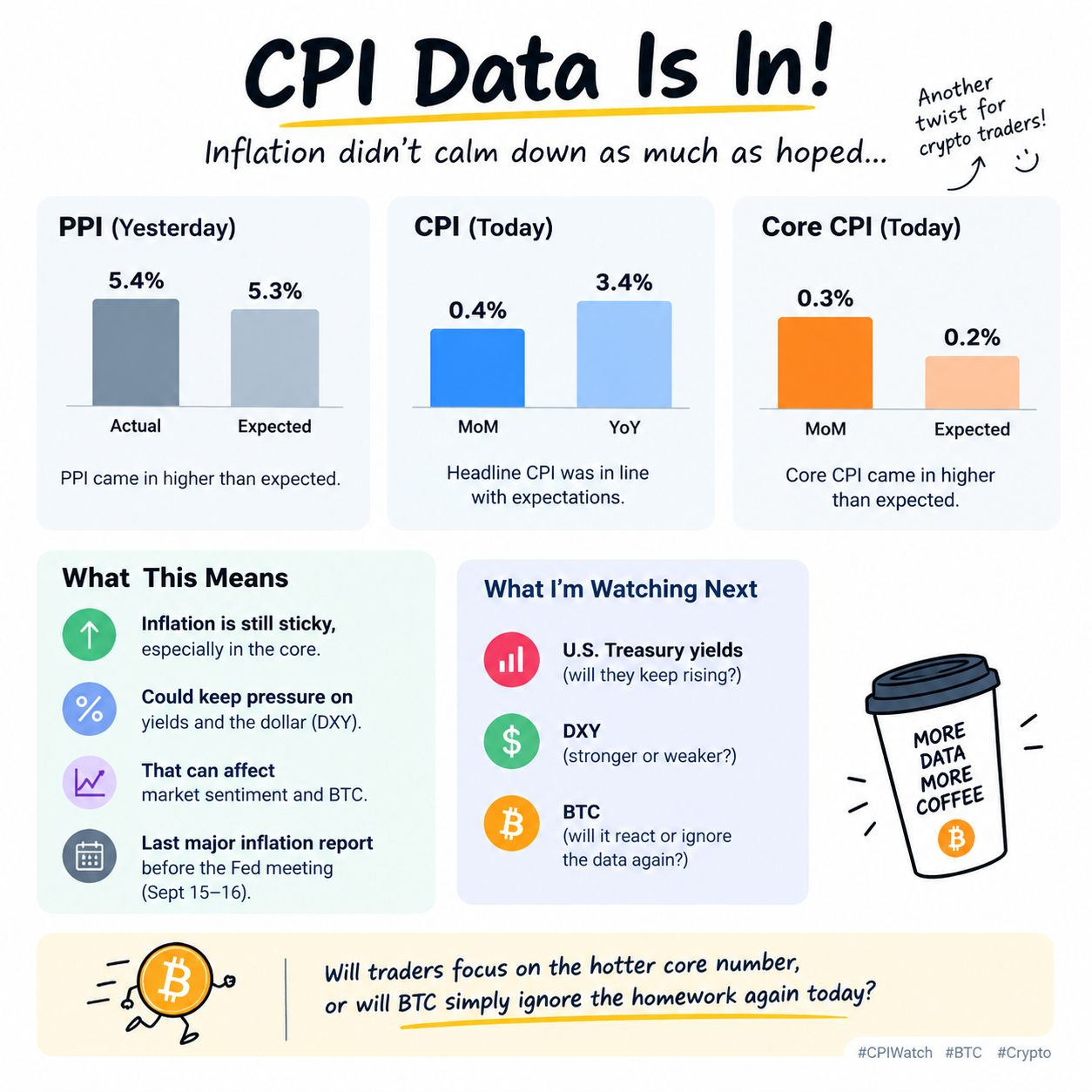
看漲我一直在觀察今天的 CPI 反應,老實說,通脹又給加密交易者添了一點小麻煩。昨天的 PPI 已經很不舒服了:實際爲 5.4%,而預期是 5.3%,所以我很好奇 CPI 會不會把局面安撫下來。結果並沒有。
headline CPI 按月(month-on-month)爲 0.4%,同比(year-on-year)爲 3.4%,整體大致符合預期。更讓我關注的是核心 CPI。核心 CPI 錄得環比 0.3%,而預期是 0.2%,這表明潛在通脹仍然不肯像大家希望的那樣更快降溫。這對比特幣很關鍵,因爲通脹數據會影響美債收益率、美元,並最終影響市場對美聯儲的預期。基本上,哪怕一個百分點,都能讓市場的表現像剛喝了三杯咖啡一樣誇張。
不過,我並不會直接做出偏空 BTC 的判斷。數據可能看起來偏負面,但價格的反應可能完全不同。對我來說,下一個更有用的信號是:美債收益率、DXY(美元指數)以及 BTC 的反應,而不是僅僅看 headline 本身。與此同時,這是美聯儲 9 月 15–16 日會議之前最後一份重要的通脹報告,所以市場接下來有得消化。
現在我在想:交易者會更關注更“熱”的核心數據,還是比特幣今天又會乾脆無視作業?
#cpiwatch #CPIWatch
headline CPI 按月(month-on-month)爲 0.4%,同比(year-on-year)爲 3.4%,整體大致符合預期。更讓我關注的是核心 CPI。核心 CPI 錄得環比 0.3%,而預期是 0.2%,這表明潛在通脹仍然不肯像大家希望的那樣更快降溫。這對比特幣很關鍵,因爲通脹數據會影響美債收益率、美元,並最終影響市場對美聯儲的預期。基本上,哪怕一個百分點,都能讓市場的表現像剛喝了三杯咖啡一樣誇張。
不過,我並不會直接做出偏空 BTC 的判斷。數據可能看起來偏負面,但價格的反應可能完全不同。對我來說,下一個更有用的信號是:美債收益率、DXY(美元指數)以及 BTC 的反應,而不是僅僅看 headline 本身。與此同時,這是美聯儲 9 月 15–16 日會議之前最後一份重要的通脹報告,所以市場接下來有得消化。
現在我在想:交易者會更關注更“熱”的核心數據,還是比特幣今天又會乾脆無視作業?
#cpiwatch #CPIWatch

Shaheen 69
·
--
🚨 CPI 剛剛下跌——現在纔是真正的考驗開始!
頭條 CPI 符合預期,但核心 CPI 按月(MoM)意外更熱。這讓美聯儲政策的不確定性依然存在,並可能給 BTC、ETH 和山寨幣帶來更多波動。⚠️
在我採取倉位之前,我會先觀察價格走勢。
看漲 🟢 還是看跌 🔴?
非財務建議/請自行盡調(NFA/DYOR)。
頭條 CPI 符合預期,但核心 CPI 按月(MoM)意外更熱。這讓美聯儲政策的不確定性依然存在,並可能給 BTC、ETH 和山寨幣帶來更多波動。⚠️
在我採取倉位之前,我會先觀察價格走勢。
看漲 🟢 還是看跌 🔴?
非財務建議/請自行盡調(NFA/DYOR)。


登入以探索更多內容