
#nearai
nearai
2,950 次瀏覽
14 討論中
熱門
最新

文章
查看翻譯
IronClaw 1.0 and the Infrastructure Behind User-Owned AIAI agents are moving beyond answering questions. They are increasingly expected to take actions, work across applications, remember previous tasks, and operate for long periods without constant supervision. That creates a difficult question: how do you make an AI agent capable enough to act, without giving it uncontrolled access to everything it can touch?
@NEAR_Protocol l #NEARAI #ironclaw
NEAR AI’s IronClaw 1.0 takes a different architectural approach.
Separating Thinking From Acting
IronClaw 1.0 is an AI agent harness built around a simple but important separation: the component responsible for deciding what should happen is separated from the component that actually carries out the action.
Between them sits what NEAR AI calls the guard.
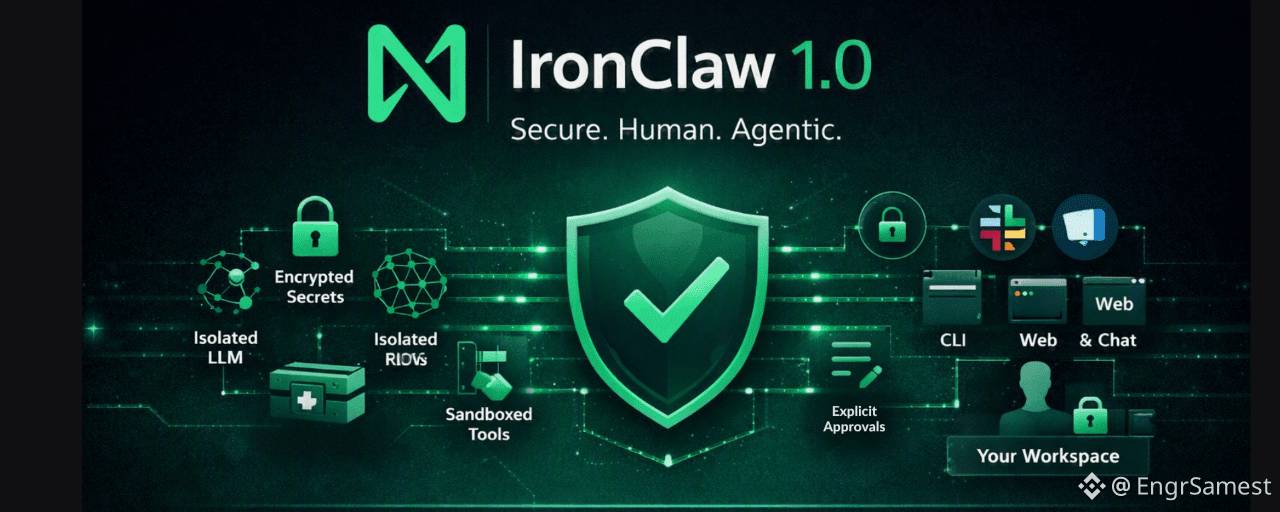
Every action passes through this coordination layer. Instead of allowing the model to directly interact with tools, credentials, websites or other external systems, the guard provides a controlled checkpoint before execution.
This matters because an agent can be highly capable and still create problems if capability and authority are treated as the same thing. IronClaw also requires explicit approval for sensitive actions. Credentials such as passwords and tokens are designed to be single-use and are scrubbed from logs, errors and reports.
Performance Across Three Different Benchmarks
The architecture is not presented only as a security improvement. IronClaw 1.0 is also performing strongly across different types of agent tasks. Using the same deepseek-v4-flash base model for comparison, IronClaw leads three benchmarks:
PinchBench: 93.5% — testing 147 real-world tasks including scheduling, email, coding, research and file management.
ClawBench: 88.6% — testing agents across more than 140 real production websites and complex, multi-step web tasks.
OfficeQA: 76.4% — testing reasoning over a large corpus of enterprise documents, including almost a century of U.S. Treasury Bulletins.
The significance is less about one impressive number and more about consistency. These benchmarks test different failure points, yet the same architecture performs strongly across all three.
What Makes IronClaw Different?
One of its most practical features is persistent state. AI agents can be interrupted by permission requests, restarts or other failures. Traditionally, that can mean losing the work already completed. IronClaw continuously checkpoints its progress, allowing an interrupted task to resume instead of starting again.
It is also designed to operate across CLI, web, Slack and Telegram while maintaining the same memory and safety rules. The idea is straightforward: changing where you interact with the agent should not mean changing how the agent behaves.
For organizations, IronClaw supports both multi-tenant deployments, where tools and skills can be shared across a team, and single-tenant deployments where complete isolation is preferred.
Where NEAR AI and Staking Fit In
IronClaw is one component of a broader NEAR AI vision focused on private, user-controlled AI infrastructure. That vision also extends into how people access AI services. In July 2026, NEAR AI introduced staking-based access for confidential inference and agent hosting. Users can stake NEAR to receive usage credits and deploy IronClaw agents, while the underlying NEAR remains owned by the user under the non-custodial model described by NEAR AI.
This gives staking a role beyond simply looking for a yield percentage. The underlying NEAR network provides the decentralized infrastructure on which this ecosystem operates, while staking contributes to the security of that network. At the service level, NEAR AI is also connecting staking with access to AI compute and agent hosting.
That is an interesting direction for decentralized AI: the network securing the infrastructure, the wallet holding the user's stake, and the AI services being brought closer together.
IronClaw 1.0 shows what a more capable AI agent can look like when safety, persistence and execution are treated as architectural requirements rather than afterthoughts.
The bigger question now is how far this model can go as decentralized AI infrastructure matures.
IronClaw 1.0 and the Infrastructure Behind User-Owned AI
AI agents are moving beyond answering questions. They are increasingly expected to take actions, work across applications, remember previous tasks, and operate for long periods without constant supervision. That creates a difficult question: how do you make an AI agent capable enough to act, without giving it uncontrolled access to everything it can touch?
@NEAR Protocol l #NEARAI #ironclaw
NEAR AI’s IronClaw 1.0 takes a different architectural approach.
Separating Thinking From Acting
IronClaw 1.0 is an AI agent harness built around a simple but important separation: the component responsible for deciding what should happen is separated from the component that actually carries out the action.
Between them sits what NEAR AI calls the guard.
Every action passes through this coordination layer. Instead of allowing the model to directly interact with tools, credentials, websites or other external systems, the guard provides a controlled checkpoint before execution.
This matters because an agent can be highly capable and still create problems if capability and authority are treated as the same thing. IronClaw also requires explicit approval for sensitive actions. Credentials such as passwords and tokens are designed to be single-use and are scrubbed from logs, errors and reports.
Performance Across Three Different Benchmarks
The architecture is not presented only as a security improvement. IronClaw 1.0 is also performing strongly across different types of agent tasks. Using the same deepseek-v4-flash base model for comparison, IronClaw leads three benchmarks:
PinchBench: 93.5% — testing 147 real-world tasks including scheduling, email, coding, research and file management.
ClawBench: 88.6% — testing agents across more than 140 real production websites and complex, multi-step web tasks.
OfficeQA: 76.4% — testing reasoning over a large corpus of enterprise documents, including almost a century of U.S. Treasury Bulletins.
The significance is less about one impressive number and more about consistency. These benchmarks test different failure points, yet the same architecture performs strongly across all three.
What Makes IronClaw Different?
One of its most practical features is persistent state. AI agents can be interrupted by permission requests, restarts or other failures. Traditionally, that can mean losing the work already completed. IronClaw continuously checkpoints its progress, allowing an interrupted task to resume instead of starting again.
It is also designed to operate across CLI, web, Slack and Telegram while maintaining the same memory and safety rules. The idea is straightforward: changing where you interact with the agent should not mean changing how the agent behaves.
For organizations, IronClaw supports both multi-tenant deployments, where tools and skills can be shared across a team, and single-tenant deployments where complete isolation is preferred.
Where NEAR AI and Staking Fit In
IronClaw is one component of a broader NEAR AI vision focused on private, user-controlled AI infrastructure. That vision also extends into how people access AI services. In July 2026, NEAR AI introduced staking-based access for confidential inference and agent hosting. Users can stake NEAR to receive usage credits and deploy IronClaw agents, while the underlying NEAR remains owned by the user under the non-custodial model described by NEAR AI.
This gives staking a role beyond simply looking for a yield percentage. The underlying NEAR network provides the decentralized infrastructure on which this ecosystem operates, while staking contributes to the security of that network. At the service level, NEAR AI is also connecting staking with access to AI compute and agent hosting.
That is an interesting direction for decentralized AI: the network securing the infrastructure, the wallet holding the user's stake, and the AI services being brought closer together.
IronClaw 1.0 shows what a more capable AI agent can look like when safety, persistence and execution are treated as architectural requirements rather than afterthoughts.
The bigger question now is how far this model can go as decentralized AI infrastructure matures.
@NEAR Protocol l #NEARAI #ironclaw
NEAR AI’s IronClaw 1.0 takes a different architectural approach.
Separating Thinking From Acting
IronClaw 1.0 is an AI agent harness built around a simple but important separation: the component responsible for deciding what should happen is separated from the component that actually carries out the action.
Between them sits what NEAR AI calls the guard.
Every action passes through this coordination layer. Instead of allowing the model to directly interact with tools, credentials, websites or other external systems, the guard provides a controlled checkpoint before execution.
This matters because an agent can be highly capable and still create problems if capability and authority are treated as the same thing. IronClaw also requires explicit approval for sensitive actions. Credentials such as passwords and tokens are designed to be single-use and are scrubbed from logs, errors and reports.
Performance Across Three Different Benchmarks
The architecture is not presented only as a security improvement. IronClaw 1.0 is also performing strongly across different types of agent tasks. Using the same deepseek-v4-flash base model for comparison, IronClaw leads three benchmarks:
PinchBench: 93.5% — testing 147 real-world tasks including scheduling, email, coding, research and file management.
ClawBench: 88.6% — testing agents across more than 140 real production websites and complex, multi-step web tasks.
OfficeQA: 76.4% — testing reasoning over a large corpus of enterprise documents, including almost a century of U.S. Treasury Bulletins.
The significance is less about one impressive number and more about consistency. These benchmarks test different failure points, yet the same architecture performs strongly across all three.
What Makes IronClaw Different?
One of its most practical features is persistent state. AI agents can be interrupted by permission requests, restarts or other failures. Traditionally, that can mean losing the work already completed. IronClaw continuously checkpoints its progress, allowing an interrupted task to resume instead of starting again.
It is also designed to operate across CLI, web, Slack and Telegram while maintaining the same memory and safety rules. The idea is straightforward: changing where you interact with the agent should not mean changing how the agent behaves.
For organizations, IronClaw supports both multi-tenant deployments, where tools and skills can be shared across a team, and single-tenant deployments where complete isolation is preferred.
Where NEAR AI and Staking Fit In
IronClaw is one component of a broader NEAR AI vision focused on private, user-controlled AI infrastructure. That vision also extends into how people access AI services. In July 2026, NEAR AI introduced staking-based access for confidential inference and agent hosting. Users can stake NEAR to receive usage credits and deploy IronClaw agents, while the underlying NEAR remains owned by the user under the non-custodial model described by NEAR AI.
This gives staking a role beyond simply looking for a yield percentage. The underlying NEAR network provides the decentralized infrastructure on which this ecosystem operates, while staking contributes to the security of that network. At the service level, NEAR AI is also connecting staking with access to AI compute and agent hosting.
That is an interesting direction for decentralized AI: the network securing the infrastructure, the wallet holding the user's stake, and the AI services being brought closer together.
IronClaw 1.0 shows what a more capable AI agent can look like when safety, persistence and execution are treated as architectural requirements rather than afterthoughts.
The bigger question now is how far this model can go as decentralized AI infrastructure matures.
2
76

·
--
文章
IronClaw 1.0:以人爲本的助手框架最好的助手是那種你不需要刻意去注意的助手。你設定目標,在終端與 Slack 之間無縫切換,並且不會因爲被打斷就丟失上下文或返工。大多數 AI 代理之所以會在這個日常測試上失敗,是因爲一個結構性的原因:它們把每一項“思考、行動、存儲密鑰、訪問互聯網”的功能都糾纏在同一個系統裏。每獲得一項新能力,就會多出一個故障點或風險點。
IronClaw 1.0 於 2026 年 7 月 27 日由 @NEAR_Protocol 推出,走上了另一條道路。它將決策與執行分離,通過它們之間的一層名爲 guard 的單一協調層來完成銜接。這個檢查點並非營銷噱頭;它是架構層面的關鍵,能夠讓“始終在線”的助手感覺更像值得信賴的同事,而不是脆弱的腳本。
IronClaw 1.0:以人爲本的助手框架
最好的助手是那種你不需要刻意去注意的助手。你設定目標,在終端與 Slack 之間無縫切換,並且不會因爲被打斷就丟失上下文或返工。大多數 AI 代理之所以會在這個日常測試上失敗,是因爲一個結構性的原因:它們把每一項“思考、行動、存儲密鑰、訪問互聯網”的功能都糾纏在同一個系統裏。每獲得一項新能力,就會多出一個故障點或風險點。
IronClaw 1.0 於 2026 年 7 月 27 日由 @NEAR Protocol 推出,走上了另一條道路。它將決策與執行分離,通過它們之間的一層名爲 guard 的單一協調層來完成銜接。這個檢查點並非營銷噱頭;它是架構層面的關鍵,能夠讓“始終在線”的助手感覺更像值得信賴的同事,而不是脆弱的腳本。
IronClaw 1.0 於 2026 年 7 月 27 日由 @NEAR Protocol 推出,走上了另一條道路。它將決策與執行分離,通過它們之間的一層名爲 guard 的單一協調層來完成銜接。這個檢查點並非營銷噱頭;它是架構層面的關鍵,能夠讓“始終在線”的助手感覺更像值得信賴的同事,而不是脆弱的腳本。
1
96

·
--
文章
IronClaw 1.0 與用戶擁有的 AI 未來:爲什麼 NEAR 正在構建超越模型的能力人工智能正從只能回答問題的系統,轉向能夠真正執行任務的代理。但賦予 AI 行動能力會帶來一個棘手的挑戰:我們如何在不讓它們變得危險的情況下,讓自主代理變得強大?
<c-127/>正從基礎設施的角度來應對這個問題。它最新的發佈版本 #IronClaw 1.0 引入了一種架構,旨在將 AI 代理的決策能力與其執行行動的能力分離,從而爲自主 AI 構建更安全的基礎。
IronClaw 1.0 與用戶擁有的 AI 未來:爲什麼 NEAR 正在構建超越模型的能力
人工智能正從只能回答問題的系統,轉向能夠真正執行任務的代理。但賦予 AI 行動能力會帶來一個棘手的挑戰:我們如何在不讓它們變得危險的情況下,讓自主代理變得強大?
<c-127/>正從基礎設施的角度來應對這個問題。它最新的發佈版本 #IronClaw 1.0 引入了一種架構,旨在將 AI 代理的決策能力與其執行行動的能力分離,從而爲自主 AI 構建更安全的基礎。
<c-127/>正從基礎設施的角度來應對這個問題。它最新的發佈版本 #IronClaw 1.0 引入了一種架構,旨在將 AI 代理的決策能力與其執行行動的能力分離,從而爲自主 AI 構建更安全的基礎。
EngrSamest:
The real leap pass just smarter agents, it’s agents that stay capable without ever crossing your trust. It is great we have this one and thanks for sharing
1
2
104

·
--
真實
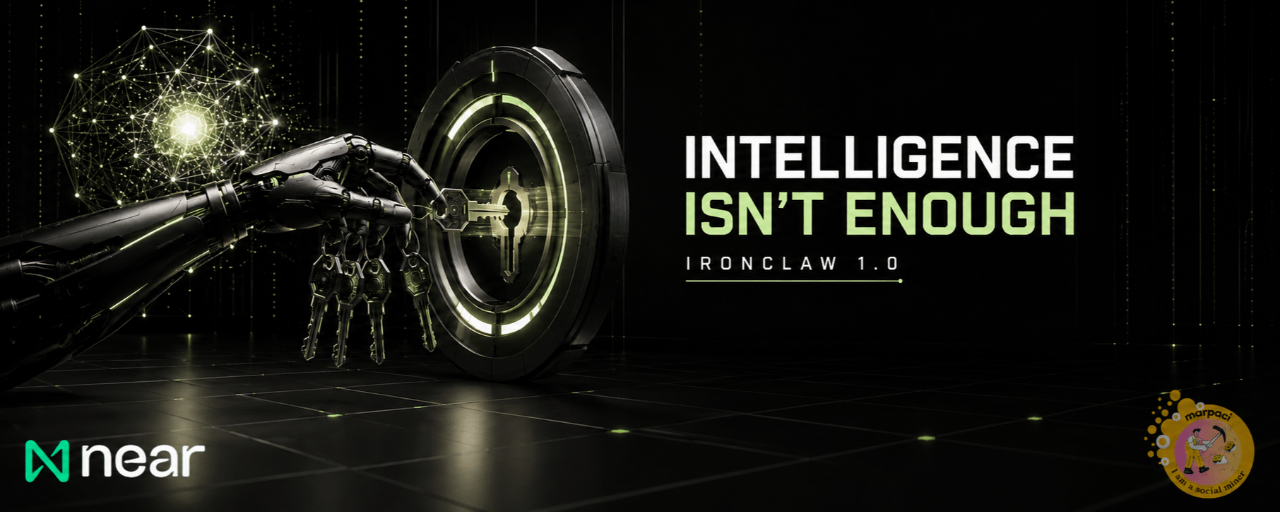
IronClaw 1.0:AI 代理需要的不僅僅是智能AI 代理的推理能力越來越強。這裏的關鍵不只是“光靠推理不夠”。
真正的挑戰始於當代理需要採取行動的時候:訪問某個工具、瀏覽網頁、管理憑據、在中斷後繼續任務,或者在不同的通信渠道之間切換而不丟失上下文。
這就是 IronClaw 1.0 旨在解決的問題。
✅ 爲 AI 代理帶來不同的架構
#ironclaw 將決策部分與執行動作的部分分離。在它們之間存在一層名爲 guarding(守護/監管)的協調層。這樣的分離很重要,因爲僅僅因爲某個 AI 代理能對某個行動進行推理,並不意味着它就應該擁有無限的訪問權限。每一個行動都會經過 guarding 層,從而爲權限與安全創建一個統一的檢查點。
IronClaw 1.0:AI 代理需要的不僅僅是智能
AI 代理的推理能力越來越強。這裏的關鍵不只是“光靠推理不夠”。
真正的挑戰始於當代理需要採取行動的時候:訪問某個工具、瀏覽網頁、管理憑據、在中斷後繼續任務,或者在不同的通信渠道之間切換而不丟失上下文。
這就是 IronClaw 1.0 旨在解決的問題。
✅ 爲 AI 代理帶來不同的架構
#ironclaw 將決策部分與執行動作的部分分離。在它們之間存在一層名爲 guarding(守護/監管)的協調層。這樣的分離很重要,因爲僅僅因爲某個 AI 代理能對某個行動進行推理,並不意味着它就應該擁有無限的訪問權限。每一個行動都會經過 guarding 層,從而爲權限與安全創建一個統一的檢查點。
真正的挑戰始於當代理需要採取行動的時候:訪問某個工具、瀏覽網頁、管理憑據、在中斷後繼續任務,或者在不同的通信渠道之間切換而不丟失上下文。
這就是 IronClaw 1.0 旨在解決的問題。
✅ 爲 AI 代理帶來不同的架構
#ironclaw 將決策部分與執行動作的部分分離。在它們之間存在一層名爲 guarding(守護/監管)的協調層。這樣的分離很重要,因爲僅僅因爲某個 AI 代理能對某個行動進行推理,並不意味着它就應該擁有無限的訪問權限。每一個行動都會經過 guarding 層,從而爲權限與安全創建一個統一的檢查點。
EngrSamest:
IronClaw is turning that reasoning into safe, reliable action. By separating thinking from doing, adding checkpoints, and preserving memory across channels, it makes agents feel less like chatbots and more like dependable digital colleagues. The bottleneck ahead isn’t intelligence alone; it’s building the guardrails that let intelligence operate without risk.
5
7
1.8k

·
--
文章
AI 代理需要的不止是聰明才智AI 代理已經從聊天框走進了職場的走廊。
他們不再只是簡單地回答問題。他們會對郵件進行分類、安排會議、開展研究、訪問文件,並在公司的各類工具上執行真實操作。簡而言之,他們正在從我們對話的軟件,演變爲能夠代表我們打開“門”的數字同事。
但我們絕不會把公司裏所有的鑰匙交給一位員工,並說:“他們看起來挺聰明的。希望他們能打開正確的門。”有了 AI 代理,僅僅關注他們的決策質量已經不夠了。
AI 代理需要的不止是聰明才智
AI 代理已經從聊天框走進了職場的走廊。
他們不再只是簡單地回答問題。他們會對郵件進行分類、安排會議、開展研究、訪問文件,並在公司的各類工具上執行真實操作。簡而言之,他們正在從我們對話的軟件,演變爲能夠代表我們打開“門”的數字同事。
但我們絕不會把公司裏所有的鑰匙交給一位員工,並說:“他們看起來挺聰明的。希望他們能打開正確的門。”有了 AI 代理,僅僅關注他們的決策質量已經不夠了。
他們不再只是簡單地回答問題。他們會對郵件進行分類、安排會議、開展研究、訪問文件,並在公司的各類工具上執行真實操作。簡而言之,他們正在從我們對話的軟件,演變爲能夠代表我們打開“門”的數字同事。
但我們絕不會把公司裏所有的鑰匙交給一位員工,並說:“他們看起來挺聰明的。希望他們能打開正確的門。”有了 AI 代理,僅僅關注他們的決策質量已經不夠了。
EngrSamest:
The real bottleneck goes beyond how smart the model gets, it’s whether that intelligence can be turned into safe, controlled action. IronClaw’s guard layer shows that separating thinking from doing makes agents more trustworthy without slowing them down, and that’s what will matter most as they move deeper into enterprise workflows.
7
7
207

文章
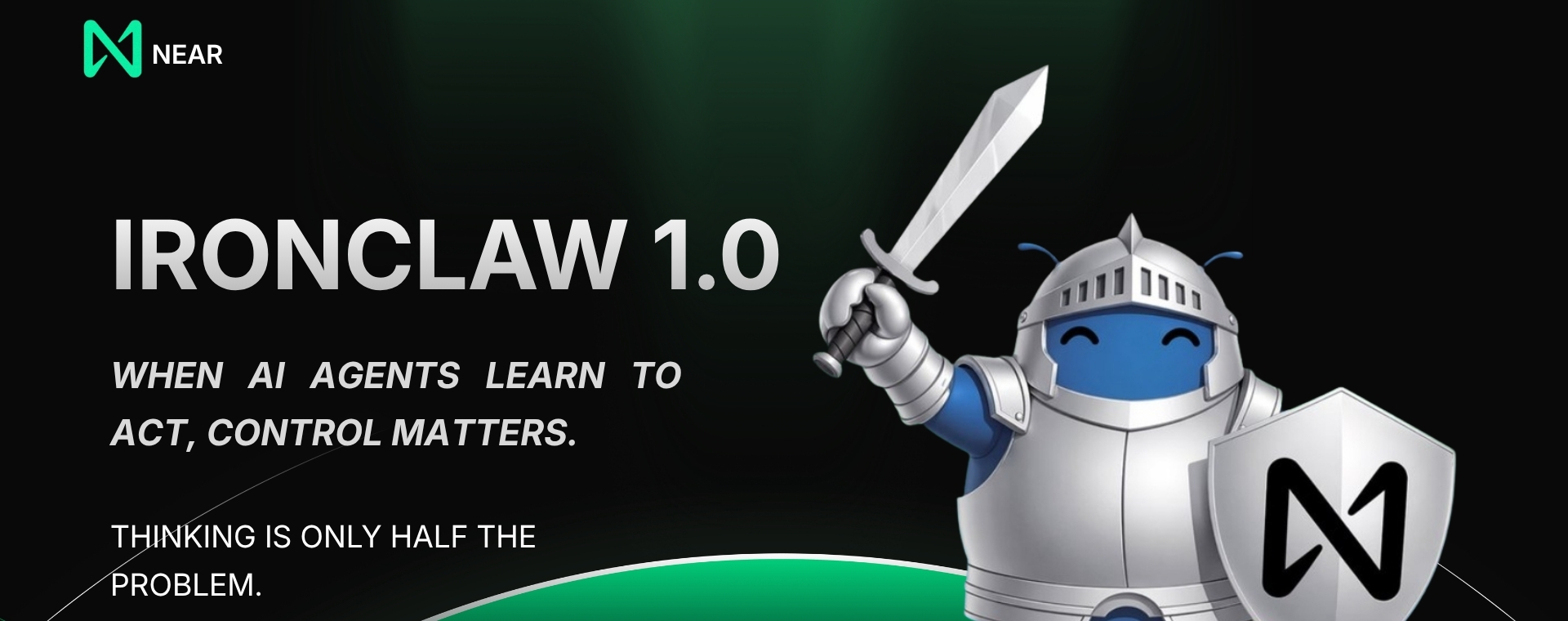
IronClaw 1.0:當 AI 代理學會行動時,控制就成爲智能的一部分AI 代理正進入一個不同的階段。
它們不再侷限於生成文本或回答問題。它們可以進行研究、管理文件、與網站互動、跨平臺溝通,並執行多步驟工作流。但當代理能夠代表我們採取行動時,我認爲一個問題變得越來越重要:
我們如何在不賦予其無限制權力的情況下,給予人工智能足夠的自主性以發揮作用?
這也是讓我對從 #NEARAI 出來的《IronClaw 1.0》特別感興趣的原因。
IronClaw 1.0:當 AI 代理學會行動時,控制就成爲智能的一部分
AI 代理正進入一個不同的階段。
它們不再侷限於生成文本或回答問題。它們可以進行研究、管理文件、與網站互動、跨平臺溝通,並執行多步驟工作流。但當代理能夠代表我們採取行動時,我認爲一個問題變得越來越重要:
我們如何在不賦予其無限制權力的情況下,給予人工智能足夠的自主性以發揮作用?
這也是讓我對從 #NEARAI 出來的《IronClaw 1.0》特別感興趣的原因。
它們不再侷限於生成文本或回答問題。它們可以進行研究、管理文件、與網站互動、跨平臺溝通,並執行多步驟工作流。但當代理能夠代表我們採取行動時,我認爲一個問題變得越來越重要:
我們如何在不賦予其無限制權力的情況下,給予人工智能足夠的自主性以發揮作用?
這也是讓我對從 #NEARAI 出來的《IronClaw 1.0》特別感興趣的原因。
heymen33:
I think the most striking point here is that security isn't an afterthought, but a direct part of the architecture. While the Guard layer provides control, checkpointing and persistent context help agents work more consistently in real workflows. Trust is truly fundamental to autonomy.
2
4
84

·
--

文章
深入剖析 NEAR IronClaw 1.0 & NEAR AI 質押人工智慧助理的演進在歷史上曾明確撞上一個架構瓶頸:單一龐大模型直接連結其所有能力。當推理、執行動作、處理敏感憑證以及存取網路都發生在同一個環境中時,就會出現關鍵弱點與單點故障;一旦任何工作流程出現問題,就可能在數秒內完全崩潰。
<c-55/> 直面這項結構性挑戰,透過推出 #IronClaw 1.0:一種先進架構,能以安全協調層作為基礎,將高層次決策與執行乾淨地分離開來。該協調層稱為 guard。
深入剖析 NEAR IronClaw 1.0 & NEAR AI 質押
人工智慧助理的演進在歷史上曾明確撞上一個架構瓶頸:單一龐大模型直接連結其所有能力。當推理、執行動作、處理敏感憑證以及存取網路都發生在同一個環境中時,就會出現關鍵弱點與單點故障;一旦任何工作流程出現問題,就可能在數秒內完全崩潰。
<c-55/> 直面這項結構性挑戰,透過推出 #IronClaw 1.0:一種先進架構,能以安全協調層作為基礎,將高層次決策與執行乾淨地分離開來。該協調層稱為 guard。
<c-55/> 直面這項結構性挑戰,透過推出 #IronClaw 1.0:一種先進架構,能以安全協調層作為基礎,將高層次決策與執行乾淨地分離開來。該協調層稱為 guard。
Web3_ArchiTect:
Nice analysis. The idea of separating an agent's thinking from its ability to execute actions is what makes IronClaw particularly interesting to me.
4
5
229
登入以探索更多內容
加入幣安廣場中的全球加密貨幣用戶
⚡️ 獲取加密貨幣的最新和實用資訊。
💬 受到全球最大加密貨幣交易所的信任。
👍 發掘來自經過驗證創作者的真實見解。
電子郵件 / 電話號碼
熱門話題
1
#ARB上涨30%受Robinhood链收入推动
56,136 次瀏覽
548 討論中
2
#STRC优先股回购达6.35亿美元
14,436 次瀏覽
155 討論中
3
#日本10年期国债收益率首触3%
89,104 次瀏覽
442 討論中
4
#WTI油价上涨未平仓合约收缩
13,705 次瀏覽
122 討論中
5
#以太坊ETF连续11日净流入
39,900 次瀏覽
353 討論中
6
#Anthropic达成350亿美元云计算协议
37,540 次瀏覽
259 討論中
7
#黄金较三个月高点下跌5.5%
58,211 次瀏覽
353 討論中
8
#XRP两周上涨40%未平仓合约下降
97,613 次瀏覽
888 討論中
9
#a16z成长基金扩大至85亿美元
37,676 次瀏覽
149 討論中
10
#恒生指数跌1%
55,397 次瀏覽
316 討論中