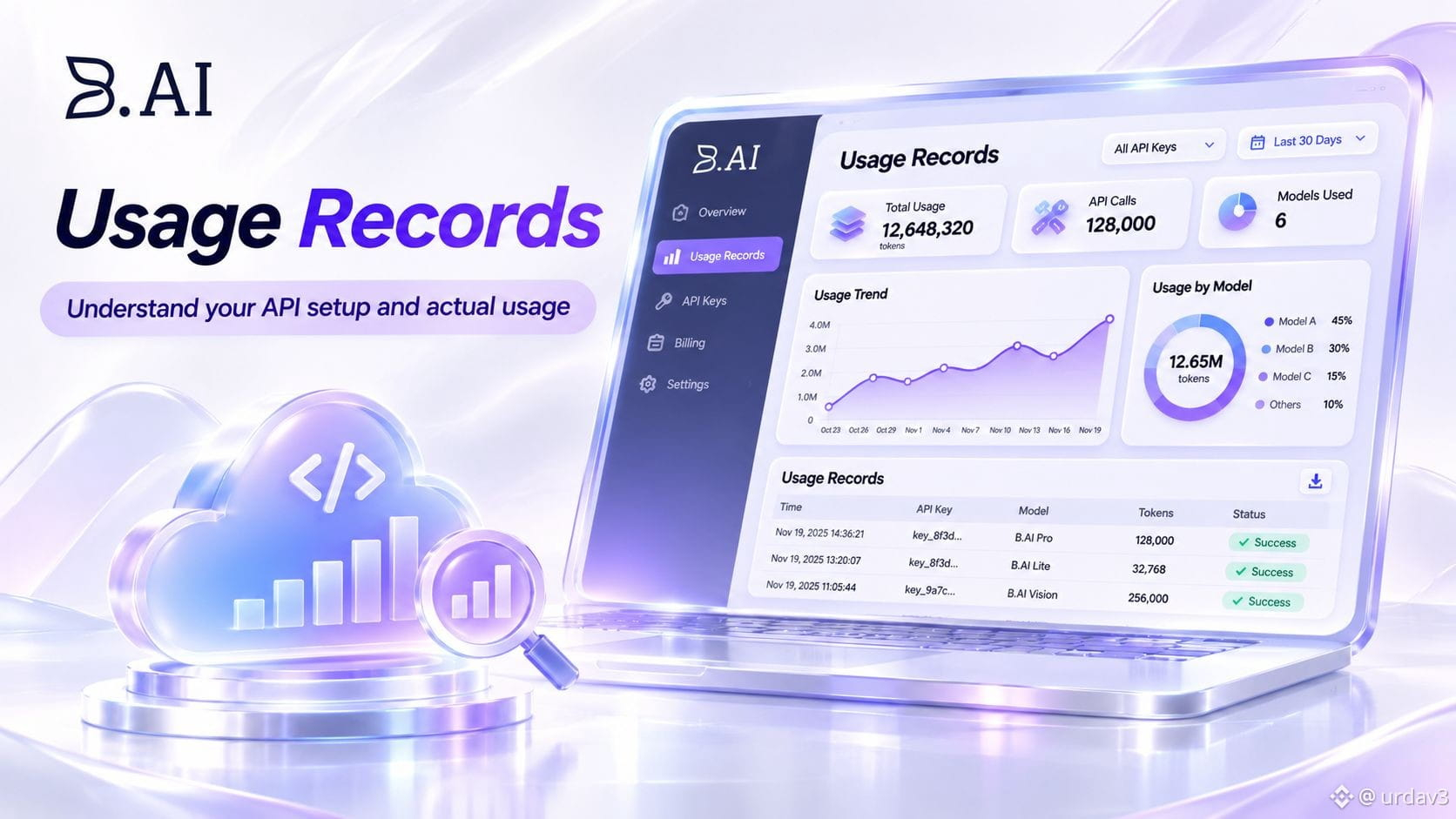
𝗕.𝗔𝗜 𝗨𝗦𝗔𝗚𝗘 𝗥𝗘𝗖𝗢𝗥𝗗𝗦: 𝗗𝗔𝗧𝗔 𝗧𝗨𝗥𝗡𝗦 𝗔𝗣𝗜 𝗖𝗢𝗦𝗧𝗦 𝗜𝗡𝗧𝗢 𝗠𝗔𝗡𝗔𝗚𝗘𝗔𝗕𝗟𝗘 𝗗𝗘𝗖𝗜𝗦𝗜𝗢𝗡𝗦
𝗬𝗼𝘂 𝗖𝗮𝗻𝗻𝗼𝘁 𝗢𝗽𝘁𝗶𝗺𝗶𝘇𝗲 𝗪𝗵𝗮𝘁 𝗬𝗼𝘂 𝗗𝗼𝗻'𝘁 𝗠𝗲𝗮𝘀𝘂𝗿𝗲
There is a significant difference between knowing that an AI application is consuming API resources and understanding exactly how those resources are being used.
Without usage visibility, developers may recognize that their costs are increasing but struggle to identify the underlying reason. This is where B.AI Usage Records become an important part of the overall API management experience.
𝗙𝗿𝗼𝗺 𝗥𝗮𝘄 𝗔𝗰𝘁𝗶𝘃𝗶𝘁𝘆 𝘁𝗼 𝗨𝘀𝗲𝗳𝘂𝗹 𝗜𝗻𝘀𝗶𝗴𝗵𝘁𝘀
Three areas deserve particular attention: API request counts, token consumption, and usage history.
Request counts help users understand how frequently their applications interact with an API. Token consumption provides another layer of information, making it possible to examine the resources associated with AI interactions. Meanwhile, historical records help users observe usage patterns over time rather than relying on isolated snapshots.
These indicators answer different questions. A high number of API calls does not automatically mean unusually high token consumption, just as a smaller number of requests does not necessarily indicate low resource usage.
Looking at these measurements together provides a more useful foundation for understanding application behavior.
𝗠𝘆 𝗔𝗻𝗮𝗹𝘆𝘁𝗶𝗰𝗮𝗹 𝗔𝗽𝗽𝗿𝗼𝗮𝗰𝗵
If I were managing an AI-powered application, I would make usage reviews part of the regular development process.
First, I would examine request activity to understand how frequently the application is being used. Next, I would compare token consumption across different periods to identify changes worth investigating. Finally, I would use the historical records to evaluate whether those changes are connected to new features, different workloads, or adjustments in application behavior.
This approach encourages optimization based on evidence instead of assumptions.
For example, developers can investigate whether certain requests contain unnecessary context, whether repeated operations could be handled more efficiently, or whether application workflows are generating more API activity than expected.
These are opportunities to investigate, not problems that should be assumed to exist.
𝗕𝗲𝘁𝘁𝗲𝗿 𝗩𝗶𝘀𝗶𝗯𝗶𝗹𝗶𝘁𝘆, 𝗕𝗲𝘁𝘁𝗲𝗿 𝗗𝗲𝗰𝗶𝘀𝗶𝗼𝗻𝘀
I see usage tracking as more than a reporting feature. It is a practical tool for connecting technical performance with financial discipline.
B.AI Usage Records give users a place to examine API calls, token consumption, and historical activity. When developers understand these indicators, they can make more informed decisions about resource allocation and cost management.
As AI applications become more sophisticated, efficient usage will matter just as much as access to powerful models.
The question I find most interesting is this: do you regularly review your API consumption, or do you only pay attention when the costs start increasing?